


Here is a surprising truth: 54% of families with children plan Easter egg hunts at home, yet many parents struggle to come up with fresh ideas beyond hiding plastic eggs in the backyard. If you have ever watched your children finish an egg hunt in five minutes and wondered what comes next, you are not alone.
Easter Sunday falls on April 5th in 2026, giving you the perfect springtime canvas for outdoor family celebrations. The fresh air, blooming flowers, and longer daylight hours create an ideal setting for activities that go far beyond the traditional egg hunt. Whether you have a curious six-month-old experiencing their first Easter or an energetic seven-year-old ready for competitive games, this comprehensive guide has you covered.
At PatPat, we understand that outdoor Easter activities create some of the most treasured family memories. From sensory play for babies to relay races for older kids, these 50+ ideas will help you plan an Easter celebration that every family member will enjoy. You will discover age-appropriate activities, eco-friendly alternatives, picnic planning tips, and practical checklists to make your family Easter celebration stress-free and memorable.
Easter Egg Hunt Ideas That Delight Every Age Group

The Easter egg hunt remains the cornerstone of most family celebrations, but the secret to a successful hunt lies in thoughtful organization. A well-planned egg hunt keeps children engaged, prevents tears, and creates fair opportunities for everyone to find treasures. Understanding how to organize an Easter egg hunt in your backyard transforms a simple activity into the highlight of the day.
Classic Backyard Easter Egg Hunt Setup
Setting up a memorable backyard Easter egg hunt requires more planning than simply scattering eggs across your lawn. Start by determining your hunting zones based on difficulty levels. Create an easy zone with eggs partially visible in grass or flower beds for younger children. Establish a medium zone where eggs sit behind objects or under leaves. Design a challenging zone with eggs tucked into tree branches, garden features, or creative hiding spots for older kids.
For the ideal hunt experience, plan on 10 to 12 eggs per child. This quantity provides a satisfying 15 to 20 minute hunt without overwhelming your space or leaving children searching forever. Fill eggs the night before and store them in baskets organized by zone to streamline your morning setup. Consider the weather forecast when choosing hiding spots.
Timing matters significantly for smooth egg hunt execution. Announce a five-minute warning before starting, gather all participants at a starting line, and consider staggering start times by age group. Younger children can begin searching their designated easy zone while older kids wait an additional minute before entering more challenging areas.
Creative Egg Hunt Variations for Larger Groups
When hosting extended family gatherings or neighborhood celebrations, standard egg hunts can become chaotic. Color-coded hunts solve this beautifully by assigning each child a specific egg color to find. This approach ensures fair distribution and eliminates the competitive rush that often leaves younger children empty-handed.
Puzzle piece hunts add an exciting twist for older children who crave mental challenges. Place puzzle pieces inside eggs throughout your hunting area. Once children collect all their eggs, they must assemble the puzzle to reveal a message pointing to a grand prize location. This extends the activity and adds a collaborative element.
The golden egg tradition creates memorable moments that children talk about for years. Hide one special golden egg containing a significant prize like a gift card, extra screen time, or the choice of Easter dessert. The anticipation adds excitement without requiring expensive prizes in every egg throughout the hunt.
Age-Appropriate Easter Activities for Babies and Infants

Your baby's first outdoor Easter creates precious moments worth capturing and cherishing for years to come. While infants cannot participate in traditional hunts, they benefit enormously from sensory experiences in spring settings. Research confirms that play promotes cognitive, physical, social, and emotional well-being even in the earliest months of life.
Sensory Easter Basket Exploration Outdoors
Create a dedicated sensory basket for your baby using safe, tactile items that introduce Easter themes gently. Include soft fabric eggs in various textures like velvet, cotton, and fleece. Add crinkly bunny toys that make intriguing sounds, and smooth wooden egg shapes for grasping practice. Avoid anything small enough to pose a choking hazard.
Set up a comfortable outdoor blanket in a shaded area where your baby can safely explore these items while experiencing fresh air and natural sounds. The sensation of grass touching tiny feet provides wonderful tactile stimulation, while the sound of birds singing introduces natural auditory experiences.
Keep outdoor sessions brief for young babies, typically 15 to 20 minutes, and watch for signs of overstimulation or temperature discomfort. Have a lightweight blanket ready for wind protection and ensure adequate shade throughout your play area.
Baby-Safe Easter Photo Opportunities in Nature
Spring provides gorgeous natural backdrops for baby's first Easter photos that become treasured keepsakes. Position your baby on a soft blanket near blooming flowers, always maintaining a safe distance from plants they might try to grab. Morning light between 8 and 10 AM offers the softest, most flattering illumination.
Easter-themed props like oversized stuffed bunnies, pastel balloons secured well out of reach, and wicker baskets filled with fabric eggs create charming compositions. Keep photo sessions short, around 10 minutes, to catch your baby's happiest expressions before fussiness sets in.
Dress your little one in comfortable, weather-appropriate layers for outdoor festivities. Soft cotton outfits with snap closures make diaper changes easy during outdoor celebrations. Browse baby-friendly Easter outfits that combine style with practicality for your baby's first outdoor Easter adventure.
Toddler Easter Games and Outdoor Adventures

Toddlers bring boundless energy and enthusiasm to Easter celebrations, but their developing motor skills and short attention spans require specially designed activities. The key to toddler Easter success lies in simplicity, visibility, and plenty of parent involvement.
Balloon Easter Egg Hunt for Toddlers
The balloon egg hunt transforms the traditional activity into a toddler-friendly triumph. Attach helium balloons to eggs using short strings, making eggs visible above grass level. Toddlers can spot the colorful balloons bobbing gently and toddle toward their treasures with confidence. This visibility eliminates the frustration toddlers often experience when eggs blend into their surroundings.
Use large, pastel-colored eggs that match their attached balloons for an added color-matching learning opportunity. Place eggs in obvious locations like the center of the lawn or beside clearly visible landmarks. Prepare extra balloon eggs hidden nearby for emotional moments when toddlers become upset about sibling finds. The goal is joyful participation, not competitive collecting.
Bunny Hop Relay and Movement Games
Toddlers love imitating animals, making bunny hop races perfectly suited to their interests. Demonstrate the bunny hop movement with exaggerated enthusiasm, then encourage toddlers to hop along a short, clearly marked course. Cheering loudly for every participant keeps the atmosphere positive and encouraging.
Create a simple Easter obstacle course using soft items like pillows, pool noodles bent into arches, and fabric tunnels. Keep obstacles low and squishy to prevent injuries when toddlers inevitably tumble. Bubble chase games with Easter-themed bubble wands provide excellent gross motor practice while burning off excited energy.
Toddler-Friendly Easter Sensory Bins Outdoors
Outdoor sensory bins allow mess-friendly exploration impossible indoors. Fill a large plastic bin with colored rice and hide small eggs throughout for a dig-and-discover activity. Toddlers practice fine motor skills while searching for treasures.
Water table Easter activities involve floating plastic eggs and using nets or cups to scoop them out. Add a few drops of food coloring to create pastel water that enhances the Easter theme. Always supervise water play closely.
For active toddlers exploring outdoors, choose durable clothing with elastic waistbands and machine-washable fabrics. Find toddler-appropriate outdoor play outfits that can handle the excitement of Easter activities.
Exciting Easter Outdoor Games for Kids

School-age children crave challenge and competition, making structured Easter games perfect for this age group. These activities build valuable skills while creating the friendly rivalry that makes celebrations memorable. Egg and spoon races date back to Victorian-era celebrations, proving classic games remain beloved across generations.
Egg and Spoon Race Championship
The egg and spoon race challenges children to balance an egg on a spoon while racing to a finish line. This activity improves coordination and balance while teaching self-control and patience. Use hard-boiled eggs for authenticity or plastic eggs for easier cleanup.
Set up a straight course of approximately 30 feet with clearly marked start and finish lines. Establish rules about what happens when an egg drops. Award prizes for various achievements: fastest time, best recovery from a drop, most graceful technique. This ensures every participant feels recognized.
Easter Olympics: Relay Races and Competitions
Transform your backyard into an Easter Olympics venue with multiple competitive stations. Sack races using burlap bags decorated with bunny ears combine tradition with theme. Three-legged races pair siblings or friends for cooperative competition that strengthens bonds while generating laughter.
Create a bunny ear ring toss using pool noodles shaped into ears and mounted on posts. Establish scoring zones at varying distances for different point values. Keep score across multiple events using a simple point system, and award gold, silver, and bronze prizes at the closing ceremony.
Easter Scavenger Hunt with Riddles and Clues
For children who enjoy puzzles, create a clue-based scavenger hunt where each found item reveals the next location. Write age-appropriate riddles that reference familiar backyard features. Include nature-based items on checklists: find something fuzzy, something that makes noise, something a bunny would eat.
Team hunts work well for groups, dividing children into teams with different-colored clue cards leading to the same final destination with shared treasure.
Lawn Games with an Easter Twist
Adapt classic lawn games with Easter modifications. Easter egg bocce ball replaces standard balls with large plastic eggs, adding unpredictable rolling patterns that level the playing field. Bunny-themed cornhole boards and Giant Easter Jenga with decorated blocks add festive charm to familiar games.
Active games call for clothing that keeps up with energetic kids. Explore kids' activity-ready outfits designed for outdoor adventures and easy washing afterward.
Nature-Based Easter Activities and Spring Exploration

Easter coincides with spring's natural awakening, creating wonderful opportunities to connect celebrations with environmental appreciation. These activities teach children about seasonal changes while fostering respect for the natural world.
Easter Nature Walk Scavenger Hunt
Design spring-themed scavenger hunts for local trails or neighborhood walks. Create checklists including robin sightings, flowering trees, budding leaves, and insects emerging from dormancy. Bring magnifying glasses for examining tiny discoveries. Bird watching introduces children to ornithology basics. Supply nature journals for sketching discoveries that become keepsakes documenting their growing scientific curiosity.
Spring Planting Activities with Kids
Easter morning presents perfect timing for planting activities children can nurture throughout spring. Decorate small pots with Easter stickers, then fill with fast-growing seeds like beans, sunflowers, or herbs. Plant Easter grass seeds in shallow containers a week before the holiday so children can harvest basket lining they grew themselves. Create mini Easter gardens in shallow dishes using moss, small plants, and decorative elements.
Easter Painted Rock Hunt in Nature
In the weeks before Easter, gather smooth rocks and paint them with Easter designs using nature-safe paints. Hide painted rocks along walking trails for a more challenging, nature-integrated hunt. Start a rock exchange tradition where children trade finds or leave one rock while taking one.
Easter Picnic Ideas for the Whole Family
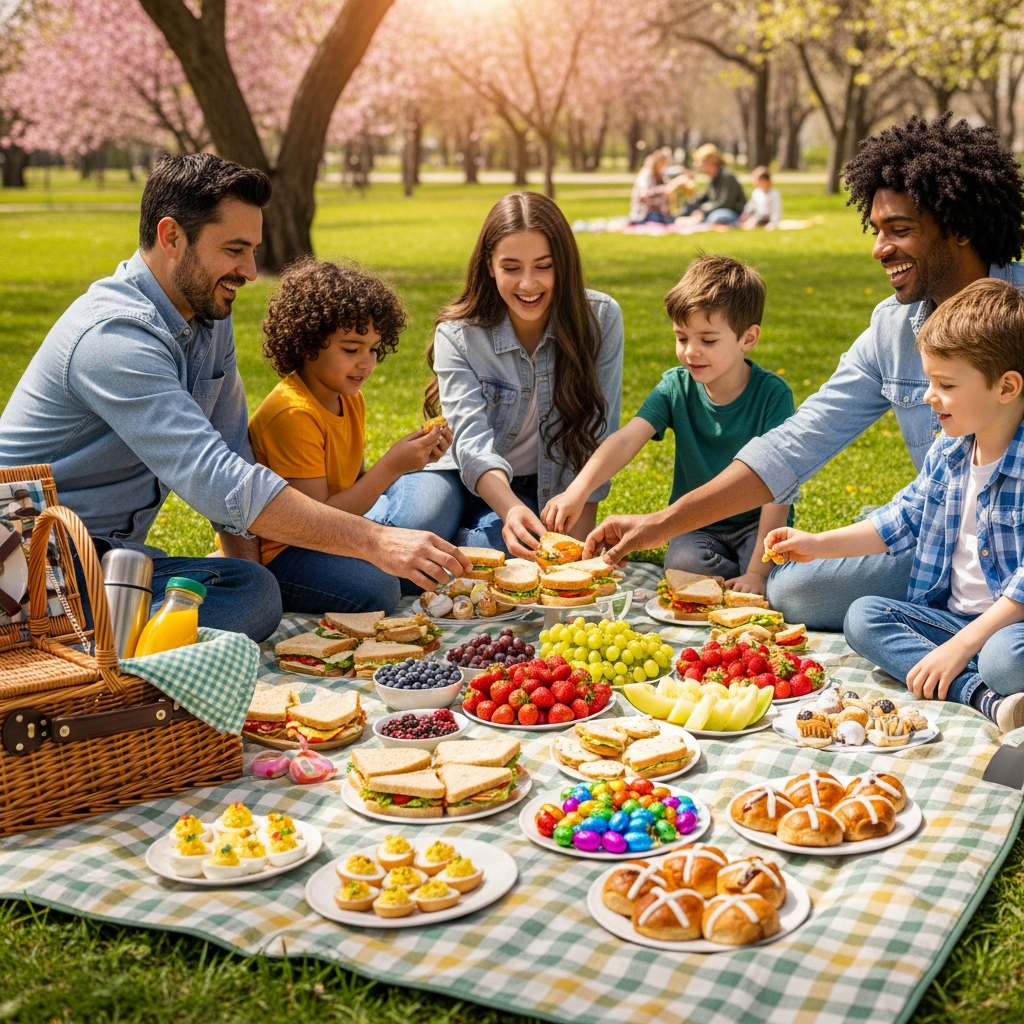
An Easter picnic extends outdoor celebrations into a leisurely dining experience that brings generations together. 58% of consumers plan to cook a holiday meal for Easter, and taking that meal outdoors adds special ambiance.
Planning the Perfect Easter Picnic Menu
Kid-friendly finger foods simplify outdoor dining while reducing mess. Prepare deviled eggs decorated to look like chicks, sandwiches cut with bunny-shaped cookie cutters, fruit kabobs on pastel sticks, and vegetable cups with ranch dressing. Make-ahead dishes like pasta salads and cold fried chicken ensure stress-free mornings. Consider allergy-friendly options when hosting extended family.
Best Locations for Family Easter Picnics
Backyard picnics offer convenience and complete control over your environment. Parks provide larger spaces for active games and often feature playground equipment for post-meal play. Scout locations beforehand for shade, restroom facilities, and adequate space. Beach Easter picnics combine holiday celebration with seaside enjoyment in coastal areas.
Picnic Games and Post-Meal Activities
After eating, transition to quieter activities before returning to high-energy games. Bring card games, Easter-themed coloring pages, or simple craft supplies for decorating bunny ear headbands. Story time under trees creates magical moments, and cloud watching challenges children to find Easter shapes without requiring supplies.
A successful Easter picnic requires outfits that transition from sitting to running. Discover coordinating family Easter outfits perfect for outdoor celebrations and memorable photos.
Eco-Friendly Easter Celebration Ideas

Growing environmental awareness inspires many families to seek sustainable Easter alternatives that reduce waste while maintaining celebration joy.
Plastic-Free Easter Egg Hunt Alternatives
Wooden eggs offer beautiful, reusable alternatives to plastic that last for years of Easter hunts. Paper mache eggs can be homemade with children as a pre-Easter craft. Fabric eggs sewn from cotton scraps provide soft, safe options for youngest hunters. Hard-boiled eggs dyed naturally return Easter to its origins and eliminate waste entirely.
Sustainable Easter Basket and Prize Ideas
Replace plastic toys with consumable treats that leave no lasting waste: seed packets for spring planting, natural sidewalk chalk, or small wooden toys. Experience-based rewards like ice cream coupons or park visit passes create excitement without physical items. Nature-based prizes like potted plants or bird feeder kits extend celebrations into ongoing projects.
Natural Easter Egg Dyeing Outdoors
Kitchen ingredients create beautiful natural dyes completely safe for children to handle. Turmeric produces bright yellow eggs, beets create pink to burgundy shades, and red cabbage makes beautiful blues. Set up outdoor dyeing stations where children experiment with different soak times to discover how duration affects color intensity. Display naturally dyed eggs in baskets lined with real grass, and compost them afterward.
Planning Your Family Easter Celebration: Tips and Checklists

Successful outdoor Easter celebrations require advance planning to ensure stress-free execution.
Two-Week Easter Activity Planning Timeline
- Two weeks before: Decide which activities to include, order needed supplies, confirm attendance if hosting guests, and begin craft projects like painted rocks
- One week before: Plant Easter grass if using homegrown basket filler, prepare fabric eggs or reusable hunt materials, and plan your picnic menu
- Three days before: Complete grocery shopping, hard-boil eggs for natural dyeing, and prepare make-ahead picnic dishes
- Day before: Fill plastic eggs with treats, set up outdoor areas if weather permits, charge camera batteries, and check weather forecasts
- Easter morning: Hide eggs before children wake, set up activity stations and picnic areas, and enjoy your celebration
Essential Supplies Checklist for Outdoor Easter
| Egg Hunt Supplies | Game Equipment | Picnic Essentials | Safety Items |
|---|---|---|---|
| Eggs (plastic/wooden/real) | Spoons for races | Blankets and seating | First aid kit |
| Collection baskets | Burlap sacks | Coolers with ice packs | Allergy medications |
| Treats and prizes | Ring toss equipment | Plates and utensils | Extra water bottles |
| Balloons for toddlers | Bubbles and wands | Sunscreen and bug spray | Shade structures |
Weather Contingency Planning
April weather can be unpredictable in many regions. Prepare indoor versions of planned activities that can substitute if rain arrives. Garage or covered porch egg hunts work well, as do indoor scavenger hunts with clues hidden throughout the house. Monitor forecasts throughout the week before Easter and communicate changes to guests promptly. Children take cues from adults, so enthusiastic indoor celebrations create equally happy memories.
Frequently Asked Questions About Outdoor Easter Activities
Planning outdoor Easter activities raises questions, especially for families new to hosting celebrations or those with children at multiple developmental stages.
What age can babies participate in Easter egg hunts?
Babies as young as six months can enjoy sensory participation in Easter egg hunts. Create a dedicated baby zone with large, brightly colored eggs placed in plain sight on a blanket. Focus on the experience of touching and holding eggs rather than hunting. Always supervise closely and avoid small items that pose choking hazards.
How many Easter eggs should I hide per child?
Plan for 10 to 12 eggs per child for a satisfying hunt lasting 15 to 20 minutes. Use 8 to 10 larger eggs in easier locations for toddlers. School-age children enjoy 12 to 15 eggs with varying difficulty levels. Color-code eggs for equal distribution in competitive hunts with multiple participants.
What can I put in Easter eggs besides candy?
Non-candy alternatives include temporary tattoos, stickers, coins, small erasers, hair accessories, and bouncy balls. Eco-friendly options include seeds, pressed flowers, or slips of paper with activity coupons. Babies benefit from fabric scraps or soft items for sensory exploration.
How do I organize an Easter egg hunt for mixed ages?
Divide your hunting area into zones by difficulty level. Create an easy zone with visible eggs for toddlers and a challenging zone with hidden eggs for older kids. Alternatively, color-code eggs so each age group searches for designated colors. Start younger children first with a time advantage.
What are the best outdoor Easter games for toddlers?
Toddlers enjoy bunny hop races, bubble chasing, balloon egg hunts where balloons are tied to eggs for visibility, and parachute games with plastic eggs. Keep games simple with clear rules and short duration. Sensory activities like Easter-themed water tables also engage toddlers effectively.
How can I make Easter activities eco-friendly?
Replace plastic eggs with wooden, fabric, or paper mache alternatives. Use natural dyes from kitchen ingredients like turmeric, beets, and red cabbage. Choose consumable treats or experience-based prizes over plastic toys. Opt for reusable decorations and compostable tableware for Easter picnics.
What should kids wear for outdoor Easter activities?
Choose comfortable, layered clothing appropriate for spring weather. Prioritize play-friendly fabrics that allow movement and can withstand grass stains. Closed-toe shoes provide protection during active games. Coordinate outfits for photos while ensuring children can run and play comfortably throughout the celebration.
What is the best time of day for outdoor Easter activities?
Mid-morning between 9 and 11 AM offers ideal conditions with comfortable temperatures and good lighting for photos. Avoid early afternoon when sun is strongest. If planning a picnic, late morning allows for games before lunch. Check your local Easter Sunday forecast and have backup plans ready.
Creating Lasting Easter Memories with Your Family
From simple egg hunts to elaborate Easter Olympics, outdoor activities create the foundation for cherished family traditions that children remember throughout their lives. The ideas in this guide offer something for every age group, interest level, and environmental preference. Whether you choose just two or three activities or plan an entire day of outdoor celebration, spending quality time together in spring's beautiful setting matters most.
Remember that perfection matters far less than participation. Dropped eggs, unexpected rain showers, and toddler meltdowns become funny family stories that you retell for years. Focus on creating an atmosphere of joy and togetherness rather than executing flawless events.
Mark your calendar for Easter Sunday, April 5, 2026, and start planning your family's outdoor celebration today. With thoughtful preparation and the activities in this guide, you will create an unforgettable family Easter celebration that becomes a treasured tradition for years to come. PatPat wishes your family a joyful Easter filled with laughter, discovery, and lasting memories made under springtime skies.



