


Does your morning start with your child clawing at a shirt collar, sobbing over a sock seam, or refusing to wear anything in the closet? If so, you are far from alone. Finding sensory friendly kids clothes that your child will actually wear can feel like solving a puzzle with missing pieces. But here is the good news: once you understand why certain fabrics, tags, and seams cause so much distress, choosing tagless seamless clothing for sensory sensitive kids becomes far more straightforward.
Research suggests that sensory processing issues affect 5 to 16 percent of school-aged children. That means in a typical classroom of 25 kids, up to four of them may struggle with the way clothing feels against their skin. Clothing battles are not about being "picky." They are about a nervous system that processes touch differently.
This guide from PatPat covers everything you need: the science behind tactile sensitivity, the best fabrics for clothes for kids with sensory issues, practical dressing strategies, and a capsule wardrobe approach that takes the guesswork out of mornings. Whether your child has sensory processing disorder, autism, ADHD, or simply a low tolerance for scratchy materials, these tips will help your family start the day with less stress and more smiles.
Why Does My Child Hate Tags and Seams on Clothes?
Imagine wearing a shirt with a small piece of sandpaper sewn into the back of the neck. You would not be able to focus on anything else, right? For children with tactile hypersensitivity, that is roughly what an ordinary clothing tag feels like. Their brain has the "volume knob" for touch turned up far too high, so everyday textures register as intensely uncomfortable or even painful.
This heightened response is rooted in the way the nervous system processes sensory input. In typical development, the brain learns to filter out background tactile information like the feeling of a shirt collar or a waistband. In children with sensory processing differences, that filtering system works differently. Tags move unpredictably against skin. Seams create raised ridges of pressure. Rough fabrics deliver constant, low-level irritation the brain cannot tune out.
Sensory processing disorder, or SPD, is not currently listed as a standalone diagnosis in the DSM-5, but it is widely recognized by occupational therapists and pediatric professionals. According to the OT Toolbox, tactile sensitivity is a common component of sensory processing difficulties and frequently co-occurs with autism spectrum disorder and ADHD. Understanding this connection helps parents see clothing refusal as a physiological response rather than defiance.
Tactile Sensitivity vs. Ordinary Preferences: How to Tell the Difference
Every child has clothing preferences. The difference between a preference and a genuine sensory issue comes down to intensity and consistency. Here are the signs that point toward true tactile sensitivity:
- Consistent reactions -- Your child reacts to the same textures or clothing features every single time, not just occasionally.
- Visible distress, not just annoyance -- Crying, gagging, scratching at skin, or full meltdowns go beyond simple dislike.
- Disruption of daily life -- Getting dressed regularly takes more than 20 minutes, causes school tardiness, or leads to avoidance of activities.
- Extends beyond clothing -- Your child also reacts to food textures, grooming (hair brushing, nail trimming), or certain types of physical contact.
If several of these signs resonate, your child is communicating genuine discomfort, not testing boundaries. That realization alone can shift the entire dynamic from a power struggle to a problem-solving partnership.
What Makes Clothing Sensory Friendly for Kids?
The term "sensory friendly" gets used broadly, but it actually refers to specific design features that reduce tactile irritation. When you are shopping for sensory friendly clothes for children, here is exactly what to look for:
- Tagless or printed labels -- Heat-transferred or printed labels eliminate the single most common irritant. Even "soft" sewn-in tags can bother sensitive kids because the folded edge and thread bulk create an inconsistent texture.
- Flat-lock or flat seams -- Flat-lock stitching lies flush against the skin instead of creating a raised ridge. This is different from standard overlocked seams, which leave a bumpy interior finish.
- Soft, consistent fabric textures -- The fabric should feel the same on both sides. Jersey-knit or brushed finishes tend to work best because there are no rough surprises.
- Adaptive closures and fit -- Elastic waistbands, pull-on designs, and magnetic closures remove the friction of buttons and zippers. Fit matters too: neither too tight (pressure points) nor too loose (bunching and rubbing).
- No irritating decorations -- Sequins, appliques with stiff backing, thick screen-printed graphics, and lace trims are hidden triggers that parents often overlook.
Sensory-Friendly Clothing Checklist
- Tagless (printed labels only)
- Flat or covered seams
- Soft, consistent-texture fabric on both sides
- Elastic or adaptive waistbands
- No scratchy decorations or stiff embellishments
- Pre-washed or garment-dyed finish
Keep this checklist on your phone when you shop. It will save you from buying clothes that look soft on the rack but fail the "real-world wear test" at home.
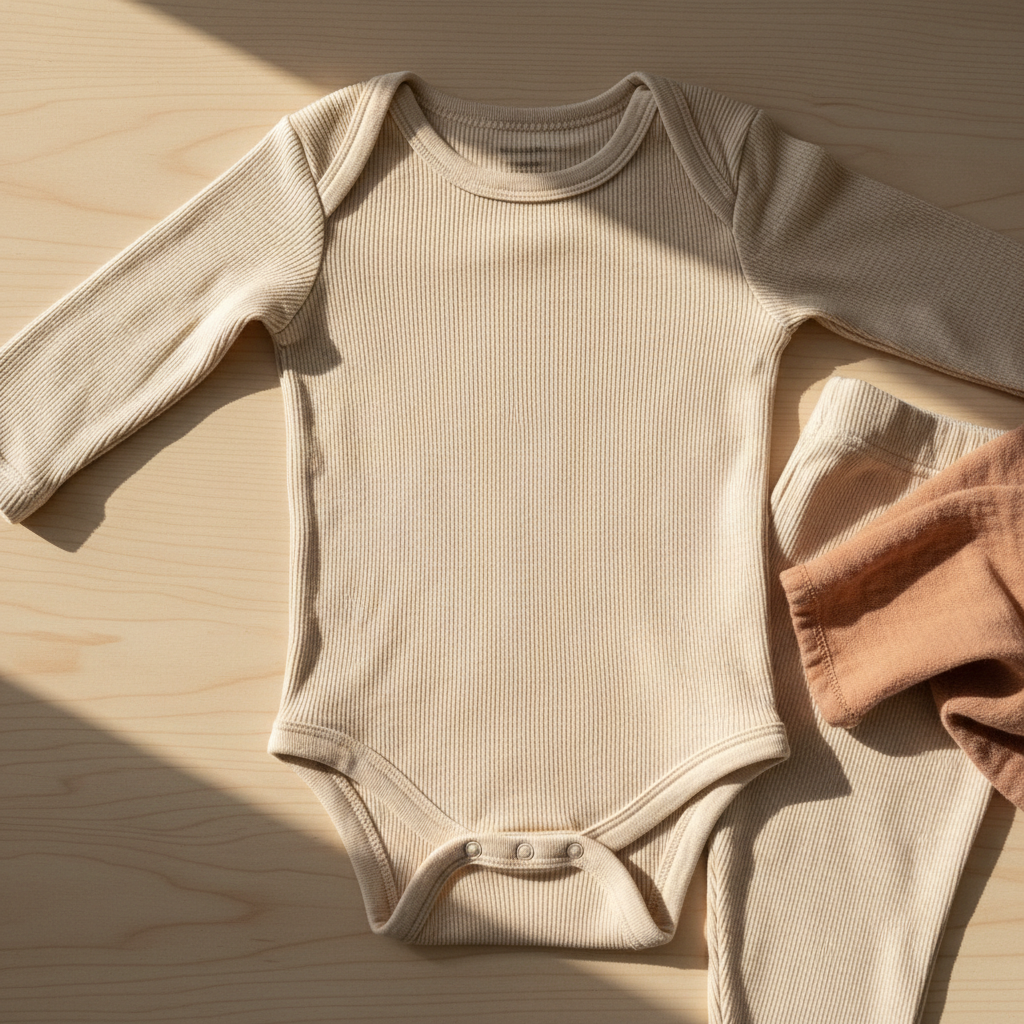
Best Fabrics for Kids with Sensory Processing Challenges
Not all soft fabrics are created equal. When choosing the best fabric for sensory sensitive kids, the material's structure, breathability, and how it holds up after repeated washing all matter. Here is a breakdown of the top options.
Bamboo Fabric
Bamboo tops the list for sensory-friendly clothing. It is naturally hypoallergenic, thermoregulating (cool in summer, warm in winter), moisture-wicking, and exceptionally soft with a silky drape. Bamboo viscose is the most common form used in children's clothing. Eco-conscious parents also appreciate that bamboo kids clothing is sustainable, hypoallergenic, and naturally antibacterial. For babies, bamboo is one of the softest natural fabrics available -- browse bamboo baby clothes for tag-free options your little one will love.
Organic Cotton
Organic cotton is the most accessible sensory-friendly fabric. It avoids the chemical treatments that leave residue on conventional cotton, reducing potential skin irritation. Jersey-knit organic cotton is particularly good for softness and stretch. It is widely available, affordable, and easy to care for.
Modal and Tencel (Lyocell)
Both derived from wood pulp (beech and eucalyptus, respectively), Modal and Tencel have an exceptionally smooth fiber surface that minimizes friction against skin. These premium fabrics are biodegradable and particularly well-suited for underwear and pajamas where skin contact is constant.
Superfine Merino Wool
Superfine merino is naturally temperature-regulating, moisture-wicking, and surprisingly itch-free when the fiber diameter is below 18.5 microns. It works best for socks, outerwear, and cold-weather base layers. That said, some sensory-sensitive children still reject wool regardless of fiber grade, so always test before committing.
| Fabric | Softness (1-5) | Breathability | Hypoallergenic | Best For | Price Range |
|---|---|---|---|---|---|
| Bamboo | 5 | Excellent | Yes | All seasons, everyday | $$ |
| Organic Cotton | 4 | Good | Yes | Basics, t-shirts | $ - $$ |
| Modal / Tencel | 5 | Excellent | Yes | Underwear, pajamas | $$ - $$$ |
| Superfine Merino | 4 | Excellent | Mostly | Socks, outerwear | $$$ |
| Standard Polyester | 2 | Poor | No | Avoid for sensory kids | $ |
Fabrics to avoid: Standard polyester blends (trap heat, feel plasticky), stiff denim, rough linen, and any fabric with a noticeable weave texture.
Age-by-Age Guide to Sensory-Friendly Clothing for Children
Sensory needs shift as children grow. What works for a baby will not necessarily work for a school-age child navigating dress codes and peer pressure. Here is age-specific guidance to keep your approach relevant.
Babies and Infants (0-12 Months)
Infants cannot tell you what bothers them, so the responsibility falls entirely on you. Look for tagless bodysuits with flat seams around the neck and leg openings, snap closures (easier than buttons, no zipper pinch risk), and pre-washed soft fabrics. Babies with eczema or sensitive skin benefit doubly from sensory-friendly materials. For the youngest children, look for comfortable baby bodysuits with snap closures and printed-on labels instead of sewn tags.
Toddlers (1-3 Years)
Toddlers are developing autonomy and may have fierce opinions but lack the vocabulary to explain sensory discomfort. At this age, clothing refusal often gets misread as a "phase" or power play. Prioritize pull-on pants with elastic waists, tagless t-shirts, and slip-on shoes. Avoid zippers, buttons, or buckles that add frustration to an already challenging process. Offering two pre-approved outfits strikes the right balance between independence and sensory safety.
Preschool and School-Age (4-8 Years)
This is when clothing battles often intensify. School introduces dress codes, uniform requirements, and specific shoe types that may not align with your child's sensory needs. Work proactively with the school to identify sensory friendly school clothes that fit within guidelines. Soft polo shirts instead of stiff button-downs. Knit pants instead of rigid khakis. Introduce the concept of a "comfort wardrobe" where your child has genuine input on what goes in their closet.
Tweens (9-12 Years)
Tweens face social pressure to dress like peers. Sensory needs do not disappear at this age, but children may try to mask discomfort to fit in, which can lead to increased anxiety or meltdowns at home. Help your tween find brands that are both sensory-friendly and stylish. Encourage self-advocacy: teach them to articulate their needs to teachers, coaches, and friends. Adaptive fashion is increasingly mainstream, and knowing that can be genuinely empowering.

10 Practical Tips for Dressing a Child with Sensory Issues
Knowing the right fabrics and features is half the battle. The other half is how you approach the dressing routine itself. These ten strategies, many drawn from occupational therapy practices for clothing sensitivities, can transform your mornings.
- Remove all tags immediately. Use a seam ripper, not scissors. Scissors leave a small stub that can be just as irritating as the full tag. A seam ripper cuts the threads cleanly, leaving a smooth finish. Better yet, buy tagless clothing from the start.
- Pre-wash new clothes at least twice. New garments carry sizing agents, dyes, and chemical finishes that stiffen fabric. Wash with fragrance-free, hypoallergenic detergent. Adding a cup of white vinegar to the first wash provides extra softening without artificial fragrances.
- Let your child touch fabrics before buying. Shop in person when possible or order from brands with generous return policies. Have your child rub the fabric against their inner forearm -- a sensitive area that gives a reliable comfort reading.
- Turn clothes inside out. If the seams on a garment bother your child but they love the design, wearing it inside out is a perfectly valid solution. Some sensory-friendly brands even design garments to look good either way.
- Build a "green light" wardrobe. Identify the specific items your child wears without complaint. Buy multiples of those exact items in different colors. Do not force variety for its own sake.
- Offer two choices, not an open closet. Reducing decision fatigue is critical for comfortable clothes for kids who hate getting dressed. Lay out two sensory-safe outfits the night before and let your child choose.
- Use deep-pressure input before dressing. Occupational therapists recommend proprioceptive activities before dressing: bear hugs, rolling in a blanket, or pressing hands firmly against the wall. This can recalibrate the sensory system and raise tolerance temporarily.
- Introduce new clothing gradually. Do not expect a new item to be worn for a full day immediately. Start by having the child hold it, then try it on for five minutes at home, then for a short outing. Gradual exposure reduces anxiety.
- Keep a consistent morning routine. Predictability reduces sensory-related anxiety for a morning routine with a sensory child. Dress at the same time, in the same place, in the same order every day.
- Stay calm and validate their experience. If your child says "this hurts," believe them. Reacting with frustration escalates the situation. Calmly say, "I hear you. Let us find something that feels better." Model problem-solving, not power struggles.
One parent on a popular parenting forum shared a counterintuitive insight worth noting: she stopped buying new clothes entirely for six months and instead let her daughter wear the same three outfits on rotation. The result? Morning meltdowns dropped to nearly zero, and her daughter gradually became willing to try new items because the pressure was gone. Sometimes less really is more.
How to Build a Sensory-Friendly Capsule Wardrobe for Kids
A capsule wardrobe is a small collection of interchangeable pieces that all work together. For sensory-sensitive children, this approach is transformative: every single item in the closet has been pre-tested and approved. No more "I have nothing to wear" battles, because everything feels safe.
The Sensory Capsule Wardrobe Formula
- 5-7 soft tagless t-shirts or tops (neutral and preferred colors)
- 3-4 pairs of elastic-waist pants or leggings (soft knit -- no jeans)
- 2-3 pairs of seamless socks
- 2 pairs of sensory-friendly pajamas
- 1-2 lightweight layering pieces (zip-up hoodie with soft lining, cardigan)
- 5-7 sets of tagless underwear
Finding soft kids clothes that combine comfort with style does not have to break the budget. Building a capsule wardrobe from a single trusted brand simplifies the process because you already know the fabric, fit, and construction meet your child's needs.
Smart Shopping Strategies
When your child finds a shirt they love, buy three. When brands discontinue a favorite, stock up before it disappears. Sign up for restock alerts. This is not excessive -- it is strategic parenting for a child whose comfort depends on consistency.
Rotate seasonal items in and out without overwhelming your child. Store off-season clothes out of sight. When introducing a new seasonal piece, use the gradual introduction technique from the tips section above. Let them hold it, touch it, and try it on their terms before it enters the daily rotation.
Seasonal Dressing Strategies for Sensory-Sensitive Children
Spring and Summer: Lightweight, Breathable Options
Summer intensifies sensory issues. Heat, sweat, and sunscreen residue create additional layers of irritation on top of existing tactile sensitivity. Prioritize bamboo and lightweight organic cotton. Avoid polyester athletic wear, which traps heat and feels plasticky against damp skin.
Specific summer strategies:
- Choose loose-fitting shorts with soft elastic waistbands
- Opt for sleeveless or cap-sleeve tops to minimize fabric-on-skin contact
- Use rash guards with flat seams for swimming -- they can replace itchy sunscreen application on the torso and arms
- Select lightweight, breathable sensory friendly summer clothes in light colors that reflect heat
Fall and Winter: Layering Without Overloading the Senses
Layering is essential in cold weather, but it creates multiple fabric-on-fabric interactions. Each layer must pass your child's comfort test independently.
- Base layer: Soft bamboo or merino thermal underwear (tagless, of course)
- Mid layer: Fleece or soft knit hoodie
- Outer layer: Weather-appropriate shell
- Avoid wool scarves directly on skin -- use soft fleece neck gaiters instead
- Build extra time into the morning routine for winter dressing, which inevitably takes longer
When to Consult an Occupational Therapist About Clothing Sensitivity
Most clothing sensitivities can be managed with the strategies outlined above. But sometimes professional support makes a significant difference. Consider consulting a pediatric occupational therapist if you notice these signs:
- Clothing battles last more than 30 minutes daily and are escalating in intensity
- Your child is consistently late for school or missing activities because of dressing difficulty
- Clothing discomfort causes significant emotional distress: crying, meltdowns, or self-harm like scratching skin
- Sensitivity extends well beyond clothing to food textures, grooming, and physical contact
- Your child avoids age-appropriate activities (swimming, sports, playdates) because of clothing requirements
An OT trained in sensory integration therapy can assess your child's unique sensory profile, create a personalized "sensory diet" (a set of activities designed to help the nervous system regulate), and provide targeted desensitization strategies. According to The OT Toolbox, when clothing sensitivity impacts daily function, an occupational therapy evaluation can help identify underlying processing patterns.
To find a qualified therapist, ask your pediatrician for a referral, search the American Occupational Therapy Association (AOTA) website, or contact your school district about evaluation services, which are free under IDEA for qualifying children. Many families see meaningful improvement within a few months. Early intervention tends to produce the best outcomes, but it is never too late to seek help.
Frequently Asked Questions About Sensory-Friendly Kids Clothing
What is sensory friendly clothing?
Sensory friendly clothing is specifically designed to minimize tactile irritation. Key features include tagless printed labels, flat or covered seams, ultra-soft fabrics like bamboo or organic cotton, and adaptive closures such as elastic waistbands. These garments reduce the sensory input that causes discomfort in children with heightened tactile sensitivity.
Is it normal for kids to hate seams in socks?
Yes, very common. Sock seams sit directly against the toes, one of the most nerve-dense areas of the body. Children with even mild tactile sensitivity notice the ridge of a seam that other kids can easily ignore. Seamless socks or socks with flat toe seams resolve this issue for most children.
Do children outgrow sensory issues with clothing?
Some children become less sensitive as their nervous system matures, particularly between ages 6 and 10. Others continue to experience clothing sensitivity into adolescence and adulthood. Occupational therapy can help children develop effective coping strategies regardless of whether they fully outgrow the sensitivity.
Can sensitivity to clothing tags be a sign of autism?
Tactile sensitivity, including discomfort with tags and seams, is common in children on the autism spectrum. However, it also occurs in children without autism. Tag sensitivity alone is not a diagnostic indicator. If you notice multiple sensory sensitivities alongside social or communication differences, discuss your observations with your pediatrician.
What is the best way to remove tags from kids' clothes?
Use a small seam ripper rather than scissors. A seam ripper cuts the threads holding the tag in place, leaving a smooth finish. Scissors tend to leave a small stub that can be equally irritating. After removing the tag, run your finger over the area to ensure no thread fragments remain.
What fabrics should I avoid for a child with sensory issues?
Avoid stiff or scratchy fabrics including raw denim, rough linen, standard polyester, and any fabric with a pronounced weave texture. Also steer clear of garments with heavy screen-printed graphics (the plastisol ink creates a stiff patch on the inside) and anything with glitter, sequins, or rough appliques.
How can I make school mornings easier for my sensory-sensitive child?
Prepare outfits the night before using only pre-approved clothing. Follow a consistent dressing routine at the same time and in the same order each day. Incorporate a brief calming activity before dressing, such as deep-pressure squeezes. Allow extra time so the morning does not feel rushed.
Are bamboo clothes good for kids with sensitive skin?
Bamboo fabric is one of the best choices for sensory-sensitive children. It is naturally hypoallergenic, exceptionally soft, moisture-wicking, and temperature-regulating. Bamboo clothing also tends to stay softer than cotton after repeated washing, making it a reliable long-term option for children who are particular about fabric texture.
Making Mornings Easier, One Outfit at a Time
Clothing sensitivity is real, valid, and manageable. If your child melts down over a tag or refuses to wear socks with seams, they are not being difficult. They are communicating genuine discomfort through the only means available to them. And you, by reading this far, are already doing something powerful: learning how to listen.
Here are the three most important takeaways from this guide:
- Choose the right construction and fabric. Tagless, flat-seam clothing in soft natural fabrics like bamboo and organic cotton eliminates the most common triggers.
- Build a sensory capsule wardrobe. A small collection of pre-tested, approved items means everything in the closet is a safe choice.
- Create a predictable, calm dressing routine. Consistency, limited choices, and deep-pressure input before dressing can dramatically reduce morning battles.
The adaptive clothing market is growing rapidly. Fortune Business Insights projects the global adaptive clothing market is on track for significant growth, which means more options, better designs, and greater accessibility for families like yours every year. You are not navigating this alone, and the choices available to you are expanding.
PatPat is committed to making comfortable, affordable children's clothing accessible to every family. Whether you are looking for ultra-soft bamboo basics, tagless everyday essentials, or simply clothes that feel as good as they look, there are options waiting for you. Once you have found sensory-safe fabrics your child loves, explore kids matching outfits the whole family can enjoy.
Ready to find clothes your child will actually want to wear?
Explore PatPat's collection of soft, tagless, sensory-friendly kids clothes designed with your child's comfort in mind. From bamboo baby essentials to everyday soft kids clothing, comfort has never looked this good.
This article is intended for informational purposes and does not constitute medical advice. If you have concerns about your child's sensory processing, consult a qualified pediatric occupational therapist or your pediatrician.





