


Is your baby fussier than usual during hot summer days? Are you constantly wondering whether your little one is comfortable or overheating in their outfit? You are not alone. One of the most common concerns new parents face is figuring out how to dress their baby appropriately when temperatures rise.
Here is the good news: baby rompers in warm weather have become a go-to solution for parents everywhere, and for excellent reasons. These versatile one-piece garments offer the perfect combination of comfort, breathability, and practicality that both babies and parents love. Whether you are preparing for your first summer with a newborn or looking for better warm-weather options for your growing infant, understanding why summer baby rompers work so well can transform your approach to dressing your little one.
In this comprehensive guide, we will explore everything you need to know about choosing breathable baby rompers, understanding temperature guidelines, preventing overheating, and building a practical summer wardrobe. At PatPat, we understand the importance of keeping babies comfortable, and this guide draws on expert recommendations and pediatric research to help you make confident decisions for your child.
What Makes Baby Rompers Ideal for Hot Weather
Baby rompers have earned their reputation as warm-weather essentials through thoughtful design that prioritizes infant comfort. Unlike multi-piece outfits that can bunch up, trap heat, or restrict movement, rompers offer a streamlined solution that works with your baby's natural need to stay cool.
One-Piece Design for Maximum Airflow
The single-layer construction of a baby romper hot weather style eliminates the trapped air pockets that occur when layering separate tops and bottoms. This means heat can escape more easily from your baby's body rather than building up between fabric layers. The American Academy of Pediatrics recommends that infants should be dressed appropriately for the environment, with no greater than one layer more than an adult would wear. A single romper accomplishes this perfectly on warm days.
The ergonomic fit of quality rompers also supports your baby's natural movement. Whether your little one is learning to roll, crawl, or simply kick their legs during tummy time, the flexible design allows unrestricted motion without fabric bunching uncomfortably.
Exposed Limbs Allow Natural Cooling
Most summer rompers feature short sleeves or sleeveless designs combined with shorts-length or bubble-style legs. This intentional exposure of arms and legs serves an important thermoregulatory purpose. Babies have trouble regulating their body temperature compared to adults, and exposed skin helps heat dissipate naturally.
Additionally, babies who dislike feeling restricted often fuss less in rompers compared to full-coverage outfits. The psychological comfort of freedom, combined with physical cooling, creates happier babies during hot weather.
Consider this real-world scenario: Sarah, a first-time mom in Arizona, noticed her three-month-old became irritable every afternoon despite air conditioning. After switching from two-piece outfits to single-layer cotton rompers, her baby's mood improved dramatically. The simple change eliminated the bunched fabric at the waist that was trapping heat and causing discomfort.
Best Breathable Fabrics for Summer Baby Rompers
Not all rompers are created equal when it comes to keeping your baby cool. The fabric you choose matters enormously because babies' skin is up to 30 percent thinner than adult skin, making it incredibly absorbent and sensitive to whatever touches it.
Organic Cotton: The Classic Choice for Sensitive Skin
Organic cotton baby rompers for summer remain the gold standard for good reason. This natural fiber offers excellent breathability, allowing air to circulate freely against your baby's skin. The National Eczema Association recommends 100 percent organic cotton as their top choice for baby clothing because it is less likely to contain potential allergens and formaldehyde resins that can irritate sensitive skin.
When shopping for organic cotton, look for the Global Organic Textile Standard (GOTS) certification. GOTS-certified products are made of at least 95 percent organic fibers and must meet strict safety and quality standards throughout the entire production process, from farm to finished garment. This certification ensures that not only the cotton itself is organic, but the entire production chain—including dyeing, printing, and manufacturing—meets rigorous environmental and social standards.
Organic cotton also offers environmental benefits that eco-conscious parents appreciate. Organic farming uses significantly less water than conventional cotton farming and eliminates toxic pesticides that can harm soil, water, and wildlife. When you choose organic cotton rompers, you are making a choice that benefits both your baby and the planet.
Bamboo Viscose: Naturally Moisture-Wicking and Soft
Bamboo baby rompers for warm weather have gained tremendous popularity, and the science backs up the hype. Research shows that bamboo has the highest capillary effect of leading fabrics, absorbing more moisture and drawing it away from the body than other materials.
The unique micro-gaps in bamboo fibers create natural pathways for air circulation. Studies indicate that bamboo fabric can keep skin two to three degrees cooler than cotton in warm conditions. For babies prone to sweating or those with eczema, bamboo's moisture-wicking abilities help keep rashes dry so they heal quickly. If you are interested in exploring bamboo options, bamboo baby clothes collections offer a variety of soft, breathable choices.
Muslin and Linen Blends: Lightweight Summer Options
Muslin's loose, open weave structure creates exceptional airflow, making it ideal for the hottest days. Originally used in tropical climates for centuries, muslin remains one of the most breathable fabric options available. The open weave allows air to pass through easily, which helps sweat evaporate quickly and keeps your baby's skin dry.
Linen-cotton blends have also emerged as a trending choice for summer baby rompers, offering the natural cooling properties of linen with the softness parents prefer. Pure linen can feel slightly rough against delicate baby skin, but blending it with cotton creates a fabric that is both breathable and gentle. These blends are particularly popular for special occasions when parents want their baby to look stylish while staying comfortable.
When selecting fabric, also consider OEKO-TEX certification. This standard tests finished products for harmful substances, ensuring that every component—from zippers to thread—has been verified safe for contact with your baby's skin. Combining GOTS or OEKO-TEX certified fabrics with breathable designs gives you the best of both worlds: safety and comfort.
| Fabric | Breathability | Moisture-Wicking | Best For |
|---|---|---|---|
| Organic Cotton | Excellent | Good | Everyday wear, sensitive skin |
| Bamboo Viscose | Excellent | Superior | Sweaty babies, eczema-prone skin |
| Muslin | Superior | Good | Very hot days, maximum airflow |
| Linen Blend | Excellent | Good | Special occasions, style-conscious |
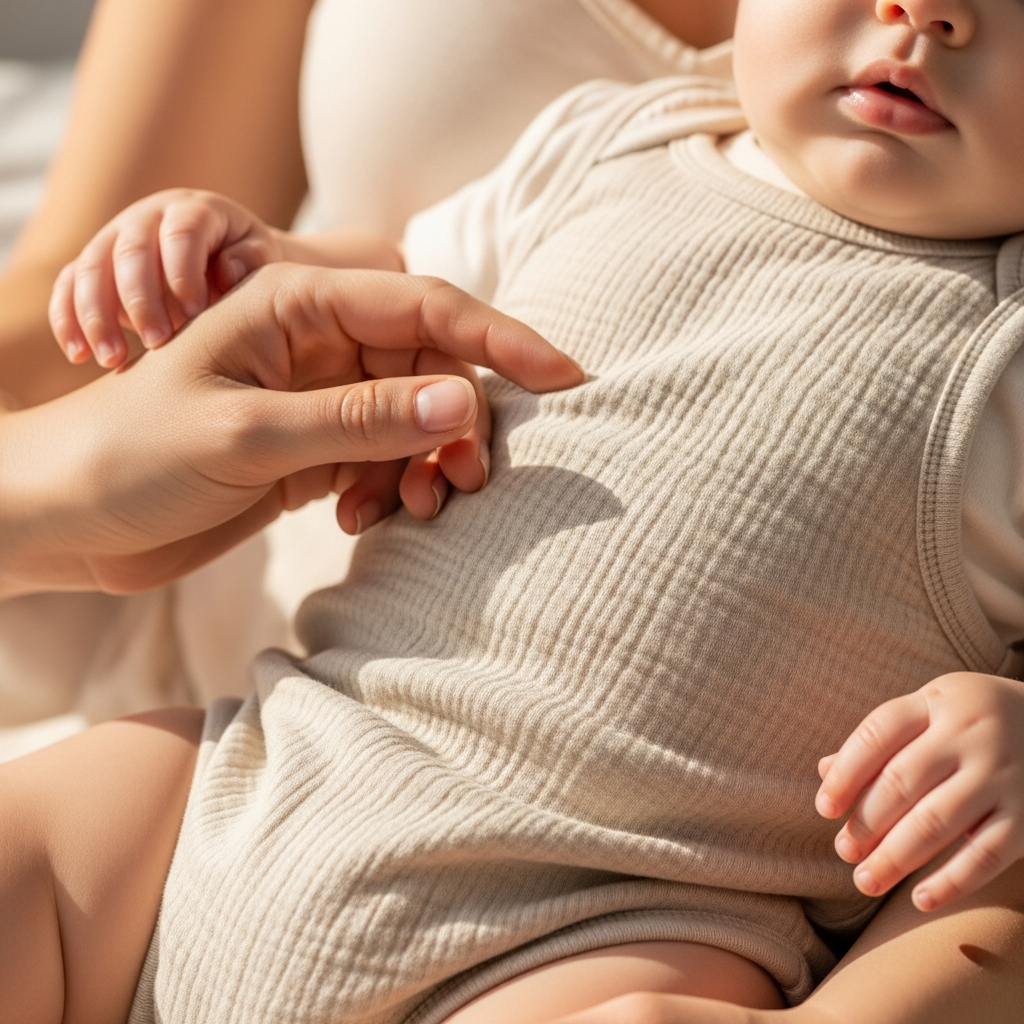
Rompers vs. Onesies: Which Is Better for Hot Weather
Many parents use "romper" and "onesie" interchangeably, but understanding the difference between a romper and a bodysuit helps you make smarter choices for warm weather dressing.
Understanding the Key Differences
A bodysuit (often called a onesie) is designed as a base layer. It snaps at the crotch and typically requires additional bottoms to create a complete outfit. The snug fit works well under other clothing but can trap heat when worn alone in very warm conditions.
A romper functions as a complete, standalone outfit. It covers the torso and includes attached shorts or pants, eliminating the need for additional pieces. This makes rompers inherently more suitable for hot weather since they provide full coverage without layering.
| Feature | Romper | Bodysuit |
|---|---|---|
| Complete Outfit | Yes | No (needs bottoms) |
| Layering Needs | None in summer | Requires additional layer |
| Diaper Access | Crotch snaps or zippers | Crotch snaps |
| Best Use | Standalone warm weather wear | Under other clothes, sleep |
When to Choose a Romper Over a Onesie
Choose rompers for outdoor activities, beach trips, casual outings, and any situation where you want a quick, single-piece outfit. Onesies work better as sleepwear layers or under outfits when extra coverage is needed. Both baby bodysuits and baby rompers and jumpsuits have their place in a well-rounded summer wardrobe.
Here is a counterintuitive insight many parents discover: despite covering less of the body overall, rompers often keep babies cooler than bodysuits worn alone. This happens because bodysuits fit snugly against the torso to stay tucked, which can trap heat. Rompers, by contrast, are designed with more ease through the body, allowing air to circulate freely underneath the fabric.
Temperature Dressing Guide: What Baby Should Wear in Summer
One of the most frequently searched questions parents have is what should baby wear in 80 degree weather or similar temperature-specific queries. Here is a practical breakdown to take the guesswork out of summer dressing.
Room Temperature and Outdoor Heat Guidelines
The American Academy of Pediatrics suggests parents avoid taking babies outside for long periods when the heat index exceeds 90 degrees Fahrenheit. Understanding how many layers baby should wear in summer at various temperatures helps keep your little one safe:
- 70-75 degrees F: Light romper with short sleeves; a thin blanket may be needed in air conditioning
- 75-80 degrees F: Single lightweight romper in cotton or bamboo is ideal
- 80-85 degrees F: Sleeveless or minimal coverage romper; keep baby in shade
- Above 85 degrees F: Minimal clothing, limit outdoor time, prioritize shade and hydration
What should baby wear at 75 degrees? This comfortable range allows for a standard short-sleeve romper. Adjust based on humidity, sun exposure, and whether you are indoors with air conditioning.
Signs Your Baby Is Dressed Appropriately
Many parents make the mistake of checking their baby's hands and feet to gauge temperature. However, experts recommend feeling your baby's chest, back, or tummy instead, as extremities are often naturally cooler and do not accurately reflect core temperature.
Signs your baby is comfortable include:
- Chest and back feel warm but not hot or sweaty
- Skin appears normal in color (not flushed)
- Baby seems content and relaxed
- No visible sweating or damp hair
A helpful rule of thumb: if you feel comfortable in a t-shirt, your baby will likely be comfortable in a single-layer romper. The old advice to add one extra layer still applies in mild weather, but once temperatures climb above 75 degrees, that extra layer often does more harm than good. Trust your instincts and your baby's cues—they will let you know if something is off.
Indoor air conditioning adds another variable to consider. Many parents keep their homes quite cool in summer, which means a baby dressed for outdoor heat may actually need a light layer when inside. Keep a thin muslin blanket or light cardigan handy for transitions between air-conditioned spaces and the outdoors.

Preventing Overheating and Heat Rash in Babies
Baby overheating prevention through summer clothes is not just about comfort—it is a safety issue. According to the CDC, children have a smaller body mass to surface area ratio than adults, making them more vulnerable to heat-related illness.
Warning Signs of Baby Overheating
Knowing the signs baby is overheating can help you respond quickly:
- Flushed or reddened skin, especially on face and chest
- Sweating or damp hair (though some babies overheat without sweating)
- Unusual fussiness or difficulty being soothed
- Rapid breathing or faster heartbeat
- Skin that feels hot to the touch
- Concentrated urine indicating possible dehydration
If you notice these signs, move your baby to a cooler area, remove layers, offer fluids, and cool their skin with a damp cloth. Seek emergency care if your baby becomes unresponsive or cannot cool down.
How Proper Romper Choice Reduces Heat Rash Risk
Heat rash develops when sweat gland openings become blocked, trapping perspiration beneath the skin. The best rompers to prevent heat rash for baby share these characteristics:
- Loose-fitting design that does not press against skin folds
- Breathable natural fabrics like cotton, bamboo, or muslin
- Moisture-wicking properties that keep skin dry
- Minimal seams in areas prone to friction
Heat rash commonly appears in neck folds, under diapers, and on the upper chest and back. Choosing lightweight baby rompers with appropriate fit and fabric significantly reduces this risk.
One pediatric nurse shared an observation from years of working with families: babies dressed in synthetic fabrics during summer months present with heat rash far more frequently than those in natural fibers. While polyester blends may be affordable and durable, the trade-off in breathability is not worth it during hot weather. Investing in quality natural-fiber rompers can actually save you trips to the pediatrician and keep your baby more comfortable overall.
Choosing the Right Summer Romper: Features That Matter
Beyond fabric, several practical features make certain rompers more suitable for warm weather and easier for busy parents.
Closure Types for Easy Diaper Changes
Rompers with easy diaper access for summer are essential when you are changing diapers multiple times daily. Consider these options:
- Crotch snaps: The classic choice, providing quick access without removing the entire outfit
- Full-length zippers: Fastest option for diaper changes but check that zipper pulls are covered to prevent scratching or overheating from metal
- Envelope necklines: Allow pulling rompers down over shoulders for messy diaper situations
- Shoulder snaps vs. back snaps: Shoulder snaps are easier for quick changes; back snaps offer a cleaner front appearance
Sleeve and Leg Length Options
A sleeveless baby romper for summer provides maximum cooling and freedom of movement. However, consider your specific needs:
- Sleeveless: Best for indoor use, shaded outdoor areas, or under sun-protective layers
- Short sleeve: Offers slight sun protection while maintaining breathability
- Bubble romper style: Trendy aesthetic with loose leg openings for excellent airflow
- Shorts-length legs: Standard coverage that works for most situations
For extended sun exposure, some parents opt for UPF-rated rompers that provide ultraviolet protection without adding bulk. These specialized fabrics block harmful UV rays while still allowing breathability, making them ideal for beach days, pool time, and outdoor adventures.
Sizing also matters for summer comfort. A romper that fits too tightly will restrict airflow and cause overheating, while one that is too loose may bunch up uncomfortably. Look for rompers with a relaxed fit through the body but secure closures at the legs and shoulders. Many brands offer detailed size charts that account for both height and weight—take a few minutes to measure your baby before ordering to ensure the best fit.
When building your baby's summer wardrobe, exploring a comprehensive baby rompers collection helps you find the right styles and closures for your needs.
Summer Romper Wardrobe Essentials for New Parents
How many summer rompers do I need for my baby? This practical question deserves a practical answer based on your baby's age and your lifestyle.
Building a Practical Summer Romper Collection
For newborns experiencing their first summer, plan for 7-10 rompers. Frequent outfit changes due to spit-ups, diaper leaks, and general messiness mean you will cycle through clothes quickly. For babies 6 months and older who have fewer daily changes, 5-7 rompers typically suffice.
A balanced newborn summer clothes wardrobe might include:
- 4-5 everyday basics in neutral colors for maximum mix-and-match versatility
- 2-3 nicer options for outings, family photos, or special occasions
- 1-2 rompers with UPF protection or lightweight long sleeves for sun-heavy days
Versatile Styles for Different Occasions
Consider how you will use each romper:
- Everyday home wear: Simple, easy-care cotton or bamboo in solid colors
- Baby beach outfit romper: Quick-dry fabrics, sand-resistant materials
- Going-out styles: Fun patterns, coordinating pieces for family photos
- Sleep-appropriate options: Super-soft fabrics, minimal hardware
Gender-neutral options in colors like sage green, soft yellow, cream, and gray have become increasingly popular, allowing hand-me-down possibilities and reducing wardrobe waste. Starting with quality baby clothes essentials ensures your little one stays comfortable throughout the warm season.
Care tips for longevity: Wash rompers in cold water on gentle cycle, skip fabric softeners (they can reduce breathability), and line dry when possible to preserve fabric integrity. Proper care extends the life of quality rompers so they can be passed down to younger siblings or donated when your baby outgrows them.
One budget-friendly strategy: invest in higher-quality rompers for your everyday basics since these will see the most wear. Save money on special-occasion pieces that your baby may only wear once or twice. A well-made organic cotton or bamboo romper that costs a bit more upfront will outlast several cheaper alternatives while keeping your baby more comfortable.
Frequently Asked Questions About Baby Rompers in Warm Weather
Can newborns wear rompers in summer?
Yes, newborns can safely wear rompers in summer, and they are often an excellent choice for keeping young babies cool. Choose soft, breathable fabrics like organic cotton or bamboo, and ensure the romper fits loosely without restricting movement. For newborns under 2 months, opt for designs with easy diaper access and gentle closures that will not irritate their delicate skin.
What is the best fabric for baby rompers in hot weather?
Organic cotton and bamboo viscose are the top fabric choices for summer baby rompers. Organic cotton is breathable, hypoallergenic, and gentle on sensitive skin. Bamboo naturally regulates temperature and wicks moisture away from the body. Muslin is another excellent option due to its lightweight, airy weave. Look for GOTS or OEKO-TEX certified fabrics for added safety assurance.
How do I know if my baby is too hot in a romper?
Check your baby's chest or back of neck rather than hands or feet, which are not accurate indicators. Signs of overheating include flushed or red skin, rapid breathing, sweating, unusual fussiness, and feeling hot to touch. If you notice these signs, move baby to a cooler area, remove layers, and offer fluids. Breast milk, formula, or water for babies over 6 months helps with hydration.
Are sleeveless rompers safe for babies?
Sleeveless rompers are safe and practical for babies in warm weather. They provide excellent ventilation and freedom of movement. However, if your baby will be in direct sunlight, consider a light short-sleeve option or apply baby-safe sunscreen to exposed skin for babies over 6 months. For indoor or shaded outdoor use, sleeveless rompers are an ideal cooling choice.
What should baby wear under a romper in summer?
In warm weather, most babies do not need anything under their romper. The romper serves as a complete outfit on its own. If your home has strong air conditioning, you may add a thin cotton onesie underneath. For diapers, use breathable options to maximize comfort. The key is keeping layers minimal to prevent overheating—less is more in summer.
How many rompers does a baby need for summer?
Plan for 7-10 rompers for newborns who require frequent outfit changes due to spit-ups and diaper leaks. For babies 6 months and older, 5-7 rompers typically suffice. Include a mix of everyday basics, a few nicer options for outings, and consider one or two with UPF protection for beach days or extended outdoor time.
What should my baby wear at 80 degrees?
At 80 degrees Fahrenheit, dress your baby in a single layer of lightweight, breathable clothing. A sleeveless or short-sleeve romper in cotton or bamboo is ideal. Avoid synthetic fabrics that trap heat. In direct sun, add a sun hat and seek shade. Indoors with air conditioning, a short-sleeve romper provides appropriate coverage without overheating risk.
Is cotton or bamboo better for summer baby rompers?
Both fabrics excel in summer with slight differences. Cotton is widely available, affordable, and reliably breathable. Bamboo offers superior moisture-wicking, natural antibacterial properties, and silky softness, making it excellent for babies with sensitive skin or those who sweat more. Choose organic versions of either for the safest option against baby's delicate skin.
Keeping Your Baby Cool and Comfortable This Summer
Dressing your baby for warm weather does not have to be complicated. Baby rompers in warm weather have earned their popularity through smart design, breathable fabrics, and practical features that make parenting easier. From the temperature-regulating properties of bamboo to the classic comfort of organic cotton, today's summer baby rompers offer something for every family's needs.
Remember the key takeaways: choose breathable baby rompers in natural fabrics, follow temperature guidelines to avoid overdressing, watch for overheating signs, and prioritize loose-fitting styles that allow air circulation. By understanding what makes certain rompers work better for hot weather, you can shop with confidence and keep your little one comfortable all season long.
At PatPat, we believe every parent deserves access to quality, comfortable clothing options that keep babies happy and safe. Whether you are preparing for your baby's first summer or refreshing an older infant's wardrobe, investing in well-made rompers pays dividends in comfort and convenience. Your baby will thank you—in coos, smiles, and better naps.




