


You have probably heard that overheating is dangerous for babies, but figuring out exactly how to dress your little one for sleep can feel overwhelming. TOG ratings on baby sleepwear promise to make this easier, yet the numbers and charts often add to the confusion rather than solve it.
Here is the reality: getting your baby's sleepwear right matters more than you might think. Research published in Frontiers in Pediatrics confirms that heat stress and hyperthermia are common findings in sudden infant death syndrome cases, making temperature regulation a genuine safety concern. But this guide is not meant to frighten you. Instead, we want to empower you with clear, practical knowledge.
In this complete TOG guide for baby sleepwear, you will learn what TOG ratings actually mean, how to match them to your room temperature, and which options work best for each season. At PatPat, we understand that new parents need straightforward answers, not more confusion. By the time you finish reading, choosing the right sleep sack will feel like second nature.
What Is TOG Rating and Why Does It Matter for Baby Sleep?
TOG stands for Thermal Overall Grade, a standardized measurement of thermal resistance that tells you how much warmth a fabric retains. Think of it as a warmth score: higher TOG numbers mean more heat retention, while lower numbers indicate more breathability.
The important thing to understand is that TOG measures warmth retention, not thickness or weight. A thin merino wool sleep sack might have a higher TOG rating than a bulky fleece one because of how the material traps body heat. This standardization allows you to compare sleepwear across different brands and materials with confidence.
Why does this matter so much for babies? Unlike adults, infants cannot regulate their body temperature effectively. According to research in Early Human Development, the ability to regulate body temperature matures significantly around three to six months, but even then, babies remain more vulnerable to temperature extremes than adults. They lose heat rapidly through their relatively large head surface area and lack the developed mechanisms to cool down through sweating efficiently.
This immature thermoregulation creates real risks. The American Academy of Pediatrics states that overheating can increase the risk of SIDS, which is why choosing appropriate sleepwear based on room temperature is not just about comfort but about safety.
Understanding the TOG Rating Scale
Here is a quick breakdown of common TOG ratings and when to use each:
- 0.2-0.5 TOG: Lightweight and breathable, perfect for warm rooms or hot summer nights above 75F (24C)
- 1.0 TOG: The versatile year-round option, ideal for moderate temperatures between 68-72F (20-22C)
- 1.5 TOG: Great for transitional seasons when nights are slightly cooler, around 64-68F (18-20C)
- 2.5 TOG: Winter warmth for cooler rooms between 61-68F (16-20C)
- 3.5 TOG: Heavy warmth reserved for very cold environments below 61F (16C)
Most families find that owning two to three different TOG options covers their needs throughout the year. You do not need every rating in your nursery closet.

Complete TOG Chart: Match Room Temperature to Sleepwear
This TOG temperature chart serves as your quick reference guide for dressing baby appropriately for sleep. Keep in mind that every baby is different, so use this as a starting point and adjust based on your individual child's cues.
| Room Temperature | TOG Rating | What Baby Wears Underneath |
|---|---|---|
| 75F+ (24C+) | 0.5 TOG or less | Diaper only or short-sleeve onesie |
| 72-75F (22-24C) | 0.5-1.0 TOG | Short-sleeve bodysuit |
| 68-72F (20-22C) | 1.0 TOG | Long-sleeve bodysuit |
| 64-68F (18-20C) | 1.5-2.5 TOG | Long-sleeve bodysuit |
| 61-64F (16-18C) | 2.5 TOG | Footie pajamas or long-sleeve bodysuit with pants |
| Below 61F (16C) | 3.5 TOG | Footie pajamas with long-sleeve layer |
The Sleep Foundation notes that a room temperature between 68 and 72 degrees Fahrenheit is comfortable for most babies. This moderate range typically works well with a 1.0 TOG sleep sack and a single layer underneath.
How to Check If Your Baby Is the Right Temperature
Forget about feeling your baby's hands and feet. They are often naturally cool due to immature circulation and do not reflect core body temperature accurately. Instead, use these reliable methods:
- Touch the chest or back of neck: These areas give you an accurate read on your baby's actual body temperature
- Check 20-30 minutes after putting baby down: This allows time for body temperature to stabilize in the sleep environment
Signs your baby is overheating:
- Sweaty neck, chest, or damp hair
- Flushed or red cheeks
- Rapid breathing or restlessness
- Hot to the touch on chest or back
Signs your baby is too cold:
- Chest feels cool to the touch
- Mottled or pale skin
- Fussiness or difficulty settling
Seasonal TOG Guide: Dressing Baby for Every Time of Year
Seasons affect not just outdoor temperatures but your indoor climate too. Even with climate control, most nurseries experience temperature variations throughout the year. Here is how to adapt your baby sleep sack TOG selection for each season.
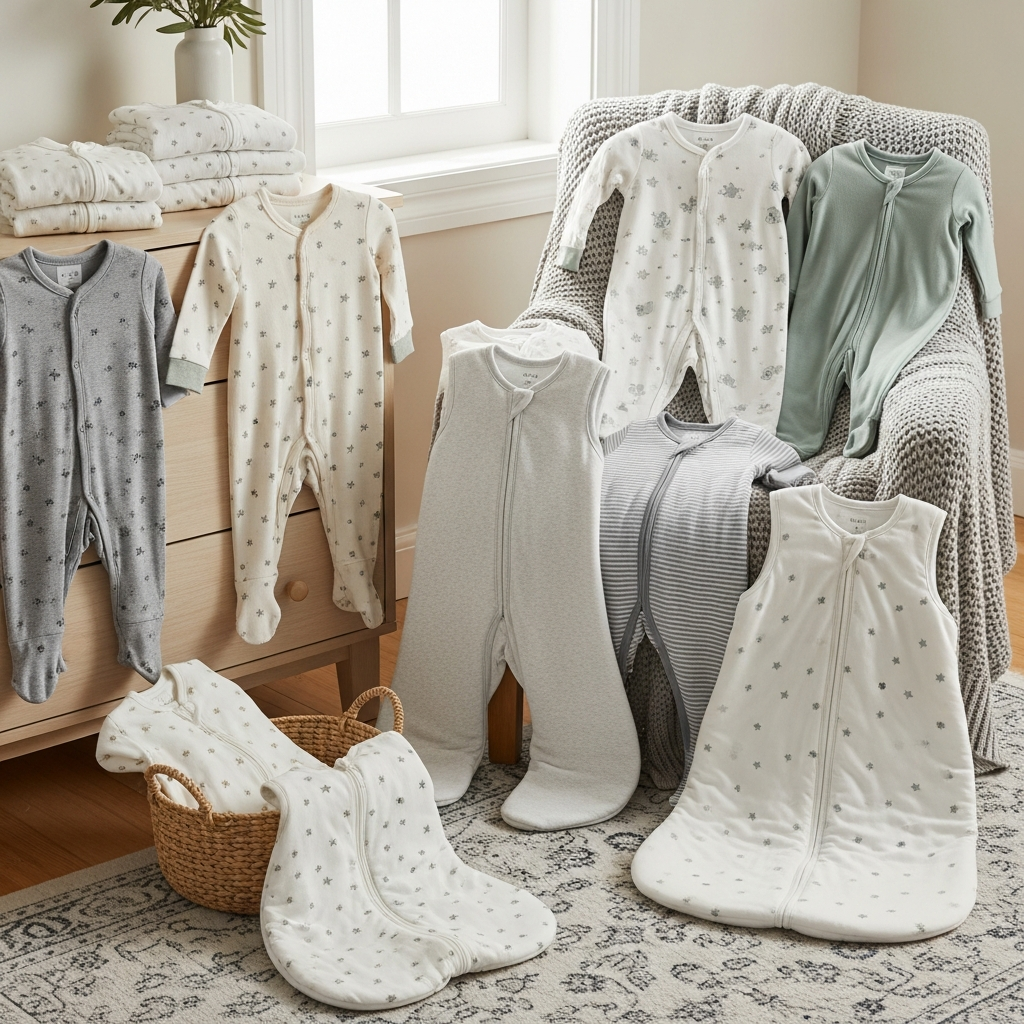
Summer Sleep Sack Guide (0.5-1.0 TOG)
Hot summer nights call for lightweight, breathable sleepwear. A 0.5 TOG sleep sack works well for rooms above 75F (24C), while 1.0 TOG suits air-conditioned spaces that stay around 70F (21C).
Consider these summer strategies:
- Mesh or muslin sleep sacks offer maximum breathability for very hot nights
- On extremely hot nights without AC, a simple diaper and onesie might be sufficient without any sleep sack
- If you use air conditioning, remember your nursery might actually need a higher TOG than expected
- Watch for sweaty hair and flushed cheeks as signs baby is too warm
Winter Sleep Sack Guide (2.5-3.5 TOG)
Cooler winter nights require more thermal protection. A 2.5 TOG sleep sack suits most winter conditions where rooms stay between 64-68F (18-20C). Reserve 3.5 TOG for very cold rooms or homes with unreliable heating.
Winter layering tips:
- Layer a long-sleeve bodysuit under the sleep sack for added warmth
- Never use loose blankets as an alternative, as they pose suffocation risks
- Account for nighttime temperature drops if your heating cycles off
- Consider footie pajamas under the sleep sack for the coldest conditions
Spring and Fall Transitional Sleepwear (1.0-1.5 TOG)
Transitional seasons present the biggest challenge because temperatures fluctuate dramatically from day to day. A 1.0 TOG handles most moderate temperatures around 68-72F (20-22C), while 1.5 TOG bridges the gap when nights turn slightly cooler.
Smart transitional strategies:
- Keep both 1.0 and 1.5 or 2.5 TOG options available during transition months
- Check weather forecasts to plan ahead for temperature changes
- Monitor your baby more closely during seasonal transitions
Year-Round Sleepwear Strategy
Building a practical baby sleepwear collection does not require dozens of options. At minimum, most families need one lightweight option (0.5-1.0 TOG) and one warmer option (2.5 TOG). A room thermometer helps you track nursery temperature and make informed decisions about which TOG to use each night.
When building your baby's sleepwear collection for year-round comfort, look for versatile options in different TOG ratings. Quality baby pajamas that layer well under sleep sacks give you flexibility without needing to purchase excessive quantities.
What to Wear Under a Sleep Sack: Layering Guide by Temperature
The layering principle is simple: sleep sack TOG plus clothing underneath equals total warmth. Understanding this relationship gives you more flexibility than relying on high-TOG sacks alone. A 1.0 TOG sleep sack with appropriate layers can cover a wider temperature range than purchasing multiple specialized options.
Layering Combinations for Every Room Temperature
| Room Temperature | Sleep Sack TOG | Recommended Layers |
|---|---|---|
| 77F+ (25C+) | 0.5 TOG | Diaper only |
| 73-77F (23-25C) | 0.5 TOG | Short-sleeve bodysuit |
| 69-73F (21-23C) | 1.0 TOG | Short-sleeve bodysuit |
| 65-69F (18-21C) | 1.0-2.5 TOG | Long-sleeve bodysuit |
| 61-65F (16-18C) | 2.5 TOG | Long-sleeve bodysuit with pants or footie pajamas |
| Below 61F (16C) | 2.5-3.5 TOG | Footie pajamas |
Common layering mistakes include overdressing baby "just to be safe" or automatically reaching for footie pajamas when a simple bodysuit would suffice. Remember that babies only need one more layer than you would find comfortable in the same environment.
Can Baby Wear Footie Pajamas With a Sleep Sack?
Yes, footie pajamas can be worn under sleep sacks, but reserve this combination for genuinely cold conditions below 65F (18C). In moderate temperatures, this combination risks overheating.
When deciding whether to add footie pajamas:
- Consider using a higher TOG sack with a lighter layer underneath as an alternative
- Check your baby's temperature more frequently when adding extra layers
- Watch for signs of overheating like sweaty hair or flushed skin
Soft, breathable gowns work beautifully as a base layer under sleep sacks for easy nighttime changes. Browse options like infant gowns that provide comfort without excessive bulk.
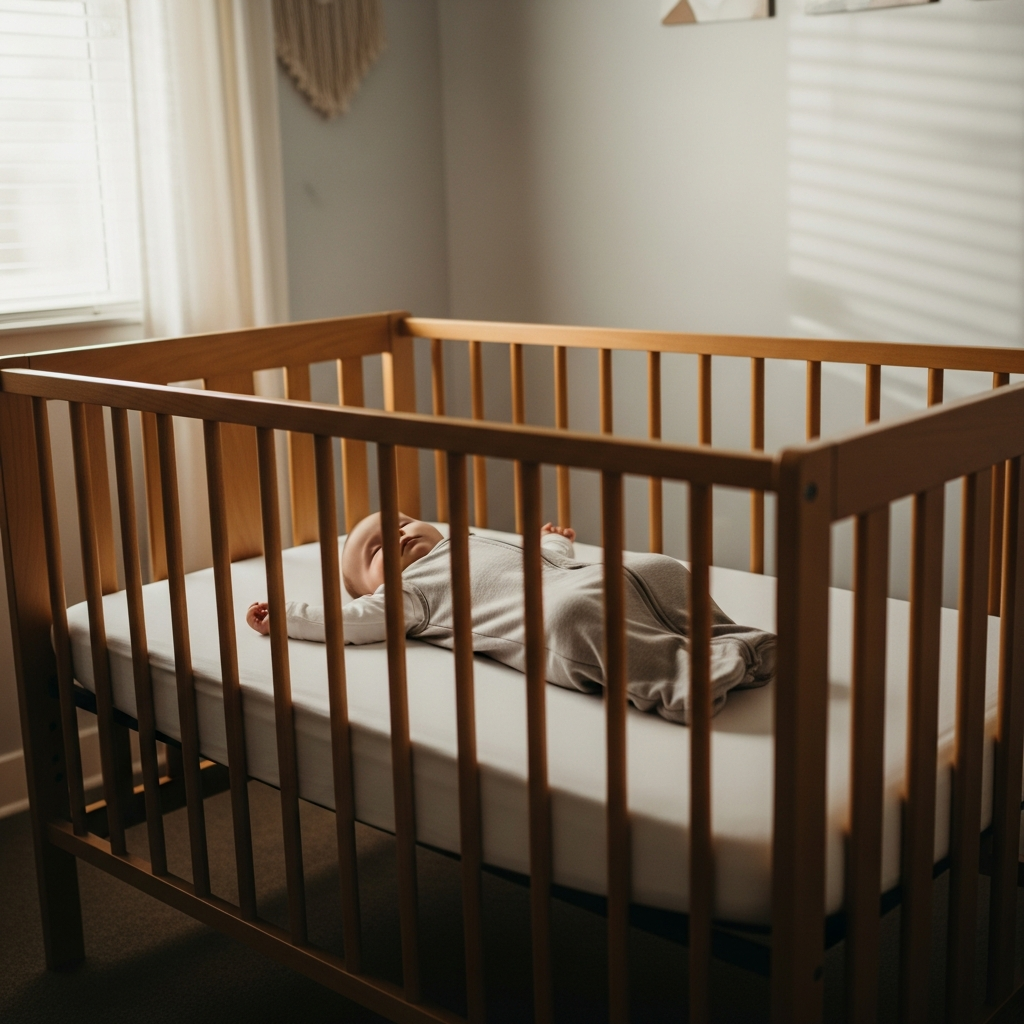
Safe Sleep Guidelines: What Every Parent Should Know About Baby Sleepwear
Understanding TOG ratings connects directly to safe sleep practices. The choices you make about baby sleepwear affect not just comfort but safety.
A 2019 analysis found that infant sleep sacks are as safe, if not safer, than other bedding when preventing SIDS. This research supports what pediatricians have recommended for years: wearable blankets eliminate the primary hazards associated with loose bedding.
Why Wearable Blankets Are Safer Than Loose Bedding
The AAP recommends against loose blankets until at least 12 months of age because they pose suffocation and strangulation risks. Babies can pull blankets over their faces or become tangled during sleep. Wearable blankets solve this problem elegantly.
Benefits of sleep sacks over blankets:
- Cannot be kicked off, pulled over face, or tangled
- Maintain consistent warmth throughout the night
- Allow arm freedom for self-rescue if baby rolls face-down
- Proper sizing prevents fabric from bunching near face
When transitioning from swaddle to sleep sack, plan for around 8 weeks of age or when your baby shows signs of rolling. Cleveland Clinic experts note that swaddling with pinned arms becomes dangerous around 8 weeks when babies begin rolling over. Sleeveless sleep sacks provide a safer alternative that does not restrict arm movement.
Recognizing Overheating Warning Signs During Sleep
Overheating is a recognized SIDS risk factor, making temperature awareness critical. Babies overheat easily because their thermoregulation systems remain immature for months after birth.
Warning signs to watch for:
- Sweating, especially on neck and chest
- Hot chest when touched
- Flushed or red skin
- Rapid breathing
- Restlessness or difficulty settling
If you notice these signs, remove a layer, lower the room temperature, or switch to a lower TOG sleep sack. Err on the side of slightly cooler rather than warmer.
Choosing the Best Sleep Sack Materials for Temperature Regulation
Material choice matters as much as TOG rating for overnight comfort. Different fabrics affect breathability and heat retention differently, so matching material to your baby's needs enhances the effectiveness of your TOG selection.
Bamboo vs. Cotton vs. Merino Wool Sleep Sacks
| Material | Breathability | Temperature Regulation | Best For |
|---|---|---|---|
| Bamboo Viscose | Excellent | Very Good (cooling) | Hot sleepers, sensitive skin, summer |
| Organic Cotton | Good | Moderate | Year-round general use |
| Merino Wool | Good | Excellent (warming) | Cold climates, winter, minimal layering |
| Cotton Muslin | Excellent | Moderate (cooling) | Hot weather, warm rooms |
| Fleece | Low | High (warming) | Very cold rooms only |
Bamboo viscose has gained popularity for good reason. It naturally regulates temperature, wicks moisture, and feels silky soft against sensitive baby skin. Cotton remains a reliable, affordable choice for everyday use. Merino wool excels in cold conditions because it regulates temperature in both directions, keeping baby warm without overheating.
Best Materials for Babies with Sensitive Skin or Eczema
If your baby has sensitive skin or eczema, material choice becomes even more important:
- Bamboo and merino wool are naturally hypoallergenic
- Look for OEKO-TEX certification, which indicates testing for harmful substances
- Avoid polyester blends for eczema-prone skin, as they may trap heat and irritate
- Choose organic materials to reduce chemical exposure
- Select options with smooth, flat seams that will not rub or irritate
Finding sleepwear made from gentle, breathable materials helps ensure baby stays comfortable all night. Explore options like quality baby clothes designed with softness and comfort as priorities.
When to Transition TOG Ratings: Seasonal Changes and Milestones
Knowing when to switch TOG ratings prevents uncomfortable nights and keeps your baby sleeping safely as conditions change.
Switching TOG Ratings as Temperatures Change
Rather than reacting to daily temperature fluctuations, watch for consistent patterns over 5-7 days before changing TOG ratings. This approach prevents constant switching that disrupts your routine.
Seasonal transition guide:
- Spring transition: Gradually move from 2.5 TOG to 1.0 TOG as temperatures warm consistently
- Fall transition: Reverse the process, moving from lighter to warmer options
- Keep both TOG options accessible during transition months for nights that differ from the pattern
- Monitor your baby's temperature more closely during these transition periods
From Swaddle to Sleep Sack: Making the Transition
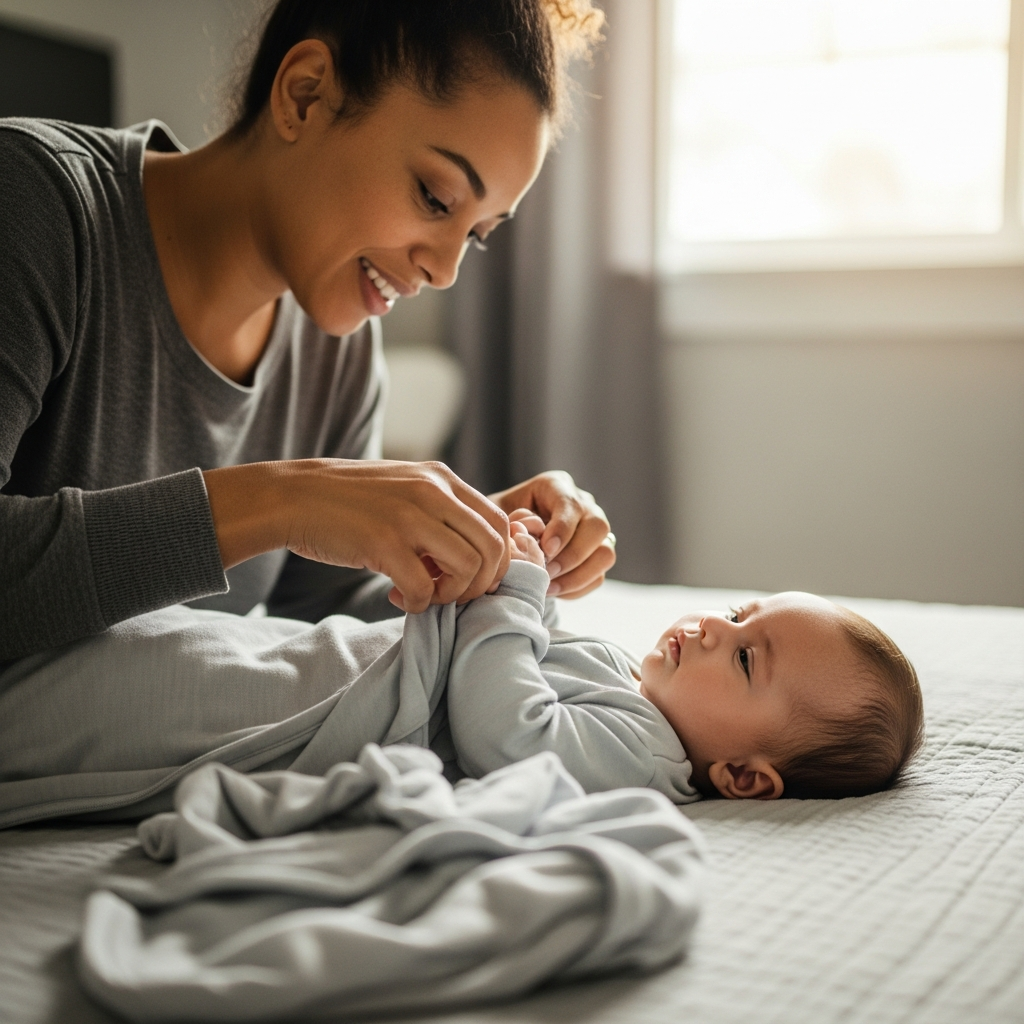
The swaddle to sleep sack transition typically happens around 8 weeks to 4 months, triggered by your baby's developmental milestones rather than a specific age.
Signs your baby is ready to transition:
- Breaking out of the swaddle regularly
- Showing attempts to roll over
- Startle reflex beginning to diminish
Transition tips:
- Start with arms-out swaddle options to ease the change
- Choose an appropriate TOG for your current room temperature
- Expect some adjustment period where baby may wake more initially
- Be patient and consistent as your baby adapts
Special Situations: Travel, Daycare, and Temperature Fluctuations
Real life does not always match ideal nursery conditions. Here is how to adapt your TOG choices for less controllable environments.
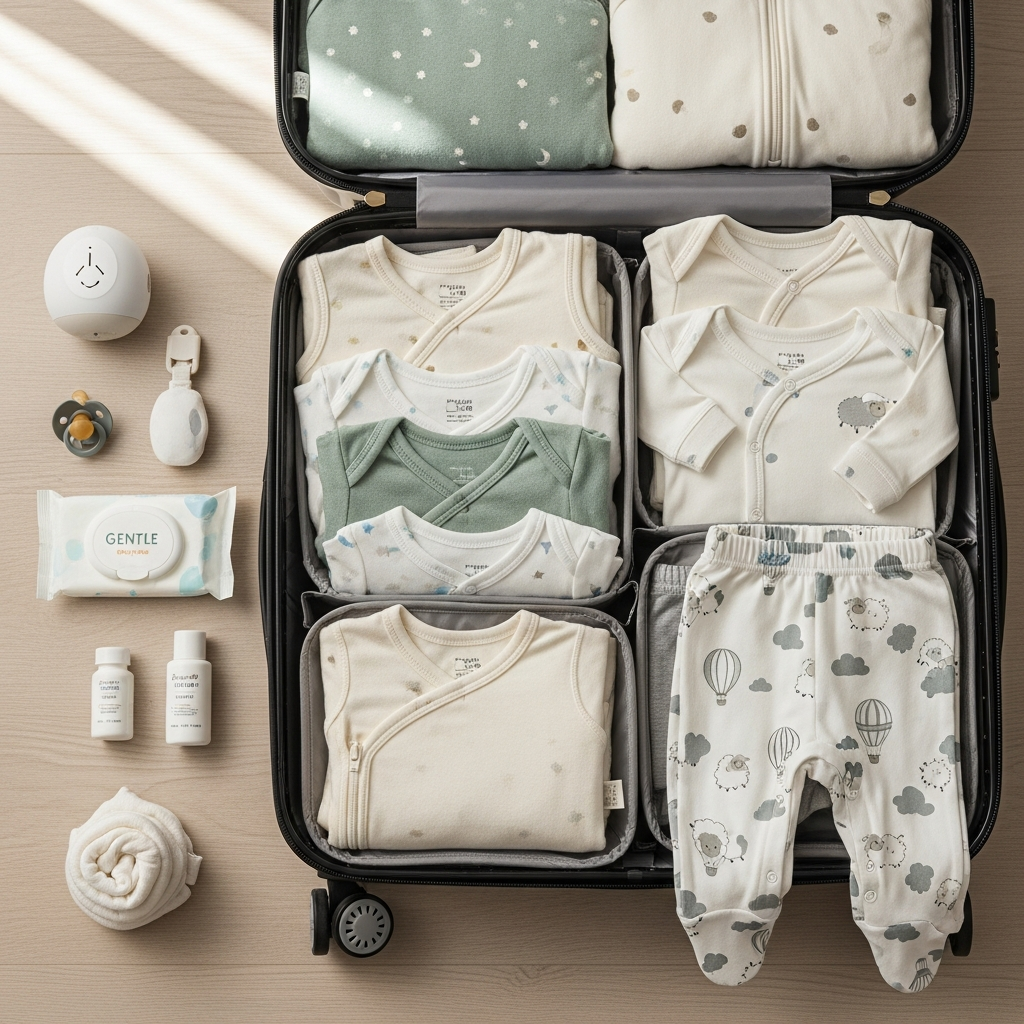
TOG Choices for Travel and Vacation
Unfamiliar sleeping environments make TOG selection trickier. Hotels and vacation rentals often have different temperature controls than your home.
Travel tips:
- Pack multiple TOG options rather than guessing what you will need
- Bring a portable room thermometer to assess unfamiliar spaces
- Start with lighter TOG options since it is easier to add layers than to cool down an overheated baby
- Choose travel-friendly, lightweight fabrics that pack easily
Coordinating Sleepwear for Daycare and Home
When your baby naps at daycare, consistency helps maintain good sleep habits.
Daycare coordination tips:
- Communicate with daycare about their temperature settings and sleep policies
- Try to maintain consistent TOG between locations when possible
- Label sleep sacks clearly with your baby's name
- Provide daycare with appropriate TOG options for their climate control setup
- Ask about their safe sleep policies to ensure alignment with AAP guidelines
FAQ: Common TOG Rating Questions from Parents
What TOG rating should my baby wear at night?
The right TOG depends on your nursery temperature. For rooms at 68-72F (20-22C), a 1.0 TOG sleep sack is ideal. Warmer rooms above 75F (24C) need 0.5 TOG, while cooler rooms below 65F (18C) require 2.5 TOG. Always check your baby's chest temperature to confirm they are comfortable.
What is the ideal room temperature for baby sleep?
Experts recommend keeping your baby's room between 68-72F (20-22C). This temperature range helps prevent overheating, which is a SIDS risk factor. Use a room thermometer to monitor temperature, especially as seasons change or if your home's heating and cooling varies.
Is 2.5 TOG too warm for my baby?
A 2.5 TOG sleep sack is appropriate for room temperatures between 61-68F (16-20C). It would be too warm for rooms above 72F (22C). If your baby shows signs of overheating like sweating, flushed skin, or restlessness, switch to a lower TOG or remove a layer underneath.
What should baby wear under a 1.0 TOG sleep sack?
Under a 1.0 TOG sleep sack, dress your baby based on room temperature. At 68-72F (20-22C), a long-sleeve bodysuit works well. For 72-75F (22-24C), use a short-sleeve bodysuit. Above 75F (24C), consider a lower TOG sack or just a diaper with the 1.0 TOG.
When should I change my baby's TOG rating?
Change TOG ratings when room temperatures shift consistently over several days, typically during seasonal transitions. Switch to lighter TOG (0.5-1.0) in late spring and to warmer TOG (2.5) in fall. Also adjust if you change your home's thermostat settings or notice signs your baby is too hot or cold.
Can a baby overheat in a sleep sack?
Yes, babies can overheat in a sleep sack if the TOG rating is too high for the room temperature or if they are overdressed underneath. Signs of overheating include sweating, hot chest, flushed cheeks, and rapid breathing. Always match TOG to room temperature and check baby regularly.
Do I need different TOG sleep sacks for each season?
Most families benefit from having two to three different TOG options. A 0.5-1.0 TOG for summer and warm rooms, a 2.5 TOG for winter and cooler rooms, and optionally a 1.5 TOG for transitional seasons. This ensures baby stays comfortable as temperatures change throughout the year.
How do I know if my baby is too cold at night?
Check your baby's chest or back of neck rather than hands or feet. If their chest feels cool to the touch or skin appears mottled, baby may be too cold. Consider adding a layer underneath or switching to a higher TOG sleep sack. Ensure room temperature is at least 65F (18C).

Creating Safe, Comfortable Sleep for Your Baby
Understanding TOG ratings transforms what once seemed confusing into a straightforward system for keeping your baby comfortable and safe at night. The key takeaways are simple: match TOG to room temperature, check your baby's chest rather than hands or feet, and watch for signs of overheating or being too cold.
Remember these core guidelines:
- 68-72F (20-22C) rooms work well with 1.0 TOG
- Warmer rooms above 75F (24C) need 0.5 TOG or less
- Cooler rooms below 65F (18C) call for 2.5 TOG
- Having 2-3 TOG options covers most families year-round
Trust your instincts as a parent. You know your baby better than any chart or guide. Use the TOG temperature guidelines as a starting point, then adjust based on your individual child's cues. Some babies run warmer than others, and that is perfectly normal.
At PatPat, we believe every parent deserves clear, practical guidance for the decisions that matter most. With the right sleepwear and a little knowledge about TOG ratings, you can create a safe, comfortable sleep environment that helps everyone in your family rest easier.




