


You are folding tiny onesies, arranging miniature socks, and wondering if you have everything your little one needs for those first precious hours. The hospital bag sits open on your bed, and questions start flooding in: How many outfits should I pack? What size? Does the hospital provide diapers?
You are not alone in this beautifully overwhelming moment. According to the CDC, approximately 3.6 million babies are born in the United States each year, and every parent preparing for those newborns faces the same packing dilemma. Whether this is your first baby or you are welcoming another little one, having a comprehensive hospital bag checklist transforms anxiety into confidence.
This guide from PatPat covers every essential for your newborn hospital bag, from must-have clothing to often-overlooked items, seasonal considerations, and what you can safely leave at home. By the time you finish reading, you will have a clear, actionable plan to ensure you are fully prepared for your baby's arrival.
When to Pack Your Newborn Hospital Bag (Ideal Timing by Trimester)
Timing matters more than most parents realize. Pack too early, and you might forget last-minute essentials. Wait too long, and you risk a frantic scramble if labor starts unexpectedly.
The sweet spot for packing your newborn hospital bag is between 35 and 37 weeks of pregnancy. This window gives you ample time to gather everything while remaining prepared for an early arrival. The American Pregnancy Association recommends having your bag ready by week 36, as approximately 10% of babies arrive before their due date.
For high-risk pregnancies, consider packing earlier, around 32-34 weeks. Your healthcare provider can offer personalized guidance based on your specific situation.
Consider a "staged packing" approach:
- First stage (35-36 weeks): Pack all essentials that will not be needed before hospital
- Second stage (37+ weeks): Add last-minute items like phone chargers and weather-appropriate outfits
- Keep accessible: Your ID, insurance cards, and birth plan in an outer pocket
Newborn Hospital Bag Must-Haves: The Essential Checklist
Now that you know when to pack, let us dive into exactly what to include. These items form the core of your newborn hospital bag essentials, the non-negotiables that every new parent needs.
Clothing Essentials for Your Baby's Hospital Stay
When selecting baby clothes for the hospital, less is more. However, strategic choices make all the difference. Pack 2-3 outfits in both newborn and 0-3 month sizes, since babies vary significantly in birth weight and length.
Focus on designs that simplify diaper changes and umbilical cord care. The umbilical stump needs air circulation and gentle handling during those first days, so avoid anything with a tight waistband that sits directly on the belly button area.
When selecting hospital outfits, look for pieces that combine practicality with sweetness. Zip-front sleepers make middle-of-the-night diaper changes effortless, while soft newborn gowns provide easy access for nurses checking baby's vitals.
Best clothing features for hospital stays:
- Zip-front closures (faster than snaps during sleepy nighttime changes)
- Envelope necklines that allow dressing over feet instead of head
- Gowns with elastic bottoms (quick diaper access, no leg wrestling)
- Soft, breathable cotton that has been prewashed
- Magnetic closures (if budget allows, these are truly effortless)
The Non-Negotiable: Car Seat for Hospital Discharge
Here is a fact that surprises some first-time parents: you cannot leave the hospital without an approved infant car seat. This is not a suggestion but a requirement at all U.S. hospitals. Hospital staff will verify that you have a car seat before discharging your newborn.
The National Highway Traffic Safety Administration (NHTSA) requires all infants to ride in rear-facing car seats. They also recommend having your installation inspected by a certified technician. You can find free inspection stations at local fire departments, police stations, or hospitals through the NHTSA website.
Car seat preparation checklist:
- Purchase and install car seat by 36 weeks
- Have installation professionally inspected
- Practice adjusting the harness and buckle
- Know where the instruction manual is stored
- Ensure the seat is rear-facing and properly angled
Comfort Items for Your Newborn
Beyond the basics, a few comfort items help your baby feel cozy and secure during those first hours of life outside the womb.
Essential comfort items to pack:
- 1-2 lightweight swaddles or receiving blankets: Hospitals provide these, but many parents prefer using their own
- Newborn hat: Optional since hospitals typically provide one, but nice to have a special keepsake
- Mittens: Prevent scratching from those sharp little fingernails
- Soft socks or booties: Keep tiny toes warm, especially in air-conditioned rooms
- A special blanket for going-home photos: Optional but makes for beautiful memories
What the Hospital Provides for Newborns (Save Space in Your Bag)
Here is a secret that experienced parents know: hospitals supply more than most people realize. Knowing what your birthing center provides helps you pack smarter and lighter.
Items most hospitals provide:
- Diapers and wipes for your entire stay
- Basic cotton shirts or hospital onesies
- Receiving blankets and swaddles
- Newborn hats (often the classic striped variety)
- Formula and feeding supplies (if needed)
- Pacifiers (just ask if desired)
- Umbilical cord care supplies and guidance
Birthing centers may offer less than traditional hospitals, while private facilities might provide premium amenities. During your hospital tour, ask specifically about newborn supplies. This prevents both overpacking and unpleasant surprises.
Choosing the Perfect Newborn Going Home Outfit
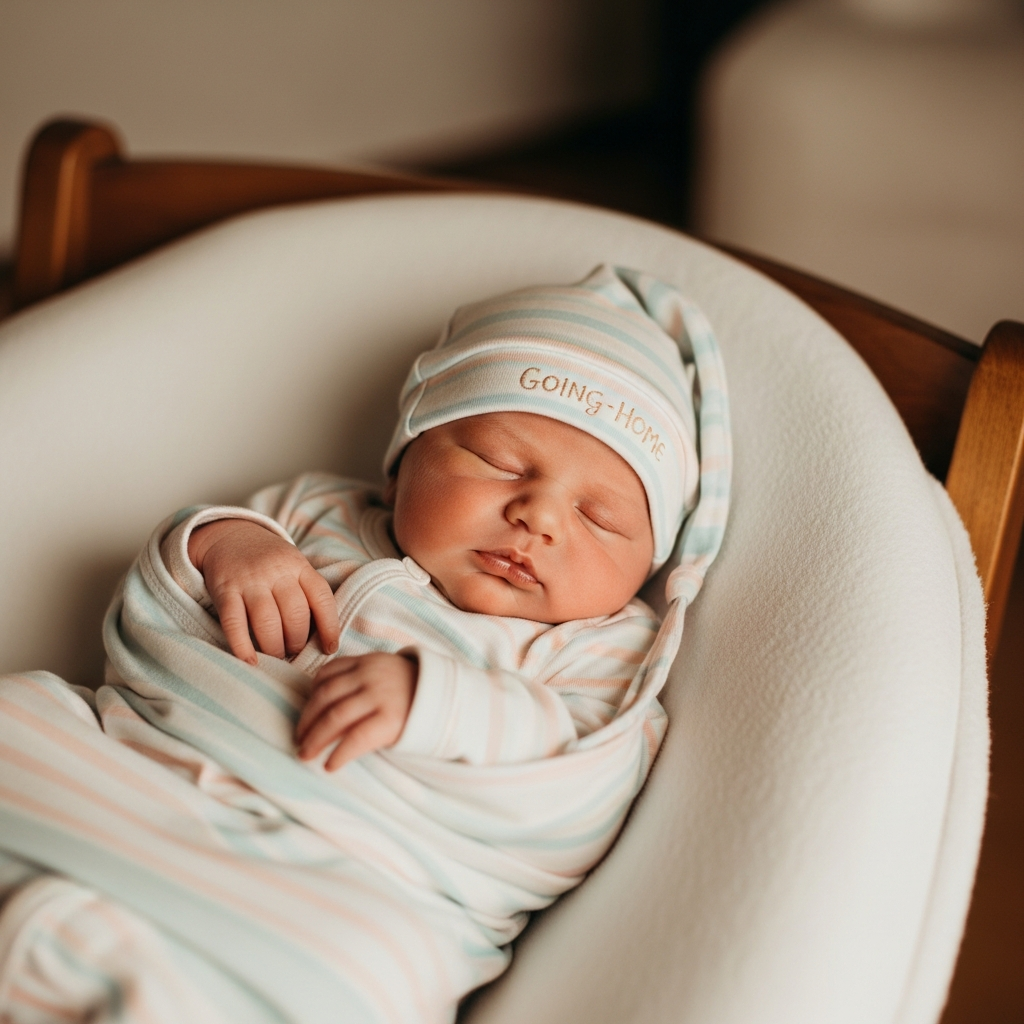
The going-home outfit holds special significance for most families. It is often the outfit captured in your first family photos and the one your baby wears for their very first car ride. That said, comfort should still take priority over aesthetics.
Key considerations for the perfect going-home outfit:
- Umbilical cord-friendly design (no tight waistbands)
- Easy diaper access for inevitable last-minute changes
- Soft, non-irritating fabrics (always prewash before packing)
- Minimal accessories that might be uncomfortable
- Pack two sizes: newborn AND 0-3 months
For this special moment, choose outfits that photograph beautifully while keeping baby comfortable. Many parents love coordinating family looks for those first photos together, creating a cohesive memory of your baby's homecoming.
Style options based on your preference:
| Style | Best Choice | Why It Works |
|---|---|---|
| Classic and Simple | Solid-colored sleeper or gown | Timeless photos, maximum comfort |
| Adorable and Sweet | Printed cotton onesie with coordinating hat | Personality without sacrificing practicality |
| Photo-Ready | Soft knit outfit with minimal embellishments | Polished look, no scratchy details |
| Matching Moment | Coordinating family outfits | Creates unified first family photos |
Seasonal Hospital Bag Guide: Dressing Baby for the Weather
Your due date season significantly impacts what to pack. A summer baby needs entirely different clothing than a winter arrival. Here is your season-by-season breakdown.
Winter Baby Hospital Bag Essentials (December-February)
Winter babies need extra warmth protection, especially for the journey from hospital to car. However, there is a critical safety consideration many parents miss.
Winter must-haves:
- Warm footie sleeper or fleece-lined outfit
- Soft knit hat that covers ears completely
- Warm blanket for the walk to the car
- Extra layers that can be added in the vehicle
Critical safety warning: Never place a baby in a puffy coat or snowsuit while in the car seat. The American Academy of Pediatrics warns that bulky clothing compresses in a crash, creating dangerous slack in the harness. Instead, dress baby in thin layers and place a blanket over the buckled harness.
Summer Baby Hospital Bag Packing Tips (June-August)
Summer babies face the opposite challenge: staying cool in hot weather while hospitals blast air conditioning.
Summer essentials:
- Lightweight, breathable cotton outfits
- Thin muslin swaddles (multi-purpose and packable)
- Light blanket for overly cold hospital rooms
- Sun shade for car seat during transport
- Skip heavy blankets entirely
Spring and Fall Baby Layering Strategies (March-May, September-November)
Transitional seasons require flexibility. Weather can shift dramatically from one day to the next.
Layering approach:
- Start with a onesie base layer
- Add cardigan or light sweater
- Include both pants and footie sleeper options
- Include a lightweight blanket
- Include a hat for cooler temperatures
- Check the weather forecast 24-48 hours before discharge
Hospital Bag Differences: C-Section vs. Vaginal Delivery
Your delivery type affects hospital stay length, which impacts packing needs. While the core newborn essentials remain the same, quantities differ.
| Item | Vaginal Delivery | C-Section |
|---|---|---|
| Baby Outfits | 2-3 | 3-4 |
| Swaddles | 1-2 | 2-3 |
| Typical Hospital Stay | 1-2 days | 2-4 days |
| Special Considerations | Standard preparation | Extra comfort items for extended stay |
C-section specific tips:
- Pack additional outfits to account for the longer recovery period
- Include extra comfort items since you will spend more time in the room
- Consider easy-access clothing designs that accommodate your limited mobility
- The extra days allow more bonding time, so having variety is nice
Vaginal delivery notes:
- Pack light, as you may leave within 24-48 hours
- Have the bag ready to grab quickly
- 2-3 outfits typically provide plenty of options
Common Hospital Bag Mistakes New Parents Make (And How to Avoid Them)
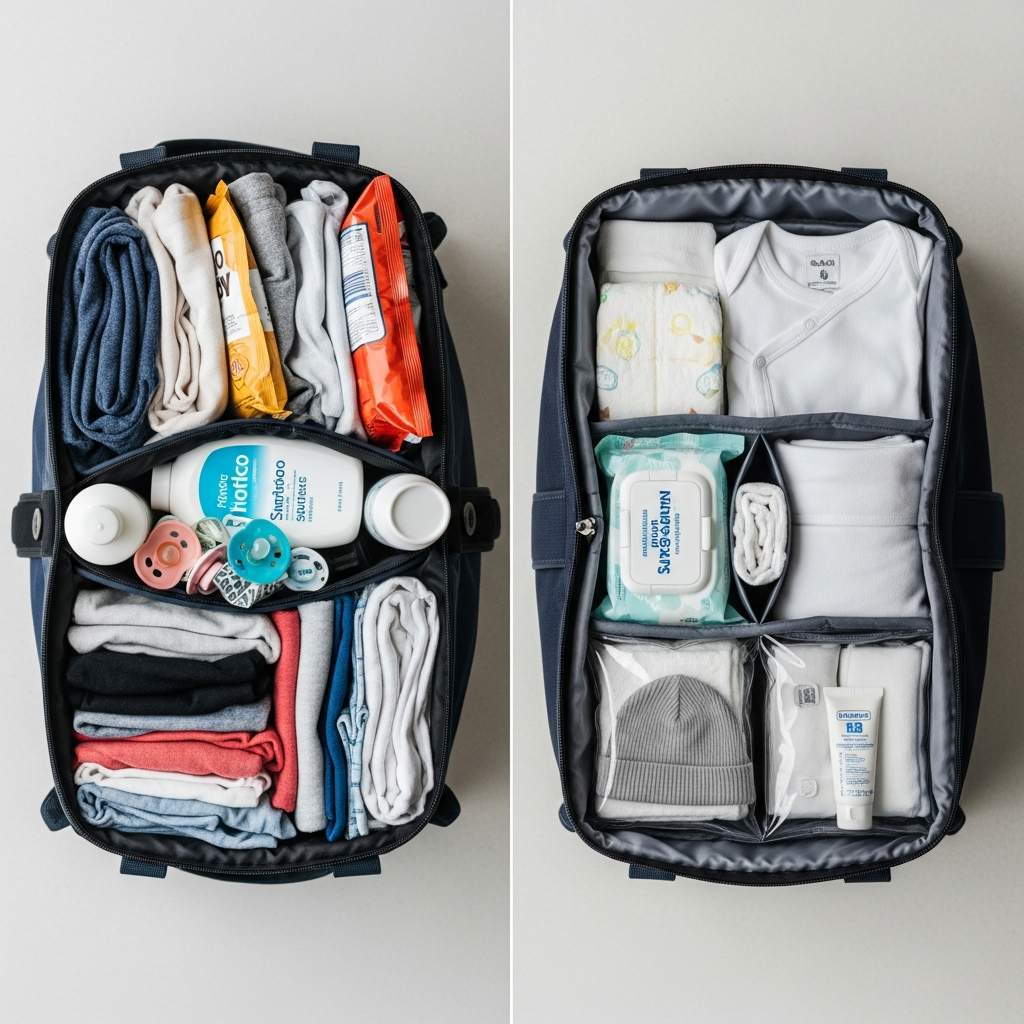
Learning from others' experiences saves stress. Here are the most common hospital bag mistakes and how to sidestep them.
Mistake #1: Overpacking Outfits
The reality is that babies spend most of their hospital time in hospital-provided shirts or swaddles. You primarily need the going-home outfit and one or two backups. Pack 2-3 outfits maximum, plus your special going-home look.
Mistake #2: Bringing Only One Size
Birth weight varies more than expectant parents realize. Some eight-pound babies do not fit newborn sizes at all, while smaller babies swim in 0-3 month clothing. Always pack both newborn and 0-3 month sizes.
Mistake #3: Forgetting to Prewash Clothes
New fabric can irritate sensitive newborn skin with residual chemicals, dyes, and sizing agents. Wash all baby items with gentle, fragrance-free detergent before packing.
Mistake #4: Ignoring Weather Forecasts
That adorable summer outfit will not work if an unexpected cold front arrives. Check the weather 24-48 hours before your due date and pack accordingly.
Mistake #5: Last-Minute Car Seat Installation
Installing a car seat while stressed and sleep-deprived leads to errors that compromise safety. Install and have the seat inspected by 36 weeks at the latest.
Mistake #6: Packing Items the Hospital Provides
Diapers, wipes, hats, and blankets take up valuable bag space when hospitals supply them freely. Call ahead to confirm and save room for items that truly matter.
Having trouble deciding between styles? Stock your nursery with a variety of practical newborn basics so you can grab the perfect option based on baby's size and the day's weather.
Partner and Support Person Hospital Bag Additions for Baby
Partners and support people play crucial roles during delivery and the hospital stay. Beyond their personal items, they should prepare specific things for baby's arrival.
General partner essentials:
- Extra phone charger (those first photos drain batteries fast)
- Snacks for long waits and middle-of-the-night hunger
- Camera or video equipment for capturing moments
- List of people to notify when baby arrives
- Baby book or keepsake items for hospital footprints
- Comfortable shoes for pacing hallways
- Change of clothes (baby spit-up happens to partners too)
Baby-specific responsibilities for partners:
- Know exactly where the car seat key is located
- Understand how to adjust the car seat harness
- Bring the outfit options the birthing parent selected
- Keep extra blankets in the car for unexpected weather changes
- Have the pediatrician's contact information accessible
Frequently Asked Questions About Newborn Hospital Bags
How many outfits should I pack for my newborn at the hospital?
Pack 2-3 outfits in both newborn and 0-3 month sizes. Babies stay in hospital-provided clothing or swaddles most of the time, so you primarily need a going-home outfit. Having two sizes ensures a proper fit regardless of birth weight.
What size baby clothes should I bring to the hospital?
Bring both newborn (up to 8 lbs) and 0-3 month sizes. Average newborns weigh 6-9 lbs, but some babies are born larger or smaller than expected. Having both sizes prevents the stress of an ill-fitting going-home outfit.
Do I need to bring diapers and wipes to the hospital for my baby?
No. Hospitals provide diapers, wipes, and basic care supplies during your stay. Many hospitals also send extras home with you. Call your birthing center to confirm their policy before packing.
What type of baby clothes are best for the hospital?
Choose outfits with easy access for diaper changes and umbilical cord care. Zip-front sleepers, gowns with elastic bottoms, and magnetic-closure onesies are ideal. Avoid complicated snaps, tight waistbands, or pull-over styles that require lifting baby's arms.
Should I wash baby clothes before packing the hospital bag?
Yes. Prewash all baby clothing with fragrance-free, gentle detergent. New fabrics may contain chemicals or dyes that can irritate a newborn's sensitive skin. Washing also softens fabric for added comfort.
What should my newborn wear home from the hospital in winter?
Dress baby in a warm footie sleeper or layered outfit with a hat that covers the ears. Wrap in a cozy blanket for the walk to the car. Avoid puffy snowsuits or coats in the car seat, as they compress in a crash and create unsafe harness gaps.
Can I leave the hospital without a car seat?
No. All U.S. hospitals require an approved, properly installed infant car seat before discharging a newborn. Staff may verify installation before releasing you. Have your car seat installed and inspected well before your due date.
When should I start packing my hospital bag for baby?
Begin packing at 35-37 weeks of pregnancy. For high-risk pregnancies, start earlier at 32-34 weeks. This timeline ensures you're prepared if baby arrives early while leaving time for last-minute additions like weather-appropriate clothing.
Your Complete Newborn Hospital Bag Checklist
Quick Reference Checklist
Clothing (pack both newborn and 0-3 month sizes):
- 2-3 outfits with easy-access closures
- 1 special going-home outfit
- 2-3 pairs of socks or booties
- 1-2 hats
- Mittens to prevent scratching
Comfort Items:
- 1-2 swaddles or receiving blankets
- Weather-appropriate blanket for car ride
Safety Essentials:
- Infant car seat (installed and inspected)
Skip These (hospital provides):
- Diapers and wipes
- Basic hospital shirts
- Formula and feeding supplies
- Umbilical cord care items
Final Thoughts: Confidence Over Perfection
Here is the truth every new parent needs to hear: you do not need a perfect hospital bag. You need the essentials, a calm mindset, and trust that hospitals are equipped to help you through those first days.
Your newborn will not remember whether their going-home outfit was Instagram-perfect or whether you packed three swaddles instead of two. What matters is that you feel prepared enough to focus on what truly counts: bonding with your new baby and beginning this incredible journey together.
Pack your bag with confidence, give yourself grace for any forgotten items, and remember that this moment, the one where you are thoughtfully preparing for your baby's arrival, is already proof that you are going to be a wonderful parent.
Welcome to parenthood. You have got this.




