


Are you losing sleep over your baby's sleep? You are not alone. As a new parent, few things feel as urgent and overwhelming as keeping your little one safe during those quiet nighttime hours. The good news is that creating the best sleep environment for your newborn does not require expensive gadgets or complicated setups. It requires knowledge, consistency, and attention to a few critical details.
Here is a fact that might surprise you: approximately 3,500 infants die from sleep-related deaths each year in the United States, including sudden infant death syndrome (SIDS), accidental suffocation, and strangulation. The reassuring news? Following evidence-based safe sleep practices can dramatically reduce these risks. At PatPat, we believe every parent deserves access to clear, trustworthy guidance on protecting their baby during sleep.
This comprehensive guide covers everything from room temperature and sleep surfaces to choosing safe sleepwear and troubleshooting common challenges. Whether you are preparing for your first baby or refreshing your knowledge, you will walk away with actionable steps backed by the American Academy of Pediatrics (AAP) and leading medical organizations.
Understanding Safe Sleep for Babies: What Every Parent Must Know
Safe sleep is not just a buzzword. It is a set of proven practices that can protect your baby's life. The foundation is simple and easy to remember: the ABCs of safe sleep.
- A - Alone: Baby sleeps alone on their own surface, without pillows, blankets, or stuffed animals
- B - Back: Always place baby on their back for every sleep, including naps
- C - Crib: Use a safety-approved crib, bassinet, or play yard with a firm, flat mattress
Why does this matter so much? Research shows that following safe sleep practices can reduce SIDS risk by up to 50%. The Back to Sleep campaign launched in the 1990s led to a dramatic 53% reduction in SIDS rates within just one decade.
These practices apply to every sleep, day or night. It is tempting to relax the rules during a quick nap, but consistency is key. Your baby's brain and respiratory system are still developing, making them vulnerable during all sleep periods.
Choosing the Right Sleep Surface: Bassinet vs Crib for Newborns
One of the first decisions new parents face is where their baby will sleep. Both bassinets and cribs are safe choices when they meet current safety standards. The best option depends on your space, budget, and preferences.
| Feature | Bassinet | Crib |
|---|---|---|
| Portability | Highly portable, easy to move between rooms | Stationary, stays in one location |
| Size | Compact, ideal for small spaces | Larger footprint, requires dedicated space |
| Age Range | Birth to 4-6 months (weight limits vary) | Birth through toddlerhood |
| Room Sharing | Perfect for bedside placement | Can work but takes more space |
| Long-term Value | Short-term use only | Years of use |
What Makes a Sleep Surface Safe for Newborns
Regardless of whether you choose a bassinet or crib, the safety requirements are identical:
- CPSC Certified: Only use products that meet Consumer Product Safety Commission standards
- Firm Mattress: The mattress should have no more than 1 inch of give when pressed
- Fitted Sheet Only: Use a tight-fitting sheet designed for that specific mattress
- Bare Surface: No blankets, pillows, bumpers, positioners, or stuffed animals
Can your baby sleep in a crib from day one? Absolutely. There is no need to start with a bassinet if you prefer going straight to a crib. The key is proper setup, not the specific product.
Pack n Play and Portable Cribs: Are They Safe for Daily Sleep?
Yes, play yards (like Pack n Plays) are safe for daily sleep when they meet CPSC standards. The critical rule is to use only the mattress pad that comes with the product. Adding extra padding creates dangerous soft spots where a baby's face could sink in.
What Temperature Should Baby Room Be: Creating Ideal Nursery Climate
Getting the room temperature right is more important than many parents realize. Overheating is a recognized risk factor for SIDS, and babies cannot regulate their body temperature as effectively as adults.
The ideal temperature range for baby sleep is 68 to 72 degrees Fahrenheit (20 to 22 degrees Celsius). This range provides comfort without the risks associated with overheating.

Signs Your Baby Is Too Hot or Too Cold While Sleeping
Checking your baby's hands and feet is not reliable since these extremities often feel cool even when baby is perfectly comfortable. Instead, feel the back of their neck or chest.
Signs of overheating:
- Sweaty or damp hair and neck
- Flushed or red cheeks
- Heat rash on skin
- Rapid breathing
- Restless, unsettled sleep
Signs baby is too cold:
- Cool chest or back (not just hands and feet)
- Mottled or blotchy skin
- Fussiness and difficulty settling
A helpful guideline is the "one more layer" rule: dress your baby in one more layer than you would need to be comfortable in that room.
Seasonal Temperature Management: Summer vs Winter Nursery Settings
Summer strategies:
- Use a fan to circulate air. Research published in JAMA Pediatrics found that fan use during sleep was associated with a 72% reduction in SIDS risk
- Choose lightweight sleepwear (0.5 TOG rating)
- Use air conditioning if available to maintain safe temperatures
Winter strategies:
- Layer appropriately with sleep sacks instead of blankets
- Keep space heaters away from the sleep area
- Never use electric blankets or heating pads in the crib
How to Dress Baby for Sleep: Choosing Safe and Comfortable Sleepwear
What your baby wears to bed directly impacts their comfort and safety. The goal is keeping them warm enough without any risk of overheating or loose fabric covering their face.
General guidelines for dressing baby for sleep:
- One layer more than you would wear to be comfortable
- Snug-fitting sleepwear without loose parts
- No strings, ribbons, or ties that pose strangulation risk
- Breathable, natural fabrics that regulate temperature
When selecting sleepwear, prioritize breathable, temperature-regulating fabrics that help prevent overheating. Bamboo baby clothes offer exceptional moisture-wicking properties and are naturally hypoallergenic, making them ideal for sensitive newborn skin. For cooler nights, organic cotton clothes provide gentle warmth without harsh chemicals that could irritate your baby.
Swaddle vs Sleep Sack: Which Is Better for Your Baby's Stage
Swaddling (0-2 months):
- Mimics the snug feeling of the womb
- Can help reduce startle reflex
- Must stop immediately when baby shows signs of rolling
- Arms should be secured, hips loose to allow natural movement
Sleep sacks (birth through toddlerhood):
- Safe alternative to loose blankets
- Allows free arm movement from the start
- Available in various warmth levels (TOG ratings)
- Can be used long after swaddling ends
The transition period typically happens around 8 weeks or whenever your baby can roll. Arms-out swaddles can help ease this transition.
Understanding TOG Ratings: A Simple Guide to Baby Sleep Clothing
TOG stands for Thermal Overall Grade and measures how warm a fabric keeps your baby. Higher TOG means more warmth.
| Room Temperature | Recommended TOG | What to Wear |
|---|---|---|
| Above 75°F (24°C) | 0.5 TOG or less | Diaper only or light cotton onesie |
| 72-75°F (22-24°C) | 0.5-1.0 TOG | Light sleep sack over onesie |
| 68-72°F (20-22°C) | 1.0 TOG | Medium sleep sack over onesie |
| 64-68°F (18-20°C) | 1.5-2.5 TOG | Warm sleep sack over long-sleeve onesie |
| Below 64°F (18°C) | 2.5+ TOG | Warm sleep sack with layers underneath |
Room Sharing with Baby: AAP Recommendations and Practical Setup Tips
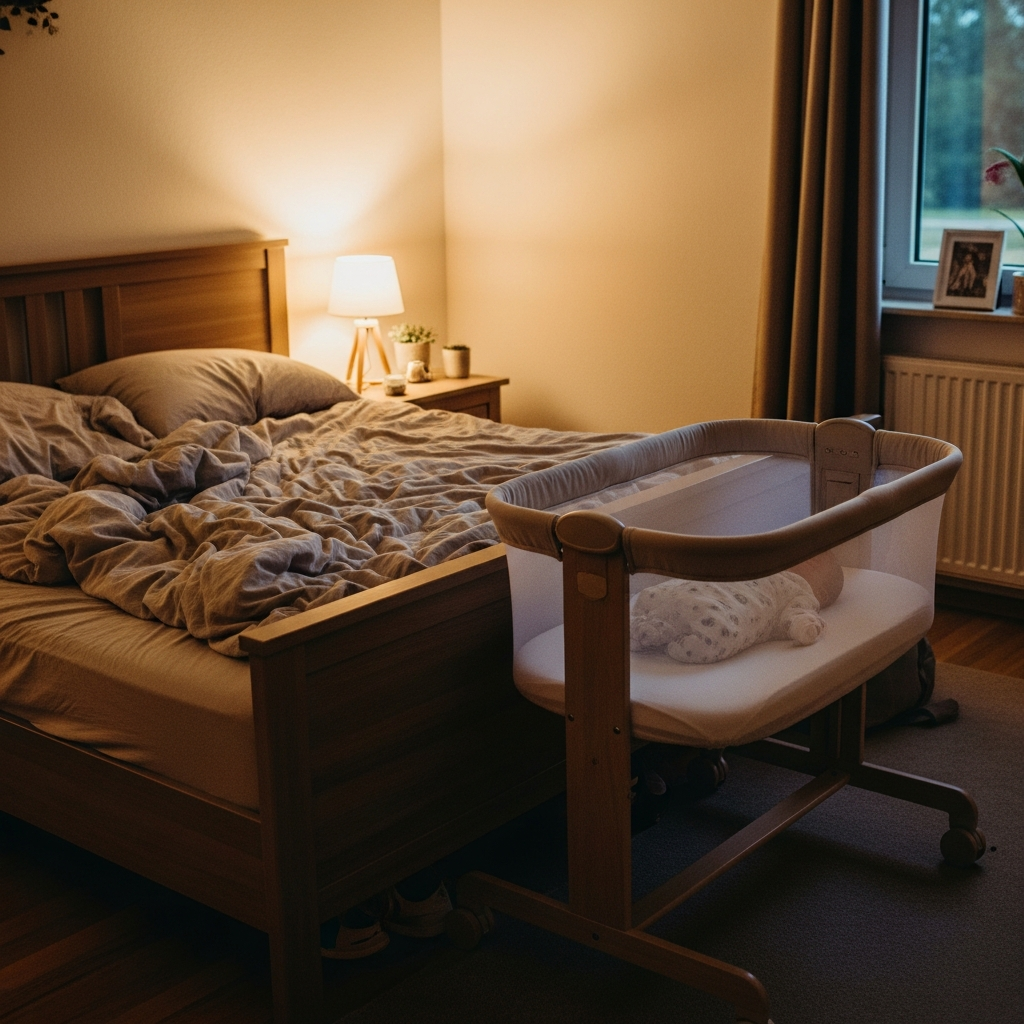
Room sharing means having your baby sleep in your bedroom on a separate sleep surface. It is not the same as bed sharing, where baby sleeps in your bed with you.
The AAP recommends room sharing for at least the first 6 months, ideally up to 12 months. This recommendation is backed by compelling evidence: room sharing can reduce SIDS risk by up to 50%.
Why is room sharing protective? When baby sleeps near you, they tend to mimic your breathing patterns, which helps maintain regular heart and respiratory rates. The sounds of your movement and breathing also help keep baby in lighter, safer sleep stages. SIDS is more common during deeper sleep stages.
Safe Room Sharing Setup: Where to Place Baby's Sleep Space
- Within arm's reach: Close enough for easy nighttime feeding and monitoring
- Separate surface: Never in your bed, always on their own bassinet or crib
- Away from hazards: Keep away from windows, cords, curtains, and blinds
- Clear path: Ensure you can safely reach baby during nighttime check-ins
- Adult bedding secured: Your blankets and pillows should never be able to reach baby's sleep space
When and How to Transition Baby to Their Own Room
There is no magic age for moving baby to their own room. Signs that your family might be ready include:
- Baby is sleeping longer stretches (6+ hours)
- Baby has outgrown the bassinet
- Parents and baby are disturbing each other's sleep
- Baby is at least 6 months old (per AAP minimum recommendation)
Make the transition gradual. Start with naps in the new room, then move to nighttime sleep. A video baby monitor can provide peace of mind during this change.
Optimizing Sound and Light for Newborn Sleep
The sensory environment plays a significant role in how well your newborn sleeps. Understanding how light and sound affect infant sleep can help you create conditions that support healthy development.
Darkness and sleep: Complete or near-complete darkness supports melatonin production and helps establish circadian rhythms. For nighttime feeds, use a dim red or amber nightlight that allows you to see without fully waking baby.
Day versus night: During daytime naps, some light exposure is actually beneficial. It helps baby distinguish day from night and reduces the day-night confusion common in newborns.
White Noise Safety: How Loud Is Too Loud for Baby?
White noise can be a helpful sleep tool when used correctly. It masks household sounds and mimics the constant whooshing sounds baby heard in the womb.
Safety guidelines for white noise:
- Volume: Keep it under 50 decibels (about as loud as a quiet dishwasher)
- Distance: Place the machine at least 7 feet from baby's head
- Type: Use continuous, steady sounds rather than intermittent or alarming noises
- Duration: Can run throughout sleep periods
Will baby become dependent on white noise? Most babies transition away from white noise naturally as they develop. If you are concerned, you can gradually reduce volume over time.
Creating Day-Night Sleep Distinctions for Better Newborn Sleep Patterns
Newborns are not born knowing the difference between day and night. You can help them learn by creating distinct environments:
Daytime:
- Allow natural light exposure
- Maintain normal household noise levels
- Engage in active, stimulating play during wake windows
Nighttime:
- Keep the room dark (use blackout curtains if needed)
- Minimize stimulation during feeds and diaper changes
- Use soft, calm voices
- Avoid eye contact during night wakings (it stimulates alertness)
Baby Won't Sleep in Crib: Troubleshooting Common Sleep Challenges
If your newborn only wants to sleep in your arms, you are experiencing one of the most common challenges of early parenthood. This preference is completely normal, but it does require safe solutions.
Why Your Newborn Wants to Sleep on You (And What to Do About It)
During the "fourth trimester" (the first three months), your baby is adjusting to life outside the womb. After nine months of constant motion, warmth, and closeness, a flat, still crib can feel foreign and unsettling.
Contact sleeping (having baby sleep on you while supervised) is biologically normal but must be done safely:
- Never sleep with baby on a couch or armchair. This is extremely dangerous, with risk increasing 67 times compared to a safe sleep surface.
- Contact naps should only happen when you are fully awake and alert
- If you feel drowsy, transfer baby to their safe sleep space immediately
Step-by-Step Guide to Helping Baby Accept the Crib or Bassinet
- Create positive associations: Place baby in the crib during brief awake periods so they become familiar with the space without the pressure of sleep
- Perfect the environment: Check temperature (68-72°F), ensure darkness, and consider white noise
- Time the transfer: Wait about 20 minutes after baby falls asleep to ensure they have reached deeper sleep before moving them
- Warm the surface: Use a heating pad to warm the sheet (remove before placing baby), so they are not startled by cold fabric
- Lower slowly: Keep contact with baby as long as possible while lowering them, maintaining gentle pressure on their chest for a moment before withdrawing your hands
- Be consistent: Every time you practice, you are building a new habit
Sometimes the right sleepwear makes all the difference in helping your baby settle. Soft, cozy baby clothes that feel gentle against skin can help your little one feel secure even when not in your arms. Look for snug-fitting sleep outfits without loose parts that might disturb their rest.
Safe Sleep Checklist and Common Mistakes to Avoid
Use this comprehensive checklist every time you put your baby down to sleep. Print it and post it in the nursery for quick reference.
The Complete Safe Sleep Checklist for New Parents
- Baby is placed on their back
- Sleep surface is firm and flat (CPSC-approved crib, bassinet, or play yard)
- Only a fitted sheet is in the sleep space (no blankets, pillows, bumpers, or toys)
- Room temperature is between 68-72°F (20-22°C)
- Baby is dressed appropriately for the room temperature (sleep sack instead of blankets)
- No loose clothing, strings, or accessories on baby
- Crib is away from windows, cords, and curtains
- Baby is room sharing (for first 6-12 months)
- Pacifier is offered (after breastfeeding is established). Research shows pacifier use during sleep can significantly reduce SIDS risk
- Environment is smoke-free
- Caregivers are sober and alert
Products to Avoid: Sleep Safety Marketing vs Reality
Unfortunately, not every product marketed as "safe sleep" actually meets safety standards. Be cautious of:
- Inclined sleepers: Products like the Rock n Play have been recalled due to infant deaths. Any incline greater than 10 degrees is not safe for sleep
- Weighted sleep sacks or blankets: Not recommended by the AAP
- Crib bumpers: Pose suffocation and strangulation risks, banned in some states
- Sleep positioners and wedges: The FDA has warned against these products
- "Breathable" mattresses: No evidence they prevent SIDS, and babies should always sleep on their backs regardless
- Monitors claiming to prevent SIDS: No product can guarantee SIDS prevention
The safest approach is the simplest: a bare crib with only a fitted sheet, following the ABCs of safe sleep.
Your Safe Sleep Questions Answered
What temperature should a baby's room be for sleeping?
The ideal room temperature for baby sleep is 68-72 degrees Fahrenheit (20-22 degrees Celsius). Check your baby's comfort by feeling their neck or chest, which should be warm but not sweaty. Hands and feet may feel cool, and that is normal. Overheating is a risk factor for SIDS, so err on the side of slightly cooler rather than warmer.
Why can't newborns sleep with blankets?
Loose blankets pose serious suffocation and strangulation risks for babies under 12 months. Babies lack the motor skills and strength to push a blanket away from their face if it covers their nose and mouth. Instead, use a wearable blanket (sleep sack) to keep your baby warm safely. The AAP recommends a completely bare sleep surface with only a fitted sheet.
Is it better for a newborn to sleep in a bassinet or crib?
Both bassinets and cribs are equally safe when they are CPSC-certified and set up properly with a firm, flat mattress and fitted sheet only. Bassinets offer convenience for room sharing and smaller spaces, while cribs last longer as your baby grows. Choose based on your space and preferences. Safe sleep practices matter more than the specific product you choose.
How do I know if my baby is too hot while sleeping?
Check your baby's neck, chest, or back rather than their hands or feet. Signs of overheating include sweating, damp hair, flushed cheeks, heat rash, rapid breathing, and restlessness. If your baby feels hot or shows these signs, remove a layer of clothing or lower the room temperature. Remember the "one more layer" rule: baby needs only one more layer than you would wear to be comfortable.
When should I stop swaddling my newborn?
Stop swaddling immediately when your baby shows any signs of rolling, which typically happens around 2 months of age. You should also stop if baby can break free from the swaddle. Transition to a sleep sack with arms free, which is safe to use from birth through toddlerhood. Arms-out transition swaddles can help make this change easier for babies who love being swaddled.
How long should a baby sleep in the parents' room?
The AAP recommends room sharing (not bed sharing) for at least the first 6 months, and ideally up to 12 months. Room sharing can reduce SIDS risk by as much as 50%. Keep baby on a separate, safe sleep surface within arm's reach of your bed. The rates of sleep-related deaths are highest in the first 6 months, making room sharing especially important during this vulnerable period.
Why won't my newborn sleep in the crib?
Newborns often resist cribs because they are adjusting to life outside the womb. After nine months of constant warmth and closeness, a flat, still surface can feel unfamiliar. Try warming the sleep surface before placing baby down, swaddling (if under 2 months), using white noise, and waiting about 20 minutes after baby falls asleep before transferring. This is a normal phase that usually improves by 3-4 months.
Do pacifiers reduce the risk of SIDS?
Yes, research shows that pacifier use during sleep can significantly reduce SIDS risk. The AAP recommends offering a pacifier at nap time and bedtime throughout the first year. If you are breastfeeding, wait until nursing is well established, usually around 3-4 weeks, before introducing a pacifier. If baby refuses the pacifier, do not force it. If it falls out after baby is asleep, you do not need to replace it.
Creating Your Baby's Safe Sleep Sanctuary
Creating the best sleep environment for your newborn comes down to a few essential principles: a firm, bare sleep surface; the right room temperature; appropriate sleepwear; and room sharing without bed sharing. These evidence-based practices have been proven to significantly reduce the risk of sleep-related infant deaths.
Remember, you do not need expensive gadgets or complicated systems. The safest sleep setup is also the simplest. Trust the research, follow the ABCs of safe sleep, and give yourself grace as you navigate those exhausting early weeks.
At PatPat, we understand how overwhelming new parenthood can feel. Our mission is to support families with quality, safe, and comfortable clothing that makes daily life a little easier. From breathable bamboo sleepwear to cozy organic cotton options, we are here to help your baby sleep comfortably and safely.
Every sleep is an opportunity to practice these safe sleep habits. Before long, they will become second nature, and you will have the peace of mind that comes from knowing you are doing everything possible to protect your little one.
Have questions about safe sleep or need help choosing the right sleepwear for your baby? Explore our baby clothes collection for comfortable, safety-conscious options designed with your newborn in mind.





