


You are standing in the baby clothes aisle, holding up two pairs of pajamas. One looks so tight you wonder how your little one will even move. The other feels soft and roomy -- much more comfortable, right? But then you flip the tag and see a confusing yellow warning that reads "not flame resistant." Now you are second-guessing everything.
You are not alone. The question of snug fit vs loose pajamas for baby safety trips up thousands of parents every year, and the conflicting advice online only adds to the confusion. And here is the thing most people miss: this is not a matter of personal preference. It is a question of federally regulated safety standards backed by decades of fire safety research. With multiple baby pajama brands recalled for flammability violations in recent years -- including pajamas sold on major platforms like Amazon and SHEIN -- understanding baby pajama safety has never been more urgent.
In this guide from PatPat, we will walk you through the fire science behind pajama fit, break down CPSC baby sleepwear regulations, explain what those confusing labels actually mean, and give you a simple test to check whether your baby's pajamas fit correctly. We will also compare the safest fabrics for sleepwear, explain the health concerns around flame retardant chemicals, and provide an age-by-age roadmap for when snug-fit rules apply. Whether you are buying your first set of safe baby sleepwear or shopping for a growing toddler, you will leave here knowing exactly what to look for.
The Science Behind Snug-Fit Pajamas: How the Chimney Effect Puts Babies at Risk
What Is the Chimney Effect in Baby Clothing?
Should baby pajamas be tight or loose? To answer that, you need to understand a concept called the chimney effect. When fabric hangs loosely away from the body, the air gap between skin and cloth acts as a flue. Just like a chimney draws oxygen upward to feed a fire, that air column between loose pajamas and your baby's body funnels heat upward and pulls in fresh oxygen from below, accelerating flame spread along the garment.
Think of it this way: if you blow gently on a smoldering ember, it glows hotter. That is what happens when air circulates freely inside loose pajamas -- the gap acts as a bellows, feeding oxygen to any flame source. Now imagine pressing a tight cover over that same ember. The fire smothers. That is exactly how snug-fit pajamas work. Research into loose-fitting garment fires confirms that the chimney effect can cause flame spread rates several times faster than in garments that fit close to the body.
How Snug-Fit Construction Eliminates the Fire Danger
Snug fit baby pajamas press fabric close to the skin, eliminating the air column that feeds flames. Without that oxygen channel, fabric self-smothers rather than sustaining fire spread. This is why the CPSC allows snug-fit garments to skip flame-retardant chemical treatment entirely -- the construction itself provides the safety mechanism.
And "snug fit" is not just a marketing buzzword. It is a federally defined dimensional standard with exact maximum measurements at the chest, waist, seat, upper arm, thigh, wrist, and ankle. Every measurement must fall within CPSC-specified maximums for the garment to legally qualify as snug-fit sleepwear.
From Chemical Flame Retardants to Snug-Fit Design: A Brief History
In 1971, the Flammable Fabrics Act required all children's sleepwear to pass flammability testing, which led to widespread chemical flame retardant treatment on virtually every pair of kids' pajamas sold in the United States. But by the 1990s, growing health concerns about these chemicals -- particularly their effects on children's developing endocrine systems -- prompted a major policy shift. In 1996, the CPSC introduced the snug-fit exemption: garments meeting strict dimensional requirements could skip chemical treatment entirely. This was a landmark change. Today, the vast majority of baby pajamas sold by reputable brands use snug-fit construction rather than chemical treatment, giving parents a safer path on both the fire safety and chemical exposure fronts.
CPSC Sleepwear Regulations and Recent Pajama Recalls Every Parent Should Know
The Two Legal Paths to Compliance
Under 16 CFR 1615 and 16 CFR 1616, children's sleepwear (sizes 9 months through 14 years) must meet one of two standards:
| Compliance Path | How It Works | Chemical Treatment? | Label |
|---|---|---|---|
| Flame-Resistant | Fabric self-extinguishes within defined time and char length | Usually yes | "Flame Resistant" |
| Snug-Fit | Garment meets strict dimensional maximums at every measurement point | No | "Wear Snug-Fitting, Not Flame Resistant" |
| Not Sleepwear | Does not meet either path -- classified as playwear | Varies | "Not Intended as Sleepwear" |
Both compliant paths result in legally safe sleepwear. The key takeaway: garments labeled "not intended as sleepwear" have not been tested or constructed for nighttime safety, and you should avoid using them for overnight sleep. This includes regular t-shirts, standard onesies without sleepwear designation, and decorative holiday outfits that may look like pajamas but lack the proper construction or treatment.
Recent Pajama Recalls: Why This Matters Right Now
This is not a theoretical concern. In 2025 and 2026 alone, the CPSC issued recalls and warnings for multiple children's pajama brands that violated federal flammability standards:
- Andy and Evan -- Children's pajama sets recalled for burn hazard
- Mallimoda -- Sold on Amazon, recalled for flammability violations
- Forever 21 Kids -- Disney pajama pants failed to meet flammability standards
- SXDFSA (sold via SHEIN), Morgan Lane, and Bellabu Bear -- all recalled or warned for similar violations
These recalls share a common thread: the pajamas were too loose to qualify as snug-fit and were not treated for flame resistance. They fell into a dangerous gap between the two compliance paths. The lesson for parents? Buying from well-known brands does not guarantee compliance. Always check the label yourself.
What the Yellow Tag on Baby Pajamas Really Means
Decoding the "Wear Snug-Fitting, Not Flame Resistant" Warning
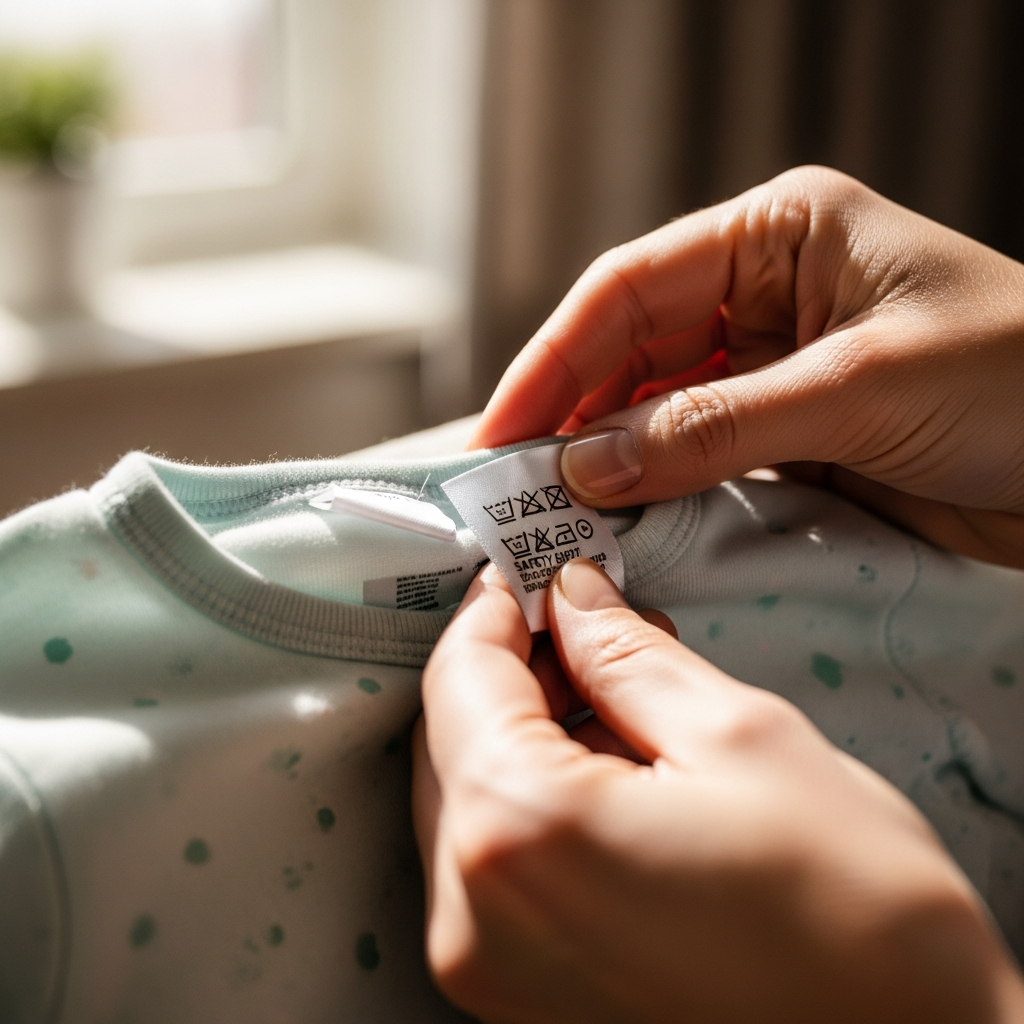
If you have ever felt a jolt of worry reading that yellow tag on your baby's pajamas, you are in good company. The full text reads: "Wear snug-fitting. Not flame resistant. For child's safety, garment should fit snugly. This garment is not flame resistant. Loose-fitting garment is more likely to catch fire."
It sounds alarming. But here is the counterintuitive truth: that tag is actually a sign of safety, not a warning of danger. The CPSC requires this label on all snug-fit sleepwear. It communicates that the garment's fire protection comes from its tight construction -- not from chemicals soaked into the fabric.
Why "Not Flame Resistant" Is Actually a Good Sign
When you see "not flame resistant" on baby pajamas, it means your child's skin will not be in contact with flame retardant chemicals all night long. The pajama passed safety standards through design, not chemistry. For parents concerned about chemical exposure -- and there are good reasons to be, as we will cover shortly -- this tag is exactly what you want to see.
The real tag to watch out for? "Not intended as sleepwear." That label means the garment meets neither safety path and should not be used for overnight sleep.
When Do Babies Need Snug-Fit Pajamas? The Age-by-Age Safety Guide
Under 9 Months: Why Infants Are Exempt
The CPSC exempts infant garments sized 9 months or smaller from both flammability and snug-fit requirements, provided they meet specific size limits. According to CPSC regulations, one-piece garments must not exceed 25.75 inches in length, while two-piece garments must have no piece longer than 15.75 inches.
The reasoning is straightforward: babies under 9 months generally lack the mobility to reach ignition sources like candles, stove burners, or heaters. However, this exemption only applies if the garment meets those size limits. A 9-month-sized garment that exceeds 25.75 inches must comply with the full flammability or snug-fit requirements. That said, sleep sacks and properly fitted sleepers remain excellent choices for overall safe sleep during this stage, even when not legally required.
9 Months to 2 Years: The Critical Transition
Once your baby hits the 9-month size threshold, snug-fit pajama rules kick in. This is also the age range when many families transition from sleep sacks to traditional pajamas. Here is what to keep in mind:
- All sleepwear in this size range must be either snug-fit or flame-resistant
- If you are still using a sleep sack, the pajamas underneath should still meet snug-fit standards
- Many parents combine snug-fit pajamas with a wearable blanket for both fire safety and warmth
Toddlers and Beyond (2-5 Years): Balancing Safety and Comfort
This is where things get tricky. Toddlers have opinions -- strong ones -- and many of them loudly dislike tight clothing. Parents on Reddit and parenting forums constantly ask: "Why are toddler pajamas so uncomfortably tight?" The answer is always the same -- it is a fire safety standard, not a fashion choice. The good news is that modern snug-fit designs have come a long way in terms of comfort, especially in stretchy fabrics.
If your toddler resists snug pajamas, try these approaches:
- Choose bamboo viscose or stretchy cotton blends that feel softer despite a snug fit
- Size up by one size only if the current fit leaves red marks -- but never skip more than one size
- Let your toddler choose from patterns and colors to build positive associations with sleepwear
Are Flame Retardant Chemicals in Pajamas Safe for Babies?
What the Research Says About Chemical Flame Retardants
Here is where the snug-fit vs loose pajama debate takes an important turn beyond fire safety. The National Institute of Environmental Health Sciences reports that adverse health effects from flame retardant chemicals may include endocrine and thyroid disruption, immunotoxicity, reproductive toxicity, cancer, and adverse effects on fetal and child development.
Children are particularly vulnerable. Their developing brains and organs are more susceptible to chemical exposure, and hand-to-mouth behavior increases their contact with these substances. The National Institute of Environmental Health Sciences notes that children are especially vulnerable to flame retardant chemical exposure.
How to Avoid Flame Retardant Chemicals in Baby Sleepwear
The simplest way to avoid chemical exposure? Choose snug-fit pajamas. When pajamas bear the "not flame resistant" label, it means no chemical flame retardants were applied. For extra assurance, look for these certifications:
- OEKO-TEX Standard 100 -- tests for over 100 harmful substances
- GOTS (Global Organic Textile Standard) -- certifies organic fiber content and processing
- Bluesign -- verifies responsible chemical use in manufacturing
If you are shopping for chemical-free baby sleepwear, PatPat offers a range of bamboo baby clothes made from breathable, naturally soft fabrics that prioritize both safety and comfort.
Safest Fabrics for Baby Sleepwear: Cotton vs Bamboo vs Polyester
Why Fabric Choice Matters for Baby Pajama Safety
When comparing snug fit vs loose pajamas for baby safety, fabric often gets overlooked. But the material your baby sleeps in affects more than just comfort -- it influences fire behavior, temperature regulation, and even SIDS risk.
The American Academy of Pediatrics warns that overheating can increase the risk of SIDS, making breathable sleepwear an important factor in your baby's safe sleep environment.
Fabric Safety Comparison Chart
| Safety Factor | Cotton | Bamboo Viscose | Polyester |
|---|---|---|---|
| Fire Behavior | Burns, does not melt | Burns, does not melt | Melts to skin (higher injury risk) |
| Breathability | Good | Excellent | Poor |
| Temperature Regulation | Moderate | Excellent (thermoregulating) | Poor (traps heat) |
| Moisture Wicking | Moderate | Superior (40% faster than cotton) | Low |
| Hypoallergenic | Varies | Yes (naturally) | No |
| Shape Retention for Snug Fit | Good | Good to excellent | Excellent |
| Overheating Risk | Low | Very low | Moderate to high |
Notice that polyester melts rather than burns. When fabric melts, it bonds to skin and causes far more severe burns than natural fibers that simply char. This is a critical safety distinction most parents never hear about. While polyester excels at holding its snug-fit shape, the melt-to-skin risk makes it a less ideal choice compared to natural fibers for overnight sleepwear.
Bamboo viscose stands out for temperature regulation. Its micro-gap fiber structure wicks moisture away from skin significantly faster than cotton, keeping your baby dry and reducing overheating risk during sleep. If you are comparing fabric options for safe baby sleepwear, PatPat's baby pajamas collection offers snug-fit options in both cotton and bamboo viscose blends.
How to Check If Baby Pajamas Fit Correctly: The Finger Test and Beyond
The Two-Finger Test at Three Body Points
You do not need to be a CPSC inspector to assess baby pajama fit. Here is a simple three-point check you can do at home:
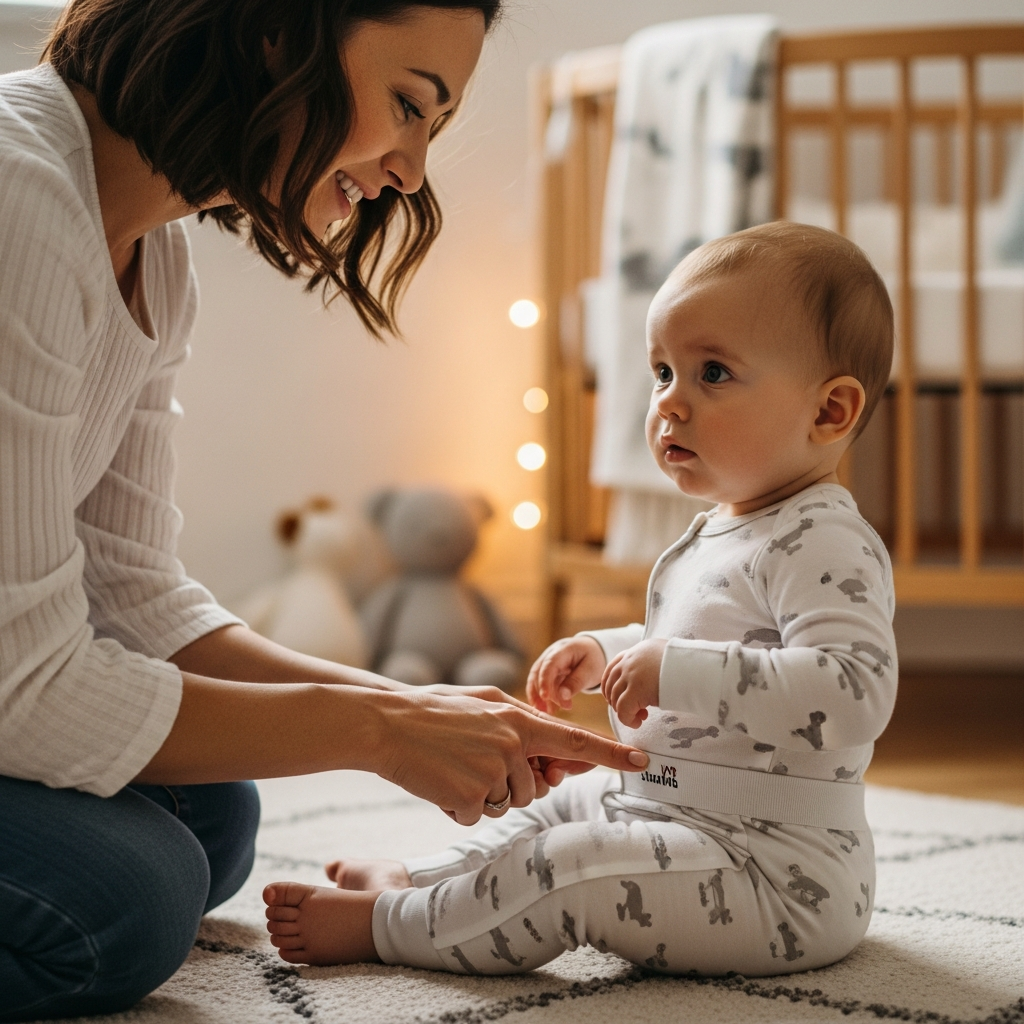
- Slide two fingers under the waistband while your baby is wearing the pajamas
- Repeat at the wrists or ankles (cuffs)
- Check the neckline
At each point, your fingers should slide in but the fabric should gently grip around them. There should be no large gap and no pinching. Think of it like fitted athletic wear -- close to the body without compressing it.
Signs the Pajamas Are Too Tight
While snug is the goal, too tight creates its own problems. Watch for these indicators:
- Red marks or indentations on skin after removing pajamas
- Difficulty getting the garment on or off
- Restricted movement -- your baby cannot crawl, roll, or stretch normally
- Fabric pulling taut across the chest or belly when your baby moves
If you see any of these signs, it is time to size up -- but only by one size.
When It Is Safe to Size Up -- and When It Is Not
Can you size up snug-fit pajamas for comfort? Yes, but with boundaries. Going up one size is perfectly fine when the current pair is leaving marks or restricting movement. However, skipping two or more sizes creates a loose fit that defeats the snug-fit safety design.
Baby Pajama Safety Checklist
With all this information in mind, here is a practical baby pajama safety checklist you can use every time you shop for sleepwear. Print it, save it to your phone, or bookmark this page for easy reference:
- Check the label -- look for "Wear Snug-Fitting, Not Flame Resistant" (the yellow tag)
- Avoid garments labeled "Not Intended as Sleepwear" for overnight use
- Use the two-finger test at waist, wrists, and neckline
- Choose cotton or bamboo viscose over polyester when possible
- Look for OEKO-TEX Standard 100 or GOTS certification for chemical-free assurance
- Verify there are no drawstrings, ribbons, or loose decorations that pose entanglement or strangulation risks
- Size up by only one size if the current fit is too tight -- never more
- Check CPSC.gov/Recalls periodically for current sleepwear recalls
FAQ: Baby Pajama Safety Questions Parents Ask Most
Should baby pajamas be snug or loose?
Baby pajamas should be snug-fitting. The CPSC requires children's sleepwear (sizes 9 months through 14 years) to either pass flammability testing or meet snug-fit dimension standards. Snug-fit pajamas eliminate the air gap that accelerates flame spread, making them the safer choice without requiring chemical flame retardants.
Why are baby pajamas so tight?
Baby pajamas are tight because snug-fit construction is a federally mandated fire safety mechanism. Close-fitting fabric eliminates the chimney effect, where air gaps between skin and loose fabric feed oxygen to flames. This tight design allows pajamas to skip chemical flame retardant treatment entirely.
Do babies under 9 months need snug-fit pajamas?
No. The CPSC exempts infant garments sized 9 months or smaller (up to 25.75 inches long) from both snug-fit and flammability requirements. Infants at this age lack the mobility to reach ignition sources. However, sleep sacks and properly fitted sleepers remain smart choices for general sleep safety.
What does the yellow tag on baby pajamas mean?
The yellow tag reads "Wear snug-fitting. Not flame resistant." This means the pajama's safety comes from its construction, not chemical treatment. It is a CPSC-required label confirming the garment meets strict dimensional standards. Despite its alarming wording, it actually signals a chemical-free safety approach.
Are flame retardant chemicals in baby pajamas harmful?
Research has linked certain flame retardant chemicals to endocrine disruption, thyroid dysfunction, and neurodevelopmental concerns in children. To avoid chemical exposure, choose snug-fit pajamas labeled "not flame resistant" and look for OEKO-TEX Standard 100 or GOTS certified sleepwear.
What is the safest fabric for baby pajamas?
Cotton and bamboo viscose are generally the safest fabrics for baby sleepwear. Both burn without melting to skin (unlike polyester) and offer good breathability to prevent overheating. Bamboo viscose provides superior temperature regulation, making it ideal for babies who sleep hot or have sensitive skin.
Can I size up snug-fit pajamas so my baby is more comfortable?
Moving up one size is fine when pajamas leave red marks or restrict movement. However, skipping multiple sizes creates a loose fit that compromises fire safety. Always stay within one size of your baby's actual measurements to maintain the snug-fit safety design.
Are sleep sacks safer than snug-fit pajamas?
Sleep sacks and snug-fit pajamas serve different safety purposes. Sleep sacks replace loose blankets (an AAP safe sleep recommendation), while snug-fit pajamas address fire safety. Many families use both together -- snug-fit pajamas under a wearable blanket for comprehensive protection.
The Bottom Line on Baby Pajama Safety
When it comes to snug fit vs loose pajamas for baby, the evidence is clear: snug-fit pajamas are the safer choice for the vast majority of families. They meet federal fire safety standards through smart construction rather than chemical treatments, support healthy temperature regulation when made from the right fabric, and represent the dominant design used by reputable baby sleepwear brands today. Understanding baby pajama safety does not have to be overwhelming -- once you know what to look for, choosing safe sleepwear becomes second nature.
Here are the key takeaways to remember:
- Snug-fit pajamas meet CPSC fire safety standards through construction, not chemicals
- The yellow "not flame resistant" tag is a safety feature, not a warning
- Use the two-finger test at the waist, wrists, and neckline to confirm proper fit
- Choose breathable, certified fabrics like cotton or bamboo viscose for overnight wear
- Babies under 9 months are exempt from snug-fit rules, but safe sleep practices still apply
Ready to choose safe, comfortable sleepwear for your little one? Explore PatPat's baby pajamas in snug-fit designs made from soft, breathable fabrics. You can also browse the full baby clothes collection for everyday essentials that keep your baby safe and comfortable.
The fact that you are researching baby pajama safety means you are already doing something right. Trust the labels, trust the fit, and trust your instincts. Your baby is in good hands.





