


There is something magical about those first loads of tiny onesies, impossibly small socks, and delicate sleepers spinning in the washing machine. If you are preparing for your baby's arrival or navigating the endless laundry pile of new parenthood, you have probably wondered: am I doing this right?
Here is the reassuring truth: learning how to wash baby clothes safely is simpler than you might think. Your little one's skin is remarkably delicate. Research shows that infant skin is approximately 30% thinner than adult skin, making it more susceptible to irritation from chemicals, fragrances, and residues. That is exactly why washing newborn clothes properly matters so much.
In this comprehensive guide, you will discover everything you need to know about baby laundry, from pre-washing new purchases to tackling those inevitable diaper blowouts. At PatPat, we understand that quality baby clothing deserves quality care. Whether you are building your nursery wardrobe or already knee-deep in spit-up stains, these expert tips will help you keep every piece soft, safe, and ready for snuggles.
Why You Should Pre-Wash Baby Clothes Before First Use
That adorable outfit from your baby shower might look pristine, but appearances can be deceiving. New baby clothes travel a long journey from factory to your nursery, picking up invisible hitchhikers along the way.
What Hidden Chemicals Lurk on New Baby Clothes
Before those tiny garments reach your hands, they undergo various chemical treatments during manufacturing. The American Academy of Pediatrics notes that children are more impacted by certain environmental hazards because their bodies are smaller relative to the same exposure an adult might experience.
Common substances found on new clothing include:
- Formaldehyde resins used to prevent wrinkles during shipping and display
- Synthetic dyes that may not be fully set and can transfer to skin
- Sizing agents that give clothes their crisp store appearance
- Pesticide residues on conventionally grown cotton
- Dust, allergens, and bacteria from warehouses and handling
The good news? Studies indicate that washing new clothes before wearing them can remove up to 60% of formaldehyde. A simple wash cycle eliminates most of these concerns.
When to Start Washing Baby Clothes Before Birth
Planning when to wash baby clothes before birth helps you stay organized without last-minute stress. Most parents find the sweet spot is 4-6 weeks before their due date. This window aligns perfectly with the natural nesting instinct many experience during the third trimester.
Pro tip: Rather than saving everything for one marathon laundry session, wash items as you receive them from baby showers. This approach spreads out the work and ensures clothes are ready to be organized by size.
Consider these practical steps:
- Wash newborn sizes first since these will be needed immediately
- Remove all tags and packaging before washing
- Store freshly washed clothes in a clean dresser or closet
- Keep a small basket ready for additional gifts that arrive later
Choosing the Best Baby-Safe Laundry Detergent
Standing in the detergent aisle can feel overwhelming when you are trying to make the safest choice for your baby. The truth is, you do not necessarily need products marketed specifically as "baby detergent," but you do need to choose wisely.
Ingredients to Avoid in Baby Laundry Detergent
Reading labels becomes second nature once you know what to look for. The Environmental Working Group (EWG) rates cleaning products based on ingredient safety, providing helpful guidance for parents.
| Ingredient to Avoid | Why It Matters |
|---|---|
| Synthetic fragrances/parfum | Can contain dozens of undisclosed chemicals that may irritate sensitive skin |
| Optical brighteners | Leave residue on fabric that can cause skin reactions |
| Sodium lauryl sulfate (SLS) | Harsh surfactant known to irritate delicate skin |
| Artificial dyes | Unnecessary additives that may trigger allergies |
| Chlorine bleach | Too harsh for baby items and can damage fabric |
Dermatologist-Recommended Detergent Features
Rather than focusing on brand names, look for these characteristics when selecting a baby safe laundry detergent:
- Fragrance-free and dye-free formulas: Dermatologists recommend fragrance-free, hypoallergenic, or dye-free laundry detergents for washing baby clothes
- Hypoallergenic certification: Look for products tested for allergen content
- Plant-based ingredients: Generally gentler than petroleum-derived chemicals
- Free and clear labeling: Indicates no added colors or scents
- EWG Verified or similar certifications: Third-party testing provides additional assurance
If your baby shows any signs of skin sensitivity, consult your pediatrician before switching detergents. Some babies with eczema may need enzyme-free formulas, while others do fine with standard gentle options.
Step-by-Step Guide to Washing Baby Clothes Safely
Now that you have the right detergent, mastering the washing process ensures every load comes out perfectly clean and gentle against your baby's skin.
Sorting Baby Laundry the Right Way
Proper sorting prevents color bleeding and ensures appropriate washing conditions for different fabrics. During the newborn stage, many parents prefer washing baby clothes separately from family laundry.
Sort by color:
- Whites and light colors together
- Dark colors in a separate load
- Bright or new colored items washed alone initially
Sort by fabric type:
- Delicates like special occasion outfits in mesh laundry bags
- Heavier items like sleepers and rompers together
- Tiny items like socks in a mesh bag to prevent loss
Always check pockets, remove bibs, and close any snaps or zippers to protect both the garments and your washing machine.

Water Temperature Guidelines for Baby Clothes
Choosing the right water temperature balances effective cleaning with fabric preservation.
| Temperature | Best For | Notes |
|---|---|---|
| Cold (60-80F) | Most everyday items, colored clothing | Prevents shrinking and color fading; saves energy |
| Warm (90-110F) | Moderately soiled items | Better stain removal while still being gentle |
| Hot (130F+) | Heavily soiled items, cloth diapers, sanitizing | Use sparingly; may cause shrinkage |
When in doubt, check the care label. Most quality baby clothes include specific washing instructions that help maintain their softness and fit.
Optimal Wash Cycle and Machine Settings
Your washing machine settings significantly impact how clean and soft baby clothes remain:
- Delicate or gentle cycle: Best for most baby items, especially knits and delicates
- Normal cycle: Appropriate for heavily soiled everyday items
- Extra rinse: Always recommended to remove all detergent residue
- Low spin speed: Reduces stress on delicate fabrics and prevents stretching
Do not overload the machine. Clothes need room to move freely for thorough cleaning and rinsing. A half-full load typically cleans better than a stuffed one.
How to Keep Baby Clothes Soft Without Fabric Softener
That fresh-from-the-store softness does not have to disappear after the first wash. Surprisingly, the secret to keeping baby clothes soft involves avoiding what many adults reach for automatically.
Why Pediatricians Recommend Avoiding Fabric Softener
Commercial fabric softeners might seem like the obvious solution, but they present several concerns for baby clothing:
- Chemical residue: Softeners coat fabric fibers with chemicals that remain against skin
- Reduced absorbency: Consumer Reports confirms that fabric softener reduces the absorbency of textiles, which matters for burp cloths and bibs
- Fragrance compounds: Even "baby-scented" versions may trigger skin reactions
- Flame resistance impact: CPSC regulations require children's sleepwear to be flame resistant, and fabric softener can compromise this protection
Natural Alternatives That Actually Work
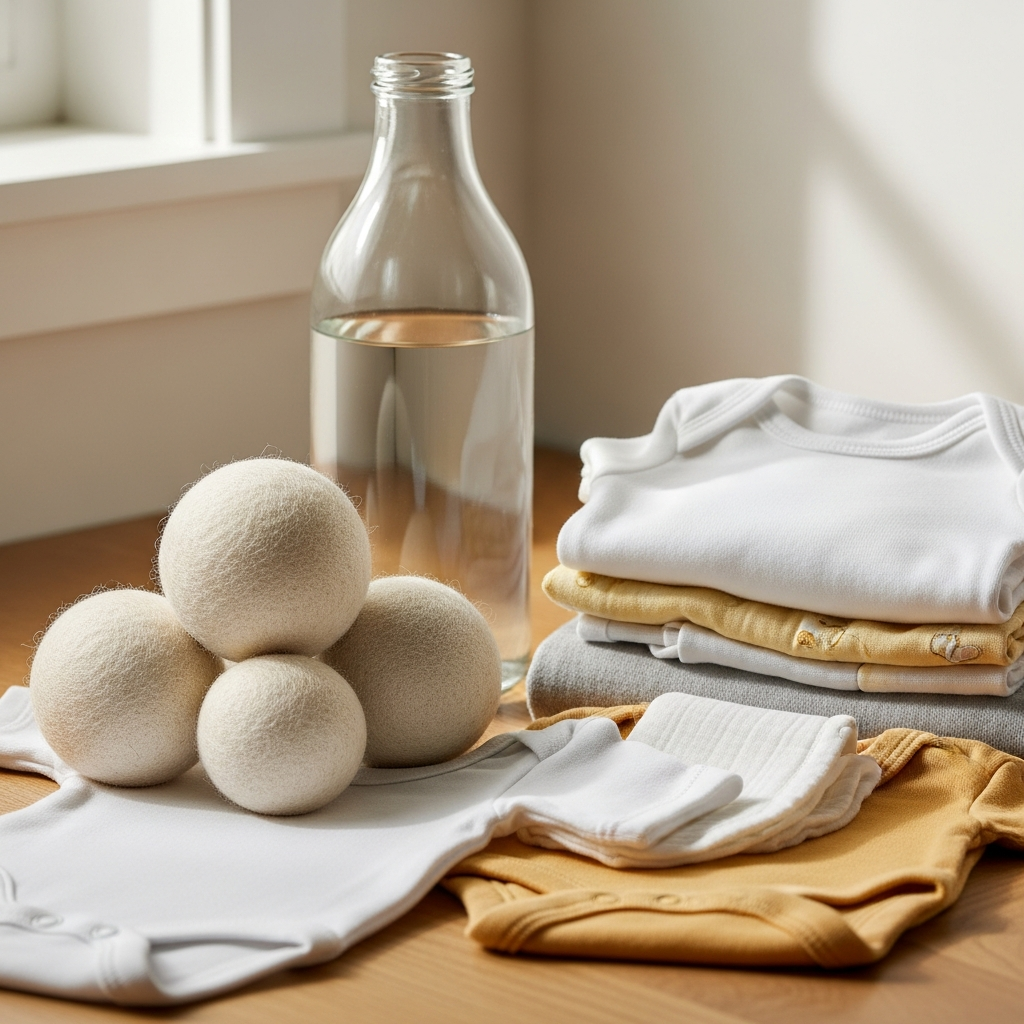
Fortunately, nature provides effective solutions for keeping baby clothes soft naturally:
White vinegar method: Add half a cup of distilled white vinegar to the rinse cycle. It softens fabric, removes detergent residue, and rinses away completely, leaving no smell.
Wool dryer balls: These reusable balls bounce around the dryer, separating clothes and naturally softening fibers. They also reduce drying time by up to 25%.
Baking soda boost: Add half a cup to your wash cycle to soften water and enhance cleaning without leaving residue.
Proper detergent dosing: Using too much detergent causes buildup that makes clothes feel stiff. Follow package directions carefully, or use slightly less.
Air drying: Tumble drying can cause stiffness. When possible, air dry and give items a gentle shake before hanging.
Removing Stubborn Stains from Baby Clothes
Here is an unavoidable truth of parenthood: babies are messy. The good news is that most stains, even the most alarming ones, can be conquered with the right approach.
Tackling Breast Milk and Formula Stains
Protein-based stains like milk and formula require special attention because heat sets them permanently. The golden rule: act fast and use cold water.
Step-by-step treatment:
- Rinse immediately with cold water (never hot)
- Apply a small amount of gentle enzyme-based stain remover
- Let sit for 15-30 minutes
- Wash in cold or warm water according to fabric care instructions
- Check before drying, as heat sets any remaining stain
For set-in milk stains: Create a paste with baking soda and cold water. Apply to the stain, let sit for an hour, then wash as normal. Sunlight also acts as a natural bleaching agent for white fabrics.
Conquering Diaper Blowouts and Food Stains
Every parent has a blowout horror story. Take a deep breath because even the worst explosions can usually be cleaned.
For solid waste stains:
- Scrape off any solid matter (outdoors if possible)
- Rinse with cold water, holding fabric under running water stain-side down
- Apply oxygen-based stain remover (look for baby-safe formulas)
- Soak in cold water for 30 minutes to overnight
- Wash on the warmest temperature safe for the fabric
For fruit and vegetable puree stains: Rinse immediately, then treat with lemon juice before washing. Sun-dry white items for natural bleaching.
A reassuring note: Some stains become battle scars of parenthood. If a stain survives your best efforts, designate that item as "play clothes" as play clothes and save your frustration for bigger battles.
Special Care for Delicate Fabrics and Sensitive Skin
Premium fabrics and sensitive skin conditions require extra attention, but the effort pays off in comfort and longevity.
Caring for Organic Cotton and Bamboo Baby Clothes
Natural and organic fabrics deserve gentle treatment to maintain their special properties. Bamboo baby clothes have become a parent favorite for good reason: they are naturally hypoallergenic, incredibly soft, and temperature-regulating.
Best practices for natural fabrics:
- Wash in cold or lukewarm water to prevent shrinking
- Use gentle, plant-based detergents without harsh chemicals
- Skip the fabric softener, which can strip natural fibers of their inherent softness
- Air dry when possible to preserve fiber integrity
- If machine drying, use the lowest heat setting
Bamboo fabric stays soft through hundreds of washes when cared for properly, making it an excellent investment for your baby's wardrobe.
Laundry Tips for Babies with Eczema or Allergies
If your baby has sensitive skin or diagnosed eczema, laundry becomes even more important. The American Academy of Dermatology recommends washing baby items with fragrance-free detergents.
Extra precautions for sensitive babies:
- Double rinse cycle: Essential to remove all detergent traces
- Fragrance-free everything: Including wool dryer balls (skip scented varieties)
- Enzyme-free detergent: Some babies react to enzyme cleaners
- New detergent test: Try washing just a few items first before converting all baby laundry
- Separate washing: Consider keeping sensitive baby's clothes away from family laundry
If irritation persists despite these measures, consult a pediatric dermatologist for personalized recommendations.
Drying Baby Clothes Safely
The final step in the laundry process determines whether clothes come out soft and ready to wear or stiff and wrinkled. Both machine and air drying have their place in baby laundry.
Machine Drying Best Practices
When time is short (which is most of the time for new parents), machine drying works well with proper settings:
- Low heat always: High heat causes shrinkage and can damage elastic and snaps
- Wool dryer balls: Add 3-4 to reduce drying time and naturally soften fabric
- Remove promptly: Taking clothes out immediately prevents wrinkles and stiffness
- Skip dryer sheets: They have the same concerns as liquid fabric softener
- Clean lint trap: Every load, for both safety and efficiency
Easy-care styles like rompers and jumpsuits with their simple one-piece design are particularly convenient. They dry quickly and have fewer pieces to track than separate tops and bottoms.
Air Drying Tips for Best Results
Air drying preserves fabric quality and saves energy, though it requires more planning:
- Indoor drying: Use a rack away from direct heat sources that can cause uneven drying
- Outdoor drying: Sunlight naturally sanitizes and brightens whites (but fades colors)
- Reshape before hanging: Smooth out wrinkles and stretch gently to original shape
- Hang colored items in shade: Prevents fading while still allowing fresh air circulation
Many quality bodysuits air dry beautifully overnight, ready for the next day's adventures.
Frequently Asked Questions About Washing Baby Clothes
Should I wash baby clothes before my baby wears them?
Should I wash baby clothes before my baby wears them?
Yes, always wash new baby clothes before first use. New clothing contains manufacturing chemicals, dyes, and residues from shipping and retail handling. Washing removes potential irritants and ensures fabric is clean and safe against your baby's sensitive skin. This applies to gifts, hand-me-downs, and all new purchases.
Do I need special detergent for baby clothes or can I use regular?
You do not necessarily need marketed "baby detergent," but you should use a fragrance-free, dye-free formula. Pediatricians recommend gentle, hypoallergenic detergents labeled "free and clear." Avoid harsh chemicals and fragrances that can irritate sensitive skin. If your baby shows no sensitivities, washing with gentle family detergent is usually fine.
What temperature should I wash baby clothes in?
Cold water (60-80F) works best for most baby clothes and prevents shrinking. Use warm water (90-110F) for moderately soiled items. Reserve hot water (130F+) only for heavily soiled items like cloth diapers or when sanitizing is necessary. Always check care labels for fabric-specific requirements.
Can I use fabric softener on baby clothes?
Most pediatricians recommend avoiding commercial fabric softeners for baby clothes. They leave chemical residues that may irritate sensitive skin and reduce fabric absorbency, which matters for items like burp cloths. Softeners can also affect flame resistance of sleepwear. Use natural alternatives like white vinegar or wool dryer balls instead.
How do I keep baby clothes soft without fabric softener?
Add half a cup of white vinegar to the rinse cycle to naturally soften fabrics without residue. Use wool dryer balls instead of dryer sheets for machine drying. Avoid over-drying, which causes stiffness. Using the correct amount of detergent is also important since excess leaves residue that makes clothes feel stiff.
How do I get poop stains out of baby clothes?
Act quickly for best results. Scrape off solid matter, then rinse with cold water (hot sets protein stains). Apply a baby-safe enzyme-based stain remover and let sit 15-30 minutes. Wash on the warmest temperature safe for the fabric. For stubborn stains, sun-drying naturally bleaches remaining marks on white fabrics.
Should I wash baby clothes separately from adult laundry?
Washing baby clothes separately is recommended during the newborn stage, especially in the first few months when skin is most sensitive. Once your baby is a few months old and shows no skin sensitivities, you can typically combine baby clothes with family laundry using gentle, fragrance-free detergent for the entire load.
When should I wash baby clothes before the due date?
Start washing baby clothes 4-6 weeks before your due date. This timeline gives you time to wash, organize by size, and have everything ready without last-minute stress. Many parents find washing baby clothes is a satisfying nesting activity during the third trimester. Wash items as you receive them rather than saving everything for one session.
Your Baby Laundry Journey Starts Here
Mastering how to wash baby clothes is one of those parenting skills that quickly becomes second nature. Remember the essentials: pre-wash everything new, choose gentle and fragrance-free detergents, skip the fabric softener, and act fast on stains. These simple practices protect your baby's delicate skin while keeping their wardrobe soft and ready for countless cuddles.
Building a collection of quality, easy-care baby clothes makes laundry day even simpler. When you invest in well-made pieces designed to withstand frequent washing while staying soft, you spend less time worrying about care instructions and more time enjoying those precious moments with your little one.
At PatPat, we create baby clothing with both comfort and practicality in mind. From breathable organic cotton to silky-soft bamboo fabrics, our pieces are designed to look beautiful and feel gentle, wash after wash. Browse our collection of baby clothes to find pieces that make dressing and laundry a breeze.
You have got this, and your baby is lucky to have someone who cares so much about the little details.




