


You are standing in the baby section of your favorite store, surrounded by impossibly tiny onesies and adorable sleepers. Your heart swells with excitement, but then confusion sets in. What is the difference between "Newborn" and "0-3 Months"? Will your baby actually fit into these clothes? And why do some brands seem to size things completely differently?
If you have ever stared at baby clothes tags feeling completely lost, you are not alone. Understanding newborn clothing sizes is one of those parenting challenges that nobody warns you about until you are knee-deep in a pile of cute outfits that may or may not fit your little one.
Here is the good news: once you understand the basics of baby clothing sizes, the confusion melts away. This guide will walk you through everything you need to know about infant clothing sizes, from decoding size labels to navigating brand differences. Whether you are building your baby's first wardrobe, creating a registry, or preparing your hospital bag, you will find practical answers here.
At PatPat, we have helped countless first-time parents navigate the wonderful (and sometimes bewildering) world of baby clothes. This guide is based on real parent experiences, expert recommendations, and the questions we hear most often. By the time you finish reading, you will feel confident choosing the right sizes for your baby, no matter what brand you are shopping.
Understanding How Baby Clothing Sizes Work
Before you start shopping for your little one, it helps to understand the logic behind baby clothing sizes. Unlike adult clothing, which uses standardized measurements, baby clothes follow a system that can seem puzzling at first. Let us break it down.
The US Baby Clothing Size System Explained
In the United States, baby clothing sizes are primarily based on age ranges. You will see labels like Newborn (NB), 0-3 Months (0-3M), 3-6 Months (3-6M), and so on. This seems straightforward enough, but here is where it gets tricky: these age labels are guidelines, not guarantees.
The "Newborn" or "NB" label typically fits babies weighing between 5 and 8 pounds. Size ranges overlap intentionally to accommodate growth spurts and the natural variation in baby sizes. This means a baby might comfortably wear two different sizes at the same time, depending on the brand and style.
Why Weight Matters More Than Age for Baby Clothes
Here is a truth that many first-time parents discover the hard way: your baby's weight is a far more reliable predictor of clothing fit than their age. Consider this: the average U.S. newborn weighs about 7.5 pounds, but healthy babies can range anywhere from 5.5 to over 10 pounds at birth.
A 9-pound newborn might skip the "Newborn" size entirely and fit better in 0-3 month clothes from day one. Meanwhile, a smaller baby born at 6 pounds could wear Newborn size for several weeks. This is why you should always check the weight range printed on the tag, not just the size label.
Why Baby Clothing Sizes Vary Between Brands
Unlike adult clothing industries, there is no universal baby sizing standard that all manufacturers must follow. Each brand determines its own size ranges based on their target market, design philosophy, and fit preferences.
Fast fashion brands often run larger to give the impression of value and longer wear time. Specialty or boutique brands may run smaller for a more fitted, "designer" look. European brands use an entirely different sizing system based on height in centimeters rather than age.
This lack of standardization is exactly why keeping tags on purchases and buying from multiple brands is a smart strategy. What fits perfectly in one brand's "Newborn" might be too snug or too loose in another's.
Complete Baby Clothes Size Chart by Weight and Height
This comprehensive size chart represents standard US sizing, though individual brands may vary slightly. Use this as your starting point and adjust based on your baby's actual measurements and the specific brand's guidelines.
| Size | Weight (lbs) | Weight (kg) | Height (in) | Height (cm) | Typical Duration |
|---|---|---|---|---|---|
| Preemie | Up to 5 | Up to 2.3 | Up to 17 | Up to 43 | Until 5+ lbs |
| Newborn (NB) | 5-8 | 2.3-3.6 | 17-21.5 | 43-55 | 0-4 weeks |
| 0-3 Months | 8-12 | 3.6-5.4 | 21.5-24 | 55-61 | 1-3 months |
| 3-6 Months | 12-17 | 5.4-7.7 | 24-27 | 61-69 | 3-6 months |
| 6-9 Months | 17-22 | 7.7-10 | 27-29 | 69-74 | 6-9 months |
| 9-12 Months | 22-27 | 10-12.2 | 29-31 | 74-79 | 9-12 months |
Preemie Baby Clothes (Up to 5 lbs)
Preemie sizes are designed for babies born before 37 weeks or weighing under 5 pounds. These tiny garments often feature specialized designs for medical monitoring access, with easy-open snaps and NICU-friendly closures. Micro-preemie sizes also exist for babies under 3 pounds.
Newborn Size Clothes (5-8 lbs)
The classic "first outfit" size for average-weight babies, Newborn typically fits for 2-4 weeks. Common features include fold-over mittens to prevent scratching, envelope necklines for easy dressing, and umbilical cord-friendly designs that sit below the healing belly button area.
According to MedlinePlus, the umbilical cord stump normally falls off between 1 and 3 weeks after birth. During this time, clothing that avoids irritating the healing area is essential.
0-3 Month Clothes (8-12 lbs)
This is arguably the most versatile first-year size. Many babies wear 0-3M longer than other sizes, making it the safest "default" for gifts when birth weight is unknown. The transition from Newborn to 0-3M typically happens around 4-6 weeks for average-sized babies.
3-6 Month and Beyond (12-17+ lbs)
As your baby grows, sizing becomes more predictable. Growth is fastest in the first 3 months, with babies typically gaining about 1.5 to 2 pounds each month during this period. After the initial growth spurt, the rate slows, making it easier to plan ahead.
Once you know your baby's size range, you can start building their wardrobe with essentials. Browse newborn clothing collections to see how different styles fit within standard size ranges.
Newborn vs 0-3 Months: The Key Differences Explained
This is the most frequently asked sizing question among new parents, and for good reason. The distinction between these two sizes can mean the difference between a comfortable baby and a frustrated parent wrestling with ill-fitting clothes.

Size and Fit Comparison
Newborn size is designed for babies weighing 5-8 pounds, while 0-3M fits babies 8-12 pounds. But weight is only part of the picture. Newborn clothes are shorter in length and narrower in width. The sleeves and pant legs in 0-3M are noticeably longer, sometimes by 2 inches or more.
Here is a helpful visual comparison:
- Newborn onesie: Approximately 9 inches long
- 0-3M onesie: Approximately 11 inches long
Newborn sizes often include features specifically for brand-new babies, like umbilical cord cutouts or low-rise waistbands that avoid the healing belly button area.
Should You Buy Newborn or 0-3 Month Clothes?
The answer is both, but in different quantities. Your shopping ratio should depend on your expected birth weight.
| Expected Birth Weight | Newborn Size | 0-3M Size |
|---|---|---|
| Under 6 lbs | 50% | 50% |
| 6-8 lbs | 30% | 70% |
| Over 8 lbs | 10-15% | 85-90% |
How Long Do Babies Wear Each Size?
Newborn size typically lasts 2-4 weeks for average-sized babies, though some babies skip it entirely. The 0-3M range usually covers 6-10 weeks of wear. Remember that these are averages, not rules. Every baby grows at their own pace.
Many parents report their baby wore newborn clothes for just one week, while others got a full month of use. The unpredictability is exactly why the "keep tags on" strategy is so important.
Brand-by-Brand Baby Clothing Size Comparison
Here is insider knowledge that can save you money and frustration: not all brands size their clothes the same way. A "Newborn" from one brand might fit completely differently than a "Newborn" from another.
| Brand | Sizing Tendency | Best For | Notes |
|---|---|---|---|
| Carter's | True to size | Standard reference | Most widely available |
| Gerber | Runs small | Smaller babies | Size up one level |
| Gap Baby | Runs large | Longer babies | Good for tall/lean babies |
| Old Navy | Runs slightly large | Budget-conscious | Similar to Gap |
| Burt's Bees Baby | True to size | Organic preference | Consistent sizing |
| Cat and Jack (Target) | True to size | Budget-friendly | Reliable sizing |
| H&M Baby | European sizing (cm) | Modern styles | Check cm measurements |
| Hanna Andersson | European sizing | Quality seekers | Uses height in cm |
European vs American Baby Sizing Conversion
European baby sizes are based on the baby's height in centimeters, which many parents find more precise than age-based US sizing. If you shop international brands or secondhand items, this conversion chart will be invaluable.
| EU Size (cm) | US Equivalent | Height Range |
|---|---|---|
| 50 | Preemie | Up to 50 cm |
| 56 | Newborn | 51-56 cm |
| 62 | 0-3M | 57-62 cm |
| 68 | 3-6M | 63-68 cm |
| 74 | 6-9M | 69-74 cm |
| 80 | 9-12M | 75-80 cm |
H&M, Zara, and Hanna Andersson all use European sizing, so knowing this conversion helps you shop these brands with confidence.
How Many Newborn Clothes Do You Actually Need?
One of the biggest mistakes new parents make is overbuying newborn size clothes. Those tiny outfits are irresistible, but restraint pays off. Here is a practical guide based on real parent experience and laundry realities.
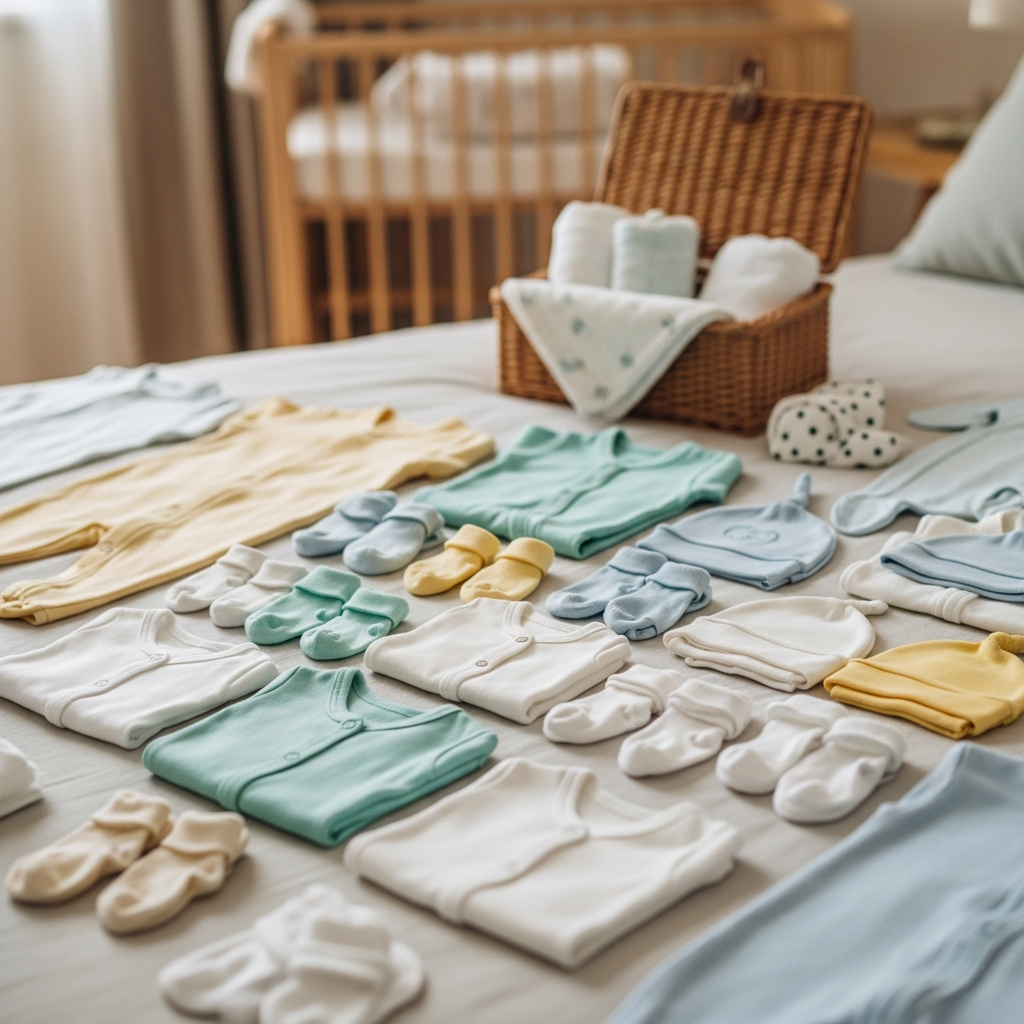
Newborn Wardrobe Essentials Checklist
Newborn Size (NB) - Keep minimal:
- 3-4 onesies or bodysuits
- 2-3 sleepers or footie pajamas
- 1-2 coming home or special outfits
- 2 pairs of socks or booties
- 1-2 hats
0-3 Month Size - Stock up:
- 6-8 onesies or bodysuits
- 4-6 sleepers or footie pajamas
- 3-4 pants or leggings
- 2-3 outfits for outings
- 4-6 pairs of socks
- 2-3 hats
- 1-2 sweaters or jackets (season-dependent)
What to Pack in Your Hospital Bag
According to the American Pregnancy Association, you should have your hospital bag packed about a month before your due date. For baby clothes specifically, pack:
- 2 onesies (1 Newborn, 1 0-3M)
- 2 sleepers with zippers (easier than snaps for new parents)
- 2-3 pairs of socks
- 1-2 hats
- 1 coming home outfit
- 1 swaddle blanket or sleep sack
The Smart Shopping Strategy for First-Time Parents
Keep tags on until baby arrives and save all receipts. Buy basics first, then add cute outfits later when you know what size fits. Accept hand-me-downs graciously because they are often barely worn. For your registry, ask for 0-3M and larger sizes, not Newborn.
When building your baby's first wardrobe, focus on versatile basics like bodysuits and sleepers that work for everyday wear. Explore newborn essentials in a range of sizes to find pieces that grow with your baby.
Seasonal Dressing Guide for Newborn Sizes
The season your baby is born significantly impacts your wardrobe needs and sizing strategy. A summer baby needs a completely different first wardrobe than a winter baby.
Summer Baby Clothing and Sizing Tips
Lightweight fabrics mean less bulky fit, so summer clothes often feel roomier. One-piece rompers are ideal for warm weather. Short sleeves and sleeveless options help keep baby cool. You might even consider sizing up for a breezier, more comfortable fit.
Summer essentials include light cotton onesies, breathable sleep sacks (the AAP recommends wearable blankets over loose blankets for safe sleep), sun hats with UPF protection, and light muslin blankets for shade.
Winter Baby Clothing and Sizing Tips
Winter babies need room for layering underneath, so consider sizing up to accommodate base layers. Fleece and warmer fabrics may fit snugger than cotton equivalents. Footie pajamas become winter essentials.
Winter essentials include long-sleeve bodysuits as base layers, fleece sleepers, warm hats and mittens, and bunting or warm outerwear for outings. Follow the classic layering formula: dress baby in one more layer than you are wearing.
Planning Your Wardrobe Based on Due Date
| Due Date | Stock Up On | Sizing Strategy |
|---|---|---|
| Spring (Mar-May) | Transitional layers | Buy across 2 sizes for temperature changes |
| Summer (Jun-Aug) | Lightweight onesies | Can size up for looser fit |
| Fall (Sep-Nov) | Layering pieces | Size up slightly for layers |
| Winter (Dec-Feb) | Warm sleepers, layers | Definitely size up |
Common Newborn Clothing Size Mistakes to Avoid
Learn from the experiences of parents who have been there before. These common mistakes can cost money and cause frustration, but they are completely avoidable with a little planning.
Overbuying Newborn Size Clothes
The Mistake: Buying 10 or more Newborn outfits because they are so adorable.
The Reality: Many babies wear Newborn size for 2 weeks or less. Some 8-plus-pound babies never fit in Newborn at all. Unworn clothes with removed tags cannot be returned, leaving you with a drawer full of outfits your baby never wore.
The Fix: Buy 4-6 Newborn pieces maximum. Stock up on 0-3M instead, which offers much longer wear time.
Removing All Tags Before Baby Arrives
The Mistake: Washing and organizing all baby clothes with tags removed before birth.
The Reality: You do not know your baby's size until they arrive. Many items may not fit or be needed. Returns become impossible without tags.
The Fix: Wash only a few essentials in each size. Keep tags on everything else until you know what size fits.
Ignoring Brand Sizing Differences
The Mistake: Assuming all "Newborn" labeled clothes are the same size.
The Reality: Gerber Newborn fits like a small Preemie. Gap Newborn fits like other brands' 0-3M. Mixing brands without checking measurements leads to frustration and wasted money.
The Fix: Always check the weight and height range on the tag, not just the size label.
Not Planning for Umbilical Cord Care
The Mistake: Buying only pants and onesies without considering the healing belly button.
The Reality: The umbilical cord stump takes 1-3 weeks to fall off. Tight waistbands can irritate it and delay healing. Some clothing styles are much more comfortable during this period.
The Fix: Choose gowns, kimono-style tops, or onesies with low-rise design for the first few weeks.
Frequently Asked Questions About Newborn Clothing Sizes
What size clothes do newborns actually wear?
Most newborns wear "Newborn" size (fits 5-8 lbs) for the first 2-4 weeks. However, babies born over 8 pounds often fit better in 0-3 month sizes immediately. Always check the weight range on clothing tags rather than relying on the size label alone.
How long do babies wear newborn size clothes?
Average-sized babies (6-8 lbs at birth) typically wear Newborn size for 2-4 weeks. Smaller babies may wear it longer (4-6 weeks), while larger babies (8+ lbs) may skip it entirely and start in 0-3 month sizes from day one.
Should I buy newborn or 0-3 month clothes?
Buy both, but prioritize 0-3 month sizes. A safe ratio is 30% Newborn and 70% 0-3M for average expected birth weights. If your baby is predicted to be over 8 pounds, reduce Newborn purchases to just a few essential pieces. Finding clothes that fit well in both sizes helps you prepare for whatever size your baby turns out to be. Shop size-inclusive newborn collections with options from Newborn to 0-3M.
What size baby clothes fit an 8-pound baby?
An 8-pound baby is at the upper limit of Newborn size and may fit better in 0-3 month clothes, especially for length. Try both sizes to see which fits more comfortably. Many parents find 0-3M works better from the start for babies this size.
Do babies skip newborn size?
Yes, larger babies often skip Newborn size entirely. Babies born at 8+ pounds frequently start in 0-3 month clothes from birth. This is completely normal and one reason experts recommend not over-purchasing Newborn size items before delivery.
What size clothes should I bring to the hospital?
Pack both Newborn and 0-3 month sizes in your hospital bag since you will not know your baby's exact size until birth. Include 2 onesies, 2 sleepers, socks, a hat, and a coming home outfit in each size to be prepared.
Why are baby clothing sizes so inconsistent between brands?
There is no universal sizing standard for baby clothes. Each brand creates its own size ranges. Gerber tends to run small, while Gap and Old Navy run large. Always check the weight and height specifications on tags rather than assuming sizes are consistent.
What does NB mean on baby clothes?
NB stands for "Newborn" and typically fits babies weighing 5-8 pounds and measuring 17-21.5 inches long. This is the smallest standard size above Preemie. Not all babies will fit this size, as it depends on their birth weight and length.
Your Newborn Clothing Size Cheat Sheet
Navigating newborn clothing sizes does not have to be overwhelming. Here are the key takeaways to remember:
- Weight matters more than age labels - Always check the weight range on tags
- Buy 30% Newborn, 70% 0-3M as a safe starting ratio for average expected birth weights
- Keep tags on and save receipts until you know what fits your specific baby
- Different brands size differently - Gerber runs small, Gap runs large
- You cannot predict exact needs until baby arrives - and that is completely okay
Remember, there is no perfect preparation when it comes to baby clothes. The best strategy is staying flexible and keeping your options open. Every baby is different, and adapting as you go is simply part of the beautiful journey of parenthood.
Whether your little one ends up being petite and swimming in Newborn clothes for weeks, or arrives ready to skip straight to 0-3M, you will figure it out together. That is what parents do.
Ready to start shopping? Begin with versatile basics in multiple sizes so you are prepared for whatever size your little one turns out to be. Discover newborn essentials at PatPat to build the perfect first wardrobe.
This guide was created to help first-time parents navigate the sometimes confusing world of baby clothing sizes. For more parenting tips and baby essentials, visit PatPat.




