


You check the forecast and see 45 degrees at sunrise and 70 degrees by afternoon. How on earth are you supposed to dress your baby for that? If you have ever stood in front of your little one's closet feeling completely overwhelmed by spring's unpredictable weather, you are not alone.
Spring temperature swings of 20 to 30 degrees in a single day make dressing your baby feel like solving a puzzle with missing pieces. Here is the challenge: babies lose heat nearly 4 times faster than adults, yet overheating poses serious health risks. Getting the layering balance right matters more than you might think.
This complete spring baby outfit guide from PatPat walks you through everything you need to confidently dress your little one for any spring scenario. Whether you are navigating your first spring with a newborn or preparing for daycare drop-offs, you will find practical, expert-backed layering strategies that actually work.
What You Will Learn:
- The three-layer system for spring baby dressing
- Temperature guide: how many layers for each weather condition
- Best fabrics that adapt to spring weather
- Scenario-based outfit ideas for daycare, stroller walks, and carriers
- Signs your baby is too hot or too cold
- Essential spring wardrobe checklist
Why Baby Temperature Regulation Makes Spring Dressing Challenging
Understanding why babies struggle with temperature changes helps you become a more confident decision-maker when choosing spring baby clothes. Your little one's body works differently than yours, and spring's fluctuating temperatures amplify these challenges.
How Newborns and Infants Regulate Body Heat Differently
Your baby's thermoregulation system is still developing, which is why proper layering matters so much. When a baby's skin temperature drops just one degree from the ideal 97.7 degrees Fahrenheit, their oxygen use can increase by 10 percent. This means your baby works harder to stay warm, using precious energy that could go toward growth and development.
Infants under six months face unique challenges. Unlike adults who shiver to generate warmth, the ability to shiver is limited in infants younger than 3 months. Instead, newborns rely on brown adipose tissue, a special type of fat that generates heat through metabolic processes. This brown fat typically depletes by 9 months of age and cannot be replaced.
You might notice your baby's hands and feet feel cool even when they are perfectly comfortable. This is normal. Blood flow prioritizes vital organs, so extremities are unreliable temperature indicators. Always check your baby's chest or the back of their neck for an accurate reading.
Why Overheating Is a Serious Concern
While keeping your baby warm is important, overheating carries significant risks. Mayo Clinic warns that being too warm while sleeping can increase a baby's risk of SIDS, and overdressing is a common cause. Spring's variable temperatures make this balance particularly tricky since what works at 7 AM may be too warm by noon.
The Three-Layer Spring Dressing System for Babies
Professional outdoor enthusiasts have long used a layering system to manage changing conditions. The same principle works beautifully for spring baby outfits. Instead of one thick garment, multiple lighter layers give you flexibility to add or remove clothing as temperatures shift throughout the day.

Base Layer Essentials: Bodysuits and Onesies
The base layer sits against your baby's skin and serves as the foundation for spring layering. Choose short-sleeve bodysuits for warmer spring days above 65 degrees and long-sleeve versions when temperatures dip lower. Quality bodysuits in breathable cotton or bamboo make the perfect foundation for spring layering.
Look for these base layer features:
- Snap closures at the crotch for easy diaper changes
- Envelope necklines that stretch for easier dressing
- Tagless designs to prevent skin irritation
- Natural, breathable fabrics
Mid-Layer Options: Adding Warmth Without Bulk
The mid-layer provides insulation while remaining easy to remove. This is where spring dressing gets flexible. Rompers and jumpsuits serve as excellent mid-layer options that combine coverage with convenience. Cardigans and zip-up sweaters work wonderfully because caregivers can add or remove them without fully undressing your baby.
Effective mid-layer choices include:
- Lightweight fleece jackets
- Cotton or bamboo rompers
- Zip-front sweaters for quick changes
- Footed pajamas for cooler spring days
Outer Layer Choices: Protection from Wind and Light Rain
The outer layer shields your baby from wind, light rain, and temperature drops. For most spring days, you need something lighter than winter outerwear but substantial enough to block wind chill. A lightweight jacket with water-resistant properties handles April showers without causing overheating.
Consider bunting suits for younger infants in strollers, as they provide full-body protection while remaining easy to remove indoors. Keep a light cotton hat in your diaper bag for cool mornings since babies lose significant heat through their heads.
Spring Temperature Guide: How Many Layers Does Your Baby Need?
One of the most common questions new parents ask is "how many layers should a baby wear in spring?" This temperature guide gives you specific recommendations so you never second-guess your layering decisions again.
| Temperature Range | Recommended Layers | Example Outfit |
|---|---|---|
| 45-50°F (7-10°C) | 3 layers + hat | Long-sleeve bodysuit + fleece + jacket + cotton hat |
| 50-60°F (10-15°C) | 2-3 layers | Long-sleeve bodysuit + sweater + light jacket |
| 60-68°F (15-20°C) | 2 layers | Short-sleeve bodysuit + long-sleeve romper |
| 68-75°F (20-24°C) | 1-2 light layers | Short-sleeve bodysuit + light pants |
| 75°F+ (24°C+) | 1 layer | Single breathable onesie |
Planning for Temperature Swings
Spring mornings and afternoons can feel like different seasons entirely. Check the hourly forecast rather than just the daily high and low. Plan your baby's outfit for the coldest part of your outing, then pack layers you can remove as temperatures rise.
Practical tips for spring outings:
- Always pack an extra layer in the diaper bag
- Keep a light receiving blanket in the car for emergencies
- Dress in easily removable layers with front zippers or snaps
- Consider wind chill, which makes 60 degrees feel much colder
Best Fabrics and Materials for Spring Baby Clothing
The fabrics you choose affect how well your baby adapts to spring temperature changes. Natural fibers generally outperform synthetics for layering because they breathe better and regulate temperature more effectively.
Why Natural Fibers Excel in Variable Spring Weather
Cotton remains the most popular choice for baby clothes. It breathes well, washes easily, and comes at various price points. Organic cotton reduces exposure to pesticides and processing chemicals that might irritate sensitive skin.
Bamboo has become a parent favorite for spring baby clothes due to its natural temperature-regulating properties. Bamboo fabric wicks moisture away from skin, stays cool in warmth and warm in cool temperatures, and offers exceptional softness for babies with sensitive skin or eczema.
Merino wool provides excellent insulation even when damp, making it ideal for outer layers during unpredictable spring weather. While more expensive, quality merino pieces last through multiple children.
Fabric Weight and Weave Considerations
Beyond fiber content, fabric weight matters for spring layering:
- Lightweight jersey knits: Perfect for base layers
- French terry: Ideal mid-layer warmth without bulk
- Microfleece: Lighter than polar fleece, great for spring jackets
Avoid 100% polyester against your baby's skin since it traps moisture and can lead to overheating. Blended fabrics work well when natural fibers dominate the mix.
Spring Baby Outfits for Every Scenario
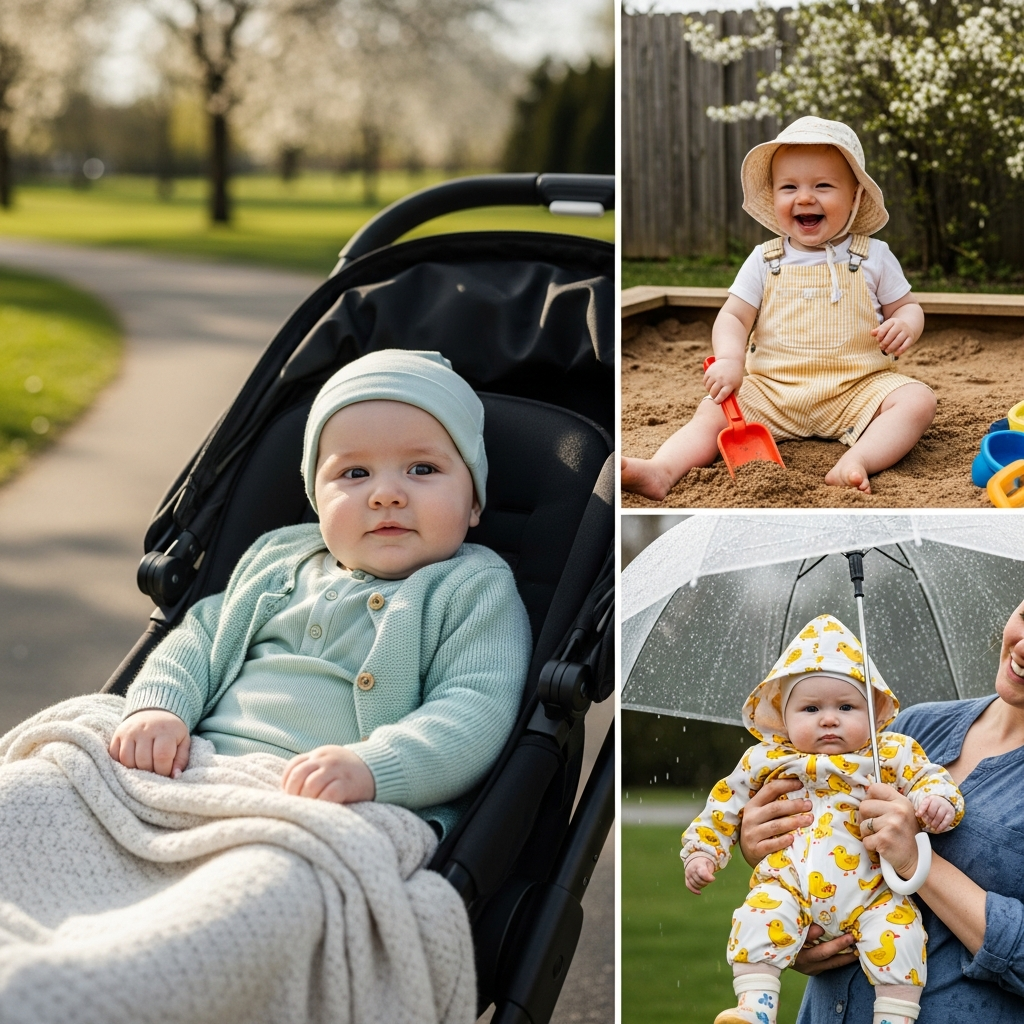
Different situations call for different layering strategies. What works for a quick errand differs from all-day daycare needs. Here are specific outfit recommendations for common spring scenarios.
Daycare Drop-Off Outfits That Adapt All Day
Daycare presents a unique challenge since you cannot adjust your baby's clothing throughout the day. Dress for adaptability by choosing easily removable layers that caregivers can manage.
Effective daycare strategy:
- Start with a bodysuit appropriate for indoor temperatures
- Add a comfortable romper or separates on top
- Send a labeled cardigan or light jacket for outdoor play
- Pack an extra outfit in case of temperature misjudgments
- Communicate your layering preferences with caregivers
Stroller Walk and Outdoor Adventure Outfits
Stroller babies face different conditions than those in carriers. Wind exposure is typically higher, and they are not receiving body heat from a caregiver. Plan for slightly more coverage.
Consider stroller footmuffs for cooler spring days. They provide warmth without loose blankets and easily unzip when temperatures rise. For April showers, a stroller rain cover combined with a water-resistant outer layer keeps your baby dry without overheating.
Baby Carrier and Babywearing Outfits
When babywearing, your body heat counts as a layer. Babies in carriers typically need one fewer layer than stroller babies at the same temperature. This is a common area where parents overdress.
Watch for overheating signs during babywearing, especially in forward-facing positions where baby's chest presses against you. Carrier covers provide an excellent outer layer alternative since you can easily unzip or remove them as needed.
Having a variety of baby clothes in your rotation makes dressing for any spring outing simple and stress-free.
Recognizing if Your Baby is Too Hot or Too Cold
Even with perfect planning, you need to check your baby's comfort throughout outings. Learning to read your baby's temperature cues helps you make quick adjustments.
The Touch Test: Checking Neck and Chest
Forget the hands and feet test. Your baby's extremities often feel cool due to immature circulation, even when they are perfectly comfortable. Instead, place your hand on your baby's chest, tummy, or the back of their neck. The skin should feel warm but not sweaty or clammy.
The ideal room temperature for infants is between 68-72 degrees Fahrenheit, which serves as a helpful baseline for gauging outdoor comfort.
Warning Signs of Baby Overheating
Overheating happens more easily than most parents expect, especially in spring when we default to winter dressing habits. Watch for these signs:
- Flushed cheeks and ears
- Sweating, particularly on the head and neck
- Damp hair
- Rapid breathing
- Fussiness and irritability
- Hot skin on chest or neck
If you notice these signs, remove a layer immediately and move to a cooler environment if possible.
Signs Your Baby Needs More Warmth
An under-dressed baby may show:
- Cool or cold chest and tummy
- Pale or mottled skin
- Decreased activity or unusual stillness
- Fussiness that resolves with added warmth
During your first spring outings, check your baby's temperature every 15 minutes until you develop confidence in your layering choices.
Spring Sleep Safety: Nighttime Dressing and TOG Ratings
Spring nights require different considerations than daytime dressing. As outdoor temperatures rise, indoor sleeping environments change too. Understanding TOG ratings helps you choose appropriate sleep clothing.
Understanding TOG Ratings
TOG measures thermal resistance in fabrics. Higher TOG numbers mean more warmth. For spring sleep, you will typically use sleep sacks in the 0.5 to 2.5 TOG range depending on your room temperature.
| Room Temperature | Recommended TOG | Clothing Under Sleep Sack |
|---|---|---|
| 75°F+ (24°C+) | 0.5 TOG | Diaper only or short-sleeve onesie |
| 70-75°F (21-24°C) | 1.0 TOG | Short-sleeve bodysuit |
| 68-70°F (20-21°C) | 1.0-2.5 TOG | Long-sleeve bodysuit |
| 65-68°F (18-20°C) | 2.5 TOG | Long-sleeve bodysuit + socks |
Safe Sleep Practices for Spring
The American Academy of Pediatrics recommends removing hats and beanies while your baby is indoors to prevent overheating during sleep. Use sleep sacks as safe alternatives to loose blankets, which pose suffocation risks. As spring progresses and nights warm up, transition to lighter TOG ratings to maintain comfort.
Building Your Spring Baby Wardrobe: Essentials Checklist
Stocking a functional spring wardrobe does not require buying everything new. Focus on versatile pieces that layer well and cover the temperature range you typically experience.
Spring Baby Clothes Essentials
Base Layers:
- 7-10 short-sleeve bodysuits
- 5-7 long-sleeve bodysuits
- 5-7 pairs of pants or leggings
Mid Layers:
- 3-4 rompers or coveralls
- 2-3 cardigans or zip-up sweaters
- 2-3 lightweight fleece pieces
Outer Layers:
- 1 lightweight jacket
- 1 water-resistant jacket or bunting
- 2-3 cotton hats of varying weights
Sleep:
- 2-3 sleep sacks (1.0-2.5 TOG range)
- 5-7 footed pajamas
Budget-Friendly Tips
Buy slightly larger sizes for longer wear through spring. Choose gender-neutral pieces that work for future siblings or have better resale value. Stock your spring wardrobe with versatile baby clothes that mix and match easily.
Frequently Asked Questions
How many layers should a baby wear in spring?
The general rule is to dress your baby in one more layer than you would wear yourself. For spring temperatures between 50-65 degrees Fahrenheit, this typically means 2-3 layers: a base layer bodysuit, a mid-layer like a romper or sweater, and a light outer layer for wind protection. Always check your baby's neck and chest to confirm they are comfortably warm but not sweating.
What should a newborn wear in 60-degree weather?
In 60-degree weather, dress your newborn in a long-sleeve cotton bodysuit as a base layer, add a lightweight sweater or fleece romper as a mid-layer, and keep a thin jacket or blanket nearby for wind. A cotton hat is recommended since newborns lose significant heat through their heads.
How do I know if my baby is too hot or too cold?
Check your baby's chest, tummy, or the back of their neck rather than their hands or feet. The skin should feel warm but not sweaty or clammy. Signs of overheating include flushed cheeks, sweating, and rapid breathing. Signs of being too cold include pale or mottled skin and a cool chest.
Can babies overheat in spring weather?
Yes, babies can overheat even in mild spring temperatures, especially when overdressed or during babywearing. Overheating is a known risk factor for SIDS. Watch for sweating, flushed skin, and irritability. In spring, layer lightly and add warmth as needed rather than overdressing from the start.
What TOG rating should baby wear in spring for sleep?
For spring nights with room temperatures between 68-72 degrees Fahrenheit, a 1.0 to 2.5 TOG sleep sack is appropriate. Pair a 1.0 TOG sack with a long-sleeve bodysuit, or use a 2.5 TOG sack with just a short-sleeve bodysuit. The ideal room temperature for baby sleep is 68-72 degrees Fahrenheit.
Is cotton or bamboo better for spring baby clothes?
Both are excellent choices for spring. Cotton is breathable, durable, affordable, and easy to care for. Bamboo offers natural temperature regulation, extra softness, and hypoallergenic properties beneficial for babies with sensitive skin. Cotton works well for base layers while bamboo excels when you need fabric that adapts to temperature changes.
Should my baby wear a hat in spring?
For babies under 6 months, a lightweight cotton hat is recommended when temperatures are below 60 degrees Fahrenheit since newborns lose significant heat through their heads. Older babies may only need hats in cooler morning temperatures or windy conditions. Remove hats indoors to prevent overheating.
How do I dress my baby for daycare in spring?
Dress your baby in easily removable layers since you cannot adjust their clothing throughout the day. Start with a bodysuit based on indoor temperature, add a comfortable romper or separates, and send a labeled sweater or light jacket that teachers can add or remove. Pack an extra outfit and communicate your layering preferences with caregivers.
Embrace Spring with Confidence
Dressing your baby for spring's unpredictable weather does not have to feel overwhelming. With the three-layer system, temperature-based guidelines, and knowledge of your baby's temperature cues, you are now equipped to handle any spring day that comes your way.
Remember the key principles: layer for flexibility, choose breathable natural fabrics, and always check your baby's chest or neck rather than hands and feet. Spring baby outfits work best when you can easily add or remove layers as conditions change throughout the day.
PatPat offers a wide selection of comfortable, stylish baby clothes perfect for spring layering. Whether you need breathable bodysuits, versatile rompers, or temperature-regulating bamboo pieces, you will find quality options to build your spring wardrobe.
What spring dressing challenges have you faced with your little one? Share your favorite layering tips in the comments below, and do not forget to save this guide for those early morning outfit decisions when you need it most.




