


Those tiny onesies and soft sleepers can make any expecting parent's heart skip a beat. But one question keeps echoing: exactly how many baby clothes do you really need? If you have ever wondered whether six sleepers are enough or if you should grab twelve "just in case," you are not alone.
Here is a reality check: newborns typically need 6 to 10 diaper changes every day, meaning outfit changes happen more often than expected. Between blowouts and spit-ups, having the right quantity of baby clothes is about sanity, not luxury.
This baby clothes checklist covers exact quantities, seasonal dressing tips, and why fabric choice matters. Whether you are building your first baby wardrobe or upgrading with quality essentials, PatPat has been helping parents with thoughtfully designed baby clothing that prioritizes comfort and practicality.
How Many Baby Clothes Do You Really Need?
The answer depends on laundry frequency, how messy your baby is, and your comfort level with backup supplies. Most experts agree that having enough for 2-3 outfit changes per day, with a buffer for laundry days, hits the sweet spot.
Your Essential Baby Clothes Quantity Guide
| Clothing Item | Minimum | Comfortable | Notes |
|---|---|---|---|
| Bodysuits/Onesies | 6-8 | 10-12 | Foundation of baby wardrobe |
| Sleepers/Footie Pajamas | 4-6 | 8-10 | Primary sleep and daywear |
| Pants/Leggings | 4-5 | 6-8 | For layering over bodysuits |
| Infant Gowns | 2-3 | 4-5 | Ideal for first 6 weeks |
| Socks/Booties | 6-8 pairs | 10-12 pairs | They disappear easily |
| Hats/Beanies | 2-3 | 4-5 | Essential for temperature regulation |
| Scratch Mittens | 2-3 pairs | 4-5 pairs | Protect baby's face |
| Light Jackets | 1-2 | 2-3 | Seasonal layering |
Smart Size Distribution
Here is something experienced parents wish they knew sooner: most babies wear newborn size for only 4-6 weeks, and larger babies may skip it entirely. Your smartest investment is in 0-3 month sizes, where babies spend significantly more time.
- Newborn size (0-10 lbs): Buy minimal quantities. Borrow if possible.
- 0-3 months: Your primary investment zone. Stock up here.
- 3-6 months: Moderate investment, keeping seasonal timing in mind.
Essential Bodysuits and Onesies for Your Newborn
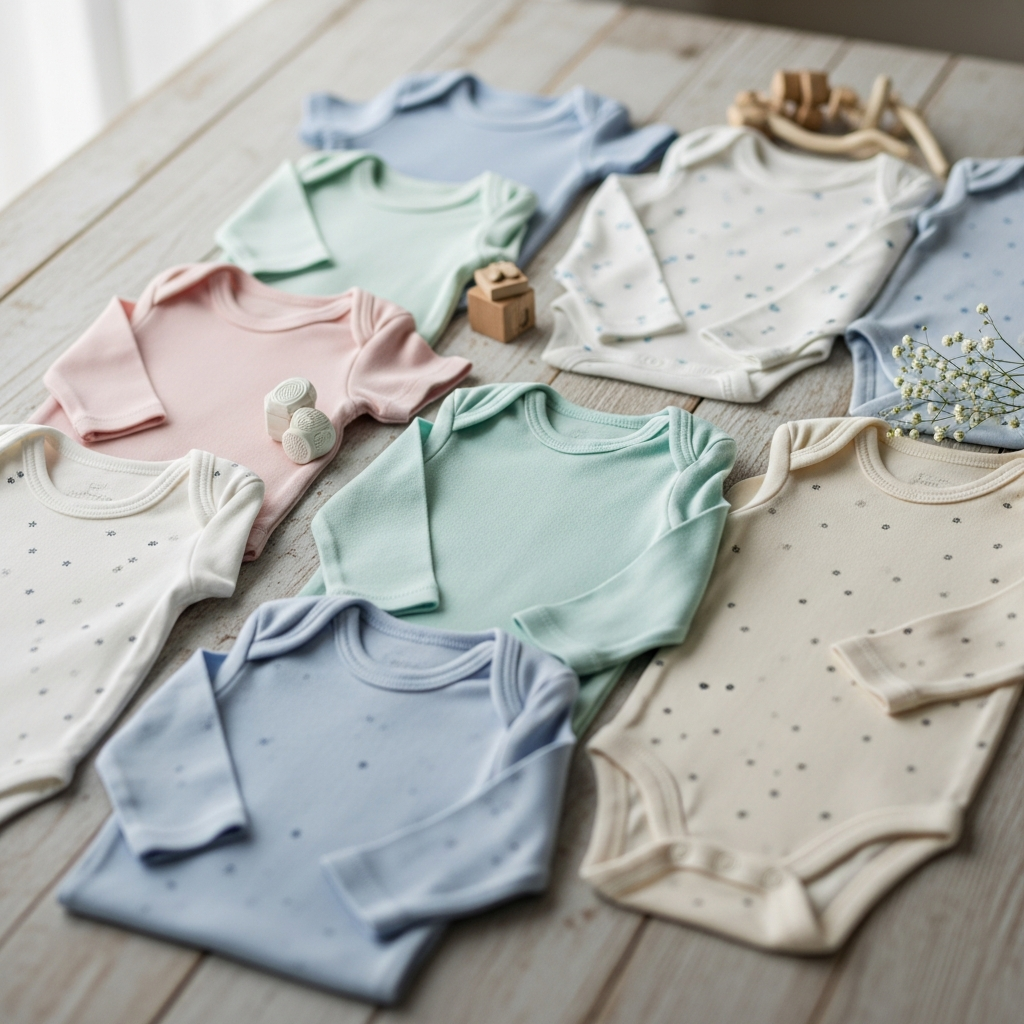
Bodysuits are the unsung heroes of infant clothing. These versatile pieces work as standalone outfits, base layers, or foundations for any baby look. Their snap closures keep diapers secure, and the envelope neckline allows you to pull them down during diaper disasters.
Types of Bodysuits to Include
| Type | Best For | Features to Look For |
|---|---|---|
| Short-sleeve bodysuits | Warm weather, layering | Envelope neck, quality bottom snaps |
| Long-sleeve bodysuits | Cooler weather, standalone wear | Fold-over mittens, reinforced snaps |
| Sleeveless bodysuits | Hot summer, under outfits | Breathable fabric, stretchy fit |
| Kimono/Side-snap bodysuits | Newborns, umbilical cord healing | No over-the-head dressing required |
What Makes a Quality Bodysuit
Not all onesies are created equal. When building your newborn clothes essentials, prioritize these features:
- Fabric: Soft, breathable materials like bamboo or organic cotton
- Neckline: Envelope or lap shoulders for easier changes
- Snaps: Reinforced, nickel-free closures that stay secure
- Design: Tagless labels to prevent skin irritation
- Sizing: Pre-washed and pre-shrunk for accurate fit
Finding soft, well-designed bodysuits makes all the difference in daily comfort. Browse baby bodysuits with thoughtful features like reinforced snaps and gentle fabrics that respect your baby's delicate skin.
Baby Sleepers and Zippered Footie Pajamas Made for Easy Changes
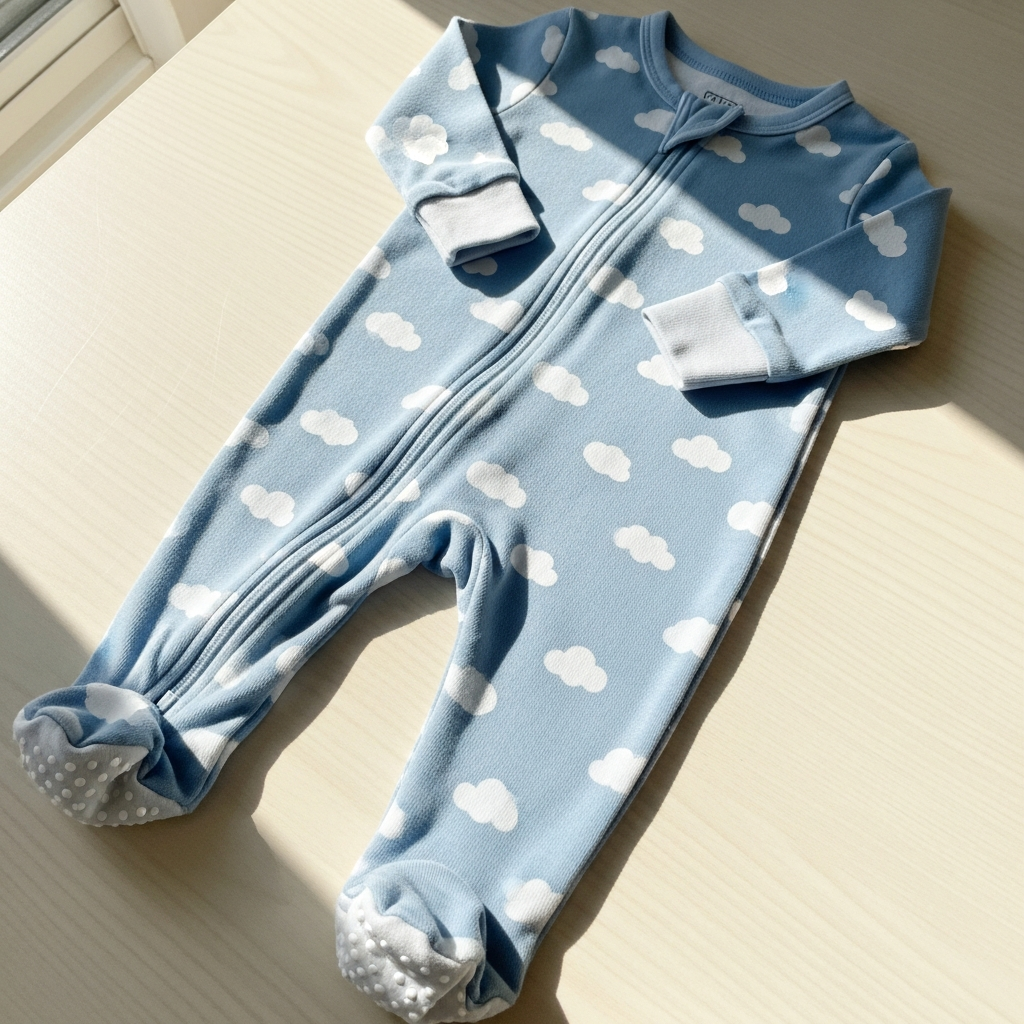
Sleepers are the workhorses of your baby's wardrobe. These all-in-one garments eliminate outfit coordination (a blessing at 3 AM) and keep baby cozy from neck to toes while reducing the need for loose blankets in the crib.
Zippers vs. Snaps: The Great Debate
| Feature | Zippers | Snaps |
|---|---|---|
| Diaper change speed | Faster, one smooth motion | Slower, multiple closures |
| Nighttime changes | Preferred by most parents | More fumbling in dim lighting |
| Safety concerns | Look for zipper guards | No pinch concerns |
| Durability | Long-lasting | May pop open over time |
| Best feature | Two-way zipper access | No zipper against skin |
Footie vs. Footless: When to Choose Each
- Footie pajamas: Perfect for newborns and cold weather. No socks needed, maximum warmth.
- Footless rompers: Better for warm weather, active crawlers, and extended sizing flexibility.
Quality sleepers with thoughtful design features make nighttime changes easier for everyone. Explore zippered footie pajamas and rompers designed with parents in mind, featuring two-way zippers and built-in mittens.
Infant Gowns for Easy Nighttime Changes
Infant gowns are the best-kept secret of the newborn phase. These dress-like garments with an open or knotted bottom eliminate fumbling with closures. Simply lift, change, and pull back down. When changing diapers 8-12 times daily, this simplicity is revolutionary.
Why Parents Love Knotted Gowns
- Fastest diaper changes possible (especially valuable at 3 AM)
- Easy access for umbilical cord care in the first weeks
- Comfortable fit with no pressure on baby's tummy
- Adjustable length with the tie-knot design
- Perfect for hospital stays and coming-home outfits
When to Use Infant Gowns
| Situation | Why Gowns Work Best |
|---|---|
| First 4-6 weeks | Frequent diaper changes (8-12 per day) |
| Nighttime sleep | Minimal disruption during changes |
| Coming home outfit | Easy and comfortable for first car ride |
| Hospital stay | Quick access for medical checks |
For those exhausting early weeks, infant gowns can be a lifesaver. Discover comfortable, practical infant gowns that make diaper duty a breeze while keeping your little one cozy and content.
Seasonal Baby Clothing Guide for Every Weather
Understanding how to dress your baby for different seasons is crucial because newborns cannot regulate their body temperature like adults can. According to the American Academy of Pediatrics, babies can lose heat up to four times more quickly than adults due to their higher body surface area relative to weight.
The Golden Rule of Baby Dressing
The American Academy of Pediatrics recommends dressing your baby in no more than one extra layer than you would wear. Signs of overheating include sweating, flushed skin, and rapid breathing. Signs of being too cold include a cool chest or tummy and increased fussiness.
Spring Baby Clothing Essentials
- Layering is key during transitional weather
- Light cotton or bamboo bodysuits as base layers
- Cardigan or light jacket for outdoor time
- Lightweight sleep sacks for naps
- Essential items: 4-5 long-sleeve bodysuits, 3-4 light pants, 3-4 cotton sleepers
Summer Baby Clothing Essentials
- Prioritize breathable, moisture-wicking fabrics
- Short-sleeve or sleeveless bodysuits
- Lightweight rompers and sun hats with UPF protection
- Essential items: 5-6 short-sleeve bodysuits, 3-4 lightweight rompers, 2 sun hats
Fall and Winter Baby Clothing Essentials
- Fall mirrors spring with slightly warmer fabrics
- Winter requires a layering system: base layer + insulating layer + outer layer
- Avoid loose blankets in sleep; use sleep sacks instead
- Winter essentials: 5-6 long-sleeve bodysuits, 5-6 warm footed sleepers, 2-3 fleece layers, warm hat and mittens
What Should Baby Wear to Sleep?
| Room Temperature | What to Wear |
|---|---|
| 72-75F (22-24C) | Short-sleeve bodysuit + light sleep sack |
| 68-72F (20-22C) | Long-sleeve bodysuit + sleep sack |
| 65-68F (18-20C) | Long-sleeve bodysuit + footed pajamas + sleep sack |
| Below 65F (18C) | Multiple layers + warmer TOG-rated sleep sack |
Building a versatile newborn wardrobe means having pieces that work across seasons. Shop newborn clothes designed for comfort in any weather, from breathable summer options to cozy winter layers.
Why Bamboo Fabric is Best for Baby Clothes
For your baby's sensitive skin, bamboo has emerged as a standout fabric choice. Bamboo viscose offers a unique combination of softness, breathability, and moisture management that makes it ideal for infant clothing.
Bamboo vs. Cotton: A Direct Comparison
| Property | Bamboo | Cotton | Why It Matters |
|---|---|---|---|
| Softness | Silky, ultra-soft | Soft (varies by quality) | Gentler on newborn skin |
| Breathability | Highly breathable | Breathable | Prevents overheating |
| Temperature regulation | Thermoregulating | Moderate | Comfort in all seasons |
| Moisture-wicking | Excellent | Good | Reduces skin irritation |
| Hypoallergenic | Yes | Depends on processing | Better for sensitive skin |
| Eco-friendly | Sustainable, fast-growing | Varies | Environmental consideration |
The Science Behind Bamboo's Benefits
Research shows that bamboo has the highest capillary effect among five leading fabrics, meaning it wicks moisture more effectively than alternatives. The smooth, round fibers create minimal friction, making bamboo particularly valuable for babies with eczema or skin sensitivities.
When to Choose Bamboo
- Sleepwear: Temperature regulation during sleep is critical
- Skin-contact pieces: Bodysuits, gowns, and base layers
- Hot weather clothing: Superior moisture-wicking keeps baby dry
- Babies with eczema: Gentle fibers reduce irritation
- Year-round versatility: Thermoregulating properties work in all seasons
For parents prioritizing skin health and comfort, bamboo is the clear choice. Explore our bamboo baby clothes collection for ultra-soft, breathable essentials that treat your baby's skin with the gentleness it deserves.
Smart Shopping Tips for Building Baby's Wardrobe
Strategic shopping saves money, closet space, and the hassle of returns. Here is how to approach baby clothes shopping like a pro.
Before Baby Arrives: What to Buy
- Focus on newborn and 0-3 month sizes initially
- Limit newborn size purchases (4-6 weeks of wear maximum)
- Invest more heavily in 0-3 and 3-6 month sizes
- Keep all tags on and save receipts for potential exchanges
- Buy ahead during sales for larger sizes you will need later
Baby Registry Strategy
- Register for a variety of sizes, not just newborn
- Include different price points to accommodate all gift-givers
- Prioritize quality basics over fancy occasion outfits
- Consider seasonality for each size when selecting items
- Popular registry items: bodysuits, sleepers, sleep sacks
Budget-Smart Shopping Tips
- Quality over quantity: Fewer well-made pieces last longer and feel better
- Choose neutrals: Colors that work for future siblings or resale
- Stock up during sales: End-of-season clearance offers significant savings
- Accept hand-me-downs gracefully: Inspect for wear, but do not turn down free clothes
- Splurge on: Sleepwear and everyday bodysuits (highest usage items)
- Save on: Special occasion outfits and sizes baby may skip
What to Avoid Buying
- Too many newborn-sized items (most babies outgrow them quickly)
- Complicated outfits with excessive closures
- Stiff, non-stretchy fabrics that restrict movement
- Items without easy diaper access
- Excessive "special occasion" pieces worn only once
- Anything requiring dry cleaning or delicate care
Complete Baby Clothes Checklist (Your Printable Summary)
Here is everything in one scannable reference. Print it or share with anyone helping you prepare.
The Complete Infant Clothing Checklist
| Category | Item | Quantity | Sizes to Buy |
|---|---|---|---|
| Bodysuits | Short-sleeve | 5-6 | NB, 0-3, 3-6 |
| Long-sleeve | 5-6 | NB, 0-3, 3-6 | |
| Kimono/Side-snap | 2-3 | Newborn only | |
| Sleepwear | Zippered footie pajamas | 6-8 | 0-3, 3-6 |
| Footless sleepers | 2-3 | 3-6 | |
| Infant gowns | 3-4 | NB, 0-3 | |
| Sleep sacks | 2-3 | 0-6, 6-12 | |
| Bottoms | Pants/Leggings | 4-6 | 0-3, 3-6 |
| Layers | Cardigan/Sweater | 2-3 | 0-3, 3-6 |
| Light jacket | 1-2 | 0-3, 3-6 | |
| Accessories | Socks/Booties | 8-10 pairs | 0-6 |
| Hats/Beanies | 3-4 | NB, 0-6 | |
| Scratch mittens | 3-4 pairs | Newborn | |
| Hospital Bag | Coming home outfit | 1-2 options | NB + 0-3 backup |
| Hospital stay outfits | 2-3 | Newborn |
Hospital Bag Mini-Checklist
- 2-3 onesies/bodysuits
- 2-3 sleepers or infant gowns
- 1 coming home outfit (weather-appropriate)
- 2-3 pairs of socks
- 1-2 hats
- 1 receiving blanket for the ride home
Frequently Asked Questions
How many onesies does a newborn need?
Most newborns need 6-8 onesies as a minimum, with 10-12 being more comfortable for less frequent laundry. Plan for 2-3 outfit changes per day due to diaper blowouts, spit-ups, and drool. Split your purchase between short and long-sleeve styles based on the season your baby will be born.
Are zippers or snaps better for baby clothes?
Most parents prefer zippers, especially for nighttime. Zippers are faster and easier in dim lighting. Look for two-way zippers allowing bottom-up diaper access without undressing baby. Snaps work well for bodysuits and daytime wear.
Is bamboo or cotton better for baby clothes?
Bamboo is softer, more breathable, and better at temperature regulation. For sensitive skin or eczema, bamboo is preferred. Cotton remains durable, especially organic cotton. Many parents use both, choosing bamboo for sleepwear.
What size baby clothes should I buy before birth?
Focus on 0-3 month sizes, as most babies fit newborn only 4-6 weeks. Buy a few newborn pieces with tags on. Invest more in 0-3 and 3-6 sizes, considering seasonality for each size.
How many sleepers should I buy for my baby?
Plan for 6-8 sleepers (minimum 4-6). Sleepers are worn for sleep and daytime in early months. Prioritize zippered styles with two-way zippers. Mix footie and footless based on season.
What should a newborn wear home from the hospital?
Choose a comfortable, weather-appropriate outfit. A soft onesie with sleeper or gown works well. Avoid complicated outfits. Bring two options in newborn and 0-3 sizes since you cannot predict size.
What fabric is best for babies with eczema?
Bamboo and organic cotton are best for eczema. Bamboo's smooth fibers reduce friction and its moisture-wicking prevents flare-ups. Avoid synthetics, wool, and harsh chemicals. Look for OEKO-TEX certified clothing.
Do babies need separate day and night clothes?
In early months, no. Sleepers, gowns, and bodysuits work for both. This simplifies laundry. After 6 months, some parents add designated pajamas for routine-building, but it is optional.
Building Your Baby's Wardrobe with Confidence
With this baby clothes checklist, you now know exactly how many onesies, sleepers, and gowns to stock, how to dress baby safely each season, and why quality fabrics like bamboo matter for sensitive skin. Key takeaways:
- Quality over quantity: Invest in well-made basics that will withstand countless washes
- Prioritize easy changes: Zippers, gowns, and accessible snaps save sanity
- Consider fabric carefully: Bamboo offers exceptional benefits for comfort and skin health
- Plan by size: Focus on 0-3 months over newborn sizes
- Adjust for season: Layer appropriately and choose breathable fabrics
Trust your instincts, use this checklist as your guide, and know that you are already doing a wonderful job.
Ready to check items off your list? PatPat offers a complete baby clothes collection featuring comfortable, practical, and beautifully designed essentials your little one will love. From ultra-soft bamboo sleepers to adorable bodysuits with easy-change features, you will find everything you need to build a wardrobe that works as hard as you do.
Additional Resources
For more guidance on caring for your newborn, explore these trusted resources:




