


You remember the moment perfectly. That first touch of bamboo fabric against your fingertips felt like nothing you had experienced before in baby clothing. Silky, buttery soft, almost impossibly smooth. You held that tiny bamboo sleeper up to your cheek and thought, "This is what my baby deserves."
Then came the anxiety. How do you wash something this luxurious without ruining it? Will it survive the inevitable spit-up stains, the diaper blowouts, the constant laundering that comes with a newborn? If you have wondered how to wash bamboo baby clothes without losing that incredible softness, you are not alone.
Here is the truth that many parents discover too late: bamboo baby clothes can actually get softer with proper washing, not rougher. The secret lies in understanding what makes bamboo fabric unique and treating it accordingly. Whether you have recently invested in bamboo baby clothes from PatPat or are considering adding them to your little one's wardrobe, this guide will ensure you get years of buttery softness from every piece.
By the end of this comprehensive bamboo baby clothes care guide, you will know exactly how to wash, dry, store, and even restore bamboo fabric. These are not just tips passed down from well-meaning relatives. This is the science-backed approach that keeps bamboo clothing soft enough to pass down to siblings and even future generations.
Why Bamboo Baby Clothes Require Special Care
Before diving into care instructions, understanding why bamboo viscose behaves differently than cotton or synthetic fabrics will help everything else make sense. Think of this as learning the "why" behind the rules.
Understanding Bamboo Viscose Fiber Structure
Bamboo viscose is a semi-synthetic cellulose fiber created from bamboo pulp through a chemical process called the viscose method. What makes this fiber remarkable is its microscopic structure. According to textile research, bamboo viscose fibers have a cross-section covered in micro-gaps and massive pores, resembling Swiss cheese. These microscopic voids create natural ventilation and temperature regulation.
Unlike wool or synthetic filaments that have microscopic barbs, bamboo fibers feature a smooth, circular cross-section. This is why the fabric feels silky against sensitive baby skin rather than scratchy or irritating. Independent testing has confirmed that bamboo viscose maintains greater than 12 cm vertical wicking height within 5 minutes, outperforming cotton and polyester blends for moisture management.
How Heat and Harsh Chemicals Damage Bamboo Fibers
Here is where many parents unknowingly sabotage their bamboo investment. Those hollow fibers that make bamboo so breathable and soft are also what make it vulnerable to damage. High heat causes bamboo fibers to contract rapidly, becoming rigid and losing their natural drape. Harsh chemicals strip the fiber surface of its smooth characteristics.
The most counterintuitive problem? Traditional fabric softener actually damages bamboo. Research shows that fabric softener leaves a coat of chemicals on the surface that reduces the soft feel and impacts the absorbency of the fibers. This coating builds up over time, making your buttery soft bamboo feel progressively stiffer with each wash.
Think of it like this: you would not wash fine silk in hot water with harsh detergent and expect it to stay luxurious. Bamboo viscose deserves the same respect.
The Complete Bamboo Baby Clothes Washing Guide
Now for the actionable steps that will keep your bamboo baby clothes soft wash after wash. These bamboo fabric washing instructions are based on both textile science and real-world parent experience.
Water Temperature and Cycle Settings for Bamboo Fabric
Cold water is non-negotiable for bamboo baby clothes care. The ideal bamboo fabric wash temperature is cold to lukewarm, never exceeding 30 degrees Celsius or 86 degrees Fahrenheit. As textile care experts emphasize, washing bamboo in cold water is the single best thing you can do to prevent shrinking and preserve softness and strength for years.
Here are your optimal washing settings:
- Water temperature: Cold or cool (30C/86F maximum)
- Cycle setting: Gentle or delicate
- Spin speed: Low or medium (high spin stresses fibers)
- Load size: Do not overload; give garments room to move freely
Best Detergents for Bamboo Baby Clothes
Choosing the best detergent for bamboo clothes makes a significant difference in long-term softness. Look for these characteristics:
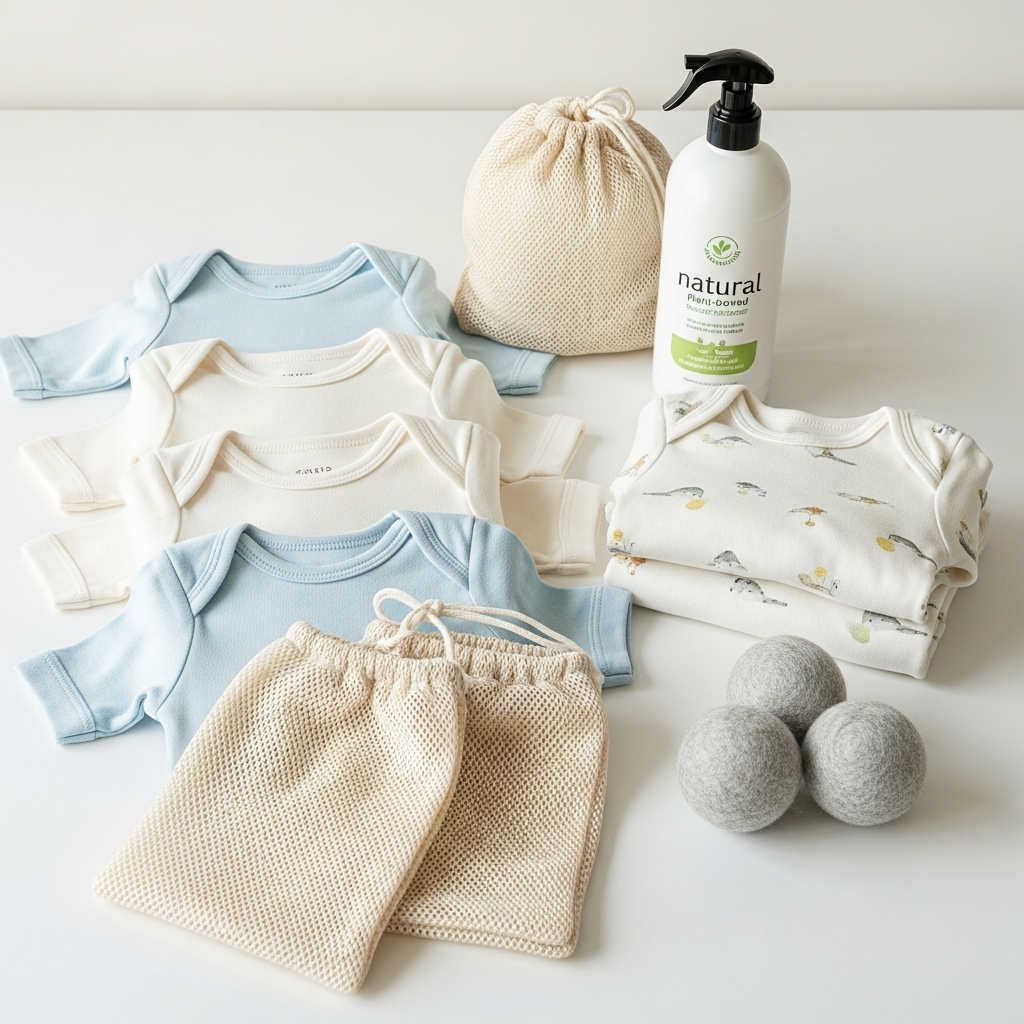
- Mild, plant-based formulas
- Enzyme-free (enzymes can break down cellulose fibers)
- Fragrance-free or naturally scented
- Eco-friendly and biodegradable
- Specifically labeled as baby-safe
Popular choices among parents who successfully maintain bamboo softness include Seventh Generation Free and Clear, ECOS Baby Laundry Detergent, and Dreft Pure Gentleness. The key is using less detergent than you think necessary. Most parents use too much, and that excess does not rinse completely from the fabric. Detergent buildup is one of the primary reasons bamboo loses its silky texture over time.
A helpful rule of thumb: use about half the amount recommended on the detergent bottle for bamboo baby clothes. These garments are typically lightly soiled compared to adult workout clothes or heavily stained items, so they simply do not need as much cleaning power. Less detergent means less residue, which means softer fabric.
What Products to Avoid When Washing Bamboo
Knowing what to avoid is just as important as knowing what to use. Keep these products away from your bamboo baby clothes:
| Product to Avoid | Why It Harms Bamboo |
|---|---|
| Chlorine bleach | Breaks down cellulose fibers, causes yellowing |
| Traditional fabric softener | Creates coating that reduces softness and breathability |
| Optical brighteners | Chemical residue irritates sensitive skin |
| Hot water pre-soaking | Causes fiber contraction and potential shrinkage |
| Harsh stain removers | Degrades fiber integrity over time |
How to Dry Bamboo Baby Clothes Without Shrinking
Mastering the drying process is where many parents unknowingly undo all their careful washing work. Whether you are caring for bamboo pajamas from PatPat or everyday bamboo basics, proper drying is the key to longevity.
Air Drying Best Practices for Bamboo Fabric
Air drying is the gentlest method for bamboo baby clothes and what textile experts recommend for maximum fabric preservation. Here is how to do it right:
- Flat drying: Lay garments flat on a clean, dry towel or drying rack. This prevents stretching and maintains shape.
- Avoid direct sunlight: UV rays can fade colors and weaken fibers over time. Choose a shaded area with good air circulation.
- Never wring or twist: Gently press excess water out between towels instead.
- Indoor drying: A drying rack indoors is ideal for temperature and humidity control.
Air drying actually helps maintain that silky texture you love. As moisture evaporates naturally, bamboo fibers relax into their original smooth configuration rather than being forced into a contracted state by heat.
Many parents find that setting up a simple indoor drying station makes air drying convenient rather than burdensome. A folding drying rack near a window with good airflow can dry a full load of bamboo baby clothes in just a few hours during warmer months. In winter, placing the rack near a heating vent speeds up the process without exposing fabrics to the harsh direct heat of a dryer.
Machine Dryer Settings That Preserve Softness
Real life happens. Sometimes you need clothes dried faster than air drying allows. Can you put bamboo baby clothes in the dryer? Yes, but with important caveats.
Use these bamboo clothes dryer settings to minimize damage:
- Heat setting: Low heat only, or preferably the air fluff or no-heat tumble setting
- Timing: Remove while still slightly damp to prevent over-drying
- Dryer balls: Use wool dryer balls instead of dryer sheets (dryer sheets leave the same problematic coating as fabric softener)
- Load size: Dry bamboo items separately from heavy fabrics like jeans or towels
Preventing Common Bamboo Fabric Problems
Prevention is always easier than repair. These proactive strategies will help you avoid the most common issues parents encounter with bamboo baby clothes.
How to Stop Bamboo Baby Clothes from Pilling
Pilling occurs when fibers break and tangle on the fabric surface. While some minimal pilling can occur with any fabric, you can significantly reduce it with these strategies:
- Separate laundry carefully: Never wash bamboo with rough fabrics like denim, towels, or items with zippers and velcro
- Use mesh laundry bags: This reduces friction between garments
- Turn items inside out: Protects the visible outer surface
- Avoid overloading: Crowded washing machines increase fabric-to-fabric friction
- Use appropriate detergent amounts: Excess detergent residue can contribute to fiber damage
If minor pilling does occur, a fabric shaver or sweater stone can gently remove pills without damaging the underlying fabric. Work gently in one direction and avoid pressing too hard. Many parents find that addressing pilling early, before it spreads, keeps bamboo looking new longer.
Protecting Against Shrinkage and Color Fading
Shrinkage and fading are two concerns that worry parents about bamboo fabric. Here is how to prevent both:
To prevent bamboo shrinkage:
- Cold water washing is non-negotiable
- Low heat or air dry only
- Never wring or twist wet bamboo
- Avoid hot water pre-soaking, even for stains
To preserve bamboo color:
- Wash dark and light bamboo items separately
- Add half a cup of white vinegar to the rinse cycle to help set colors
- Dry away from direct sunlight
- Store in a cool, dark location
How to Restore Softness to Rough Bamboo Clothes
What if your bamboo baby clothes have already lost their softness? Do not despair. In many cases, you can restore that buttery texture with these proven methods.
The White Vinegar Rinse Method
White vinegar is a natural fabric softener that works brilliantly for bamboo. According to cleaning experts, white vinegar works by breaking down detergent residue that can build up on laundry and make items feel stiff.
Here is how to use the vinegar rinse method:
- Add one-half cup of white distilled vinegar to the fabric softener compartment or directly into the rinse cycle
- Wash on cold with a gentle cycle using minimal or no detergent
- Air dry or tumble dry on low heat
- Repeat monthly as a maintenance treatment
Do not worry about vinegar smell. It rinses out completely, leaving no lingering scent on the fabric.
The Baking Soda Refresh Technique
For bamboo that smells musty or needs extra softening power, baking soda is your friend:
- Add one-half cup of baking soda directly to the wash cycle
- Use cold water and a gentle cycle
- For maximum effect, combine with a vinegar rinse (add them separately: baking soda in wash, vinegar in rinse)
- Air dry for best results
Baking soda is safe for sensitive baby skin and helps neutralize odors while gently softening fibers. This makes it particularly useful for bamboo clothes that have been in storage or those handed down from another family.
Hard Water Considerations
If you live in an area with hard water, mineral deposits can accumulate on bamboo fibers and contribute to roughness over time. Signs of hard water impact include gradual stiffening despite proper washing and a grayish tinge to light-colored fabrics.
To combat hard water effects on your bamboo baby clothes:
- Add white vinegar to every wash, not just restoration treatments
- Consider installing a water softener for your laundry area
- Use a laundry additive designed to neutralize minerals
- Run an extra rinse cycle to remove more mineral-laden water
Long-Term Storage Tips for Bamboo Baby Clothes
When you invest in quality bamboo clothing from PatPat for your little one, proper storage ensures these pieces can be passed down to siblings or saved for future babies.
Preparing Bamboo Clothes for Long-Term Storage
Before storing bamboo baby clothes between seasons or for a future child:
- Wash and fully dry: Store only completely clean and dry items. Any residual moisture encourages mold and mildew.
- Treat stains first: Stains that are not removed before storage can set permanently and become impossible to remove later.
- Fold neatly: Avoid hanging for long-term storage as this can stretch shoulder seams. Fold garments gently.
- Add natural fresheners: Cedar blocks or lavender sachets provide pleasant scent and natural moth deterrence.
Creating Ideal Storage Conditions
Where and how you store bamboo makes a significant difference in how it emerges months or years later:
| Do This | Avoid This |
|---|---|
| Use breathable cotton storage bags | Plastic containers or vacuum-sealed bags |
| Store in a cool, dry closet | Attics (temperature extremes) |
| Choose dark or dim locations | Areas with direct sunlight |
| Check periodically for issues | Basements (humidity problems) |
Plastic containers trap moisture and can cause yellowing over time. Vacuum-sealed bags, while space-efficient, can crush bamboo fibers and cause permanent creasing. Breathable storage is always better for natural fiber fabrics.
Making Bamboo Baby Clothes Last for Multiple Children
One of the best investments you can make as a parent is choosing clothing that lasts beyond one child. With proper care, bamboo clothes can last 9-12 years of use without losing softness.
Year-Over-Year Maintenance Strategies
To maximize your bamboo investment across multiple children:
- Create a seasonal care routine: Perform a vinegar refresh treatment quarterly to prevent buildup accumulation
- Rotate pieces: If you have favorite items, rotate them to prevent excessive wear on any single garment
- Address issues immediately: Small stains and minor repairs are easier to handle before they become permanent problems
- Track quality: Note which pieces hold up best for future purchasing decisions
When to Retire Bamboo Pieces (And When to Keep Going)
Not all bamboo wears out at the same rate. Here is how to evaluate when pieces are ready for retirement:
Signs it is time to retire:
- Thin spots or visible wear-through areas
- Permanent pilling that cannot be removed
- Elastic failure in waistbands or cuffs
- Stains that will not come out despite treatment
Signs you can keep going:
- Fabric still feels soft after washing
- Colors remain vibrant
- Seams and stitching are intact
- Shape holds after washing and drying
Well-cared-for bamboo often lasts three to five years of active use and can be worn by multiple children. When calculating cost-per-wear, bamboo frequently outperforms cheaper alternatives that need replacing after one child.
Repurposing Retired Bamboo
Even when bamboo clothes are too worn for another child to wear, the fabric often remains useful. Many parents cut retired bamboo pieces into soft cleaning cloths for dusting or polishing. The smooth, lint-free surface that made bamboo gentle on baby skin also makes it excellent for cleaning glass and electronics. Other creative uses include stuffing for handmade toys, quilt squares for a memory blanket, or soft pet bedding.
Frequently Asked Questions About Bamboo Baby Clothes Care
How do you wash bamboo baby clothes?
Wash bamboo baby clothes in cold water on a gentle or delicate cycle with a mild, enzyme-free detergent. Turn garments inside out and use a mesh laundry bag for extra protection. Avoid bleach and fabric softener, which damage bamboo fibers.
Can you put bamboo baby clothes in the dryer?
Yes, but use the lowest heat setting or air fluff only. Remove while slightly damp to prevent over-drying, which causes stiffness. For best results, air dry flat or on a drying rack.
Why do my bamboo clothes feel rough after washing?
Rough bamboo is usually caused by detergent buildup, high heat drying, or hard water mineral deposits. Try a vinegar rinse with one-half cup of white vinegar in the rinse cycle to dissolve buildup and restore softness.
Should you use fabric softener on bamboo baby clothes?
No. Fabric softener coats bamboo fibers, reducing their natural softness and breathability over time. Use white vinegar in the rinse cycle as a natural alternative that actually enhances softness without harmful buildup.
Does bamboo fabric shrink in the dryer?
Bamboo can shrink significantly in high heat. Always use low heat or air dry settings to prevent shrinkage. Cold water washing combined with low-heat or air drying is the best combination for maintaining bamboo's original size and shape.
How do you restore softness to bamboo fabric?
Add one-half cup white vinegar to the rinse cycle to dissolve detergent buildup. For extra softness, also add one-half cup baking soda to the wash cycle. Air dry for best results. This treatment can be repeated monthly as maintenance.
How long do bamboo baby clothes last?
With proper care, quality bamboo baby clothes can last 3-5 years of active use and be passed down to multiple children. Some parents report bamboo lasting up to 9-12 years when following proper care guidelines.
Do bamboo baby clothes pill easily?
Bamboo can pill when washed with rough fabrics or subjected to excessive friction. Prevent pilling by washing inside out in a mesh laundry bag, separate from denim, towels, and items with zippers or velcro.
Keep Your Bamboo Baby Clothes Buttery Soft for Years
The secret to keeping bamboo baby clothes soft really comes down to three simple principles: cold water, gentle handling, and avoiding heat and harsh chemicals. These small changes in your laundry routine make a tremendous difference in how your bamboo fabric looks and feels over time.
Remember, bamboo viscose is a premium fabric that rewards proper care. Unlike cheaper alternatives that wear out quickly, well-maintained bamboo can last through multiple children, making it one of the smartest investments in your baby's wardrobe. The same buttery softness that made you fall in love with bamboo in the first place can be preserved for years when you follow these expert care techniques.
Whether you are washing bamboo for the first time or trying to restore pieces that have lost their magic, you now have the knowledge to succeed. Start with cold water and gentle detergent, skip the fabric softener in favor of natural vinegar rinses, and always choose low heat or air drying. Your baby's sensitive skin and your investment will thank you.
Ready to experience the difference quality bamboo makes? Explore the PatPat collection of bamboo baby clothes designed to stay soft wash after wash. With proper care, these pieces will become treasured staples in your family's clothing rotation for years to come.





