


Picture this: you lift your baby out of the car seat on a 90-degree afternoon and see sweat pooling behind their tiny neck. Red patches are forming in the creases of their skin. Your parental instinct screams, "Fix this." Here is the truth most parents discover too late -- the single biggest tool you have for keeping your baby comfortable in summer is not the thermostat or the fan. It is the fabric touching their skin.
Choosing the best breathable fabrics for babies is about far more than comfort. It is about safety. Babies cannot regulate body temperature the way adults can, and the wrong fabric in hot weather can lead to overheating, heat rash, disrupted sleep, and genuine health risks. That is why understanding which summer baby clothes truly perform matters so much.
The best fabric for baby clothes in summer is bamboo. Bamboo fabric is approximately 20% more breathable than cotton, naturally wicks moisture, and stays about 3 degrees cooler against the skin. It is also hypoallergenic, offers natural UV protection, and is gentle on sensitive or eczema-prone skin.
In this guide from PatPat, we will walk through a complete comparison of the four most popular natural fabrics for baby clothing -- cotton, muslin, linen, and bamboo -- and show you the science behind why bamboo outperforms them all. By the end, you will know exactly what to look for, what to avoid, and how to dress your baby for every summer scenario.
How Summer Heat Affects Your Baby's Skin and Body
Before we compare fabrics, it helps to understand why your baby is so much more vulnerable to heat than you are. This is not about being overprotective -- it is about biology.
Why Babies Overheat Faster Than Adults
Your baby's thermoregulation system is still developing. Infants under 12 months have immature sweat glands, which means they cannot cool themselves efficiently through perspiration. According to Stanford Children's Health, a baby's body surface area is about three times greater than an adult's relative to body weight, meaning they absorb ambient heat much faster.
The result? Babies can lose or gain heat as much as four times more quickly than adults. In summer, that rapid heat absorption can push a small body toward overheating with alarming speed. And because their underdeveloped nervous system makes it harder to signal discomfort clearly, parents need to act proactively rather than reactively.
This is not a minor concern. The American Academy of Pediatrics identifies overheating as a known risk factor for SIDS and sleep-related infant deaths. Fabric choice is a frontline defense in preventing baby overheating in summer.
Recognizing Heat Rash, Overheating, and Fabric-Related Irritation
When your baby gets too hot, the first signs often show up on their skin. Heat rash (miliaria) appears as tiny red bumps, typically in areas where fabric traps heat: neck folds, the diaper area, behind the knees, and in elbow creases. It is easy to confuse with eczema flare-ups, but heat rash is directly caused by blocked sweat ducts -- and the wrong fabric makes it worse.
Watch for these overheating signs:
- Flushed, red cheeks
- Damp hair, especially at the nape of the neck
- Rapid breathing or restlessness
- A warm or hot chest (the most reliable check spot)
Non-breathable fabrics create a micro-climate of trapped heat and moisture against your baby's skin. That is why baby skin irritation from clothes often comes down to fabric choice, not detergent or allergies. Choosing a breathable, moisture-wicking material is the most effective baby heat rash prevention strategy you can adopt.
The 4 Most Breathable Natural Fabrics for Summer Baby Clothes
Not all natural fabrics perform equally in hot weather. Here is an honest look at the four most popular options for summer baby clothing -- their strengths, limitations, and ideal uses.
Cotton -- The Familiar Everyday Staple
Cotton is the most widely available and affordable baby clothing fabric. It is breathable, soft, and familiar -- and organic cotton (GOTS certified) avoids pesticide residues. However, cotton has a key summer limitation: it absorbs moisture and holds it against the skin rather than wicking it away. On humid days, cotton baby clothes feel clammy and damp. It also offers minimal UV protection, typically only UPF 5-10.
Best for: Mild summer days under 80F, indoor wear, budget-friendly basics.
Muslin -- The Lightweight Layer
Muslin is an open, loosely woven fabric with excellent air circulation -- extremely lightweight and quick-drying, which is why it dominates the swaddle and blanket market. For structured clothing like onesies and rompers, though, its thin weave loses shape faster and is less durable for daily wear. It offers no UV protection or antibacterial properties.
Best for: Swaddling blankets, light summer layering pieces, burp cloths.
Linen -- The Breathability Specialist
Made from flax fibers, linen is one of the most inherently breathable woven fabrics, conducting heat away from the body and drying rapidly. The catch? Its rougher texture is not ideal against newborn skin, it wrinkles heavily, and it has limited availability in baby sizes at a higher price point.
Best for: Decorative baby items, summer hats, older baby outerwear.
Bamboo -- The All-Around Summer Performer
Bamboo combines the breathability of linen, a silk-like softness, and the comfort of cotton -- without the drawbacks. It is approximately 20% more breathable than cotton, naturally wicks moisture, and stays about 3 degrees cooler to the touch.
Bamboo fabric is hypoallergenic and antibacterial, and it offers natural UV protection. It is available across the full range of bamboo baby clothes: onesies, rompers, sleepers, sleep sacks, and pajamas. For parents searching for the best breathable fabric for baby clothes in summer, bamboo delivers across every category.
Best for: All summer scenarios -- daytime wear, nighttime sleep, outdoor adventures, and sensitive skin.
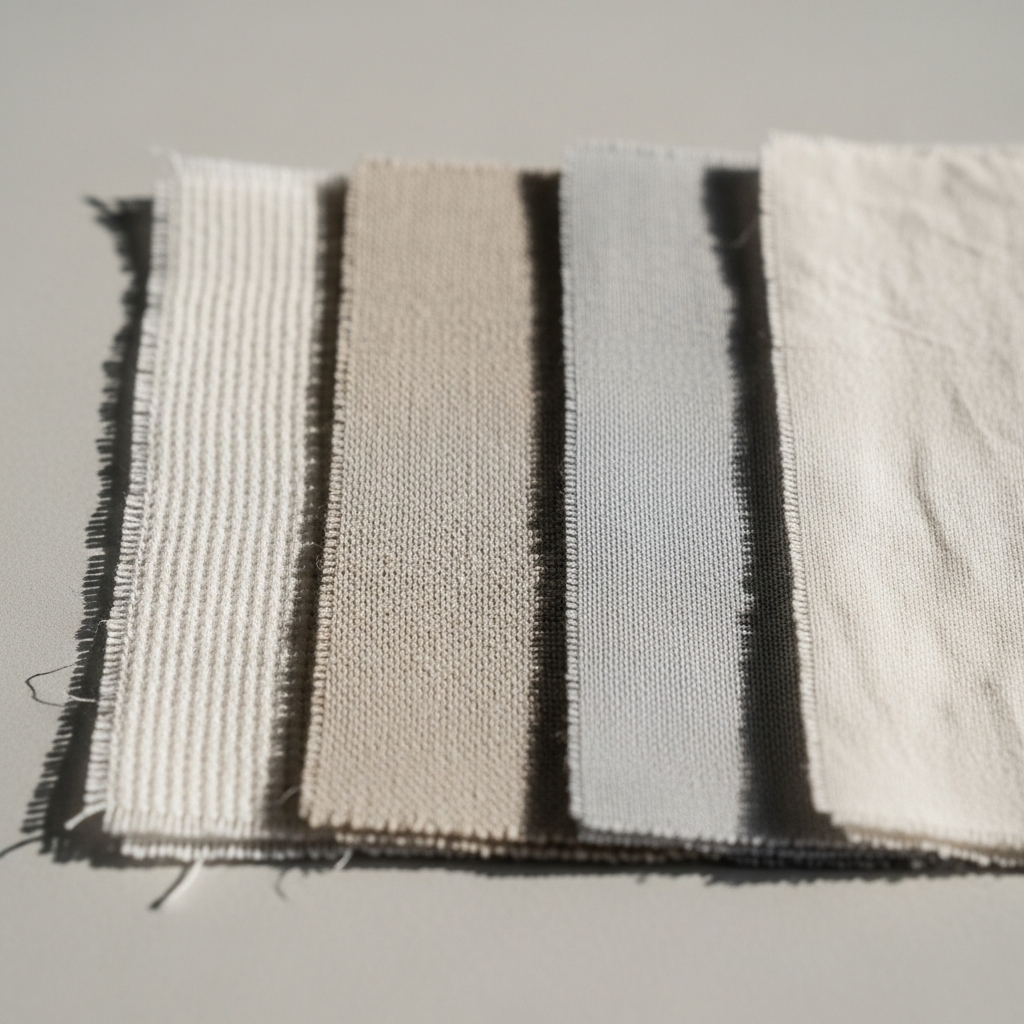
The Science Behind Bamboo: Why It Outperforms Every Other Fabric
Most baby clothing guides make vague claims about bamboo being "breathable." Let us dig into the actual science -- the fiber structure, the data, and the measurable properties that set bamboo apart.
Micro-Gap Fiber Structure and Temperature Regulation
Bamboo fibers contain natural micro-gaps and micro-holes in their cross-section that create ventilation channels. These tiny openings allow air to circulate freely between the fabric and your baby's skin, preventing heat buildup.
This tiny openings. Textile testing shows bamboo fabric is approximately 20% more breathable than equivalent-weight cotton. Research also indicates that bamboo viscose reduces skin surface temperature 2-3 degrees Celsius faster than cotton under identical conditions. What fabric keeps baby cool in summer? The data consistently points to bamboo.
Even more impressive, this thermoregulating property works bidirectionally -- cooling in heat and providing warmth in cold. That makes bamboo baby clothes temperature regulating across seasons, not just a summer-only purchase.
Natural Moisture-Wicking That Keeps Babies Dry
Here is where bamboo really separates itself from cotton. Cotton absorbs moisture and holds it -- your baby ends up lying in a damp layer of fabric. Bamboo fiber, by contrast, pulls sweat outward to the fabric surface where it evaporates. Baby stays dry, not clammy.
For babies with limited sweat gland function, this matters enormously. The small amount of sweat their body produces needs to be managed immediately. When that moisture lingers against the skin, it creates the perfect conditions for heat rash, fungal irritation, and friction-based chafing. Moisture wicking baby clothes made from bamboo address all three problems simultaneously.
Hypoallergenic and Naturally Antibacterial Properties
Bamboo contains a natural bio-agent that resists bacterial growth. Research published in the International Journal of Environmental Research and Public Health has investigated bamboo's antibacterial characteristics, finding that antibacterial agents in bamboo are associated with its lignin content. This property helps reduce odor and stays effective through multiple washes.
The fibers themselves are smooth and round with no sharp edges or barbs. They glide over skin rather than scratching -- making bamboo ideal for hypoallergenic baby clothes and particularly beneficial for babies with eczema, contact dermatitis, or generally sensitive skin. If your little one has reactive skin, bamboo baby clothes for eczema in summer can make a noticeable difference in flare-ups.
Bamboo vs Cotton vs Muslin: The Complete Side-by-Side Comparison
Parents searching for bamboo vs cotton vs muslin for babies want clear, honest answers. This comparison table puts all four natural fabrics head to head across the properties that matter most for summer baby comfort.
| Property | Bamboo | Organic Cotton | Muslin | Linen |
|---|---|---|---|---|
| Breathability | Excellent (20% more than cotton) | Good | Very Good (open weave) | Excellent |
| Moisture-Wicking | Excellent (pulls moisture away) | Fair (absorbs and holds) | Good (dries fast) | Good |
| Softness | Exceptionally soft (silk-like) | Soft | Soft (improves with washes) | Rough (not ideal for newborns) |
| Temperature Regulation | Excellent (2-3 degrees cooler) | Moderate | Moderate | Good |
| UV Protection | Natural UPF 50+ | Low (UPF 5-10) | Minimal | Moderate (UPF 15-20) |
| Hypoallergenic | Yes (naturally) | Yes (organic only) | Depends on blend | Yes |
| Antibacterial | Yes (natural agents) | No | No | Mild |
| Durability | High | High | Moderate | Very High |
| Eco-Friendliness | High (fast-growing, low water) | Moderate (organic) to Low (conventional) | Depends on base fiber | High (flax-based) |
| Price Range | Mid-High | Low-Mid | Low-Mid | High |
| Best Summer Use | All-day wear, sleep, outdoors | Indoor basics, mild days | Swaddles, blankets, layers | Hats, light outerwear |
Let us be clear: cotton is not a bad fabric. It remains a solid, affordable choice for mild days and indoor basics. But when you look at the categories that matter most for summer baby comfort -- breathability, moisture-wicking, UV protection, and skin sensitivity -- bamboo wins across the board. That is why bamboo is better than cotton for babies in hot weather.
What about cost? Yes, bamboo costs more per garment. But consider the cost-per-wear value. Bamboo's durability means a single bamboo onesie can replace two cotton ones that get sweat-stained or trigger rash. Many parents on forums report that their bamboo pieces last through multiple children, making them the smarter long-term investment.
Ready to feel the difference for yourself? Explore PatPat's bamboo baby clothes collection to experience what natural fabric performance looks like in practice.

Bamboo's Hidden Advantage: Natural UV Protection for Summer Babies
Here is an angle that almost no other baby clothing guide covers: bamboo's natural ability to block UV radiation. For summer babies, this is a significant advantage hiding in plain sight.
What UPF Ratings Mean and Why They Matter for Babies
UPF (Ultraviolet Protection Factor) measures how much UV radiation a fabric blocks. A UPF 50+ rating means the fabric blocks over 98% of UV rays -- the highest rating available.
Why does this matter so much for babies? Research on infant skin barrier function shows that infant skin's stratum corneum is 20-30% thinner than adult skin, making it far more vulnerable to UV damage. And here is the critical point: the American Academy of Pediatrics recommends keeping babies younger than 6 months out of direct sunlight and avoiding sunscreen on infants that young. Protective clothing becomes the primary UV defense.
How Bamboo Achieves UV Protection Without Chemical Treatments
A comparative study published in the Journal of The Textile Institute found that bamboo viscose showed higher UPF ratings compared to cotton when woven with identical yarn counts. Unlike synthetic UPF fabrics that rely on chemical UV-blocking agents (which can wash out over time), bamboo's protection is linked to its dense fiber structure and natural lignin content.
The practical takeaway: a bamboo onesie or romper provides meaningful sun protection for stroller walks, park visits, and beach outings. Combine bamboo baby clothes with a wide-brim hat and shade for comprehensive sun safety, and your summer baby is well protected.
How to Dress Your Baby in Summer Heat: A Practical Guide
Now that you know which fabrics perform best, let us get practical. How do you dress baby in summer across different temperatures and scenarios? Here is a straightforward guide that takes the guesswork out of hot weather dressing.
Daytime Dressing by Temperature
| Temperature | What to Dress Baby In | Bamboo Recommendation | Sleep Guidance |
|---|---|---|---|
| Below 75F (24C) | Long-sleeve onesie + light pants | Bamboo footie or long-sleeve romper | 1.0 TOG sleep sack |
| 75-80F (24-27C) | Short-sleeve bodysuit or romper | Bamboo short-sleeve onesie | 0.5 TOG bamboo sleep sack |
| 80-85F (27-29C) | Sleeveless bodysuit or diaper + cover | Bamboo sleeveless bodysuit | 0.2 TOG or single bamboo layer |
| Above 85F (29C+) | Diaper only or very light single layer | Bamboo diaper cover | Diaper only + light bamboo muslin |
A few rules of thumb for baby clothes in hot weather:
- Use light-colored clothing in direct sunlight -- it reflects heat rather than absorbing it
- Stick to a single layer of loose-fitting, lightweight baby clothes
- Skip thick seams and tight waistbands that trap heat
- Bare feet indoors are fine when it is warm
What to Dress Baby in for Summer Sleep
Sleep is where fabric choice matters most. The AAP recommends keeping nursery temperature at a level comfortable for a lightly dressed adult, typically between 68-72F. From there, match your baby's sleepwear to the room temperature using the TOG guide in the table above.
Bamboo sleepers and sleep sacks are ideal for summer because they regulate temperature throughout the night. When the room warms at 3am, bamboo releases heat. When it cools, bamboo retains warmth. This bidirectional temperature regulation means fewer midnight wake-ups from a baby who is overheating or too cold.
Key summer sleep tips:
- Avoid loose blankets, heavy swaddles, or layered pajamas
- The "one more layer than you" rule does not always apply in summer -- babies often need one fewer layer
- Check your baby's chest (not hands or feet) to gauge temperature
- A bamboo sleep sack at the right TOG rating is the safest, most effective option
Building your summer baby wardrobe? Start with bamboo newborn essentials designed for sensitive skin and hot weather comfort.
How to Choose Quality Bamboo Baby Clothes
Not all bamboo baby clothing is created equal. Here is what to look for so you get genuine quality and safety -- not just a "bamboo" label.
Certifications That Matter: OEKO-TEX and GOTS Explained
OEKO-TEX Standard 100 is one of the world's best-known labels for textiles tested for harmful substances. For baby products specifically, it applies its strictest testing limits (Class I) to all items designed for children under 36 months. Every component -- fabric, thread, labels, snaps, and zippers -- must pass testing for over 100 harmful substances including formaldehyde, heavy metals, pesticides, and allergenic dyes.
GOTS (Global Organic Textile Standard) verifies the organic status of textiles from raw material through manufacturing, covering both environmental and labor criteria.
| Certification | What It Verifies | Why It Matters for Babies |
|---|---|---|
| OEKO-TEX Standard 100 | Free from 100+ harmful chemicals | Ensures nothing toxic touches baby skin |
| GOTS Certified | Organic fiber + ethical production | Guarantees organic claims are legitimate |
| CPSIA Compliant | Lead-free, phthalate-free (US law) | Required baseline for all US baby products |
Checking is simple: look for the certification logo on the hang tag or product page. For non-toxic baby clothes and chemical free baby clothing, certification is the only guarantee behind safety claims.
Bamboo Viscose vs Bamboo Lyocell: What Parents Should Know
You will see two main types of bamboo fabric in baby clothing:
- Bamboo viscose (rayon): The most common type. Uses a chemical process to convert bamboo pulp into soft fiber. The resulting fabric is safe and incredibly soft, though the manufacturing process is less eco-friendly.
- Bamboo lyocell: Uses a closed-loop solvent process that recycles over 99% of chemicals. More environmentally responsible but less widely available and higher-priced.
Both produce equally soft, breathable, hypoallergenic fabric for your baby. For most parents, OEKO-TEX certified bamboo viscose provides the ideal balance of softness, safety, and affordability when shopping for organic bamboo baby clothes.
Building a Summer Bamboo Baby Wardrobe: Essential Pieces
Here is your summer baby clothes checklist for a complete bamboo wardrobe:
- 4-6 short-sleeve onesies or bodysuits -- your daily rotation
- 2-3 bamboo rompers -- for outings and photo-ready days
- 2 bamboo sleep sacks -- 0.5 TOG for warm nights, 1.0 TOG for cooler rooms
- 1-2 long-sleeve options -- for air-conditioned restaurants and stores
- 2-3 bamboo pajama sets or footies -- nighttime comfort
Bamboo holds up remarkably well through repeated washing and even multiple children. Investing in quality bamboo newborn clothes often outperforms buying double the cotton basics that wear out faster. Browse PatPat's full bamboo baby clothes collection to build your perfect summer wardrobe.
Frequently Asked Questions About Breathable Baby Fabrics
What is the most breathable fabric for baby clothes in summer?
Bamboo is the most breathable fabric for baby clothes in summer. Its natural micro-gap fiber structure allows approximately 20% more air circulation than cotton. Bamboo also wicks moisture away from the skin and stays about 3 degrees cooler to the touch, making it the top choice for keeping babies comfortable in hot weather.
Is bamboo better than cotton for babies?
Bamboo outperforms cotton for babies in several key areas:
- 20% more breathable with better air circulation
- Superior moisture-wicking that dries faster instead of staying damp
- Naturally 2-3 degrees cooler to the touch
- Hypoallergenic and naturally antibacterial
- Hypoallergenic and naturally antibacterial
- Softer fibers with no rough edges that irritate sensitive skin
Is bamboo fabric safe for newborns?
Yes, bamboo fabric is safe for newborns when certified by OEKO-TEX Standard 100 or GOTS. These certifications verify the fabric is free from harmful chemicals, heavy metals, and allergenic dyes. Bamboo is naturally hypoallergenic with smooth fibers that will not scratch or irritate a newborn's delicate skin.
Can bamboo baby clothes help with eczema?
Bamboo baby clothes can significantly benefit babies with eczema. The fibers are naturally smooth with no sharp edges that irritate skin, and bamboo's moisture-wicking properties keep skin dry -- a key factor in managing eczema flare-ups. The antibacterial properties also help prevent secondary infection of eczema patches.
Does bamboo fabric have natural UV protection?
Yes, bamboo fabric can offer UPF 50+ UV protection, blocking over 98% of harmful UV rays. Research shows bamboo viscose achieves higher UPF ratings than cotton at identical yarn counts, thanks to its dense fiber structure and natural lignin content. This protection does not wash out over time like chemical UV treatments.
What should a baby wear to sleep in summer?
In summer, dress your baby in a single layer of breathable fabric -- a bamboo or cotton short-sleeve onesie paired with a 0.5 TOG sleep sack for rooms at 72-78F. Above 78F, a diaper with a 0.2 TOG sleep sack is sufficient. Always check your baby's chest (not hands or feet) for warmth to gauge whether they are comfortable.
How do I keep my baby cool in summer?
Keep your baby cool by dressing them in lightweight, breathable fabrics like bamboo, staying in shaded or air-conditioned spaces, and offering frequent breast or bottle feeds for hydration. Avoid direct sun during peak hours (10am-4pm), use UPF clothing outdoors, and never leave a baby in a parked car, even briefly.
What fabric prevents heat rash in babies?
Bamboo is the best fabric for preventing heat rash because it wicks moisture away from skin, allows maximum air circulation, and does not trap heat in skin folds. Cotton can worsen heat rash by absorbing sweat and holding it against the skin. Choose loose-fitting bamboo garments and avoid synthetic polyester entirely.
Have more questions about choosing the right fabric? Explore PatPat's bamboo baby clothes collection to find OEKO-TEX certified options that keep your summer baby cool, dry, and comfortable.
Choosing the Best Breathable Fabrics for Your Summer Baby
Fabric choice is one of the most impactful decisions you can make for your baby's summer comfort and safety. While cotton, muslin, and linen each have their place, bamboo delivers the broadest combination of breathability, moisture-wicking, UV protection, hypoallergenic properties, and softness. The science supports what many parents already feel: bamboo baby clothing keeps little ones cooler, drier, and more comfortable than any other natural fabric.
There is no single "wrong" natural fabric. Cotton and muslin are still fine choices for specific situations. But for parents who want the highest-performing, most versatile summer baby clothes, bamboo wins across the board. Pair it with temperature-guided dressing, certified-safe products, and common-sense sun protection, and you have a summer strategy built on confidence rather than guesswork.
Your baby deserves the most breathable, softest summer wardrobe. Discover PatPat's bamboo newborn collection and bamboo baby clothes -- naturally cool, gentle on skin, and made for summer.




