


How many times have you pulled a cotton onesie from the dryer only to find it faded, stretched out at the neck, and covered in those frustrating little pills? If you are like most parents, this scene repeats itself every few months, and your budget feels it. You are not alone in wondering whether there is a better way.
The truth might surprise you: bamboo clothes durability far exceeds what most parents expect from baby clothing. While your cotton basics are wearing thin after a few dozen washes, quality bamboo garments can outlast them by three times or more. This is not marketing fluff but science-backed reality that more families are discovering every day. At PatPat, we have seen countless parents make the switch and never look back.
In this guide, you will learn exactly why bamboo fabric longevity makes it the smarter choice for growing babies. We will break down the science, compare real-world performance, calculate the actual cost savings, and share care tips that help your bamboo clothes last even longer. Whether you are building a first wardrobe or looking to make better purchasing decisions, this information will change how you think about baby clothes.
The Science Behind Bamboo Fiber Durability

Understanding why bamboo fabric lasts longer than cotton starts at the microscopic level. The difference in fiber structure between these two materials fundamentally determines how long your baby's clothes will hold up to daily wear and endless washing cycles.
Why Bamboo Fibers Are Naturally Stronger
Think of fabric fibers like rope. Longer, smoother strands create stronger, more resilient material. Bamboo fibers excel in exactly these areas. According to textile research, bamboo fiber is featured with high tenacity and stability, strong durability and good spinnability.
The secret lies in bamboo's cellulose composition. Bamboo contains between 40% to 50% cellulose, creating a fiber structure that resists tearing and fraying far better than shorter cotton fibers. Scientific studies have found that single bamboo fiber can exhibit tensile strength of more than 1.43-1.69 GPa, which is remarkable for a natural textile fiber.
Cotton fibers, by comparison, are shorter and have more breakage points along their length. Each wash cycle stresses these weak spots, causing the fabric to deteriorate faster. Bamboo's longer fibers distribute stress more evenly, reducing wear accumulation over time.
Another advantage comes from bamboo's naturally smooth surface. This silky texture means less friction damage during wear. When your baby crawls across the carpet or squirms during diaper changes, bamboo fibers slide rather than catch and tear.
Bamboo vs Cotton Baby Clothes: Real-World Durability Comparison
Scientific explanations are helpful, but what really matters is how these differences play out in your laundry room and your nursery. Let us look at a practical, side-by-side comparison of bamboo vs cotton baby clothes that addresses the durability factors parents actually notice.
Washing Performance After 50+ Cycles
Your washing machine is where fabric quality truly shows itself. Cotton garments typically begin showing significant wear after 20-30 wash cycles. You will notice thinning fabric, faded colors, and stretched-out necklines. The material just does not bounce back like it used to.
Bamboo tells a different story. Testing shows that with the right care, bamboo clothing can last between 3 to 5 years, easily handling 100+ wash cycles while maintaining structural integrity. The longer fiber structure simply holds up better to the mechanical stress of tumbling and spinning.
Shrinkage tells a compelling story too. Research indicates that 100% cotton fabric typically shrinks between 3% to 5% in both length and width, with untreated cotton experiencing up to 10% shrinkage. Bamboo typically shrinks only 1-3% when properly cared for.
| Factor | Bamboo | Cotton |
|---|---|---|
| Typical Lifespan | 3-5 years | 1-2 years |
| Washes Before Visible Wear | 100+ | 30-50 |
| Shrinkage | Minimal (1-3%) | Moderate (3-10%) |
| Pilling Resistance | High | Low-Medium |
| Color Retention | Excellent | Fair |
| Shape Recovery | Excellent | Poor |
To be fair, cotton does have strengths. It is more affordable upfront and handles extremely high heat better during drying. However, for parents prioritizing long-term value and reduced replacement costs, bamboo consistently outperforms.
How Bamboo Clothes Maintain Color and Shape Over Time

Beyond structural integrity, two factors drive parents particularly crazy about worn-out baby clothes: fading colors and stretched-out shapes. Bamboo excels in both areas, and understanding why helps you appreciate this fabric's true value.
Color Retention That Survives Endless Washes
Nothing makes baby clothes look shabby faster than faded colors. That vibrant yellow onesie becomes a sad, washed-out version of itself after enough laundry cycles. Bamboo's fiber structure provides a solution.
The smooth, round bamboo fibers hold dye molecules more securely than cotton's rougher surface. Industry testing confirms that bamboo fabrics lose only 5-8% of their vibrancy after 25 washes, compared to cotton's typical 12-18% loss. This means your bamboo baby clothes will still look bright and cheerful even after months of regular washing.
Cotton's shorter fibers release dye particles more readily, especially in warm water. Those loosened dye molecules wash away down the drain, taking your garment's vibrant appearance with them.
Stretch Recovery and Dimensional Stability
Have you ever noticed how cotton necklines get stretched out after a few months of pulling them over your baby's head? Or how the waistband on cotton pants loses its shape? This happens because cotton fibers do not "remember" their original position after being stretched.
Bamboo demonstrates superior dimensional stability, a fancy term for keeping its shape. When you stretch bamboo fabric during dressing, diaper changes, or active play, it bounces back to its original form. Cotton tends to stay stretched, creating that baggy, worn-out look even on relatively new garments.
This stretch recovery means bamboo clothes continue fitting properly longer. Your baby gets more comfortable wear from each garment, and you get more value from your purchase.
Cost-Per-Wear Analysis: Why Bamboo Saves Money Long-Term
Here is where we address the elephant in the room: bamboo baby clothes typically cost more upfront than cotton alternatives. This price difference causes many parents to hesitate. But smart shoppers know that initial price tells only part of the story.
Breaking Down the Real Cost of Baby Clothes
Cost-per-wear is the metric that reveals true value. It calculates how much you pay for each time your child wears a garment. Here is how bamboo vs cotton baby clothes compare:
- Cotton onesie: $12 purchase price / 30 wears = $0.40 per wear
- Bamboo onesie: $25 purchase price / 150 wears = $0.17 per wear
Despite costing more than twice as much initially, the bamboo onesie delivers less than half the cost per wear. Over a year of dressing your baby, these savings compound significantly.
Consider a practical scenario. If you need five onesies in rotation, cotton would cost $60 upfront but require replacement every 6-8 months. Bamboo would cost $125 initially but last through your baby's entire onesie-wearing phase and potentially serve a younger sibling too.
Hand-Me-Down and Resale Value
Durable bamboo baby clothes hold their value for hand-me-downs and resale markets. Many parents report bamboo garments lasting through two or three children while maintaining their softness, color, and shape. Cotton clothes rarely survive one child looking presentable enough to pass along.
The secondhand market for quality bamboo baby clothes remains strong because buyers know these items hold up. Your investment continues paying dividends long after your own children have outgrown them.
This durability connects directly to sustainable parenting values. Buying fewer, better-quality items reduces overall consumption and waste, aligning your purchasing decisions with your environmental principles.
Grow-With-Me Benefits: How Bamboo Stretch Extends Clothing Life
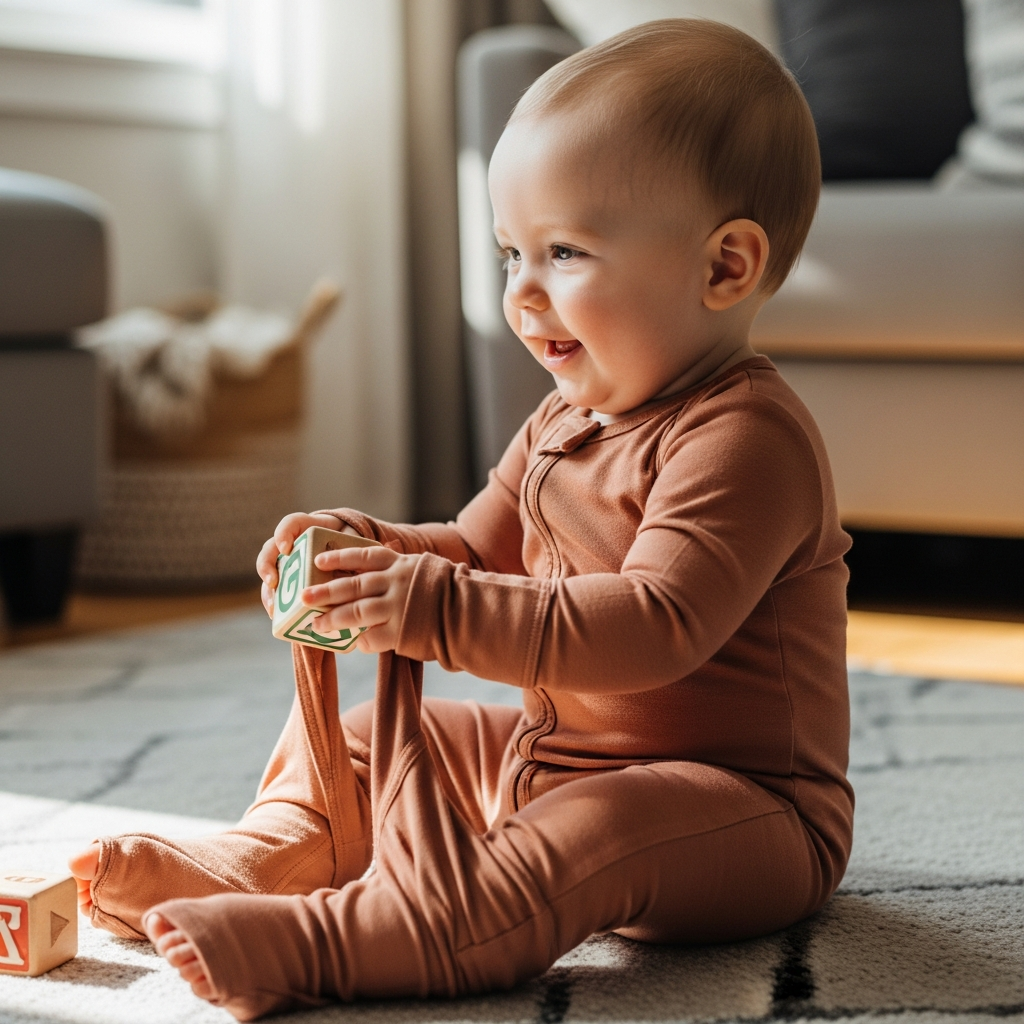
Beyond basic durability, bamboo offers a unique advantage that cotton simply cannot match: stretch properties that let clothes grow with your baby. This "grow with me" quality extends each garment's useful life significantly.
Sizing Flexibility for Growing Babies
Babies grow at astonishing rates. That perfectly fitting outfit from last month suddenly looks too small. Rigid cotton fabrics offer little flexibility here, forcing frequent size upgrades.
Bamboo's natural four-way stretch accommodates growth spurts gracefully. A bamboo sleeper might fit comfortably for six or more extra months compared to a cotton equivalent. The fabric expands with your growing baby rather than restricting movement or looking uncomfortably tight.
This stretch also recovers beautifully. Unlike cotton that stays stretched out, bamboo returns to shape after being expanded. Your baby enjoys freedom of movement during wear, and the garment looks proper again after washing.
Durability for Active Toddlers
Once babies become mobile toddlers, clothing durability faces new challenges. Crawling creates knee wear. Tumbling stresses seams. Climbing stretches fabric in unexpected directions.
Bamboo's combination of strength and stretch handles the toddler test remarkably well. The fibers flex rather than break under stress, and the fabric resists developing thin spots in high-friction areas. Parents often find that bamboo pajamas become the go-to choice for bedtime because they combine stretch comfort with lasting durability through countless nights of active sleeping.
Care Tips to Maximize Your Bamboo Clothes Lifespan
Even the most durable fabric benefits from proper care. The good news? Caring for bamboo is straightforward and does not require complicated routines. A few simple habits maximize your investment.
Simple Washing Guidelines
- Water temperature: Use cold water for regular washes. Hot water is unnecessary for bamboo's antibacterial properties to work and can stress the fibers over time.
- Cycle selection: Choose a gentle or delicate cycle when possible, though bamboo handles normal cycles well too.
- Skip fabric softener: Bamboo is naturally soft and fabric softener actually coats the fibers, reducing breathability and moisture-wicking properties.
- Turn inside out: This simple step protects the outer surface from abrasion against other items in the wash.
Drying and Storage Best Practices
How you dry bamboo clothes matters more than how you wash them. Heat is the main enemy of bamboo longevity.
- Low heat or air dry: Tumble dry on low heat or hang to air dry. High heat can damage fibers and cause unnecessary shrinkage.
- Remove promptly: Take clothes from the dryer while slightly damp to prevent wrinkles and reduce heat exposure.
- Store properly: Fold bamboo garments rather than hanging heavy items, and keep them away from direct sunlight to prevent color fading during storage.
Following these guidelines takes no extra time but significantly extends garment life, maximizing your cost-per-wear savings.
Environmental Impact: Sustainable Clothing That Lasts
For many families, bamboo clothes durability connects to deeper values around sustainability and environmental responsibility. Choosing durable clothing is an environmental choice as much as an economic one.
Reducing Fashion Waste Through Durable Choices
The scale of textile waste is staggering. According to environmental research, the world produces 92 million tons of textile waste every year. That equals roughly one garbage truck full of clothing reaching landfills every single second.
Baby clothes contribute significantly to this problem. Fast-growing children plus fast-wearing fabrics create a cycle of constant replacement and disposal. The EPA notes that textiles make up a significant portion of municipal solid waste, with most clothing ending up in landfills rather than being recycled.
When you choose durable bamboo clothing, you directly reduce this waste stream. Fewer garments purchased means fewer garments eventually discarded.
Teaching Sustainability Through Example
Children learn values by watching their parents' choices. When you prioritize quality over quantity, you model conscious consumption. When clothes last long enough to become hand-me-downs or donations, you demonstrate that belongings have extended value beyond immediate use.
This quality-over-quantity mindset extends beyond clothing to influence how children eventually approach all their purchasing decisions. Starting this lesson early, even before children can articulate it, plants seeds for lifelong sustainable habits.
Frequently Asked Questions About Bamboo Clothing Durability
How Long Do Bamboo Baby Clothes Last Compared to Cotton?
With proper care, bamboo baby clothes typically last 3-5 years, while cotton garments often show significant wear after just 1-2 years. This means bamboo clothes can easily be passed down to siblings or resold, extending their value even further.
Is Bamboo Clothing More Durable Than Cotton?
Yes, bamboo fibers are naturally stronger than cotton due to their longer fiber structure and higher cellulose content. This results in better resistance to tearing, pilling, and general wear, making bamboo approximately 3 times more durable in everyday use.
Do Bamboo Clothes Shrink After Washing?
Bamboo clothes experience minimal shrinkage, typically 1-3% when washed in cold water and dried on low heat. This is significantly less than cotton, which can shrink 3-10%. Following care instructions helps maintain the original fit.
Why Do Bamboo Clothes Stay Soft After Washing?
Bamboo fibers have a naturally smooth, round structure that remains intact through multiple wash cycles. Unlike cotton fibers that become rougher over time, bamboo actually becomes softer with each wash while maintaining its structural integrity.
Are Bamboo Baby Clothes Worth the Higher Price?
When calculated by cost-per-wear, bamboo clothes often cost less than cotton over time. A bamboo garment worn 150 times costs roughly $0.17 per wear versus $0.40 for cotton worn 30 times. Bamboo also holds resale value for hand-me-downs.
Does Bamboo Fabric Pill Over Time?
Bamboo fabric is highly resistant to pilling due to its long, smooth fiber structure. While some pilling may occur in high-friction areas after extended use, it is significantly less than what occurs with cotton fabrics under the same conditions.
Can Bamboo Baby Clothes Be Passed Down to Siblings?
Absolutely. Bamboo's durability makes it ideal for hand-me-downs. Many parents report bamboo clothes lasting through 2-3 children while maintaining their softness, color, and shape, making them one of the most hand-me-down friendly fabric choices.
What Are the Disadvantages of Bamboo Clothing?
The main considerations are higher upfront cost and the need for gentle care like cold water washing and low heat drying. However, the long-term durability benefits and cost-per-wear savings typically outweigh these factors for most families.
Making the Smart Choice for Your Growing Family
Understanding bamboo clothes durability changes how you approach baby wardrobes. The higher upfront cost becomes an investment rather than an expense when you recognize the three-to-one longevity advantage over cotton.
You now know the science behind why bamboo lasts longer: stronger fibers, better color retention, superior stretch recovery, and resistance to pilling. You have seen the math on cost-per-wear that proves bamboo saves money over time. And you have learned the simple care practices that maximize these benefits.
Most importantly, choosing durable baby clothes aligns with what matters to modern parents: spending wisely, reducing waste, and building sustainable habits for the next generation. At PatPat, we believe every family deserves access to quality clothing that works as hard as parents do.
The next time you are shopping for baby clothes, consider how many washes, how many wears, and how many potential hand-me-downs each purchase might deliver. When you think in terms of long-term value rather than short-term price, bamboo makes sense for growing families who want clothes that genuinely grow with their children.





