


You are standing in the baby aisle, staring at sleepers labeled "Newborn" and "0-3 months," wondering which one your baby actually needs. Sound familiar? Understanding baby sleeper sizing can feel overwhelming, especially when you discover that your seven-pound newborn might already be too big for "Newborn" size clothes.
Here is the good news: choosing the right fit is simpler than it seems once you understand how baby sizes actually work. Proper sleeper sizing matters more than you might think. It affects your baby's comfort, sleep quality, and even safety. A sleeper that fits well helps regulate body temperature, allows free movement, and keeps your little one snug without restriction.
This guide from PatPat covers everything you need to know about baby sleeper sizing, from decoding size charts to recognizing when it is time to size up. Whether you are preparing a hospital bag or shopping for your growing infant, you will walk away with the confidence to choose sleepers that fit just right.
Understanding Baby Sleeper Sizes: The Basics
Baby clothing sizes can be confusing because they use age labels that do not always match your baby's actual measurements. Let us break down how sizing really works so you can shop with confidence.
How Baby Clothing Sizes Work (Age vs. Weight vs. Height)
Those age labels on baby clothes? They are really just guidelines. Baby sizes are actually based on weight and height ranges, not how old your baby is. A petite three-month-old might still fit comfortably in 0-3 month clothes, while a larger newborn could skip that size entirely.
Weight tends to be the most reliable indicator for sizing, especially in the first few months. According to the CDC, the average birth weight in the United States is approximately 7.5 pounds, which means most babies fall right between Newborn and 0-3 month sizes at birth.
Height becomes increasingly important as babies grow longer. A baby who is average weight but in the 90th percentile for length will need to size up sooner than the clothes' age label suggests. Always check the specific measurements on size charts rather than relying solely on the age printed on the tag.
Standard Baby Sleeper Size Chart
This size chart gives you a quick reference for standard baby sleeper sizes. Keep in mind that sizes can vary between brands, so always double-check individual brand charts.
| Size | Weight | Height | Typical Age |
|---|---|---|---|
| Preemie | Up to 6 lbs | Up to 17 in | Premature |
| Newborn (NB) | 6-9 lbs | 18-21 in | 0-4 weeks |
| 0-3 Months | 9-12 lbs | 21-24 in | 0-3 months |
| 3-6 Months | 12-17 lbs | 24-27 in | 3-6 months |
| 6-9 Months | 17-21 lbs | 27-29 in | 6-9 months |
| 9-12 Months | 21-25 lbs | 29-31 in | 9-12 months |
| 12-18 Months | 25-28 lbs | 31-33 in | 12-18 months |
Pro tip: When in doubt, size up rather than down. A slightly roomier sleeper is safer than one that is too snug, as long as there is no excess fabric near your baby's face.
Newborn vs. 0-3 Months: What is the Difference?
This is one of the most common questions new parents ask, and for good reason. The overlap between these sizes causes real confusion.
Newborn size is designed for babies weighing 6-9 pounds and measuring up to 21 inches long. The 0-3 month size fits babies from 9-12 pounds and 21-24 inches. Here is what many parents discover: full-term babies often skip Newborn size entirely.
Since the average full-term baby weighs around 7.5 pounds at birth, many are already at the upper end of Newborn sizing. If your baby is born at 8 pounds or more, they may go straight into 0-3 month sleepers. For your hospital bag, it is smart to pack both sizes so you are prepared regardless of your baby's birth weight.
Types of Baby Sleepers and How Each Style Fits
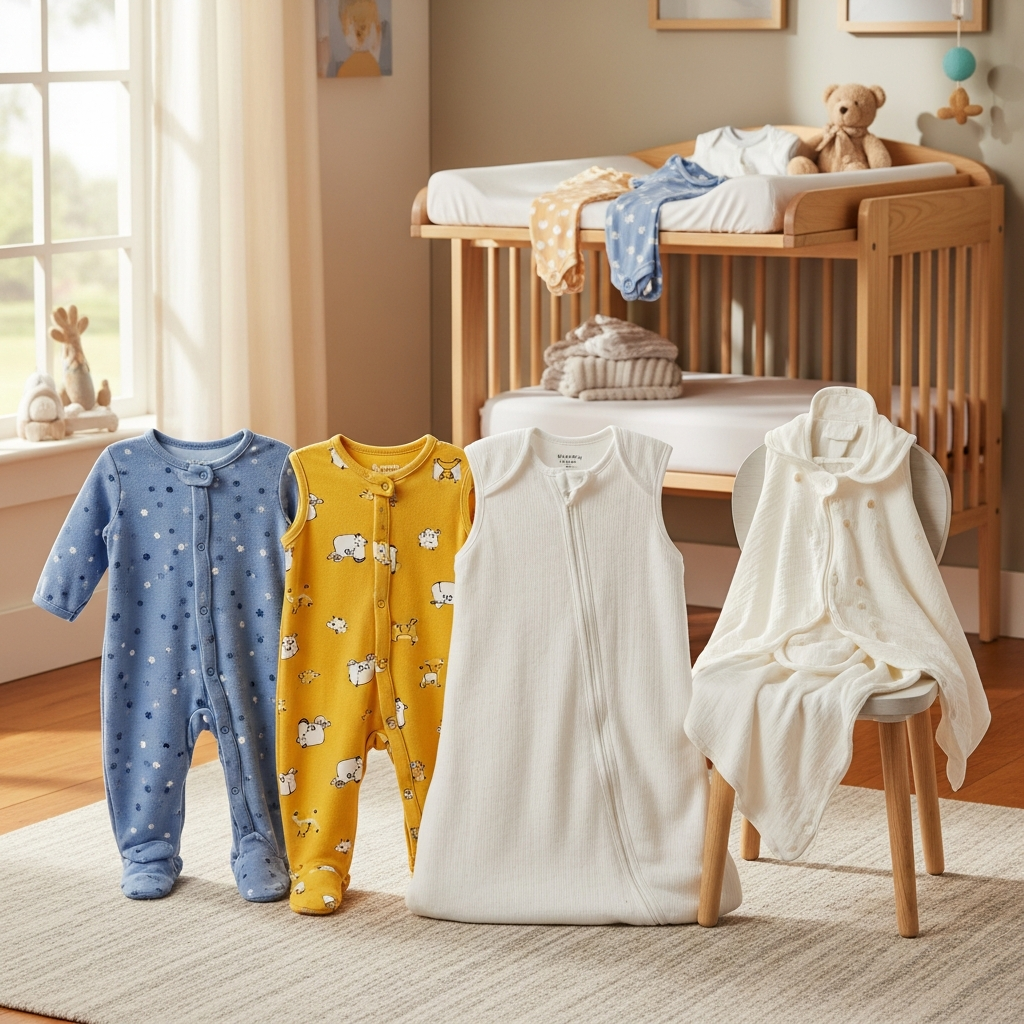
Different sleeper styles have unique sizing considerations. Understanding these differences helps you choose the right type for your baby's age, body type, and the season.
Footed Sleepers (Footie Pajamas)
Footed sleepers are the classic choice for nighttime, covering your baby from neck to toes. The key sizing consideration? Your baby's toes should never touch the end of the feet. Leave about half an inch to one inch of wiggle room.
When your baby is between sizes, footed sleepers need to go up to the larger size. The feet are the first thing to get tight, and cramped toes can restrict circulation and cause discomfort. Many brands now offer convertible fold-over cuffs that cover hands and feet, extending the useful life of each size.
Footless Sleepers
Footless sleepers offer more flexibility, especially for tall babies. Since there are no built-in feet, length is less critical. Your baby can wear footless styles longer before sizing up.
These work beautifully when your baby is between sizes. Pair them with socks on cooler nights, and you get extended wear time compared to footed versions. They are also ideal for babies who run warm since feet stay uncovered.
Sleep Sacks and Wearable Blankets
Sleep sacks are sized primarily by weight and age rather than length. The fit at the chest and armholes should be snug enough that your baby cannot slip down inside, but the bottom should be roomy enough for leg movement.
The American Academy of Pediatrics recommends sleep sacks as a safe alternative to loose blankets. They allow arm movement and provide warmth without suffocation risks.
When choosing a sleep sack, consider the TOG rating for seasonal appropriateness. A TOG of 1.0-2.5 works for most room temperatures between 68-72 degrees Fahrenheit. When choosing breathable fabrics that regulate temperature well, bamboo fabric is an excellent choice for its natural breathability and softness. You can explore options like bamboo baby sleepwear that combines comfort with easy-care convenience.
Two-Piece Pajama Sets
Two-piece pajamas are generally designed for babies 12 months and older due to safety regulations. According to CPSC guidelines, children's sleepwear must be either snug-fitting or flame-resistant.
Two-piece sets must fit snugly to meet safety standards. The sizing approach differs from one-piece sleepers since you need to consider both top and bottom measurements independently. These become increasingly practical as babies become mobile toddlers.
How to Check if a Baby Sleeper Fits Properly
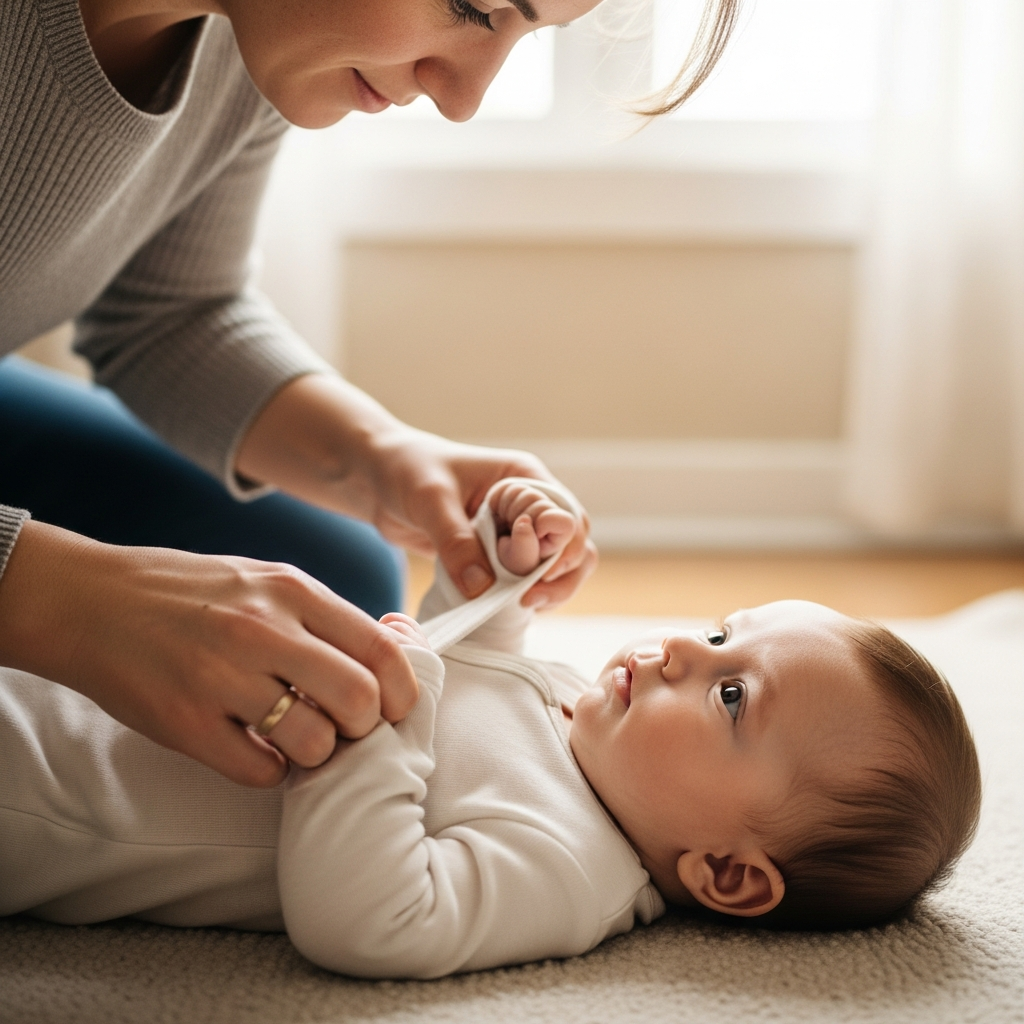
Knowing what size to buy is only half the battle. Once you get that sleeper on your baby, you need to verify the fit is right. Here are practical tests you can do at home.
The Neck and Shoulder Test
Start at the top. The neck opening should fit snugly but allow you to slide two fingers underneath comfortably. Shoulders should align with your baby's actual shoulders, not slip off or bunch up.
Signs it is too loose: The sleeper slips off shoulders, neckline gaps or bunches, fabric pools around the neck.
Signs it is too tight: Red marks appear after wearing, difficulty pulling it over your baby's head, fabric pulls at the neckline.
The Armhole and Chest Check
Apply the two-finger rule under the arms when your baby's arms are down. There should be enough room for two fingers but not so much that the armhole gaps significantly.
The chest fabric should lay flat without pulling or gaping when your baby moves. Watch your baby kick and wiggle. If the fabric stretches tight across the chest or bunches uncomfortably, the fit needs adjustment.
Legroom and Hip Movement Assessment
Babies naturally hold their legs in a frog-like position with knees bent. Your baby should be able to kick freely while maintaining this position. The International Hip Dysplasia Institute recommends the M-position where thighs are spread and hips are bent with knees slightly higher than buttocks.
For footed sleepers, ensure there is toe wiggle room without excess bunching. Your baby's toes should not press against the fabric end, but the feet should not swim in excess material either.
Signs a Sleeper is Too Small
Watch for these red flags indicating it is time to size up:
- Red marks on skin after wearing, especially at cuffs and neckline
- Difficulty snapping or zipping the sleeper closed
- Baby's toes touching the end of footed sleepers
- Restricted leg movement or limited kicking ability
- Fabric pulling across the chest or shoulders
- Sleeves riding up past the wrists consistently
Baby Sleeper Safety: Why Proper Fit Matters
Proper sleeper sizing is not just about comfort. It is directly connected to safe sleep practices. Understanding these guidelines helps you make informed choices.
Snug Fit vs. Loose Fit: CPSC Guidelines Explained
The Consumer Product Safety Commission requires baby sleepwear to be either snug-fitting or flame-resistant. This regulation exists because snug-fitting sleepwear is less likely to catch fire and does not ignite as easily since there is little air under the garment to feed a fire.
Snug fit means close to the body with no more than about two inches of ease. This is different from tight. Your baby should still move freely, but fabric should not hang loose or bunch up. Loose pajamas pose safety risks because they can ride up, cover the face, or create excess fabric near your baby's airway.
Temperature Regulation and Overheating Risks
Properly sized sleepers help regulate your baby's temperature. This matters because the AAP warns that overheating can increase the risk of SIDS.
A sleeper that is too tight can restrict circulation. One that is too loose may cause overheating from trapped air and bunched fabric. The sweet spot is a fit that allows body heat to dissipate naturally while keeping your baby comfortably warm.
To check temperature, feel your baby's chest or back of the neck, not hands or feet. Hands and feet often feel cool even when babies are perfectly warm. The AAP recommends keeping nursery temperature between 68-72 degrees Fahrenheit.
Special Sizing Situations
Not every baby fits neatly into standard size charts. Here is how to approach sizing for specific situations.
Sizing for Preemie Babies
Preemie size typically fits babies under six pounds. Some brands offer micro-preemie sizing for very small babies under four pounds. If your baby was born prematurely, you may find that even Newborn sizes are too big initially.
Watch for your preemie to hit the six-pound mark as a signal to transition to Newborn size. Many preemies catch up quickly, so do not stock up on too many Preemie-sized items. For NICU stays, check with your hospital about any specific clothing requirements.
Sleepers for Tall or Long Babies
When your baby is long but not heavy, prioritize length over weight when choosing sizes. A baby in the 90th percentile for height but 50th for weight will outgrow sleepers by length first.
Best options for tall babies include:
- Footless sleepers that eliminate the toe-cramping problem
- Convertible sleepers with fold-over foot cuffs
- Brands known for running long
The tall-but-skinny baby dilemma is real. Sometimes sizing up for length means the chest and shoulders are baggy. Look for sleepers with adjustable features or stretchy fabrics that accommodate various proportions.
Sleepers for Chunkier Babies
For babies who are heavier but not particularly long, prioritize weight and chest measurements. A chunky baby might need a larger size even if length-wise they would fit the smaller one.
Look for stretchy fabrics with good give, particularly around the belly, thighs, and diaper area. Zipper closures often work better than snaps for larger babies since snaps can pop open under pressure. For babies of all shapes and sizes, look for sleepers with quality construction and gentle stretch. A well-stocked baby pajama collection will offer various styles to accommodate your baby's unique proportions.
When to Size Up: Signs It is Time for the Next Size
Babies grow at different rates, but certain signs universally indicate that your current size is not working anymore.
Physical Signs to Watch For
Your baby's sleeper is too small when you notice:
- Toes reaching the end of footed sleepers
- Snaps pulling apart or difficult to close
- Zippers straining or catching
- Sleeves and pant legs riding up constantly
- Red marks after wearing, especially at elastic areas
- Diaper area looking compressed or bunched
Do not wait until the sleeper is impossible to put on. Size up at the first consistent signs of tightness to maintain comfort and safety.
Average Timeline for Sizing Up
While every baby grows differently, here is a general timeline:
- Newborn: 0-4 weeks (some babies skip entirely)
- 0-3 Months: 4 weeks to 3 months
- 3-6 Months: 3-5 months
- 6-9 Months: 5-8 months
- 9-12 Months: 8-12 months
Growth spurts can accelerate this timeline dramatically. Many parents find their babies seem to outgrow clothes overnight during these periods. It is also completely normal for some babies to skip sizes entirely, going from 3-6 months directly to 9-12 months, for example.
How Many Sleepers to Buy Per Size
Stocking your baby's wardrobe strategically saves money and closet space. Here is how to plan smart.
Recommended Quantities by Size
| Size | Recommended Quantity | Notes |
|---|---|---|
| Newborn | 3-4 sleepers | Shortest wear time |
| 0-3 Months | 5-6 sleepers | May skip if baby is large at birth |
| 3-6 Months | 6-8 sleepers | Longer wear period typically |
| 6-9 Months | 6-8 sleepers | Starting solids means more mess |
| 9-12 Months | 6-8 sleepers | Active babies may wear through knees |
Factor in your laundry frequency. If you wash daily, fewer sleepers suffice. Washing every few days means you need more in rotation. Always account for the inevitable diaper blowouts and spit-up incidents that demand immediate changes.
Budget-Smart Sizing Strategy
Here is the secret experienced parents know: buy fewer in smaller sizes and more in larger sizes. Babies spend the least time in Newborn and 0-3 month sizes, so investing heavily there often results in unworn clothes.
Other money-saving approaches:
- Accept hand-me-downs in all sizes gratefully
- Stock up during sales on larger sizes you know you will need
- Prioritize quality over quantity since well-made sleepers survive multiple babies
- Choose versatile styles that work for different seasons
Building a smart baby wardrobe does not have to break the bank. Look for quality pieces that offer good value, like these baby clothes options that balance durability with affordability, perfect for stocking up on multiple sizes.
Seasonal Sleeper Sizing Tips
The season affects how sleepers fit and what size you might need. Plan accordingly for comfortable sleep year-round.
Winter Sleeper Sizing Considerations
Winter may require sizing up to accommodate layering underneath. If you plan to put a onesie under the sleeper, go up a size to prevent the outfit from being too tight.
Fleece sleepers often run smaller due to fabric bulk. Always check reviews and size charts carefully before purchasing. For sleep sacks, choose a TOG rating of 2.0-2.5 for cooler rooms, but avoid going higher than 2.5 to prevent overheating.
One common mistake is over-bundling babies in winter. Despite the cold weather, indoor heating means your baby does not need as many layers as you might think. The AAP recommends dressing babies in only one layer more than you would wear to be comfortable.
Summer Sleeper Sizing Considerations
Lightweight summer fabrics usually fit true to size since there is no bulk to account for. This is the one season where the size chart is most likely to be accurate.
Consider short-sleeve or sleeveless options for warm nights. Breathable materials like cotton and bamboo help regulate temperature naturally. You might find that a lightweight sleep sack alone is sufficient without additional pajamas underneath on hot summer nights.
Frequently Asked Questions About Baby Sleeper Sizing
What size sleeper should I bring to the hospital?
Pack both Newborn and 0-3 month sizes. Average newborns weighing 7-8 pounds may fit either size, while larger babies (8+ pounds) often go straight to 0-3 months. Having both ensures you are prepared regardless of your baby's birth weight.
How do I know if my baby's sleeper is too tight?
Check for red marks on skin after wearing, difficulty closing snaps or zippers, restricted leg movement, and fabric that pulls across the chest. If you notice any of these signs, it is time to size up.
Can my newborn wear 0-3 month sleepers?
Yes, many full-term babies can wear 0-3 month sleepers from birth, especially if they weigh over 8 pounds. A slightly roomier fit is safer than one that is too snug, as long as there is no excess fabric near the face.
Should baby pajamas be tight or loose?
Baby pajamas should be snug but not tight. Per CPSC guidelines, sleepwear must be either snug-fitting or flame-resistant. Snug fit means close to the body with about 2 inches of ease, enough to allow movement but not so loose that fabric bunches.
Why do my baby's sleepers leave marks on their skin?
Red marks indicate the sleeper is too tight. Check elastic cuffs, leg openings, and necklines. While minor temporary marks can be normal, persistent or deep marks mean it is time to move to the next size.
How long do babies wear each size?
On average: Newborn size lasts 2-4 weeks, 0-3M lasts 6-10 weeks, 3-6M lasts 8-12 weeks, and larger sizes typically last 2-3 months each. However, every baby is different. Some skip sizes entirely while others wear certain sizes longer.
What is the best sleeper style for each age?
Newborns (0-3M) do well in sleep sacks or footed sleepers with easy diaper access. Babies 3-9 months suit footed sleepers or sleep sacks based on mobility. For 9-12+ months, consider footless sleepers or two-piece sets as babies become more active.
Are baby clothes sizes the same across all brands?
No, sizing varies significantly between brands. Some brands run large while others run small. Always check the specific brand's size chart and prioritize weight and height measurements over age labels when determining what size to buy.
Choosing the Right Baby Sleeper Size with Confidence
Baby sleeper sizing does not have to be mysterious. The key takeaways to remember: use weight and height rather than just age to determine size, size up when in doubt, and check fit regularly at the neck, arms, and legs. Different sleeper types have different sizing needs, and proper fit matters for both comfort and safety.
You will get better at gauging sizes over time. Every parent develops an eye for what fits their particular baby. A well-rested baby, and a well-rested you, makes the effort worthwhile.
At PatPat, we understand the importance of comfortable, well-fitting sleepwear for your little one. When you are ready to explore quality sleepers in every size, you will find options designed with both babies and parents in mind. Sweet dreams start with the right fit.




