


It is 2 AM, your newborn needs a diaper change, and you are fumbling with tiny snaps in the dark. Sound familiar? The type of pajamas your baby wears can make these moments easier or more frustrating. This brings us to one of the most common questions new parents ask: are footed baby sleepers better than two-piece sleepwear?
The answer is not as straightforward as you might hope. Both footed sleepers and two-piece pajamas have passionate advocates among experienced parents, and for good reason. The best choice depends on your baby's age, the season, your little one's mobility, and your family's daily routine. Whether you are browsing baby clothes for your registry or looking to upgrade your current sleepwear collection at PatPat, understanding the differences will help you make confident decisions.
In this guide, you will learn everything about footed sleeper vs two-piece pajamas comparisons. We cover safety guidelines from the American Academy of Pediatrics, age-appropriate recommendations, seasonal considerations, and practical tips for those inevitable nighttime diaper changes. By the end, you will know exactly what works best for your baby at each stage of their first years.
Quick Answer: When to Choose Footed Sleepers vs Two-Piece Pajamas
The Bottom Line: Footed sleepers are generally better for newborns through 6-12 months because they provide complete warmth coverage without loose parts and eliminate the frustration of lost socks. Two-piece pajamas become more practical once babies start crawling confidently and especially when walking begins around 12 months or later.
Here is a quick decision framework for choosing one piece vs two piece baby pajamas:
Choose footed sleepers when:
- Your baby is under 12 months old
- You live in a cooler climate or it is winter
- You want simplicity with one garment to manage
- Your baby is not yet walking
Choose two-piece pajamas when:
- Your baby is crawling or walking confidently
- Warmer weather makes full coverage uncomfortable
- You need faster diaper access during changes
- Potty training is on the horizon
Rest assured that both options are safe when properly fitted. According to the American Academy of Pediatrics safe sleep guidelines, wearable blankets and sleepers are recommended alternatives to loose blankets, which should not be used with infants.
What Makes Footed Sleepers the Go-To Choice for Newborns
There is a reason footed sleepers dominate baby shower registries. For newborns and young infants, one-piece sleepwear offers compelling advantages that make those exhausting early months just a bit easier to manage.
Benefits of One-Piece Sleepwear for Babies Under 6 Months
Temperature regulation tops the list of footed sleeper benefits. Unlike two-piece sets, footies cover your baby's entire body evenly with no gaps between top and bottom where cold air can sneak in. This matters because newborns cannot regulate their body temperature as easily as older children or adults.
The built-in foot coverage eliminates one of parenting's great mysteries: where do all those tiny socks disappear to? With footed sleepers, you never need to worry about socks falling off in the night or mismatched pairs in the laundry.
Safety is another crucial advantage. With no separate pieces that could ride up, twist, or cover baby's face, footed sleepers align perfectly with AAP recommendations. The organization advises that families concerned their infant will be cold should add layers of clothing, as this reduces the risk of head covering or entrapment.
For parents transitioning from swaddling, footed sleepers offer a natural next step. They provide similar cozy containment while allowing arm freedom as your baby outgrows the swaddle stage.
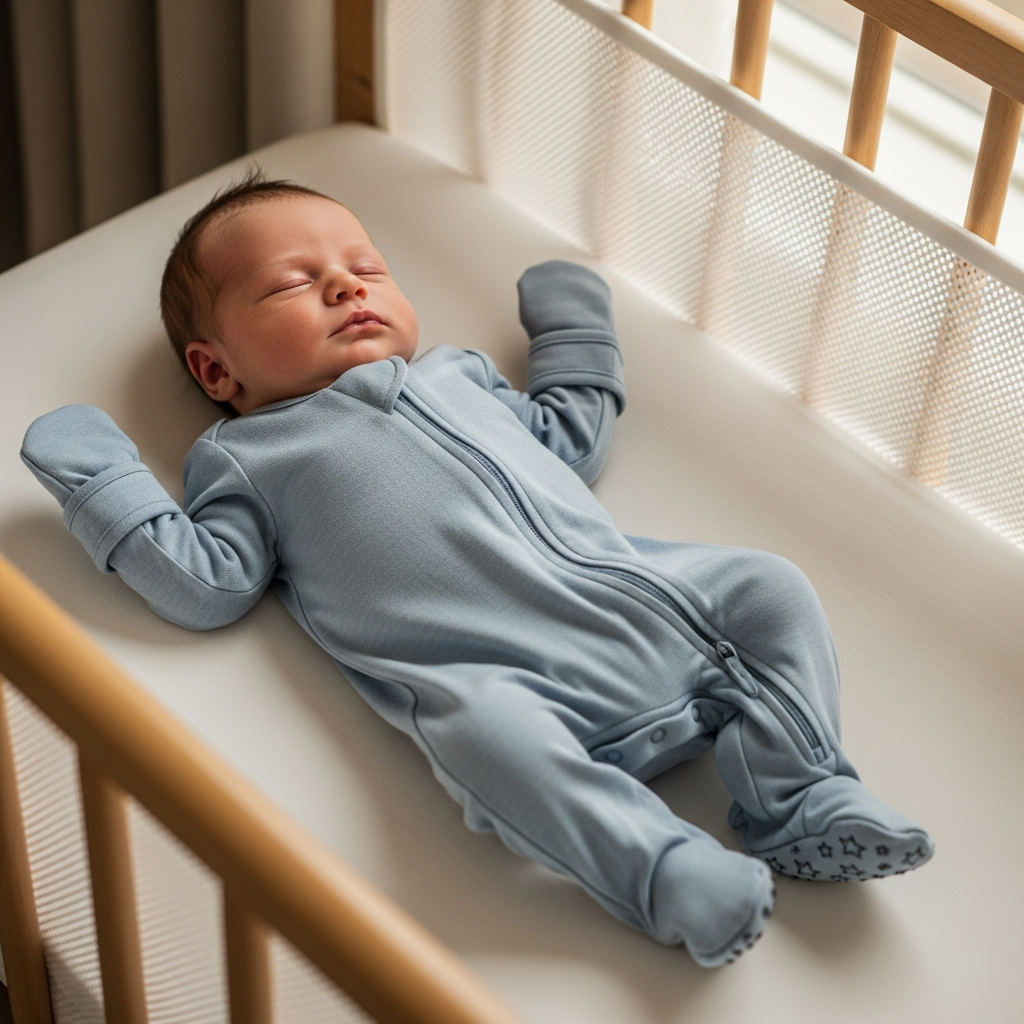
Safety Features to Look for in Baby Footie Pajamas
Not all footed sleepers are created equal. When shopping for the best baby sleepwear for newborns, prioritize these features:
- Snug fit: According to CPSC federal safety rules, all children's sleepwear garments sold in sizes larger than nine months must be flame resistant or tight-fitting. Snug-fitting sleepwear is safer because loose fabric poses fire and suffocation risks.
- Two-way zippers: These allow you to unzip from the bottom for diaper changes without fully undressing your baby, keeping their chest and arms warm.
- Fold-over mittens: Essential for newborns who scratch their faces. Built-in cuffs that fold over tiny hands protect delicate skin during sleep.
- Non-slip soles: Once your baby starts pulling up and cruising, grippy bottoms on footed pajamas help prevent slips on hard floors.
- Certified safe materials: Look for OEKO-TEX or GOTS certification, indicating fabrics free from harmful chemicals.
If you are shopping for quality footed sleepers with these practical features, explore baby zippered footies and rompers that make nighttime routines smoother for you and more comfortable for your little one.
Why Two-Piece Pajamas Work Better for Mobile Babies and Toddlers
As your baby grows and becomes more active, two-piece pajamas start showing their strengths. There is a reason most toddlers eventually graduate to separate tops and bottoms.
How Two-Piece Sets Make Nighttime Diaper Changes Easier
Picture this: your 14-month-old needs a 3 AM diaper change. With two-piece pajamas, you simply pull down the pants, change the diaper, and pull them back up. The pajama top stays in place, keeping your baby's chest warm and minimizing disruption.
This bottom-only access is a game-changer for parents of squirmy toddlers. Less undressing means less opportunity for your little one to fully wake up and resist going back to sleep. Many parents report that two-piece pajamas cut their diaper change time nearly in half once they have a mobile, opinionated toddler.
Two-piece sets also prepare babies for eventual potty training. When that milestone approaches, having pajamas they can pull down independently builds confidence and makes those urgent nighttime bathroom runs more successful.
Best Age to Transition from Footies to Separate Pajama Sets
When do babies stop wearing footie pajamas? There is no official cutoff, but most parents make the switch between 12 and 24 months. Watch for these signs that your baby might be ready:
- Walking confidently: Standard footed pajamas can be slippery on hardwood or tile floors, making two-piece pajamas with gripper socks safer for early walkers.
- Resistance to dressing: If your toddler fights getting into footies, they may find separate pieces less restrictive.
- Approaching potty training: Two-piece pajamas give toddlers the independence they need for bathroom success.
- Frequent overheating: Active toddlers generate more body heat, and two-piece sets allow easier temperature adjustment.
- Rapid growth spurts: Two-piece pajamas can accommodate growth more flexibly since tops and bottoms do not need to fit together perfectly.
As your baby grows into this stage, two-piece pajama sets offer the flexibility that active toddlers need while keeping them comfortable through the night.
Age-by-Age Baby Sleepwear Comparison Guide
Your baby's sleepwear needs evolve rapidly during the first two years. Here is what works best at each developmental stage.
0-3 Months: Best Pajamas for Newborn Sleep Comfort
Recommendation: Footed sleepers or sleep gowns
During the newborn stage, simplicity wins. Footed sleepers provide complete coverage and pair well with swaddling if you use it. Sleep gowns offer even easier diaper access with their open bottom design, making them popular for the frequent changes of early weeks.
Look for features like two-way zippers and fold-over hand cuffs. Most experienced parents strongly prefer zippers over snaps for those exhausted middle-of-the-night changes when fine motor skills are compromised.
3-6 Months: Footed Sleepers with Two-Way Zipper Benefits
Recommendation: Footed sleepers remain ideal
At this stage, babies are more active but not yet mobile. They still need consistent warmth coverage, and footed sleepers continue to excel. Two-way zippers become even more valuable as babies get wigglier during diaper changes.
This is a rapid growth period, so stock multiple sizes. Many parents keep the next size up ready to go, switching when current sleepers start looking snug.
6-12 Months: Sleepwear Options for Crawling Babies
Recommendation: Either type works; parent and baby preference matters most
This transitional period is when personal preference really comes into play. If your baby crawls actively during awake time, they may find two-piece pajamas more comfortable for movement. However, footed sleepers with non-slip soles remain excellent choices for babies starting to pull up and cruise.
A practical approach many parents use: two-piece pajamas in summer months, footed sleepers in winter. This gives you flexibility while matching sleepwear to seasonal needs.
12+ Months: Why Walking Toddlers Prefer Two-Piece Pajamas
Recommendation: Two-piece pajamas become the practical choice
Once your baby is walking confidently, two-piece pajamas offer several advantages. Better mobility supports their developing gross motor skills, and easier bathroom access prepares them for potty training. Toddlers learning to dress themselves find separate pieces more manageable.
That said, footed sleepers can absolutely continue into toddlerhood, especially in cold weather. Just ensure they have non-slip soles and fit properly.

How to Dress Baby for Sleep by Room Temperature and Season
Room temperature significantly impacts which sleepwear type works best. Getting this right matters for both comfort and safety.
Choosing Winter Baby Sleepwear That Keeps Baby Warm Safely
The ideal room temperature for baby sleep is between 68 and 72 degrees Fahrenheit (20-22 degrees Celsius). In winter, footed sleepers excel because they provide complete coverage without needing loose blankets, which are unsafe for infants under 12 months.
For very cold rooms, use this layering strategy:
- Start with a long-sleeve onesie as a base layer
- Add a cotton or fleece footed sleeper
- If needed, use a TOG-rated sleep sack over pajamas
The AAP recommends that infants should be dressed appropriately for the environment, with no greater than 1 layer more than an adult would wear to be comfortable.
Preventing Overheating: Summer Sleepwear Solutions
Overheating is a serious concern. Research shows that heat stress and hyperthermia are common findings in sudden infant death syndrome (SIDS) victims. Research found that on days when temperatures are too high, overheated babies are at higher risk for SIDS.
For warm weather, consider these options:
- Lightweight short-sleeve two-piece sets
- Footless sleepers in breathable fabrics
- Cotton or bamboo viscose materials
Watch for signs of overheating: sweating, damp hair at the neck, flushed cheeks, or rapid breathing. If your baby seems too warm, remove a layer or switch to lighter sleepwear.
In air-conditioned rooms during summer, light footed sleepers may still be appropriate. Always check your baby's temperature by feeling their neck or chest rather than hands and feet, which naturally run cooler.
Footed Sleepers vs Two-Piece Pajamas: Side-by-Side Feature Comparison
Still deciding between footie pajamas vs two-piece baby options? This comparison table breaks down the key differences:
| Feature | Footed Sleepers | Two-Piece Pajamas |
|---|---|---|
| Best Age Range | 0-12 months | 6 months through toddlerhood |
| Diaper Changes | Requires unzipping (easier with two-way zipper) | Pull-down access only |
| Warmth Coverage | Complete, no gaps | May have gap at waist |
| Sock Management | Not needed | May need separate socks |
| Mobility | Can restrict walking practice | Full leg freedom |
| Summer Comfort | Can be hot unless lightweight | Easier layer adjustment |
| Cost Efficiency | One purchase per set | Two pieces to buy and replace |
| Potty Training | Not practical | Easy bathroom access |
| Self-Dressing | More challenging for toddlers | Easier for learning independence |
As you can see, neither option is universally superior. Footed sleepers win for warmth, simplicity, and younger babies, while two-piece pajamas excel for mobility, diaper access, and developmental readiness. Many families find that having both types available gives them flexibility for different seasons and situations.
What Material Should Baby Pajamas Be Made From?
The fabric of your baby's sleepwear affects comfort, temperature regulation, and skin health. Understanding your options helps you make better choices.
Organic Cotton vs Bamboo Viscose Sleepwear for Babies
Cotton remains the classic choice for good reasons. It is durable, affordable, easy to wash, and widely available. Organic cotton takes these benefits further by eliminating pesticide exposure concerns.
Bamboo viscose has gained popularity for its exceptional softness and naturally hypoallergenic properties, meaning it is less likely to cause rashes or allergic reactions. This makes it excellent for babies with eczema or sensitive skin.
Key differences between these materials:
| Property | Cotton | Bamboo Viscose |
|---|---|---|
| Softness | Soft | Exceptionally soft |
| Temperature Regulation | Good | Excellent |
| Moisture Wicking | Moderate | Superior |
| Durability | Excellent | Good (requires gentle care) |
| Price Point | Budget-friendly | Premium |
| Best For | Everyday use | Sensitive skin, hot sleepers |
Both fabrics are excellent choices. Bamboo is worth the investment for babies with skin sensitivities or those who sleep hot, while cotton remains a reliable everyday option.
Understanding TOG Ratings for Baby Sleep Safety
TOG stands for thermal overall grade, measuring the warmth level of sleepwear and bedding. The lower the TOG rating, the lighter the fabric; the higher the rating, the more padded and insulated it is.
General TOG guidelines:
- TOG 0.2-0.5: Warm rooms (75-80 degrees F), summer months
- TOG 1.0: Year-round moderate temperatures (70-75 degrees F)
- TOG 2.0-2.5: Cool rooms (61-69 degrees F), fall and winter
When using sleep sacks with TOG ratings, combine them with appropriate pajama weights. For example, in a cool room, you might pair a lightweight pajama with a 2.5 TOG sleep sack rather than using heavy pajamas alone.
Whether you prefer cotton or bamboo, exploring a variety of baby sleepwear options helps you find what works best for your little one's comfort and your climate.
Frequently Asked Questions About Baby Sleepwear
Are footie pajamas safe for babies to sleep in?
Yes, footed pajamas are safe for babies when they fit snugly as recommended by the AAP. Snug-fitting sleepwear reduces fire hazards and prevents loose fabric from covering baby's face. Always choose the correct size and avoid oversized pajamas for safety.
When should babies stop wearing footed pajamas?
There is no strict age limit, but most parents transition to two-piece pajamas between 12-24 months. Signs it may be time include your baby walking confidently (footies can be slippery), resisting one-piece dressing, or approaching potty training age.
Can babies overheat in footed pajamas?
Yes, overheating is possible, especially in warm weather or heated rooms. Choose lightweight, breathable fabrics for warmer conditions and check baby's neck and chest for sweatiness. If overheating is a concern, switch to footless sleepers or two-piece pajamas.
Which type of pajamas makes nighttime diaper changes easier?
Two-piece pajamas generally allow faster diaper changes since you only need to remove the bottoms. However, footed sleepers with two-way zippers that zip from the bottom up make diaper access nearly as convenient while keeping baby's upper body covered and warm.
Are footed pajamas bad for babies learning to walk?
Footed pajamas are not harmful for walking development, but standard footed bottoms can be slippery on hard floors. Look for footed sleepers with non-slip grip soles, or switch to two-piece pajamas with gripper socks during this learning stage.
Should newborns wear footie pajamas or sleep gowns?
Both are excellent choices for newborns. Sleep gowns make the frequent diaper changes of early weeks easier with their open bottom, while footed sleepers provide complete warmth coverage. Many parents use sleep gowns for the first few weeks, then transition to footed sleepers.
What should babies wear to sleep in cold winter months?
In cold weather, dress baby in a footed sleeper made from cotton or fleece. If the room is very cold, layer a long-sleeve onesie underneath. Use a TOG-rated sleep sack over pajamas if extra warmth is needed, instead of loose blankets which are unsafe for infants.
Do babies need socks under footed pajamas?
No, socks are unnecessary under footed pajamas and may cause overheating. The built-in foot coverage is designed to keep feet warm. If baby's feet still feel cold in footed sleepers, the pajamas may be too thin for the room temperature, or you may need to increase the room's warmth.
Finding the Right Sleepwear for Your Baby
The footed sleeper vs two-piece pajamas debate does not have a single winner because both options serve different needs at different stages. Here is what to remember:
- For newborns and infants: Start with footed sleepers for their simplicity, complete warmth coverage, and alignment with safe sleep recommendations.
- For active babies and toddlers: Transition to two-piece pajamas when mobility, diaper changes, and developmental readiness make them more practical.
- For seasonal flexibility: Keep both types on hand to adjust for temperature changes throughout the year.
There is no wrong choice here. Both sleepwear types have safely and comfortably clothed generations of babies. Trust your instincts about what works for your baby and fits your family's routine.
As you build your baby's sleepwear wardrobe, PatPat offers a range of options from cozy footed sleepers to flexible two-piece sets. The most important thing is choosing well-fitted, comfortable pajamas made from safe, breathable materials that let your little one sleep soundly through the night.
What sleepwear style has worked best for your family? Your experience could help another parent facing the same decision.





