


Are you wondering what your 7 month old baby should be doing right now? You are not alone. This is one of the most exciting and transformative periods in your baby's first year, filled with remarkable developmental leaps that can leave parents both amazed and occasionally anxious.
At seven months, your little one is becoming increasingly interactive, mobile, and curious about the world. From sitting up independently to babbling their first consonant sounds, your baby is hitting developmental milestones at a rapid pace. According to CDC milestone guidelines, babies between 6-9 months show tremendous growth across all developmental domains.
This comprehensive guide covers everything you need to know about 7 month old baby development, including physical milestones, cognitive leaps, sleep schedules, feeding tips, and engaging activities. Whether you are a first-time parent or adding to your family, understanding what to expect helps you support your baby's growth while enjoying this precious stage. Let us dive into the incredible journey of your 7 month old's development.
What Should a 7 Month Old Be Doing? Development Overview
Key Developmental Areas at 7 Months
Your 7 month old is developing across five main domains, each interconnected and equally important. Understanding these areas helps you recognize and celebrate your baby's progress.
- Physical Development: Sitting independently, rolling in both directions, and preparing for crawling
- Cognitive Development: Understanding object permanence and cause-and-effect relationships
- Language Development: Babbling with consonant sounds and responding to their name
- Social-Emotional Development: Showing attachment preferences and experiencing separation anxiety
- Sensory Development: Exploring textures, sounds, and tastes with increased curiosity
At this stage, your baby likely recognizes familiar faces, reaches for interesting objects, and expresses emotions more clearly. They might laugh, squeal with delight, or show frustration when something does not go their way. These responses show healthy brain development and emerging personality.
How to Know If Your Baby Is Developing Normally
Every baby follows their own developmental timeline. What matters most is steady progress rather than hitting exact milestones on specific dates. The American Academy of Pediatrics emphasizes watching for overall developmental patterns rather than comparing your baby to others.
Signs of healthy development include:
- Shows interest in surroundings and people
- Makes eye contact and responds to emotions
- Reaches for and grasps objects
- Makes sounds when spoken to
- Shows affection for caregivers
Physical Milestones: 7 Month Old Motor Skills and Growth
Gross Motor Skills at 7 Months
Your 7 month old is becoming remarkably mobile and strong. Most babies at this age have mastered several significant gross motor milestones that prepare them for crawling and eventually walking.
Sitting independently is a major achievement during this period. According to research from the Mayo Clinic, most babies can sit without support by 7 months, freeing their hands for play and exploration. Your baby might wobble occasionally, but their core strength is developing rapidly.
Other gross motor developments to watch for:
- Rolling confidently from back to tummy and tummy to back
- Bearing weight on legs when held in standing position
- Rocking back and forth on hands and knees (pre-crawling)
- Army crawling or scooting using arms and legs
- Pivoting in circles while on tummy to reach toys
Continue providing plenty of tummy time opportunities. This position strengthens neck, shoulder, and arm muscles essential for crawling. As your baby becomes more active, comfortable clothing becomes increasingly important. Soft, breathable options like bamboo baby clothes allow unrestricted movement during motor skill practice.
Fine Motor Skills Development
Watch your baby's hands closely this month. Their fine motor skills are advancing rapidly as they learn to manipulate objects with increasing precision.
Key fine motor milestones include:
- Transferring objects smoothly between hands
- Using a raking grasp to pick up small items
- Banging two objects together intentionally
- Exploring objects by mouthing, shaking, and dropping
- Beginning to point at interesting objects
The pincer grasp (using thumb and forefinger) is still developing and typically emerges around 8-9 months. For now, your baby uses their whole hand to grasp items, which is perfectly normal.
Average Weight and Height for 7 Month Old Babies
Growth tracking helps ensure your baby is thriving. According to WHO growth standards, here are typical ranges:
| Measurement | Girls (Average) | Boys (Average) |
|---|---|---|
| Weight | 16-17 pounds (7.3-7.7 kg) | 17-19 pounds (7.7-8.6 kg) |
| Length | 26-27 inches (66-69 cm) | 27-28 inches (68-71 cm) |
Remember that healthy babies come in all sizes. Your pediatrician monitors growth curves over time to ensure consistent progress, not specific numbers. If your baby follows their own growth curve, they are likely thriving.
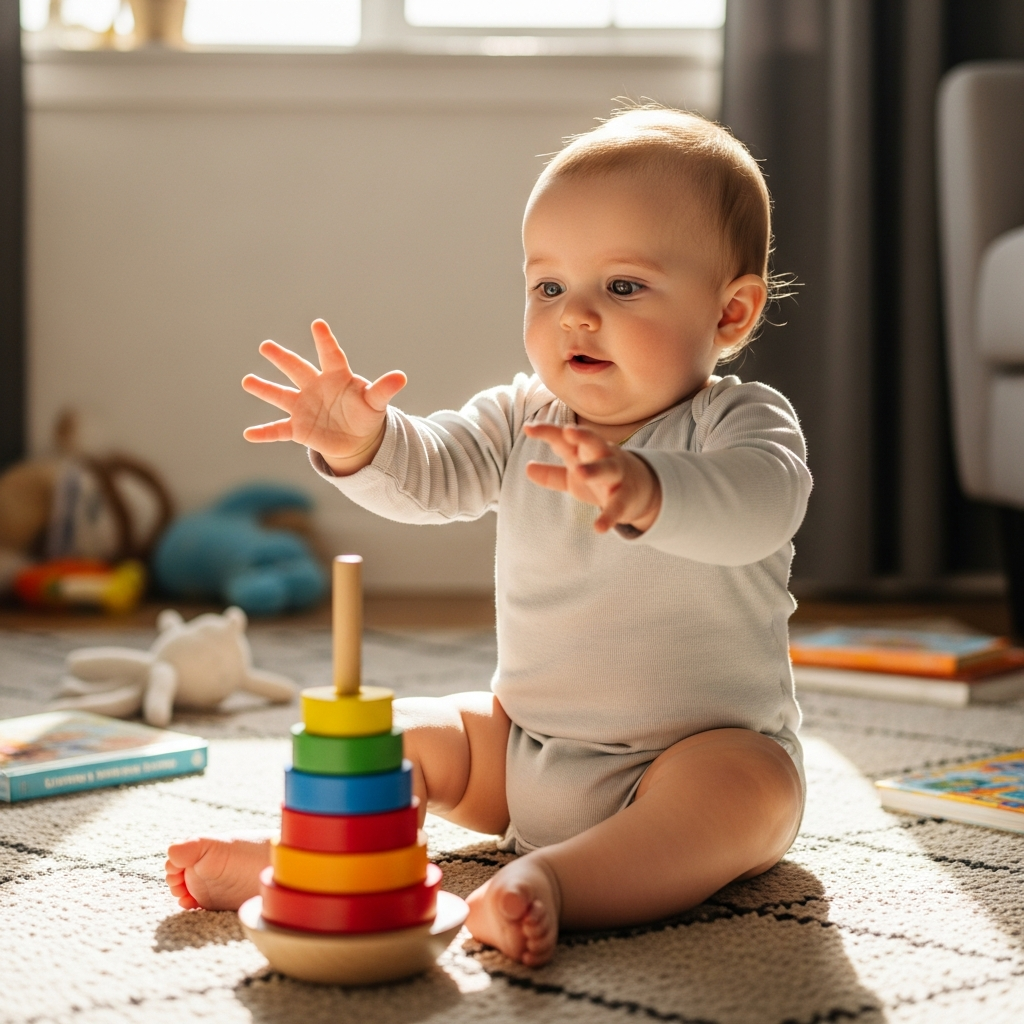
Cognitive Development and Sensory Milestones at 7 Months
Object Permanence: A Major Cognitive Leap
One of the most fascinating cognitive developments at 7 months is emerging object permanence. This means your baby is beginning to understand that objects and people continue to exist even when out of sight.
You might notice your baby:
- Looking for a toy you have partially hidden under a blanket
- Searching for a dropped object
- Becoming upset when you leave the room (they know you exist but cannot see you)
- Showing delight during peek-a-boo games
This cognitive milestone directly connects to separation anxiety, which often intensifies around this age. Your baby understands you exist when you leave but has not yet developed the emotional capacity to know you will return. This is completely normal and actually indicates healthy cognitive growth.
Sensory Exploration and Learning
Your 7 month old learns primarily through sensory experiences. They explore the world using all five senses with remarkable intensity.
Watch for these sensory exploration behaviors:
- Mouthing almost everything (their way of learning about objects)
- Showing preferences for certain textures
- Responding differently to various sounds and music
- Reaching for colorful or moving objects
- Showing interest in watching activities around them
Cause and effect understanding is also emerging. Your baby learns that shaking a rattle makes noise, pressing a button activates a toy, and dropping food from the high chair gets a reaction. This experimental behavior, while sometimes messy, represents important cognitive development.
Language Development: What Sounds Should a 7 Month Old Make?
Babbling and Consonant Sounds
At 7 months, your baby's language development enters an exciting phase. Babbling becomes more complex and conversation-like, even though words have not emerged yet.
Typical language milestones at this age:
- Babbling with consonant-vowel combinations ("ba-ba," "da-da," "ma-ma")
- Varying pitch and tone while babbling
- Responding when you call their name
- Understanding simple words like "no"
- Using different sounds to express emotions
Important note: When your baby says "dada" or "mama" at this age, they typically do not associate these sounds with specific people yet. True word-person associations usually develop around 9-12 months.
How to Encourage Language Development
You play a crucial role in your baby's language development. Simple daily interactions build the foundation for future communication skills.
- Narrate your daily activities: "Now we are changing your diaper!"
- Read board books together, pointing to pictures
- Sing songs and nursery rhymes with gestures
- Respond to your baby's babbles as if having a conversation
- Introduce basic baby sign language (milk, more, all done)
- Name objects and people throughout the day
Research shows that babies whose caregivers engage in frequent verbal interaction develop stronger language skills. Talk to your baby often, even about mundane activities.
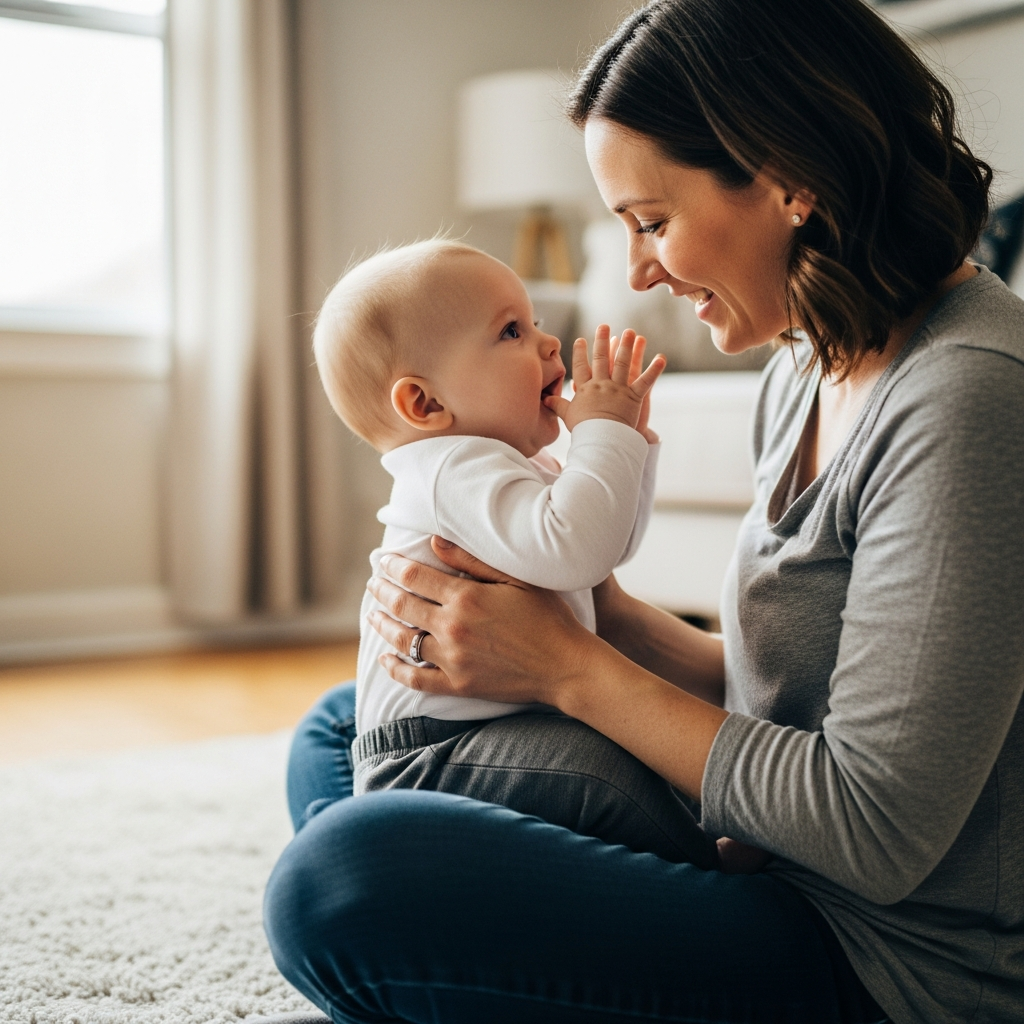
Social and Emotional Development at 7 Months
Attachment and Bonding
Your 7 month old's social-emotional development is blossoming. Strong attachment to primary caregivers becomes increasingly evident, and your baby shows clear preferences for familiar people.
Social milestones to celebrate:
- Reaching toward familiar people to be picked up
- Smiling and laughing during social interactions
- Initiating games like peek-a-boo
- Showing joy during face-to-face play
- Looking to caregivers for reactions (social referencing)
Your baby now recognizes the difference between familiar and unfamiliar faces. This discernment is a positive developmental sign, though it can make introductions to new people challenging.
Understanding Separation Anxiety and Stranger Danger
If your baby has suddenly become clingy or cries when you leave the room, welcome to separation anxiety. This common phase typically emerges around 7-8 months and is directly connected to cognitive development.
Why separation anxiety happens:
- Your baby now understands you exist when out of sight (object permanence)
- They have not yet learned you will always return
- Their memory is strong enough to miss you but not to remember past reunions
Strategies for easing separation anxiety:
- Practice brief separations and happy reunions
- Create consistent goodbye rituals
- Stay calm and confident when leaving
- Avoid sneaking away, which increases anxiety
- Introduce new caregivers gradually
Stranger anxiety is equally normal. Your baby may cry or cling when unfamiliar people approach. Give new adults time to become familiar before expecting your baby to warm up to them.
7 Month Old Sleep Schedule: Naps, Bedtime, and Wake Windows
How Much Sleep Does a 7 Month Old Need?
Sleep remains crucial for your baby's development and your sanity. According to sleep recommendations from the National Sleep Foundation, 7 month olds typically need:
- Total sleep: 12-15 hours per 24 hours
- Nighttime sleep: 10-12 hours
- Daytime naps: 2-3 naps totaling 2-4 hours
- Wake windows: 2-3 hours between sleep periods
Sample 7 Month Old Sleep Schedule
Every baby is different, but here is a sample schedule that works for many families:
| Time | Activity |
|---|---|
| 6:30 AM | Wake up, first feeding |
| 9:00 AM | Nap 1 (1-1.5 hours) |
| 12:30 PM | Nap 2 (1-1.5 hours) |
| 3:30 PM | Optional catnap (30 minutes) |
| 7:00 PM | Bedtime routine begins |
| 7:30 PM | Asleep for the night |
Signs your baby is ready to drop from 3 naps to 2:
- Fighting or refusing the third nap
- Taking longer to fall asleep
- Short naps that do not add up to adequate total sleep
- Bedtime becoming later and later
Surviving the 7 Month Sleep Regression
Sleep regression at 7 months catches many parents off guard. Just when you thought sleep was improving, your baby might start waking frequently or fighting naps.
Common causes of sleep regression:
- Developmental leaps (learning new skills disrupts sleep)
- Teething discomfort
- Separation anxiety at night
- Growing awareness of surroundings
- Hunger from increased activity levels
Sleep regression typically lasts 2-6 weeks. Maintain consistent sleep routines, respond to your baby's needs, and know that this phase will pass. If early morning waking becomes an issue, ensure the room is dark enough and bedtime is not too late.
Feeding Your 7 Month Old: Schedule, Solid Foods, and Nutrition
Sample Feeding Schedule for 7 Month Olds
At 7 months, breast milk or formula remains your baby's primary nutrition source. Solid foods complement rather than replace milk feeds. According to AAP guidelines, babies should consume 24-32 ounces of formula daily or continue breastfeeding 4-6 times per day.
| Time | Feeding |
|---|---|
| 6:30 AM | Breast milk or formula |
| 8:00 AM | Breakfast solids (2-4 tablespoons) |
| 10:00 AM | Breast milk or formula |
| 12:00 PM | Lunch solids (2-4 tablespoons) |
| 2:00 PM | Breast milk or formula |
| 5:30 PM | Dinner solids (2-4 tablespoons) |
| 7:00 PM | Breast milk or formula (before bed) |
Best First Foods and Recipes for 7 Month Olds
Your 7 month old can enjoy a variety of nutritious foods. At this age, you can progress from smooth purees to mashed foods and soft finger foods.
Excellent food choices for 7 month olds:
- Mashed sweet potato, butternut squash, or carrots
- Avocado (mashed or in strips)
- Ripe banana (mashed or as finger food)
- Pureed peas, green beans, or broccoli
- Iron-fortified infant cereals
- Soft-cooked chicken or turkey (pureed or shredded)
- Cooked egg yolk (mashed)
- Plain whole-milk yogurt
Foods to avoid:
- Honey (risk of botulism until age 1)
- Whole nuts and seeds (choking hazard)
- Whole grapes, cherry tomatoes, or hot dogs (cut into quarters)
- Added salt or sugar
- Cow's milk as main drink (okay in cooking)
Introducing Allergens and Managing Feeding Challenges
Current guidelines recommend introducing common allergens early, including peanuts, eggs, dairy, wheat, and fish. Offer one new allergen at a time and wait 2-3 days before introducing another to monitor for reactions.
For peanut introduction, thin peanut butter with breast milk or formula to prevent choking. Scrambled eggs make an excellent early allergen introduction, being both nutritious and easy to eat.
Common feeding challenges and solutions:
- Refusing solids: Continue offering without pressure. Some babies take longer to accept new textures.
- Gagging: Mild gagging is normal as babies learn to manage textures. It differs from choking.
- Constipation: Offer water between feeds and high-fiber foods like prunes or pears.
Best Activities and Toys for 7 Month Old Baby Development
Developmental Activities to Try at Home
Play is your baby's work. Through play, 7 month olds develop motor skills, cognitive abilities, and social connections. Here are engaging activities that support all areas of development.
Motor Skill Activities:
- Tummy time with toys placed just out of reach to encourage movement
- Sitting play with support nearby for safety
- Standing practice while holding your hands
- Rolling a ball back and forth together
Cognitive Activities:
- Peek-a-boo games (builds object permanence)
- Simple hide-and-find with partially hidden toys
- Mirror play for self-recognition
- Cause-and-effect toys that respond to actions
Sensory Activities:
- Exploring different textures (smooth, bumpy, soft, rough)
- Water play during bath time
- Music and movement activities
- Safe outdoor exploration (feeling grass, watching leaves)
When engaging in active play, dress your baby in comfortable, stretchy baby clothes that allow freedom of movement. Soft fabrics without restrictive waistbands make floor play and exploration easier.
Top Toy Recommendations for 7 Month Olds
The best toys for 7 month olds encourage exploration and skill development without overwhelming their senses.
Recommended toy types:
- Cause and effect toys: Push-button toys, pop-up toys, and light-up options
- Stacking and nesting toys: Cups, rings, and blocks
- Soft balls: Easy to grasp and roll
- Board books: Sturdy pages with simple pictures
- Musical instruments: Shakers, drums, and xylophones
- Teething toys: Various textures for gum relief
Remember that household items often make excellent toys. Wooden spoons, plastic containers, and empty boxes fascinate babies just as much as expensive toys. Rotate toys every few days to maintain interest.
Frequently Asked Questions About 7 Month Old Babies
What should a 7 month old be doing developmentally?
A 7 month old typically sits without support, rolls both ways, transfers objects between hands, babbles consonant sounds, responds to their name, and shows emotions like joy and frustration. They may begin rocking on hands and knees preparing to crawl. Every baby develops at their own pace, so focus on overall progress rather than specific timelines.
How many naps should a 7 month old take?
Most 7 month olds take 2-3 naps per day, totaling 2-4 hours of daytime sleep. Many babies transition from 3 naps to 2 around this age. Watch for signs your baby is ready: resisting the third nap, taking longer to fall asleep, or bedtime becoming increasingly late.
Is it normal for a 7 month old to not crawl yet?
Yes, not crawling at 7 months is completely normal. Many babies crawl between 7-10 months, while some skip crawling entirely and go straight to pulling up or cruising. Focus on whether your baby is making progress in other motor skills like sitting, rolling, or scooting. Talk to your pediatrician if you have concerns about overall motor development.
How much should a 7 month old weigh?
The average 7 month old baby girl weighs 16-17 pounds, and the average baby boy weighs 17-19 pounds. However, healthy weights vary widely based on genetics and birth size. Your pediatrician tracks your baby's growth on a percentile chart to ensure consistent growth patterns rather than focusing on specific numbers.
What foods can I give my 7 month old?
At 7 months, babies can eat pureed or mashed fruits, vegetables, and proteins. Good options include sweet potato, avocado, banana, peas, chicken, and iron-fortified cereals. You can also introduce soft finger foods and common allergens like eggs and thinned peanut butter. Avoid honey and choking hazards like whole grapes or nuts.
When should a 7 month old go to bed?
Most 7 month olds do best with a bedtime between 6:30-8:00 PM, with 7:00-7:30 PM being ideal for many families. The best bedtime depends on when your baby wakes and their last nap. Aim for 2.5-3 hours of wake time before bed to prevent overtiredness, which can actually make sleep harder.
How many teeth should a 7 month old have?
Most babies get their first teeth between 6-10 months, so having 0-2 teeth at 7 months is typical. The bottom front teeth usually appear first, followed by the top front teeth. Some babies are born with teeth, while others do not get any until after their first birthday. Tooth timing varies greatly and is largely genetic.
How do I help my 7 month old with separation anxiety?
Help your baby with separation anxiety by practicing short separations and happy reunions, maintaining consistent goodbye routines, and staying calm when leaving. Play peek-a-boo to reinforce that you always return. Avoid sneaking away, as this can increase anxiety. Remember that separation anxiety is a normal sign of healthy attachment and typically eases by 18-24 months.
When to Talk to Your Pediatrician
While every baby develops differently, certain signs warrant professional evaluation. Contact your pediatrician if your 7 month old:
- Does not roll over in either direction
- Cannot sit with support
- Does not bear weight on legs when held standing
- Does not reach for objects
- Shows no interest in social interaction
- Does not respond to sounds or voices
- Does not make eye contact
- Seems unusually stiff or floppy
Trust your instincts as a parent. If something feels wrong, it is always worth discussing with your healthcare provider. Early intervention, when needed, can make a significant difference in developmental outcomes.
Embracing Your 7 Month Old's Unique Journey
The seventh month brings incredible growth, new challenges, and countless moments of joy. Your baby is transforming from a dependent newborn into an increasingly independent, curious, and social little person.
Remember these key takeaways about 7 month old baby development:
- Physical milestones like sitting and pre-crawling movements are emerging
- Cognitive leaps include object permanence and cause-and-effect understanding
- Language development shows through babbling and responding to names
- Separation anxiety is normal and indicates healthy attachment
- Sleep needs total 12-15 hours with 2-3 daytime naps
- Solid foods complement continued breast milk or formula nutrition
- Play-based activities support all developmental domains
Every baby follows their own timeline. Celebrate your little one's unique progress rather than comparing to others. Provide a safe, loving environment filled with opportunities to explore, and your baby will continue to thrive.
At PatPat, we understand the joys and challenges of parenting through every developmental stage. Continue enjoying this remarkable journey with your 7 month old, knowing that each day brings new discoveries for both of you.





