


You made it. One whole month of round-the-clock feedings, endless diaper changes, and those precious moments when your baby looks into your eyes and your heart simply melts. If you are reading this while running on three hours of sleep and wondering whether you are doing everything right, take a deep breath. You are doing an amazing job.
Understanding 1 month old baby development can feel overwhelming when you are in the thick of new parenthood. What should your 4 week old baby be doing? How much sleep is enough? Is that feeding schedule normal? These questions swirl through every new parent's mind, and that is exactly why we created this comprehensive guide.
We believe every parent deserves reliable, science-backed information delivered with warmth and understanding. Whether you are a first-time parent or adding to your growing family, this guide covers everything you need to know about what to expect from your 1 month old, from developmental milestones and sleep patterns to feeding schedules and when to contact your pediatrician.
Remember, every baby develops at their own unique pace. The milestones we discuss here represent general guidelines, not rigid checkboxes. Your baby is already perfect exactly as they are.
What Physical and Cognitive Milestones Should a 1 Month Old Baby Reach?
Your little one has been busy during these first four weeks. While they may seem to only eat, sleep, and fill diapers, remarkable development is happening behind the scenes. Here is what you can expect from your 1 month old baby's milestones.
Physical Development and Motor Skills at One Month
Your baby's physical development during the first month is nothing short of extraordinary. Those tiny muscles are getting stronger every day, even if movements still appear jerky and uncoordinated.
Head control: While your baby still needs full head support, you may notice them briefly lifting their head during tummy time. These micro-moments of strength are building the foundation for future motor skills.
Reflexes present at one month include:
- Moro reflex: That startled "flinging" motion when baby feels unsupported
- Rooting reflex: Turning toward touch on the cheek, searching for food
- Grasp reflex: Automatic finger curling when something touches baby's palm
- Stepping reflex: Leg movements resembling walking when held upright
Your baby's hands are likely still in fists most of the time, and they may bring them toward their mouth. Arm and leg movements are becoming slightly more coordinated, though still largely reflexive.
According to KidsHealth, babies typically gain about 5-7 ounces per week during this period, building strength for the exciting developments ahead.
Vision and Sensory Development in Your 1 Month Old
How far can a 1 month old see? This is one of the most common questions new parents ask. The answer might surprise you.
According to the American Academy of Ophthalmology, newborns see things best from 8 to 12 inches away. This is the perfect distance for gazing into your eyes during feeding. Anything farther appears blurry because babies are naturally nearsighted.
Key vision characteristics at one month:
- Strong preference for high-contrast patterns (black and white images)
- Fascination with human faces, especially yours
- Beginning to track objects briefly with their eyes
- Can distinguish some bold colors like red
Your baby's other senses are developing rapidly too. They can recognize your voice and scent, which is why skin-to-skin contact is so powerful. Research shows babies can identify their mother's unique smell within the first week of life.
Social and Communication Milestones
When do babies start smiling? This magical milestone typically emerges between 4-8 weeks. Your 1 month old may show early hints of social smiling, though those adorable grins during sleep are still reflexive rather than intentional.
Communication at this stage happens primarily through crying. But listen closely and you will notice different cries for different needs. Your baby is also beginning to make soft cooing sounds, the earliest form of language development.
Social behaviors to watch for:
- Making eye contact during feeding and alert periods
- Calming when hearing familiar voices
- Responding differently to different people
- Brief moments of alertness and engagement
How Much Should a 1 Month Old Sleep? Complete Sleep Schedule Guide
Sleep is likely your most pressing concern right now. Understanding your 1 month old's sleep needs can help you establish realistic expectations and create healthy sleep foundations.
Understanding 1 Month Old Wake Windows and Sleep Needs
According to the National Sleep Foundation, infants up to 3 months old should get 14-17 hours of sleep over a 24-hour period. This sounds like a lot until you realize it happens in short bursts throughout the day and night.
Typical 1 month old sleep patterns:
| Sleep Category | Duration |
|---|---|
| Total daily sleep | 14-17 hours |
| Nighttime sleep | 8-9 hours (with 2-3 feedings) |
| Daytime naps | 5-7 hours across 4-6 naps |
| Wake windows | 45-90 minutes maximum |
Your baby's wake windows are particularly important to understand. Most 1 month olds can only stay awake for about 45-90 minutes before becoming overtired. Watch for sleepy cues like yawning, eye rubbing, and fussiness.
Safe Sleep Practices and Creating the Ideal Sleep Environment
Safe sleep is non-negotiable. The American Academy of Pediatrics recommends placing infants on their backs for sleep in their own sleep space with no other people, using a crib, bassinet, or portable play yard with a firm, flat mattress and a fitted sheet.
The ABCs of safe sleep:
- Alone: Baby sleeps in their own sleep space without blankets, pillows, or toys
- Back: Always place baby on their back for every sleep
- Crib: Use a safety-approved crib with a firm, flat mattress
Keep the room temperature comfortable, ideally between 68-72 degrees Fahrenheit. Choosing soft, breathable bamboo baby clothes can help your little one maintain comfortable body temperature throughout the night while following safe sleep guidelines.
Research shows that room-sharing (not bed-sharing) decreases the risk of SIDS by as much as 50 percent. The AAP recommends babies sleep in the same room as parents for at least the first six months.
Common Sleep Challenges and Solutions
Day-night confusion: Many 1 month olds have their days and nights mixed up. Help reset their internal clock by exposing baby to natural light during daytime feeds and keeping nighttime interactions calm and dimly lit.
Baby will not sleep unless held: This is incredibly common. Try these gentle transition strategies:
- Wait until baby is in deep sleep (limp limbs, slow breathing) before transferring
- Warm the sleep surface with a heating pad before laying baby down
- Use swaddling to recreate the secure feeling of being held
- Place a worn shirt near (but not in) the sleep space for your scent
Remember, this phase will not last forever. Your baby's sleep patterns will mature over the coming months.

1 Month Old Feeding Schedule: Breastfeeding and Formula Guidelines
How often should a 1 month old eat? Whether you are breastfeeding, formula feeding, or combination feeding, understanding your baby's nutritional needs helps ensure healthy growth.
Breastfeeding Your 1 Month Old: Frequency and Duration
According to the CDC, newborn babies should breastfeed 8-12 times per day for about the first month. This translates to feeding every 2-3 hours, though some babies may cluster feed more frequently, especially in the evenings.
Typical breastfeeding session:
- Duration: 10-20 minutes per breast
- Frequency: Every 2-3 hours, including at night
- Cluster feeding in evenings is normal and helps establish milk supply
Cluster feeding, when your baby wants to nurse frequently for several hours, is completely normal and does not mean you are not producing enough milk. It actually helps boost your supply and is particularly common during growth spurts.
Formula Feeding Guidelines and Amounts
Formula-fed 1 month olds typically eat every 3-4 hours. Most babies at this age take about 3-4 ounces per feeding, though this varies based on individual needs.
Formula feeding guidelines:
| Measure | Guideline |
|---|---|
| Amount per feeding | 3-4 ounces |
| Feeding frequency | Every 3-4 hours |
| Daily intake | 24-32 ounces total |
Practice paced bottle feeding to mimic the natural rhythm of breastfeeding and prevent overfeeding. Hold the bottle horizontally and allow baby to take breaks during the feeding.
Recognizing Hunger Cues and Signs Baby is Getting Enough
Early hunger cues to watch for:
- Rooting (turning head toward touch on cheek)
- Hand-to-mouth movements
- Lip smacking or sucking motions
- Increased alertness and activity
Crying is actually a late hunger cue. Try to feed your baby before they reach this point for easier, calmer feedings.
Signs your baby is getting enough milk:
- 4-6 wet diapers daily by day 4-5
- Regular bowel movements
- Steady weight gain (5-7 ounces per week)
- Baby seems satisfied after feedings
- You can hear swallowing during feeds
1 Month Old Baby Growth: Weight, Length, and What Pediatricians Track
Understanding growth expectations helps you track your baby's healthy development without unnecessary worry.
Average Weight and Length at One Month
According to WHO growth standards referenced by KidsHealth, the average weight for a 1 month old is about 9.9 pounds (4.5 kg) for boys and slightly less for girls. Average length is approximately 21-22 inches.
Growth expectations at one month:
| Measurement | Average Range |
|---|---|
| Weight | 9-10 pounds (varies by birth weight) |
| Length | 21-22 inches |
| Head circumference | 14-15 inches |
| Weekly weight gain | 5-7 ounces |
Most babies lose 7-10% of their birth weight in the first week but should regain it by two weeks of age. After that, expect steady gains of about 1 ounce per day.
Understanding Growth Charts and Percentiles
Growth percentiles are not grades. A baby in the 25th percentile is just as healthy as one in the 75th percentile. What matters most is that your baby follows a consistent growth curve over time.
The CDC and AAP recommend using WHO growth charts for children up to 2 years old. Your pediatrician will plot your baby's measurements at each visit, tracking the pattern rather than focusing on any single number.
Growth spurts are common and can happen at any time during the first months. During these periods, your baby may seem hungrier than usual and nurse more frequently. This is completely normal.
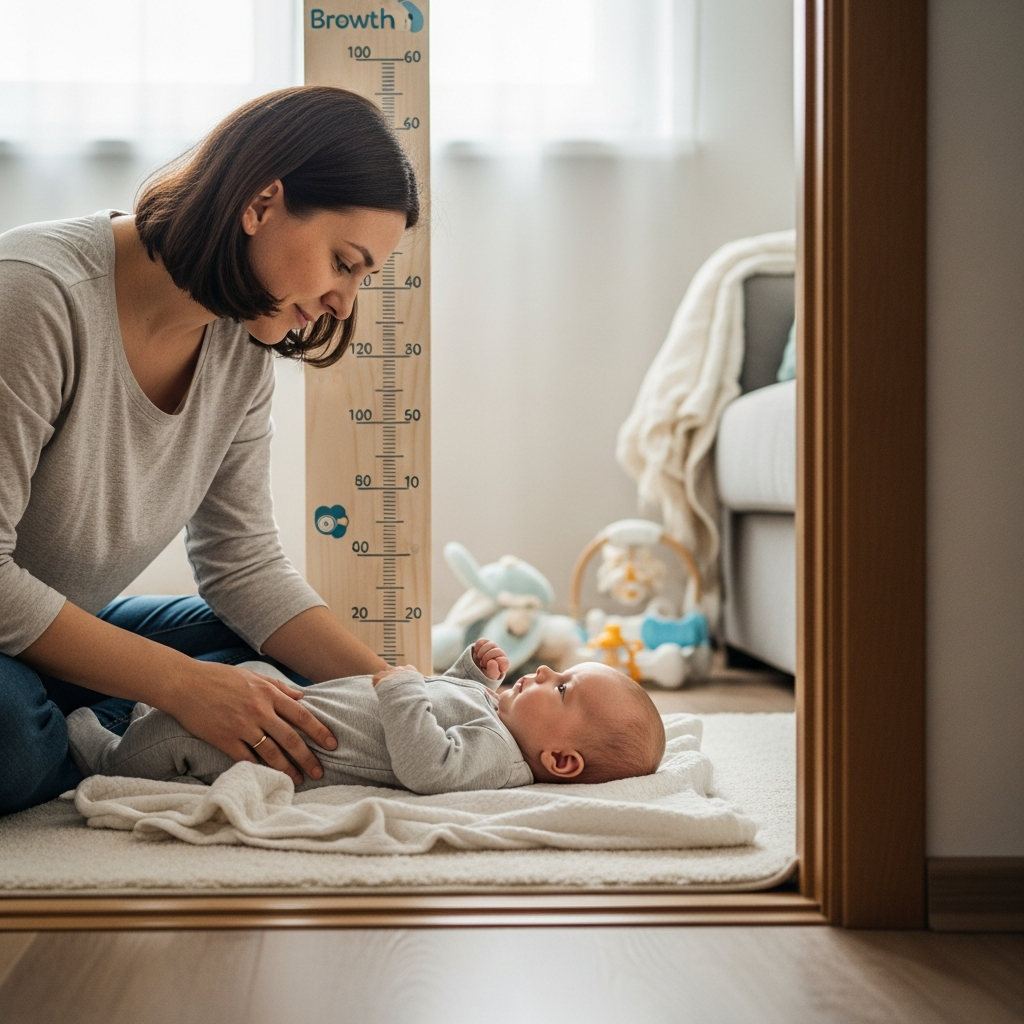
Tummy Time and Developmental Activities for Your 1 Month Old
Wondering how to play with a 1 month old? Simple activities support healthy development and strengthen your bond.
How to Do Tummy Time with a 1 Month Old
According to the AAP, you should play and interact with your baby while they are awake and on their tummy 2 to 3 times each day for a short time (3-5 minutes). You can start the day you bring baby home from the hospital.
Tummy time tips for success:
- Start with short sessions (2-3 minutes) and build up gradually
- Try tummy time on your chest, which often feels more secure for newborns
- Place a rolled towel under baby's chest for support
- Get down on baby's level and make eye contact
- Use high-contrast images or toys to encourage head turning
If your baby fusses during tummy time, do not worry. Many babies protest at first. Shorter, more frequent sessions often work better than longer ones. By 7 weeks, aim for 15-30 minutes of total tummy time daily.
Sensory Play and Bonding Activities
Your 1 month old baby is learning about the world through all their senses. Here are simple ways to support that exploration:
Visual stimulation:
- Show high-contrast black and white images or books
- Let baby study your face during alert periods
- Hang a simple mobile with bold patterns
Auditory development:
- Talk, sing, and read aloud to your baby
- Play soft music or nature sounds
- Describe what you are doing during daily routines
Touch and bonding:
- Practice skin-to-skin contact daily
- Try gentle infant massage with natural oil
- Rock, bounce, and sway gently together
During these precious bonding moments, having your baby in comfortable, soft baby clothes makes skin-to-skin transitions easier and keeps your little one cozy throughout the day.
Your 1 Month Pediatrician Checkup: What to Expect and Questions to Ask
Your baby's 1 month checkup is an important opportunity to discuss development, address concerns, and ensure your little one is thriving.
What happens at the 1 month visit:
- Measurements: weight, length, and head circumference
- Physical examination of heart, lungs, hips, and reflexes
- Developmental screening discussion
- Hepatitis B vaccine if not already given
- Review of feeding, sleep, and elimination patterns
Questions to ask your pediatrician:
- Is my baby gaining weight appropriately?
- Should I be concerned about [specific behavior you have noticed]?
- What should I do if my baby develops a fever?
- How can I help my baby sleep better?
- Is my baby's feeding pattern normal?
- When should I schedule the next appointment?
Write down your questions beforehand. In the fog of new parenthood, it is easy to forget what you wanted to ask once you are in the exam room.
When to Call the Doctor: Red Flags and Health Concerns
Knowing when to seek medical attention helps you respond appropriately to potential problems while avoiding unnecessary worry.
Developmental Warning Signs to Watch For
While every baby develops at their own pace, certain signs warrant a conversation with your pediatrician:
- No response to loud sounds
- Does not watch things as they move
- Does not bring hands to mouth
- Cannot lift head briefly when on tummy
- Seems extremely stiff or extremely floppy
- Does not seem to recognize you
Health Symptoms Requiring Medical Attention
Call your doctor or seek emergency care immediately for:
Fever: According to Nationwide Children's Hospital, for babies under one month old, a fever (rectal temperature of 100.4F or higher) is considered an emergency. Go to the emergency room immediately.
Other urgent symptoms:
- Signs of dehydration (fewer than 4-6 wet diapers daily)
- Projectile or persistent vomiting (different from normal spit-up)
- Difficulty breathing, rapid breathing, or blue coloring
- Extreme lethargy or difficulty waking for feeds
- Umbilical cord area appears red, swollen, or has discharge
- Yellowing of skin or eyes (jaundice) that worsens
- Inconsolable crying for extended periods
Trust your instincts. You know your baby better than anyone. If something feels wrong, it is always appropriate to call your pediatrician.
Frequently Asked Questions About 1 Month Old Babies
How many hours should a 1 month old sleep in 24 hours?
A 1 month old typically sleeps 14-17 hours in a 24-hour period. This includes 8-9 hours of nighttime sleep (with feeding interruptions) and 5-7 hours of daytime naps spread across 4-6 sleep sessions. Every baby varies, so focus on whether your baby seems rested and content rather than hitting exact numbers.
How far can a 1 month old baby see?
At one month, babies can see clearly at a distance of 8-12 inches, approximately the distance to your face during feeding. They prefer high-contrast patterns and faces. Color vision is still developing, though they can distinguish some bold colors like red. By one month, babies may briefly focus on objects up to 3 feet away.
When do babies start smiling socially?
Most babies begin social smiling between 4-8 weeks of age. Your 1 month old may show early hints of smiling, particularly when looking at your face. Before true social smiling develops, you may notice reflex smiles during sleep or when passing gas. That first genuine smile is coming soon.
How often should I feed my 1 month old baby?
Breastfed 1 month olds typically eat 8-12 times per day (every 2-3 hours), while formula-fed babies usually eat every 3-4 hours. Follow your baby's hunger cues rather than strict schedules. Cluster feeding in the evenings is normal for breastfed babies and helps establish milk supply.
Is it normal for my 1 month old to spit up frequently?
Yes, frequent spit-up is normal in 1 month olds because their digestive systems are still maturing. Most babies spit up until around 6-12 months. Concerning signs include projectile vomiting, poor weight gain, or signs of discomfort. Keep baby upright for 15-20 minutes after feedings to minimize spit-up.
How much tummy time does my 1 month old need?
Start with 3-5 minutes of tummy time, 2-3 times per day when your baby is awake and alert. Gradually increase as your baby gets stronger, working toward 15-30 minutes daily by 7 weeks. Tummy time on your chest also counts. If your baby fusses, try shorter sessions and different positions.
Should I wake my 1 month old to feed at night?
Most pediatricians recommend waking your 1 month old every 3-4 hours for feeding if they have not regained birth weight, or if there are weight gain concerns. Once your baby has established good weight gain patterns, you can typically let them sleep longer stretches. Always confirm with your pediatrician.
What is a normal weight for a 1 month old baby?
The average weight for a 1 month old is approximately 9-10 pounds, though healthy weights range from 7 to 12 pounds depending on birth weight. Boys typically weigh slightly more than girls. The most important factor is that your baby is gaining weight consistently each week, around 5-7 ounces.
Celebrating Your First Month Together
You have made it through one month of the most intense, exhausting, and rewarding experience of your life. Your 1 month old baby development journey is just beginning, and the changes you have already witnessed are remarkable. From those first wobbly moments of tummy time to the way your baby calms at the sound of your voice, every day brings new discoveries.
Remember that baby milestones are guideposts, not deadlines. Your little one is developing exactly as they should, at their own unique pace. Trust yourself, trust your baby, and do not hesitate to reach out to your pediatrician whenever you have questions or concerns.
At PatPat, we are here to support you through every stage of your parenting journey. As you look ahead to your baby's second month, you will see even more exciting developments: true social smiles, better head control, and longer stretches of sleep. The adventure is just getting started.
You are doing an amazing job. Take a moment to celebrate how far you have come in this first month with baby. The sleepless nights, the endless love, the tiny fingers wrapped around yours. This is parenthood, and you are already a natural.


