


Your 10 month old baby stands at the threshold of an incredible transformation. In just two months, your little one will celebrate their first birthday, but right now, they are rapidly evolving from a dependent infant into an independent pre-toddler. You might notice your baby pulling up on furniture, babbling enthusiastically, or showing a distinct personality that makes you laugh daily.
What should a 10 month old be doing? The truth is, 10 month old baby development varies tremendously. Some babies are taking their first wobbly steps, while others crawl at lightning speed. Both paths are completely normal. This comprehensive guide covers everything about 10 month old milestones, from sleep schedules and feeding transitions to activities supporting your baby's growing brain.
Whether navigating the 10 month sleep regression, wondering about finger foods, or curious about cognitive leaps, you will find evidence-based answers here.
What Developmental Milestones Should a 10 Month Old Baby Achieve
Understanding 10 month old developmental milestones helps you celebrate your baby's progress while knowing what to gently encourage. Remember, the CDC notes that milestones reflect what 75% of children can do by a certain age, meaning one quarter of healthy babies reach these skills earlier or later.
Gross Motor Skills: Crawling, Cruising, and Standing at 10 Months
Your 10 month old is likely a mobility machine. Most babies have mastered some form of crawling, whether traditional hands-and-knees, army crawling, or bear crawling. Some babies skip crawling entirely.
The biggest gross motor achievement at 10 months is pulling to stand. Your baby grabs furniture or anything stable and hauls themselves upright. Once standing, many begin cruising, that sideways shuffle along furniture bridging standing and walking. According to the AAP, babies between 8-12 months typically pull to standing and cruise along furniture.
You might also notice your baby:
- Sitting independently with excellent balance while reaching for toys
- Transitioning smoothly between positions such as sit to crawl to stand
- Attempting to climb stairs, cushions, or low furniture
- Standing briefly without support before plopping down
Fine Motor Skills and the Pincer Grasp at Ten Months
The 10 month old pincer grasp is becoming increasingly refined. Your baby can now pick up tiny objects like cereal pieces or peas using just their thumb and forefinger rather than their whole hand. The AAP confirms that babies at this age use their thumb and pointer finger to pick up tiny objects and release them into containers.
Other fine motor developments include:
- Transferring objects between hands effortlessly
- Banging objects together intentionally
- Pointing at objects of interest with their index finger
- Turning pages in board books, often several at once
- Dropping objects deliberately to watch them fall
Cognitive Leaps and Problem-Solving Skills
Your 10 month old's brain development is accelerating. Object permanence, understanding that things exist when hidden, is now established. This is why peek-a-boo delights your baby and why they search for hidden toys.
Cause and effect understanding has matured. Your baby knows pushing a button produces sound and dropping a spoon makes you pick it up. They are beginning to understand simple instructions and recognize "no," even if compliance remains optional.
Imitation becomes more sophisticated. Your 10 month old watches your actions and copies gestures, sounds, and expressions, building social connections.
10 Month Old Sleep Schedule: Managing Naps and Nighttime Rest
Sleep remains a major concern for parents of 10 month olds, and for good reason. Your baby's sleep patterns are maturing, but regressions and disruptions can still catch you off guard.
Total Sleep Needs and Wake Windows for 10 Month Olds
How much sleep does a 10 month old need? The Sleep Foundation recommends 12 to 16 hours per day. This breaks down to 11-12 hours of nighttime sleep and 2-3 hours of daytime naps.
Wake windows typically range from 3 to 4 hours at this age, with shorter windows in the morning and longer stretches before bed.
| Sleep Component | Typical Range |
|---|---|
| Total Daily Sleep | 12-15 hours |
| Nighttime Sleep | 10-12 hours |
| Daytime Naps | 2-3 hours total |
| Wake Windows | 3-4 hours |
Sample 10 Month Old Nap Schedule That Works
By 10 months, most babies have transitioned to a solid two-nap schedule. Here is a sample 10 month old sleep schedule with 2 naps that many families find successful:
6:30 AM - Wake and first feed
10:00 AM - Morning nap (1-1.5 hours)
2:30 PM - Afternoon nap (1-1.5 hours)
6:30 PM - Bedtime routine begins
7:00-7:30 PM - Asleep for the night
Flexibility is key. Watch your baby's sleepy cues, including eye rubbing, yawning, and fussiness, and adjust timing as needed. Some babies thrive with slightly earlier or later schedules.
Surviving the 10 Month Sleep Regression
If your good sleeper suddenly wakes multiple times nightly, fights naps, or struggles to settle, you may be experiencing the 10 month sleep regression. This is commonly triggered by developmental milestones, separation anxiety, teething, or increased mobility. Regressions typically last 2-6 weeks. Here is how to cope:
- Maintain consistent bedtime routines even when sleep is rough
- Offer comfort and reassurance without creating new sleep dependencies
- Ensure adequate daytime sleep to prevent overtiredness
- Stay calm and remember this phase will pass

Feeding Your 10 Month Old: Transitioning to Table Foods
Your 10 month old's relationship with food is evolving rapidly. Solids are becoming a more significant part of their nutrition, and self-feeding skills are blossoming.
Safe Finger Foods for 10 Month Old Babies With Emerging Teeth
What can a 10 month old eat? More than you think. Choose foods soft enough to mash between your fingers. Many 10 month olds have only 2-4 teeth, and some have none, which is perfectly normal.
Safe finger foods for 10 month old babies include:
- Soft fruits: ripe banana slices, avocado chunks, soft peach pieces, steamed apple
- Cooked vegetables: steamed carrots, broccoli florets, sweet potato cubes
- Proteins: scrambled eggs, flaked fish, soft shredded chicken, ground meat
- Grains: soft pasta, toast strips, O-shaped cereal, soft pancake pieces
- Dairy: soft cheese cubes, plain whole-milk yogurt
Foods to avoid due to choking hazards:
- Whole grapes or cherry tomatoes (cut into quarters)
- Raw vegetables like carrots or celery
- Nuts and seeds
- Popcorn
- Hot dog rounds
- Hard candies
Sample Feeding Schedule With Breast Milk, Formula, and Solids
At 10 months, breast milk or formula remains important, but solids are taking center stage. Most babies drink 20-28 ounces daily while eating three meals plus one or two snacks.
7:00 AM - Breast milk/bottle (6-8 oz) + breakfast solids
10:00 AM - Small snack if hungry before nap
11:00 AM - Lunch solids
2:30 PM - Breast milk/bottle (6-8 oz) after nap
5:30 PM - Dinner solids with family
7:00 PM - Breast milk/bottle before bed (6-8 oz)
Introduce water in a sippy cup during meals, preparing for the transition away from bottles by 12-15 months.
Handling Picky Eating and Food Refusal at 10 Months
Is your 10 month old not eating solids? Food refusal often emerges as babies assert preferences. This is developmentally normal. Strategies for encouraging healthy eating:
- Offer new foods repeatedly without pressure, research shows babies may need 10-15 exposures before accepting a food
- Model eating the same foods yourself
- Keep mealtimes positive and avoid battles
- Trust your baby to regulate their own intake
- Focus on variety over quantity
Consult your pediatrician if your baby consistently refuses all solids or is not gaining weight appropriately. For most families, picky phases pass with patience. Solid Starts offers excellent resources for baby-led weaning.
Social Emotional Development: Understanding 10 Month Old Behavior
Your 10 month old's emotional world is expanding dramatically. You are witnessing the emergence of a unique personality with preferences, fears, and a strong attachment to you.
Why 10 Month Olds Experience Separation Anxiety and Clinginess
If your easygoing baby suddenly cries when you leave the room, welcome to separation anxiety. According to the AAP, separation anxiety peaks between 10 and 18 months.
This occurs because your baby understands you exist when out of sight but lacks trust that you will return. This is actually a sign of healthy cognitive development and secure attachment.
Strategies for easing separation anxiety:
- Keep goodbyes brief and consistent rather than prolonged
- Practice short separations in safe environments
- Offer a comfort object like a favorite stuffed animal
- Reassure but avoid excessive coddling that reinforces anxiety
- Return when you say you will to build trust
Stranger anxiety often accompanies separation anxiety, with wariness of unfamiliar faces. This typically improves by 18-24 months.
Personality Emergence and Social Interactions at Ten Months
Your 10 month old's personality is shining through clearly. You might notice distinct preferences for certain toys, people, or activities. Some babies crawl fearlessly toward new experiences, while others observe carefully before engaging. Social developments include:
- Interactive play with parents and siblings featuring back-and-forth exchanges
- Beginning to notice other babies during parallel play
- Developing humor and laughing at silly sounds or peek-a-boo
- Showing affection through hugs, cuddles, and sometimes kisses
- Imitating social behaviors like waving, clapping, and blowing kisses
- Expressing frustration when desires are thwarted
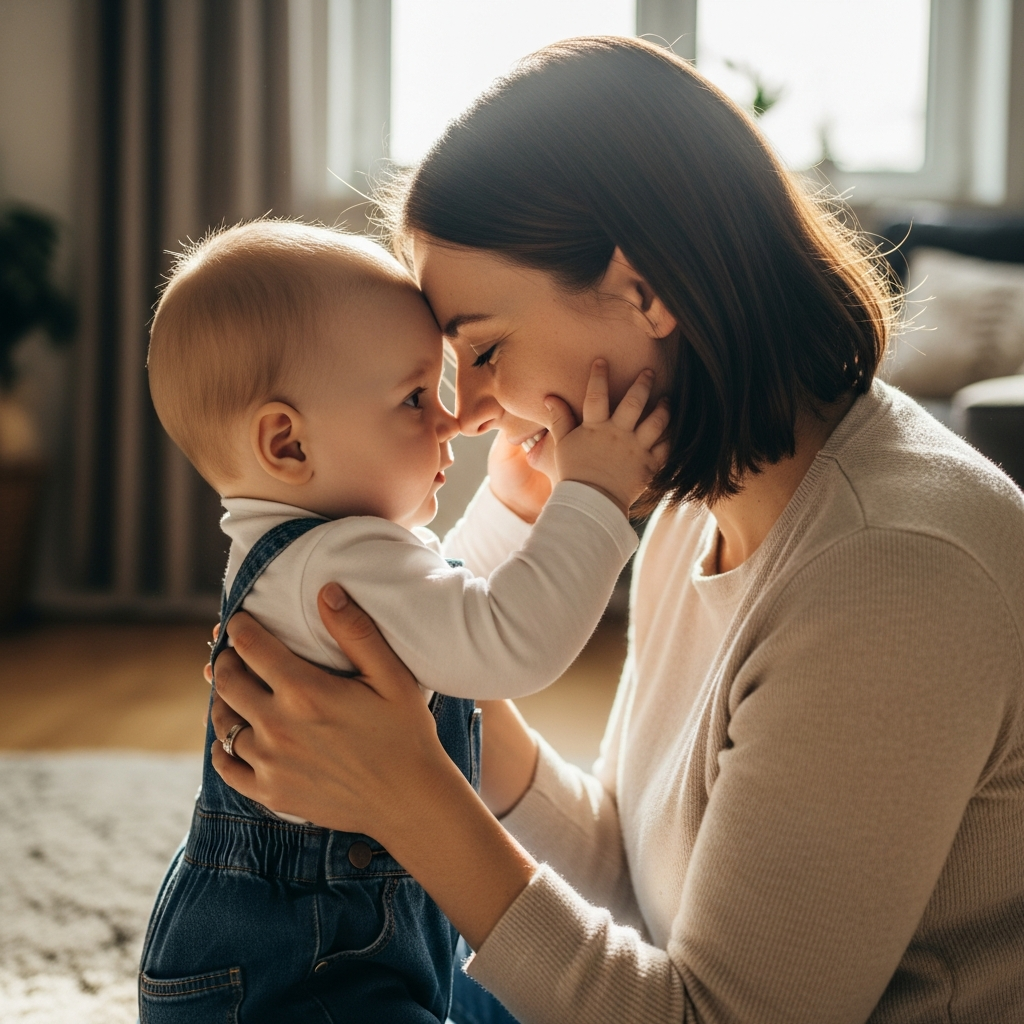
Speech and Language Development at 10 Months Old
Communication is exploding at 10 months, even without actual words. Understanding receptive language (what babies understand) versus expressive language (what they say) helps set realistic expectations.
First Words and Babbling: What to Expect From Your 10 Month Old
How many words should a 10 month old say? Most babies say zero to two meaningful words, typically "mama" and "dada." Many 10 month olds are still babbling without true words, which is completely normal. What you should hear at 10 months:
- Varied consonant-vowel babbling such as "ba-ba," "da-da," "ma-ma," "ga-ga"
- Jargon babbling that sounds like conversation with intonation patterns
- Responses to their name
- Understanding of simple words like "no," "bye-bye," and "bottle"
- Gestures like pointing, waving, and reaching
Your baby understands far more than they can say. HealthyChildren.org provides detailed guidance on language development from 8-12 months.
Activities to Encourage Your Baby to Talk and Communicate
You play the most important role in language development. Here is how to encourage talking:
- Narrate constantly: Describe what you are doing, seeing, and feeling throughout the day
- Read together daily: Point to pictures and name objects in simple board books
- Sing songs: Repetitive songs with hand motions like "Itsy Bitsy Spider" build vocabulary
- Pause for responses: After speaking, wait expectantly for your baby to "reply"
- Introduce baby sign language: Signs for "more," "milk," "eat," and "all done" reduce frustration
- Respond enthusiastically: Celebrate all communication attempts
- Limit screen time: The AAP recommends avoiding screens under 18 months, as passive viewing can delay language
Best Developmental Activities and Toys for 10 Month Olds
Play is your 10 month old's primary occupation. Through play, babies develop motor skills, cognitive abilities, language, and social connections.
Sensory Play Ideas That Boost 10 Month Old Brain Development
Sensory activities engage developing senses and build neural connections:
- Water play: Supervised splash time in the tub or a shallow container
- Texture exploration: Touch-and-feel books, different fabrics, safe nature items
- Music and rhythm: Simple instruments like maracas, drums, or wooden spoons on pots
- Messy play: Finger painting with edible paints, exploring cooked spaghetti
- Outdoor sensory experiences: Feeling grass, leaves, and sand under supervision
Top Developmental Toys and Games for This Age
The best toys for 10 month olds support emerging skills:
| Toy Type | Developmental Benefit |
|---|---|
| Push toys and walkers | Support cruising and pre-walking skills |
| Shape sorters | Problem-solving and fine motor coordination |
| Stacking cups and blocks | Spatial awareness and hand-eye coordination |
| Cause-and-effect toys | Cognitive development and understanding consequences |
| Board books with flaps | Language development and fine motor skills |
| Soft balls | Gross motor skills and social play |
Interactive Games That Build Connection and Skills
Sometimes the best activities require no toys at all:
- Peek-a-boo variations: Hide behind hands, cloths, or furniture
- Ball rolling: Roll a ball back and forth to practice turn-taking
- Pat-a-cake and clapping games: Build rhythm and imitation skills
- Chase games: Crawl after your baby or let them chase you
- Mirror play: Watch expressions together and make faces
- Container play: Fill and empty containers with safe objects
For more developmental activity ideas organized by age, Pathways.org offers excellent free resources.
10 Month Old Growth Chart: Weight, Height, and Physical Development
Physical growth provides important health information. What matters most is your baby following their own consistent growth curve.
Average Weight and Height for 10 Month Old Babies
According to WHO growth standards, here are median measurements for 10 month olds:
| Measurement | Boys (50th percentile) | Girls (50th percentile) |
|---|---|---|
| Weight | 20.3 lbs (9.2 kg) | 18.7 lbs (8.5 kg) |
| Length | 28.9 in (73.3 cm) | 28.1 in (71.5 cm) |
Healthy babies vary tremendously in size. A baby at the 10th percentile is as healthy as one at the 90th percentile. By 10 months, most babies have tripled their birth weight, though growth slows compared to the first six months.
Teething Timeline and What to Expect at 10 Months
How many teeth should a 10 month old have? Many have 2-4 teeth, typically the bottom and top central incisors. However, some perfectly healthy babies have no teeth at 10 months.
Common teething symptoms include increased drooling, desire to chew on everything, mild fussiness, sleep disruption, and swollen gums. Important: teething does not cause high fever or diarrhea. If your baby has fever over 101F or seems very ill, contact your pediatrician.
Safe teething remedies include cold washcloths, refrigerated teething rings, and gentle gum massage. If no teeth appear by 12 months, mention it at your next visit, though this alone rarely causes concern.
Frequently Asked Questions About 10 Month Old Development
What should a 10 month old be doing developmentally?
At 10 months, most babies can sit independently, crawl confidently, pull to stand, and cruise along furniture. They use a pincer grasp to pick up small objects, babble with varied sounds, wave bye-bye, and understand simple words like "no." They show stranger anxiety and strong attachment to caregivers. Some babies may already be saying their first meaningful words like "mama" or "dada."
How many words should a 10 month old say?
Most 10 month olds say 0-2 words with meaning, typically "mama" or "dada." Many babies are still babbling and not yet speaking true words at this age, which is completely normal. Focus on receptive language instead. Your baby should respond to their name, understand "no," and follow simple commands. Words typically emerge between 10-14 months.
What finger foods are safe for a 10 month old?
Safe finger foods for 10 month olds include soft fruits like banana and avocado, steamed vegetables such as carrots and broccoli, scrambled eggs, soft pasta, toast strips, soft cheese, and flaked fish. All foods should mash easily between your fingers. Avoid choking hazards like whole grapes, raw vegetables, nuts, popcorn, and hot dogs.
Is it normal for a 10 month old not to crawl?
Yes, some babies skip crawling entirely and go straight to walking. Others use alternative movement like scooting, rolling, or army crawling. Crawling is not a required milestone according to the CDC. Focus on whether your baby shows interest in movement and mobility. If your baby cannot bear weight on legs or shows no mobility attempts, discuss this with your pediatrician.
How many naps should a 10 month old take?
Most 10 month olds take 2 naps per day, totaling 2-3 hours of daytime sleep. A typical schedule includes a morning nap around 9:30-10:00 AM and an afternoon nap around 2:00-2:30 PM. If your baby is still on 3 naps, watch for signs of readiness to transition: fighting the third nap, longer wake windows, or shortened naps.
Why is my 10 month old suddenly so clingy?
Increased clinginess at 10 months is typically separation anxiety, which peaks between 8-18 months. This is a positive sign of healthy cognitive development. Your baby now understands you exist when out of sight and prefers familiar caregivers. This phase is temporary and usually improves by 18 months. Consistent, brief goodbyes and reassurance help ease this transition.
What is the average weight for a 10 month old baby?
The average weight for a 10 month old boy is approximately 20.3 pounds (9.2 kg), and for girls approximately 18.7 pounds (8.5 kg). However, healthy babies vary widely in size. Consistent growth along your baby's own percentile curve matters more than matching averages. By 10 months, most babies have about tripled their birth weight.
When should I worry about my 10 month old's development?
Contact your pediatrician if your 10 month old does not bear weight on legs when supported, does not sit with help, does not babble consonant sounds, does not respond to their name, does not recognize familiar people, or does not look where you point. However, developmental ranges are wide, so discuss any concerns rather than waiting anxiously.
Conclusion: Embracing Your 10 Month Old's Journey
Your 10 month old stands at an incredible crossroads of development. In just weeks, they will celebrate their first birthday. From mastering the pincer grasp to navigating separation anxiety, from cruising along furniture to babbling with intention, your baby is building the foundation for toddlerhood.
Remember that 10 month old developmental milestones are guidelines, not deadlines. Your baby will reach each skill in their own time. What matters most is providing a loving environment where exploration is encouraged and connection is prioritized.
Trust your instincts. You know your baby better than anyone. At PatPat, we understand the joys and challenges of this remarkable stage. Bookmark this guide and enjoy every moment of your 10 month old's amazing development.


