


Is your baby suddenly grabbing everything in sight, babbling up a storm, and maybe even attempting their first roll? Welcome to the remarkable world of 5 month old baby development. This stage brings an explosion of new skills that can feel both thrilling and overwhelming for parents.
At five months old, your little one is becoming an active participant in the world, eager to explore, communicate, and connect. Whether you are celebrating new milestones or wondering if your baby is on track, this guide covers everything you need to know about this transformative period.
We understand that parenting comes with endless questions. That is why we have created this evidence-based resource drawing from guidance by the Centers for Disease Control and Prevention (CDC) and the American Academy of Pediatrics (AAP). From 5 month old milestones and sleep schedules to feeding tips and developmental activities, you will find practical answers to support your baby's growth journey.
Remember, every baby develops at their own unique pace. The milestones discussed here represent general guidelines, not strict deadlines. If you have concerns about your infant development, always consult your pediatrician for personalized guidance.
What to Expect: 5 Month Old Baby Development Milestones
What should a 5 month old be doing? This is one of the most common questions parents ask. At this age, your baby is experiencing rapid growth across multiple developmental areas. Understanding these baby milestones helps you celebrate progress and identify opportunities to support your little one.
Key Developmental Milestones Your 5 Month Old Should Reach
According to the CDC, developmental milestones represent skills that 75% or more of children achieve by a certain age. For a five month old baby, key milestones include:
- Rolling over: Many babies roll from tummy to back first, then master back to tummy
- Head control: Holding their head steady when upright
- Sitting with support: Maintaining balance when propped up
- Reaching and grasping: Grabbing objects with purpose
- Name recognition: Turning toward you when you call their name
- Emotional expression: Showing joy, frustration, and curiosity through facial expressions
Understanding the 5 Month Old Milestone Checklist
Use this checklist to track your baby's progress across different developmental areas:
| Category | Milestone |
|---|---|
| Physical | Rolls over, pushes up during tummy time, brings hands together |
| Cognitive | Explores objects by mouthing, tracks moving objects, shows curiosity |
| Communication | Babbles with consonant sounds, responds to voices, laughs |
| Social-Emotional | Recognizes familiar faces, smiles at people, enjoys play |
Keep in mind that these 5 month baby development milestones are guidelines. Some babies reach certain skills earlier while others take more time. Consistent progress matters more than hitting exact timelines.
Physical Development: Rolling Over, Sitting Up, and Motor Skills at 5 Months
Physical milestones often steal the spotlight at this age. Watching your baby gain strength and coordination is incredibly rewarding. Let us explore what to expect and how to support your 5 month old's motor skill development.
When Do 5 Month Olds Start Rolling Over?
Rolling over is often the first major mobility milestone. According to Pathways.org, babies typically begin rolling around 4 months as their core muscles strengthen. Most babies roll from tummy to back first because it requires less strength. The back-to-tummy roll usually follows weeks later.
Signs your baby is preparing to roll include:
- Rocking side to side during tummy time
- Lifting legs high while on their back
- Arching their back and looking to one side
- Pushing up strongly on arms during tummy time
If your 5 month old is not rolling over yet, do not panic. Continue offering plenty of tummy time. Pathways.org notes that tummy time strengthens the neck, shoulder, back, and core muscles essential for rolling. Some babies simply prefer other activities first.
Can a 5 Month Old Sit Up Without Support?
Independent sitting typically develops between 6-8 months. At 5 months, most babies can sit with support or in the "tripod" position, propping themselves up with their hands. This is completely normal and expected.
Practice supported sitting during playtime by placing pillows around your baby for safety. This builds core strength for independent sitting later. Never leave your baby unattended in a sitting position at this stage.
Gross Motor Skills and Fine Motor Skills Development
At five months, your baby is developing both gross motor skills (large muscle movements) and fine motor skills (small, precise movements):
Gross motor progress includes:
- Strong head control when held upright
- Pushing up on extended arms during tummy time
- Weight-bearing on legs when held standing
Fine motor progress includes:
- Reaching for objects with both hands
- Transferring objects between hands
- Raking grasp to pick up toys
- Improved hand-eye coordination

Sleep Schedule for 5 Month Old Babies: Naps, Bedtime, and Wake Windows
Sleep is often a hot topic for parents of five month olds. Understanding your baby's sleep needs helps establish healthy patterns and manage the dreaded sleep regression.
How Much Sleep Does a 5 Month Old Need?
According to the American Academy of Pediatrics (endorsed by AASM), infants 4-12 months should sleep 12-16 hours per 24 hours (including naps) on a regular basis. For your 5 month old, this typically breaks down as:
- Nighttime sleep: 10-12 hours (may include 1-2 night feedings)
- Daytime naps: 3-4 hours total, spread across 3 naps
- Wake windows: 2-2.5 hours between sleep periods
Sample 5 Month Old Sleep Schedule and Wake Windows
Here is a realistic schedule template you can adapt to your family's routine:
| Time | Activity |
|---|---|
| 7:00 AM | Wake up and feed |
| 9:00 AM | Nap 1 (1-1.5 hours) |
| 12:00 PM | Nap 2 (1.5-2 hours) |
| 3:30 PM | Nap 3 (30-45 minutes) |
| 7:00 PM | Bedtime routine begins |
| 7:30 PM | Bedtime |
Remember, this is a guide, not a rigid schedule. Follow your baby's sleepy cues and adjust as needed.
Surviving the 5 Month Sleep Regression
The 5 month sleep regression can feel like a nightmare after weeks of better sleep. This temporary disruption happens because your baby's sleep cycles are maturing. According to the Sleep Foundation, neurological development changes how babies cycle through sleep stages, causing more frequent wakings.
Common signs include:
- Frequent night wakings
- Shorter naps
- Fighting bedtime
- Increased fussiness
The good news? Cleveland Clinic reports that regressions typically last a week or two before children get back on track. Maintain consistent routines and avoid creating new sleep associations you will need to break later.
Feeding Your 5 Month Old: Breastfeeding, Formula, and Solid Food Readiness
Feeding questions abound at five months. Should you start solids? How much milk does your baby need? Let us break down the essentials of your 5 month old feeding schedule.
Breastfeeding and Formula Feeding Schedule at 5 Months
At this age, breast milk or formula remains your baby's primary nutrition source. Most 5 month olds need:
- Frequency: 5-6 feedings per day
- Breast milk: Approximately 24-32 ounces daily
- Formula: Approximately 24-36 ounces daily
Signs your baby is getting enough include steady weight gain, 6 or more wet diapers daily, and contentment after feedings.
Signs Your 5 Month Old Is Ready for Solid Foods
The AAP recommends introducing solid foods at about 6 months, not 5 months. However, you can start watching for readiness signs:
- Good head and neck control
- Sitting with minimal support
- Loss of tongue-thrust reflex
- Interest in watching others eat
- Opening mouth when food approaches
Waiting until around 6 months allows your baby's digestive system to mature fully. If you are eager to start earlier, discuss timing with your pediatrician first.
Handling Growth Spurts and Feeding Changes
Growth spurts at 5 months can temporarily increase hunger. Your baby may want to nurse more frequently or seem unsatisfied after bottles. This is normal and usually resolves within a few days. Trust your baby's hunger cues and offer feeds on demand during these periods.
Language and Communication Development: Babbling and Social Skills at 5 Months
Your baby's communication skills are blossoming at five months. Those adorable babbles and social smiles signal important cognitive development happening behind the scenes.
What Sounds Should a 5 Month Old Be Making?
Babbling typically begins between 4-6 months. According to HealthyChildren.org (AAP), babies start babbling around four months, using rhythms and characteristics of their native language. At 5 months, expect to hear:
- Consonant-vowel combinations like "ba," "ga," "ma"
- Squealing and laughing
- Cooing and vowel sounds
- Imitating sounds and voice tones
Respond to your baby's babbles with enthusiasm. This back-and-forth "conversation" builds the foundation for language development.
Social-Emotional Milestones at Five Months
Your baby's social world is expanding. Key social-emotional developments include:
- Recognizing familiar faces, especially parents
- Beginning stranger awareness
- Social smiling and belly laughs
- Expressing emotions through facial expressions
- Early signs of separation anxiety
These emotional connections are crucial for healthy development. Spend quality face-to-face time with your baby daily to strengthen your bond.
Best Developmental Activities and Toys for 5 Month Old Babies
Playtime is learning time for your 5 month old. The right activities and toys support cognitive growth, motor development, and sensory exploration.
Tummy Time Activities to Strengthen Your Baby
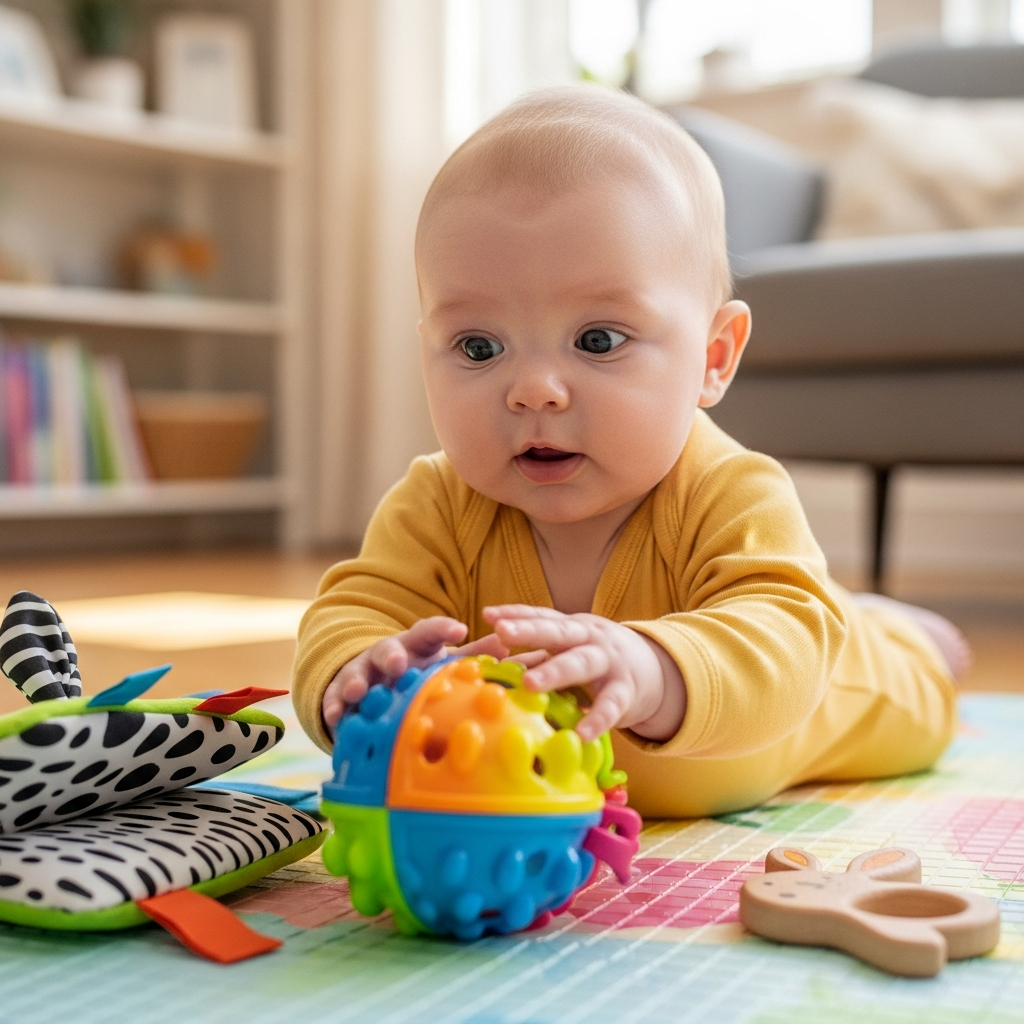
Tummy time remains essential at 5 months. Pathways.org recommends continuing tummy time for at least the first 6 months to support motor, visual, and sensory development. Aim for 30 or more minutes daily (cumulative).
Make tummy time engaging with:
- Placing a mirror in front of your baby
- Using toys just out of reach to encourage reaching
- Getting down on the floor to interact face-to-face
- Varying surfaces (play mat, blanket on grass)
Sensory Play Ideas for 5 Month Old Development
Sensory experiences help your baby learn about their world. Safe sensory activities include:
- Textured toys with different fabrics
- Musical toys and rattles
- High-contrast and colorful objects
- Safe-to-mouth exploration
- Water play during bath time
When engaging in floor play and sensory activities, dress your baby in soft, comfortable clothing that allows freedom of movement. Breathable fabrics like bamboo baby clothes are gentle on sensitive skin while your baby explores their environment. Browse comfortable baby clothes designed for active little ones.
Choosing Age-Appropriate Toys for Cognitive Growth
The best toys for 5 month olds are simple and encourage exploration:
- Easy to grasp: Lightweight rattles, ring toys
- Multiple textures: Crinkle toys, soft blocks
- Cause-and-effect: Toys that light up or make sounds when pressed
- High contrast: Black, white, and bright primary colors
- Safe for mouthing: Teething toys, soft books
You do not need expensive toys. Household items like wooden spoons, measuring cups, and fabric scraps provide excellent sensory experiences.
5 Month Old Baby Weight, Height, and Growth Chart Guidelines
Parents often wonder if their baby is growing "normally." Understanding growth charts and percentiles helps you track your 5 month old baby weight and height with confidence.
Average Weight and Height for 5 Month Old Babies
Based on WHO Child Growth Standards, here are typical measurements at 5 months:
| Measurement | Girls (50th percentile) | Boys (50th percentile) |
|---|---|---|
| Weight | 15.2 lbs (6.9 kg) | 16.6 lbs (7.5 kg) |
| Length | 25 inches (63.5 cm) | 26 inches (66 cm) |
| Head Circumference | 16.3 inches (41.5 cm) | 17 inches (43 cm) |
Remember, these are averages. Healthy babies come in all sizes.
Understanding Growth Percentiles and What They Mean
Percentiles compare your baby to others of the same age and sex. A baby in the 50th percentile weighs more than 50% of babies and less than 50% of babies that age. Being in the 25th or 75th percentile is equally healthy.
What matters most is consistent growth along your baby's own curve. Your pediatrician tracks patterns over time rather than focusing on single measurements. Discuss concerns at well-baby checkups if your baby's growth pattern changes dramatically.
When to Consult Your Pediatrician: Developmental Red Flags
While developmental variation is normal, certain signs warrant professional evaluation. Knowing what to watch for helps you advocate for your baby's needs.
Signs That May Warrant Professional Evaluation
The CDC's "Learn the Signs. Act Early" program encourages parents to talk with their doctor if babies are not meeting milestones. Contact your pediatrician if your 5 month old:
- Does not make eye contact
- Shows no response to sounds or their name
- Has extremely stiff or floppy muscle tone
- Does not reach for objects
- Never smiles socially
- Has lost previously acquired skills
Understanding Normal Variation vs. Developmental Concerns
Every baby develops on their own timeline. Being "late" on one milestone while progressing in other areas is usually not concerning. The difference between normal variation and a potential issue often lies in:
- Overall developmental pattern (progress in multiple areas)
- Interaction and engagement with caregivers
- Response to intervention and practice
Trust your parental instincts. If something feels off, discuss it with your pediatrician. Early intervention, when needed, leads to better outcomes.
Medical Disclaimer: This content is for informational purposes only and does not replace professional medical advice, diagnosis, or treatment. Always consult your pediatrician with questions about your baby's health and development.
Frequently Asked Questions About 5 Month Old Baby Development
What should a 5 month old baby be doing?
At 5 months old, your baby should be rolling over (at least one direction), holding their head steady, reaching for and grasping toys, making babbling sounds, recognizing familiar faces, and showing interest in their surroundings. Every baby develops at their own pace, but these are typical milestones.
How much should a 5 month old sleep?
A 5 month old typically needs 12-16 hours of total sleep per day. This includes 10-12 hours of nighttime sleep (with possible night feedings) and 3-4 hours of daytime naps spread across 3 nap periods. Wake windows between sleep periods are usually 2-2.5 hours.
Is it normal if my 5 month old is not rolling over yet?
Yes, it can be normal. While many babies roll over between 4-6 months, some take longer. If your baby has good head control and is making progress in other areas, there is usually no cause for concern. Discuss with your pediatrician if your baby shows no interest in rolling by 6 months.
Can a 5 month old eat solid foods?
Most pediatricians and the AAP recommend waiting until around 6 months to introduce solid foods. At 5 months, most babies are not developmentally ready. Look for signs of readiness like good head control, sitting with support, loss of tongue-thrust reflex, and interest in food before starting solids.
What is the 5 month sleep regression?
The 5 month sleep regression is a temporary period when babies who previously slept well suddenly experience disrupted sleep. It is caused by developmental changes including increased awareness and brain development. It typically lasts 2-6 weeks and resolves on its own with consistent sleep routines.
How much should a 5 month old weigh?
The average weight for a 5 month old is approximately 16-17 pounds (7.3-7.7 kg) for boys and 14.5-15.5 pounds (6.6-7.0 kg) for girls. However, healthy weights vary widely. Your pediatrician tracks growth patterns over time, which matters more than any single measurement.
What toys are best for a 5 month old?
The best toys for 5 month olds are easy to grasp, have multiple textures, and encourage exploration. Look for rattles, teething toys, soft blocks, activity gyms, and high-contrast board books. Choose toys that are safe to mouth and encourage cause-and-effect learning through sounds or movements.
Can a 5 month old sit up on their own?
Most 5 month olds cannot sit independently yet. At this age, babies typically sit with support or in a tripod position (propped on their hands). Independent sitting usually develops between 6-8 months. You can practice supported sitting during playtime to strengthen core muscles.
Celebrating Your 5 Month Old's Amazing Journey
Your five month old baby is growing and learning at an incredible pace. From rolling over to babbling first consonant sounds, every day brings new discoveries. These 5 month old milestones represent just a snapshot of the remarkable development happening during this stage.
Remember that 5 month old baby development varies from child to child. What matters most is overall progress, loving interactions, and responding to your baby's unique needs. Celebrate the small victories and trust the journey.
Keep up with regular well-baby checkups to ensure your baby is thriving. When you need comfortable clothing for tummy time and floor play, PatPat offers gentle fabrics perfect for your active little explorer. Share your experiences in the comments below. You are doing an amazing job.


