


Has your baby suddenly become a little explorer who wants to grab everything in sight? Welcome to the magical halfway point of the first year. At six months old, your baby is transforming from a sleepy newborn into an alert, curious, and increasingly mobile little person who seems to learn something new every single day.
This is one of the most exciting stages of 6 month old baby development. Your little one is likely starting to sit up, babble up a storm, and maybe even show interest in those delicious foods you have been eating. But with all these changes come plenty of questions. What should a 6 month old be doing? Is my baby hitting the right 6 month old milestones? When should I start solids?
We understand how much you want to support your baby's growth and celebrate every tiny victory. That is why we have created this comprehensive guide covering everything from physical milestones to sleep schedules, feeding tips to developmental activities. Whether you are a first-time parent or welcoming another little one into your family, this guide will give you the confidence and knowledge you need during this incredible stage.
Keep in mind that every baby develops at their own unique pace. The 6 month old developmental milestones we discuss are guidelines based on what most babies achieve around this age, not strict deadlines. Your pediatrician is always your best resource for personalized advice about your little one.
Physical Development Milestones at 6 Months
The physical changes happening at six months are remarkable. Your baby is building strength, coordination, and the foundation for all the big movements to come like crawling and walking.

Gross Motor Skills: Sitting, Rolling, and Pre-Crawling
One of the most celebrated 6 month old milestones is sitting up. According to the CDC's developmental milestones, most babies can lean on their hands to support themselves when sitting by this age. Some babies sit independently for brief moments, while others still need support. Both are completely normal.
Rolling is another major accomplishment. By six months, many babies can roll from tummy to back and back to tummy. The CDC notes that babies at this age can roll from tummy to back and push up with straight arms during tummy time. If your baby only rolls in one direction right now, do not worry. Many babies master one direction first before learning the other.
During tummy time, you might notice your baby doing what looks like swimming motions. These adorable arm and leg movements are actually your baby's way of preparing for crawling. Some babies also start rocking on their hands and knees, though actual crawling typically does not happen until seven to ten months.
Here is what to expect with gross motor skills at six months:
- Sitting with support or briefly without support
- Rolling in one or both directions
- Pushing up on straight arms during tummy time
- Bearing weight on legs when held in standing position
- Making swimming or rocking movements on tummy
Fine Motor Skills: Reaching, Grasping, and Exploring
Your baby's hands are becoming incredibly skilled tools for exploration. At six months, most babies have developed what is called a palmar grasp, where they hold objects with their entire hand wrapped around them like a fist. They are getting better at reaching for toys and can transfer objects from one hand to the other.
One of the most noticeable fine motor behaviors at this age is bringing everything to their mouth. This is not just about teething. It is actually how babies learn about the world. Their mouths have more nerve endings than their fingers, making mouthing objects an important sensory experience.
You might also notice your baby using a raking grasp to pick up smaller objects. This is an early precursor to the pincer grasp that develops around nine to twelve months. Encourage this development by offering toys with different textures and sizes.
As your baby becomes more tactile and curious about textures, soft bamboo clothing becomes especially comfortable against their sensitive skin during play. The gentle, breathable fabric allows for unrestricted movement as they practice rolling and reaching throughout the day.
Cognitive and Brain Development at 6 Months
While physical milestones are easy to observe, incredible changes are happening inside your baby's brain too. Your six month old is beginning to understand the world in entirely new ways.
Object Permanence and Memory Development
One of the most fascinating cognitive developments at this age is the beginning of object permanence. This is your baby's growing understanding that objects continue to exist even when they cannot see them. Research suggests that babies begin understanding object permanence somewhere between 4 and 7 months.
This is exactly why peek-a-boo suddenly becomes the most hilarious game ever. When you hide your face and reappear, your baby is genuinely surprised and delighted because they are just starting to grasp that you were there all along.
Your baby's memory is also improving rapidly. They recognize familiar faces immediately and may start showing preference for certain toys. You might notice your little one looking around for a dropped toy or searching for you when you leave the room.
Cause and effect understanding is emerging too. Your baby is learning that their actions produce results. Drop a spoon, and someone picks it up. Press a button, and music plays. Shake a rattle, and it makes noise. This is early problem-solving in action.
Sensory Development and Environmental Awareness
Your baby's senses are becoming more refined every day. Visual tracking is much smoother now, and your baby can follow moving objects without losing sight of them. Depth perception is developing, which is important for reaching and grasping accurately.
Hearing has also sharpened considerably. Your baby can locate sounds and will turn toward voices or noises with accuracy. They may show preference for familiar voices and startle at loud or unexpected sounds.
The CDC recommends using back and forth play with your baby at this stage. When your baby smiles, you smile back. When they make sounds, you copy them. This interaction supports both cognitive and social development.
Language and Communication Skills for Your 6 Month Old
Get ready for adorable babbling conversations. Your six month old is laying the groundwork for language in the cutest possible ways.
Babbling, Cooing, and Pre-Language Sounds
By six months, most babies have moved beyond simple coos and are producing consonant sounds. You will hear lots of "ba-ba," "da-da," and "ma-ma," though your baby does not attach meaning to these sounds yet. According to the CDC, babies at this age take turns making sounds with caregivers.
Your baby is also experimenting with volume and pitch. Expect squeals, growls, and those funny raspberry sounds that babies love to make. This vocal play is actually important practice for speech development.
One exciting milestone around this age is responding to their name. Your baby is beginning to understand that this particular sound refers to them. They might turn their head or look at you when you call their name, though consistency with this skill develops over the coming months.
Social Communication and Emotional Expression
Your six month old is becoming quite the social butterfly. They smile responsively and can even initiate smiles to get your attention. Laughter is common now, especially during games and silly faces.
Emotional expression is becoming more nuanced. Your baby can show joy, excitement, frustration, and displeasure quite clearly. They might reach out to be picked up or protest when a favorite toy is taken away. The CDC notes that babies at this age know familiar people and may start showing wariness around strangers.
This is often when stranger anxiety begins to emerge. Your previously social baby might suddenly seem shy or upset around unfamiliar faces. This is actually a sign of healthy cognitive development. Your baby now understands the difference between familiar and unfamiliar people.
6 Month Old Growth: Weight, Height, and What Is Normal
Parents often wonder if their baby is growing at the right pace. Here is what you need to know about typical growth patterns at six months.
Average Weight and Length for 6 Month Old Boys and Girls
According to WHO growth standards, the average weight for a 6 month old baby boy ranges from 7.0 to 9.2 kg (approximately 15.4 to 20.3 pounds), while baby girls typically weigh between 6.5 to 8.8 kg (approximately 14.3 to 19.4 pounds). Average length for boys is about 63 to 71 cm (24.8 to 28 inches), and for girls about 62 to 69 cm (24.4 to 27.2 inches).
One exciting milestone: most babies have doubled their birth weight by six months. If your baby was born at 7 pounds, they might now weigh around 14 pounds or more.
At this stage, babies typically gain about 1 to 1.25 pounds per month. Head circumference also continues to grow, averaging about half an inch per month. This head growth reflects the rapid brain development happening inside.
Understanding Growth Charts and Percentiles
Percentiles can be confusing for parents. If your baby is in the 25th percentile for weight, it simply means that 25% of babies weigh less and 75% weigh more. Being in a lower or higher percentile does not automatically mean something is wrong.
What matters most is consistency. Your pediatrician wants to see your baby following their own growth curve over time. A baby who has always been in the 20th percentile is perfectly healthy. What would raise concern is a baby suddenly dropping from the 75th to the 25th percentile.
If your baby was born premature, your doctor will use corrected age for the first two years. This means milestones and growth are measured from your baby's due date rather than birth date.
Growth spurts are common around six months. You might notice increased hunger, more frequent nursing or bottle feeding, and temporary sleep disruptions. These spurts typically last a few days to a week.
6 Month Old Sleep Schedule: Naps, Bedtime, and Sleep Regression
Sleep is often a hot topic for parents of six month olds. Here is everything you need to know about your baby's sleep needs and how to navigate common challenges.
How Much Sleep Does a 6 Month Old Need
According to the American Academy of Sleep Medicine, infants 4 to 12 months should sleep 12 to 16 hours per 24 hours including naps. This recommendation has been endorsed by the American Academy of Pediatrics.
For most six month olds, this breaks down to approximately 10 to 12 hours of nighttime sleep and 2 to 4 hours of daytime naps. Some babies still wake once or twice at night for feeding, which is completely normal.
Wake windows, the time your baby can comfortably stay awake between sleep periods, are typically 2 to 3 hours at this age. Watch for sleep cues like eye rubbing, yawning, and fussiness to know when your baby is ready for sleep.
Sample Nap and Bedtime Schedule for 6 Month Olds
While every baby is different, here is a sample schedule that works for many six month olds:
| Time | Activity |
|---|---|
| 6:30 AM | Wake and feed |
| 9:00 AM | Nap 1 (1-1.5 hours) |
| 12:30 PM | Nap 2 (1.5-2 hours) |
| 4:00 PM | Optional catnap (30-45 min) |
| 7:00 PM | Bedtime routine begins |
| 7:30 PM | Asleep |
Many babies are transitioning from three naps to two naps around this age. If your baby is fighting the third nap or it is pushing bedtime too late, it might be time to drop it and move bedtime a bit earlier.
Understanding and Surviving the 6 Month Sleep Regression
Just when you thought you had sleep figured out, the 6 month sleep regression might arrive. The Sleep Foundation notes that a 6 month sleep regression usually lasts for a few days or weeks, though some babies experience disruptions for two to six weeks.
Common triggers include developmental milestones like learning to sit or roll, starting solid foods, teething, and changes in sleep needs. Signs of sleep regression include increased night waking, difficulty falling asleep, shorter naps, and general fussiness around sleep times.
The good news is that sleep regressions are temporary. Stay consistent with your bedtime routine, respond to your baby's needs, and remember that this phase will pass. Creating a comfortable sleep environment matters. Soft, breathable baby clothes can help regulate your little one's temperature throughout the night, reducing wake-ups caused by overheating.
Starting Solids at 6 Months: Complete Feeding Guide
Starting solid foods is one of the most exciting milestones at six months. Here is how to know if your baby is ready and how to make this transition successfully.
Signs Your Baby Is Ready for Solid Foods
The American Academy of Pediatrics recommends starting solids at about six months when your baby can sit in a high chair or feeding seat with good head control. But age alone is not the only factor. Look for these readiness signs:
- Can sit with minimal support and has good head control
- Shows interest in food by watching you eat or reaching for your plate
- Opens mouth when food approaches
- Has lost the tongue-thrust reflex that pushes food out
- Has approximately doubled their birth weight
If your baby is not showing all these signs yet, waiting a few more weeks is perfectly fine. Every baby develops on their own timeline.
Best First Foods for 6 Month Old Babies
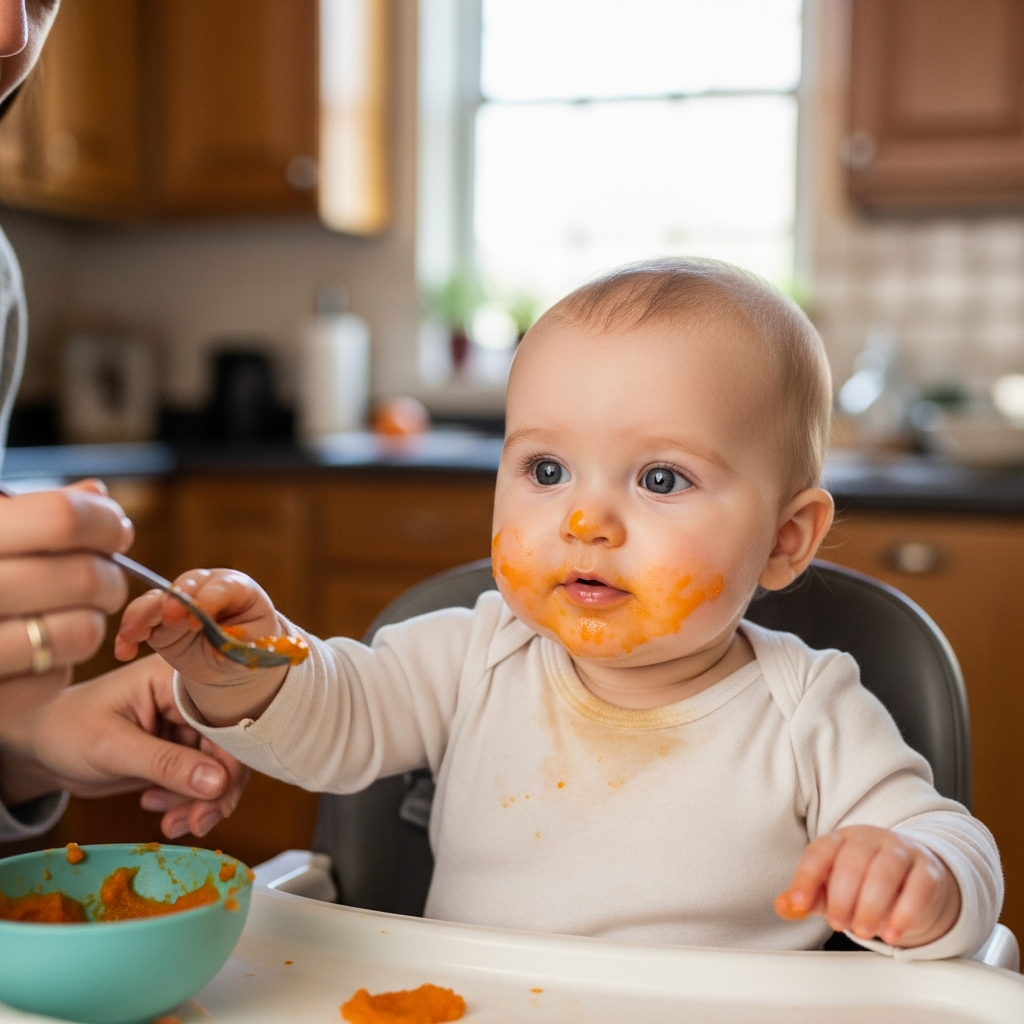
According to the AAP, you do not need to introduce foods in any particular order. However, because iron stores from birth begin depleting around six months, iron-rich foods are particularly important. Good options include iron-fortified baby cereal and pureed meats.
Popular first foods for 6 month olds include:
- Vegetables: Sweet potato, carrots, peas, butternut squash
- Fruits: Banana, avocado, apple, pear
- Proteins: Pureed chicken, turkey, or tofu
- Grains: Iron-fortified baby cereal, oatmeal
If you prefer baby-led weaning, offer soft finger foods that your baby can grasp and gum safely. Ripe avocado strips, soft-cooked sweet potato sticks, and banana spears are great options.
Current guidelines encourage early introduction of common allergens like peanuts, eggs, and dairy. Introducing these foods early may actually help prevent allergies. Talk to your pediatrician about how to safely introduce allergenic foods.
Foods to avoid at six months include honey (risk of botulism), whole cow's milk as a drink, and choking hazards like whole grapes, nuts, or raw hard vegetables.
Sample Feeding Schedule with Breast Milk or Formula
At six months, solid foods complement but do not replace breast milk or formula. Your baby still needs 24 to 32 ounces of breast milk or formula daily. Here is a sample schedule:
| Time | Feeding |
|---|---|
| 6:30 AM | Breast milk or formula |
| 8:30 AM | Breakfast solids (2-4 tbsp) |
| 10:30 AM | Breast milk or formula |
| 12:30 PM | Breast milk or formula |
| 2:30 PM | Lunch solids (2-4 tbsp) |
| 4:30 PM | Breast milk or formula |
| 6:30 PM | Breast milk or formula before bed |
Start with just one to two tablespoons of solids and gradually increase based on your baby's appetite and interest. Offer milk before solids to ensure your baby gets adequate nutrition while they are learning to eat.
Activities and Toys That Support 6 Month Old Development
Play is serious business for your six month old. Every game and toy interaction is building brain connections and developing skills.
Best Developmental Activities to Do With Your 6 Month Old
You do not need fancy equipment to support your baby's development. Here are proven activities that boost growth across all areas:
- Tummy time variations: Try airplane holds, tummy time on your chest, or propping baby on a nursing pillow
- Peek-a-boo: Perfect for developing object permanence and social skills
- Mirror play: Babies love looking at themselves and making faces
- Reading board books: Point to pictures, use different voices, let baby touch the pages
- Songs with motions: Pat-a-Cake, Itsy Bitsy Spider, and other finger plays
- Sensory exploration: Water play in a shallow basin, touching different textures
- Outdoor time: Nature walks expose baby to new sights, sounds, and experiences
Recommended Toys by Developmental Skill Area
Choosing the right toys can enhance your baby's learning. Here is what works best for each skill area:
For Motor Skills:
- Stacking cups and rings
- Soft balls to grasp and roll
- Activity gyms with hanging toys
For Cognitive Development:
- Cause-and-effect toys that light up or make sounds
- Simple shape sorters with large pieces
- Nesting and stacking toys
For Sensory Development:
- Textured books and crinkle toys
- Musical instruments like shakers and drums
- Water play toys
For Language Development:
- Board books with simple pictures
- Puppets for interactive storytelling
- Musical toys with songs
Between all the reaching, grasping, and tummy time activities, your baby will be on the move constantly. Comfortable, stretchy baby clothes allow them full range of motion while keeping them cozy during play sessions.
When to Be Concerned About Your 6 Month Old's Development
While every baby develops differently, there are certain signs that warrant a conversation with your pediatrician. Trust your instincts as a parent.
Red Flags and Warning Signs to Watch For
The CDC's Act Early program recommends talking to your doctor if your 6 month old:
- Does not try to reach for objects
- Shows no affection for caregivers
- Does not respond to sounds around them
- Has difficulty getting objects to their mouth
- Does not make vowel sounds like "ah," "eh," or "oh"
- Does not roll in either direction
- Does not laugh or make squealing sounds
- Seems very stiff or very floppy
- Has lost skills they once had
Early intervention can make a significant difference if developmental delays are identified. Do not hesitate to bring up any concerns with your pediatrician.
Common Concerns That Are Usually Normal
Many things that worry parents are actually within the normal range of development:
- Not sitting unsupported yet: Independent sitting often develops between 6-9 months
- Only rolling one direction: Very common; most babies master both directions eventually
- No teeth yet: Teeth can appear anytime in the first year; some babies get them much later
- Preferring one parent: Normal as separation awareness develops
- Not crawling: Most babies do not crawl until 7-10 months
- Excessive drooling: Completely normal, especially if teething
How to Talk to Your Pediatrician About Developmental Concerns
Your six month checkup is the perfect time to discuss development. Come prepared with specific examples of what you are observing. Ask your pediatrician about developmental screening if you have concerns.
If your doctor recommends early intervention services, know that this is a proactive step that can provide valuable support. The earlier any delays are addressed, the better the outcomes tend to be.
For more resources on developmental milestones and early intervention, visit the CDC's Act Early website.
Frequently Asked Questions About 6 Month Old Baby Development
What should a 6 month old be doing developmentally?
At 6 months, most babies can sit with support, roll in both directions, and bring objects to their mouth. They babble with consonant sounds like "ba" and "da," respond to their name, and show emotions like joy and frustration. They recognize familiar faces, enjoy social interaction, and are developing object permanence through games like peek-a-boo. Remember that all babies develop at their own pace, and there is a wide range of normal.
How many hours should a 6 month old sleep per day?
A 6 month old typically needs 12-16 hours of total sleep in 24 hours. This usually includes 10-12 hours at night (possibly with 1-2 brief wake-ups) and 2-4 hours of daytime naps spread across 2-3 naps. Wake windows between sleep periods are typically 2-3 hours. Every baby has slightly different sleep needs, so watch for your baby's individual cues.
What foods can I give my 6 month old baby?
Good first foods include iron-fortified baby cereal, pureed vegetables (sweet potato, carrots, peas), pureed fruits (banana, avocado, apple), and soft finger foods if doing baby-led weaning. Introduce one new food every 2-3 days to watch for allergies. Avoid honey, whole cow's milk as a drink, and choking hazards like whole grapes or hard vegetables. Breast milk or formula should remain the primary source of nutrition.
Should my 6 month old be sitting up on their own?
Most 6 month olds can sit with support or when propped, but sitting independently without support typically develops between 6-9 months. Some babies sit unsupported by 6 months, while others need a few more weeks or even a couple of months. If your baby cannot sit with any support at all by 6 months, discuss this with your pediatrician to rule out any concerns.
Is there a sleep regression at 6 months?
Yes, many babies experience a sleep regression around 6 months. This is often triggered by developmental milestones like learning to roll or sit, starting solids, teething, or changes in sleep needs. Signs include increased night waking, difficulty falling asleep, and shorter naps. This regression typically lasts 2-6 weeks and resolves with consistent sleep routines and patience. Not all babies experience it.
How much should a 6 month old weigh?
Average weight for a 6 month old boy is about 17.5 pounds (7.9 kg), and for girls about 16.1 pounds (7.3 kg). However, healthy babies come in many sizes. What matters most is consistent growth along their own curve rather than hitting an exact number. Most babies have doubled their birth weight by 6 months. Your pediatrician tracks growth at each visit to ensure healthy development.
Why is my 6 month old not rolling over yet?
Some babies focus on other skills like sitting or babbling before rolling. Rolling typically develops between 4-7 months, so your baby may still be within the normal range. To encourage rolling, increase tummy time, place toys just out of reach to motivate movement, and ensure plenty of floor play time without restrictive devices. Consult your pediatrician if there is no rolling in either direction by 7 months.
How do I know if my 6 month old is developing normally?
Look for key milestones: responding to sounds, smiling at familiar faces, reaching for toys, making babbling sounds, rolling in at least one direction, and showing interest in surroundings. Every baby develops differently, and ranges are wide. Regular pediatric checkups include developmental screenings that can catch any concerns. Trust your instincts as a parent. If something feels off, discuss it with your doctor sooner rather than later.
Supporting Your 6 Month Old's Growth Journey
The six month mark is truly special. Your baby has transformed from a tiny newborn into an interactive, curious, and increasingly capable little person. Every day brings new discoveries, from that first taste of sweet potato to the triumphant moment of sitting up without toppling over.
Remember that 6 month old baby development unfolds differently for every child. The milestones we have discussed are guidelines, not deadlines. Some babies roll early and sit late. Others babble up a storm before they master physical skills. What matters most is that your baby is making progress, engaging with the world, and growing in their own unique way.
Keep attending those well-baby checkups, trust your parenting instincts, and enjoy this remarkable stage. Before you know it, your six month old will be crawling, walking, and getting into everything. These moments of wonder pass quickly, so soak up every smile, giggle, and milestone along the way.
We are here to support you through every stage of your parenting journey. Whether you need comfortable clothes for all that rolling and reaching or simply want to connect with other parents navigating similar experiences, we are cheering you on. Your baby is lucky to have such a caring, informed parent guiding their growth.


