


Are you eating enough leafy greens to support your fertility journey? If you are trying to conceive, you might be surprised to learn that something as simple as a salad could make a meaningful difference in your preconception nutrition. The secret lies not just in the greens themselves, but in how you prepare and dress them to maximize nutrient absorption.
Here is a striking fact: the CDC recommends that all women capable of becoming pregnant get 400 mcg of folic acid every day. Yet many people struggle to reach this goal through diet alone. Leafy greens like spinach, kale, and arugula offer some of the highest natural folate concentrations available, making them essential components of any fertility-focused eating plan.
At PatPat, we understand that preparing for pregnancy involves countless decisions about nutrition and lifestyle. This guide explores green vegetable recipes for fertility that go beyond basic salads. You will discover spinach recipes for pregnancy preparation, learn why a kale salad can provide a fertility boost, and understand the science behind nutrient-enhancing dressings that help your body absorb more of what it needs.
The Fertility Connection: Why Leafy Greens Matter for Conception
Understanding the relationship between leafy greens and reproductive health starts with understanding folate. This B vitamin plays a critical role in DNA synthesis and cell division, processes that are fundamental to conception and early pregnancy development.
Folate Content in Spinach, Kale, and Arugula
Different leafy greens offer varying amounts of folate. One cup of raw spinach provides approximately 58 mcg of folate, representing 15% of the Daily Value. Cooked spinach concentrates these nutrients even further, delivering around 263 mcg per cooked cup.
| Leafy Green | Serving Size | Folate (mcg) | % Daily Value |
|---|---|---|---|
| Spinach (cooked) | 1 cup | 263 | 66% |
| Spinach (raw) | 1 cup | 58 | 15% |
| Kale (raw) | 1 cup | 20-23 | 5% |
| Arugula (raw) | 1 cup | 19 | 5% |
| Collard greens (cooked) | 1 cup | 177 | 44% |
Iron and Antioxidants for Egg and Sperm Quality
Beyond folate, leafy greens deliver iron and powerful antioxidants that support reproductive health. Iron plays a vital role in ovulation and maintaining healthy menstrual cycles. The antioxidants found in dark leafy greens, including vitamins C and E and beta-carotene, help protect reproductive cells from oxidative stress.
These benefits extend to male fertility as well. Folate and zinc found in leafy greens support healthy sperm production and DNA integrity, making a leafy greens fertility diet beneficial for both partners trying to conceive.
Best Leafy Greens for Pregnancy Preparation: A Nutritional Comparison
Not all greens are created equal when it comes to preconception nutrition. Each variety brings unique nutrients to your plate, and understanding these differences helps you make informed choices about your fertility diet.
Spinach Recipes for Pregnancy Preparation: The Folate Powerhouse
Spinach stands out as one of the most folate-dense vegetables available. Its nutritional profile includes significant amounts of iron, magnesium, and vitamins A and K. Raw spinach preserves maximum folate content, while cooking allows you to consume larger quantities more easily.
For optimal nutrient retention when cooking spinach, use quick methods like light sauteing or steaming. Avoid boiling, which causes the greatest nutrient loss. Adding spinach to smoothies offers another way to consume larger quantities while preserving its raw nutritional benefits.
Kale Salad for Fertility Boost: Beyond the Trend
A cup of chopped raw kale contains about 20 micrograms of folate. While this is less than spinach, kale offers unique benefits including exceptional amounts of vitamin K, calcium, and fiber. These nutrients support bone health and hormone regulation.
The key to enjoying kale in salads lies in proper preparation. Massaging raw kale with a small amount of olive oil and lemon juice breaks down its tough fibers, making it more digestible and reducing its natural bitterness. This technique transforms kale from chewy and harsh to tender and pleasant.
Arugula and Swiss Chard: Underrated Fertility Greens
Arugula brings a peppery flavor profile that complements sweeter salad ingredients beautifully. Arugula is a good source of vitamin B9 (folate), providing 10-20% of the daily value. Its distinct taste adds variety to your diet, which helps prevent palate fatigue when eating greens daily.
Swiss chard offers impressive iron content alongside its folate. Rotating between different greens throughout the week ensures you receive a broad spectrum of nutrients while keeping meals interesting.
Nutrient-Enhancing Dressings That Maximize Fertility Benefits
This is where most fertility nutrition guides miss the mark. The dressing you choose for your salad dramatically affects how many nutrients your body actually absorbs. Making strategic dressing choices can multiply the benefits of every leafy green you eat.
Why Olive Oil Dressings Improve Vitamin Absorption
Fat helps the body absorb vitamins A, D, and E because these vitamins are fat-soluble and can only be absorbed with the help of fats. Without adequate dietary fat, much of the vitamin content in your greens passes through your system without being utilized.
Research from Iowa State University found that adding twice the amount of salad dressing leads to twice the nutrient absorption. The relationship is proportional: more healthy fat means more vitamins absorbed from your vegetables.
Extra virgin olive oil makes an ideal base for fertility-focused dressings. Its monounsaturated fats support the Mediterranean diet pattern that research has associated with favorable fertility outcomes.
Lemon and Citrus Dressings for Iron Absorption
Plant-based iron, known as non-heme iron, requires vitamin C for optimal absorption. Ascorbic acid (vitamin C) facilitates iron absorption by forming a chelate with ferric iron in your digestive system, making it available for your body to use.
Adding fresh lemon juice to your dressings serves a dual purpose. It provides vitamin C to enhance iron absorption while adding bright flavor that makes salads more enjoyable. Orange juice, lime juice, and other citrus options offer similar benefits.

Fertility-Boosting Spinach and Kale Salad Recipes
These folate-rich salad recipes combine the nutritional power of leafy greens with strategic ingredient pairings that maximize absorption. Each recipe includes nutrient information to help you track your preconception nutrition goals.
Mediterranean Spinach Salad with Olive Oil and Lemon
Prep Time: 10 minutes | Servings: 2
Nutritional Highlights (per serving):
- Folate: 130 mcg (33% DV)
- Iron: 2.5 mg (14% DV)
- Vitamin C: 18 mg (20% DV)
- Vitamin K: 290 mcg (242% DV)
Ingredients:
- 4 cups fresh baby spinach
- 1/4 cup crumbled feta cheese
- 10 kalamata olives, halved
- 1/4 red onion, thinly sliced
- 2 tablespoons pine nuts, toasted
- 1/2 cup cherry tomatoes, halved
Dressing:
- 3 tablespoons extra virgin olive oil
- 1 tablespoon fresh lemon juice
- 1 clove garlic, minced
- Salt and pepper to taste
Instructions:
- Place spinach in a large salad bowl and massage gently with clean hands to soften slightly.
- Whisk together olive oil, lemon juice, garlic, salt, and pepper in a small bowl.
- Add feta, olives, red onion, pine nuts, and tomatoes to the spinach.
- Drizzle with dressing and toss gently to combine.
- Serve immediately for best texture and nutrient retention.
Fertility Notes: This easy spinach salad fertility recipe combines folate-rich spinach with healthy fats from olive oil and pine nuts. The lemon juice enhances iron absorption while the feta adds protein and calcium.
Kale Quinoa Power Bowl for Preconception Nutrition
Prep Time: 15 minutes | Cook Time: 15 minutes | Servings: 2
Nutritional Highlights (per serving):
- Folate: 165 mcg (41% DV)
- Iron: 4.2 mg (23% DV)
- Fiber: 8 g (29% DV)
- Protein: 12 g
Ingredients:
- 3 cups lacinato (dinosaur) kale, stems removed and chopped
- 1 cup cooked quinoa
- 1/2 avocado, sliced
- 2 tablespoons pumpkin seeds
- 1/4 cup dried cranberries (unsweetened)
- Shaved parmesan (optional)
Instructions:
- Place chopped kale in a large bowl. Add 1 tablespoon olive oil and a pinch of salt.
- Massage kale firmly with your hands for 2-3 minutes until it darkens and becomes tender.
- Add cooked quinoa to the massaged kale.
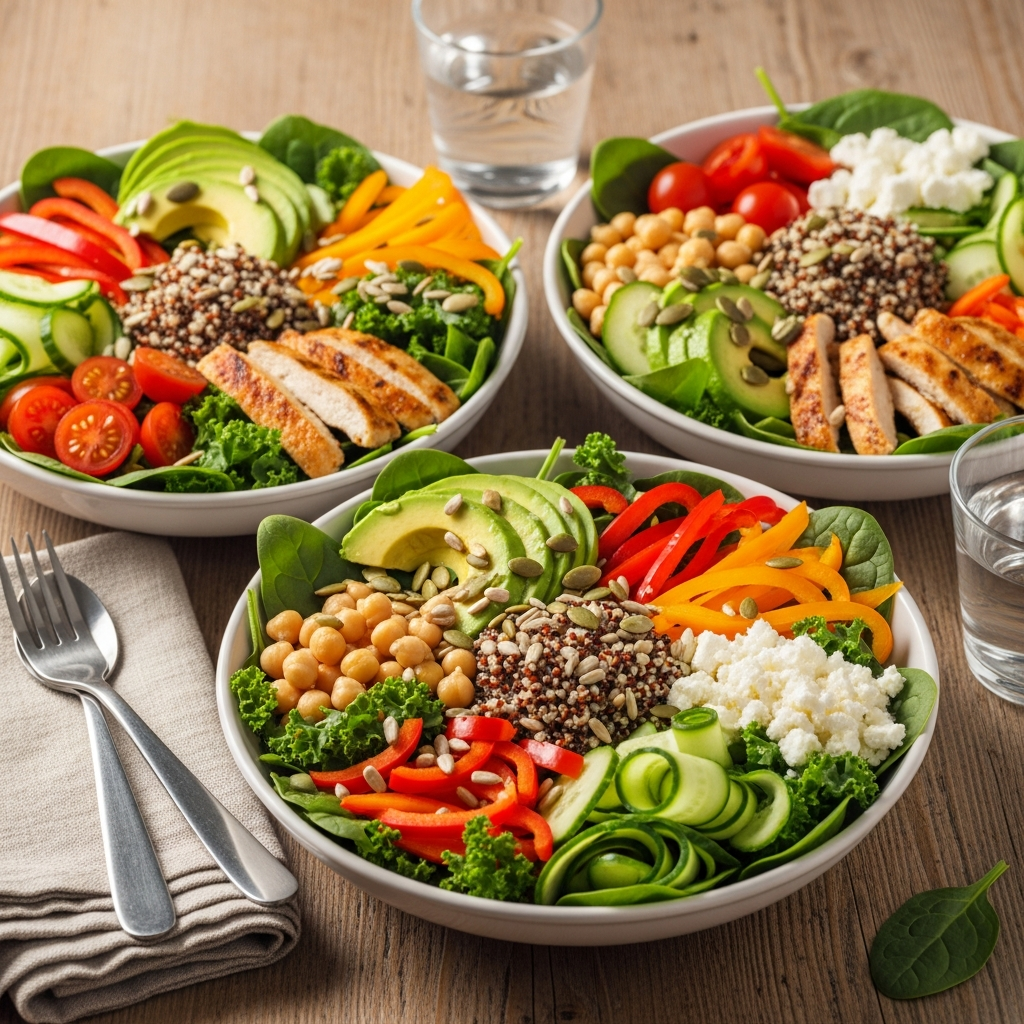
- Top with avocado slices, pumpkin seeds, cranberries, and optional parmesan.
- Drizzle with Creamy Tahini Dressing (recipe below) and serve.
Fertility Notes: This kale salad fertility boost recipe provides complete plant protein from quinoa, healthy fats from avocado and pumpkin seeds, and zinc for reproductive health. The tahini dressing adds additional folate and calcium.
Arugula Avocado Salad with Citrus Vinaigrette
Prep Time: 10 minutes | Servings: 2
Nutritional Highlights (per serving):
- Folate: 95 mcg (24% DV)
- Vitamin C: 32 mg (36% DV)
- Healthy Fats: 18 g
- Fiber: 6 g (21% DV)
Ingredients:
- 4 cups fresh arugula
- 1 ripe avocado, cubed
- 1/4 cup toasted walnuts
- 2 tablespoons goat cheese crumbles
- Segments from 1 orange
Instructions:
- Arrange arugula on a serving platter or divide between two plates.
- Top with cubed avocado, orange segments, walnuts, and goat cheese.
- Drizzle with Orange Citrus Vinaigrette (recipe below).
- Season with freshly cracked black pepper and serve immediately.
Fertility Notes: This folate-rich salad for conception combines the omega-3 fatty acids from walnuts with vitamin C-rich oranges for enhanced iron absorption. Avocado provides folate plus healthy monounsaturated fats.
Three Nutrient-Enhancing Dressing Recipes for Fertility Salads
These dressing recipes complement the salads above while maximizing nutrient absorption through strategic ingredient combinations.
Classic Lemon Olive Oil Fertility Dressing
Makes: About 1/2 cup | Storage: Refrigerate up to 1 week
Ingredients:
- 1/4 cup extra virgin olive oil
- 2 tablespoons fresh lemon juice
- 1 teaspoon Dijon mustard
- 1 small garlic clove, minced
- 1/2 teaspoon honey (optional)
- Salt and pepper to taste
Instructions: Whisk all ingredients together until emulsified. Alternatively, shake vigorously in a sealed jar. Taste and adjust seasonings as needed.
Absorption Benefits: Olive oil enables absorption of fat-soluble vitamins A, D, E, and K. Lemon juice provides vitamin C to enhance iron absorption from leafy greens.
Creamy Tahini Dressing for Iron Absorption
Makes: About 1/2 cup | Storage: Refrigerate up to 5 days
Ingredients:
- 3 tablespoons tahini
- 2 tablespoons fresh lemon juice
- 2 tablespoons water
- 1 tablespoon olive oil
- 1 small garlic clove, minced
- Pinch of cumin
- Salt to taste
Instructions: Whisk tahini with lemon juice until smooth. Gradually add water and olive oil while whisking until desired consistency is reached. Stir in garlic, cumin, and salt.
Absorption Benefits: Tahini provides additional folate, calcium, and healthy fats while supporting fat-soluble vitamin absorption. The lemon juice ensures iron from your greens becomes bioavailable.
Orange Citrus Vinaigrette for Vitamin C Boost
Makes: About 1/2 cup | Storage: Refrigerate up to 5 days
Ingredients:
- 3 tablespoons olive oil
- 2 tablespoons fresh orange juice
- 1 tablespoon apple cider vinegar
- 1 teaspoon orange zest
- 1/2 teaspoon maple syrup
- Salt to taste
Instructions: Combine all ingredients in a jar with a tight-fitting lid. Shake vigorously until emulsified. Taste and adjust sweetness or acidity as preferred.
Absorption Benefits: Fresh orange juice delivers vitamin C for iron absorption while olive oil handles fat-soluble nutrients. The zest adds aromatic compounds and additional vitamin C.
Quick Sauteed and Steamed Green Vegetable Side Dishes
While raw salads preserve maximum nutrients, cooked greens allow you to consume larger quantities and offer easier digestion for some people. These quick cooking methods retain substantial nutritional value.
Garlic Sauteed Spinach with Pine Nuts
Prep Time: 5 minutes | Cook Time: 3 minutes | Servings: 2
Ingredients:
- 2 tablespoons olive oil
- 2 cloves garlic, sliced
- 6 cups fresh spinach
- 2 tablespoons pine nuts, toasted
- Squeeze of fresh lemon
- Salt and pepper to taste
Instructions: Heat olive oil over medium-high heat. Add garlic and cook 30 seconds until fragrant. Add spinach and toss until just wilted, about 1-2 minutes. Remove from heat, add pine nuts, squeeze lemon over top, and season.
Nutrient Note: High heat and quick cooking preserves nutrients. Adding lemon after cooking provides vitamin C for iron absorption without degrading it through heat exposure.
Steamed Kale with Lemon Butter
Prep Time: 5 minutes | Cook Time: 5 minutes | Servings: 2
Ingredients:
- 1 bunch kale, stems removed
- 1 tablespoon butter or olive oil
- Juice of half a lemon
- Salt and pepper
Instructions: Steam kale for 3-5 minutes until tender but still bright green. Transfer to a serving dish, toss with butter or oil and lemon juice, then season to taste.
Nutrient Note: Steaming retains more folate than boiling. Avoid overcooking, which depletes water-soluble nutrients.
Mixed Greens with Balsamic Glaze
Prep Time: 5 minutes | Cook Time: 4 minutes | Servings: 2
Ingredients:
- 2 cups Swiss chard, chopped
- 2 cups spinach
- 1 cup arugula
- 2 tablespoons olive oil
- Balsamic glaze for drizzling
Instructions: Heat olive oil in a large pan. Add Swiss chard first and cook 2 minutes. Add spinach and arugula, tossing until wilted. Drizzle with balsamic glaze and serve.
Daily Serving Recommendations and Meal Planning Tips
Consistency matters more than perfection when building a leafy greens fertility diet. These practical guidelines help you incorporate greens into your daily routine without feeling overwhelmed.
How Much Leafy Greens Should You Eat When Trying to Conceive
Aim for 2-3 cups of leafy greens daily as part of your preconception nutrition plan. This amount contributes meaningfully toward your folate goals while providing iron, antioxidants, and fiber. Remember that it can be difficult for most people to get the recommended daily amount through natural food folates alone, so leafy greens should complement rather than replace a prenatal supplement.
Rotate between different greens throughout the week. Monday might feature spinach, Tuesday kale, Wednesday arugula, and so on. This rotation ensures you receive diverse nutrients while preventing taste fatigue.
Weekly Meal Prep Ideas for Fertility Salads
- Batch wash greens: Wash and dry a week's worth of greens on Sunday. Store in sealed containers with paper towels to absorb excess moisture.
- Pre-make dressings: All three dressings above keep 5-7 days refrigerated. Make them ahead for quick salad assembly.
- Prepare salad kits: Portion greens and toppings into separate containers. Keep dressing separate until serving time.
- Cook quinoa in batches: Prepare a large batch of quinoa to use throughout the week in power bowls.
- Freeze for smoothies: Freeze portions of spinach or kale in bags for easy addition to morning smoothies.
Frequently Asked Questions About Leafy Greens and Fertility
Which leafy greens have the highest folate content for fertility?
Spinach leads with 263 mcg of folate per cooked cup, followed by collard greens (177 mcg) and turnip greens (170 mcg). Raw spinach provides 58 mcg per cup. For optimal fertility support, rotate between different greens to obtain varied nutrients including iron, calcium, and antioxidants.
Does cooking leafy greens destroy folate?
Some folate is lost during cooking, typically 15-35% depending on the method. Steaming retains the most nutrients, while boiling causes the greatest loss. Raw preparations preserve maximum folate, but lightly cooked greens are still highly nutritious and may be easier to digest in larger quantities.
Can eating leafy greens improve egg quality?
Leafy greens contain antioxidants like vitamin C, vitamin E, and beta-carotene that may protect eggs from oxidative stress. The folate in greens supports healthy cell division. While greens alone cannot guarantee improved egg quality, they are an important component of a fertility-supportive diet alongside other lifestyle factors.
What salad dressing helps absorb nutrients from leafy greens?
Dressings made with healthy fats like olive oil, avocado oil, or tahini help your body absorb fat-soluble vitamins A, D, E, and K from greens. Adding lemon or citrus juice provides vitamin C, which enhances iron absorption from spinach and other iron-rich greens. The combination of fat plus citrus maximizes overall nutrient absorption.
How can I eat more greens if I dislike the taste?
Start with milder greens like baby spinach or butter lettuce. Massage kale with olive oil and lemon to reduce bitterness. Blend greens into smoothies with sweet fruits like banana and mango. Saute with garlic and olive oil to transform the flavor, or mix small amounts into dishes you already enjoy like pasta, soup, or omelets.
Are raw or cooked leafy greens better for fertility?
Both offer distinct benefits. Raw greens provide maximum folate and vitamin C, while cooked greens are easier to digest and allow you to consume larger quantities. A combination of both raw salads and cooked side dishes provides the most comprehensive nutritional support for preconception health.
Can men benefit from eating leafy greens for fertility?
Yes. Folate and zinc in leafy greens support healthy sperm production and DNA integrity. Antioxidants may help protect sperm from oxidative damage. Men trying to conceive should also aim for 2-3 cups of leafy greens daily as part of a balanced fertility diet.
How do I store leafy greens to preserve their nutrients?
Store unwashed greens in a sealed container or bag with a paper towel to absorb excess moisture. Keep refrigerated at 35-40 degrees Fahrenheit. Use within 5-7 days for optimal freshness and nutrient retention. Wash only before eating, as moisture accelerates spoilage and nutrient degradation.
Building a fertility-supportive diet does not require complicated meal plans or expensive supplements. Simple additions like spinach recipes for pregnancy preparation, a daily kale salad for fertility boost, and nutrient-enhancing dressings can meaningfully contribute to your preconception nutrition goals.
The key insights to remember: choose a variety of leafy greens throughout the week, always pair them with healthy fats for vitamin absorption, and add citrus to enhance iron uptake. These green vegetable recipes for fertility work best as part of a consistent eating pattern rather than occasional efforts.
At PatPat, we believe that nourishing your body during the preconception period sets the foundation for a healthy pregnancy journey. Start with one new salad recipe this week, try a homemade dressing, and notice how small changes can become sustainable habits. Your fertility nutrition journey begins with the next meal you prepare.




