


You have checked the room thermometer for the third time tonight. The nursery reads 70 degrees Fahrenheit, but somehow you are still second-guessing whether your little one needs that extra layer. Should you add socks? Remove the sleep sack? Welcome to one of the most universal anxieties of new parenthood: figuring out exactly how many layers should baby wear.
Here is the truth that experienced parents eventually learn: there is no single perfect answer. But there is a reliable system you can master, and that is exactly what this comprehensive guide delivers. We understand that dressing your baby for safe, comfortable sleep should not feel like solving a complex puzzle every single night.
The classic "one more layer than you" rule offers a helpful starting point, but real life demands more nuance. Your nursery stays at a different temperature than your living room. Summer nights with air conditioning require different strategies than winter nights with central heating. And car seat safety adds another layer of complexity (pun intended) that many generic guides overlook entirely.
This guide provides what you actually need: a complete baby clothing temperature chart covering every room in your home, clear TOG rating explanations, seasonal strategies, and safety considerations backed by American Academy of Pediatrics recommendations. Whether you are dressing a newborn for their first night home or navigating unpredictable spring weather with a six-month-old, you will find specific, actionable guidance below.
Understanding Baby Temperature Regulation
Before diving into specific clothing recommendations, understanding why babies need our help with temperature regulation explains many of the guidelines you will encounter throughout this article.
Why Babies Need Help Regulating Temperature
Your baby's thermoregulation system operates quite differently from yours. Newborns and young infants lack the mature internal thermostat that adults take for granted, which means they lose heat faster and struggle to generate warmth efficiently when cold.
Several physiological factors contribute to this vulnerability:
- Higher surface-area-to-body-weight ratio - Babies have proportionally more skin relative to their body mass, meaning heat escapes more rapidly
- Immature sweat glands - Full development does not occur until age 2-3 years, limiting their ability to cool down through sweating
- Limited brown fat reserves - While newborns have brown fat that helps generate heat, these reserves diminish over the first months of life
- Developing circulatory system - Blood flow prioritizes vital organs, often leaving extremities cooler
Premature babies face even greater challenges. Preemies may need extra layers compared to full-term infants because they have less body fat for insulation and their thermoregulation systems are even less developed.
The Classic "One More Layer" Rule Explained
You have probably heard the advice: dress your baby in one more layer than you would wear to feel comfortable. This guideline works reasonably well as a starting point, but it requires context.
The rule assumes several conditions:
- You and your baby are in the same room temperature
- Both of you are relatively inactive (sleeping or resting)
- Fabric weights are roughly equivalent
- Neither you nor baby runs particularly hot or cold
Real-world scenarios often differ. If you sleep under a thick comforter while your baby uses a lightweight sleep sack, the math changes. Similarly, a parent who naturally runs warm might underdress themselves, making "one more layer" insufficient for baby.
Consider this rule your baseline, then adjust based on room temperature readings, your baby's individual tendencies, and the specific guidance in the temperature chart below.
Signs Your Baby Is Too Hot or Too Cold
Learning to read your baby's comfort signals matters more than any chart or guideline. Watch for these indicators:

Signs of overheating:
- Sweating (especially on the back of neck or head)
- Damp hair, even if room feels comfortable to you
- Flushed or red cheeks
- Rapid breathing
- Heat rash, particularly in skin folds
- Restlessness or difficulty settling
Signs baby is too cold:
- Cool chest or tummy (check under clothing)
- Fussiness or difficulty sleeping
- Pale skin, especially on face
- Mottled appearance on limbs
- Less active than usual
Important: Cold hands and feet alone are NOT reliable indicators. Baby circulation naturally prioritizes core organs, so cool extremities remain developmentally normal throughout infancy. Always check the chest or back of neck for accurate temperature assessment.
The Complete Baby Clothing Temperature Chart
This comprehensive baby clothing temperature chart covers every scenario from hot summer nights to cold winter evenings. All recommendations apply to healthy, full-term babies. Premature infants or those with health conditions may need adjustments based on pediatric guidance.
Note that individual babies naturally run warmer or cooler than average. Use this chart as your starting framework, then adjust based on your specific baby's comfort signals.

Hot Weather Dressing (Above 75F / 24C)
Summer heat and homes without air conditioning require the lightest possible dressing approach. Overheating poses greater risks than being slightly cool, so when in doubt, err toward fewer layers.
| Room Temperature | Recommended Clothing | Sleep Sack TOG |
|---|---|---|
| Above 80F (27C) | Diaper only OR short-sleeve bodysuit | None needed or 0.2 TOG maximum |
| 75-80F (24-27C) | Short-sleeve onesie or thin cotton romper | None or 0.5 TOG |
Ensure adequate air circulation during hot weather. A ceiling fan or oscillating fan directed away from baby (not blowing directly on them) helps maintain airflow and reduces SIDS risk according to research. Keep the room well-ventilated and monitor for signs of heat stress.
Comfortable Range (68-75F / 20-24C)
This temperature range represents the AAP-recommended zone for baby sleep, offering the safest and most comfortable conditions for overnight rest. Most layering combinations work well here.
| Room Temperature | Recommended Clothing | Sleep Sack TOG |
|---|---|---|
| 72-75F (22-24C) | Short or long-sleeve onesie | 0.5-1.0 TOG |
| 68-72F (20-22C) | Long-sleeve onesie OR footed pajamas | 1.0-1.5 TOG |
If wondering how to dress baby for sleep in a 70-degree room specifically, a long-sleeve cotton bodysuit paired with a 1.0 TOG sleep sack typically works perfectly. This combination provides adequate warmth without overheating risk.
Cool Weather Dressing (61-68F / 16-20C)
Cooler temperatures require thoughtful layering. Resist the urge to pile on excessive layers; instead, use appropriate TOG-rated sleepwear and comfortable base layers.
| Room Temperature | Recommended Clothing | Sleep Sack TOG |
|---|---|---|
| 65-68F (18-20C) | Long-sleeve onesie with light pants OR footed pajamas | 1.5-2.0 TOG |
| 61-65F (16-18C) | Base layer + footed pajamas | 2.0-2.5 TOG |
At these temperatures, consider whether warming the room slightly might be preferable to heavy layering. Many parents find that maintaining a consistent 68F (20C) simplifies nighttime dressing decisions.
Cold Weather Dressing (Below 61F / 16C)
When room temperatures drop below 61F (16C), prioritize warming the space before adding excessive baby layers. Heavy layering increases overheating and SIDS risk once baby generates body heat during sleep.
| Room Temperature | Recommended Clothing | Sleep Sack TOG |
|---|---|---|
| Below 61F (16C) | Base layer + warm footed pajamas | 2.5-3.5 TOG |
Critical safety reminder: Never use loose blankets regardless of temperature. Even in cold rooms, sleep sacks and appropriate layers provide sufficient warmth without the suffocation hazards that loose bedding presents.
Understanding TOG Ratings for Baby Sleepwear
TOG ratings eliminate guesswork from baby sleepwear selection by providing standardized warmth measurements. Understanding this system transforms how you approach dressing baby for sleep.
What Is TOG and Why Does It Matter?
TOG stands for Thermal Overall Grade, a unit measuring thermal resistance. Originating from the UK textile industry, TOG ratings indicate how effectively a fabric retains heat. Higher TOG numbers mean warmer garments.
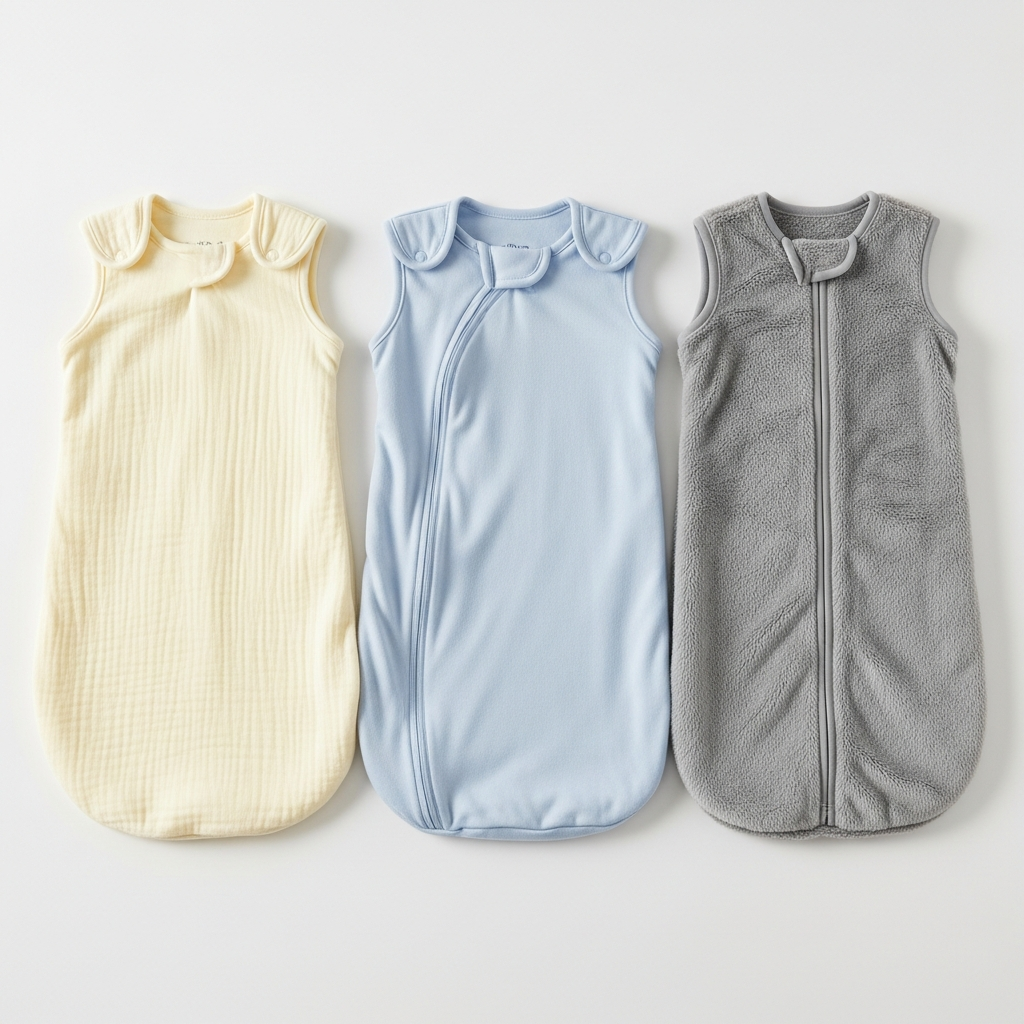
Standard baby sleepwear TOG ratings range from 0.2 (lightest summer-weight) to 3.5 (warmest winter-weight). Most families need two to three sleep sacks covering different TOG ranges to handle seasonal temperature variations.
Why does TOG matter more than vague "warmth" descriptions? Because a garment marketed as "warm" or "cozy" tells you nothing objective. A 2.5 TOG sleep sack from one brand provides roughly equivalent warmth to a 2.5 TOG from another brand, regardless of marketing language. This standardization empowers confident purchasing decisions.
TOG Chart by Room Temperature
The following chart provides detailed TOG recommendations with appropriate underlayer guidance:
| Room Temperature | Recommended TOG | What to Wear Underneath |
|---|---|---|
| Above 75F (24C) | 0.2-0.5 TOG | Diaper only or short-sleeve onesie |
| 72-75F (22-24C) | 0.5-1.0 TOG | Short-sleeve bodysuit |
| 68-72F (20-22C) | 1.0-1.5 TOG | Long-sleeve bodysuit |
| 65-68F (18-20C) | 1.5-2.5 TOG | Long-sleeve onesie + light pants |
| 61-65F (16-18C) | 2.5-3.0 TOG | Footed pajamas or sleepsuit |
| Below 61F (16C) | 3.0-3.5 TOG | Warm pajamas with base layer |
When layering underneath higher TOG sleep sacks, remember that combined insulation adds up. A 2.5 TOG sleep sack over thick fleece pajamas may create too much warmth even in a 65F room.
Sleep Sack vs Swaddle vs Footed Pajamas
Choosing between these options depends primarily on your baby's age and development stage:
- Swaddles (0-3 months typically) - Ideal for newborns who benefit from the security of contained arms. Transition out when baby shows signs of rolling. Most swaddles range 0.5-1.5 TOG.
- Transition swaddles (2-4 months) - Allow gradual arm freedom while maintaining wearable blanket warmth during the rolling transition period.
- Sleep sacks (from birth through toddlerhood) - Versatile option available in all TOG ranges. Can be used from birth if swaddling is not preferred, and continue through age 2-3 years.
- Footed pajamas - Work alone in comfortable temperature ranges or under sleep sacks in cooler conditions. Typically provide 0.5-1.0 TOG equivalent warmth.
Many parents find that combining footed pajamas with a lower TOG sleep sack provides optimal temperature flexibility. This approach allows quick adjustments by simply adding or removing the sleep sack layer.
Room-by-Room Baby Dressing Guide
Your home does not maintain one uniform temperature. The nursery at 68F might coexist with a 73F living room and a drafty 64F entryway. This room-by-room approach addresses real-world temperature variations that most baby dressing guides overlook.

Nursery Temperature and Nighttime Sleep
The nursery deserves special attention because babies spend extended unsupervised hours sleeping there. The AAP recommends maintaining nursery temperature between 68-72F (20-22C) for safe infant sleep.
Practical nursery temperature management tips:
- Use a dedicated room thermometer positioned at crib level for accurate readings
- Ceiling fans help circulate air and may reduce SIDS risk when used appropriately
- Blackout curtains provide temperature regulation benefits beyond just blocking light
- Position the crib away from windows, heating vents, and direct sunlight
- Check temperature before bedtime and during night wakings for seasonal adjustments
For what to wear at 68 degrees in the nursery, a long-sleeve cotton onesie with a 1.0-1.5 TOG sleep sack provides ideal comfort for most babies. Adjust based on your baby's individual temperature tendencies.
Living Room Naps and Daytime Rest
Living rooms typically run 2-4 degrees warmer than bedrooms due to larger windows, cooking activities in adjacent kitchens, and higher daytime occupancy generating body heat. Adjust daytime nap attire accordingly.
Consider these daytime-specific factors:
- Sunlight streaming through windows can significantly warm nap spaces
- Active supervision during daytime naps allows for lighter dressing since you can respond quickly to temperature cues
- Portable bassinets may not have the same airflow as stationary cribs
- Afternoon temperatures often peak when babies take longer naps
For daytime naps in warm living rooms, consider skipping the sleep sack entirely if temperatures exceed 75F (24C). A simple cotton onesie may suffice when you remain nearby to monitor comfort.
Outdoor Temperature Guidelines
Outdoor dressing requires additional considerations beyond ambient temperature:
- Wind chill - A 50F day with strong wind feels much colder than a calm 50F day
- Sun exposure - Direct sunlight dramatically increases perceived temperature, even on cool days
- Stroller microclimates - Weather shields and covers trap heat; monitor baby closely
- Transition planning - Dress in easy-to-remove layers when moving between indoor and outdoor environments
General outdoor guidelines:
- Above 75F (24C): Light, breathable layers with sun protection; avoid direct sunlight for young infants
- 60-75F (15-24C): Base layer plus light jacket or sweater; bring extra layer
- 40-60F (4-15C): Multiple thin layers plus warm outerwear; hat covering ears
- Below 40F (4C): Limit outdoor exposure for young babies; full winter gear with mittens
Transitional Spaces (Bathroom, Entryway)
Temperature transitions between rooms require planning to prevent baby from becoming chilled or overheated during brief exposures.
Bath time transitions:
- Warm the bathroom before bath time in cooler weather
- Have towels, diaper, and clothes laid out and ready before undressing baby
- Warm clothes briefly on a radiator or in the dryer for cold nights
- Move quickly but calmly through the undressing-bathing-drying-dressing sequence
Entryway dressing for outings:
- Add outdoor layers in the entryway rather than a warm living room to prevent overheating before you leave
- Remove layers promptly upon returning indoors
- Keep the car seat in the home to pre-warm it on cold days (or pre-cool on hot days)
Seasonal Baby Clothing Strategies
Each season presents unique baby dressing challenges. Beyond simply "add layers for winter, remove for summer," understanding seasonal nuances helps you dress baby appropriately as conditions change.
Summer Dressing With and Without Air Conditioning
Homes with air conditioning:
Air conditioning transforms summer dressing into a comfortable-range scenario. If your AC maintains 68-72F (20-22C), follow the standard recommendations for that temperature range regardless of outdoor heat. The challenge shifts to transition management when moving between air-conditioned indoor spaces and hot outdoor environments.
Homes without air conditioning:
Non-AC homes during summer require maximum heat management:
- Minimize layers to just a diaper or single lightweight garment
- Use breathable cotton or bamboo fabrics exclusively
- Position fans to circulate air (not blowing directly on baby)
- Consider cool baths before bedtime to lower body temperature
- Monitor for heat stress signs more frequently
Heat wave and power outage emergencies:
During extreme heat events, prioritize cooling over all other concerns. Remove all clothing except a diaper, use damp (not cold) washcloths on the forehead and torso, and seek air-conditioned locations if your home becomes dangerously hot. Signs of heat stroke in infants include hot/dry skin, rapid pulse, and lethargy requiring immediate medical attention.
Winter Layering Without Overheating
Winter presents a counterintuitive challenge: heated homes combined with heavy sleepwear often cause overheating, not cold. The outdoor cold triggers parental instincts to bundle up, but indoor heating has already warmed the sleep environment.
Common winter dressing mistakes to avoid:
- Fleece sleepers in heated homes - Fleece retains significant heat; use only in genuinely cool rooms under 65F (18C)
- Adding blankets "just in case" - Loose blankets remain dangerous regardless of temperature
- Leaving outdoor layers on indoors - Remove coats and heavy layers within minutes of entering heated spaces
- Cranking up the nursery heat - Warmer rooms require lighter sleepwear, not the reverse
For winter nighttime dressing in homes heated to 68-72F (20-22C), dress baby identically to how you would in any season at that temperature. The season matters less than the actual room reading.
Spring and Fall Transition Weather
Transition seasons challenge parents with daily temperature swings that can span 20+ degrees between morning and afternoon. Your approach requires flexibility:
- Morning naps - May need warmer layers before heating systems or sunlight warm the home
- Afternoon naps - Often require lighter layers as temperatures peak
- Nighttime - Check temperature at bedtime; do not assume it matches yesterday
Keep multiple TOG options readily accessible during transition seasons. Having 0.5, 1.0, and 2.0 TOG sleep sacks allows quick adjustments as conditions change day-to-day or even hour-to-hour.
Layer systems work exceptionally well during unpredictable weather. A base onesie plus removable pants plus adjustable sleep sack provides three variables you can modify without fully undressing baby.
Special Situations and Safety Considerations
Certain circumstances require specific dressing modifications beyond standard temperature guidelines. Safety must always take priority over perfect temperature comfort.

Car Seat Safety and Bulky Winter Clothing
This deserves special emphasis: puffy coats, snowsuits, and bulky winter clothing are dangerous in car seats. These garments compress during impact, creating slack in the harness straps that should fit snugly against baby's body. This slack can allow ejection or improper restraint during crashes.
Car seat safety experts recommend the following approach:
- Dress baby in thin, compressible layers that allow snug harness fit
- Buckle baby into the car seat, then place blankets OVER the buckled harness
- Use car seat-safe covers designed to go over the harness system
- Pre-warm the car before trips when possible
The pinch test: After buckling baby in, try to pinch the harness strap material at shoulder level. If you can pinch webbing into a fold, the harness is too loose (possibly due to bulky clothing underneath). Proper fit allows no slack at all.
Thin fleece layers that compress completely under harness tension remain acceptable. The issue is specifically with puffy, insulated outerwear that springs back to its original thickness.
Dressing a Baby with Fever
Fever management in babies requires counterintuitive dressing approaches. While instinct suggests bundling a sick baby for comfort, doing so can actually prolong fever by preventing heat release.
Guidelines for dressing a baby with fever:
- Use light, breathable single layers that allow body heat to escape
- Keep room temperature in the normal 68-72F (20-22C) range
- Avoid bundling even if baby feels chilled from fever cycles
- Monitor temperature regularly; high fevers in young infants require medical attention
Contact your pediatrician for any fever in babies under 3 months old, or temperatures above 104F (40C) at any age. Never use cold water or ice baths to reduce fever.
Premature Babies and Temperature Sensitivity
Preemies require additional consideration due to their enhanced vulnerability to temperature extremes:
- Less body fat provides less natural insulation
- Higher surface-area-to-weight ratio accelerates heat loss
- Less developed thermoregulation systems
- May need one additional layer compared to full-term babies at the same temperature
Follow NICU discharge guidelines specific to your baby. Many preemies benefit from skin-to-skin contact (kangaroo care) which helps regulate temperature while providing developmental benefits. Always consult your pediatrician about temperature needs for premature infants rather than relying solely on general guidelines.
SIDS Prevention and Overheating
Overheating is a recognized risk factor for Sudden Infant Death Syndrome (SIDS). While researchers continue studying the exact mechanisms, the connection between excessive warmth and elevated SIDS risk is well-established.
Safe sleep clothing guidelines that reduce SIDS risk:
- No hats for indoor sleep - Babies release excess heat through their heads; covering it impairs cooling
- No loose blankets, pillows, or soft bedding - Use wearable blankets/sleep sacks instead
- Back-to-sleep positioning - Always place babies on their backs for all sleep
- Firm, flat sleep surface - Soft surfaces increase overheating and suffocation risk
- Room sharing without bed sharing - Baby's own sleep space in parents' room for the first 6-12 months
The Safe to Sleep campaign provides comprehensive resources for reducing SIDS risk through appropriate sleep environments and practices.
How to Check If Your Baby Is Comfortable
Thermometers and charts provide guidance, but your baby's actual comfort level requires hands-on assessment. Learning these simple checks builds confidence in your dressing decisions.
The Neck and Chest Check Method
This reliable technique takes just seconds and provides accurate temperature feedback:
- Slide your hand inside baby's clothing at the back of the neck or on the chest
- Hold your hand against the skin for several seconds
- Assess the skin temperature and moisture level
What your findings mean:
- Warm and dry - Perfect temperature; no changes needed
- Warm and sweaty or damp - Too hot; remove a layer or reduce TOG
- Cool or cold - Too cold; add a layer or increase TOG
- Cool and clammy - May indicate illness; check for other symptoms
Perform this check at bedtime, during any nighttime wakings, and when room conditions change (weather shifts, heating cycles, etc.). With practice, you will develop intuitive sense for your specific baby's temperature patterns.
Why Cold Hands and Feet Are Normal
New parents frequently worry about cold baby hands and feet. Here is reassurance: this is almost always normal and not a sign that baby needs more layers.
Baby circulatory systems prioritize vital organs. Blood flow to extremities reduces naturally, resulting in hands and feet that feel cooler than the core body. This protective mechanism keeps the heart, lungs, and brain properly supplied with warm blood.
Cold extremities concern parents because:
- When touching baby, hands and feet are the most accessible areas
- Adult circulation maintains warmer extremities, making baby's feel abnormal by comparison
- It triggers protective instincts to "warm them up"
Only be concerned about cold hands and feet when accompanied by:
- Cool chest or tummy
- Mottled or bluish skin coloring
- Lethargy or unusual fussiness
- Feeding difficulties
Absent these additional symptoms, cool extremities require no intervention.
When to Add or Remove Layers
Responding appropriately to temperature checks matters as much as performing them:
- Make changes gradually - Add or remove one layer at a time, then reassess in 15-20 minutes
- Time adjustments thoughtfully - During natural wake periods is ideal; avoid waking a sleeping baby unless truly concerned about overheating
- Track patterns - Note which combinations work at various temperatures to build your personal reference guide
- Adjust for illness - Feverish babies may feel hot but should not be heavily bundled
Seasonal transitions may require more frequent checks as both outdoor weather and indoor heating patterns change. Build a routine of checking temperature before bed during these transitional periods.
Best Fabrics for Baby Sleepwear by Temperature
Fabric choice significantly impacts how effectively baby clothing manages temperature. Understanding fabric properties helps you select appropriate sleepwear for any conditions.
Fabric Properties and Temperature Regulation
Key fabric characteristics affecting baby comfort include:
- Breathability - How easily air passes through the fabric, allowing heat to escape
- Moisture-wicking - The fabric's ability to draw sweat away from skin
- Thermal regulation - How well the fabric adapts to changing temperatures
- Softness - Important for sensitive baby skin comfort
| Fabric | Breathability | Warmth | Best For |
|---|---|---|---|
| Cotton | High | Moderate | Year-round base layers; most versatile |
| Bamboo | Very High | Moderate | Hot sleepers; sensitive skin; temperature regulation |
| Merino Wool | High | High | Cold weather; natural temperature regulation |
| Fleece | Low | Very High | Very cold rooms only; use with caution |
| Polyester | Low | Moderate | Avoid for sleep; retains heat and moisture |
Cotton vs Bamboo vs Wool for Different Temperatures
Cotton: The classic choice for good reason. Cotton offers excellent breathability, wide availability, easy care, and affordability. It works well across temperature ranges when selected in appropriate weights. Drawback: cotton can retain moisture, potentially leaving sweaty babies feeling damp rather than wicking moisture away.
Bamboo: Increasingly popular for baby sleepwear, bamboo fabric offers superior temperature regulation that keeps babies comfortable across wider temperature ranges. Bamboo wicks moisture more effectively than cotton, provides natural antibacterial properties, and feels exceptionally soft. Premium pricing reflects these benefits.
Merino wool: Despite wool's scratchy reputation, merino wool is exceptionally soft and provides outstanding natural temperature regulation. It keeps babies warm when cold and cool when warm, adapting to conditions dynamically. Merino also resists odors naturally. Higher maintenance requirements and cost limit its popularity, but for cold-climate families, merino sleepwear offers excellent performance.
For comprehensive fabric comparisons, our baby clothing materials guide provides detailed analysis to help you choose optimal sleepwear fabrics.
Frequently Asked Questions
How many layers should a baby wear at night?
Most babies need one more layer than an adult would find comfortable. In a room at 68-72F (20-22C), dress your baby in a long-sleeve onesie plus a 1.0-1.5 TOG sleep sack. Check your baby's chest or back of neck to ensure they feel warm but not sweaty.
What temperature should a baby's room be for sleeping?
The American Academy of Pediatrics recommends keeping baby's room between 68-72F (20-22C). This temperature range reduces SIDS risk associated with overheating while keeping baby comfortable. Use a room thermometer to monitor temperature, especially during seasonal changes.
How do I know if my baby is too hot or too cold?
Check your baby's chest or back of neck rather than their hands or feet. A comfortable baby feels warm and dry. Sweating, damp hair, flushed cheeks, or rapid breathing indicate overheating. A cool chest or tummy, along with fussiness, suggests your baby needs another layer.
Is 72 degrees too hot for a baby's room?
No, 72F (22C) is within the AAP recommended range of 68-72F. At this temperature, dress your baby in a light long-sleeve onesie with a 0.5-1.0 TOG sleep sack. Avoid adding extra blankets and ensure good air circulation in the room.
What TOG sleeping bag does my baby need?
TOG requirements depend on room temperature. For rooms above 75F, use 0.2-0.5 TOG. For 68-72F, choose 1.0-1.5 TOG. For 61-68F, select 2.0-2.5 TOG. Below 61F, use 2.5-3.5 TOG. Always adjust underlayers based on TOG rating for optimal comfort.
Why are my baby's hands and feet always cold?
Cold hands and feet are normal in babies. Their circulatory system prioritizes keeping vital organs warm, so extremities often feel cool. This is not a reliable indicator of body temperature. Instead, check your baby's chest or back of neck to assess if they are warm enough.
Should babies wear hats to sleep indoors?
No, healthy full-term babies should not wear hats to sleep indoors. Babies release excess heat through their heads, and covering it can lead to overheating, a SIDS risk factor. Only use hats outdoors in cold weather or as directed by your pediatrician for medical reasons.
How should I dress my baby for the car seat in winter?
Avoid bulky coats and snowsuits in car seats as they compress in a crash, leaving harness straps dangerously loose. Instead, dress your baby in thin layers, buckle them in with snug straps, then place a blanket over the harness. Pre-warm the car when possible.
Keeping Your Baby Comfortable: Your Next Steps
Dressing your baby appropriately for sleep does not need to remain a source of nightly stress. With the temperature charts, TOG guidelines, and comfort-checking techniques in this guide, you now have a comprehensive framework for confident dressing decisions in any room, any season, any situation.
Remember these core principles:
- Use the baby clothing temperature chart as your starting framework, adjusting for your specific baby's tendencies
- Check chest and neck temperature rather than hands and feet
- Err toward fewer layers rather than more; overheating poses greater risks than mild coolness
- Invest in two to three sleep sacks covering different TOG ranges for seasonal flexibility
- Never use loose blankets; wearable blankets and sleep sacks provide safe warmth
At PatPat, we design breathable, temperature-regulating sleepwear that makes dressing baby for comfortable sleep straightforward. Explore our collection of baby bamboo pajamas to build your complete seasonal sleepwear wardrobe.
Your baby's comfort and safety remain the priorities. Trust your instincts, check regularly, and adjust as needed. With practice, reading your baby's temperature cues becomes second nature, and those anxious nighttime thermometer checks transform into confident, quick assessments.


