


Here is a number that might surprise you: professional baby proofing services charge between $500 and $2,500 for a typical home. When you are already spending thousands on diapers, formula, and pediatrician visits, that figure can feel crushing. But here is the good news -- with a strategic DIY approach, you can make your home baby-friendly on a budget for as little as $70 to $130.
Creating a safe, comfortable home for your baby goes beyond plugging outlets and locking cabinets. It means setting up a cozy nursery without overspending, choosing clothing that keeps sensitive skin happy, and designing a space where your little one can explore freely. Whether you are a first-time parent nesting in a small apartment or preparing a house for baby number two, this guide walks you through every step -- from room-by-room baby proofing on a budget to affordable nursery essentials and eco-friendly choices. At PatPat, we believe every family deserves practical solutions that protect both their baby and their bank account.
Let us get your home baby-ready without breaking the bank.
When to Start Baby Proofing and What to Prioritize First
One of the most common questions new parents ask is "when should I start baby proofing?" The answer is simpler than you think: begin during the third trimester, then adjust as your baby grows. Baby proofing is not a one-time event -- it is a phased process that matches your child's developmental milestones.
Your Baby Proofing Timeline by Developmental Stage
- Third trimester (pre-birth): Anchor heavy furniture to walls, install outlet covers, and set up the nursery. This costs under $30 and addresses the highest-risk hazards before you are sleep-deprived.
- 4 to 6 months (rolling and sitting): Remove small objects from floor level, add corner guards to sharp furniture edges, and secure loose cords.
- 6 to 10 months (crawling): Install safety gates for stairs, add cabinet locks in the kitchen and bathroom, and lock the toilet lid. This is when most families need the biggest safety push.
- 10 to 14 months (pulling up and walking): Double-check furniture stability, add door knob covers to off-limits rooms, and install window guards on upper floors.
How to Spread Baby Proofing Costs Over Time
Instead of buying everything at once, phase your purchases. Start with the five highest-risk items the CPSC identifies as essential childproofing priorities: furniture anchors, outlet covers, cabinet locks, safety gates, and water temperature adjustment. Together, these cost $25 to $40. Then add room-specific safety items as your baby reaches each milestone.
Smart tip: add safety items to your baby registry. Most guests will happily buy a $15 cabinet lock set alongside that adorable stuffed animal.
Budget Baby Proofing Room by Room: Kitchen, Bathroom, and Beyond
Thinking about baby proofing room by room keeps the task manageable and your budget under control. Here is exactly what each space needs and what it costs.
Kitchen Safety on a Budget
- Cabinet locks: Adhesive magnetic locks run $8 to $15 for a set of eight. The free alternative? Loop a rubber band tightly around double-handled cabinet knobs.
- Stove safety: Stove knob covers cost $5 to $8; an oven door lock runs $6 to $10.
- Chemical storage: Simply relocate cleaning products from under the sink to a high shelf -- completely free and instantly effective.
- Refrigerator and dishwasher locks: $4 to $5 each.
Bathroom Baby Proofing Without Expensive Products
- Toilet lock ($6 to $8): This is one of the most critical low-cost purchases. Young children can drown in just a few inches of water.
- Anti-scald protection: Adjust your water heater to 120 degrees Fahrenheit -- completely free and prevents burns.
- Non-slip mat ($5 to $10): Or use adhesive grip stickers for around $3.
- Medicine storage: Move all medications to a high, locked shelf. Zero cost.
- Door access: A bathroom door knob cover ($3 to $5) prevents unsupervised bathroom visits.
Living Room, Bedroom, and Stairway Safety
Furniture tip-overs are among the most dangerous hazards in your home. According to the CPSC, nearly 80% of all furniture and TV tip-over fatalities involve children five and younger. Furniture anchor straps cost just $8 to $12 for a multi-pack and are the single most important safety item in your living space.
- Corner guards: $5 to $10 per set for coffee tables and fireplace hearths.
- Outlet covers: $3 to $5 for a 24-pack of plug covers, or $8 to $12 for sliding outlet plates.
- Safety gates: Pressure-mounted gates for stairs cost $20 to $40. Use hardware-mounted gates at the top of stairs ($25 to $50) for the most secure option.
- Cord management: Tie up or cut looped blind cords -- strangulation hazards that cost nothing to fix.
| Room | Top Priority Items | Estimated Budget Cost |
|---|---|---|
| Kitchen | Cabinet locks, stove knob covers, chemical relocation | $15 to $25 |
| Bathroom | Toilet lock, anti-scald adjustment, non-slip mat | $10 to $20 |
| Living Room | Furniture anchors, outlet covers, corner guards | $15 to $25 |
| Stairs | Pressure-mounted gate(s), cord management | $20 to $40 |
| Bedroom | Furniture anchors, window cord safety, outlet covers | $10 to $20 |
| Total Essentials | $70 to $130 |

DIY Baby Proofing Hacks That Actually Work and Save Money
Some of the best baby proofing solutions are already in your home. These DIY baby proofing ideas have been tested by thousands of parents in communities like Reddit's r/beyondthebump -- and they cost next to nothing.
Household Items You Can Repurpose for Baby Safety
- Pool noodles ($1 to $2 each): Slice lengthwise and press over sharp furniture edges or door tops to prevent finger-pinch injuries. One noodle covers multiple danger spots.
- Rubber bands (free): Wrap tightly around paired cabinet knob handles to create a temporary latch that stumps little fingers.
- Hair ties and zip ties (free): Secure cabinet handles together or bundle loose electrical cords out of reach.
- Pipe insulation ($3 to $4 for six feet): Wrap around exposed pipes, table legs, and stair railings for cushioned protection.
- Adhesive felt pads ($2): Apply to sharp furniture corners -- these are often already in your junk drawer.
- Old socks (free): Slip over door handles to create a soft knob cover that prevents toddlers from opening doors and slamming fingers.
Dollar Store Baby Proofing Finds Under $5
- Adhesive hooks for cord management ($1)
- Non-slip shelf liner under rugs and play mats ($1 to $2)
- Foam bath letters as non-slip tub grips ($1)
- Binder clips for cord bundling ($1)
- Command strips for lightweight anchoring ($2 to $3)
Setting Up a Safe and Stylish Nursery on a Budget
You do not need a Pinterest-perfect nursery to give your baby a great start. A budget-friendly nursery setup focuses on what truly matters: safe sleep, practical organization, and comfort. Everything else is optional.
Nursery Essentials Checklist -- What You Actually Need
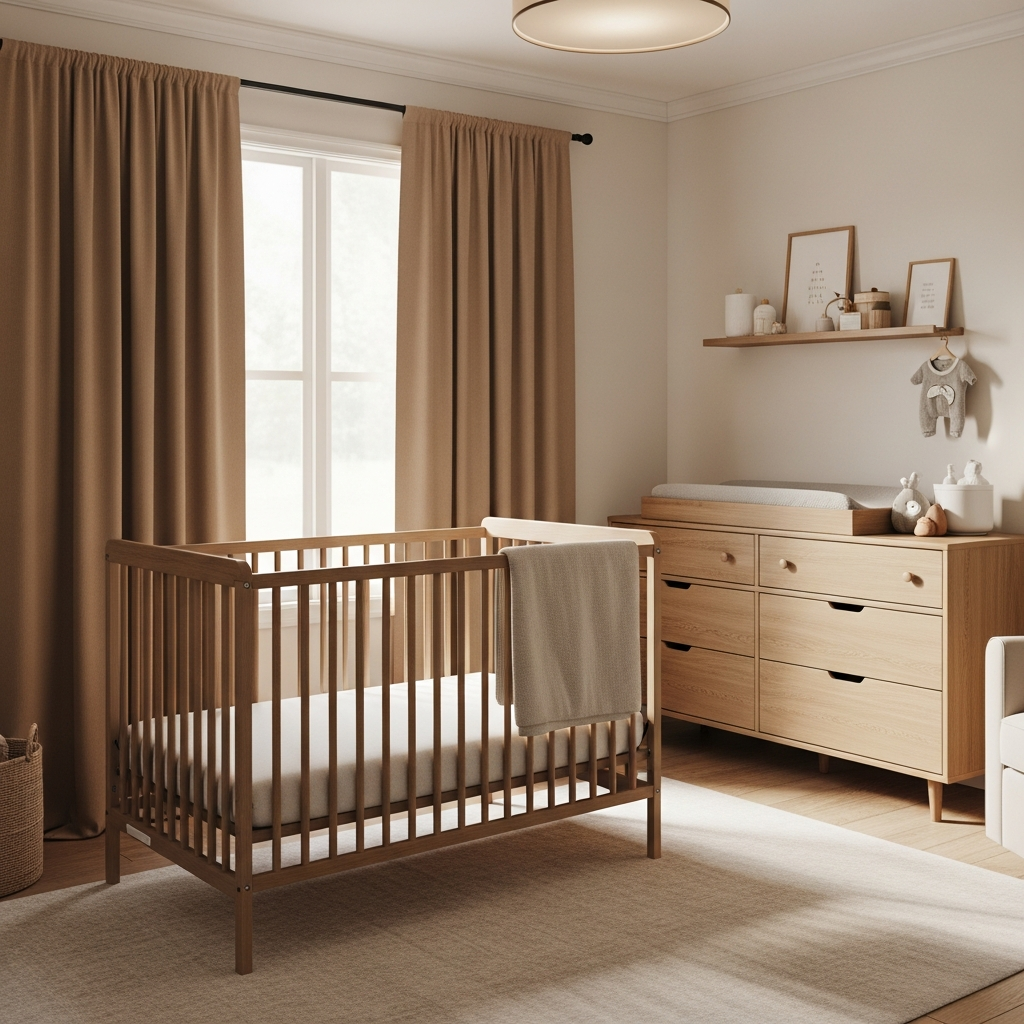
- Safe sleep space: A convertible crib ($100 to $200 new, $40 to $80 secondhand) grows with your child, making it one of the smartest budget investments. Alternatively, a bassinet works for the first few months.
- Firm mattress: Always buy new. Never purchase a secondhand crib mattress -- it may not meet current safety standards and can harbor mold or bacteria.
- Dresser with changing pad on top: Skip the standalone changing table. A dresser serves double duty and lasts years beyond the diaper stage.
- Blackout curtains ($10 to $20): Dramatically improve daytime naps.
- Sound machine ($15 to $25): One of the highest-value budget purchases for infant sleep quality.
What you can skip: Wipe warmers, specialized diaper pails, decorative crib mobiles, and elaborate nursery wall art. These add cost without meaningfully improving your baby's comfort or safety.
Secondhand Nursery Furniture: What is Safe to Buy Used
- Safe to buy used: Dressers (always anchor them), rocking chairs, bookshelves, decor, and clothing.
- Never buy used: Crib mattresses, car seats, and cribs manufactured before current CPSC crib safety standards.
- Where to find deals: Facebook Marketplace, Buy Nothing groups, consignment shops, and end-of-season retail clearances.
Budget Baby Wardrobe Essentials for the Nursery
A minimalist baby wardrobe saves money and closet space. Prioritize versatile basics -- bodysuits, footed sleepers, and simple layering pieces -- in just two to three sizes ahead. Building a capsule baby wardrobe with affordable baby clothes that last keeps your costs low while ensuring your baby stays comfortable at home. Focus on quality fabrics that survive repeated washing rather than trendy outfits your baby will outgrow in weeks.
Choosing Baby Clothes That Keep Your Little One Comfortable and Safe at Home
A truly baby-friendly home is not just about safety locks and gates. What your baby wears matters just as much. The right clothing keeps sensitive skin calm, regulates temperature, and lets your baby move freely -- all of which contribute to a happier, safer home environment.
Best Fabrics for Baby Clothes to Wear at Home
Not all baby clothing fabrics are created equal. Bamboo fiber absorbs moisture through natural micro-gaps in its structure, making it significantly more absorbent than traditional cotton. It is also ultra-soft, naturally temperature-regulating, and gentle on delicate skin -- ideal for all-day home wear.
Organic cotton is another excellent choice: chemical-free, breathable, and consistently gentle. For everyday basics, it remains a reliable workhorse fabric. On the other end of the spectrum, synthetic polyester blends trap heat and moisture against your baby's skin, which can trigger rashes and discomfort.
When shopping, look for OEKO-TEX or GOTS certifications -- these labels confirm the fabric has been tested for harmful chemicals and meets strict safety standards.
How the Right Clothing Helps Babies with Sensitive Skin and Eczema
If your baby struggles with eczema or reactive skin, clothing choices become even more important. The National Eczema Society notes that wool and synthetic materials like polyester and nylon cause overheating, sweating, and irritation -- all of which trigger the itch-scratch cycle. Rough seams, scratchy tags, and stiff waistbands are common culprits too.
Practical steps to protect sensitive skin at home:
- Choose tagless designs with flat seams to minimize friction
- Dress your baby in one appropriate layer for room temperature (pediatric sources recommend keeping rooms between 68 and 72 degrees Fahrenheit)
- Avoid over-dressing indoors -- overheating worsens both eczema and heat rash
- Wash all new clothes before first wear with fragrance-free detergent
For babies prone to eczema or skin irritation, bamboo baby clothes for sensitive skin offer a naturally hypoallergenic, breathable option that keeps little ones comfortable throughout the day.
| Fabric | Breathability | Softness | Hypoallergenic | Temperature Regulation |
|---|---|---|---|---|
| Bamboo | Excellent | Excellent | Yes | Excellent |
| Organic Cotton | Very Good | Very Good | Yes | Good |
| Regular Cotton | Good | Good | Moderate | Moderate |
| Polyester Blend | Poor | Variable | No | Poor (traps heat) |
Baby Proofing for Renters and Small Spaces Without Losing Your Deposit
Renting does not mean your baby's safety has to suffer. The key is choosing no-drill, no-damage baby proofing solutions that come off cleanly when you move. Every product in this section is renter-friendly and deposit-safe.
No-Drill, No-Damage Baby Proofing Solutions
- Adhesive magnetic cabinet locks ($10 to $15 for eight): Leave no holes and remove cleanly. These are a renter's best friend in the kitchen and bathroom.
- Pressure-mounted safety gates ($20 to $35): No screws or wall damage. Adjustable widths fit most doorways and hallways.
- Removable outlet covers and cord concealers ($3 to $8): Peel-off adhesive leaves no residue.
- Command strip furniture anchors ($5 to $8): Works for lightweight shelving and decor. Use traditional wall anchors for heavy dressers -- your landlord will likely approve a small repair over a liability risk.
- Freestanding play yards ($30 to $60 secondhand): Double as room dividers without touching walls.
Creating a Safe Play Area in a Small Apartment
You do not need an entire room dedicated to baby. Try these small-space strategies:
- Use interlocking foam play mats ($15 to $25) to define a clearly visible baby zone
- Designate one thoroughly baby-proofed room rather than trying to childproof the entire apartment
- Maximize vertical storage: over-the-door organizers, hanging closet shelves, and stackable bins keep hazards off the floor
- Choose multi-functional furniture like a storage ottoman that doubles as a toy box
A counterintuitive finding from parenting communities: families in smaller apartments often find baby proofing easier -- and cheaper -- than those in large homes. Fewer rooms mean fewer outlets to cover, fewer cabinets to lock, and a smaller total area to monitor. In many cases, a well-proofed 700-square-foot apartment is safer than a loosely proofed 2,500-square-foot house.
Eco-Friendly and Non-Toxic Approaches to a Baby-Safe Home
Here is something many parents discover: the most eco-friendly baby proofing choices are often the most budget-friendly too. Sustainability and saving money go hand in hand more often than you might expect.
Non-Toxic Nursery and Home Choices on a Budget
- VOC-free paint ($25 to $35 per gallon): Only slightly more expensive than standard paint, and it eliminates harmful off-gassing in your baby's room.
- Natural cleaning products: White vinegar, baking soda, and castile soap handle most household cleaning for under $10 total. They are safer for crawling babies who put everything in their mouths.
- Solid wood over particle board: When buying secondhand furniture, choose solid wood. Particle board can off-gas formaldehyde -- a known irritant -- for years.
- Certified textiles: OEKO-TEX and GOTS certifications ensure fabrics are free from harmful chemicals. Check labels when buying bedding, curtains, and clothing.
Montessori-Inspired Baby-Friendly Design That Saves Money
Montessori principles naturally favor budget-friendly choices. The philosophy emphasizes simplicity, natural materials, and independence -- all of which reduce spending:
- Repurpose low shelves and baskets you already own for accessible, child-height storage
- Choose open-ended play items -- wooden blocks, fabric scarves, kitchen utensils -- many of which are free or secondhand
- Rotate toys weekly instead of buying new ones. This keeps your baby engaged without ongoing costs
- Use natural materials like cotton, wood, and bamboo instead of plastic alternatives
Sustainable choices extend to baby clothing too. Eco-friendly bamboo baby essentials are made from one of the world's most renewable resources and offer natural comfort without synthetic chemicals -- aligning your nursery with both your budget and your values.
Frequently Asked Questions About Baby Proofing on a Budget
What is the cheapest way to baby proof a house?
Combine free strategies with a few essential purchases. Relocate hazardous items to high shelves, tie up blind cords, and use rubber bands on cabinet knobs -- all at zero cost. Then invest $15 to $25 in outlet covers, furniture anchors, and a toilet lock for the highest-risk hazards.
How much does it cost to baby proof a home on a budget?
A strategic DIY approach costs $70 to $130 for essential safety items covering all rooms. By comparison, professional baby proofing services average $500 to $2,500 nationally. Phasing purchases across your baby's developmental milestones spreads the cost further.
When should I start baby proofing my home?
Start basic baby proofing during the third trimester with furniture anchoring and outlet covers. Intensify efforts around four to six months as babies begin rolling. Complete full baby proofing before crawling begins, typically between six and ten months.
What are the most important things to baby proof first?
Prioritize these five areas: anchor heavy furniture to walls, install outlet covers, lock cabinets containing chemicals or medicines, secure stair access with safety gates, and adjust your water heater to 120 degrees Fahrenheit to prevent scalding.
How do I baby proof a rental apartment without causing damage?
Use adhesive magnetic cabinet locks, pressure-mounted safety gates, and removable outlet covers -- all leave no holes or marks. Freestanding play yards work as room barriers without touching walls. Everything can be removed cleanly when you move.
Is professional baby proofing worth the cost?
For most families, DIY baby proofing provides equal safety at significantly less cost. However, if you have a large home, limited time, or unusual hazards like pools and multiple staircases, a professional consultation may provide worthwhile peace of mind.
What baby proofing items do parents say were a waste of money?
Parents frequently report that decorative outlet plug covers (a choking hazard when removed), door knob covers (kids learn to defeat them quickly), and stove guard shields (interfere with cooking) were least useful. Invest instead in cabinet locks, furniture anchors, and quality safety gates.
Do I really need to baby proof my house?
Yes. According to Nemours KidsHealth, accidental injury is the leading cause of death in children up to 14 years old, with more than a third of these injuries happening at home. Basic baby proofing addresses preventable hazards and does not require overspending -- a minimal approach focusing on the top five risks costs under $50.
Making Your Home Baby-Friendly Starts Today
Creating a safe, baby-friendly home does not require a huge budget. It requires a plan. Start with the essentials -- furniture anchors, outlet covers, and cabinet locks -- and build from there as your baby grows. Use DIY hacks and dollar store finds to fill in the gaps. Set up a minimalist nursery that prioritizes function over fashion. Choose soft, breathable clothing that keeps sensitive skin comfortable. And if you are renting, take heart: no-damage solutions work beautifully.
The three pillars of a baby-friendly home on a budget are straightforward: safety through affordable room-by-room baby proofing, comfort through smart nursery setup and the right baby clothing fabrics, and planning through phased spending that matches your baby's development. Tackle one room at a time, and before you know it, your entire home will be a safe haven for your little explorer.
As you prepare your home for your little one, building a wardrobe of quality, affordable baby clothing is one of the simplest ways to keep your baby comfortable, safe, and happy at home -- without stretching your budget. At PatPat, we are here to help you give your baby the best start, no matter your budget.
You have got this, parent. Your baby does not need a perfect home. They need a safe one -- and now you know exactly how to create it.




