


Every day in the United States, six children die from an injury in the home, and 10,000 more visit the emergency department for the kinds of accidents that happen right where families feel safest. If you are a new parent or expecting your first baby, the thought of needing to childproof your home can feel genuinely overwhelming. Where do you even start? What matters most? And how do you keep your little one safe without turning your entire house into a padded fortress?
This baby proofing checklist takes the guesswork out of it. We break down how to baby proof your house with a clear, room by room baby proofing approach -- from the kitchen to the nursery to the hallways in between. You will learn what to tackle first, which products actually work, how to adapt for renters and tight budgets, and the common mistakes most parents make without realizing it. At PatPat, we believe every child deserves a safe environment to explore, grow, and thrive -- and every parent deserves a straightforward plan to make that happen.
Whether you are preparing for a newborn or chasing a newly mobile crawler, this guide covers every stage. And yes, there is a free printable checklist at the end.
When to Start Baby Proofing Your Home: A Timeline by Age and Stage
When should you actually start? The timing depends on your baby's developmental milestones. Childproofing is not a one-time project -- it evolves as your child grows stronger and more mobile.
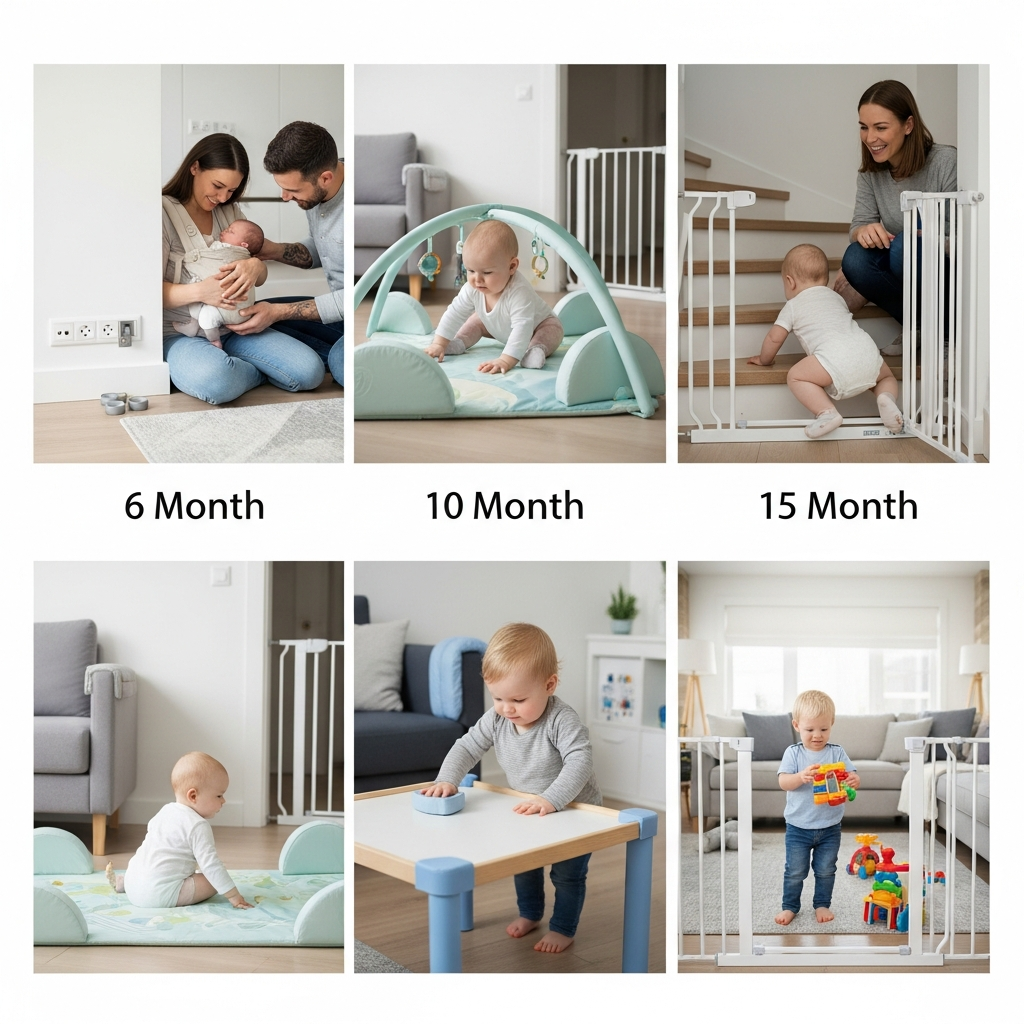
| Age / Stage | What Baby Can Do | Key Safety Actions |
|---|---|---|
| Before birth (nesting phase) | N/A -- preparation time | Install smoke and carbon monoxide detectors, anchor heavy furniture, set water heater to 120 degrees F, set up the nursery with safe sleep essentials |
| 3-6 months (rolling and reaching) | Rolling over, grasping objects | Secure the crib environment, remove dangling cords from reach, cover outlets in nursery and main living areas |
| 6-9 months (sitting and crawling) | Crawling, sitting unsupported | Do a full crawl-level audit (get on hands and knees). Install safety gates at stairs, lock cabinets with chemicals, add corner protectors |
| 9-12 months (pulling up and cruising) | Pulling to stand, walking along furniture | Anchor all furniture that could tip over, secure TV with anti-tip straps, install window guards, remove tablecloths |
| 12-24 months (walking and opening things) | Walking, climbing, turning knobs | Add door knob covers, re-evaluate gate placement, lock medicine cabinets, childproof toilet lids, restrict kitchen access |
| 2-3 years (climbing and escaping) | Climbing furniture, opening doors, problem-solving | Upgrade locks for determined toddlers, address pool and outdoor hazards, begin teaching basic safety rules alongside physical barriers |
Kitchen Safety -- How to Childproof Cabinets, Appliances, and Countertops
The kitchen packs more hazards per square foot than any other room: heat, sharp objects, chemicals, heavy items, and choking risks. Here is your systematic checklist to baby proof the kitchen.

Cabinets and Drawers
- Install magnetic cabinet locks or adhesive latches on all lower cabinets -- magnetic locks are hidden from view and harder for toddlers to defeat
- Store knives, scissors, and sharp utensils in upper cabinets or locked drawers
- Dedicate one "safe" cabinet stocked with plastic containers and wooden spoons for your baby to explore freely
Appliances and Countertops
- Use stove knob covers and install an oven door lock
- Install a stove guard to prevent pots from being pulled off the burner
- Keep small appliances unplugged and pushed to the back of the counter with cords wrapped
- Remove tablecloths -- children pull them and bring heavy items crashing down
- Install counter corner bumpers on sharp granite or marble edges
- Keep hot beverages well away from counter edges
Under the Sink and Floor
- Relocate all cleaning chemicals, detergent pods, and garbage bags to a high, locked location. Children younger than six years old account for nearly half of all poison exposures reported to Poison Control centers
- Use a non-slip mat near the sink area
- Pick up small food items immediately -- they are choking hazards
- Keep pet food bowls out of reach during meal prep
- Always close the dishwasher immediately -- exposed utensil baskets with knives pointing up are a serious stabbing risk
Bathroom Childproofing -- Preventing Drowning, Burns, and Poisoning Risks
The bathroom presents a unique trifecta of dangers: water, temperature, and chemicals. Each requires separate attention because consequences are severe and fast-acting.
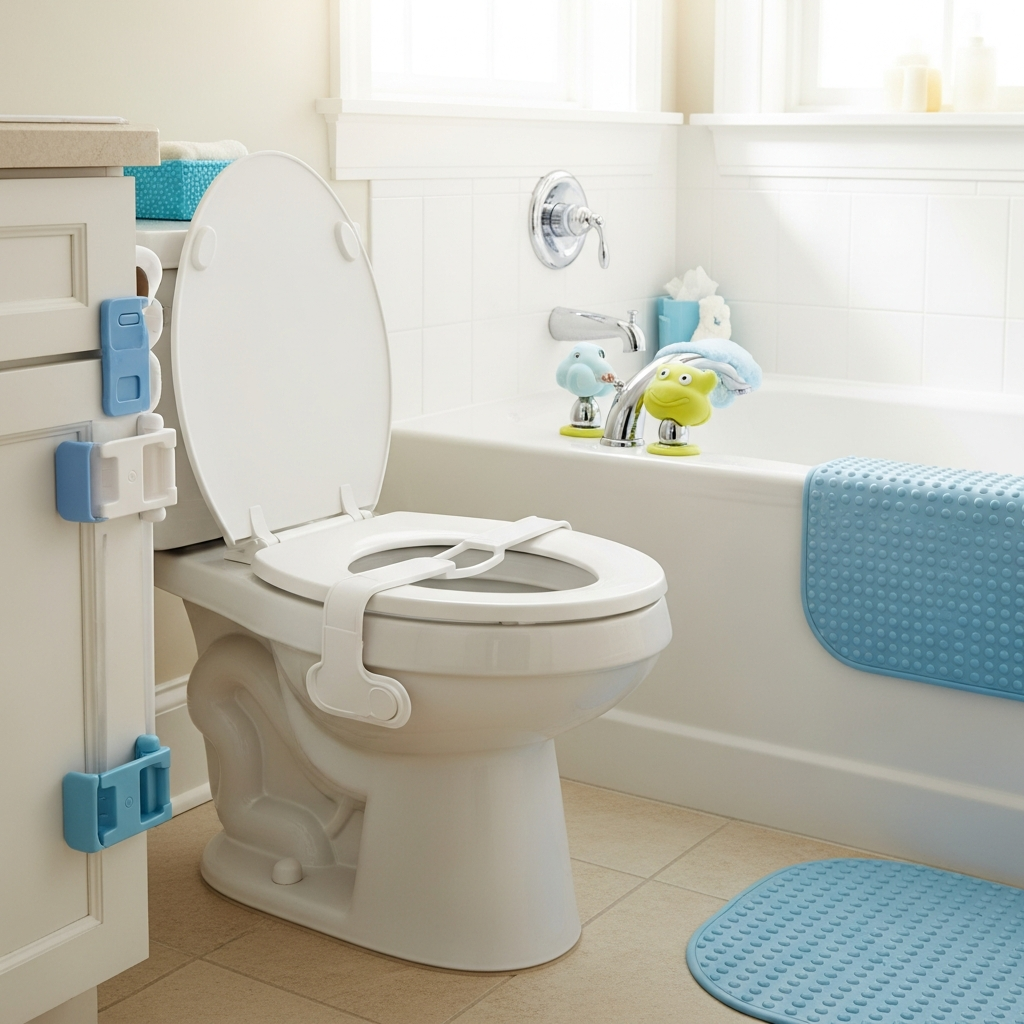
Drowning Prevention
This is the most critical bathroom hazard because it is the most irreversible. A child can drown in as little as one inch of water, and it happens quickly and silently.
- Never leave a child unattended near water, even for a second -- not to answer the phone, not to grab a towel
- Install toilet lid locks on every toilet in your home
- Drain the bathtub immediately after every use
- Empty any standing water in buckets, mop pails, or containers
Scald and Burn Prevention
The CPSC recommends setting your water heater thermostat to 120 degrees Fahrenheit to prevent scalding. Children's skin is thinner than adults' and burns deeper at lower temperatures.
- Install anti-scald faucet devices on bath and sink taps
- Test bath water with your elbow or a thermometer before placing baby in
- Keep curling irons, hair dryers, and straighteners unplugged and stored out of reach
Poisoning Prevention
- Lock the medicine cabinet with a keyed or combination lock -- a simple latch is not enough for a clever toddler
- Store all medications, vitamins, and supplements in child-resistant containers at adult height
- Move cosmetics, mouthwash, shampoo, and body wash to high shelves or locked cabinets
- Place the Poison Control number (1-800-222-1222) on speed dial and post it visibly in your bathroom and kitchen
Slip and Fall Prevention
- Place non-slip mats inside the bathtub and on the bathroom floor
- Use a faucet cover to cushion against head bumps
- Secure bath rugs with non-skid backing
- Keep the floor dry -- wipe up splashes immediately
Nursery and Bedroom Safety -- Creating a Safe Sleep and Play Environment
The nursery requires a two-pronged approach many guides overlook: the physical room setup and the equally important role of clothing in sleep safety.
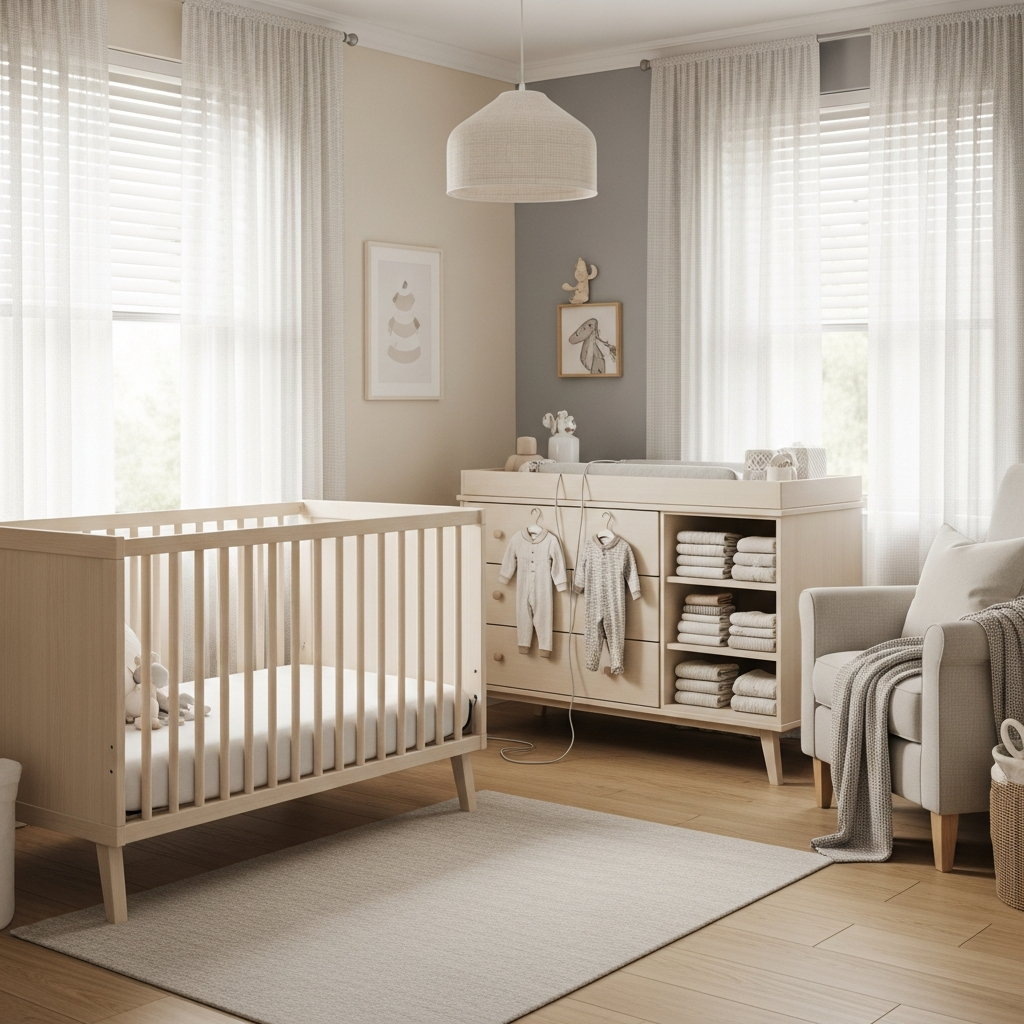
Safe Crib Setup and Furniture Anchoring Essentials
Follow the ABCs of safe sleep recommended by the American Academy of Pediatrics: baby sleeps Alone, on their Back, in a bare Crib. This single guideline prevents a significant number of sleep-related infant deaths each year.
Your nursery safety checklist should include these items:
- Ensure the crib meets current CPSC safety standards -- check for recalls at cpsc.gov
- No bumpers, pillows, loose blankets, or stuffed animals in the crib
- Anchor all dressers, bookshelves, and changing tables to the wall with furniture anchors and anti-tip straps. An estimated 17,800 people are injured annually in furniture and TV tip-over incidents, and the vast majority of fatalities involve children under five
- Position the crib away from windows, blinds, and dangling cords
- Use cordless window coverings or retrofit blind cords with cord cleats mounted well out of reach
- Install window guards or window stops that limit openings to less than four inches
- Secure the changing table with a safety strap and never leave baby unattended on it
What Baby Should Wear for Safe Sleep and Daily Comfort
Safe sleep is not just about the crib -- it includes dressing baby appropriately. The AAP recommends dressing infants in no more than one layer more than what an adult would wear to be comfortable. Overheating is a recognized SIDS risk factor, making fabric choice a genuine safety decision.

- Choose breathable, temperature-regulating fabrics to prevent overheating
- Bamboo fabric is an excellent nursery choice: naturally hypoallergenic, moisture-wicking, and thermoregulating
- Look for tagless designs to avoid skin irritation on sensitive newborn skin
- Opt for OEKO-TEX certified baby clothes to ensure no harmful chemicals touch your baby's skin
- Use wearable blankets or sleep sacks instead of loose blankets
- Avoid clothing with long strings, ribbons, or drawstrings that pose strangulation hazards
Choosing breathable, gentle baby clothes made from skin-safe materials is a simple but meaningful step in your nursery safety plan. For babies with sensitive or eczema-prone skin, bamboo baby clothes offer natural hypoallergenic protection and help regulate body temperature throughout the night.
Living Room Childproofing -- Securing Furniture, Electronics, and Play Areas
Your family spends more waking hours in the living room than almost anywhere else, which means this space must be both safe and livable.
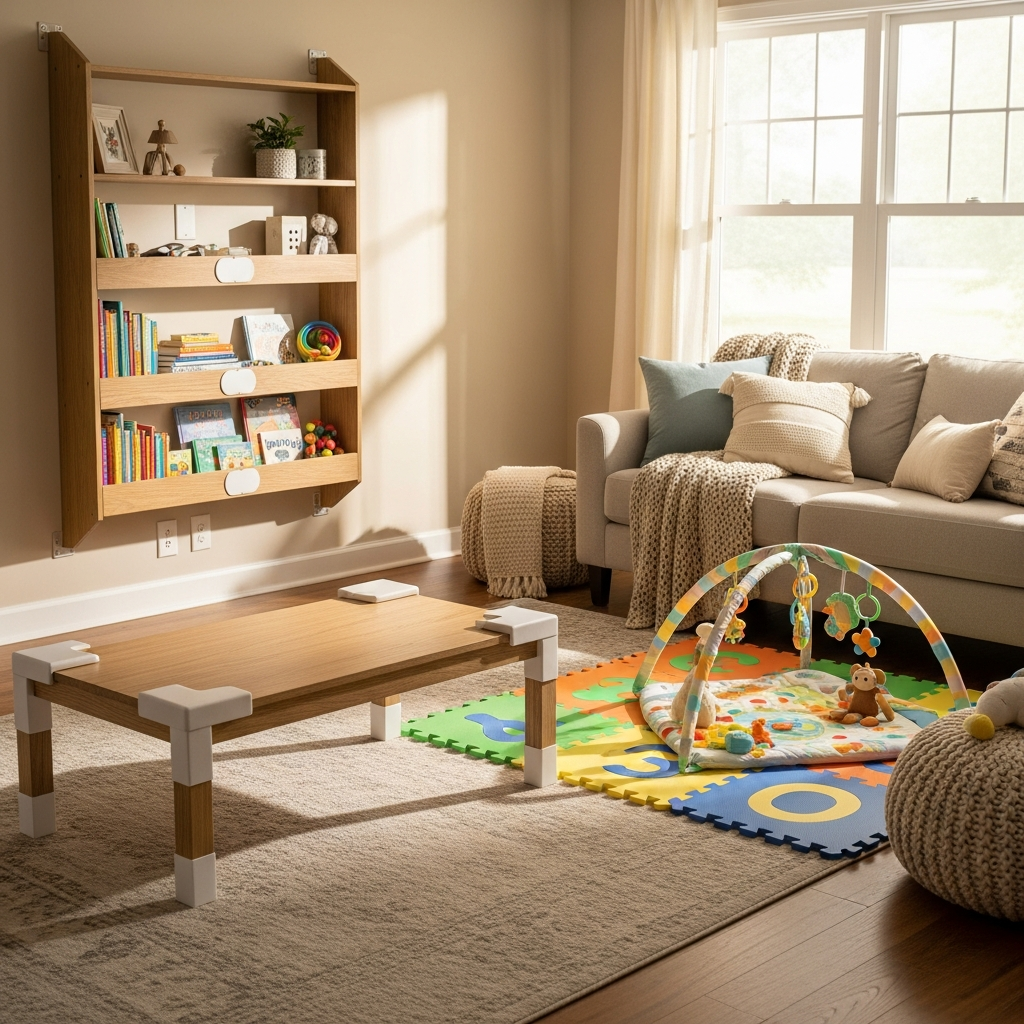
Furniture and TV Safety
- Anchor all bookshelves, media consoles, and TV stands to the wall
- Use anti-tip straps for flat-screen TVs -- a mounted TV is the safest option
- Remove or secure decorative items on low shelves
- Replace glass coffee tables or cover sharp edges and corners with edge protectors
Fireplace and Heating Safety
- Install a fireplace screen or hearth gate
- Cover radiators with guards
- Keep space heaters out of reach and on a flat, stable surface
- Store fireplace tools and matches in a locked container
Electrical and Cord Management
- Cover all accessible outlets with tamper-resistant outlet covers -- not loose plug covers, which are themselves choking hazards
- Bundle and hide cords from lamps, chargers, and electronics behind furniture or in cord covers
- Shorten window blind cords or replace with cordless options
Creating a Safe Play Zone
- Designate a specific area with age-appropriate toys on soft foam play mats
- Remove small decorative items from all surfaces within reach
- Verify every houseplant is non-toxic -- many popular varieties like pothos, philodendrons, and peace lilies are poisonous to children if ingested
Stairway, Hallway, and Door Safety -- Preventing Falls and Pinch Injuries
Hallways and staircases are easy to overlook, but they are where many serious injuries happen. Stairs are a leading cause of injury for small children, with a child treated in a U.S. emergency room for a stair-related injury roughly every six minutes.
Stairway Gates
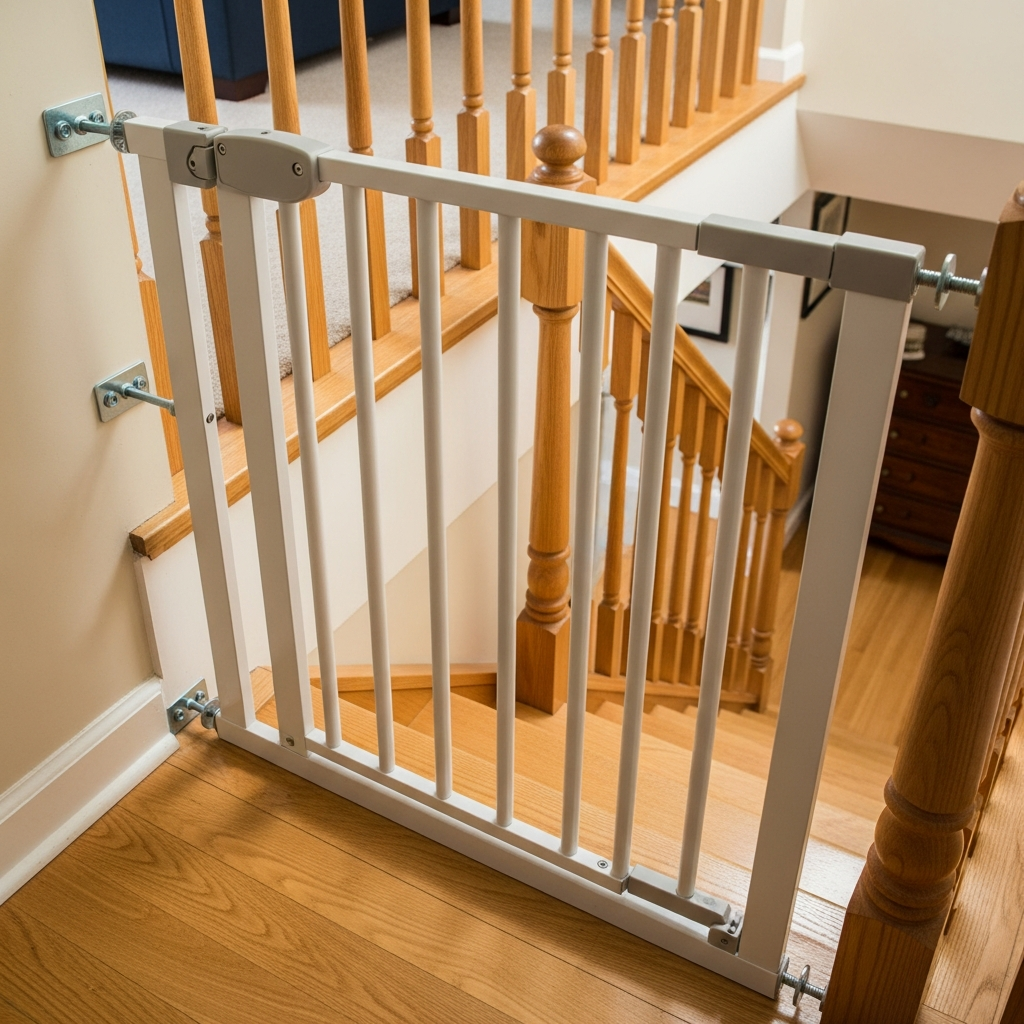
- Install a hardware-mounted baby gate (never pressure-mounted) at the top of stairs
- Use pressure-mounted gates at the bottom of stairs or between rooms
- Ensure gates meet ASTM F2050 safety standards
- Remove the gate once your child can climb over it (typically around age 2-3) and teach stair safety instead
Hallway Safety
- Install night lights along hallways and near stairs to prevent tripping during nighttime wake-ups
- Secure hallway rugs with non-slip pads
- Keep hallways clear of toys, shoes, and clutter
Door Safety
- Install door finger-pinch guards on both the hinge side and the latch side of doors
- Use door knob covers to prevent access to off-limits rooms like the garage, basement, or laundry room
- Install a door stop or soft-close hinge to prevent doors from slamming on small fingers
Balcony and Railing Safety
- Ensure railings have no gaps wider than four inches
- Install clear plexiglass panels or safety netting if railing gaps are too wide
- Lock balcony doors with a high-mounted lock or childproof door lever handle
Smart Childproofing -- Solutions for Renters, Tight Budgets, and Mistakes to Avoid
Not every family owns their home or has unlimited budget. And even well-prepared parents make mistakes they do not see coming. This section addresses both realities.
No-Drill, Renter-Friendly, and Budget Baby Proofing Ideas That Work
If you rent or are watching your budget, you still have effective options. Your child's safety does not depend on drilling into walls.

No-Drill and Adhesive Solutions
- Adhesive cabinet locks that remove cleanly (3M Command Strip style)
- Pressure-mounted gates for doorways and the bottom of stairs (never at the top)
- Freestanding play yards as room dividers
- Adhesive outlet covers and sliding outlet plates
Budget-Friendly Childproofing Priorities
If your budget is limited, here is the order to prioritize your spending:
- Smoke and carbon monoxide detectors (if not already installed)
- Outlet covers (as low as $5 for a pack)
- Cabinet locks for chemicals and medications ($10-25 per set)
- Furniture anchors for dressers and bookshelves ($5-15 per set)
- Safety gates for stairs ($30-80 each)
Effective DIY alternatives include pool noodles on sharp furniture edges, hair ties looped around dual cabinet knobs, and rubber bands on lever-style door handles.
Childproofing Grandparents' and Caregivers' Homes
Many child home injuries happen outside the primary residence. Build a portable baby proofing travel kit with outlet covers, adhesive cabinet locks, a toilet lock, and door finger guards. A quick 30-minute sweep before any visit prevents the most common hazards.
7 Childproofing Mistakes Most Parents Make (and How to Fix Them)
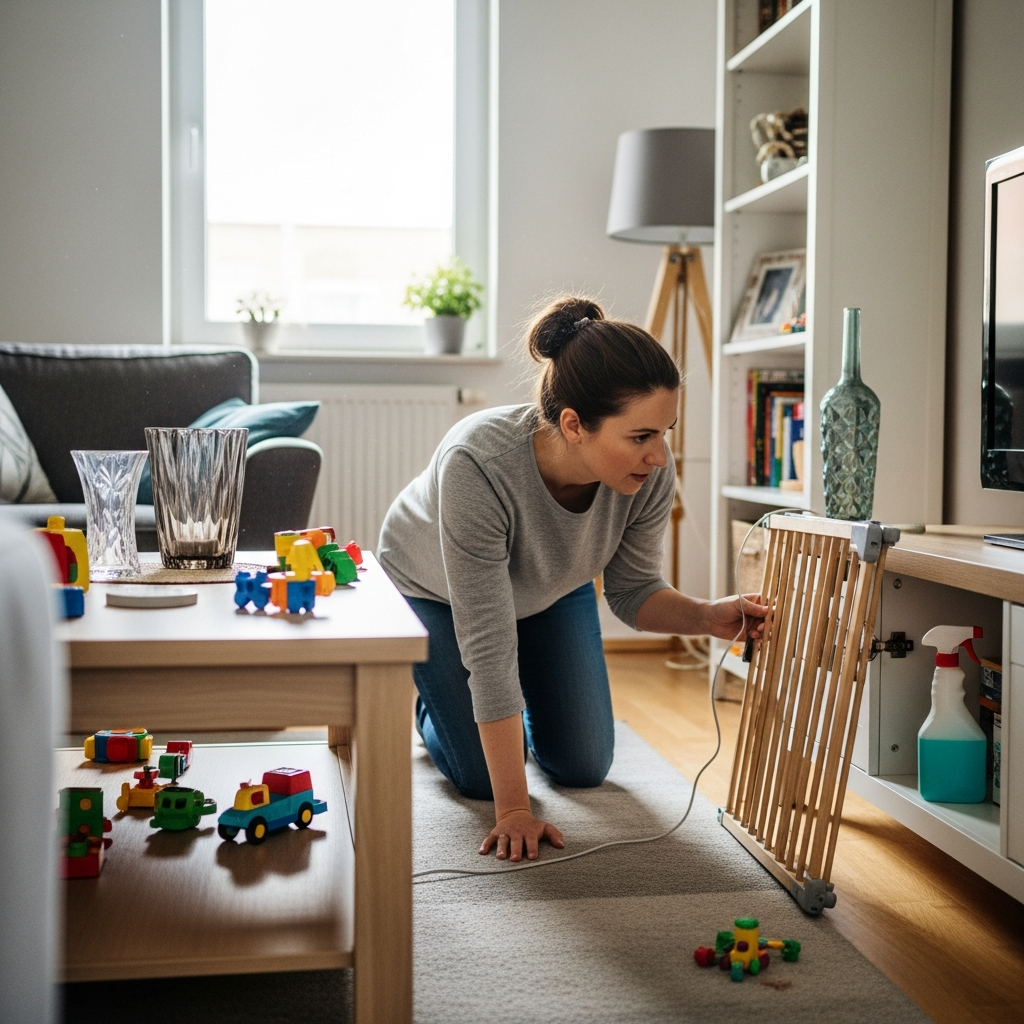
Even well-intentioned parents stumble. Here are the most common baby proofing mistakes -- and what to do instead.
- Childproofing once and forgetting about it. A six-month-old's hazards are completely different from a two-year-old's. Schedule a safety re-evaluation every three months as your child grows.
- Using loose outlet plug covers. Those small, removable plug covers that pop into outlets? They are choking hazards themselves. One parent on a popular parenting forum shared that her toddler pulled one out and put it straight in his mouth. Use tamper-resistant outlet plates or sliding outlet covers instead.
- Over-relying on products instead of supervision. No product replaces active adult supervision. Safety devices buy you reaction time -- they are not babysitters.
- Ignoring the garage, laundry room, and outdoor areas. These "forgotten" rooms contain concentrated hazards: detergent pods, power tools, pesticides, and pool access. Lock these spaces with the same urgency you give the kitchen.
- Assuming a baby-proof product is toddler-proof. Smart toddlers defeat cabinet locks, climb over gates, and figure out door handles within weeks. Upgrade security as your child's problem-solving skills grow.
- Not anchoring furniture because "it looks sturdy." A dresser that a grown adult cannot tip over can easily be toppled by a climbing toddler who pulls out drawers like a ladder. After one family's dresser fell on their 23-month-old, the father said he never imagined something so heavy could tip. Anchor everything.
- Skipping childproofing at grandparents' or caregivers' homes. Data consistently shows that a significant portion of child home injuries happen in homes that are not the child's primary residence. Pack a travel safety kit every time you visit.
Every parent misses something -- it is part of the learning curve. The key is not perfection. It is ongoing awareness and a willingness to re-evaluate as your child grows.
Frequently Asked Questions About Childproofing Your Home
Begin basic baby proofing by the third trimester of pregnancy or when your baby is around 3-4 months old -- before they start rolling and reaching. The most intensive childproofing phase should be complete by six months, when most babies begin crawling. However, childproofing is not a one-time event. You should update your safety measures at each developmental milestone through age three.
Prioritize these five areas first: (1) install smoke and carbon monoxide detectors on every floor, (2) cover electrical outlets in all rooms, (3) lock cabinets containing cleaning chemicals and medications, (4) anchor heavy furniture and TVs to walls, and (5) install safety gates at the top and bottom of stairs. These address the highest-risk injury categories: fire, electrocution, poisoning, crushing, and falls.
A thorough DIY baby proofing for an average home costs between $100 and $400 for products. Essential items like outlet covers ($5-15), cabinet locks ($10-25 per set), safety gates ($30-80 each), and furniture anchors ($5-15 per set) are the core expenses. Hiring a professional childproofing service typically costs $300 to $1,000 or more depending on home size and the scope of work.
Yes. Renters have many effective no-drill baby proofing solutions. Use adhesive cabinet locks, pressure-mounted safety gates for doorways, freestanding play yards, and sliding outlet covers. Adhesive furniture anchors with removable strips can secure dressers temporarily. The only exception: the top of stairs always requires a hardware-mounted gate. Discuss installation with your landlord -- most will agree for safety reasons.
The kitchen is the most dangerous room due to its concentration of hazards: hot surfaces, sharp objects, heavy appliances, toxic cleaning chemicals, and choking-risk foods. The bathroom is the second most dangerous room because of drowning risk (a child can drown in as little as one inch of water), scalding, and access to medications. Prioritize childproofing these two rooms first.
The essential baby proofing products are: safety gates (hardware-mounted for stairs, pressure-mounted for doorways), magnetic or adhesive cabinet locks, tamper-resistant outlet covers, furniture anchors and anti-tip straps, toilet lid locks, door finger-pinch guards, stove knob covers, and corner protectors for sharp furniture edges. Skip products marketed as novelties and focus on items that address falls, poisoning, drowning, burns, and electrocution.
Climbing toddlers require advanced childproofing. Anchor every piece of furniture to the wall, even items that seem stable. Remove objects that can be used as stepping stools inside the crib. Rearrange furniture that creates "climbing ladders" near windows. Switch to upgraded locks that toddlers cannot manipulate. Most importantly, teach climbing safety on approved surfaces -- a small indoor climber or playground -- rather than only trying to prevent climbing entirely.
Choose breathable, temperature-regulating fabrics like bamboo or cotton to prevent overheating, which is a known SIDS risk factor. Avoid clothing with loose ribbons, drawstrings, or long strings that pose strangulation hazards. Use wearable blankets or sleep sacks instead of loose blankets. Look for OEKO-TEX or similar certifications to ensure the fabric is free from harmful chemicals. Tagless designs reduce skin irritation for babies with sensitive skin. Many parents find that bamboo baby clothes meet all of these nursery safety criteria while keeping baby comfortable through the night.
Your Home Can Be Both Safe and Wonderful
Childproofing your home does not mean living in a sterile space locked down like a fortress. It means creating an environment where your child can explore and grow with fewer risks around every corner. The goal is to remove the most dangerous hazards and give yourself reaction time to handle the rest.
Start with the highest-priority items -- smoke detectors, outlet covers, cabinet locks, and furniture anchors. Then work through each room using this baby proofing checklist at your own pace. Re-evaluate every three months as your child hits new milestones. The fact that you are reading this guide means you are already doing a great job.
At PatPat, we support families through every stage -- from building a safe nursery to choosing the right clothing for your little one's comfort. If you found this room by room baby proofing guide helpful, download our free printable checklist below and share it with anyone who has a baby in their life.
Last updated: March 6, 2026


