


Those first days with a newborn disappear in a haze of feedings, diaper changes, and three-hour sleep stretches. One morning you look down and realize the tiny curled-up creature who once fit in the crook of your arm is already stretching out, filling the bassinet. The fleeting newborn stage waits for no one, and the pressure to capture it can feel like just one more impossible item on an already overwhelming to-do list.
Here is the good news: you do not need a professional photographer, a studio, or expensive camera equipment to freeze those precious first moments. A newborn photo shoot at home is absolutely within your reach. All it takes is a window with soft natural light, a couple of blankets, a sleeping baby, and your phone. Thousands of parents create beautiful DIY newborn photos at home every day, and after reading this guide, you will too.
In this step-by-step walkthrough from PatPat, we will cover everything you need to know about planning baby photoshoot at home ideas that actually work -- from setting up your room and nailing the timing to choosing the right outfits and mastering eight easy newborn poses for beginners that are completely safe. We will also walk through smartphone camera tips, simple photo editing tricks, and seasonal theme inspiration to keep you shooting well beyond those first two weeks. Whether you are a first-time parent holding your newborn in one arm and your phone in the other, or a seasoned parent wanting better results this time around, this guide has you covered. No fancy gear required. Just you, your baby, and a little patience.
How to Set Up Your Home for a Newborn Photo Shoot Using Natural Light
Before you snap a single photo, your newborn photo setup at home needs to be ready. The good news? Your "studio" is already built. You just need to know which room to pick and how to use the light you already have.
Choosing the Best Room and Window for Natural Light
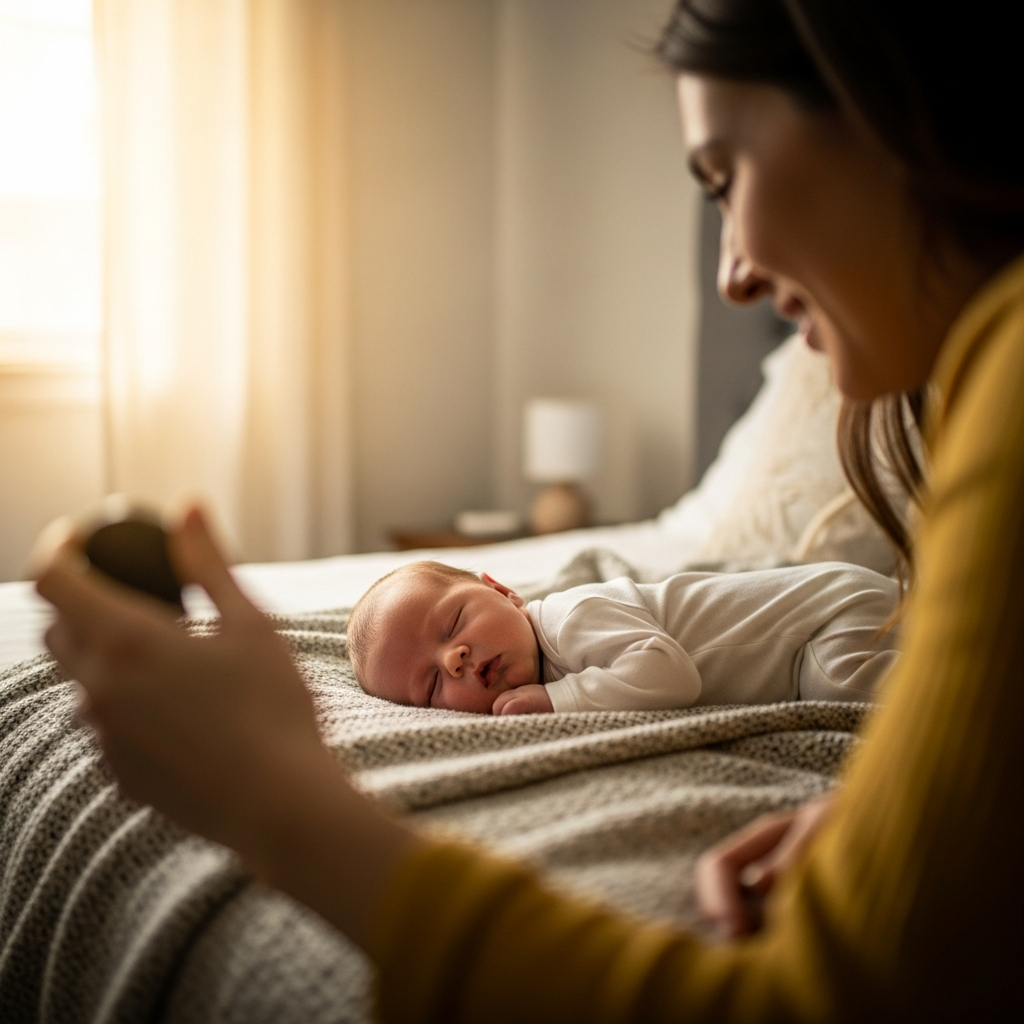
The single most important element in DIY newborn photography is natural window light. Soft, diffused daylight creates the warm, even glow you see in professional newborn portraits -- and it is completely free.
Here is how to set up lighting for newborn photos at home:
- Find a large window -- ideally north-facing or shaded -- that lets in plenty of light without direct sunbeams. Direct sunlight creates harsh shadows across baby's delicate skin.
- Position baby at a 45-degree angle to the window so the light falls gently across one side of their face. This creates subtle, flattering dimension.
- Pull sheer curtains over bright windows to diffuse the light. Even a white bedsheet hung over the window works in a pinch.
- Turn off all overhead and lamp lighting. Mixing artificial and natural light creates unflattering color casts. You want window light only.
Your best room options: the master bedroom gives you a large bed as a posing surface, the nursery adds sentimental context for lifestyle shots, and the living room typically offers the biggest windows. Walk through your home in the morning and note which rooms glow with soft, indirect light. That is your studio.
Simple DIY Backdrops and Posing Surfaces
Professional-looking backdrops cost nothing when you use what you already own. The simplest photo backdrop at home is a plain white or cream fitted sheet stretched tightly over a flat surface. Tape the edges underneath to eliminate wrinkles -- bunched fabric distracts the camera and the eye.
For more visual depth, layer your textures: place a fluffy white comforter as a base, then drape a smooth muslin blanket on top. This creates the soft, billowy look trending in neutral-toned newborn photography. You can also use a beanbag or firm pillow beneath the top layer to create a gently curved posing surface that cradles baby naturally.
Simple props make a big difference too. A wicker basket lined with a soft blanket, a shallow wooden crate, or even a clean laundry basket draped in fabric can frame your baby beautifully. Keep it minimal -- the focus should always be on your newborn, not the props.
Room Temperature and White Noise for a Calm Baby
A comfortable baby is a cooperative baby. During a newborn photo session, you will likely be changing outfits, unwrapping swaddles, and occasionally exposing baby's skin. That means the room needs to be warmer than your typical thermostat setting.
Professional newborn photographers typically warm their studios to 75-80 degrees Fahrenheit. For context, the AAP recommends dressing babies appropriately for the room temperature and avoiding overheating, so monitor your baby closely for signs of being too warm such as sweating or a flushed chest. A small space heater can help you reach the right temperature without heating the entire house.
White noise is your other essential tool. Run a white noise machine or a free phone app at a steady volume to mimic the womb sounds that keep newborns calm. Feed baby fully right before you begin, have a pacifier within reach, and dim any supplemental lighting. Natural window light only -- no flash, no ceiling fixtures.
Best Time to Schedule Your DIY Newborn Photo Shoot
Timing can make or break your photo session. Getting it right involves two factors: your baby's age and the time of day.
The 5-to-14-Day Sweet Spot for Posed Newborn Photos
The ideal window for a newborn photo shoot at home is when baby is between 5 and 14 days old. During this brief period, babies sleep deeply and still naturally curl into those tucked, fetal poses that define classic newborn photography. Newborns sleep 16 to 17 hours a day according to Stanford Children's Health, which means plenty of opportunities for sleeping poses.
After about two to three weeks, babies become more alert, gassier, and less willing to stay in placed positions. Baby acne also typically appears around 2 weeks of age according to Cleveland Clinic, which can complicate close-up shots. If your baby has jaundice or medical needs that require attention first, delay without guilt. A healthy baby always comes before a photo session.
Missed the two-week window? Do not worry. Lifestyle-style photos -- where you capture natural moments of holding, feeding, and gazing at your baby -- work beautifully all the way through the first eight weeks and beyond.
Reading Your Baby's Mood and Choosing the Right Moment
The best time of day for newborn photography at home is mid-morning, typically between 9 and 11 AM. Natural light is brightest but still soft, and most babies have had a feeding and are settling into a sleepy stretch.
But here is the truth: your baby's schedule matters more than the clock. Only shoot when baby is fed, dry, and drowsy or sleeping. Never force a photo session on a fussy baby. If they are crying, stop. Feed, soothe, wait for the next sleep cycle, and try again. Plan to block two to three hours for the entire session, even though actual shooting time may total only 30 to 45 minutes. The rest is feeding, soothing, and patience. This is exactly how professional photographers work, too.
Set everything up -- backdrops, lighting, outfits -- before baby falls asleep. When those eyes close, you want to be ready to go immediately.
What to Dress Your Newborn in for Beautiful Home Photos
Here is something most newborn photography guides skip entirely: what your baby wears has a bigger impact on your photos than almost any other single factor. The right outfit keeps baby comfortable, reduces fussiness, and creates clean, timeless images that look professional. The wrong one? Wrinkled fabric, bunched seams, distracting patterns, and a crying baby who is done before you have started.
Think about it this way. You can have perfect lighting, a flawless backdrop, and a sleeping baby -- but if that baby is wearing a stiff, scratchy outfit covered in cartoon characters, the photo will never look polished. Let us walk through what actually works.
Why Soft Fabrics Like Bamboo Photograph Better Than You Think
Here is a tip that professional photographers know well: fabric texture and drape show up on camera. Stiff or scratchy materials bunch, wrinkle, and catch light unevenly. Soft fabrics like bamboo and organic cotton drape smoothly against baby's skin, creating clean lines and a polished look without any effort.
Bamboo fabric offers specific advantages for newborn photoshoots. Bamboo has natural thermoregulating properties thanks to micro gaps in the fibers that allow for superior moisture absorption and ventilation. In a warm 75-80 degree shoot environment, this keeps baby comfortable longer, which directly translates to more usable photos and fewer fussy interruptions.
Stick to neutral tones -- white, cream, oatmeal, sage, soft gray -- to keep the viewer's attention on your baby's face, not the outfit. Babies with sensitive skin or eczema stay particularly comfortable in hypoallergenic bamboo, which means longer shooting windows before anyone gets upset. A soft bamboo onesie or sleeper in white or cream creates that clean, timeless look trending in newborn photography right now. Browse breathable bamboo baby clothes for photo-ready options that keep baby comfortable throughout the session.
Coordinating Parent and Family Outfits for Newborn Photos
When you step into the frame for parent-baby shots, your outfit matters just as much. The goal is not matching -- it is cohesion. Think "same color family" rather than identical shirts.
- Wear solid colors in neutral or muted tones: whites, creams, soft grays, denim, and earth tones all work beautifully.
- Avoid bold logos, busy patterns, neon colors, or graphic tees -- they pull attention away from baby.
- Muted earth tones and soft whites photograph well alongside a neutrally dressed baby.
- If including siblings, dress them in complementary (not identical) outfits for a natural, cohesive look.
Planning coordinated family shots? Find adorable baby outfits in every style to complement your family's color palette without spending hours searching.
Swaddles, Wraps, and Blanket Styling Tips for Photos
Muslin wraps in neutral tones are the most versatile newborn photo accessory you can own. They serve triple duty as an outfit, a backdrop accent, and a posing aid.
Two simple wrap styles work for beginners:
- The classic snug swaddle: Wraps baby tightly with arms tucked in, leaving only the face visible. This captures the cozy, "fresh from the womb" look.
- The loose "peek-out" wrap: Wraps loosely around baby's torso, letting tiny hands and feet peek out. This shows more skin and personality.
Knit wraps add texture without overwhelming the frame. One important note: for photo purposes, keep wraps slightly looser than a typical sleep swaddle. A too-tight wrap looks constricting on camera and can be uncomfortable during extended posing sessions.

8 Safe and Easy Newborn Poses Any Parent Can Do at Home
This is the section you will want to bookmark for shoot day. These eight easy newborn poses for beginners are all parent-safe, require no special training, and produce beautiful results with just a phone and natural light. We have ordered them from simplest to most advanced so you can start with the easiest options and work your way up as you gain confidence.
A quick note before you begin: a sleeping baby is your best subject. Most of these poses work best during deep sleep, so time your posing attempts for when baby is in a settled, relaxed state. If they wake up or fuss, take a break. Feed, soothe, and try again on the next cycle.
Pose 1 -- The Back Pose Flat Lay (Your Simplest Starting Point)
Lay baby on their back on the prepared blanket surface. Gently arrange hands on tummy or loosely at sides. Shoot from directly above -- stand on a step stool for a true overhead angle. This is the safest pose because baby is on a flat surface at all times. A simple white onesie or bare skin with a draped blanket works beautifully here.
Pose 2 -- The Swaddled Sleep Pose
Swaddle baby snugly in a muslin or knit wrap, leaving the face fully visible. Place them on the posing surface with gentle side or overhead lighting. This captures that cozy, wrapped-up newborn look that parents love. Safety note: ensure the swaddle does not cover the nose or mouth, and keep fabric below chin level at all times.
Pose 3 -- The Side-Lying Curl
Gently roll a sleeping baby onto their side with knees tucked toward the chest. Support their back with a rolled-up towel hidden beneath the blanket. Place one tiny hand under their cheek for the classic sleeping pose. Your spotter must keep a hand near baby at all times. Never step away from this position.
Pose 4 -- The Parent Hands Close-Up
Cup baby's head gently in your palms, or cradle them in cupped hands. Shoot from above or at a slight angle to capture the stunning scale contrast between your hands and your tiny newborn. This pose emphasizes just how small they are, and it is inherently safe because you are actively holding baby the entire time.
Pose 5 -- The Cradle Hold with Mom or Dad
Sit near the window cradling baby in your arms, gazing down at their face. Have your partner or a tripod with self-timer capture the moment from the side. Focus on the genuine connection between parent and baby. For visual harmony, coordinate your sleeve color with baby's outfit -- both in soft neutrals creates a stunning cohesive look.
Pose 6 -- The Tummy Time Pose (With Active Spotter)
Place a sleeping baby on their tummy with arms tucked under the chest and head turned to one side. This creates the classic curled newborn look. This pose requires an active spotter with hands inches from baby at every moment. The AAP emphasizes babies should always be placed on their backs for sleep, so this is for supervised photo moments only. Never leave baby unattended in this position.
Pose 7 -- The Detail Shots: Tiny Hands, Feet, and Eyelashes
These are not full-body poses but close-up shots that tell a story. Use your phone's zoom or portrait mode to fill the frame with just tiny curled toes, wrinkled fingers, rosebud lips, or wispy hair. Place your wedding ring beside baby's hand or rest their foot against your palm for scale. Baby can remain in any comfortable, supported position for these shots.
Pose 8 -- The Lifestyle Family Candid
Forget about posing entirely. Simply hold, feed, or gaze at your baby as you naturally would. Have someone photograph the moment, or set up a phone tripod with a self-timer. Capture everyday scenes: a parent reading to baby, a sibling meeting their new brother or sister, baby yawning in the nursery, or a grandparent holding the baby for the first time. These unscripted moments often become the most treasured images in your entire collection. Lifestyle newborn photography at home is about capturing the real emotion of your family's first days together -- and those authentic moments age better than any perfectly posed shot ever could.
How to Take Stunning Newborn Photos with Your iPhone or Smartphone
Let us be honest: the vast majority of new parents will photograph their baby with a phone, not a DSLR. And that is perfectly fine. Modern smartphones are incredibly capable cameras. The phone already in your pocket can produce photos that rival studio portraits when you know how to use it properly. Here is how to take newborn photos at home with your iPhone or Android device, step by step.
Portrait Mode and Camera Settings for Newborn Photos
Portrait Mode creates a depth-of-field effect that keeps baby in sharp focus while softly blurring the background -- that dreamy, professional-looking "bokeh" you see in studio portraits. It works on both iPhones and Samsung Galaxy devices.
Essential camera settings for newborn photography at home:
- Enable Portrait Mode and position your phone 2-8 feet from baby for the best depth effect.
- Tap baby's face on the screen to lock focus. Then slide the exposure dial upward slightly for a bright, airy look.
- Turn off flash entirely. Always. Natural light only.
- Shoot in the highest resolution available and turn on HDR for balanced lighting in mixed-light situations.
- Use burst mode (hold the shutter button) to capture ten or more frames quickly and pick the sharpest one later.
Best Camera Angles That Flatter Newborns
The angle you choose changes the entire feel of the photo. Here are the four essential angles for newborn photography at home with your phone camera:
| Angle | Best For | How to Shoot |
|---|---|---|
| Overhead (bird's-eye view) | Flat lay and back poses | Stand directly above baby on a step stool |
| 45-degree angle | Most universally flattering angle | Shoot from slightly above baby's eye level |
| Side profile | Capturing nose slope, lips, eyelashes | Position at baby's head level from the side |
| Ultra close-up | Detail shots (hand, foot, ear) | Fill the entire frame with one feature |
One angle to avoid: shooting from below baby's chin. This angle is unflattering for newborns and creates an unnatural perspective.
Quick Tips for Sharper Photos Without a Tripod
- Brace your elbows firmly on the bed or floor while shooting to eliminate body sway.
- Use a 3-second self-timer so the shutter fires after your hand-press shake settles.
- Clean your phone lens with a soft cloth before every session -- fingerprints create a hazy, unfocused look that ruins otherwise perfect shots.
- Tap and hold the screen to lock both focus and exposure so they do not shift as you recompose the frame.
Do not forget short video clips. Tiny stretches, yawns, and the gentle rise and fall of a sleeping baby's chest make "living photos" that are priceless. Record 10-to-15-second clips throughout your session. These micro-moments -- a little fist uncurling, a sleepy smile, the way baby's eyelids flutter -- are almost impossible to time perfectly with a still photo but easy to catch on video. You can always pull a still frame from video later if you capture an amazing expression.
If you own an older phone without Portrait Mode, do not worry. Simply move closer to your subject and ensure the background is uncluttered. The closer you get, the more natural blur you create. Combined with good window light, even a basic smartphone can produce surprisingly professional-looking newborn photos.
Seasonal and Themed Newborn Photo Ideas You Can Create at Home
Your newborn photo shoot at home does not have to be a one-time event. Seasonal themes extend your photography throughout baby's first year, and they require surprisingly little effort. A single prop or color shift can completely transform the look and give you a reason to keep practicing your new skills month after month.
Many parents who start with a newborn session continue with monthly milestone photos. Documenting month one through twelve with a consistent style creates a beautiful visual story of your baby's growth. And once you have the setup skills from this guide, each subsequent shoot gets faster and easier.
Spring and Summer Newborn Photo Themes
- Spring: Pastel blankets, a few fresh flowers placed near (never on) baby, cherry blossom branches, or a tiny bunny ears headband for Easter-themed shots.
- Summer: Lightweight white outfits, a shaded outdoor porch or garden setting, and a bright, airy editing style. Think sunshine without the sun directly on baby.
- Color palettes: Soft greens, blush pinks, lavender, and sunny yellows. Lightweight bamboo or cotton outfits are ideal for warm-weather shoots because they prevent overheating.
Fall and Winter Cozy Newborn Photo Themes
- Fall: Warm earth tones -- rust, mustard, olive -- paired with knit blankets, tiny pumpkins, or a scattering of dried leaves around (not on) baby.
- Winter: Cozy knit wraps, fairy lights in the background only, holiday-themed props, or family-by-the-fireplace lifestyle shots.
- Color palettes: Deep greens, burgundy, cream, and warm browns. Heavier-weight sleepers and knit rompers suit cooler-season themes perfectly.
Gender-Neutral and Minimalist Newborn Photography Trends
The strongest trend in newborn photography right now is the move toward minimalism. Neutral backdrops in white, oatmeal, or sage. Minimal props. Total focus on baby and family connection. Gender-neutral color palettes -- creams, warm grays, muted greens, and soft browns -- produce the most timeless images that look just as beautiful in ten years as they do today. This aesthetic also works in your favor as a beginner, because fewer props means fewer things to coordinate and less clutter to distract from your subject.
If you plan to share your newborn photos on social media as a baby announcement, the minimalist approach photographs particularly well for Instagram and Pinterest. Clean backgrounds and simple styling translate beautifully to small screens and thumbnail previews.
For themed shoots and seasonal milestone photos, find photo-ready baby outfits in neutral tones, seasonal colors, and soft fabrics that suit any theme. Monthly milestone cards paired with coordinating outfits create a cohesive visual story of your baby's entire first year.
How to Edit Your Newborn Photos Like a Pro Using Free Apps
You have taken the photos. Now a few simple edits can transform a good picture into a frame-worthy one. The key word here is "simple." Over-editing newborn photos makes them look artificial and removes the authentic quality that makes these images so special. Your goal is to enhance, not transform. Think of editing as adjusting the seasoning on a dish -- a little goes a long way.
The good news is that you do not need to be a photo editing expert. If you can adjust a filter on a social media post, you have all the skills you need. These four free apps make newborn photo editing on your phone quick and intuitive, even at 2 AM between feedings.
Top Free Photo Editing Apps for Newborn Pictures
| App | Best For | Cost |
|---|---|---|
| Snapseed (Google) | Selective adjustments -- brighten just baby's face, blur background further | Free |
| Lightroom Mobile (Adobe) | Preset creation and consistent editing across your album | Free tier |
| VSCO | Soft, film-inspired looks popular in newborn photography | Free presets |
| Native Phone Editor | Quick brightness, warmth, and crop adjustments | Free (built-in) |
Many of these apps now include AI-powered editing features that can automatically clean up backgrounds and correct lighting with one tap -- helpful when you are editing at 2 AM with one hand.
Five Simple Edits That Transform Any Newborn Photo
- Brighten: Increase exposure or brightness by 15-25% for an airy, light feel. Newborn photos almost always benefit from being slightly brighter than your camera captured them.
- Warm Up: Shift the white balance slightly warm to add a golden, cozy tone to baby's skin. This also helps minimize the appearance of newborn redness or blotchiness.
- Soften: Reduce clarity or sharpness by 10-15% for a dreamy, soft-focus skin texture. This is the secret behind those ethereal newborn portraits.
- Crop and Straighten: Remove distracting edges -- visible cords, clutter, or uneven blanket edges. Straighten any tilted lines for a polished look.
- Vignette: Add a subtle dark edge around the frame to draw the viewer's eye toward the center, which is where baby should be.
Worried about baby acne or peeling skin? Gentle brightening and warmth adjustments naturally minimize these without heavy retouching. Resist the urge to use heavy skin-smoothing filters -- your newborn's real skin, even with a few blemishes, is part of the story.
One final tip: create a consistent editing "look" by saving your adjustments as a preset in Lightroom or VSCO. Apply it across your entire shoot for a cohesive album that feels intentional and professional.
Frequently Asked Questions About Newborn Photo Shoots at Home
What is the best age for a newborn photo shoot at home?
The ideal age is 5 to 14 days old. During this window, babies sleep deeply and naturally curl into classic newborn poses, making it easier to capture those iconic images. Newborn sleep cycles last 40 to 60 minutes according to the Sleep Foundation, giving you predictable windows for posed shots. After two weeks, babies become more alert and harder to pose. For relaxed, lifestyle-style photos, any time within the first eight weeks works well.
How do I take good newborn photos at home with my iPhone?
Use Portrait Mode with natural window light. Position baby facing the window at a 45-degree angle, tap the screen to focus on baby's eyes, and slide the exposure up slightly for a bright look. Turn off flash, shoot in burst mode to capture multiple frames, and brace your elbows on the surface to prevent blur. Clean your lens before every session.
What should a baby wear for a newborn photoshoot at home?
Dress your baby in simple, solid-colored outfits made from soft fabric like bamboo or organic cotton. White onesies, neutral-toned sleepers, and muslin wraps photograph beautifully and keep baby comfortable. Avoid outfits with bold patterns, stiff fabrics, or large logos that distract from baby's face. Soft bamboo baby clothes drape naturally and prevent fussiness during the session.
Is it safe to pose a newborn for photos at home without a photographer?
Yes, many poses are safe for parents to do at home -- back pose, swaddled sleep, side-lying with support, cradle hold, and detail shots. Always keep a second adult nearby as a safety spotter. Avoid the "froggy pose" or "chin on hands" pose seen on social media. These are composite images created by merging multiple shots in post-production, and they require professional training to execute safely.
How warm should the room be for a newborn photoshoot?
Set the room temperature to 75-80 degrees Fahrenheit (24-27 degrees Celsius) during the shoot. This is warmer than standard room temperature but necessary for baby's comfort, especially during outfit changes or when less clothing is worn. Use a space heater if needed and monitor baby's comfort throughout the session. Watch for sweating, flushed skin, or rapid breathing as signs of overheating.
Can I do a newborn photoshoot by myself without help?
You can capture many photos alone using a phone tripod with a self-timer or remote shutter. However, a second adult is strongly recommended as a safety spotter for any pose other than baby lying flat on their back. Solo parents can focus on flat lay shots, detail close-ups, and cradle-hold selfie-style photos, all of which are safe and beautiful without a spotter.
What props do I need for a DIY newborn photo shoot at home?
You need very little: a soft blanket or two for the backdrop, a muslin wrap or swaddle, and natural window light. Optional extras include a wicker basket lined with fabric, a knit bonnet, milestone cards, or a family heirloom item. Household items like a clean white bedsheet make an excellent free backdrop. You do not need to spend money on props to get professional-looking results.
How long does a home newborn photoshoot usually take?
Plan for two to three hours total, though actual shooting time is usually just 30 to 45 minutes. Most of the session involves feeding, soothing, and waiting for baby to fall asleep between poses. Patience is the most essential tool in your kit. Professional newborn photographers work on the same baby-led timeline, so do not feel discouraged if progress feels slow.
Your Beautiful Newborn Photos Start Right Here at Home
A stunning newborn photo shoot at home does not require expensive equipment, professional skills, or a studio. It requires three things: natural light from a window, a comfortable baby in soft clothing, and a parent with a phone and a little patience.
Remember the essentials. Natural light is your best friend. Baby's comfort drives photo quality. Simple poses and soft outfits produce the most timeless images. And those tiny imperfections -- a yawn mid-shot, a little fist curling around your finger, a milk-drunk smile -- those are the moments you will reach for again and again in the years ahead.
Do not wait for perfect conditions. Your baby is changing every single day. The wrinkled nose, the curled toes, the way they tuck their knees to their chest -- all of it is disappearing faster than you think. Pick up your phone, find a window, lay down a blanket, and start shooting. You will be amazed at what you can create.
Ready to capture your baby's first days? Start by choosing a simple, soft outfit that keeps baby comfortable and looks beautiful on camera. Explore PatPat's baby clothes collection for photo-ready newborn outfits in gentle fabrics and timeless neutral tones. For the softest, most camera-friendly option, try bamboo baby clothes -- naturally temperature-regulating, hypoallergenic, and designed to drape beautifully in every photo.
We would love to see your DIY newborn photos at home. Share your baby photoshoot at home ideas and tag PatPat -- because every baby deserves to have their first days remembered.


