


The baby just spit up on the couch cushion. Your toddler decided the cracker box looked better upside down -- on the carpet. The sink is piled with bottles, and there is a mysterious stain on your shirt you do not remember getting. It is only 9 AM.
Sound familiar? If you are wondering how to keep your house clean with a baby and toddler, you are far from alone. Nearly every parent of young children hits this wall. And here is the truth no one puts on Instagram: having a messy house with kids is completely normal. It does not mean you are failing. It means you are raising tiny humans hardwired to explore, experiment, and scatter everything in their path.
But "normal" does not mean you have to live in chaos. Whether you are a stay-at-home parent, a working mom or dad, or juggling two under two, there are realistic strategies that work. This guide from PatPat covers daily and weekly cleaning routines, baby-safe products, laundry lifesavers, room-by-room strategies, and honest talk about mom guilt. Think of it as advice from a friend who has been through it and came out the other side, coffee in hand.
Why Keeping a Clean House With a Baby and Toddler Feels Impossible
Before we dive into solutions, let us talk about why keeping house clean with a baby feels so overwhelming. It is not just you. The challenge is built into the biology and development of your children -- and it shifts every few months.
The Developmental Stage Mess Timeline
Each phase of early childhood brings its own cleaning challenges. Understanding this helps you stop blaming yourself and start adapting.
- Newborn phase (0-5 months): Spit-up lands on everything. Diaper blowouts can ruin an outfit in seconds. Newborns typically need two to three outfit changes per day, and bottle parts seem to multiply overnight. The mess is constant and biological.
- Explorer phase (6-12 months): Baby food introduction creates entirely new stain categories -- hello, pureed carrots on the ceiling. Crawling means floor hygiene suddenly becomes urgent because everything goes straight into baby's mouth.
- Toddler tornado phase (12-36 months): Now your child is intentionally making messes. Food throwing, marker on walls, drawers emptied for fun, toy explosions in every room. They create new messes faster than you can clean old ones.
Each stage has different cleaning priorities. What worked last month may not work this month, and that is not a sign of failure -- it is a sign of growth.
Then there is the mental load. Research shows that mothers handle 71 percent of household mental load tasks, which includes noticing what needs doing, planning when to do it, and executing it all while keeping small humans alive and safe. Add social media comparisons showing spotless homes, and it is easy to feel like you are falling behind.
The good news? You do not need a perfectly clean house. You need a "clean enough" house -- one that is safe, hygienic, and functional. That is absolutely achievable.
Daily Cleaning Routine That Works Around Nap Times and Feedings
The secret to cleaning with a baby and toddler is not finding more time. It is building a three-phase daily system that fits around your unpredictable schedule. You are not deep cleaning every day -- just maintaining a baseline so things never spiral out of control.
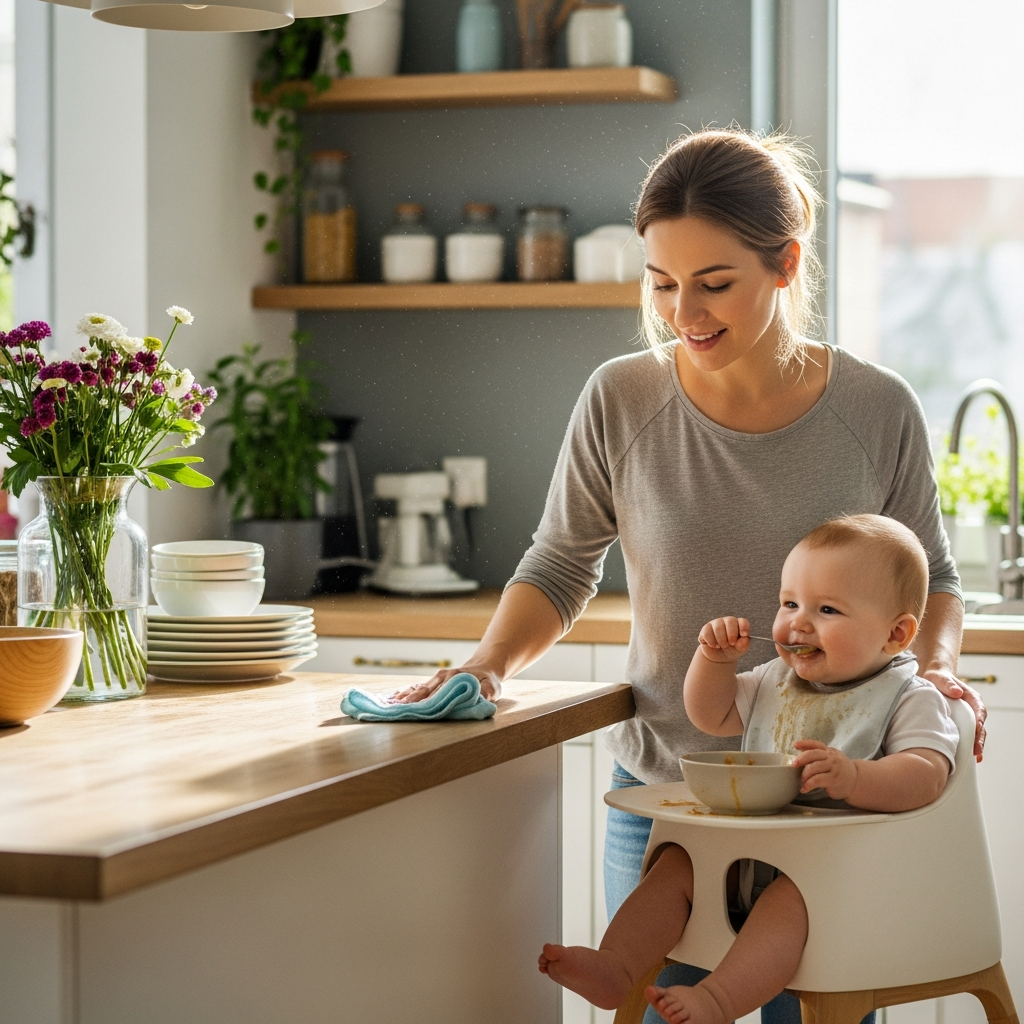
Morning Reset Routine (10 Minutes Before the Day Takes Over)
Start your day with a quick win. While your baby eats breakfast in the high chair or your toddler is happily contained with a morning activity, tackle these three things:
- Make the bed (2 minutes). Even just pulling up the comforter counts. A made bed instantly makes a bedroom look 80 percent tidier.
- Quick kitchen counter wipe and dishwasher unload (5 minutes). Clear the overnight clutter, wipe counters, and either load or unload the dishwasher.
- Start one load of laundry (3 minutes). Toss a load in the washer before you get pulled into the day's demands.
Why mornings matter: starting with a small, visible win creates momentum that carries through the day.
Nap Time Power Cleaning (15-20 Minutes, Not a Second More)
When baby goes down, resist the urge to tackle everything. Instead, pick ONE focus area per nap:
- Set a timer for 15 minutes and work in one direction around one room.
- Use the 15-minute rule: if a task takes less than 15 minutes, do it now. If it takes more, schedule it for another day.
- Avoid nap-time traps: do not start reorganizing closets, deep scrubbing grout, or scrolling cleaning TikToks instead of actually cleaning.
And here is the important part: some nap times are for you, not for chores. If you are sleep-deprived, rest always wins. Try alternating -- one nap for speed cleaning, the next for rest or something you enjoy.
Evening Closing Shift Routine for Parents (10-15 Minutes After Bedtime)
The "closing shift" cleaning method works perfectly for parents. Think of bedtime like closing a restaurant -- you would not leave the kitchen a mess for the morning crew.
- Load the dishwasher and wipe counters.
- Do a quick "one bin sweep" of the living room: everything goes into one basket. Sort it later (or never -- honestly, it is fine).
- Spot-sweep the kitchen floor for crumbs.
- Lay out tomorrow's outfits for your kids and yourself.
- Quick living room reset: fluff pillows, fold throws, clear surfaces.
The payoff: you wake up to a reset home, which dramatically reduces morning overwhelm.
Weekly Cleaning Schedule for Busy Moms With Babies and Toddlers
Your daily routine handles maintenance. Bigger tasks need a weekly framework that spreads work across the week so no single day feels crushing.
The One-Room-a-Day System That Prevents Overwhelm
| Day | Focus Area | Key Tasks |
|---|---|---|
| Monday | Kitchen | Wipe appliances, check fridge for expired items, mop floor |
| Tuesday | Bathrooms | Scrub toilets, clean sinks, wipe mirrors, quick tub scrub |
| Wednesday | Living Areas | Vacuum, dust surfaces, organize play zones |
| Thursday | Bedrooms & Nursery | Change sheets, organize baby items, wipe surfaces |
| Friday | Laundry & Floors | Full laundry cycle, vacuum/mop high-traffic areas |
| Saturday-Sunday | Flex Days | Catch up on anything missed -- or take the weekend off entirely |
Golden rule: if a day goes sideways -- teething, no sleep, zero energy -- skip it without guilt. The schedule will be there next week.
How Stay-at-Home Moms and Working Parents Adapt This Schedule
A SAHM cleaning schedule looks different from a working parent's routine. Adapt to your reality:
- Stay-at-home parents: Pair each room with a specific nap time or independent play period. Break tasks into micro-sessions of 10 to 15 minutes.
- Working parents: Focus on 15 minutes after bedtime and one weekend deep-clean session. Outsource or delegate what you can.
- Two-parent households: Divide rooms between partners. One handles bedtime while the other tackles the closing shift.
- Single parents: Lower the bar further. Focus on kitchen and bathroom hygiene. Everything else is bonus.
Room-by-Room Cleaning Guide for Homes With Babies and Toddlers
Each room has unique baby-and-toddler mess challenges. Here are targeted strategies for the biggest problem areas.

Kitchen -- Conquering High Chair Chaos and Mealtime Mess
The kitchen is ground zero for toddler mealtime mess:
- High chair hack: Wipe the tray immediately after each meal. Deep clean weekly with a baking soda paste.
- Splat mat strategy: Place a silicone splat mat under the high chair. After meals, shake it off outside or into the trash. This alone can eliminate daily mopping.
- Sink system: Rinse bottles and sippy cups immediately after use. Run the dishwasher every night -- even if it is not full.
- Counter rule: Keep counters clear by designating one "baby station" with all feeding supplies grouped together.
- Mealtime clothing tip: Dress your baby in easy-care baby clothes designed for real life during mealtimes. Fabrics that release food stains easily and handle frequent washing save you from turning every meal into a wardrobe change.
As for toddler food throwing, cover the floor, try suction-bottom plates, and remind yourself that some mess is developmentally normal.
Living Room -- Taming the Toy Clutter Explosion
- Toy rotation system: Keep only eight to ten toys accessible. Store the rest and rotate every one to two weeks. Fewer toys means less cleanup.
- The one-bin nightly sweep: Sweep all toys into one large bin each evening. Sort later if you feel like it. Under three minutes.
- Play zone boundaries: Use a rug or play mat to define where toys live. Teach your toddler that toys stay on the mat.
- Surface rule: Clear coffee tables of anything you do not want destroyed. If it is within reach, it is fair game.
Nursery and Bedrooms -- Keeping Sleep Spaces Clean and Safe
- Wipe the changing pad after every use. Change crib sheets weekly, and keep a spare fitted sheet ready so you can swap quickly during midnight blowouts.
- Organize the diaper station so everything is within arm's reach: diapers, wipes, cream, a trash can with a lid, and disinfecting wipes.
- Keep only current-size clothes accessible. Store outgrown items immediately to prevent closet chaos.
- The two things that make a bedroom feel clean: make the bed and clear the floor. That is it.
Bathroom -- Baby Bath Area and Diaper Cleanup Made Simple
- Bath toy management: Drain and store bath toys in a mesh bag that hangs to air dry. This prevents mold buildup.
- Two-minute daily wipe: Toilet seat, sink, and counter. Under two minutes, and the bathroom stays guest-ready.
- Diaper pail odor control: Sprinkle baking soda in the bottom, empty every other day, and clean the pail itself weekly.
- Baby-proof cleaning supply storage: All products should be locked in a cabinet or stored on a high shelf. Curious toddlers and chemical cleaners are a dangerous combination.
Baby-Safe Cleaning Products Every Parent Should Know About
When your baby crawls across the floor putting everything in their mouth, what you clean with matters as much as how often you clean. The EPA found that indoor pollutant concentrations are often two to five times higher than outdoor levels, with cleaning products being a major contributor.
DIY Non-Toxic Cleaning Solutions You Can Make in Minutes
You do not need expensive products. These DIY recipes work on most surfaces:
- All-purpose spray: Equal parts white vinegar and water in a spray bottle. Add a few drops of lemon essential oil if you want a fresh scent.
- Floor cleaner: Warm water with a splash of white vinegar. Safe for tile, laminate, and sealed hardwood.
- Glass cleaner: Water, white vinegar, and a small amount of rubbing alcohol.
- Scrubbing paste: Baking soda mixed with a little water. Perfect for sinks, tubs, and high chair trays.
Important: Never mix vinegar and baking soda together -- they neutralize each other. Use them sequentially instead. And the cost benefit is real: DIY cleaners cost pennies per batch.
Store-Bought Non-Toxic Cleaners Safe for Homes With Babies
For ready-made options, look for these label indicators:
- EPA Safer Choice certification
- EWG Verified mark
- Fragrance-free formulation -- the American Lung Association warns that VOCs and other chemicals released from cleaning supplies contribute to chronic respiratory problems
Products to avoid around babies: Chlorine bleach in baby-accessible areas, aerosol sprays, anything with "fragrance" listed as a vague ingredient, and ammonia-based cleaners.
Smart tool tip: A HEPA-filter vacuum traps allergens instead of recirculating them -- critical for crawling babies. Robot vacuums are great for daily maintenance, but clear small toys and keep baby fingers safe before running one.
How to Conquer Laundry Overload With a Baby and Toddler
Ask any parent what household task multiplied most after having kids, and the answer is laundry. The pile never seems to shrink.
Why Baby and Toddler Laundry Piles Up So Fast (And How to Break the Cycle)
Babies need multiple outfit changes daily. Add bibs, burp cloths, bedding, and your own spit-up-stained clothes, and the loads multiply fast. Breaking the cycle starts with two strategies: reducing outfit changes AND making each load more efficient.
- Sort less: Wash all baby clothes together on a gentle cold cycle. Most baby clothes are pastels and brights that do fine together.
- One-load-a-day habit: Running one small load daily prevents the dreaded weekend laundry avalanche.
- Fold less: Baby socks and onesies do not need to be folded into perfect squares. Toss them into a drawer or bin by category. Done.
Choosing Baby Clothes That Reduce Your Laundry Burden
Here is what most cleaning guides miss: the fabric of your baby's clothes directly impacts how much laundry you do.
- Bamboo fabric advantage: Bamboo baby clothes are naturally moisture-wicking, which means they stay fresher between washes. For families trying to reduce laundry while keeping baby comfortable, naturally antibacterial bamboo baby clothing can make a noticeable difference in how often you need to run the washer.
- Color strategy: Dark colors and prints hide stains better than all-white outfits. Choose practical over Pinterest-perfect.
- Capsule wardrobe approach: Twelve to fifteen versatile pieces that mix and match reduce both decision fatigue and laundry volume.
- Quality over quantity: Investing in durable baby outfits designed for the realities of daily life actually saves money and time compared to replacing cheap clothes that fall apart after a few washes.
- Fewer changes needed: Choose fabrics and styles that can survive a minor drool incident without requiring a full wardrobe change.
Quick Stain Removal Reference for Common Baby and Toddler Messes
| Stain Type | Treatment | Key Rule |
|---|---|---|
| Formula/breast milk | Cold water rinse, enzyme cleaner | NEVER use hot water (sets protein stains) |
| Baby food purees (carrots, sweet potato) | Dish soap first, then sunlight | Beta-carotene is oil-soluble; soap breaks it down |
| Berry stains | Cold water flush, white vinegar soak | Treat immediately for best results |
| Diaper blowout | Scrape solids, cold soak with enzyme cleaner | Wash on hottest safe setting |
| Mud and grass | Let dry completely, brush off, pre-treat with dish soap | Do not rub wet mud -- it spreads |
Universal stain rule: Cold water first, treat before washing, and never put a stained item in the dryer. Heat sets stains permanently.
Letting Go of Mom Guilt About a Messy House With Kids
All the cleaning tips in the world will not help if you are drowning in guilt every time you see a toy on the floor. Mom guilt about a messy house is real, and it deserves to be addressed head-on.
Redefining "Clean Enough" When You Have Little Kids
The concept of "good enough housekeeping" is not about giving up. It is about redefining what matters. A home that is hygienic, functional, and safe for your children IS clean enough.
Here is the minimum viable clean checklist:
- Dishes done (or at least in the dishwasher)
- Laundry not overflowing
- Bathroom sanitary
- Floors safe for crawling
Everything beyond that? Bonus. Your baby does not care about streak-free windows. They care that you are present and calm. Reframe your thinking from "I should clean" to "What does my family actually need right now?" Sometimes it is mopping. Sometimes it is reading a book together.
Getting Toddlers Involved in Age-Appropriate Cleanup Tasks
One effective way to manage both mess and guilt: involve your toddler. Research suggests including chores as early as age three builds self-esteem and frustration tolerance. Here is what toddlers can do:
- 18 months: Put toys in a bin when you point and demonstrate. Make it a game with a fun cleanup song.
- 2 years: Help wipe surfaces with a wet cloth, put dirty clothes in a hamper, and "sweep" with a child-sized broom.
- 2.5-3 years: Sort laundry by color, help set the table with unbreakable items, water plants.
Keep expectations realistic. Toddler "help" often creates more mess short term. The goal is building the habit, not achieving a spotless result.
When the Mess Feels Like More Than Just a Mess
If cleaning overwhelm pairs with persistent sadness or inability to enjoy anything, it may signal something deeper. NPR reports that parental burnout is a growing concern. Practical steps:
- Talk to your partner about redistributing the household load.
- Ask a friend or family member for specific help: "Can you watch the baby for an hour while I catch up?"
- Consider a periodic cleaning service if budget allows -- even once a month can be transformative.
- Speaking with a healthcare provider is always a valid option if the overwhelm feels unmanageable.
You are not weak for needing support. You are self-aware. And that is a strength.
Frequently Asked Questions About Keeping a Clean House With Babies and Toddlers
How do you keep your house clean with a baby?
Focus on three daily resets: a 10-minute morning tidy, a 15-minute nap time power clean targeting one area, and a 10-minute evening closing shift. Keep cleaning supplies in every room for quick spot cleaning. Accept that "clean enough" is the goal -- a safe, hygienic home where you can find what you need.
How often should you clean your house with a newborn?
Focus on daily kitchen hygiene (dishes, counter wipes, bottle cleaning) and weekly bathroom sanitizing. Floors should be swept or vacuumed every few days, especially once baby starts crawling. Deep cleaning can wait. In the newborn phase, rest takes priority over a spotless house.
Is it normal to have a messy house with a toddler?
Absolutely. Toddlers are developmentally wired to explore, dump, scatter, and disassemble. A messy house with a toddler is a sign of healthy development, not poor housekeeping. Focus on safety and basic hygiene rather than perfection. Every parent of a toddler deals with this.
What cleaning products are safe to use around babies?
Choose plant-based, fragrance-free cleaners with EPA Safer Choice or EWG Verified labels. White vinegar and water works for most surfaces. Avoid chlorine bleach, ammonia, and aerosol sprays in areas where babies crawl or play. Always store all cleaning products in locked cabinets out of reach.
Should I clean or rest when the baby naps?
Alternate. Designate some nap times for a 15-minute speed clean and others purely for rest, a shower, or something you enjoy. If you are sleep-deprived, rest always wins. A sustainable approach is cleaning during one nap and resting during another.
How do you get baby food stains out of clothes?
Act fast: scrape off solids, rinse with cold water (never hot), and apply dish soap or enzyme cleaner directly to the stain. Let it sit for 10 minutes, then wash on cold. For set-in stains, soak overnight in oxygen bleach solution. Choosing stain-resistant fabrics also reduces the problem.
How do I get my toddler to help clean up?
Start small and make it a game. Sing a cleanup song, use a timer challenge, or turn tidying into a sorting activity. Give specific, simple instructions like "put the blocks in the blue bin." Praise effort over results. Toddlers can start helping around 18 months with guidance and patience.
How do stay-at-home moms keep the house clean?
Most SAHMs use a combination of daily micro-routines (morning reset, nap time power clean, evening tidy), a weekly one-room-per-day schedule, and realistic expectations. The key is building sustainable systems rather than trying to do everything at once. Flexibility is critical since no two days are the same.
You Are Doing Better Than You Think
Learning how to keep your house clean with a baby and toddler is not about achieving perfection. It is about building simple, flexible systems that keep your home safe, functional, and reasonably tidy -- without sacrificing your sanity or your time with your little ones.
Here is what actually works: daily three-phase resets taking under 35 minutes total, a weekly one-room-a-day schedule, room-by-room strategies, baby-safe cleaning products, smart clothing choices that reduce your laundry load, and the permission to define "clean enough" on your own terms.
The messes are temporary. The cracker crumbs and toy explosions will not last forever. But the memories you are making with your little ones during these wild, exhausting years? Those are permanent.
Pick one strategy from this guide and try it this week. Just one. And remember: a home full of love, laughter, and a few crumbs on the floor is not a messy house. It is a lived-in one.
For more mom-tested parenting tips and easy-care baby essentials that simplify your daily routine, explore PatPat for baby clothes and gear designed with real family life in mind.


