


You are home from the hospital after a cesarean delivery, starving but unsure what is safe to eat. And that gas pain? It might actually feel worse than the incision itself. Roughly 1 in 3 births in the United States is a cesarean delivery, yet most postpartum nutrition advice treats all deliveries the same. A c-section recovery diet requires a fundamentally different approach because you are healing from major abdominal surgery while feeding a newborn — often with limited mobility and one free hand.
This guide from PatPat goes beyond generic food lists. You will find 12 original recipes with per-serving nutritional breakdowns, organized into a phased timeline addressing what to eat after a c-section for real recovery: gas-reducing meals, one-handed snacks, bone broth variations, and dual-purpose recipes that support both wound healing and milk supply. Let us start with why cesarean recovery demands specific nutrients.
Essential Nutrients: Why C-Section Recovery Demands a Different Diet
How Abdominal Surgery Changes Your Nutritional Needs
A cesarean delivery involves cutting and repairing seven distinct tissue layers. That level of tissue repair demands elevated protein, vitamin C, and zinc. Research confirms that proteins facilitate tissue growth and repair, and post-surgical healing requires significantly more than your baseline intake.
Blood loss during a cesarean averages 500–1,000 mL — significantly higher than vaginal delivery — increasing iron requirements. Meanwhile, anesthesia slows bowel motility, and during surgery the bowel is physically moved aside, introducing trapped air. This is why gas pain after c-section can radiate to your shoulder. Prophylactic antibiotics also disrupt gut flora, though research shows probiotic supplementation can restore normal microbiota composition.
The Five Recovery Nutrients Every C-Section Mom Needs Daily
| Nutrient | Daily Target | Top Food Sources | Why It Matters for C-Section |
|---|---|---|---|
| Protein | 70–100g | Eggs, chicken, fish, Greek yogurt, lentils | Provides amino acids for collagen synthesis and tissue repair |
| Iron | 18–27mg | Beef, spinach, lentils, fortified cereals | Replaces surgical blood loss, prevents postpartum anemia |
| Vitamin C | 85–120mg | Bell peppers, citrus, strawberries, broccoli | Required for collagen cross-linking; doubles iron absorption |
| Zinc | 11–12mg | Beef, pumpkin seeds, lentils, yogurt | Supports immune function and cell division at incision site |
| Probiotics | Daily servings (week 2+) | Plain yogurt, kefir, miso, sauerkraut | Rebuilds gut flora disrupted by surgical antibiotics |
Vitamin C functions as a cofactor for enzymes that stabilize collagen structure, which is why pairing iron-rich foods with vitamin C in the same meal is one of the most effective cesarean recovery strategies.
Week-by-Week C-Section Recovery Meal Plan with Recipes
Days 1–3 in the Hospital: Clear Liquids to Soft Foods
Your first day post-surgery typically means clear liquids only — water, clear broth, apple juice, and herbal tea. The critical milestone? Passing gas, which signals that your bowel is waking up. Once that happens (usually day 1–2), you can begin advancing to soft foods.
Recipe 1: Golden Ginger Recovery Broth
Prep Time: 5 minutes | Cook Time: 15 minutes | Serves: 2
Ingredients: 2 cups low-sodium chicken broth, 1 inch fresh ginger (sliced), 1 tsp turmeric, pinch of black pepper, squeeze of lemon
Instructions: Simmer ginger and turmeric in broth for 15 minutes. Strain, add lemon juice, and serve warm.
Why this works: Ginger reduces post-surgical nausea, turmeric is anti-inflammatory, and clear broth is safe for day-1 bowel recovery. Prepare in advance and bring to the hospital in a thermos.
Week 1 at Home: Gentle, Gas-Free Recovery Meals
Your first week diet after c-section should focus on soft, low-fiber foods that support healing without triggering gas. Avoid raw vegetables, cruciferous vegetables (broccoli, cauliflower, cabbage), beans, carbonated drinks, and spicy food during this phase. Stick with cooked carrots, zucchini, sweet potato, lean protein, white rice, bananas, and eggs.
Recipe 2: Slow-Cooker Chicken and Sweet Potato Stew
Prep Time: 10 minutes | Cook Time: 6–8 hours (slow cooker) | Serves: 6
Ingredients: 1 lb boneless skinless chicken thighs, 2 sweet potatoes (cubed), 2 carrots (sliced), 4 cups low-sodium chicken broth, 1 tsp thyme, 1 tsp garlic powder, salt to taste
Instructions: Place all ingredients in slow cooker. Cook on low for 6–8 hours. Shred chicken with two forks before serving.
Why this works: High protein for tissue repair, sweet potato provides beta-carotene for skin healing, minimal gas risk, and eaten one-handed from a bowl.
Recipe 3: Scrambled Eggs with Wilted Spinach and Avocado
Prep Time: 3 minutes | Cook Time: 5 minutes | Serves: 1
Ingredients: 2 large eggs, 1 cup baby spinach, 1/4 avocado (sliced), 1 tsp olive oil, salt and pepper
Instructions: Wilt spinach in olive oil for 2 minutes. Scramble eggs in same pan. Top with avocado slices.
Why this works: Protein and choline from eggs, iron from spinach, healthy fats from avocado. Ready in under 10 minutes.
Weeks 2–3: Introducing Fiber and Rebuilding Gut Health
Now you can gradually increase fiber toward 20g daily by the end of week 3. Introduce one new higher-fiber food every 2–3 days to monitor gas response. Begin fermented foods — start with 2 tablespoons of plain yogurt or kefir. Between 15% and 61% of postpartum women experience constipation, so getting fiber right during this phase is essential.
Recipe 4: Gut-Healing Miso Salmon Bowl
Prep Time: 10 minutes | Cook Time: 12 minutes | Serves: 1
Ingredients: 4 oz salmon fillet, 1 tbsp white miso paste, 1/2 cup cooked brown rice, 1/2 cup steamed broccoli, 1/4 avocado, 1 tsp sesame seeds, 1 tsp soy sauce
Instructions: Glaze salmon with miso paste. Bake at 400°F for 12 minutes. Assemble bowl with rice, broccoli, avocado, and sesame seeds.
Why this works: Combines wound healing (protein, zinc, omega-3) with gut restoration (miso) in one bowl.
Recipe 5: Overnight Oats with Kefir and Berries
Prep Time: 5 minutes | Cook Time: None (refrigerate overnight) | Serves: 1
Ingredients: 1/2 cup rolled oats, 1/2 cup plain kefir, 1/4 cup blueberries, 1 tbsp chia seeds, 1 tbsp honey, 1/4 tsp cinnamon
Instructions: Combine all ingredients in a jar. Refrigerate overnight. Eat cold or warmed.
Why this works: Zero cooking required. Prebiotic oats feed beneficial gut bacteria while kefir provides live probiotics.
Weeks 4–6: Full Nutrition for Advanced Recovery
By now, most dietary restrictions can be relaxed. Your fiber intake can reach the standard 25–28g daily. Reintroduce beans and legumes in small portions, bring back raw salads, and shift your focus from basic healing to energy restoration and hormonal balance.
Recipe 6: Lentil and Roasted Vegetable Power Bowl
Prep Time: 10 minutes | Cook Time: 20 minutes | Serves: 1
Ingredients: 1/2 cup cooked green lentils, 1 cup roasted vegetables (bell pepper, zucchini, red onion), 2 cups mixed greens, 2 tbsp tahini dressing, 1/4 cup feta cheese, squeeze of lemon
Instructions: Roast vegetables at 425°F for 20 minutes. Assemble bowl with lentils, greens, feta, and tahini-lemon drizzle.
Why this works: Legumes safely reintroduced. Iron-rich lentils paired with vitamin C from bell pepper maximize absorption.

One-Handed Snacks and Minimal-Effort Meals for New Moms
After a c-section, you will eat many meals one-handed while nursing or holding your baby. These easy meals after c-section are designed for limited mobility and minimal prep time.
Bedside Snack Station: What to Keep Within Reach
Set up a basket or tray on your nightstand with these grab-and-go foods:
- Protein picks: Hard-boiled eggs (pre-peeled), string cheese, pre-portioned almonds, Greek yogurt cups, nut butter squeeze packets
- Hydration essentials: Large water bottle with straw (straws help you avoid abdominal strain from sitting up), herbal tea thermos, coconut water
- Energy sustainers: Bananas, apple slices with peanut butter, whole grain crackers with hummus
Recipe 7: No-Bake Postpartum Energy Bites
Prep Time: 15 minutes | Cook Time: None | Makes: 24 bites
Ingredients: 1 cup rolled oats, 1/2 cup peanut butter, 1/3 cup honey, 1/2 cup ground flaxseed, 1/4 cup mini chocolate chips, 1 tsp vanilla extract
Instructions: Mix all ingredients. Refrigerate 30 minutes. Roll into 1-inch balls. Store in fridge for up to 2 weeks.
Why this works: Eaten one-handed, no cooking or utensils required. The batch lasts two weeks. Flaxseed provides gentle fiber and omega-3, while oats support milk supply.
Five-Minute Meals You Can Make While Holding a Baby
These simple meals after cesarean need five minutes or less and no heavy lifting:
- Microwave egg mug: 2 eggs, spinach, cheese — microwave 90 seconds (16g protein)
- Loaded yogurt bowl: Greek yogurt, granola, berries, honey (18g protein, zero cooking)
- Pre-made wrap: Whole wheat tortilla, deli turkey, hummus, lettuce (22g protein)
- Toast trio: Avocado + egg, ricotta + berries, or peanut butter + banana — each under 4 minutes
Recipe 8: Recovery Smoothie You Can Blend With One Hand
Prep Time: 3 minutes | Cook Time: None | Serves: 1
Ingredients: 1 cup frozen mango, 1/2 banana, 1 cup plain kefir, 1 tbsp collagen peptide powder, 1 handful fresh spinach, 1 tbsp ground flaxseed
Instructions: Add all to blender. Blend 60 seconds. Pour into tumbler with straw.
Why this works: Collagen peptides support scar tissue repair. Kefir restores gut bacteria. Mango and spinach provide the vitamin C and iron pairing.
Bone Broth and Healing Soup Recipes for Cesarean Recovery
Why Bone Broth Is Considered the Top Healing Food After Surgery
Bone broth for c-section recovery contains collagen, glycine, proline, and glutamine — amino acids that are building blocks for tissue repair. It soothes the gut and promotes bowel motility without fiber burden, making it safe from day 1. The Cleveland Clinic recommends nutrient-dense, protein-rich foods to support surgical recovery.
Recipe 9: Classic Slow-Cooker Bone Broth (24-Hour)
Prep Time: 10 minutes | Cook Time: 24 hours (slow cooker) | Yield: ~8 cups
Ingredients: 2 lbs beef or chicken bones (roasted), 2 tbsp apple cider vinegar, 1 onion (quartered), 2 carrots, 3 celery stalks, 2 garlic cloves, 1 bay leaf, water to cover, salt
Instructions: Roast bones at 400°F for 30 minutes. Place in slow cooker with remaining ingredients. Cook on low for 24 hours. Strain through fine mesh sieve.
Partner prep note: This is an ideal pre-c-section prep item. Make 2–3 batches and freeze in 1-cup portions using silicone muffin molds or mason jars before the delivery date. Freezes well for up to 3 months.
Recipe 10: Anti-Inflammatory Turmeric Chicken Soup
Prep Time: 10 minutes | Cook Time: 15 minutes | Serves: 4
Ingredients: 6 cups bone broth, 1 lb chicken breast (pre-cooked and shredded), 2 carrots (diced), 2 celery stalks (diced), 1 inch ginger (grated), 1 tsp turmeric, 1/2 cup cooked rice, juice of 1 lemon, fresh parsley
Instructions: Simmer vegetables in broth for 10 minutes. Add shredded chicken, ginger, turmeric, and rice. Cook 5 more minutes. Finish with lemon juice and parsley.
Why this works: Combines bone broth collagen with lean protein and anti-inflammatory spices. Lemon enhances iron absorption.
Budget-Friendly Broth Tips
- Use a whole rotisserie chicken carcass — eat the meat for dinner, simmer the bones overnight for broth (~$1 for 8 cups)
- Request beef marrow bones from the butcher counter (often $2–3 per pound, sometimes free)
- Freeze broth flat in zip-lock bags to save freezer space
C-Section Recovery Diet While Breastfeeding: Dual-Purpose Recipes
Nutrients That Support Both Wound Healing and Milk Production
Breastfeeding after cesarean delivery means you need foods that serve double duty. Protein repairs tissue and synthesizes milk protein. Iron prevents fatigue that undermines supply. Omega-3 DHA reduces incision inflammation while transferring to breast milk for brain development. Add 300–500 extra calories daily — this is not the time for restriction.
Galactagogue foods with healing benefits include oats (beta-glucan plus supply boost), flaxseed (omega-3 plus gentle fiber), brewer's yeast (B vitamins for energy), and fennel (digestive soothing plus lactation support).
Recipe 11: Lactation-Boosting Oat and Flaxseed Banana Bread
Prep Time: 10 minutes | Cook Time: 35–40 minutes | Makes: 10 slices
Ingredients: 3 ripe bananas (mashed), 2 cups rolled oats, 2 eggs, 1/4 cup ground flaxseed, 2 tbsp brewer's yeast, 1/4 cup honey, 1/4 cup melted coconut oil, 1 tsp vanilla, 1 tsp baking soda, 1/2 tsp cinnamon, pinch of salt
Instructions: Mash bananas. Mix all ingredients. Pour into greased loaf pan. Bake at 350°F for 35–40 minutes until a toothpick comes out clean.
Why this works: Three galactagogue ingredients per slice plus recovery-supportive protein and iron. Slice and freeze for one-handed eating.
Recipe 12: Salmon, Oat, and Veggie Lactation Bowl
Prep Time: 10 minutes | Cook Time: 15 minutes | Serves: 1
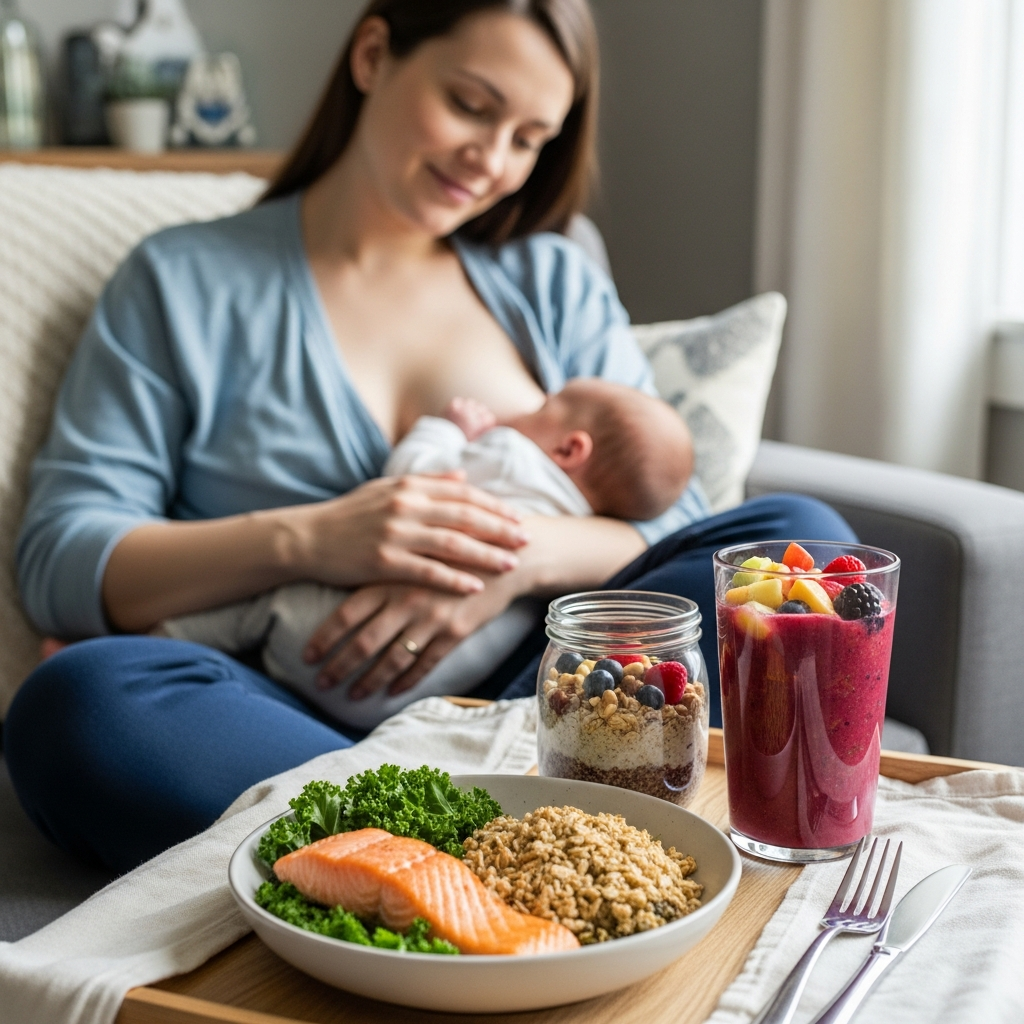
Ingredients: 4 oz baked salmon, 1/2 cup savory oats (cooked in broth instead of water), 1/2 cup roasted sweet potato, 1 cup sautéed kale, 1/4 avocado, 1 tsp sesame oil, soy sauce to taste
Instructions: Bake salmon at 400°F for 12 minutes. Cook oats in broth for 5 minutes. Assemble bowl with roasted sweet potato, sautéed kale, avocado, and sesame oil.
Why this works: Addresses wound healing, milk supply, and energy needs in a single nutrient-dense meal.
Freezer Meal Prep and Budget-Friendly Recovery Nutrition
Pre-Surgery Kitchen Prep Checklist for Partners
If your c-section is scheduled, your partner can use this meal prep before c-section timeline:
- Two weeks before: Freeze 3–4 batches of bone broth, 2 batches of soup, 1 batch of energy bites
- One week before: Stock pantry staples — oats, rice, canned beans, nut butters, canned salmon
- Three days before: Fresh items: eggs, yogurt, bananas, spinach, avocados, lemons, ginger
- Day before: Prep overnight oats, hard-boil eggs, set up the bedside snack station
Key principle: The recovering mom should not be cooking. Partners and friends rotate through these recipes.
Budget-Friendly Recovery Meals Under $75 Per Week
Recovery nutrition does not have to be expensive. Affordable protein sources ranked by cost per 20g protein:
| Protein Source | Cost Per 20g Protein | Best Recipe Use |
|---|---|---|
| Canned beans | ~$0.25 | Lentil power bowl (Recipe 6) |
| Eggs | ~$0.30 | Scrambled eggs (Recipe 3) |
| Tofu | ~$0.45 | Stir-fry bowls, smoothies |
| Greek yogurt | ~$0.60 | Loaded yogurt bowls, overnight oats |
| Chicken thighs | ~$0.65 | Chicken stew (Recipe 2), bone broth |
| Canned salmon | ~$1.20 | Salmon bowls, salmon patties |
Budget broth strategy: buy a rotisserie chicken for dinner, then simmer the carcass overnight for roughly $1.00 per 8 cups. Use frozen spinach and berries instead of fresh at half the price.
Foods to Avoid After Cesarean Delivery and When to Safely Reintroduce Them
Most advice tells you what not to eat after c-section but never when those foods become safe again. Here is your food-by-food reintroduction guide:
Gas-Triggering Foods: Avoidance and Reintroduction Timeline
| Food Category | Avoid During | Safe to Reintroduce | Reintroduction Tip |
|---|---|---|---|
| Raw cruciferous vegetables | Weeks 1–2 | Week 3 (steamed first) | Start with 1/4 cup steamed, wait 24 hours |
| Beans and lentils | Weeks 1–2 | Weeks 3–4 (small portions) | Begin with 2 tbsp, increase every 3 days |
| Carbonated beverages | Weeks 1–2 | Week 3 | CO₂ worsens post-surgical gas |
| Raw onion and garlic | Week 1 | Week 2 (cooked); raw after week 3 | Cooked versions are gentler |
| Dairy (large amounts) | Week 1 | Week 2 (gradually) | Start with yogurt; probiotics help |
| Spicy foods | Weeks 1–3 | Week 4 | May cause reflux while abs are healing |
| Fried and high-fat foods | Weeks 1–3 | Weeks 4–5 | Slow digestion increases bloating |
| Caffeine (over 1 cup) | Weeks 1–2 | Weeks 2–3 (moderate) | Limit to 200mg if breastfeeding |
Quick Answers: "Is This Food Safe?"
- Can I eat rice after c-section? Yes — white rice is one of the safest foods from day 1, easy to digest with low gas risk.
- Is banana good after c-section? Yes — excellent from day 2, provides potassium and gentle prebiotic fiber.
- Is egg good after c-section? Yes — ideal from day 2–3, high protein with minimal gas risk.
- Can I drink milk after c-section? Start with small amounts in week 1; yogurt is better tolerated due to probiotics.
- When can I eat spicy food after c-section? Most mothers can gradually reintroduce mild spice by week 4.
As you focus on healing through nutrition, having everything organized within reach — from your snack station to your baby's clothing — reduces stress during recovery. Choosing practical baby clothes with accessible snaps makes diaper changes less painful when protecting your incision. Soft fabrics like bamboo baby clothes are gentle on newborn skin. Keep the wardrobe simple with baby bodysuits for quick changes and baby rompers that minimize bending.
Frequently Asked Questions About C-Section Recovery Nutrition
What should I eat after a c-section for fast recovery?
Focus on high-protein foods (eggs, chicken, fish, Greek yogurt) plus iron-rich foods paired with vitamin C. Warm bone broth provides collagen for incision healing. In the first week, choose soft, cooked foods. Aim for 70–100g of protein daily.
How long after a c-section can I eat normal food?
Most women transition from clear liquids to soft foods within 24–48 hours, once they pass gas. By weeks 3–4, normal foods can be reintroduced. Full dietary freedom — including raw vegetables, beans, and spicy foods — typically returns by weeks 4–6.
What foods cause gas after a c-section?
The main culprits are raw cruciferous vegetables, beans, carbonated drinks, dairy in large amounts, and raw onions. Avoid these during weeks 1–2, then reintroduce one at a time starting with small cooked portions.
Can I breastfeed and follow a c-section recovery diet?
Yes. Oats, salmon, eggs, and leafy greens support wound healing and milk production simultaneously. Add 300–500 extra calories daily for breastfeeding. Stay hydrated with at least 80–100 oz of fluids daily.
How do I rebuild gut health after c-section antibiotics?
Introduce probiotic-rich foods like plain yogurt and kefir during week 2. Add fermented foods such as miso and sauerkraut gradually. Support probiotics with prebiotic fiber from bananas, oats, and cooked garlic.
What should my partner cook for me after a c-section?
Start with bone broth and scrambled eggs in week 1. Advance to slow-cooker stews in week 2. If surgery is scheduled, freeze meals ahead: bone broth, chicken stew, energy bites, and banana bread.
How can I eat healthy after a c-section on a budget?
Focus on affordable proteins: eggs (~$0.30/serving), canned beans (~$0.25), chicken thighs (~$0.65). Make bone broth from a rotisserie chicken carcass (~$1 for 8 cups). Use frozen spinach and berries instead of fresh. A full week of recovery meals can cost under $75.
Your C-Section Recovery, One Meal at a Time
Recovering from a cesarean delivery is a marathon, not a sprint. The 12 recipes and phased c-section recovery meal plan in this guide work with your body's timeline — from gentle, gas-free broths in week one to fiber-rich, nutrient-dense meals by week four.
- Days 1–3: Clear liquids and soft foods only; prioritize bone broth and hydration
- Week 1: High-protein, low-fiber, gas-free meals (chicken stew, scrambled eggs, simple smoothies)
- Weeks 2–3: Gradually introduce fiber, fermented foods, and probiotic-rich ingredients
- Weeks 4–6: Return to full nutrition including legumes, raw vegetables, and normal variety
- Daily targets: 70–100g protein, 85–120mg vitamin C, 18–27mg iron, 80–100 oz fluids
Share this article with your partner or support person. If your c-section is scheduled, use the prep checklist to stock your freezer now. If you have already delivered, start with recipes matching your current recovery week. Nourishing yourself is not selfish — it is the foundation of your recovery and your ability to care for your baby.
PatPat is here to support you through every stage of your postpartum journey. Bookmark this page for easy reference during recovery, and explore our collection of comfortable, practical baby clothes designed for the demands of new parenthood.





