


Planning your baby's first beach trip feels equal parts exciting and nerve-wracking. You are dreaming of sandy toes, gentle waves, and precious photo opportunities. But you are also wondering: what should baby wear to the beach? How do you keep that delicate skin safe from the sun? And what mistakes might you accidentally make that could turn a fun outing into a stressful one?
Here is the reality that might surprise you: one blistering sunburn in childhood more than doubles your risk of developing melanoma later in life. Your baby's skin is far thinner and more vulnerable than yours, making proper beach clothing not just a matter of comfort but of long-term health. At PatPat, we believe every family deserves safe, sunny memories, which is why we have created this comprehensive baby beach outfit guide based on recommendations from the American Academy of Pediatrics, the FDA, and the Skin Cancer Foundation.
In this guide, you will learn:
- Essential baby beach clothing from head to toe
- Understanding UPF ratings and sun protection clothing
- Age-appropriate outfit recommendations for newborns through 12 months
- Critical clothing mistakes to avoid at the beach
- Swim diaper essentials for water play
- Must-have accessories including sun hats, sunglasses, and water shoes
- Expert-backed beach safety tips for keeping baby cool and protected
What Should Baby Wear to the Beach? Essential Clothing Guide
When it comes to dressing your baby for the beach, protection always trumps fashion. Your little one's skin is fundamentally different from yours. Baby skin is thinner, more permeable, and significantly more susceptible to UV damage. This is why sun-protective clothing serves as your first and most reliable line of defense against harmful rays.
The FDA recommends keeping newborns and babies younger than 6 months out of direct sunlight entirely, relying on shade and clothing rather than sunscreen. For older babies, a combination of UPF-rated swimwear, protective hats, and strategic shade creates the safest beach experience.
Sun-Protective Clothing as Your Baby's First Defense
Unlike sunscreen, which can wear off, wash away, or be applied unevenly, clothing provides consistent, reliable protection. Once you dress your baby in UPF-rated clothing, you do not need to worry about reapplication or missed spots. The fabric does the work for you.
UPF, or Ultraviolet Protection Factor, measures how effectively fabric blocks UV radiation. Look for clothing that covers your baby's shoulders, chest, back, and as much skin as possible. Lightweight, breathable fabrics designed for sun protection keep baby cool while blocking harmful rays. This is far more practical than constantly reapplying sunscreen to a squirming, sandy infant.
Beach-Ready vs. Everyday Baby Clothes: Key Differences
Your baby's regular cotton onesie might seem convenient for the beach, but it falls short in several important ways. Beach-specific baby clothes offer quick-dry fabrics that do not stay cold and soggy after water play. They resist salt water and chlorine damage. They feature comfort elements designed for sand and water environments.
Regular cotton, when wet, loses much of its sun-blocking ability and clings uncomfortably to skin. Beach-ready clothing maintains its protective properties whether wet or dry, dries quickly to prevent chill, and moves with your baby during active play.
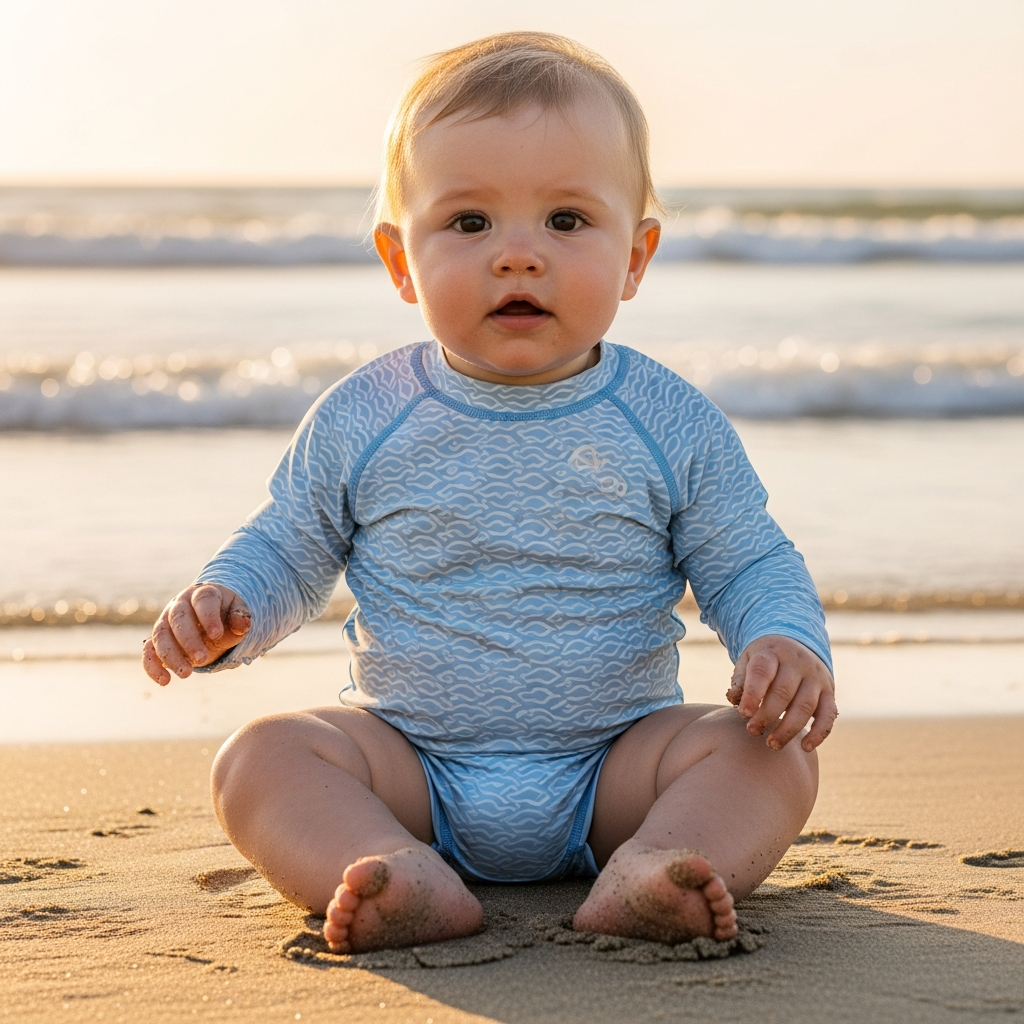
Best Baby Sun Protection Clothing: UPF Swimwear Explained
Understanding UPF ratings transforms you from a confused shopper into a confident parent who knows exactly what protection your baby needs. Unlike SPF, which applies only to sunscreen, UPF specifically measures the sun-blocking ability of fabrics.
Understanding UPF Ratings: What the Numbers Mean
The numbers on UPF clothing directly tell you how much UV radiation the fabric allows through:
| UPF Rating | UV Protection Level | UV Rays Blocked |
|---|---|---|
| UPF 15-20 | Good | 93-95% |
| UPF 25-35 | Very Good | 96-97% |
| UPF 40-50+ | Excellent | 97.5-98%+ |
According to The Skin Cancer Foundation, UPF 50 fabric blocks 98 percent of the sun's rays, allowing only 2 percent to penetrate. For comparison, a regular white cotton t-shirt provides only about UPF 5, letting through roughly 20 percent of UV radiation. When that cotton gets wet, protection drops even further.
Baby Rash Guards, Sunsuits, and Full-Coverage Options
Baby sun protection clothing comes in several practical styles, each with distinct advantages:
- Long-sleeve rash guards provide maximum arm protection while allowing freedom of movement
- Short-sleeve options balance coverage with cooling on extremely hot days
- One-piece sunsuits offer all-in-one torso protection with no gaps between pieces
- Two-piece swim sets provide flexibility for easier diaper changes during beach play
When shopping for beach-ready baby clothing, look for collections that prioritize both sun protection and comfort. Many parents find that quality baby clothes with breathable, easy-care fabrics make beach days significantly easier.
Baby Beach Essentials: Complete Outfit Checklist by Age
Your baby's beach outfit needs change as they grow. What works for a newborn differs significantly from what an active 10-month-old crawler requires. Understanding these differences helps you pack appropriately and keep your baby safe at every stage.
Beach Outfits for Newborns and Babies Under 6 Months
The American Academy of Pediatrics recommends keeping young infants in shade and out of direct sunlight entirely. At this age, sunscreen is not recommended because a baby's skin is thinner and more permeable than an adult's, increasing the risk of irritation or absorption of chemical ingredients.
For babies under 6 months, your beach outfit strategy focuses entirely on shade and coverage:
- Lightweight, long-sleeve cotton or bamboo bodysuit
- Wide-brim sun hat with chin strap (at least 3-inch brim)
- Breathable cover-up or blanket for additional shade
- Soft booties or socks to protect feet from hot sand
Limit beach time to cooler parts of the day, specifically early morning before 10 AM or late afternoon after 4 PM.
Beach Outfits for Babies 6-12 Months
Once your baby reaches 6 months, your options expand significantly. UPF 50+ swimwear becomes appropriate, and mineral sunscreen can now supplement clothing protection on exposed skin. Active babies at this age need outfits that allow movement while maintaining protection.
Essential items for older infants include:
- UPF 50+ rash guard or sunsuit
- Swim diaper (reusable or disposable)
- Sun hat with neck flap protection
- Baby water shoes for crawlers exploring sand
- Lightweight cover-up for shade breaks
Lightweight baby rompers and jumpsuits work wonderfully as cover-ups when transitioning from water play to shade time, offering easy diaper access and comfortable coverage.
What NOT to Dress Your Baby in at the Beach: Common Mistakes
Even well-meaning parents sometimes make clothing choices that increase risks rather than reduce them. Understanding what to avoid is just as important as knowing what to choose.
Clothing Choices That Increase Sunburn Risk
Some clothing that seems protective actually offers minimal UV defense:
- Regular white cotton t-shirts provide only UPF 5-7 when dry, dropping even lower when wet
- Dark-colored fabrics absorb heat, potentially causing overheating
- Loose weave fabrics allow UV rays to penetrate through gaps
- Sleeveless tops leave vulnerable shoulders exposed to direct sun
- Baseball caps fail to protect ears and neck, unlike wide-brim hats
Remember that wet fabric provides significantly less UV protection than dry fabric. A soaked cotton shirt offers almost no sun protection at all.
Outfits That Cause Overheating or Discomfort
The opposite extreme creates different problems. Overdressing or choosing wrong fabrics leads to overheating, which poses serious risks for babies who cannot regulate body temperature as effectively as adults:
- Synthetic fabrics trap heat and moisture against skin
- Too many layers prevent heat from escaping
- Tight-fitting clothes restrict airflow and movement
- Regular diapers become waterlogged and uncomfortable in water
- Heavy cotton stays wet and cold after water play
Watch for overheating signs: flushed skin, excessive sweating, rapid breathing, and unusual fussiness all indicate your baby needs to cool down immediately.

Beach Accessories That Complete Baby's Sun Protection
Clothing alone does not provide complete protection. Essential accessories protect commonly overlooked areas including your baby's head, eyes, and feet.
Choosing the Best Sun Hat for Beach Days
The Skin Cancer Foundation recommends hats with a brim of at least three inches to properly shade the face, scalp, neck, and ears. Look for these features in a baby sun hat:
- Wide brim (minimum 3 inches) for face and neck coverage
- Neck flap or legionnaire style for extra protection
- Chin strap or adjustable toggle to keep hat securely on
- UPF 50+ rated fabric
- Light colors to reflect rather than absorb heat
- Quick-dry material for water play
For babies who constantly pull off hats, try styles with under-chin ties or look for hats with fun patterns that might distract from the desire to remove them.
Baby Sunglasses and Eye Protection Essentials
Baby eyes are more susceptible to UV damage than adult eyes because their lenses have not yet developed full filtering capacity. When selecting baby sunglasses:
- Ensure 100% UVA and UVB protection
- Choose wrap-around frames for peripheral coverage
- Select flexible, shatterproof frames for safety
- Use strap attachments to keep sunglasses on active babies
Water Shoes for Hot Sand and Rocky Shores
Sand temperatures can reach dangerous levels on sunny days, potentially burning delicate baby feet in seconds. Water shoes protect against hot sand, sharp shells, rocks, and debris. Look for:
- Quick-dry, lightweight materials
- Secure closures that stay on in water
- Non-slip soles for wet surfaces
- Comfortable fit that allows natural movement
Introduce water shoes once your baby starts crawling or attempting to walk, typically around 8-10 months.
Swim Diapers for the Beach: Reusable vs. Disposable
Regular diapers are not designed for water. They absorb liquid, becoming extremely swollen and heavy within minutes. Swim diapers solve this problem by containing solid waste without the absorption issue.
When and Why to Use Swim Diapers
Most public beaches and pools require swim diapers for babies. It is important to understand that swim diapers contain solid waste only, not liquid. This means you should:
- Change swim diapers immediately after bowel movements
- Check diapers every 30-60 minutes during beach play
- Pair swim diapers with swim shorts or bottoms for style and extra containment
- Bring 2-3 extra swim diapers per beach visit
Comparing Reusable and Disposable Options
| Factor | Reusable | Disposable |
|---|---|---|
| Cost | Higher upfront, saves money long-term | Lower per-unit, adds up over time |
| Convenience | Requires washing after use | Use and dispose |
| Environmental Impact | More sustainable | Creates waste |
| Fit | Adjustable, grows with baby | Sized, may need multiple sizes |
| Best For | Frequent beach-goers | Occasional trips |
Rinse reusable swim diapers in fresh water after each use to remove salt and sand before washing.
Beach Safety Tips: Keeping Baby Cool and Protected
Proper clothing is one part of a complete safety strategy. Temperature management, hydration, and timing matter equally for a safe, enjoyable beach experience.
Timing Your Beach Visit for Baby's Safety
The FDA specifically warns to keep babies out of the sun between 10 AM and 2 PM when UV rays are most intense. Plan your beach visits accordingly:
- Early morning (before 10 AM) offers cooler temperatures and gentler sun
- Late afternoon (after 4 PM) provides another good window
- Keep first beach visits short, about 1-2 hours maximum
- Watch for signs of fatigue, overheating, or overstimulation
Creating Shade and Managing Temperature
Even on cloudy days, UV rays penetrate clouds and can cause sunburn. Always create shade for your baby:
- Beach tent or pop-up canopy provides reliable shade
- Position baby in shade at all times when not supervised in water
- Use stroller canopy and umbrella for additional coverage
- Keep baby hydrated with breast milk, formula, or water for babies 6+ months
Breathable fabrics like bamboo are excellent for beach days because they naturally regulate temperature. Bamboo baby clothes offer the softness and breathability that help keep baby comfortable in warm weather while providing gentle sun protection during shade breaks.
Know the signs of overheating: flushed skin, sweating, rapid breathing, and unusual fussiness. If you notice these signs, move to shade immediately, remove layers, and offer fluids. Know the signs of dehydration as well: fewer wet diapers, no tears when crying, and lethargy require immediate attention.
Frequently Asked Questions About Baby Beach Outfits
What should a baby wear to the beach?
Babies should wear UPF 50+ sun-protective clothing including a rash guard or sunsuit that covers shoulders and torso, swim diapers for water play, a wide-brim sun hat with chin strap, and water shoes for protection from hot sand. For babies under 6 months, lightweight long-sleeve clothing and staying in shade is recommended since sunscreen is not advised for this age group.
Can babies under 6 months go to the beach?
Yes, babies under 6 months can go to the beach with proper precautions. The American Academy of Pediatrics recommends keeping young infants in shade and avoiding direct sunlight. Dress baby in lightweight, long-sleeve clothing and a wide-brim hat. Visit during cooler hours (early morning or late afternoon), keep the trip short, and avoid sunscreen in favor of protective clothing.
What is UPF 50+ and why does it matter for baby swimwear?
UPF (Ultraviolet Protection Factor) measures how much UV radiation a fabric blocks. UPF 50+ means the fabric blocks at least 98% of harmful UV rays, allowing only 1/50th of UV radiation through. This is the highest rating available and is recommended for babies because their thinner, more sensitive skin is highly susceptible to sun damage and sunburn.
Do babies need sunscreen at the beach?
For babies under 6 months, the FDA recommends avoiding sunscreen and relying on shade and protective clothing instead. For babies 6 months and older, apply broad-spectrum mineral sunscreen (zinc oxide or titanium dioxide) with SPF 30+ to any exposed skin not covered by clothing. Reapply every two hours and immediately after water exposure.
How long can a baby stay at the beach?
For a baby's first beach trips, limit visits to 1-2 hours maximum. Avoid peak sun hours between 10 AM and 4 PM. Watch for signs of overstimulation, overheating, or fatigue such as fussiness, flushed skin, or excessive crying. Gradually extend beach time as baby adjusts. Always prioritize shade, hydration, and frequent breaks.
Can babies wear regular diapers to the beach?
No, regular diapers should not be worn at the beach. They absorb water and become extremely swollen and heavy, causing discomfort and potential chafing. Swim diapers are specifically designed to contain solid waste without absorbing water. Choose either reusable cloth swim diapers or disposable swim diapers, and check them every 30-60 minutes.
How do I keep my baby cool at the beach?
Keep baby in shade under a beach tent or umbrella at all times when not in supervised water play. Dress in lightweight, breathable, light-colored UPF clothing. Offer frequent breast milk, formula, or water (for babies 6+ months). Use a portable fan and cool washcloths if needed. Watch for overheating signs: sweating, flushed skin, rapid breathing, and unusual fussiness.
What should baby wear under a rash guard at the beach?
Under a rash guard, babies should wear a swim diaper for water play. For additional coverage on the lower body, pair the rash guard with swim shorts, swim bottoms, or board shorts. Some parents add a thin bodysuit underneath in cooler conditions, but this is usually unnecessary in warm weather. The rash guard itself provides the primary sun protection.
Making Beach Days Safe and Memorable for Your Baby
Your baby's first beach experiences should create happy memories, not health concerns. With the right baby beach outfit and a safety-first approach, you can enjoy sandy adventures while keeping your little one protected from the sun's harmful rays.
Remember the essentials: UPF 50+ clothing that covers shoulders and torso, a wide-brim sun hat with at least a 3-inch brim, swim diapers for water play, and water shoes for hot sand protection. Avoid common mistakes like relying on regular cotton clothing or baseball caps that leave vulnerable areas exposed. Time your visits to avoid peak UV hours between 10 AM and 4 PM, and always create shade for your baby.
Building a beach-ready wardrobe for baby does not have to be overwhelming. Start with quality baby bodysuits or comfortable base layers, add UPF protection pieces, and you will be ready for sunny adventures. At PatPat, we are here to help you find the comfortable, practical clothing that makes parenting easier and beach days more enjoyable.
Start with short beach visits and build from there. Watch your baby for signs of fatigue or overheating. Stay in the shade during peak hours. And most importantly, enjoy these precious moments of sandy toes, splashing waves, and your baby experiencing the wonder of the beach for the very first time.
Save this guide for your next beach trip, and share it with other parents planning their first beach day with baby. With the right preparation, you are ready to create beautiful beach memories that last a lifetime.





