


Looking for vegetarian baby food recipes that actually deliver complete nutrition? You are not alone. More parents than ever are raising vegetarian babies, and the first question from every grandparent, pediatrician, and well-meaning stranger is always the same: "But where will the baby get enough iron and protein?" It is a fair question. And the answer is more reassuring than you might expect.
Here is the truth that surprises many families: iron rich vegetarian baby food is not only possible, it can be extraordinarily nutrient-dense when you understand the science behind plant-based iron absorption. The Academy of Nutrition and Dietetics confirms that appropriately planned vegetarian diets are healthful and nutritionally adequate for all stages of life, including infancy. The American Academy of Pediatrics and the British Dietetic Association agree.
The challenge is not whether a vegetarian diet can work for your baby. It absolutely can. The challenge is knowing how to optimize iron absorption, ensure adequate zinc and B12, and provide complete plant protein for baby through thoughtful food combinations. That is exactly what this guide delivers.
In the sections ahead, you will find everything from the absorption science that doubles your baby's iron uptake, to a complete vegetarian baby meal plan with nutritional totals, to culturally diverse recipes spanning Indian dal, Mediterranean hummus, and Japanese tofu dishes. Whether you are exploring baby-led weaning or traditional purees, PatPat has put together this comprehensive resource to make your vegetarian feeding journey confident and stress-free. Let's get into it.
Is a Vegetarian Diet Safe for Babies? What Pediatricians Recommend
Before we talk recipes, let's address the question that keeps parents up at night. Is a vegetarian diet safe for babies? The short answer is yes, with one critical qualifier: it must be well-planned.

What the AAP and Global Health Organizations Say About Vegetarian Infants
The medical consensus is clearer than many parents realize. The Academy of Nutrition and Dietetics states that appropriately planned vegetarian diets are healthful, nutritionally adequate, and may provide health benefits for the prevention and treatment of certain diseases. This endorsement explicitly includes infants and children.
The American Academy of Pediatrics recognizes that vegetarian diets are acceptable for infants when parents pay careful attention to key nutrients. The British Dietetic Association confirms that well-planned vegetarian and vegan diets can be nutritious and healthy. The Canadian Paediatric Society holds a similar position.
The phrase that appears in every one of these endorsements is "well-planned." That distinction matters. Simply removing meat from your baby's plate without replacing those nutrients creates gaps. But deliberately building meals around iron-rich legumes, zinc-dense whole grains, and B12 sources creates a diet that meets every nutritional benchmark.
Vegetarian vs. Vegan Diets for Babies: Key Differences in Nutritional Risk
There is an important distinction between vegetarian and vegan infant diets. Lacto-ovo vegetarian babies who eat dairy and eggs face a lower supplementation burden than babies on strictly vegan diets. Here is how the nutrient landscape differs:
| Nutrient | Lacto-Ovo Vegetarian | Vegan |
|---|---|---|
| Vitamin B12 | Available from dairy and eggs | Supplementation required |
| Calcium | Available from dairy | Fortified foods or supplement needed |
| Iron | Requires absorption strategy | Requires absorption strategy |
| Zinc | Available from eggs, dairy, legumes | Requires careful food planning |
| DHA Omega-3 | May need algae-based supplement | Algae-based supplement recommended |
This guide focuses primarily on lacto-ovo vegetarian diets with clear notes for families who also exclude dairy or eggs. Regardless of which path you choose, the recipes and strategies ahead will serve you well.
One more reassuring point before we move on. A common worry is that vegetarian babies will fall behind in growth or development. Research does not support this fear when the diet is well-planned. The key nutrients that require your attention -- iron, zinc, B12, and DHA -- are all available through plant foods, fortified products, or targeted supplements. The remaining sections of this guide walk you through exactly how to cover each one, with specific recipes and serving sizes rather than vague advice. Let's start with the nutrient that matters most: iron.
Iron-Rich Vegetarian Baby Food: How to Maximize Plant-Based Iron Absorption
If there is one nutrient that demands your attention when feeding a vegetarian baby, it is iron. Not because plant foods lack iron, but because the type of iron they contain, non-heme iron, absorbs differently than the heme iron found in meat. Understanding this distinction is the single most important nutritional insight for parents preparing iron rich vegetarian baby food.

Non-Heme Iron vs. Heme Iron: Why Plant-Based Iron Needs a Different Approach
Plant foods contain exclusively non-heme iron, which has an absorption rate of roughly 2-20%, compared to 15-35% for heme iron from animal sources. This sounds alarming until you learn the strategies that dramatically increase that absorption rate. The recommended daily iron intake for infants 7-12 months is 11 mg, and iron-fortified cereals alone can cover a significant portion of that target.
The key takeaway: your vegetarian baby does not need meat to meet iron needs. Your baby needs smart food pairings. In fact, many pediatric dietitians point out that some of the highest iron baby foods are already plant-based. A single serving of iron-fortified infant cereal delivers 4.5-7mg of iron, which covers 40-65% of a baby's daily needs in one sitting. Add a lentil puree at lunch and a tofu dish at dinner, and you have cleared the 11mg daily target with room to spare.
Here is a quick reference for the iron content of common vegetarian baby foods:
| Food | Iron Content | Serving Size |
|---|---|---|
| Iron-fortified infant cereal | 4.5-7mg | 1 serving (per label) |
| Cooked red lentils | 3.3mg | 1/2 cup |
| Firm tofu | 3.4mg | 1/2 cup |
| Cooked chickpeas | 2.4mg | 1/2 cup |
| Cooked black beans | 1.8mg | 1/2 cup |
| Cooked spinach | 3.2mg | 1/2 cup |
| Tahini | 1.3mg | 1 tablespoon |
| Cooked quinoa | 1.4mg | 1/2 cup |
The Vitamin C Pairing Strategy That Doubles Iron Absorption
This is the game-changer most articles miss. Vitamin C is a powerful enhancer of nonheme iron absorption, increasing uptake by two to six times when consumed in the same meal. That means a simple squeeze of lemon on your baby's lentil puree transforms the iron bioavailability of the entire dish.
Here are the pairings to memorize:
| Iron-Rich Food | Vitamin C Partner | Meal Idea |
|---|---|---|
| Red lentil puree | Mandarin orange segments | Lentil puree with citrus mash on the side |
| Iron-fortified oatmeal | Mashed strawberries | Oatmeal berry breakfast bowl |
| Spinach and chickpea puree | Diced bell pepper | Green iron-booster puree |
| Black bean mash | Diced tomato | Mexican-inspired bean bowl |
| Tofu cubes | Steamed broccoli | Tofu and broccoli finger plate |
Common Iron Absorption Blockers to Avoid at Mealtimes
Knowing what boosts iron absorption is only half the picture. You also need to know what blocks it:
- Calcium (dairy): Calcium inhibits iron absorption when consumed at the same meal. Separate iron-rich meals from dairy-heavy meals by 1-2 hours. Serve yogurt and cheese as between-meal snacks, not alongside lentil puree.
- Phytates: Naturally present in whole grains and legumes, phytates reduce iron absorption. Soaking, sprouting, and fermenting legumes breaks down phytates and increases iron availability.
- Tannins: Found in tea, which babies should never drink. This is mainly a concern for older family members sharing meals.
Best Plant Proteins for Babies: Lentils, Tofu, Chickpeas, and Quinoa Recipes
Now for the part you came for: the recipes. The best vegetarian baby food recipes are built around a rotating cast of protein-rich ingredients. Each one brings its own nutritional strengths, and the key is variety. Let's walk through the core plant proteins for baby and how to prepare each one from first purees through finger foods.

Red Lentil Recipes: The Easiest High-Protein First Food for Babies
If you prepare one single vegetarian baby food, make it red lentils. They cook in 15 minutes, break down into a naturally smooth puree without a blender, and pack 9g of protein and 3.3mg of iron per half cup cooked. No other plant food is this beginner-friendly.
Recipe 1: Classic Red Lentil and Sweet Potato Puree (6+ months)
Ingredients:
- 1/2 cup red lentils, rinsed
- 1 small sweet potato, peeled and diced
- 1 1/2 cups water
- Pinch of cumin (optional)
- Squeeze of fresh lemon juice
Instructions:
- Combine lentils, sweet potato, and water in a saucepan. Bring to a boil.
- Reduce heat and simmer for 15-18 minutes until lentils are completely soft and sweet potato is tender.
- Mash with a fork or blend to desired smoothness. Add cumin if using.
- Stir in lemon juice just before serving (vitamin C boosts iron absorption).
Yield: About 8 portions. Freezer-friendly: Yes, up to 3 months in silicone ice cube trays.
Nutrition per serving: ~4.5g protein, ~1.7mg iron
Recipe 2: Lentil and Spinach Iron-Booster (7+ months)
Ingredients:
- 1/2 cup red lentils, rinsed
- 1 cup baby spinach
- 1 small tomato, diced (vitamin C pairing)
- 1 1/2 cups water
Instructions:
- Simmer lentils in water for 12 minutes.
- Add spinach and diced tomato. Cook for 3 more minutes.
- Mash to a slightly chunkier texture than the first recipe, leaving some soft lumps for developmental progression.
Nutrition per serving: ~5g protein, ~2.1mg iron
Texture progression for lentils: Smooth puree at 6 months. Mashed with soft lumps at 8 months. Whole cooked lentils as finger food scoops at 10+ months. If you want a deeper dive into age-appropriate textures, check out our 6-month baby food guide.
Tofu Preparation Guide: Silken Purees to Crispy Finger Strips
Tofu is one of the most versatile plant proteins for babies. A half cup of firm tofu delivers 10g of protein and, when calcium-set, provides significant calcium as well. The question many parents ask is: "Is tofu safe for babies?" The AAP considers moderate soy consumption safe for infants, and whole soy foods like tofu and edamame are preferred over processed soy products.

Recipe 3: Tofu Scramble for Baby (9+ months)
Ingredients:
- 1/4 block firm tofu, crumbled
- Pinch of turmeric
- 1 tsp nutritional yeast (B12 source)
- 2 tbsp soft-cooked diced vegetables (peas, bell pepper, zucchini)
- 1 tsp olive oil
Instructions:
- Heat olive oil in a small pan over medium heat.
- Crumble tofu into the pan. Sprinkle with turmeric and nutritional yeast.
- Add diced vegetables. Cook for 4-5 minutes, stirring gently, until heated through.
- Let cool to a safe temperature. Serve in small pieces for self-feeding.
Nutrition per serving: ~7g protein, ~1.5mg iron
Recipe 4: Silken Tofu Fruit Smoothie Bowl (6+ months)
Ingredients:
- 1/4 cup silken tofu
- 1/2 ripe banana
- 1/4 cup mango chunks
- 1 tbsp nut butter (if allergens already introduced)
Instructions:
- Blend all ingredients until completely smooth.
- Serve immediately as a spoon-fed puree or thick smoothie bowl.
Nutrition per serving: ~5g protein, ~0.8mg iron
For younger babies (6-7 months), silken tofu blended into fruit purees adds invisible protein. For babies 8 months and older practicing vegetarian baby led weaning, cut firm tofu into thick finger-sized strips and pan-fry lightly in olive oil for a golden crust that is easy to grip.
Chickpea, Black Bean, and Quinoa: Complete Protein Combinations
These three ingredients round out your plant protein rotation and give you endless vegetarian baby food ideas:
- Chickpeas: 7g protein and 2.4mg iron per half cup. Endlessly versatile from hummus to roasted finger foods.
- Black beans: 7.6g protein and 1.8mg iron per half cup. Their soft texture makes them ideal whole finger foods for 9+ months.
- Quinoa: 4g protein per half cup and one of the few plant foods with a complete amino acid profile.
Recipe 5: Baby-Friendly Hummus (8+ months)
Ingredients:
- 1 can (15 oz) chickpeas, drained and rinsed
- 2 tbsp tahini
- Juice of 1/2 lemon
- 2 tbsp olive oil
- 2-3 tbsp water for consistency
Instructions:
- Blend all ingredients until very smooth. Add water as needed for a baby-appropriate consistency.
- Skip the raw garlic that adult recipes call for. Babies under 12 months do better without it.
- Serve as a dip for steamed vegetable sticks or spread thinly on soft toast strips.
Nutrition per 2-tbsp serving: ~2.5g protein, ~0.7mg iron, ~30mg calcium (from tahini)
Recipe 6: Black Bean and Avocado Mash (7+ months)
Ingredients:
- 1/4 cup cooked black beans, mashed
- 1/4 ripe avocado, mashed
- Pinch of cumin
- Squeeze of lime juice (vitamin C pairing)
Instructions: Mash beans and avocado together with a fork. Season with cumin and lime. That is it. Five minutes from start to plate.
Nutrition per serving: ~4g protein, ~1mg iron, ~80 calories from avocado fat
Recipe 7: Quinoa Veggie Bowl (9+ months)
Ingredients:
- 1/4 cup cooked quinoa
- 2 tbsp steamed diced sweet potato
- 2 tbsp steamed peas
- 1 tsp olive oil drizzle
Instructions: Combine all ingredients in a bowl. The quinoa and peas together create a complete protein. The olive oil adds calorie density.
Nutrition per serving: ~3.5g protein, ~1.2mg iron
Beyond the "big five" protein sources above, do not overlook some powerful supporting players in your vegetarian baby food rotation:
- Tahini: Made from ground sesame seeds, tahini provides protein, iron, calcium, and zinc in a single tablespoon. Stir it into oatmeal, drizzle over purees, or spread thinly on toast.
- Hemp seeds: One of the few plant foods with a complete amino acid profile. Sprinkle a teaspoon over any puree or bowl for babies 8+ months.
- Nut butters (peanut, almond, cashew): Rich in protein, healthy fats, iron, and zinc. Thin with water or breastmilk for younger babies. These are also important allergens to introduce early.
- Edamame: Whole soy beans provide 9g of protein per half cup. Serve halved lengthwise for babies 10+ months to prevent choking.
Vegetarian Baby Food by Age: From First Purees at 6 Months to Toddler Meals
Knowing the recipes is one thing. Knowing what to serve when is another. This age-by-age guide maps the same core ingredients (lentils, tofu, beans, quinoa) across four developmental stages, showing you exactly how texture progression works in a vegetarian baby food schedule.
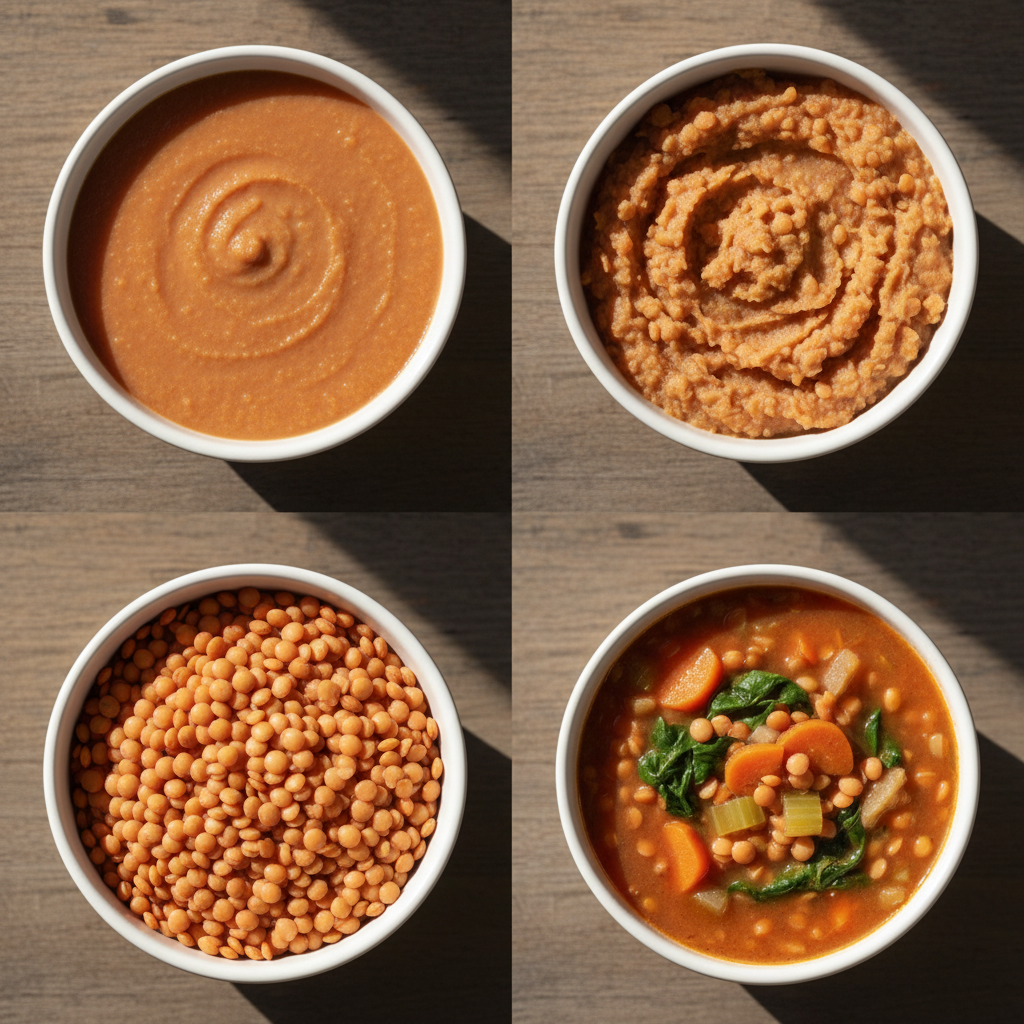
6-7 Months: Smooth Vegetarian Purees and First Tastes
Your baby's first vegetarian foods should prioritize iron. By six months, the iron stores built during pregnancy are beginning to deplete, making iron-rich first foods essential.
First foods priority list:
- Iron-fortified infant cereal (mixed with breastmilk or formula)
- Red lentil puree (Recipe 1 above)
- Silken tofu blended with fruit (Recipe 4 above)
- Sweet potato puree
- Mashed avocado
Texture: Smooth, thin purees that flow easily off a spoon. Frequency: 1-2 tablespoon portions, once or twice per day, complementary to breastmilk or formula. Start with single-ingredient purees, then gradually combine.
Sample 3-day starter menu for 6-month-old vegetarian babies:
- Day 1: Iron-fortified rice cereal mixed with breastmilk (AM), sweet potato puree (PM)
- Day 2: Iron-fortified oat cereal with mashed pear (AM), red lentil puree with a drop of lemon (PM)
- Day 3: Silken tofu blended with banana (AM), avocado mash (PM)
8-9 Months: Mashed Textures and Early Vegetarian Finger Foods
This is where things get exciting. Your baby is ready for mashed textures with soft lumps and can begin exploring vegetarian finger foods for babies:
- Soft-cooked tofu strips (firm tofu, lightly pan-fried)
- Steamed broccoli florets (iron and vitamin C in one food)
- Quartered chickpeas, gently smashed
- Ripe avocado strips
- Well-cooked pasta spirals with lentil sauce
Start offering grain-and-legume combinations: rice with lentils, oatmeal with mashed beans. Frequency increases to 2-3 meals per day plus 1-2 snacks. For more ideas at this stage, see our 8-month baby food guide.
This stage is also when you can begin vegetarian baby led weaning in earnest. Let your baby explore textures independently. Allow them to pick up soft tofu strips, squish mashed chickpeas between their fingers, and practice the pincer grasp with small pieces of cooked peas. Self-feeding is messy, but it builds critical motor skills and establishes a healthy relationship with food. Keep a vitamin C source on the plate alongside the iron-rich options -- a few soft-cooked bell pepper strips next to the tofu, or diced tomato mixed into the bean mash.
10-12 Months: Chopped Table Foods and Family Meal Adaptations
Your baby is now transitioning to chopped, soft table foods that mirror what the family eats. The simplest strategy: set aside a portion of the family's vegetarian meal before adding salt or strong spices, then chop or mash to the right size.
New foods to introduce at this stage:
- Tempeh crumbles (fermented soy, easier to digest, enhanced zinc bioavailability)
- Nut butter spread thinly on toast strips
- Edamame, halved lengthwise for safety
- Quinoa veggie bowls (Recipe 7)
For lacto-ovo families, scrambled eggs, full-fat yogurt, and cheese cubes provide B12, zinc, and additional protein at this stage. This is also a great time to introduce allergens that overlap with key vegetarian protein sources. If you have not yet introduced peanut butter, tree nut butters, or soy (through tofu or edamame), now is the time to do so systematically. Spread nut butter thinly on toast strips rather than offering it by the spoonful -- it is safer and gives your baby a grippable food for self-feeding practice.
A sample full-day eating schedule at 10-12 months might look like this:
- 7:00 AM: Breastmilk or formula
- 8:00 AM Breakfast: Iron-fortified oatmeal with mashed raspberries and tahini
- 10:00 AM Snack: Full-fat yogurt with mashed banana
- 12:00 PM Lunch: Khichdi with steamed peas and a drizzle of olive oil
- 2:30 PM Snack: Avocado on toast strip with nut butter
- 5:30 PM Dinner: Tofu scramble with diced bell pepper and broccoli
- 7:00 PM: Breastmilk or formula before bed
12-24 Months: Vegetarian Toddler Meals and Independent Eating
Toddlers need approximately 13g of protein and 7mg of iron per day. After 12 months, you can add whole cow's milk (if lacto-ovo), honey in recipes, wider nut butter varieties, and more complex spice profiles.
The biggest challenge at this age is picky eating. When your toddler refuses tofu sticks on Tuesday, try tofu scramble on Wednesday and tofu blended into a smoothie on Thursday. Same protein, three different presentations. Persistence matters more than pressure -- it can take 10-15 exposures to a new food before a toddler accepts it.
Three complete vegetarian toddler meal ideas:
- Lentil pasta bowl: Red lentil pasta with tomato sauce, steamed broccoli, and a sprinkle of nutritional yeast. (~8g protein, ~3mg iron)
- Bean and cheese quesadilla: Whole wheat tortilla with mashed black beans and shredded cheese, served with avocado and diced tomato. (~7g protein, ~2mg iron)
- Tofu stir-fry plate: Pan-fried tofu cubes with soft-cooked vegetables (carrots, peas, corn) over brown rice. (~9g protein, ~2.5mg iron)
Notice how each meal naturally pairs iron sources with vitamin C. The tomato sauce boosts iron from the lentil pasta. The diced tomato alongside the beans does the same. These pairings become second nature once you start thinking about them consistently.
Weekly Vegetarian Baby Meal Plan with Nutritional Totals
This is the section most vegetarian baby food guides skip entirely, and it is the one parents need most. A structured vegetarian baby meal plan takes the daily guesswork out of feeding. This 7-day plan targets babies 8-10 months old and rotates protein sources so no single food dominates.

7-Day Sample Meal Plan for Vegetarian Babies (8-10 Months)
| Day | Breakfast | Lunch | Dinner | Snack |
|---|---|---|---|---|
| Mon | Iron-fortified oatmeal + mashed strawberries* | Red lentil and sweet potato puree + lemon* | Tofu strips + steamed broccoli* | Full-fat yogurt + mashed banana |
| Tue | Silken tofu fruit smoothie bowl | Chickpea and spinach mash + diced tomato* | Khichdi (rice and lentil porridge) | Avocado mash on toast strip |
| Wed | Iron-fortified cereal + mashed peach* | Black bean and avocado mash + lime* | Quinoa veggie bowl + olive oil | Scrambled egg (lacto-ovo) |
| Thu | Oatmeal + tahini swirl + mashed raspberries* | Baby dal with squeeze of lemon* | Tofu scramble + steamed peas | Cheese cubes + soft pear slices |
| Fri | Silken tofu + mango puree | Lentil and spinach iron-booster* | Baby-friendly hummus + steamed carrot sticks | Full-fat yogurt + mashed blueberries |
| Sat | Iron-fortified oatmeal + diced kiwi* | Mexican black bean bowl + diced tomato* | Tempeh crumbles + steamed sweet potato | Nut butter on banana slices |
| Sun | Tofu scramble + diced bell pepper* | Quinoa and chickpea mash + lemon* | Red lentil puree + steamed broccoli* | Tahini banana oat bowl |
* = Vitamin C pairing for iron absorption
Daily nutritional targets (8-10 months): ~11g protein, ~11mg iron. This plan achieves approximately 12-15g protein and 9-12mg iron per day through food alone, with breastmilk or formula providing additional nutrients.
Notice the variety principle at work: no single protein source repeats within the same day. Monday features lentils at lunch and tofu at dinner. Tuesday rotates to tofu at breakfast and chickpeas at lunch. This rotation ensures your baby gets a broad amino acid profile and reduces the risk of developing food fatigue with any single ingredient.
Also notice that every iron-rich meal is marked with an asterisk, indicating a vitamin C pairing. This is not optional. These pairings are what make the difference between marginal iron absorption and robust iron uptake. Over the course of a week, consistent vitamin C pairing can dramatically improve your baby's iron status compared to serving the same iron-rich foods without the pairing strategy.
Batch Cooking and Freezer Prep System for Vegetarian Baby Meals
You do not need to cook from scratch every day. A 90-minute weekend batch cooking session can prepare an entire week of vegetarian baby food freezer meals:
- Red lentil puree base (15 min cook time): Makes 14 portions. Freeze in silicone ice cube trays.
- Chickpea and vegetable mash (20 min): Makes 10 portions. Freeze in labeled bags.
- Quinoa (15 min): Makes 6 portions. Refrigerate for the week.
- Tofu strips (10 min): Pan-fry a full block, refrigerate for 4 days.
- Steamed vegetable medley (12 min): Broccoli, sweet potato, peas. Refrigerate or freeze.
Zinc, B12, and DHA: Supplements and Nutrient Sources Your Vegetarian Baby Needs
Iron gets all the attention, but zinc, B12, and DHA are the quiet nutritional concerns that deserve equal planning in a vegetarian baby's diet. Let's address each one with specific food sources, dosages, and clear guidance on when supplementation becomes necessary.
Zinc-Rich Vegetarian Foods and Why Zinc Absorption Matters
The recommended daily zinc intake for infants 7-12 months is 3mg. Like iron, plant-based zinc faces a bioavailability challenge because phytates in legumes and grains bind to zinc and reduce absorption.
Top zinc rich vegetarian foods for baby:
| Food | Zinc Content | Serving Size |
|---|---|---|
| Iron-fortified infant cereal | ~3mg | 1 serving (per label) |
| Firm tofu | ~1mg | 1/4 cup |
| Chickpeas | ~0.6mg | 1/4 cup |
| Oatmeal | ~0.8mg | 1/4 cup cooked |
| Pumpkin seed butter | ~1mg | 1 tablespoon |
| Tahini | ~0.7mg | 1 tablespoon |
Absorption tip: The same strategies that boost iron absorption also help zinc. Soaking legumes overnight before cooking reduces phytates. Fermenting soy into tempeh increases zinc bioavailability significantly compared to unfermented tofu.
B12 Supplementation: When It Is Essential and How Much to Give
Vitamin B12 is found naturally only in animal products. For lacto-ovo vegetarian babies who regularly eat dairy products and eggs, B12 needs are typically met through food. The B12 requirement for infants 7-12 months is 0.4-0.5 mcg per day.
When B12 supplementation is needed:
- Babies on a strict vegan diet
- Babies who consume very little dairy or egg
- Babies with known absorption concerns
- Breastfed babies whose mothers do not supplement B12
Forms of B12: Methylcobalamin or cyanocobalamin drops are both effective. Methylcobalamin is often preferred by practitioners for its bioavailability. Food sources include fortified infant cereal, fortified nutritional yeast (sprinkle on savory purees), dairy products, and eggs.
DHA Omega-3 for Brain Development Without Fish
DHA is critical for brain and eye development during the first two years of life. The body can convert ALA (from flaxseed, chia seeds, and hemp seeds) to DHA, but the conversion rate is extremely low -- less than 5%.
The most reliable plant-based DHA source is an algae-based DHA supplement, derived from the same microalgae that fish accumulate DHA from. Many pediatricians recommend 100mg of DHA daily for vegetarian babies. Algae-based DHA oil drops can be added directly to purees or bottles.
While you should not rely solely on food-based ALA conversion for DHA needs, incorporating ALA-rich foods like ground flaxseed, chia seeds, and hemp seeds into your baby's meals still provides valuable omega-3 fatty acids and healthy fats. Sprinkle a teaspoon of ground flaxseed into oatmeal or blend chia seeds into smoothie bowls for an additional nutritional boost.
- B12: Required for vegan babies; usually food-sufficient for lacto-ovo vegetarian babies. Dose: 0.4-0.5 mcg/day.
- DHA: Algae-based supplement recommended for all vegetarian babies. Dose: ~100mg/day.
- Vitamin D: The AAP recommends 400 IU/day for all breastfed infants regardless of diet type.
- Iron: Food-first approach using absorption strategies. Supplement only if blood work indicates deficiency.
- Zinc: Food-first approach. Supplement only under pediatric guidance for restricted diets.
Always consult your pediatrician before starting any supplement. Dosages above are general guidelines and may vary based on your baby's specific needs.
Indian Dal, Mediterranean Hummus, and Global Vegetarian Baby Recipes
Vegetarian baby food is not a modern invention. Cultures around the world have raised generations of healthy babies on plant-based diets. These global vegetarian baby food recipes draw from traditions with centuries of real-world evidence behind them.

Indian Dal and Khichdi: Traditional Iron-Rich Baby Meals
India has one of the world's oldest and most developed vegetarian culinary traditions. Dal (lentil stew) and khichdi (rice and lentil porridge) have been staple first foods for Indian babies for generations -- and for good reason. They are naturally high in iron and protein, easily digestible, and provide complementary amino acids in a single dish.
Recipe 8: Baby Dal (6+ months)
Ingredients:
- 1/2 cup red lentils (moong dal), rinsed
- 1 1/2 cups water
- 1/4 tsp turmeric
- Pinch of cumin
- 1 tsp ghee or olive oil
- Squeeze of lemon juice
Instructions:
- Simmer lentils with water and turmeric for 15 minutes until completely soft.
- In a separate small pan, heat ghee and add cumin for 30 seconds until fragrant.
- Stir the spiced ghee into the cooked dal. Add lemon juice before serving.
Nutrition per serving: ~4g protein, ~1.7mg iron. The turmeric adds anti-inflammatory benefits while the lemon boosts iron absorption.
Recipe 9: Khichdi for Baby (7+ months)
Ingredients:
- 1/4 cup rice
- 1/4 cup moong dal, rinsed
- 2 cups water
- 1/4 tsp turmeric
- Pinch of asafoetida (optional, aids digestion)
- 1 tsp ghee or olive oil
Instructions:
- Combine rice, dal, water, and turmeric in a pot. Bring to a boil.
- Reduce heat and simmer for 20-25 minutes until soft and porridge-like.
- Mash with ghee to desired consistency. Khichdi should be very soft and almost soupy for younger babies.
Nutrition per serving: ~3.5g protein, ~1.4mg iron. This is a naturally complete protein combination because rice and lentils together provide all essential amino acids.
Mediterranean-Inspired Hummus, Tahini, and Olive Oil Baby Meals
The Mediterranean diet's emphasis on legumes, olive oil, sesame (tahini), and fresh vegetables makes it naturally baby-friendly and nutrient-dense.
Recipe 10: Tahini Banana Oat Bowl (7+ months)
Ingredients:
- 1/4 cup cooked oats
- 1/2 banana, mashed
- 1 tsp tahini
Instructions: Stir mashed banana and tahini into warm cooked oats. Done in 2 minutes. Provides calcium from tahini, iron from oats, and potassium from banana.
Nutrition per serving: ~3g protein, ~1mg iron, ~30mg calcium
Olive oil tip: A drizzle of extra-virgin olive oil adds healthy fats and calories to any vegetarian baby puree. This is especially useful for babies who are slow to gain weight -- one tablespoon adds 120 calories without adding volume.
Japanese Tofu and Mexican Bean Bowls: Global Flavor Foundations
Recipe 11: Japanese-Inspired Silken Tofu with Sweet Potato (6+ months)
Ingredients:
- 1/4 cup silken tofu
- 1/4 cup steamed sweet potato, mashed
Instructions: Blend silken tofu and sweet potato until smooth. For babies 12+ months, you can add a tiny drop of low-sodium soy sauce for umami flavor. Omit for younger babies.
Recipe 12: Mexican Black Bean and Avocado Bowl (8+ months)
Ingredients:
- 1/4 cup mashed black beans
- 1/4 avocado, diced
- 2 tbsp soft-cooked corn kernels, halved for safety
- Squeeze of lime
Instructions: Combine all ingredients. The beans provide protein and iron, the avocado adds healthy fat, and the lime juice enhances iron absorption. A complete meal in one bowl.
Introducing diverse flavors and spice profiles early in a baby's feeding journey is associated with lower rates of picky eating during toddlerhood. These global recipes are not just culturally rich -- they are a strategy for raising adventurous eaters.
Recipe 13: Ethiopian-Inspired Lentil Stew for Baby (8+ months)
Ingredients:
- 1/2 cup red lentils, rinsed
- 1 small carrot, diced finely
- 1/4 tsp turmeric
- Pinch of cinnamon
- 1 tsp olive oil
- 1 1/2 cups water
Instructions:
- Heat olive oil in a saucepan. Add diced carrot and cook for 3 minutes until slightly soft.
- Add lentils, water, turmeric, and cinnamon. Bring to a boil.
- Reduce heat and simmer for 18-20 minutes until lentils and carrots are very soft.
- Mash to desired texture. This stew is naturally thick and hearty, making it satisfying for older babies.
Nutrition per serving: ~4g protein, ~1.8mg iron. Ethiopian cuisine's emphasis on lentils and spices makes it one of the most naturally baby-friendly vegetarian traditions in the world.
Between the Indian, Mediterranean, Japanese, Mexican, and Ethiopian options above, you have a week of globally inspired meatless baby food recipes that keep mealtime interesting for both you and your baby. Rotate through these cultural traditions alongside the core recipes from earlier in this guide, and you will never run short of vegetarian baby food ideas.
High-Calorie Vegetarian Baby Food for Healthy Weight and Growth
One concern that is unique to plant-based feeding: calorie density. Vegetarian foods tend to be high in fiber and water, which can fill up tiny stomachs before enough calories have been consumed. This is not a reason to avoid vegetarian feeding. It is a reason to be strategic about calorie-dense additions.
Calorie-Boosting Ingredients Every Vegetarian Baby Meal Should Include
The rule is simple: add one high-calorie ingredient to every meal. Here are your options:
| Ingredient | Calories | Serving | Bonus Nutrition |
|---|---|---|---|
| Avocado | 80 cal | 1/4 fruit | Monounsaturated fats, potassium |
| Nut butter (peanut, almond) | 95 cal | 1 tablespoon | Protein, iron, zinc |
| Tahini | 89 cal | 1 tablespoon | Calcium, iron, zinc |
| Olive oil / coconut oil | 120 cal | 1 tablespoon | Healthy fats |
| Full-fat yogurt | 75 cal | 1/4 cup | Protein, B12, calcium |
| Ghee or butter | 100 cal | 1 tablespoon | Fat-soluble vitamin absorption |
A lentil puree on its own might have 60 calories per serving. Add a tablespoon of olive oil and a smear of tahini, and you have jumped to 270 calories without increasing the volume significantly. That is the difference between a snack and a meal for a growing baby.
Here is a counterintuitive insight that many parents miss: the concern about vegetarian babies being underweight is actually less common than you might think. A study published in Pediatrics (the AAP journal) found that children who followed vegetarian diets had similar growth and nutritional measures compared to children who consumed meat. The real risk is not weight -- it is micronutrient gaps in iron, zinc, and B12, which is exactly what the earlier sections of this guide address. If you are following the meal plan and pairing strategies, your baby's weight should track normally.
That said, some babies are naturally smaller or slower to gain, regardless of diet. For these babies, the calorie-boosting strategies above are especially valuable. Think of avocado, nut butters, olive oil, and tahini as your kitchen's secret weapons. A drizzle here and a spoonful there adds up over the course of a day.
When to Talk to Your Pediatrician About Growth Concerns
Vegetarian babies should follow the same WHO growth charts as omnivore babies. There is no separate standard. That said, certain red flags warrant a prompt pediatrician visit:
- Falling off established growth curve percentiles
- Persistent poor appetite or food refusal
- Unusual fatigue, pallor, or irritability
- Delayed developmental milestones
Blood tests to request at your 9-12 month well visit: Complete blood count (CBC), serum ferritin (iron stores), serum B12, and zinc levels. These tests provide a clear picture of whether your baby's vegetarian diet is meeting nutritional needs.
Frequently Asked Questions About Vegetarian Baby Food
Is a vegetarian diet safe for babies?
Yes. The Academy of Nutrition and Dietetics, AAP, and British Dietetic Association all confirm that well-planned vegetarian diets are nutritionally adequate for infants. The key word is "well-planned." Vegetarian babies need deliberate attention to iron, zinc, B12, and DHA through food choices, absorption-enhancing strategies, and supplementation when necessary. Regular pediatric check-ups and blood work help ensure nutritional adequacy.
How do I make sure my vegetarian baby gets enough iron?
Serve iron-rich plant foods (lentils, fortified cereal, tofu, chickpeas) at every meal and pair them with vitamin C sources (citrus, berries, bell pepper, tomato) to increase absorption by up to 6x. Avoid serving dairy at the same meal as iron-rich foods, since calcium inhibits iron uptake. Soaking legumes before cooking also reduces phytates that block absorption.
What are the best first foods for a vegetarian baby?
Iron-fortified infant cereal, red lentil puree, mashed avocado, silken tofu blended with fruit, and sweet potato puree are ideal first foods. Start with single-ingredient purees at 6 months, then gradually introduce combinations. Prioritize iron-rich options first, since iron stores from birth begin to deplete around 6 months.
Do vegetarian babies need B12 supplements?
Lacto-ovo vegetarian babies who regularly consume dairy products and eggs typically get adequate B12 from food. Babies on a strict vegan diet or those who consume very little dairy and eggs need a B12 supplement (methylcobalamin or cyanocobalamin drops). Consult your pediatrician for the appropriate dose, which is generally 0.4-0.5 mcg daily for infants 7-12 months.
Can babies eat tofu, and at what age?
Yes, tofu is safe for babies starting at 6 months. Silken tofu can be blended into purees or mixed with fruit for younger babies. Firm tofu can be cut into finger-sized strips for baby-led weaning starting around 8 months. Choose calcium-set tofu for an added calcium boost. Moderate soy consumption is considered safe by the AAP.
At what age can a baby eat beans and lentils?
Babies can eat well-cooked, pureed lentils and beans starting at 6 months. Red lentils are the best starter because they naturally break down into a smooth puree. By 8-9 months, mashed beans with soft lumps are appropriate. By 10-12 months, whole soft-cooked beans and lentils can be offered as finger foods.
What vegetarian foods are high in zinc for babies?
The best vegetarian zinc sources for babies include iron-fortified infant cereal (3mg per serving), firm tofu, chickpeas, oatmeal, pumpkin seed butter, and tahini. Soaking legumes before cooking and choosing fermented soy products (like tempeh) increases zinc bioavailability by reducing phytates that block absorption.
How much protein does a vegetarian baby need daily?
Infants 7-12 months need approximately 11g of protein per day. Toddlers 1-3 years need about 13g daily. These amounts are easily achievable on a vegetarian diet. A half cup of cooked lentils provides 9g protein, and a quarter cup of firm tofu provides 5g. Combining grains with legumes (rice and beans, oatmeal and chickpeas) creates complete amino acid profiles.
Key Takeaways: Vegetarian Baby Food Recipes
- Medically endorsed: Well-planned vegetarian diets are confirmed as safe and nutritionally adequate for babies from 6 months onward by the AAP, Academy of Nutrition and Dietetics, and British Dietetic Association.
- Iron is priority one: Serve iron-rich foods (lentils, fortified cereal, tofu, beans) at every meal and pair them with vitamin C sources to multiply absorption by up to 6x.
- Separate iron from dairy: Space iron-rich meals and dairy-heavy meals by 1-2 hours to prevent calcium from blocking iron uptake.
- Monitor zinc and B12: Lacto-ovo vegetarian babies typically get enough B12 from dairy and eggs. Vegan babies need B12 supplementation.
- Supplement DHA: Algae-based DHA supplements support brain development when fish is excluded from the diet.
- Core protein rotation: Red lentils, tofu, chickpeas, black beans, and quinoa form the foundation of complete vegetarian baby meals.
- Texture progression matters: The same ingredients should evolve from smooth purees at 6 months to finger foods by 10-12 months.
- Use a meal plan: A weekly rotation with varied protein sources, vitamin C pairings, and calorie-dense additions (avocado, nut butters, olive oil) ensures nutritional completeness.
- Go global: Indian dal, Mediterranean hummus, Japanese tofu, and Mexican bean bowls provide naturally nutrient-dense and culturally rich vegetarian baby food options.
- Monitor with blood work: Request iron and B12 blood panels at your baby's 9-12 month well visit to confirm nutritional status.
Your Vegetarian Baby's Nutrition Journey Starts Here
Raising a vegetarian baby is not about restriction. It is about intentional, nutrient-rich feeding that draws from the best of global culinary traditions. With the vegetarian baby food recipes, iron absorption strategies, and meal planning tools in this guide, you have everything you need to feed your baby a diet that is both plant-based and nutritionally complete.
Remember the three pillars: pair iron with vitamin C at every meal, rotate your protein sources throughout the week, and stay on top of B12 and DHA through food or supplementation. Do these three things consistently, and your vegetarian baby will thrive.
PatPat is here to support every stage of your family's journey, from those first lentil purees to adventurous toddler meals at the family table. Looking for more feeding inspiration? Explore our complete baby-led weaning guide, our baby food constipation relief guide, and our collection of baby muffin recipes for wholesome vegetarian snack ideas.
Your baby's plate might not have meat on it, but it will be overflowing with nutrition, flavor, and love. Happy cooking.





