


Your baby pushes away the spoon. Again. The puree you spent thirty minutes making drips down the highchair while your little one stares at the food on your plate instead. Sound familiar? You are not alone -- and there is a better way.
Here is the problem most parents discover too late: a recent study published in the journal Nutrients found that 71% of baby foods sold in major U.S. grocery stores are ultra-processed, loaded with added sugar, synthetic thickeners, and flavor enhancers. That convenient box of store-bought muffins? It likely contains more sugar per serving than a chocolate chip cookie.
This baby muffins recipe guide changes everything. At PatPat, we believe every baby deserves real, whole food -- and every parent deserves simple solutions that actually work. What you will find here is a complete collection of soft, no-sugar mini muffins packed with hidden vegetables that your baby will happily eat with their own hands. These healthy muffins for baby are naturally sweetened with ripe banana, ready in 20 minutes, and designed for freezer-friendly batch cooking so one Sunday session feeds your little one all week. Whether you are just starting baby led weaning or looking for new finger food ideas, this guide covers every recipe, variation, and safety tip you need.
Why Mini Muffins Are the Perfect First Finger Food for Babies
The Ideal Bite Size for Little Hands and Developing Motor Skills
Mini muffins for babies are not just regular muffins made smaller -- they are the ideal self-feeding format for developing hands. A standard mini muffin measures roughly 2 inches across, which fits perfectly in a baby's palm during the early palmar grasp stage (around 6-7 months). As your baby develops the pincer grasp around 8-9 months, quartered mini muffin pieces become the perfect size for thumb-and-forefinger practice.
Compare this to other popular finger foods. Commercial puffs dissolve too quickly to build chewing skills. Crackers have hard edges. Rice rusks turn into gummy paste. Mini muffins offer what none of these can: a soft, moist texture that is gummable even without teeth, combined with real nutritional density in every bite.
Nutritional Density in Every Small Bite
What makes mini muffins for babies truly stand out is how much nutrition you can pack into each small piece. A single mini muffin can contain whole grains, fruit, hidden vegetables, healthy fats, and even iron-boosting ingredients -- all in a format your baby controls. This self-feeding independence is exactly what baby led weaning muffins are designed for. Your baby decides how fast to eat, how much to chew, and when to stop. Research suggests that baby-led weaning promotes greater satiety responsiveness and healthier eating patterns compared to traditional spoon feeding.
Equipment tip: Silicone mini muffin molds are your best investment. They release muffins effortlessly without greasing, are dishwasher safe, and produce a softer crust than metal pans -- exactly the baby-safe texture you want.
When Can Babies Eat Muffins? Age-by-Age Serving Guide
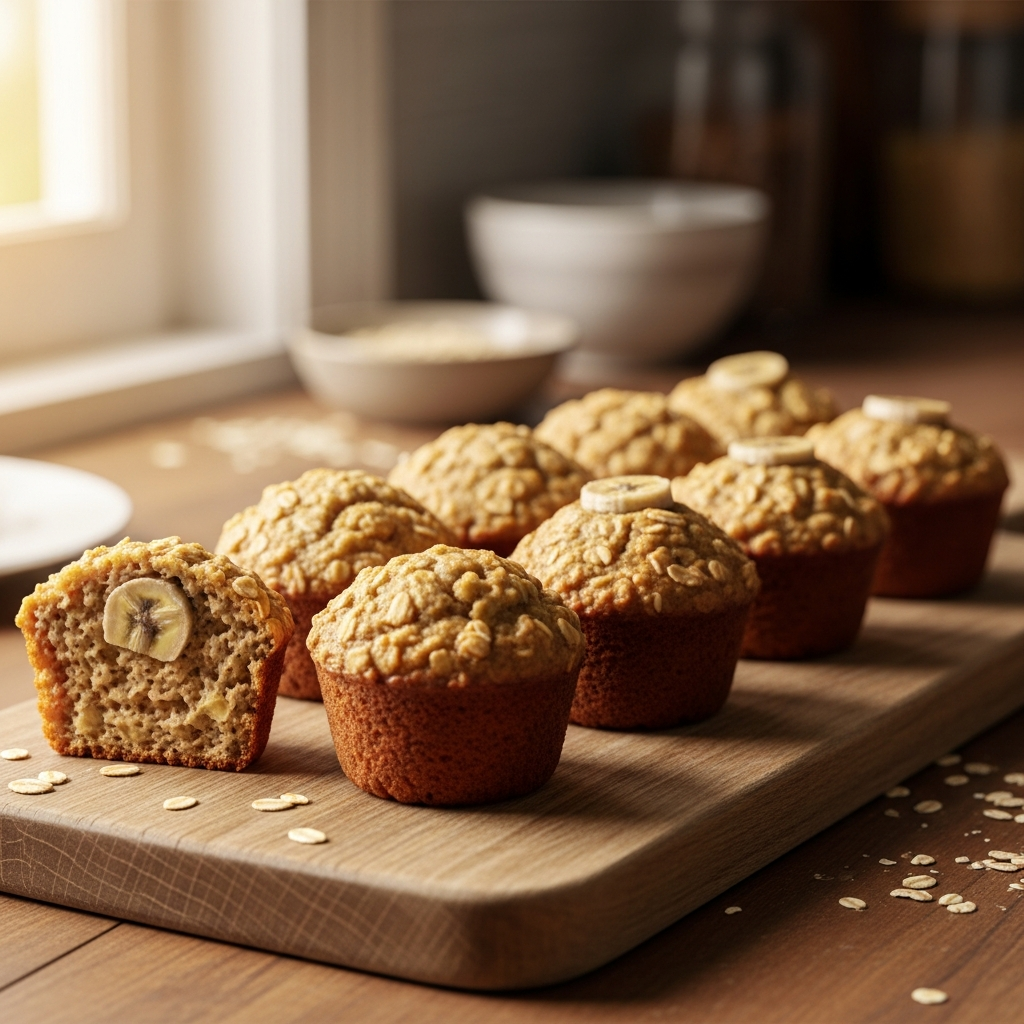
The American Academy of Pediatrics recommends introducing solid foods at around 6 months when your baby can sit independently, shows good head control, and demonstrates interest in food. Homemade baby muffins with no sugar and a soft texture are an excellent choice once these milestones are reached.
Muffins for 6-7 Month Old Babies
At this stage, your baby uses a palmar grasp to rake food into their fist. Make muffins extra soft by adding more mashed banana or applesauce. Serve half a mini muffin or large quarter pieces. Your baby will likely squeeze more than eat at first -- and that is completely normal. Exploration is eating.
Muffins for 8-9 Month Old Babies (Pincer Grasp Stage)
This is when things get exciting. As the pincer grasp develops, your baby can pick up smaller pieces with increasing precision. Serve mini muffins in quartered pieces. You can also introduce slightly more texture at this stage -- small bits of soft fruit or finely shredded vegetables in the batter.
Muffins for 10-12 Month Olds and Beyond
By 10-12 months, most babies have a refined pincer grasp and stronger chewing ability. You can serve whole mini muffins and let your baby bite off pieces independently. Toddlers at 12+ months can handle 2-3 mini muffins per snack.
| Age | Muffin Texture | Serving Size | How to Serve | Key Milestone |
|---|---|---|---|---|
| 6-7 months | Very soft, extra moist | 1/2 mini muffin | Half or large quarters | Palmar grasp, gumming |
| 8-9 months | Soft with small bits | 1-2 mini muffins | Quartered pieces | Pincer grasp developing |
| 10-12 months | Soft standard | 1-2 mini muffins | Halved or whole mini | Refined pincer grasp |
| 12+ months | Standard mini muffin | 2-3 mini muffins | Whole mini muffins | Self-feeding independence |
Base Baby Muffin Recipe with No Added Sugar
This 3-ingredient baby muffins base recipe is the foundation for every variation in this guide. It uses zero added sugar -- ripe bananas provide all the sweetness your baby needs. The American Academy of Pediatrics recommends that children under 2 should avoid all foods with added sugars, making this naturally sweetened approach the gold standard.
3-Ingredient Baby Muffins: Ingredients You Will Need
- 2 large ripe bananas -- look for bananas with lots of brown spots (the riper, the sweeter)
- 1 cup oat flour (or whole wheat flour -- see flour comparison below)
- 2 eggs
Optional add-ins: 1/2 teaspoon cinnamon, 1/2 teaspoon vanilla extract, 1 tablespoon melted coconut oil for added moisture
Step-by-Step Instructions
- Preheat your oven to 350F (175C). Grease a 24-cup mini muffin tin or line with silicone molds.
- Mash the ripe bananas in a large bowl until smooth.
- Add eggs and whisk until fully combined.
- Fold in the oat flour until just mixed. Do not overmix -- lumpy batter makes moister muffins.
- Spoon batter into mini muffin cups, filling each about two-thirds full.
- Bake for 12-15 minutes until a toothpick comes out clean.
- Cool in the pan for 5 minutes, then transfer to a wire rack.
Yield: 24 mini muffins | Prep time: 5 minutes | Bake time: 12-15 minutes | Total: 20 minutes
Best Flour Options for Baby Muffins
Your flour choice matters. Here is how the most popular baby-safe options compare:
| Flour Type | Texture Result | Nutritional Advantage | Allergen Info | Best For |
|---|---|---|---|---|
| Oat flour | Soft, tender crumb | High fiber, iron, B vitamins | Gluten-free (if certified) | Softest texture, beginners |
| Whole wheat flour | Slightly denser | Whole grains, protein, fiber | Contains gluten | Heartier muffins, 9+ months |
| Almond flour | Moist, crumbly | Healthy fats, protein, vitamin E | Tree nut allergen | Grain-free option |
| Coconut flour | Very absorbent, dry | High fiber, low carb | Tree nut free (usually) | Use 1/3 the amount of other flours |
Pro tip: Make your own oat flour by blending rolled oats in a food processor or high-speed blender for 30 seconds. This is often cheaper than buying pre-ground oat flour and guarantees freshness.
How to Hide Vegetables in Baby Muffins

Here is a counterintuitive truth: babies who reject steamed broccoli will happily eat that same broccoli baked into a soft muffin. The key is knowing which vegetables hide best and the right ratio so texture stays perfect. Baby muffins with hidden vegetables deliver the same nutritional punch as purees without the struggle.
Best Vegetables to Sneak Into Muffins (Ranked by Ease)
- Tier 1 -- Easiest to hide: Zucchini, butternut squash, sweet potato (mild flavor, blend invisibly into batter)
- Tier 2 -- Moderate: Carrot, pumpkin, beet (slight color or flavor, pair with fruit to mask)
- Tier 3 -- Advanced: Spinach, broccoli, peas (stronger flavor, requires banana or blueberry to balance)
Amount guide: Start with 2 tablespoons of pureed vegetables per 12 mini muffins and gradually increase to 1/4 cup. Going beyond 1/3 cup per batch risks making muffins too dense or wet.
Zucchini and Carrot Muffins for Baby (The Sneakiest Combination)
Zucchini is the undisputed champion of hidden vegetable muffins. It has a neutral flavor, high moisture content, and virtually no color change in batter. To make zucchini muffins for baby, start with the base recipe and add:
- 1/2 cup finely grated zucchini (squeeze out excess moisture with a clean towel)
- 1/4 cup finely grated carrot (adds natural sweetness and vibrant color)
The carrot adds beta-carotene and vitamin A while the zucchini contributes vitamin C, potassium, and extra fiber. Together, they disappear completely into the batter.
Sweet Potato and Pumpkin Muffins for Baby (Vitamin A Powerhouse)
Sweet potato muffins for baby are a nutrition powerhouse. Use 1/2 cup roasted sweet potato puree or canned pumpkin puree (pure pumpkin, not pie filling) in your base recipe. These vegetables are naturally sweet, so your muffin flavor actually improves. Add 1/4 teaspoon cinnamon for warmth. One mini muffin made with sweet potato puree can provide a meaningful dose of vitamin A -- critical for your baby's eye development and immune function.
Spinach Banana Baby Muffins (The Green Ones Kids Actually Eat)
Yes, they turn green. But here is the secret: ripe banana completely masks the taste of spinach. Blend 1 cup fresh spinach leaves with your mashed banana before mixing the batter. Your baby gets iron, folate, and vitamin K in every bite. The color might surprise you, but most babies could not care less -- and some are actually fascinated by green food.
8 Baby Muffin Flavor Variations Your Little One Will Love
Once you have mastered the base recipe, these flavor variations keep things exciting. Each one uses the 3-ingredient base recipe with simple modifications. All remain baby muffins with no sugar -- naturally sweetened by fruit only.
- Banana Blueberry Baby Muffins: Add 1/3 cup fresh or frozen blueberries (smash lightly for younger babies). Blueberry muffins for babies are packed with antioxidants.
- Apple Cinnamon Baby Muffins: Replace one banana with 1/2 cup unsweetened applesauce. Add 1/2 teaspoon cinnamon. Iron-rich if you stir in 2 tablespoons iron-fortified infant cereal.
- Pumpkin Cinnamon Baby Muffins: Add 1/3 cup canned pumpkin puree and 1/4 teaspoon each of cinnamon and nutmeg. Perfect for fall meal prep.
- Peanut Butter Banana Baby Muffins: Swirl 2 tablespoons creamy peanut butter into batter. Introduce only after confirming no nut allergy with your pediatrician.
- Apple Banana Oat Baby Muffins: Use the blender muffin method -- combine all ingredients in a high-speed blender for perfectly smooth batter. Add 1/2 cup rolled oats for extra texture.
- Avocado Baby Muffins: Replace one banana with 1/2 ripe avocado for healthy fats and a creamy, dense texture. Mild flavor that pairs well with everything.
- Strawberry Oat Baby Muffins: Add 1/3 cup diced fresh strawberries. Spring season variation that your baby will love.
- Chocolate Beet Baby Muffins: Add 2 tablespoons unsweetened cocoa powder and 1/4 cup beet puree. Sounds unusual, but the beet adds sweetness and moisture while cocoa provides iron. Suitable for 10+ months.
Blender muffin shortcut: Any of these variations can be made using the blender method. Throw all ingredients into a high-speed blender, pulse until smooth, pour into your mini muffin tin, and bake. One bowl. No cleanup. This is the method busy parents swear by for batch cooking muffins for baby.
Allergy-Friendly Baby Muffin Recipes (Egg-Free, Dairy-Free, Gluten-Free)
Food allergies affect roughly 5.3% of U.S. children according to the CDC, which means allergy-friendly baby muffins are not optional -- they are essential for many families. Here is how to modify any recipe in this guide for specific dietary needs.
Egg-Free Baby Muffins Using Flax, Chia, or Banana
- Flax egg: 1 tablespoon ground flaxseed + 3 tablespoons water, rest 5 minutes (replaces 1 egg)
- Chia egg: 1 tablespoon chia seeds + 3 tablespoons water, rest 10 minutes (replaces 1 egg)
- Extra banana: 1/2 mashed ripe banana replaces 1 egg (adds extra sweetness)
Texture note: Egg-free baby muffins tend to be slightly denser. Add 1 tablespoon extra applesauce to compensate for moisture loss.
Dairy-Free and Gluten-Free Baby Muffin Modifications
The base recipe in this guide is already dairy-free. For recipes that call for dairy additions, use these swaps:
- Coconut oil for butter (1:1 ratio)
- Oat milk or coconut milk for cow's milk (1:1 ratio)
- Coconut yogurt for Greek yogurt (1:1 ratio, add 1 tablespoon extra flour to thicken)
For gluten-free baby muffins, use certified gluten-free oat flour as a direct 1:1 replacement. Combined dairy-free and gluten-free? Oat flour + coconut oil + oat milk covers both. For fully vegan baby muffins, combine the flax egg with dairy-free swaps.
Nut-Free Baby Muffins for Daycare Compliance
Many daycares require nut-free foods. Replace almond flour with sunflower seed flour or additional oat flour. Swap peanut butter for sunflower seed butter (SunButter) or tahini. Always include a written ingredient list with each batch you send to daycare.
| Allergen to Remove | Substitution | Ratio | Texture Note |
|---|---|---|---|
| Egg (1 egg) | Flax egg (1 tbsp flax + 3 tbsp water) | 1:1 | Slightly denser, add extra moisture |
| Egg (1 egg) | Chia egg (1 tbsp chia + 3 tbsp water) | 1:1 | Slight crunch from seeds |
| Egg (1 egg) | 1/2 mashed ripe banana | 1:1 | Sweeter, moister result |
| Dairy (butter) | Coconut oil, melted | 1:1 | Nearly identical texture |
| Dairy (milk) | Oat milk or coconut milk | 1:1 | No noticeable difference |
| Dairy (yogurt) | Coconut yogurt | 1:1 | Slightly thinner, add 1 tbsp flour |
| Gluten (wheat flour) | Certified GF oat flour | 1:1 | Softer, lighter crumb |
| Tree nuts (almond flour) | Sunflower seed flour | 1:1 | Slightly earthier flavor |
Freezer-Friendly Batch Cooking Guide for Baby Muffins
This is what separates this baby muffins recipe guide from every other. Most articles mention freezing as an afterthought. Here, freezer-friendly batch cooking is the entire strategy -- because busy parents need a system, not just a recipe.
How to Freeze Baby Muffins Step by Step
- Cool completely on a wire rack (15-20 minutes minimum -- never freeze warm muffins)
- Flash freeze on a parchment-lined baking sheet in a single layer for 1-2 hours
- Transfer to labeled freezer bags, pressing out all air before sealing
- Label each bag with flavor name, date made, and use-by date
Flash freezing prevents muffins from sticking together in the bag, so you can grab exactly the number you need each morning without thawing the entire batch.
How Long Do Baby Muffins Last? (Storage Timeline)
- Room temperature: Up to 2 hours (stricter timeline for baby food safety)
- Refrigerator: 3-5 days in an airtight container
- Freezer: Up to 3 months with maintained quality in sealed bags
If a thawed muffin smells off, has visible mold, or feels slimy -- discard it immediately. Infant immune systems are still developing, so baby food requires stricter storage standards.
Best Way to Thaw and Reheat Baby Muffins
- Overnight refrigerator thaw (best method): Pull from freezer the night before, serve at room temperature next morning
- Microwave method: 20-30 seconds on medium power, always check temperature before serving
- Counter thaw: 1-2 hours at room temperature (do not exceed 2 hours total)
- Toaster oven: 5 minutes at 300F for slightly crisp exterior (toddlers 12+ months only)
Critical rule: Always test the internal temperature by pressing the center of the muffin with your finger. It should feel warm, never hot.
Weekly Batch Cooking Schedule for Busy Parents
Here is the system that saves parents hours every week:
- Sunday prep session: Make 48-72 mini muffins (2-3 batches of different flavors) in 45-60 minutes
- Monday-Friday rotation: Pull 2-3 muffins per day from the freezer the night before
- Variety plan example: Week 1: banana blueberry + zucchini carrot. Week 2: sweet potato cinnamon + spinach banana
One hour on Sunday covers your baby's snacks and breakfast additions for the entire week. That is the power of make-ahead baby muffins combined with a simple rotation system.
How to Serve Muffins Safely to Babies (Choking Prevention)
Safety is non-negotiable. Before you serve any muffin to your baby, you need to know two things: the squish test and the difference between gagging and choking.
The Squish Test and Texture Safety Checklist
Perform this test on every batch: press the muffin between your thumb and forefinger. It should compress easily with minimal pressure. If it does not squish, it is too firm for your baby. Overbaked muffins are the number one safety risk -- always set your timer and check at the minimum bake time (12 minutes for mini muffins).
Before-serving checklist:
- Muffin is soft and moist throughout (no dry edges)
- No large chunks of fruit, vegetable, or nut pieces
- Temperature is warm, not hot
- Size is cut appropriately for your baby's age (see serving guide above)
- Baby is seated upright in a highchair and supervised
If a muffin turns out too firm, you have options: microwave for 10 seconds to soften it, crumble it into yogurt, or save it for an older toddler who can handle a firmer texture.
Gagging vs. Choking: What Every Parent Must Know
Gagging is normal -- loud, visible, and means your baby's protective reflexes are working. Your baby may cough, sputter, or push food forward. This is learning, not an emergency.
Choking is silent. No sound, no airflow, and your baby's face may change color. The critical distinction: noise means gagging (they are handling it). Silence with struggle means choking -- intervene immediately.
Before starting baby led weaning with any finger food, including muffins, the AAP recommends that all caregivers take an infant CPR course. This single step gives you the confidence to let your baby explore food safely.
Frequently Asked Questions About Baby Muffins
When can babies eat muffins?
Babies can start eating specially made soft mini muffins at 6 months old, when they show signs of readiness for solid foods such as sitting independently and showing interest in food. Muffins should be made without added sugar, have a soft gummable texture, and be cut into age-appropriate pieces.
Can babies eat muffins without teeth?
Yes. Babies can safely eat soft mini muffins without teeth because their gums are strong enough to mash soft foods. The key is ensuring the muffin passes the squish test -- it should compress easily between your thumb and forefinger. Avoid muffins with hard edges or crispy tops.
What can I use instead of sugar in baby muffins?
The best sugar replacements for baby muffins are ripe mashed banana, unsweetened applesauce, date puree, mashed sweet potato, and pear puree. These provide natural sweetness plus vitamins and fiber. Never use honey for babies under 12 months due to botulism risk, and avoid all artificial sweeteners.
Are store-bought muffins safe for babies?
Most store-bought muffins are not recommended for babies because they contain added sugar, excess sodium, preservatives, and artificial flavors. Research published in the journal Nutrients found 71% of commercial baby foods are ultra-processed. Homemade mini muffins with simple, whole ingredients are always the safer, healthier option.
How do you make muffins soft enough for babies?
Use mashed ripe banana, unsweetened applesauce, or Greek yogurt to add moisture. Avoid overbaking -- check muffins 2 minutes before the minimum bake time. Use oat flour instead of all-purpose flour for a naturally softer crumb. Let muffins cool in the tin for 5 minutes to set without drying out.
How many muffins can a baby eat per day?
For babies 6-9 months, offer 1-2 mini muffins per sitting as part of a balanced meal alongside breast milk or formula. Babies 9-12 months can have 2-3 mini muffins per snack. Muffins should complement, not replace, meals with protein, fruits, and vegetables from other sources.
Can I use baby food pouches in muffin recipes?
Yes. Baby food pouches are a convenient shortcut for adding fruit and vegetable purees to muffin batter. Use the pouch contents as a direct substitute for mashed banana or pureed vegetables. Choose pouches with single ingredients and no added sugar for the best results.
Are muffins good for baby led weaning?
Muffins are one of the best foods for baby-led weaning because they are soft, easy to grip, and can be loaded with hidden nutrition. Mini muffins fit perfectly in a baby's palm for self-feeding. They also freeze well, making them an ideal BLW meal prep option for busy families.
Start Baking: Your Baby's Healthiest Snack Is 20 Minutes Away
You now have everything you need to make the best baby muffins recipe for your little one -- a simple 3-ingredient base, 8 flavor variations, 3 hidden vegetable combinations, a complete allergy substitution guide, and a freezer-friendly batch cooking system that turns one hour of weekend baking into an entire week of wholesome snacks.
The best part? You do not need to be an experienced baker. These healthy muffins for baby are designed for real parents with messy kitchens and limited time. Start with the base banana oat recipe, try the sneaky zucchini variation when you are feeling adventurous, and build your freezer stash one Sunday at a time.
Your baby deserves real food with real ingredients -- no added sugar, no mystery preservatives, just soft, nutritious mini muffins made with love. At PatPat, we are here to support your parenting journey with practical guidance that makes everyday moments easier. For more ideas on nourishing your growing baby, explore our guides on baby pancake recipes, finger foods for baby by age, and baby food meal prep made simple.
Now preheat that oven, grab some ripe bananas, and make your baby's week.




