


Here is the good news: making stage 1 baby food at home is far simpler than most parents expect. Whether you are exploring 4 month baby food recipes or waiting until closer to 6 months, this comprehensive guide covers everything you need to know about stage 1 purees homemade.
At PatPat, we understand the journey of parenthood involves countless decisions. This guide is based on current American Academy of Pediatrics and World Health Organization recommendations. You will learn the science behind texture requirements, discover 15 beginner-friendly recipes, and get a detailed baby food consistency guide that most resources overlook.
Stage 1 Baby Food Quick Reference
| Category | Stage 1 Guidelines |
|---|---|
| Age Range | 4-6 months (readiness dependent) |
| Texture | Thin, smooth, no lumps |
| Consistency | Runny like thin yogurt |
| Ingredients | Single-ingredient only |
| Portion Size | 1-2 teaspoons initially |
| Frequency | 1-2 times per day |
| Best First Foods | Sweet potato, avocado, banana, peas, carrots |
| Thinning Agents | Breast milk, formula, water |
What Is Stage 1 Baby Food and Why Texture Matters
Defining Stage 1 Baby Food: Smooth, Thin, and Single-Ingredient
Stage 1 baby food refers to the very first solid foods your baby will experience. These purees must be completely smooth with no lumps or chunks, similar to thin yogurt that drips easily from a spoon.
The defining characteristic of stage 1 foods is that they contain only one ingredient at a time. This single-ingredient approach serves a critical purpose: if your baby has an allergic reaction, you can immediately identify the culprit.
Stage 1 differs from later stages. Stage 2 introduces thicker textures and combinations around 7-8 months. Stage 3 has soft chunks for babies approaching their first birthday.
How Stage 1 Purees Support Early Feeding Development
At 4-6 months, most babies still have their tongue-thrust reflex, which causes them to push food forward. Thin purees work with this reflex rather than against it. According to the CDC's infant nutrition guidelines, preparing foods that dissolve easily with saliva helps prevent choking.

When to Start Solids: The 4-Month vs 6-Month Debate Explained
Current AAP and WHO Guidelines on Solid Food Introduction
Different health organizations offer slightly different recommendations. The World Health Organization recommends exclusive breastfeeding for the first 6 months, meaning no other foods or liquids.
According to the American Academy of Pediatrics, introducing complementary foods between 4-6 months based on developmental readiness is supported. The AAP emphasizes watching for readiness signs rather than following a strict calendar.
Why Some Pediatricians Recommend Starting at 4 Months
The landmark LEAP trial demonstrated that early introduction of peanuts significantly decreased peanut allergy development in high-risk infants by approximately 80%. This research has changed pediatric feeding recommendations worldwide.
Iron is another consideration. Around 4-6 months, infants' iron stores become depleted, making iron-rich complementary foods important for healthy development.
Readiness Signs Your Baby Shows, Not the Calendar
Rather than focusing solely on age, watch for these developmental readiness signs:
- Good head and neck control when sitting supported
- Able to sit with minimal assistance
- Shows interest in food by watching you eat or reaching toward your plate
- Opens mouth when food approaches
- Tongue-thrust reflex is diminishing
- Birth weight has approximately doubled
- Can bring objects to mouth

"The Dietary Guidelines for Americans and the American Academy of Pediatrics recommend introducing children to complementary foods around 6 months of age or when developmentally ready." - CDC Infant and Toddler Nutrition
Essential Equipment for Making Stage 1 Purees Homemade
Must-Have Tools for Homemade Baby Food
You do not need expensive gadgets. Here is what works:
- High-speed blender or immersion blender: Most versatile for smooth textures
- Fine mesh strainer: Removes stringy fibers from peas and green beans
- Steamer basket: Preserves more nutrients than boiling
- Ice cube trays: Perfect for freezing portion-sized servings
- Airtight storage containers: Glass or BPA-free plastic
Do You Really Need a Baby Food Maker?
Specialized baby food makers combine steaming and blending but come with drawbacks: additional expense, limited use period, and more storage required. The honest verdict? Baby food makers are nice but not necessary. Regular kitchen equipment produces identical results.
The Complete Baby Food Consistency Guide for Stage 1
How Thin Should Stage 1 Baby Puree Be?
Stage 1 purees need to be thinner than most people expect:
- Should drip easily from a spoon, not plop off in clumps
- Consistency similar to thin yogurt or runny applesauce
- No visible pieces, chunks, or fiber strands
The most common mistake? Making purees too thick initially.
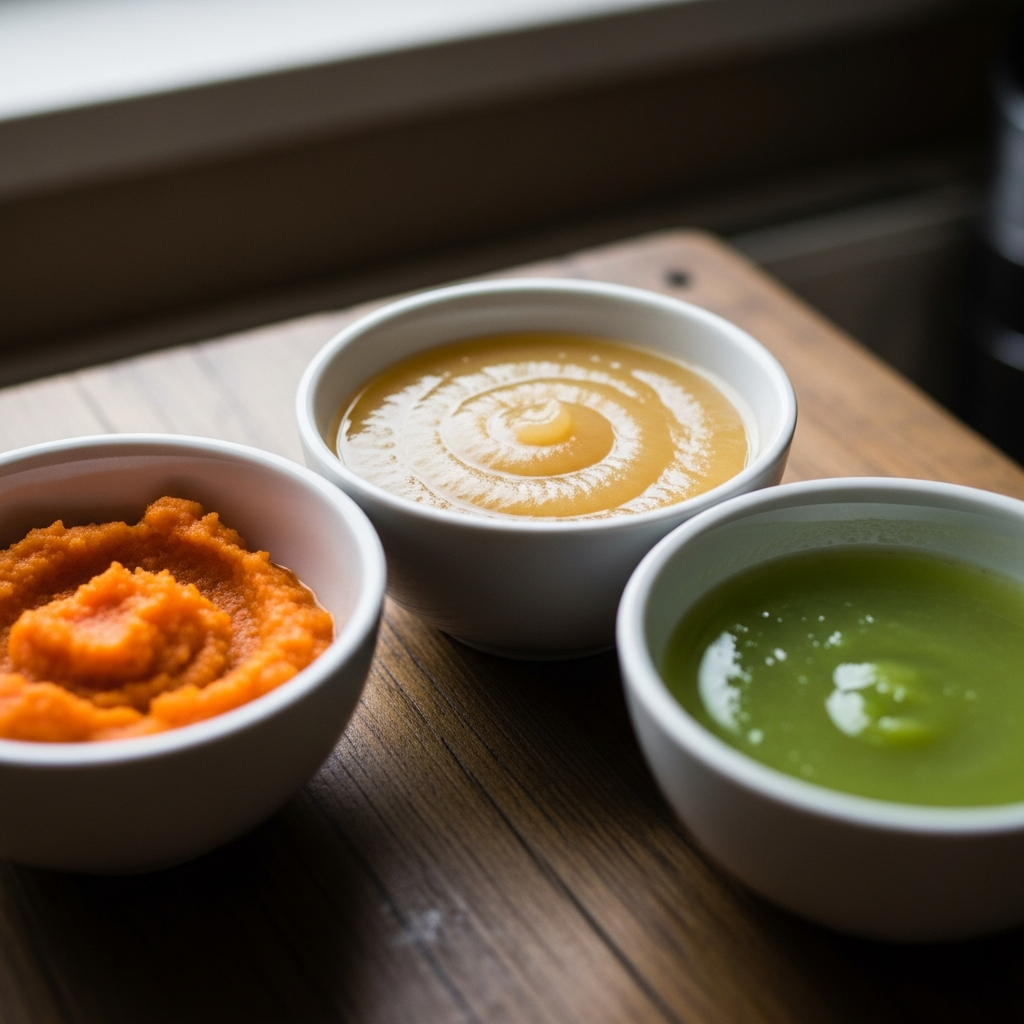
How to Thin Baby Food Purees to the Right Consistency
Choose your thinning liquid based on your baby's feeding situation:
- Breast milk: Adds familiar flavor and extra nutrition
- Formula: Ideal for formula-fed babies
- Cooking water: Retains nutrients from steamed vegetables
- Plain water: Works when other options are unavailable
Add liquid gradually. It is always easier to thin a puree than to thicken one.
Troubleshooting Common Texture Problems
| Problem | Solution |
|---|---|
| Stringy purees | Add more liquid and strain through fine mesh |
| Grainy texture | Blend longer and use a finer strainer |
| Too watery | Add a bit more cooked food, never thickeners |
| Brown color | Normal for some fruits; work quickly or add lemon juice |
15 Easy Single-Ingredient Puree Recipes for Beginners
Single-ingredient purees are essential for stage 1 feeding. They allow you to identify allergies easily, let your baby experience distinct flavors, and simplify preparation during an already busy time.
Vegetable Purees: Where Many Experts Recommend Starting
Many pediatric nutritionists suggest introducing vegetables before fruits. The reasoning? Vegetables have subtler flavors, and exposing babies to them first may help develop broader taste preferences.
Sweet Potato Puree
Prep time: 5 min | Cook time: 20 min | Makes: 6-8 servings
Ingredients: 1 medium sweet potato
Method: Peel and cube sweet potato. Steam for 15-20 minutes until very soft. Blend with cooking water until completely smooth. Add more liquid until it drips easily from a spoon.
Nutrition: Rich in vitamin A and beta-carotene for eye health and immune function.
Storage: Refrigerate 2-3 days; freeze up to 3 months.
Carrot Puree
Prep time: 5 min | Cook time: 15 min | Makes: 4-6 servings
Ingredients: 4-5 medium carrots
Method: Peel and slice carrots. Steam for 15 minutes until fork-tender. Blend until smooth, adding cooking water as needed.
Nutrition: Excellent source of vitamin A. Natural sweetness babies love.
Storage: Refrigerate 2-3 days; freeze up to 3 months.
Green Pea Puree
Prep time: 2 min | Cook time: 5 min | Makes: 4 servings
Ingredients: 1 cup fresh or frozen peas
Method: Steam peas for 3-5 minutes. Blend thoroughly, then strain through fine mesh to remove skins for smooth texture.
Nutrition: Good source of protein, fiber, and iron.
Tip: Straining is essential to achieve true stage 1 smoothness.
Butternut Squash Puree
Prep time: 10 min | Cook time: 45 min | Makes: 8-10 servings
Ingredients: 1 small butternut squash
Method: Halve squash and remove seeds. Roast cut-side down at 400F for 45 minutes. Scoop flesh and blend until smooth.
Nutrition: High in vitamins A and C, plus potassium.
Tip: Roasting enhances natural sweetness.
Zucchini Puree
Prep time: 5 min | Cook time: 10 min | Makes: 4 servings
Ingredients: 2 medium zucchini
Method: Peel and slice zucchini. Steam for 8-10 minutes until very soft. Blend until smooth.
Nutrition: Hydrating and gentle on digestion. Very mild flavor.
Fruit Purees: Naturally Sweet First Tastes
Banana Puree
Prep time: 2 min | Cook time: None | Makes: 2 servings
Ingredients: 1 ripe banana with brown spots
Method: Simply mash with a fork until smooth. Thin with breast milk or formula if needed.
Nutrition: Potassium, natural energy, easy to digest.
Tip: Brown spots indicate ripeness and sweeter flavor. Perfect for on-the-go.
Avocado Puree
Prep time: 3 min | Cook time: None | Makes: 2 servings
Ingredients: 1 ripe avocado
Method: Scoop avocado flesh and mash or blend. Thin as needed for dripping consistency.
Nutrition: Healthy fats and omega-3s crucial for brain development.
Note: Use immediately as avocado oxidizes quickly.
Apple Puree
Prep time: 10 min | Cook time: 12 min | Makes: 4 servings
Ingredients: 2-3 sweet apples such as Gala or Fuji
Method: Peel, core, and quarter apples. Steam 10-12 minutes until soft. Blend until smooth.
Nutrition: Fiber and vitamin C.
Pear Puree
Prep time: 5 min | Cook time: 10 min | Makes: 4 servings
Ingredients: 2-3 ripe pears
Method: Peel, core, and slice pears. Steam 8-10 minutes. Blend until smooth.
Nutrition: Fiber and gentle on digestion. Helpful for constipation.
Mango Puree
Prep time: 5 min | Cook time: None if very ripe | Makes: 3 servings
Ingredients: 1 ripe mango
Method: Peel and remove pit. Blend until smooth. No cooking needed if very ripe.
Nutrition: Vitamins C and A. Best in summer months.
Protein and Iron-Rich Purees for Healthy Development
Iron-Fortified Oat Cereal
Prep time: 2 min | Cook time: None | Makes: 1 serving
Ingredients: 1 tbsp iron-fortified baby oat cereal, 4-5 tbsp breast milk or formula
Method: Mix until smooth and thin. Adjust liquid for proper dripping consistency.
Nutrition: Iron and B vitamins. Critical as iron stores deplete around 6 months.
Chicken Puree
Prep time: 5 min | Cook time: 15 min | Makes: 4 servings
Ingredients: 2 oz boneless chicken breast
Method: Poach chicken until fully cooked. Blend with cooking liquid until very smooth. Strain if needed.
Nutrition: Protein, iron, and zinc for growth.
Storage: Refrigerate 1-2 days only; freeze up to 2 months.
Green Bean Puree
Prep time: 5 min | Cook time: 12 min | Makes: 4 servings
Ingredients: 1 cup fresh green beans
Method: Trim ends and steam 10-12 minutes. Blend thoroughly, then strain to remove fibers.
Nutrition: Fiber and vitamin K.
Prune Puree
Prep time: 15 min | Cook time: None | Makes: 6 servings
Ingredients: 10-12 pitted prunes
Method: Soak prunes in warm water for 10 minutes. Blend with soaking liquid until smooth.
Nutrition: Iron and fiber. Excellent for preventing or relieving constipation.
Caution: Use sparingly due to natural laxative effect.
Red Lentil Puree
Prep time: 2 min | Cook time: 25 min | Makes: 6 servings
Ingredients: 1/2 cup red lentils
Method: Rinse lentils. Simmer in water for 20-25 minutes until very soft and falling apart. Blend until smooth.
Nutrition: Protein, iron, and fiber. Red lentils break down smoothest.
Storing and Freezing Homemade Baby Food Safely
Refrigerator Storage: Short-Term Guidelines
According to FDA guidelines, homemade baby foods keep for one to two days in the refrigerator:
- Store in airtight containers within 2 hours of cooking
- Fruit and vegetable purees last 2-3 days refrigerated
- Meat purees: 1-2 days maximum
- Label with date and contents
Freezing Baby Purees for Batch Cooking Success
The ice cube tray method works beautifully:
- Each standard ice cube holds approximately 1 oz of puree
- Silicone trays release frozen cubes more easily than plastic
- Transfer frozen cubes to labeled freezer bags
- Most purees freeze well for 1-3 months
- Avoid freezing banana and avocado as texture changes
Thawing and Reheating Frozen Baby Food
- Best method: Thaw overnight in refrigerator
- Quick method: Warm water bath
- Microwave: Stir thoroughly and temperature-test before serving
- Never refreeze thawed baby food
Food Safety Reminder: Never leave baby food at room temperature for more than 2 hours. Discard any leftover food your baby has eaten from directly, as saliva introduces bacteria.
Introducing Allergens Safely During Stage 1 Feeding
When and Why to Introduce Allergens Early
Research demonstrates that early peanut introduction can reduce allergy development by approximately 80% in high-risk infants. The AAP now recommends introducing common allergens between 4-6 months after your baby has tolerated initial purees.
How to Safely Introduce Peanuts, Eggs, and Other Allergens
Follow this protocol for each new allergenic food:
- Introduce at home, never at a restaurant or daycare
- Try early in the day, not before naps or bedtime
- Offer a small amount first, about 1/4 teaspoon
- Wait 10 minutes and offer more if no reaction appears
- Monitor for 2 hours after feeding
- Continue offering 2-3 times weekly to maintain tolerance
Peanut tip: Mix smooth peanut butter with breast milk or a fruit puree until thin enough for stage 1 consistency.
Egg tip: Serve well-cooked scrambled egg, blended smooth with liquid.
Recognizing and Responding to Allergic Reactions
- Mild reactions: Hives, slight rash, fussiness
- Severe reactions (call 911): Difficulty breathing, swelling of lips or tongue, repeated vomiting
Ask your pediatrician about antihistamine dosing before allergen introduction. Babies with severe eczema may need allergy testing first.
Troubleshooting Common Stage 1 Feeding Challenges
Baby Refusing to Eat Purees: What to Try
- Your baby may not be ready; try again in 1-2 weeks
- Try different temperatures: room temp vs. slightly warm
- Try silicone-tipped spoons for comfort
- Research shows it takes 10-15 exposures for babies to accept new foods
Gagging vs. Choking: Understanding the Difference
| Gagging (Normal) | Choking (Emergency) |
|---|---|
| Loud coughing sounds | Silent or quiet |
| Face may redden | Face may turn blue |
| Resolves on its own | Requires intervention |
Gagging is protective - it pushes food forward. If your baby gags frequently, the puree may be too thick.
How Much Should Your Baby Eat at Stage 1?
- First week: 1-2 teaspoons per feeding
- Weeks 2-4: 2-4 tablespoons per feeding
- By 6-7 months: Up to 4-6 tablespoons
- Frequency: Start once daily, increase to twice
Let your baby guide portions. "Food before one is just for fun" - milk remains the nutritional priority.
Frequently Asked Questions About Stage 1 Baby Food
Can I give my 4-month-old baby food?
Yes, some babies are ready for stage 1 baby food at 4 months if they show clear readiness signs: good head control, sitting with support, interest in food, and diminishing tongue-thrust reflex. The AAP supports introduction between 4-6 months based on individual readiness. Always consult your pediatrician before starting solids, especially before 6 months.
What is the best first baby food to start with?
Iron-fortified infant cereal, sweet potato, or avocado are excellent first foods for babies. Many pediatricians recommend starting with vegetables before fruits to help prevent an early preference for sweet flavors. Single-ingredient purees allow you to identify any allergies or sensitivities easily.
How thin should stage 1 baby puree be?
Stage 1 purees should be very thin and smooth, similar to runny yogurt consistency. The puree should drip easily from a spoon rather than plop off in clumps. Thin purees with breast milk, formula, or the cooking water from steamed vegetables until reaching this consistency.
How long does homemade baby food last in the refrigerator?
Homemade fruit and vegetable purees last 2-3 days in the refrigerator when stored in airtight containers. Meat-based purees should be used within 1-2 days. For longer storage, freeze purees in ice cube trays for up to 1-3 months depending on the ingredient.
Should I start with fruits or vegetables for baby's first food?
Many feeding experts recommend starting with vegetables before fruits because vegetables have more subtle flavors. Introducing them first may help your baby accept a wider variety of tastes. However, there is no strict rule. The most important thing is offering a variety of nutritious single-ingredient foods.
Why does my baby gag on purees?
Gagging is a normal protective reflex that helps babies learn to manage food in their mouths. If your baby gags frequently, the puree may be too thick, so try thinning it further. Gagging typically decreases as babies develop better oral motor control. Contact your pediatrician if gagging is severe or accompanied by repeated vomiting.
Can I add breast milk to baby food purees?
Yes, breast milk is an excellent option for thinning baby food purees. It adds familiar flavor, extra nutrition, and helps achieve the perfect consistency. You can also use formula or the cooking water from steamed vegetables. Add liquid gradually until reaching the desired thin, smooth texture.
How many times a day should I feed my baby stage 1 food?
Start with one feeding per day, preferably in the morning when your baby is alert and not too hungry. After 1-2 weeks of consistent eating, you can introduce a second feeding. Remember that breast milk or formula remains the primary nutrition source, and solid foods are complementary at this stage.
Stage 1 Baby Food: Essential Takeaways for New Parents
- Stage 1 baby food should be thin, smooth, and made with single ingredients only
- Most babies are ready for solids between 4-6 months based on developmental signs, not just age
- Early allergen introduction between 4-6 months may significantly reduce allergy risk
- Proper consistency is crucial: purees should drip easily from a spoon, like thin yogurt
- Thin purees with breast milk, formula, or cooking water to achieve the right texture
- Homemade baby food saves money and gives you complete control over ingredients
- Store refrigerated purees for 2-3 days; freeze for up to 1-3 months
- Gagging is normal and protective; true choking is silent and requires intervention
- Breast milk or formula remains the primary nutrition source throughout the first year
Making stage 1 baby food at home is genuinely simpler than most parents expect. With the recipes and guidance in this article, you have everything needed to prepare nutritious, smooth purees that support your baby's development. Trust your instincts, follow your baby's cues, and remember that this is an exciting milestone worth enjoying together.
At PatPat, we love supporting families through every milestone. Explore our collection of baby feeding essentials, from silicone bibs to adorable mealtime outfits, designed to make this journey even more enjoyable. Shop PatPat baby essentials today.
Medical Disclaimer: This article is for informational purposes only and does not constitute medical advice. Always consult your pediatrician before introducing solid foods to your baby, especially if your baby has a history of allergies, was born prematurely, or has any health concerns.





