


Are you searching for the perfect gateway vegetable to introduce your baby to greens? Green bean baby food offers one of the mildest introductions to green vegetables your little one can experience. Unlike bitter broccoli or strong spinach, green beans provide a gentle flavor that most babies accept eagerly on their first try. Many pediatricians recommend green beans as an ideal starting point for building a love of vegetables.
At PatPat, we understand that starting solids feels both exciting and overwhelming. This comprehensive guide teaches you exactly how to make green bean baby food that is silky smooth and packed with essential nutrients. Whether you choose fresh summer beans from the farmers market or convenient frozen bags from your grocery store, you will discover why this fiber-rich vegetable has become a favorite first food among parents and nutrition experts alike.
By the end of this guide, you will know how to select quality green beans, prepare perfect green bean puree for babies at different stages, master the essential straining technique that eliminates stringy texture for younger babies, and create delicious combinations your little one will love. Let us transform this humble vegetable into your baby's new favorite meal.
Nutritional Benefits of Green Beans for Baby Development
Green beans deliver an impressive nutritional package that supports your baby's growth at every developmental stage. This mild green vegetable combines essential vitamins with gentle fiber that developing digestive systems handle well. Understanding these nutritional benefits helps you appreciate why green beans deserve a regular place in your baby's feeding rotation.
Fiber and Digestive Health
One of the standout features of green bean baby food is its fiber content. According to Healthline, green beans provide almost 3 grams of fiber per serving. This gentle fiber provides several important benefits for your baby:
- Promotes regular bowel movements during the transition to solids
- Helps establish healthy gut bacteria essential for immune function
- Prevents the constipation many babies experience when starting solid foods
- Supports blood sugar stability during feeding
Essential Vitamins A, K, and Folate
Green beans pack a powerful vitamin punch that rivals many other first vegetables. As reported by the USDA SNAP-Ed program, green beans are rich in vitamin C, vitamin K, and folate. These nutrients play crucial roles in your baby's development:
- Vitamin K: Supports blood clotting and bone development. Green beans can provide up to 50% of daily value per serving, making them one of the best vitamin K sources for babies.
- Vitamin A: Essential for eye health and immune function, with approximately 15% of recommended daily intake per cup of cooked green beans.
- Folate: Critical for brain development and cell growth during the rapid growth phases of infancy.
- Vitamin C: Enhances iron absorption from fortified cereals and other foods, helping prevent iron deficiency.
Green Bean Nutrition (per 1/4 cup cooked puree)
- Calories: ~15 | Fiber: 0.9g
- Vitamin A: 8% DV | Vitamin K: 10% DV
- Folate: 5% DV | Vitamin C: 6% DV
- Naturally low in nitrates compared to leafy greens
When Can Babies Start Eating Green Bean Puree
Understanding the right time to introduce green bean baby food helps ensure your little one is developmentally ready to enjoy this nutritious vegetable safely. According to the AAP on HealthyChildren.org, your baby should be able to sit in a high chair with good head control before starting solids. The CDC confirms that both the Dietary Guidelines for Americans and AAP recommend introducing solid foods at about 6 months.
Developmental Readiness Signs for Solids
Before offering green bean puree, watch for these important readiness signs:
- Baby can sit with minimal support and hold head steady
- Shows interest when watching others eat, reaching for food
- Has lost the tongue-thrust reflex that pushes food out
- Can close lips around a spoon and opens mouth when food approaches
- Seems hungry after regular milk feedings
Why Green Beans Make Ideal First Green Vegetables
Green beans stand out among green vegetables for several reasons that make them particularly suited for beginning eaters:
- Mild, slightly sweet flavor that babies accept more readily than bitter greens
- Lower nitrate content compared to spinach, beets, and other leafy vegetables
- Smooth texture achievable with proper preparation and straining
- Rarely triggers allergic reactions, making them a low-risk first food
- Serve as a gateway vegetable that helps babies accept other greens later
Fresh vs Frozen Green Beans for Baby Food
One of the most common questions parents ask is whether to use fresh or frozen green beans for homemade baby food. The good news is that both options produce excellent results. Research from the University of California-Davis found that frozen produce nutrition is generally equal to, and in some cases better than, fresh counterparts.
Selecting Fresh Green Beans for Baby Puree
When shopping for fresh green beans, quality selection matters significantly:
- Choose bright green, firm beans that snap cleanly when bent
- Avoid beans with brown spots, wilting, or soft areas
- Select young, thin beans as they are more tender with fewer strings
- Fresh beans are at peak quality during summer months
- Wash thoroughly under running water and trim both ends before cooking
Benefits of Using Frozen Green Beans
Frozen green beans offer compelling advantages for busy parents:
- Flash-frozen at peak ripeness, locking in maximum nutrition
- No preparation needed since they come pre-trimmed and washed
- Available year-round at consistent quality and price
- More affordable than fresh beans, especially outside peak season
- No nutrient loss during transportation as can occur with fresh produce
| Factor | Fresh | Frozen |
|---|---|---|
| Prep Work | Trim and wash required | Ready to cook |
| Availability | Seasonal (peak summer) | Year-round |
| Nutrition | Excellent when fresh | Equally excellent |
| Cost | Higher, varies seasonally | Consistent, affordable |

How to Make Green Bean Baby Food Step by Step
Making homemade green bean baby food is straightforward once you understand the process. This green bean baby food recipe creates smooth, nutritious puree perfect for babies 6 months and older. The key to success lies in proper cooking until very tender and thorough straining for younger babies.
Smooth Green Bean Puree for Baby
Ingredients
- 2 cups fresh green beans (trimmed) OR 2 cups frozen green beans
- 4-6 tablespoons breast milk, formula, or reserved cooking water
- Additional water for steaming
Steaming Method (Recommended for Nutrient Preservation)
Steaming preserves more vitamins than boiling, making it the preferred cooking method for green bean baby food:
- Bring 2 inches of water to boil in a pot fitted with a steamer basket
- Add trimmed fresh or frozen green beans to the basket
- Cover and steam for 10-12 minutes until very tender
- Test tenderness by piercing with a fork - beans should be completely soft
- Reserve 1/2 cup of the cooking water for blending
- Transfer steamed beans to blender or food processor
- Add 4 tablespoons of liquid (breast milk, formula, or cooking water)
- Blend on high for 2-3 minutes until smooth
- Proceed to straining step for babies under 8 months
Roasting Method for Enhanced Flavor (8+ Months)
Roasting brings out natural sweetness that some older babies prefer:
- Preheat oven to 400F (200C)
- Toss green beans with a small drizzle of olive oil
- Spread in single layer on baking sheet
- Roast 15-18 minutes until tender and slightly caramelized
- Cool slightly before transferring to blender
- Add liquid and blend until desired consistency
Texture by Age
| Age | Texture | Straining |
|---|---|---|
| 6 months | Very thin, completely smooth | Required |
| 7-8 months | Slightly thicker | Recommended |
| 9-10 months | Some texture acceptable | Optional |
| 11-12 months | Soft cooked pieces | No |
How to Strain Green Bean Puree for Younger Babies
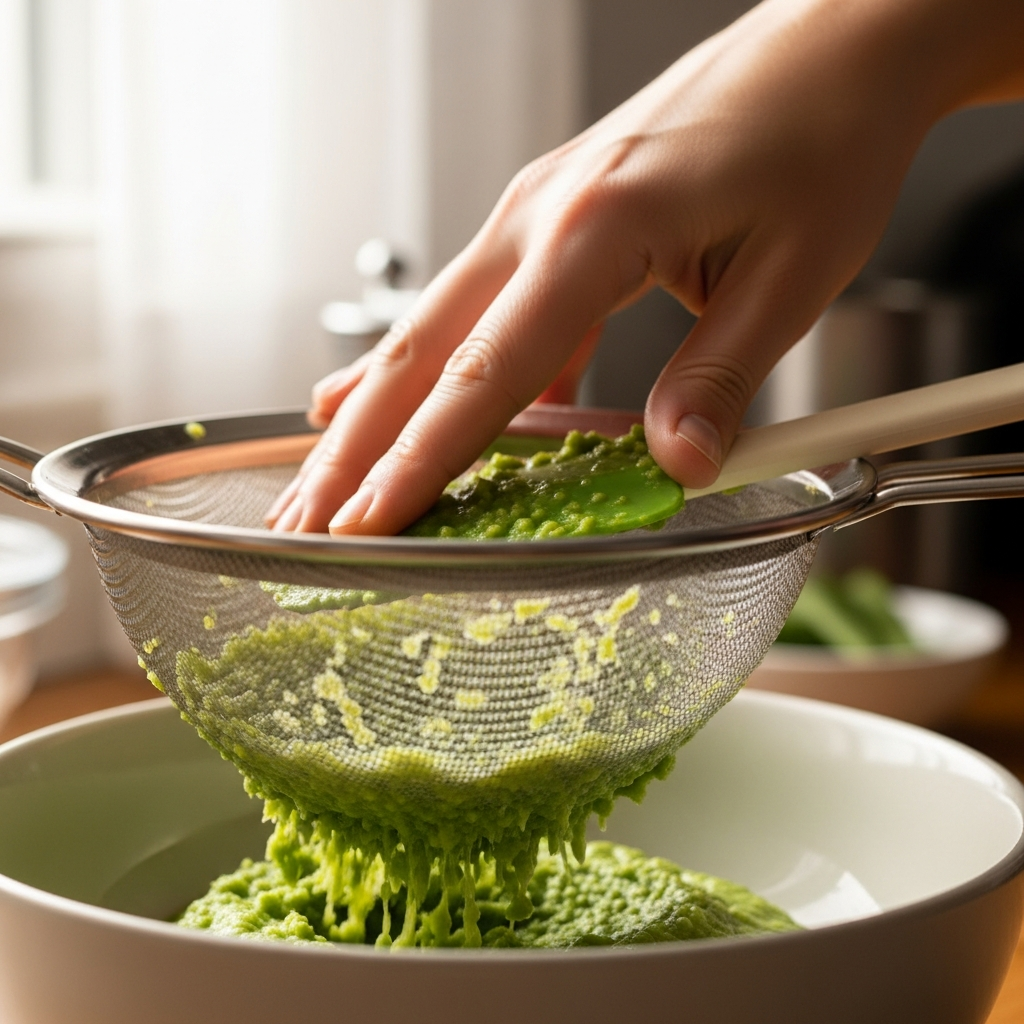
Straining is the secret to achieving the silky-smooth texture that younger babies need and accept. Unlike many other vegetables, green beans contain fibrous strings along their seams that blending alone simply cannot eliminate. This extra step makes the difference between puree your baby loves and puree they reject.
Why Green Bean Strings Require Straining
Understanding why straining matters helps you commit to this essential step:
- Green beans contain fibrous strings that persist even after extended blending
- These strings create a texture that causes many babies to gag or outright reject the food
- Young babies lack the oral motor skills to manage fibrous textures safely
- Straining removes strings while preserving all the nutrition
- The result is a silk-smooth green bean puree babies accept readily
Step-by-Step Straining Process
Fine Mesh Sieve Method (Most Common):
- Position a fine mesh sieve over a clean bowl
- Pour blended puree into the sieve
- Use the back of a silicone spatula or large spoon to press puree through
- Work in a circular motion, scraping across the mesh
- Scrape the underside of sieve frequently to collect smooth puree
- Continue until all puree has passed through
- Discard the fibrous strings remaining in the sieve
Troubleshooting Stringy Puree
Too thick to strain: Add more liquid before straining
Strings clogging sieve: Work in smaller batches
Still has texture: Strain second time through cheesecloth
Delicious Green Bean Combination Recipes
Once baby tolerates plain green bean puree, introduce these nutritious combinations (7+ months):
Green Bean and Sweet Potato
Mix 1/2 cup each strained green bean and sweet potato puree. Sweet potato's natural sweetness balances green bean's earthiness while providing complementary vitamins.
Green Bean and Apple
Combine 1/2 cup green bean puree with 1/2 cup unsweetened applesauce. Apple sweetness makes green beans palatable for vegetable-resistant babies, and vitamin C enhances iron absorption.
Green Bean and Pear
Mix equal parts green bean and ripe pear puree. Both are gentle on digestion with fiber supporting healthy bowel movements.
Green Bean and Carrot
Combine for double vegetable nutrition. Carrots add sweetness and beta-carotene for eye health.
How to Store and Freeze Green Bean Baby Food
Refrigerator Storage
- Store in airtight containers for 3-5 days maximum
- Place in coldest part of refrigerator
- Label with preparation date
Freezing for Meal Prep
- Cool puree completely
- Pour into silicone ice cube trays (each cube ~1 oz)
- Freeze until solid (4-6 hours)
- Transfer to labeled freezer bags
- Store up to 3-6 months
Thawing Methods
- Best: Thaw overnight in refrigerator
- Quick: Warm water bath
- Microwave: 15-second intervals, stirring between
- Use thawed puree within 24-48 hours; never refreeze
Green Bean Safety Tips
Choking Prevention
- Serve pureed, strained beans to babies under 9 months
- For baby-led weaning (9+ months), cook until very soft and mashable
- Cut whole beans lengthwise or smash before serving
- Always supervise meals
Managing Gas
According to Earth's Best, infants can have more gas because their digestive system is still developing. Start with 1-2 tablespoons and increase gradually.
Nitrate Safety
Good News About Nitrates
Green beans have lower nitrate levels than spinach, beets, or carrots. While Nationwide Children's Hospital advises waiting until 3 months for homemade vegetable purees, green beans are completely safe when introduced at the AAP-recommended 6 months.
Frequently Asked Questions
How Do I Make Green Bean Baby Food at Home?
Steam 2 cups green beans for 10-12 minutes until very tender. Blend with 4-6 tablespoons liquid until smooth. Strain through fine mesh sieve for babies under 8 months. Cool before serving.
When Can Babies Start Eating Green Beans?
Babies can eat green bean puree starting at 6 months when showing readiness signs: sitting with support, good head control, and interest in food. Start with thin, strained puree.
Fresh or Frozen Green Beans: Which Is Better?
Both make excellent baby food. Frozen beans preserve nutrients through flash-freezing and require no prep. Avoid canned beans due to added sodium.
Do I Need to Strain Green Bean Puree?
Yes, for babies under 8 months. Green beans contain fibrous strings that blending cannot eliminate. Push through fine mesh sieve to remove strings.
Can Green Beans Cause Gas in Babies?
Some babies experience temporary gas due to fiber. Start with 1-2 tablespoons, increasing gradually as digestive system adjusts. Most babies tolerate them well.
How Long Does Green Bean Baby Food Last?
Refrigerate 3-5 days in airtight container. Freeze in ice cube trays for 3-6 months. Use thawed puree within 24-48 hours.
What Foods Mix Well with Green Beans?
Sweet potato, apple, pear, and carrot all pair excellently. Introduce combinations after baby tolerates plain green beans (7+ months).
Are Green Beans a Choking Hazard?
Pureed and strained green beans are safe. Whole beans can pose risk for young babies. For baby-led weaning (9+ months), serve very soft, smashed or cut lengthwise.
Start Your Baby's Green Vegetable Journey Today
Green bean baby food offers the perfect introduction to green vegetables. With mild flavor, impressive fiber, and essential vitamins, this humble vegetable deserves a place in your baby's first foods. Whether you choose fresh summer beans or convenient frozen bags, you now have everything needed to create smooth, nutritious green bean puree.
Remember that proper straining transforms stringy puree into silky-smooth nutrition even texture-sensitive babies accept. Every baby progresses at their own pace, so if green beans do not appeal at first, wait a few days and try again. Research shows babies may need 10-15 exposures before accepting new foods.
Explore More Baby Food Recipes at PatPat
Ready to expand your baby's palate? PatPat offers comprehensive guides to first foods, from sweet potato and carrots to delicious fruit purees. Visit our baby feeding collection for more recipes and tips.




