


You have just started introducing solid foods to your little one, and suddenly those easy diaper changes have become a thing of the past. Your baby is straining, fussing, and clearly uncomfortable. Sound familiar? You are not alone. Many parents discover that their baby struggles with constipation once the transition to solids begins, leaving them searching for gentle, natural solutions.
Here is the good news: pear baby food offers one of the most effective and naturally gentle remedies for infant digestive troubles. At PatPat, we understand that watching your baby struggle is heartbreaking, which is why we are sharing everything you need to know about using pears to support your little one's digestive health. Pears belong to a special group called the "P fruits"—pears, prunes, peaches, and plums—which pediatricians frequently recommend for pear baby food constipation relief.
One parent we spoke with shared that after three days of her baby struggling with hard stools, a simple pear puree brought relief within hours. Stories like this are incredibly common, and the science backs them up.
In this comprehensive guide, you will discover delicious pear puree recipes for every stage, learn the science behind why pears work so effectively, and gain practical tips for selecting, preparing, and storing this nutritional powerhouse. Whether you are making your first batch of homemade baby food or looking for new combinations, these recipes will help keep your baby happy, healthy, and regular.
Why Pears Are an Ideal First Food for Babies
When choosing first foods for your baby, pears consistently rank among the top recommendations from pediatricians and nutritionists alike. But what makes this humble fruit such an excellent choice for tiny tummies?
Essential Nutrients in Pears for Infant Development
Pears pack an impressive nutritional punch in a naturally sweet, easy-to-digest package. According to USA Pears, one medium pear provides about 6 grams of fiber, which equals roughly 24 percent of the daily fiber needs for young children. This makes pears a fiber powerhouse compared to most other fruits.
Beyond fiber, pears offer:
- Vitamin C: Essential for immune function and helps your baby absorb iron from other foods
- Potassium: Approximately 190 mg per pear, supporting healthy muscle and nerve development
- Natural antioxidants: Protect developing cells from damage
- Pectin: A soluble fiber that supports gut health
Perhaps most importantly for anxious parents, pears are considered hypoallergenic. This low allergen risk makes them one of the safest fruits to introduce during those early feeding adventures.
Gentle on Baby's Developing Digestive System
What makes pears truly special among the best pears for baby food options is their gentle nature. The natural sweetness appeals to babies without being overwhelming, and the soft texture when ripe makes them easy to digest.
Unlike some fruits that can cause tummy upset, pears rarely trigger digestive distress. Their combination of soluble and insoluble fiber works harmoniously with your baby's developing gut, promoting healthy digestion without harsh effects. This gentleness is precisely why many pediatricians suggest starting with pears before moving to other fruits.
Here is a counterintuitive insight: while many parents reach for bananas as a first food due to their convenience, pears often prove to be a better choice for digestive health. Bananas can actually contribute to constipation in some babies, whereas pears actively promote regularity. This makes pears a smarter starting point, especially if your family has any history of digestive sensitivity.
How P Fruits Like Pears Help Relieve Baby Constipation Naturally
If your pediatrician has mentioned the "P fruits" for constipation, you are getting some of the most time-tested advice in infant nutrition. Understanding how these fruits work can help you use them effectively.
Understanding the P Fruits Approach for Infant Constipation
The "P fruits" mnemonic—Pears, Prunes, Peaches, and Plums—helps parents remember which fruits naturally support digestive regularity. According to Begin Health, the "4 P's" provide an easy way to remember which fruits help with constipation relief.
These P fruits to help baby poop share common characteristics that make them effective:
- High sorbitol content (natural sugar alcohol with laxative properties)
- Significant fiber content (both soluble and insoluble)
- High water content to support hydration
- Natural fructose that supports bowel function
Many pediatricians recommend using P fruits preventatively rather than waiting until constipation strikes. Incorporating pear puree into your baby's regular rotation can help maintain digestive regularity from the start.
The Science Behind Sorbitol and Fiber in Pears
The magic behind pear baby food constipation relief lies in two key components: sorbitol and fiber. According to a systematic review published in PMC, pears contain approximately 2.5% sorbitol, making them one of the richest natural sources of this compound.
Sorbitol works as an osmotic agent, meaning it draws water into the intestines. This softens stool and stimulates gentle bowel movements. As explained by Cleveland Clinic, sorbitol's hyperosmotic properties allow it to work as a laxative by drawing water into the colon from surrounding tissues.
Meanwhile, pectin—the soluble fiber in pears—acts like a gentle sponge, absorbing water and creating softer, bulkier stools. The insoluble fiber adds bulk and promotes the muscle contractions needed for healthy bowel movements. Together, these components make pears gentler than prunes while still being highly effective for infant constipation.
A practical tip from experienced parents: if you notice your baby becoming constipated after introducing rice cereal or other binding foods, adding pear puree to the mix can help counteract this effect. Many parents find that serving pear puree alongside iron-fortified cereals keeps things moving smoothly while still ensuring adequate iron intake.
When to Introduce Pear Puree to Your Baby
Timing matters when introducing any new food, and pears are no exception. Knowing when your baby is ready helps ensure a positive first experience.
Signs Your Baby Is Ready for Pears at 6 Months
According to HealthyChildren.org, your baby should be able to sit in a high chair with good head control before starting solids. Watch for these developmental milestones:
- Strong head and neck control
- Ability to sit with minimal support
- Interest in food when others are eating
- Loss of the tongue-thrust reflex (no longer pushing food out automatically)
- Doubled birth weight (typically around 13 pounds or more)
Introducing Pears Within the First Foods Timeline
For parents wondering how to make pear puree for 6 month old babies, the good news is that pears make an excellent Stage 1 food. The American Academy of Pediatrics supports introducing complementary foods around 6 months, and pears fit perfectly into this timeline.
Follow these introduction guidelines:
- Start with single-ingredient pear puree (no combinations initially)
- Offer 1-2 teaspoons for the first taste
- Wait 3-5 days before introducing another new food
- Watch for any signs of allergic reaction (rare with pears)
- Gradually increase portions as your baby shows interest
Always consult your pediatrician before starting solids, especially if your baby shows signs of readiness before 6 months. For more detailed guidance on timing and readiness, the CDC's guide to introducing solid foods offers comprehensive, up-to-date recommendations.
Easy Homemade Pear Puree Recipe for Stage 1 Babies
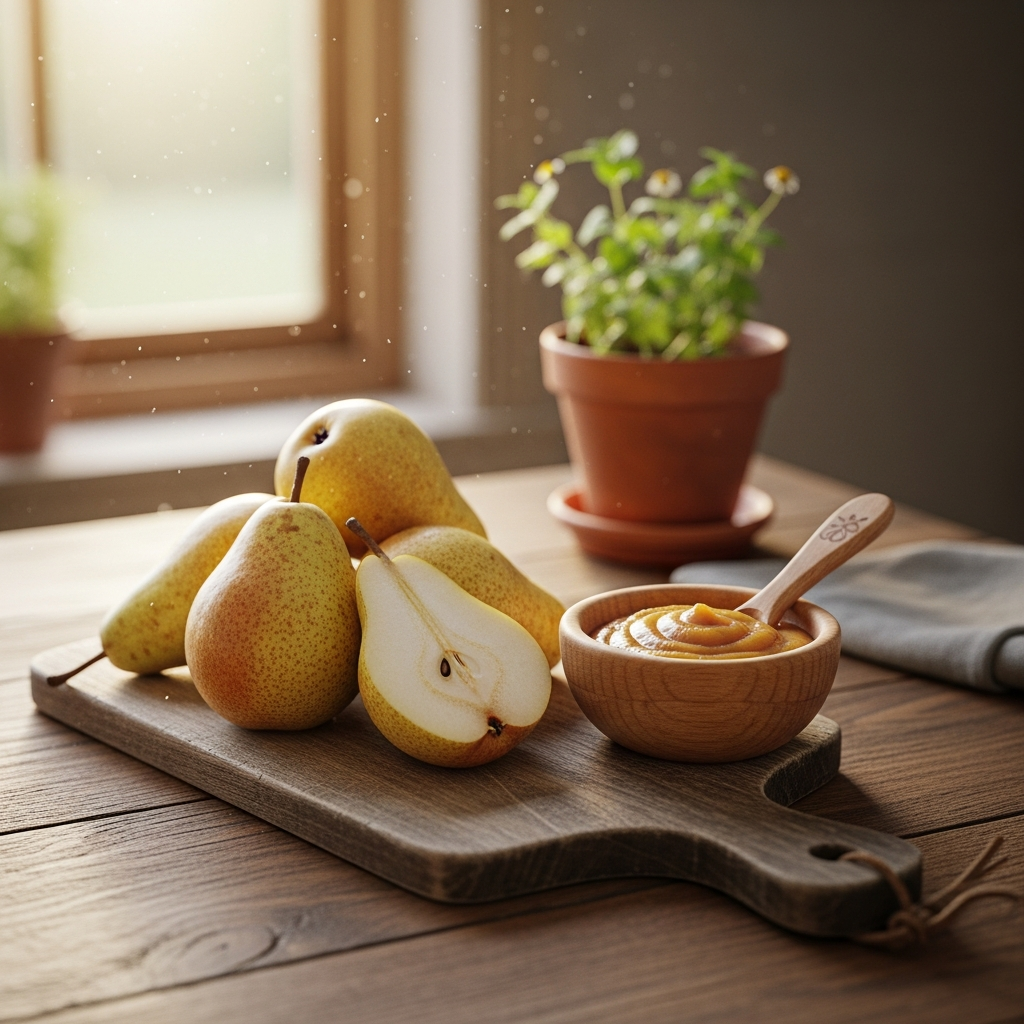
Making your own pear puree for baby is simpler than you might think. This basic recipe creates a silky-smooth puree perfect for first-time eaters.
Step-by-Step Guide to Making Smooth Pear Puree
Classic Pear Puree (Stage 1)
Yield: Approximately 8 ounces (8-10 servings)
Prep Time: 10 minutes | Cook Time: 10 minutes
Ingredients:
- 2 ripe pears (Bartlett or Anjou recommended)
- 2-4 tablespoons water, breast milk, or formula
Equipment:
- Vegetable peeler
- Steamer basket or pot with steamer insert
- Blender or food processor
- Ice cube trays for storage
Instructions:
- Prepare the pears: Wash thoroughly, then peel and core the pears. Cut into 1-inch chunks.
- Steam until tender: Place chunks in steamer basket over boiling water. Steam for 8-10 minutes until fork-tender (a fork should slide through easily).
- Reserve cooking liquid: Save 2-4 tablespoons of the steaming water for thinning.
- Blend smooth: Transfer pears to blender with reserved liquid. Blend until completely smooth with no chunks.
- Adjust consistency: Add more liquid if needed for a thinner puree.
- Cool and serve: Let cool to room temperature before serving or storing.
Tips for Achieving the Perfect Puree Consistency
Creating the ideal pear puree stage 1 texture takes a little practice. Here are expert tips:
- Choose ripe pears: Riper pears blend smoother and taste sweeter
- Thin wisely: Breast milk or formula adds familiar flavor; water keeps it simple
- Test temperature: Drop a small amount on your inner wrist before serving
- Start small: Begin with 1-2 tablespoons per feeding for 6-month-olds
- Watch for chunks: Stage 1 babies need completely smooth puree—blend longer if needed
Many parents wonder about the difference between homemade and store-bought pear puree. While commercial options offer convenience, homemade puree allows you to control the texture, freshness, and ingredient quality. You also avoid the heat processing that can reduce some nutrient content in jarred foods. Plus, making your own costs significantly less—approximately 50-70% savings compared to store-bought organic options.

Delicious Pear Combination Recipes for Stage 2 Babies
Once your baby has mastered single-ingredient purees, it is time to explore exciting combinations. These pear baby food recipes offer variety while supporting digestive health.
Pear and Prune Puree for Maximum Constipation Relief
This pear and prune puree for constipation is the gold standard remedy many pediatricians recommend.
Pear-Prune Digestive Support Puree
Ingredients:
- 1 ripe pear, peeled and cored
- 4-5 pitted prunes
- 3 tablespoons water
Method: Steam pear chunks and prunes together for 10 minutes. Blend with water until smooth.
Tip: Use this combination 2-3 times weekly rather than daily to avoid overly loose stools.
Pear and Banana Puree for Picky Eaters
This naturally sweet combination appeals to babies who need extra encouragement.
Pear-Banana Sweet Blend
Ingredients:
- 1 ripe pear, steamed
- 1/2 ripe banana
Method: Blend steamed pear with raw banana until smooth. No additional liquid typically needed.
Note: Use less banana than pear, as bananas can contribute to constipation.
Pear and Oatmeal Breakfast Blend
This hearty combination supports iron absorption thanks to the vitamin C in pears.
Morning Pear-Oatmeal Bowl
Ingredients:
- 2 tablespoons iron-fortified infant oatmeal
- 3 tablespoons pear puree
- Breast milk or formula to desired consistency
Method: Prepare oatmeal according to package directions. Stir in pear puree and adjust consistency.
Pear and Sweet Potato Savory-Sweet Mix
Introduce savory-sweet profiles with this nutrient-dense combination.
Pear-Sweet Potato Harvest Blend
Ingredients:
- 1 small sweet potato, cubed
- 1 ripe pear, cubed
- Water as needed
Method: Steam sweet potato for 10 minutes, add pear, steam 8 more minutes. Blend together until smooth.
Benefits: Combines beta-carotene from sweet potato with vitamin C from pear for enhanced nutrient absorption.
Baby Led Weaning with Pears: Safe Finger Food Ideas
If you are following a baby-led weaning approach, pears can be an excellent finger food option when prepared correctly.
Preparing Pears for Baby Led Weaning at 6+ Months
Success with BLW pears depends on proper preparation:
- Shape matters: Cut into thin wedges or spears longer than your baby's fist
- Ripeness is crucial: Choose very ripe pears that yield to gentle pressure
- Peel for younger babies: Remove skin until your baby develops better chewing skills
- Consider cooking: Steam or roast firmer pears to soften them
Bartlett pears work best for BLW because they become very soft when ripe. Anjou pears hold their shape better when cooked, making them good for roasted preparations.
Reducing Choking Risk When Serving Pear Finger Foods
Safety comes first with finger foods. Follow these guidelines:
| Age | Preparation Method | Size/Shape |
|---|---|---|
| 6-8 months | Steamed or very ripe raw | Long thin wedges, wider than palm |
| 8-10 months | Ripe raw, skin removed | Thin slices or small soft chunks |
| 10+ months | Ripe raw with or without skin | Bite-sized pieces |
Important: Never leave your baby unattended while eating. Learn to distinguish between gagging (normal learning process) and choking (silent, requires intervention). Consider taking an infant CPR class before starting BLW. The American Red Cross offers infant CPR courses both online and in-person that can give you confidence before beginning your BLW journey.
Choosing the Best Pear Varieties for Baby Food
Not all pears are created equal when it comes to baby food. Understanding variety differences helps you make the best choice.
Bartlett vs. Bosc vs. Anjou: Which Pear Is Best for Babies?
| Variety | Flavor | Texture | Best Use |
|---|---|---|---|
| Bartlett | Sweetest, classic pear flavor | Very soft when ripe | Purees, BLW raw |
| Anjou | Mild, slightly citrusy | Firm, holds shape when cooked | Roasting, cooked BLW |
| Bosc | Honey-like, aromatic | Dense, firm | Baking, older babies |
| Asian | Crisp, apple-like | Crunchy even when ripe | Not recommended for young babies |
For most best pears for baby food purposes, Bartlett pears are the top choice due to their smooth texture and natural sweetness.
Selecting and Ripening Pears for Optimal Taste
Follow these selection tips at the grocery store:
- Check the neck: Gently press near the stem—ripe pears yield slightly
- Ripen at room temperature: Place unripe pears in a paper bag for 2-4 days
- Refrigerate when ripe: Ripe pears last 3-5 days in the refrigerator
- Consider organic: Pears rank on the EWG's "Dirty Dozen" list, so organic may be worth considering for baby food
A helpful trend we have noticed: many farmers markets now offer "seconds"—perfectly nutritious pears with minor cosmetic imperfections—at significantly reduced prices. These work beautifully for purees since appearance does not matter once blended. This approach gives you organic quality at conventional prices.
Storing and Freezing Pear Puree: Complete Guide
Batch cooking saves time, but proper storage ensures safety and quality.
Refrigerator and Freezer Storage Guidelines
Your homemade pear puree for baby stays fresh when stored correctly:
- Refrigerator: Store in airtight containers for 3-5 days maximum
- Freezer: Freeze in ice cube trays (about 1 oz each) for up to 3 months
- Label everything: Include date, contents, and any combinations
- Transfer frozen cubes: Once solid, move to freezer bags to free up trays
Thawing and Reheating Pear Puree Safely
Safe thawing protects your baby from foodborne illness:
- Best method: Thaw overnight in refrigerator
- Quick method: Place sealed container in warm water bath
- Microwave caution: If microwaving, stir thoroughly and test temperature on your wrist
- Never refreeze: Discard any thawed puree not used within 24 hours
- Feeding safety: Throw away any puree that has touched a used spoon—bacteria from saliva can grow quickly
Here is a meal prep strategy that works well for busy families: dedicate one hour on Sunday to preparing a week's worth of pear puree and combinations. Freeze individual portions in labeled silicone trays, then pop them out into freezer bags organized by recipe. Each morning, simply move a cube to the refrigerator, and by lunchtime you have perfectly thawed, homemade baby food ready to serve.
Frequently Asked Questions About Pear Baby Food
When can babies have pears?
Babies can typically start eating pears at 6 months old when they begin solid foods, though some pediatricians may approve introduction at 4 months. Pears are considered a safe first food due to their low allergen risk and gentle digestibility. Always consult your pediatrician before introducing any new food.
Do you need to cook pears for baby food?
For babies under 8 months, cooking pears by steaming or baking is recommended to soften the texture and make digestion easier. Very ripe, soft pears may be served raw to babies 8 months and older who can handle more texture. Cooking also reduces choking risk for younger infants.
Does pear help baby constipation?
Yes, pears are highly effective for relieving baby constipation. They contain sorbitol, a natural sugar alcohol that draws water into the intestines, and fiber that promotes healthy bowel movements. Pears are gentler than prunes and often recommended as a first-line natural remedy. According to Mayo Clinic, offering pear juice or pureed pears can help soften stools and promote bowel movements in constipated infants.
Is pear or prune better for constipation?
Both are effective, but they work differently. Prunes have higher sorbitol content and work faster, while pears are gentler and better for prevention or mild constipation. For severe constipation, prunes may be more effective. For daily maintenance or sensitive tummies, pears are often preferred.
What are the P fruits for baby constipation?
The P fruits are Pears, Prunes, Peaches, and Plums. These fruits all contain sorbitol and fiber that naturally help relieve constipation. Pediatricians often recommend these as the first dietary approach before considering other interventions for infant constipation.
What can I mix with pear puree?
Pear puree pairs well with many foods including prunes (for constipation relief), bananas, sweet potatoes, carrots, apples, oatmeal, and yogurt. For Stage 2 babies, try pear-spinach or pear-chicken combinations. Start with single-ingredient pear puree before introducing combinations.
Can babies eat raw pears?
Babies 8 months and older with good chewing skills can eat very ripe, soft raw pears cut into appropriate sizes. For babies under 8 months, cooking pears is recommended to ensure safe, easy-to-swallow texture. Always supervise closely and ensure pieces are appropriately sized.
Are pears a choking hazard for babies?
Firm, raw pears can be a choking hazard. To serve safely, cook pears until soft for younger babies, or offer very ripe raw pears cut into thin strips for baby-led weaning. Always supervise meals, avoid round slices, and ensure pieces are appropriately sized for your baby's age and eating skills.
Start Your Pear Baby Food Journey Today
Introducing pear baby food to your little one opens up a world of nutritional benefits and digestive comfort. From the simple Stage 1 puree to creative combinations like pear and prune puree for constipation relief, you now have the knowledge to support your baby's health naturally.
Remember these key takeaways:
- Pears are among the gentlest first foods, perfect for sensitive tummies
- The P fruits (pears, prunes, peaches, plums) offer natural constipation relief
- Sorbitol and fiber work together to support healthy digestion
- Bartlett pears are ideal for purees; Anjou works best for cooking
- Proper storage keeps homemade puree fresh and safe
At PatPat, we believe every parent deserves access to reliable, practical information for raising healthy, happy babies. Whether you are dealing with constipation concerns or simply want to give your baby the best nutritional start, pear baby food recipes offer a delicious solution the whole family can feel good about.
Ready to explore more baby feeding resources? Check out our guides on starting solids, iron-rich baby food recipes, and baby-led weaning for more expert tips and recipes.





