


Are you nervous about introducing fish baby food to your little one? You are not alone. Many parents feel anxious about mercury concerns, bone safety, and allergic reactions. But here is some reassuring news: fish is one of the most nutrient-dense foods you can offer your growing baby.
When you choose the right low mercury fish for babies and follow simple preparation guidelines, you unlock incredible benefits for your child's brain, eyes, and overall development. The FDA confirms that fish is an important part of a healthy diet for children and adults alike.
In this comprehensive guide, we will walk you through everything you need to know about safe fish for babies. You will learn exactly which fish types to choose, how to prepare them safely, and discover five delicious recipes including salmon puree for baby and mild cod combinations. PatPat is here to support you on this exciting feeding journey.

When Can Babies Safely Start Eating Fish?
One of the most common questions new parents ask is about the right time to introduce fish baby food. The answer may surprise you, as current research supports earlier introduction than many parents expect.
Developmental Signs Your Baby Is Ready for Fish
Before offering any solid food, including fish, watch for these readiness signs:
- Your baby can sit upright with minimal support
- Good head and neck control is established
- The tongue-thrust reflex has diminished
- Your baby shows interest in food by reaching or opening their mouth
- They can move food from spoon to throat
Most babies display these signs between four and six months. However, the general recommendation is to wait until six months before introducing solids, including fish.
FDA and AAP Recommendations for Fish Introduction Age
According to the American Academy of Pediatrics, babies can start eating fish at six months when they begin solid foods. This is a significant change from older guidance that recommended waiting until after the first year.
Current research actually suggests that early introduction of allergenic foods, including fish, between four and six months may help reduce the risk of developing food allergies. The AAP states there is no evidence that delayed introduction of allergenic foods prevents allergies.
How Much Fish Should Babies Eat Per Week?
The FDA recommends that children ages 1-11 consume one to two servings of low-mercury fish per week. For babies under one year, we recommend:
| Age | Serving Size | Frequency |
|---|---|---|
| 6-8 months | 1-2 tablespoons (about 0.5 oz) | 1-2 times per week |
| 8-10 months | 2-3 tablespoons (about 1 oz) | 2 times per week |
| 10-12 months | 2-4 tablespoons (1-2 oz) | 2-3 times per week |
A helpful visual: one serving for an infant is roughly the size of your baby's palm. Focus on variety rather than quantity, rotating between different safe fish types throughout the week.
Omega-3 and Nutritional Benefits of Fish for Infant Development
Fish is not just another protein source. It provides unique nutrients that are difficult to obtain from other foods, making fish baby food an exceptional choice for supporting your baby's rapid growth and development.
DHA and EPA for Brain and Cognitive Development
The omega-3 fatty acids DHA (docosahexaenoic acid) and EPA (eicosapentaenoic acid) are essential building blocks for your baby's brain. According to the National Institutes of Health, DHA is a major structural fat in the brain, making up approximately 40% of the polyunsaturated fatty acids in brain tissue.
During the first two years of life, your baby's brain grows at an extraordinary rate. Adequate DHA intake during this critical period supports:
- Neural connection formation
- Cognitive function development
- Learning and memory capabilities
- Attention and focus abilities
Vision Development and Nervous System Support
DHA also plays a crucial role in eye development. It makes up approximately 60% of the polyunsaturated fatty acids in the retina. Research shows that infants who receive adequate DHA demonstrate better visual acuity during the first year of life.
Beyond the brain and eyes, omega-3 fatty acids support the development of myelin, the protective sheath that covers nerve fibers and enables efficient signal transmission throughout the nervous system.
Complete Protein, Iron, and Essential Nutrients in Fish
Fish provides much more than omega-3s. It delivers a complete package of essential nutrients:
- High-quality protein: Contains all essential amino acids for growth
- Iron: Important after six months when infant iron stores begin depleting
- Zinc: Supports immune function and wound healing
- Vitamin D: Essential for bone development and immune health
- Vitamin B12: Critical for nervous system function
- Iodine: Supports thyroid function and brain development
- Selenium: Acts as an antioxidant and supports thyroid health
Fatty fish like salmon provide the highest omega-3 content, while white fish like cod and tilapia offer excellent lean protein with milder flavors that many babies prefer.
FDA Low-Mercury Fish Guide: Best and Worst Choices for Babies
Mercury is a legitimate concern when choosing fish baby food. However, by selecting from the FDA's recommended list of low mercury fish for babies, you can confidently offer fish without worry. The key is understanding which fish to embrace and which to avoid.

Best Choices: Lowest Mercury Fish (2-3 Servings Per Week)
The FDA classifies these fish as "Best Choices" with the lowest mercury levels. You can safely serve these to your baby two to three times per week:
| Fish Type | Flavor Profile | Best For |
|---|---|---|
| Salmon | Rich, slightly sweet | Highest omega-3 content |
| Cod | Mild, white, flaky | Picky eaters, easy digestion |
| Tilapia | Very mild, neutral | First fish introduction |
| Sardines | Stronger, savory | Budget-friendly omega-3 |
| Pollock | Mild, delicate | Versatile purees |
| Catfish | Mild, slightly sweet | Widely available |
| Trout | Mild, nutty | Excellent omega-3 profile |
| Sole/Flounder | Delicate, subtle | Sensitive stomachs |
| Anchovies | Strong, salty | Flavor enhancement in small amounts |
| Shrimp | Sweet, mild | Introduce carefully (shellfish) |
Good Choices: Moderate Mercury (1 Serving Per Week Maximum)
These fish contain moderate mercury levels. The FDA recommends limiting them to one serving per week:
- Canned light tuna (not albacore/white)
- Halibut
- Mahi mahi
- Snapper
- Sea bass
For babies, we recommend focusing on the "Best Choices" category and saving these moderate-mercury options until your child is older.
Fish to Avoid: High Mercury Content
- Shark
- Swordfish
- King mackerel (regular mackerel is fine)
- Tilefish (Gulf of Mexico)
- Bigeye tuna
- Marlin
- Orange roughy
Understanding Mercury in Fish: Why Size and Lifespan Matter
Why do some fish have more mercury than others? The answer lies in a process called bioaccumulation. Mercury enters water systems through industrial pollution and natural sources. Small organisms absorb tiny amounts, which then concentrate as they are eaten by larger fish.
Large, long-lived predatory fish like shark and swordfish accumulate mercury over their entire lifespan. In contrast, small, short-lived fish like sardines and anchovies have minimal time to accumulate mercury, making them the safest choices for fish baby food.
How to Safely Prepare Fish for Baby Food
Proper preparation is essential when making homemade fish baby food. Following these guidelines ensures your baby receives all the nutritional benefits while avoiding potential hazards.
Selecting Fresh vs Frozen Fish for Baby Food
Here is a surprising fact: frozen fish is often fresher than "fresh" fish at the counter. Commercial fishing vessels flash-freeze fish immediately after catching, preserving nutrients and freshness. Fish labeled as "fresh" may have been sitting on ice for days before reaching your grocery store.
When buying fresh fish, look for:
- Clear, bright eyes (not cloudy)
- Firm flesh that springs back when pressed
- A mild, ocean-like smell (strong fishy odor indicates age)
- Moist, shiny skin
Frozen fish benefits include convenience, longer storage, pre-portioned fillets, and often lower cost. Both fresh and frozen work wonderfully for fish baby food.
Safe Cooking Temperature and Methods
According to food safety guidelines, fish must reach an internal temperature of 145 degrees Fahrenheit (63 degrees Celsius) to eliminate harmful bacteria and parasites. Use a food thermometer to verify.
The best cooking methods for fish baby food:
- Steaming (Preferred): Preserves the most nutrients while keeping fish moist and tender. Simply steam for 8-12 minutes depending on thickness.
- Poaching: Gentle cooking in simmering water or broth keeps fish extremely tender, perfect for smooth purees.
- Baking: Ideal for batch cooking. Bake at 400 degrees F for 10-15 minutes until fish flakes easily.
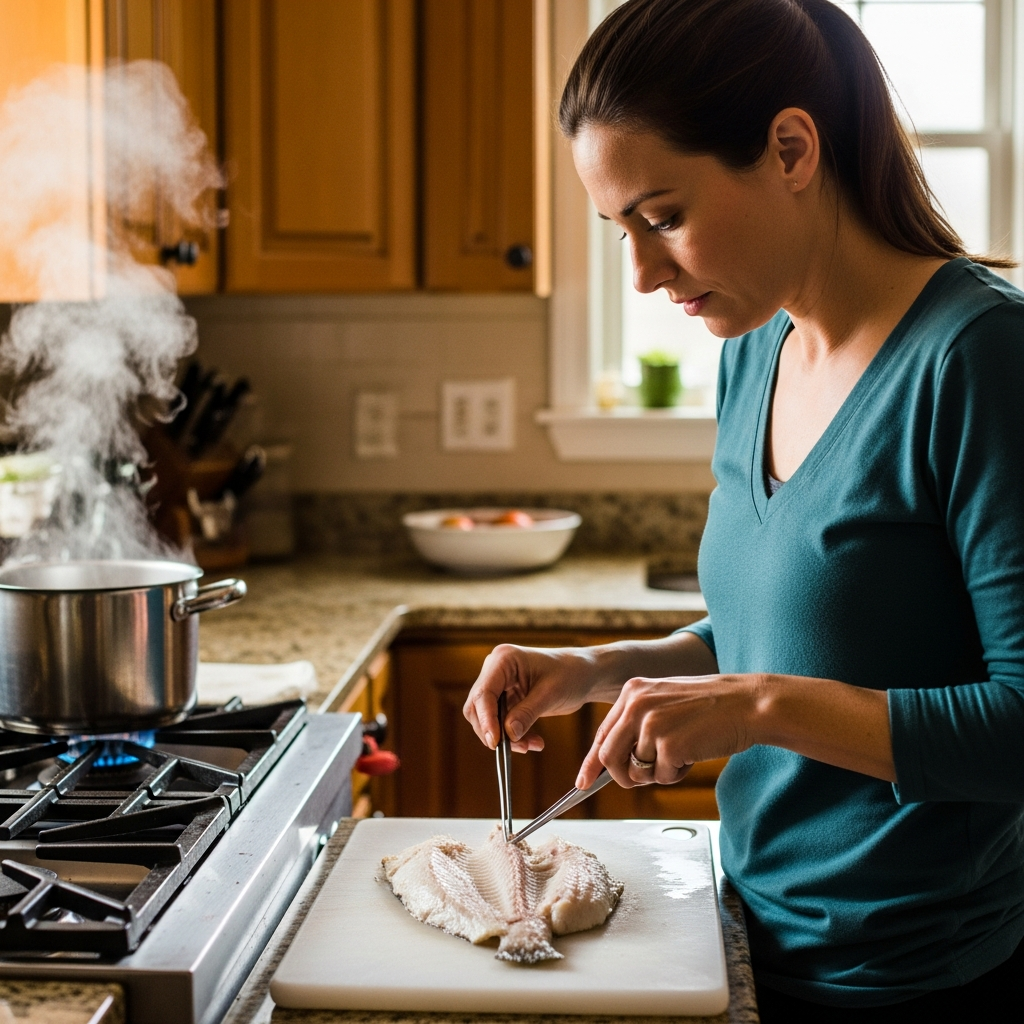
Deboning Fish Safely: Essential Steps for Parents
Removing all bones is absolutely critical when preparing safe fish for babies. Even tiny pin bones can pose a choking hazard. Follow these steps:
- Purchase pre-filleted fish when possible, as most bones are already removed
- After cooking, run your clean fingers slowly across the entire surface of the fish
- Feel carefully for any small bones that may remain
- Use clean tweezers to remove any bones you find
- Repeat the finger check two to three times to be thorough
- When blending, the puree should be completely smooth with no hard bits
Alternatively, canned salmon with bones is actually safe for babies. The canning process softens bones to the point where they are easily mashed and provide extra calcium.
Texture Progression: From Puree to Finger Foods
As your baby develops, gradually increase the texture of their fish baby food:
| Age | Texture | Description |
|---|---|---|
| 6-7 months | Smooth puree | Completely blended, no chunks |
| 7-8 months | Thicker puree | Slightly textured, soft mash |
| 8-9 months | Minced | Small, soft pieces visible |
| 9-12 months | Flaked/finger food | Soft flakes, fish cakes, strips |
For baby-led weaning, you can offer soft fish strips or patties from six months, as long as the fish is thoroughly cooked and easy to gum.
Easy Low-Mercury Fish Baby Food Recipes
Now for the exciting part: five delicious, tested recipes for homemade fish baby food. Each recipe uses safe, low-mercury fish and can be adjusted for your baby's texture preferences.

Simple Salmon Puree Recipe (6+ Months)
This salmon puree for baby is rich in omega-3s and makes an excellent first fish. Wild-caught salmon has the highest DHA content of any commonly available fish.
- 4 oz wild-caught salmon fillet (skin removed)
- 2 tablespoons breast milk, formula, or water
- Place salmon in a steamer basket over boiling water
- Steam for 8-10 minutes until fish flakes easily and reaches 145 degrees F internal temperature
- Check thoroughly for bones by running fingers across the cooked flesh, removing any found
- Place salmon in blender or food processor with liquid
- Blend until completely smooth, scraping down sides as needed
- Add more liquid if needed for thinner consistency
Storage: Refrigerate up to 3 days or freeze up to 3 months
Tip: After initial introduction, combine with sweet potato or peas for variety

Mild Cod and Sweet Potato Puree (6+ Months)
Cod puree for babies is perfect for little ones who find salmon too strong. The sweet potato adds natural sweetness and vitamin A, masking any fishy taste.
- 3 oz cod fillet
- 1/4 cup cooked sweet potato (about 1/4 medium potato)
- 2-3 tablespoons breast milk, formula, or water
- Steam cod for 6-8 minutes until flaky and cooked through
- Carefully check for and remove any bones
- Combine cod with pre-cooked sweet potato in blender
- Add liquid and blend until smooth
- Adjust consistency as needed for your baby's stage
Nutritional Note: This combination provides omega-3s, protein, vitamin A, and fiber in one serving
Tip: Great for babies who reject plain fish purees

Tilapia with Peas and Carrot Mash (7+ Months)
Tilapia has an incredibly mild flavor, making it ideal fish baby food for cautious eaters. The peas add protein while carrots provide beta-carotene.
- 3 oz tilapia fillet
- 2 tablespoons cooked peas
- 2 tablespoons cooked carrot
- Breast milk or formula as needed
- Pinch of dried dill (optional)
- Bake tilapia at 400 degrees F for 10-12 minutes until cooked through
- Steam peas and carrots until very soft (about 8 minutes)
- Check fish carefully for bones and remove any found
- Combine all ingredients in blender or mash by hand
- For 7+ months, leave slightly chunkier texture
- Add optional dill for flavor enhancement
Tip: This colorful combination often appeals to babies visually as well as taste-wise

Salmon Fish Cakes for Baby-Led Weaning (8+ Months)
These soft fish cakes are perfect for older babies developing their pincer grasp. They hold together well but are soft enough to gum safely.
- 1/2 cup cooked salmon (flaked, thoroughly checked for bones)
- 1/4 cup mashed potato (cooled)
- 1 egg yolk
- Pinch of finely minced fresh dill (optional)
- In a bowl, combine flaked salmon, mashed potato, and egg yolk
- Add dill if using and mix until well combined
- Form mixture into small patties about the size of your baby's palm
- Place on parchment-lined baking sheet
- Bake at 375 degrees F for 15-18 minutes, flipping halfway through
- Cool completely and test temperature before serving
- Cut into strips for easy gripping
Serving: Cut each cake into 2-3 strips for easy baby handling
Storage: Freeze uncooked patties on a tray, then transfer to freezer bag. Bake from frozen, adding 5 minutes to cooking time.

Quick Sardine and Avocado Mash (9+ Months)
This no-cook recipe is a nutritional powerhouse. Sardines are among the lowest mercury fish available and provide excellent omega-3s at a budget-friendly price.
- 2 canned sardines (packed in water, low sodium)
- 1/4 ripe avocado
- Tiny squeeze of lemon juice (optional)
- Drain sardines well
- Remove visible spine if desired (though canned sardine bones are soft and safe to eat)
- Place sardines in bowl and mash thoroughly with fork
- Add avocado and continue mashing until well combined
- Add tiny amount of lemon juice if desired for brightness
- Leave some texture for babies 9+ months
Nutritional Powerhouse: This combination provides omega-3s from both sardines and avocado, plus healthy fats for brain development
Budget Tip: A can of sardines costs around one dollar and provides multiple servings of high-quality fish baby food
Love These Recipes?
PatPat offers adorable, practical bibs and feeding accessories perfect for messy fish baby food adventures. Check out our feeding collection for easy cleanup solutions!
Fish and Vegetable Pairing Guide for Maximum Nutrition
Combining fish with the right vegetables not only improves nutrition but also helps babies accept new flavors. Strategic pairing can mask fishy tastes while enhancing nutrient absorption.

Best Vegetables to Combine with Fish for Babies
Root Vegetables: Sweet potato, carrot, parsnip, and butternut squash work beautifully with fish. Their natural sweetness masks any strong fish flavors, making them ideal for babies hesitant about seafood.
Green Vegetables: Peas, green beans, spinach, and broccoli pair well with mild white fish. The vitamin C in these vegetables actually enhances iron absorption from the fish.
Other Excellent Pairings:
- Avocado adds healthy fats and creates creamy texture
- Potato provides starch for binding fish cakes
- Zucchini offers mild flavor and soft texture
- Leeks add subtle savory notes when cooked
Baby-Safe Herbs and Seasonings for Fish
You can add gentle seasonings to fish baby food from six months:
- Safe from 6 months: Dill, parsley, basil, thyme (very small amounts)
- Lemon zest: Tiny amount for brightness (avoid acidic juice until later)
- Garlic: Very small amounts of cooked garlic after 8 months
Sample Weekly Fish Meal Plan for 8-Month-Old
| Day | Meal | Fish Baby Food |
|---|---|---|
| Monday | Lunch | Salmon puree with sweet potato |
| Wednesday | Dinner | Cod with peas mash |
| Friday | Lunch | Tilapia with carrot |
Two to three fish meals per week provides optimal omega-3 intake while maintaining variety. Rotate between different fish types and vegetable combinations to expose your baby to various flavors and nutrients.
Fish Allergy Awareness: Signs, Symptoms, and Safe Introduction
Fish is one of the top allergens, so understanding allergy awareness is essential when introducing fish baby food. However, do not let this discourage you. Most babies tolerate fish well, and early introduction may actually reduce allergy risk.
Understanding Fish as a Top Allergen
Fish is classified among the top nine food allergens in the United States. According to Food Allergy Research and Education (FARE), fish allergy affects approximately 1-2% of the population.
Important distinctions:
- Fish allergy and shellfish allergy are different. Being allergic to one does not mean allergic to the other.
- Someone may be allergic to one type of fish but tolerate others.
- Fish allergies can develop at any age but often first appear in childhood.
How to Introduce Fish Safely (Allergen Introduction Protocol)
Follow these steps for safe introduction of fish baby food:
- Start small: Offer just 1/4 teaspoon the first time
- Choose morning: Introduce new foods early in the day so you can monitor throughout
- Wait period: Wait 3-5 days before introducing another new food
- Repeat exposure: Offer the same fish type 3-4 times before trying a different fish
- Be prepared: Have your pediatrician's number handy and know the signs of allergic reaction

Signs and Symptoms of Fish Allergy in Babies
Mild reactions (contact pediatrician same day):
- Hives or red patches on skin
- Itching around mouth or face
- Mild swelling of lips
- Slight stomach upset or fussiness
- Difficulty breathing or wheezing
- Swelling of throat or tongue
- Severe or repeated vomiting
- Sudden drowsiness or limpness
- Pale or blue coloring around lips
When to Seek Medical Help
- Mild symptoms: Contact your pediatrician the same day
- Moderate symptoms: Seek urgent care
- Severe symptoms: Call 911 immediately
Keep a record of any reactions to share with your pediatrician or allergist. Note the type of fish, amount consumed, timing of reaction, and specific symptoms observed.
Storing and Freezing Fish Baby Food Safely
Proper storage ensures your homemade fish baby food stays safe and nutritious. Fish requires careful handling, but batch cooking and freezing can save you significant time.
Refrigerator Storage Guidelines
- Fresh fish puree: Store for 2-3 days maximum
- Use airtight glass or BPA-free plastic containers
- Keep refrigerator at 40 degrees F (4 degrees C) or below
- When in doubt, throw it out. Fish spoils quickly.
- Never leave fish puree at room temperature for more than 2 hours
Freezing Fish Puree for Batch Cooking
Freezing is the best way to preserve homemade fish baby food for busy families:
- Cool completely: Let puree reach room temperature before freezing
- Portion wisely: Use ice cube trays to create perfect 1-ounce portions
- Flash freeze: Freeze puree in trays until solid (about 4 hours)
- Transfer: Pop frozen cubes into labeled freezer bags
- Label clearly: Include fish type and date prepared
- Storage time: Frozen fish puree stays safe for up to 3 months
- Thawing: Thaw in refrigerator overnight or in warm water bath
Meal Prep Tips for Busy Parents
- Batch cook weekends: Prepare 2-3 weeks worth of fish baby food in one session
- Rotate varieties: Freeze different fish types for easy variety throughout the week
- Single ingredients first: Freeze plain fish purees and add fresh vegetables at serving time for maximum flexibility
- Combination cubes: Once baby accepts individual ingredients, freeze pre-made combinations like cod-sweet potato for convenience
- Organize by date: Use oldest cubes first to maintain rotation
Frequently Asked Questions About Fish Baby Food
Yes, babies can safely eat fish starting at 6 months when they begin solid foods. The American Academy of Pediatrics recommends introducing low-mercury fish like salmon, cod, and tilapia early to support brain development and potentially reduce allergy risk.
The lowest mercury fish for babies include salmon, sardines, anchovies, cod, tilapia, pollock, catfish, trout, sole, and shrimp. The FDA classifies these as "Best Choices" that can be served 2-3 times per week safely.
Canned light tuna is safer than albacore (white) tuna due to lower mercury content. For babies, limit to one 1-ounce serving per week maximum. Many parents prefer salmon, cod, or sardines as safer alternatives with better omega-3 profiles.
Watch for hives, facial swelling, itching around the mouth, vomiting, or difficulty breathing after eating fish. Mild symptoms warrant a same-day pediatrician call. Severe symptoms like throat swelling or breathing problems require immediate 911 assistance.
Purchase pre-filleted fish when possible. For whole fish, run your fingers across cooked flesh multiple times to detect bones. Use clean tweezers to remove any found. Alternatively, canned salmon has soft, edible bones that are safe for babies and provide extra calcium.
Yes, frozen fish is excellent for baby food. Commercial fish is often flash-frozen immediately after catching, preserving freshness and nutrients better than some "fresh" fish. Thaw in refrigerator overnight before cooking to 145 degrees F internal temperature.
Refrigerated fish puree lasts 2-3 days maximum. Frozen fish puree remains safe for up to 3 months. Always store in airtight containers, label with dates, and never refreeze previously thawed fish puree.
Sweet potato, peas, carrots, and avocado pair excellently with fish for babies. Root vegetables add natural sweetness that masks "fishy" taste, while greens like spinach and peas enhance iron absorption from the fish.
Final Thoughts: Giving Your Baby the Best Start with Fish
Introducing fish baby food to your little one is one of the best nutritional decisions you can make as a parent. The omega-3 fatty acids, high-quality protein, and essential nutrients in low mercury fish for babies support critical brain and eye development during the most important growth period of your child's life.
Remember these key takeaways:
- Start fish at 6 months when beginning solids
- Choose FDA "Best Choice" fish: salmon, cod, tilapia, sardines, pollock
- Avoid high-mercury fish: shark, swordfish, king mackerel, tilefish
- Cook to 145 degrees F and check thoroughly for bones
- Serve 1-2 times per week, gradually increasing portions
- Watch for allergy symptoms and introduce safely
- Freeze extra portions for convenient meal prep
Whether you choose the omega-rich salmon puree for baby, mild cod puree for babies who prefer gentler flavors, or budget-friendly sardine mash, you are providing your child with exceptional nutrition. The recipes in this guide have been designed to make preparing safe fish for babies simple and stress-free.
Do you have questions about fish baby food or feeding your little one? PatPat is here to support your parenting journey every step of the way. From practical feeding gear to adorable outfits for messy mealtimes, we have everything you need to make this exciting stage easier and more enjoyable.
Ready to Start Your Baby's Fish Journey?
Browse PatPat's collection of bibs, highchair accessories, and feeding essentials designed for real-life parenting. Because messy mealtimes are the best mealtimes!
This article is for informational purposes only and does not constitute medical advice. Always consult your pediatrician before introducing new foods to your baby, especially if there is a family history of food allergies. Individual babies may have different needs and readiness for solid foods.





