


Is your baby ready to explore the exciting world of finger foods? If you have a 10, 11, or 12 month old at home, you are likely witnessing an incredible transformation. Your little one is developing the skills needed for self-feeding, and introducing finger foods at this stage opens up a whole new culinary adventure for your entire family.
Many parents feel overwhelmed when transitioning from purees to table foods for baby. Questions swirl through your mind: What finger foods can my 10 month old safely eat? How do I know if the texture is right? Can my baby chew without teeth? You are not alone in these concerns, and the good news is that this guide will answer all your questions.
At PatPat, we understand that feeding your growing baby is both exciting and nerve-wracking. That is why we have created this comprehensive guide covering the best finger foods for 10-12 month olds, complete with meal plans, easy recipes, safety guidelines, and practical tips for modifying family meals. Whether you are just starting finger foods with your 10 month old or advancing textures with your near-toddler, this guide has everything you need.
Signs Your Baby Is Ready for Finger Foods at 10-12 Months
Before diving into specific foods, it is essential to recognize when your baby is developmentally prepared for self-feeding. While most babies show readiness between 8-10 months, every child develops at their own pace. Understanding these milestones helps you introduce finger foods at the right time for your unique little one.
Developmental Milestones for Self-Feeding at 10-12 Months
The most significant indicator of finger food readiness is the development of the pincer grasp. According to Pathways.org, babies typically develop this skill between the ages of 9 and 10 months, though timelines can vary. This fine motor skill allows your baby to pick up small pieces of food using their thumb and index finger.
Here are the key developmental signs to look for:
- Refined pincer grasp: Your baby can pick up small objects between thumb and forefinger
- Improved hand-eye coordination: They can accurately bring food to their mouth
- Sitting stability: They sit independently with good core control
- Interest in self-feeding: They reach for food and want to feed themselves
- Chewing motions: They move their jaw in a chewing pattern, even without teeth
The inferior or crude pincer grasp develops between 9-10 months of age, allowing babies to pick up small objects using the pads of their thumb and index finger. By 12 months, most babies develop a superior pincer grasp using their fingertips, making self-feeding baby activities even more precise and successful.
Do Babies Need Teeth to Eat Finger Foods?
One of the most common concerns parents have is whether their baby can eat finger foods without teeth. The reassuring answer is no, babies absolutely do not need teeth to eat soft finger foods safely.
As Loudoun Pediatric Associates explains, babies do not need teeth to eat solids; instead, they mash food with their gums. Those little gums are surprisingly powerful and perfectly capable of breaking down soft foods. In fact, humans chew food with our molars in the back of our mouths, and most babies do not get their molars until 10-16 months or older.
The key is offering appropriately textured foods that pass the "squish test," which we will discuss in detail later. As long as you can easily mash the food between your fingers, your baby can safely mash it with their gums.
Best Finger Foods for 10 Month Old Babies
At 10 months, your baby is likely just beginning their finger food journey or has recently started exploring self-feeding. The best finger foods for 10 month old babies focus on soft, easy-to-grasp textures that dissolve easily in the mouth. Here is your comprehensive guide organized by food category.
Soft Fruits That Dissolve Easily
Fruits are often baby favorites because of their natural sweetness. When preparing soft finger foods for your 10 month old, choose ripe fruits and cut them appropriately:
- Ripe banana: Cut into strips or thick rounds; can be rolled in crushed cereal for easier gripping
- Soft ripe pear: Slice into thin wedges; peel if skin is tough
- Steamed apple slices: Cook until fork-tender; raw apple is too hard at this age
- Ripe avocado chunks: Cut into strips; sprinkle with hemp seeds to reduce slipperiness
- Seedless watermelon: Offer soft pieces without rind; very hydrating
- Ripe mango: Slice into spears; one of the most vitamin-rich options
Perfectly Cooked Vegetables for 10 Month Olds
Vegetables introduce your baby to a variety of flavors and essential nutrients. The key is cooking them until they are soft enough to pass the squish test:
- Steamed sweet potato strips: Naturally sweet and packed with vitamin A
- Soft-cooked broccoli florets: Great for developing the pincer grasp
- Roasted carrot sticks: Cook until very tender; avoid raw carrots
- Steamed zucchini pieces: Mild flavor and easy to mash
- Mashed potato logs: Form into finger-shaped pieces for easy grabbing
- Soft-cooked green beans: Perfect size for little hands
Safe Protein Options for Beginners
Protein is crucial for your growing baby, and there are many safe ways to introduce it as finger foods:
- Shredded chicken: Cook until very tender and shred into small pieces
- Flaked fish: Remove all bones carefully; salmon and white fish work well
- Soft scrambled eggs: Cook until fully done but still soft
- Well-cooked lentils: Slightly mash to make them easier to pick up
- Tofu cubes: Firm tofu cut into small cubes is easy to grasp
- Ground meat: Form into tiny, soft meatballs

Transitioning to Table Foods at 11-12 Months
As your baby approaches their first birthday, their eating abilities advance significantly. Transitioning to table foods becomes the natural next step, and you will notice your 11-12 month old can handle more varied textures and flavors. This is an exciting time when finger foods for your 11 month old start looking more like regular family meals.
Texture Progression Month by Month
Understanding how textures should evolve helps you challenge your baby appropriately while keeping meals safe:
| Age | Texture Description | Examples |
|---|---|---|
| 10 months | Very soft, easily dissolvable | Steamed vegetables, ripe fruits, soft scrambled eggs |
| 11 months | Slightly firmer, more variety | Soft pasta, tender meat pieces, firmer fruits |
| 12 months | Most table food textures | Regular family foods modified for size |
The Squish Test for Baby Food Safety
The squish test is your best friend when determining whether food is safe for your baby. According to Boob to Food, you should hold the food between your thumb and pointer finger and pinch. If the food softens easily, it is safe to offer your baby.
Here is how to perform the squish test:
- Hold a piece of cooked food between your thumb and index finger
- Apply gentle pressure as if you were squishing it
- If it easily mashes with minimal pressure, it passes the test
- If it stays firm or requires significant force, cook it longer
Foods that typically pass the squish test include well-steamed vegetables, ripe soft fruits, tender cooked meats, and soft pasta. Foods that fail include raw carrots, undercooked potatoes, and tough meat.
Foods Your Near-Toddler Can Now Enjoy
By 11-12 months, your baby's menu can expand significantly:
- More textured proteins: Small meatball pieces, shredded roast meat, fish cakes
- Firmer fruits and vegetables: Slightly less cooked produce, raw soft fruits
- Soft bread and crackers: Toast fingers, soft pita, whole grain crackers
- Pasta in various shapes: Penne, rotini, or bow-tie pasta cut as needed
- Mixed texture combinations: Pasta with vegetable sauce, casseroles
How to Modify Family Meals for Your Baby
One of the most practical skills for parents is learning to adapt family meals for your baby. Modified family meals for baby not only save time but also help your little one develop diverse taste preferences early. The great news is that most family foods can be safely shared with your 10-12 month old with simple modifications.
Simple Strategies for Meal Adaptation
Making family meals baby-friendly does not require cooking separate dishes. Here are effective strategies:
- Reserve before seasoning: Set aside your baby's portion before adding salt or strong spices
- Adjust cooking time: Cook vegetables slightly longer to ensure softness for baby
- Modify texture: Shred, mash, or cut food into appropriate sizes
- Remove hazards: Take out any choking risks like whole nuts or large chunks
- Use separate water: For pasta or grains, cook baby's portion in unsalted water
Deconstructed Family Dinner Ideas
Nearly any family meal can become baby-friendly when you deconstruct it into safe components. Here are popular family meals and how to adapt them:
Taco Night: Soft tortilla strips cut small, plain ground meat from unseasoned portion, mashed black beans, shredded cheese, and mashed avocado.
Pasta Night: Plain cooked pasta cut into pieces, soft-cooked vegetables from the sauce, mild tomato sauce with no added salt, and shredded mozzarella.
Stir Fry: Soft-cooked vegetable pieces reserved before adding sauce, plain rice or noodles, and tender protein pieces like chicken or tofu.
Roast Dinner: Shredded roast meat, soft-cooked root vegetables, mashed potatoes, and tender green vegetables.
Managing Salt and Seasonings for Baby
Understanding sodium limits is crucial when sharing family foods with your baby. According to nutrition guidelines, the recommended amount of sodium for babies 7-12 months is 370 mg per day. This includes sodium from breast milk, formula, and food combined.
Here is how to manage seasonings safely:
- Why it matters: Too much salt can damage a baby's kidneys and increase their blood pressure
- Safe alternatives: Use garlic, mild herbs, cinnamon, and citrus for flavor
- Read labels: Check packaged foods for hidden sodium content
- Cook strategy: Season adult portions after removing baby's share
Iron-Rich Finger Foods Your 10-12 Month Old Needs
Iron is perhaps the most critical nutrient for babies at this developmental stage. Understanding why iron matters and how to incorporate iron rich finger foods into your baby's diet can significantly impact their growth and brain development.
Why Iron Matters at 10-12 Months
Your baby's iron needs are higher than you might expect. The CDC confirms that infants aged 6 to 12 months need 11 mg of iron per day. This requirement exists because babies are born with iron stores that begin depleting around 6 months of age.
Iron is essential for these critical functions:
- Brain development: Critical for cognitive growth during this rapid development period
- Immune function: Supports your baby's ability to fight infections
- Energy production: Helps cells produce energy for growth and activity
- Oxygen transport: Enables red blood cells to carry oxygen throughout the body
Top Iron Sources as Finger Foods
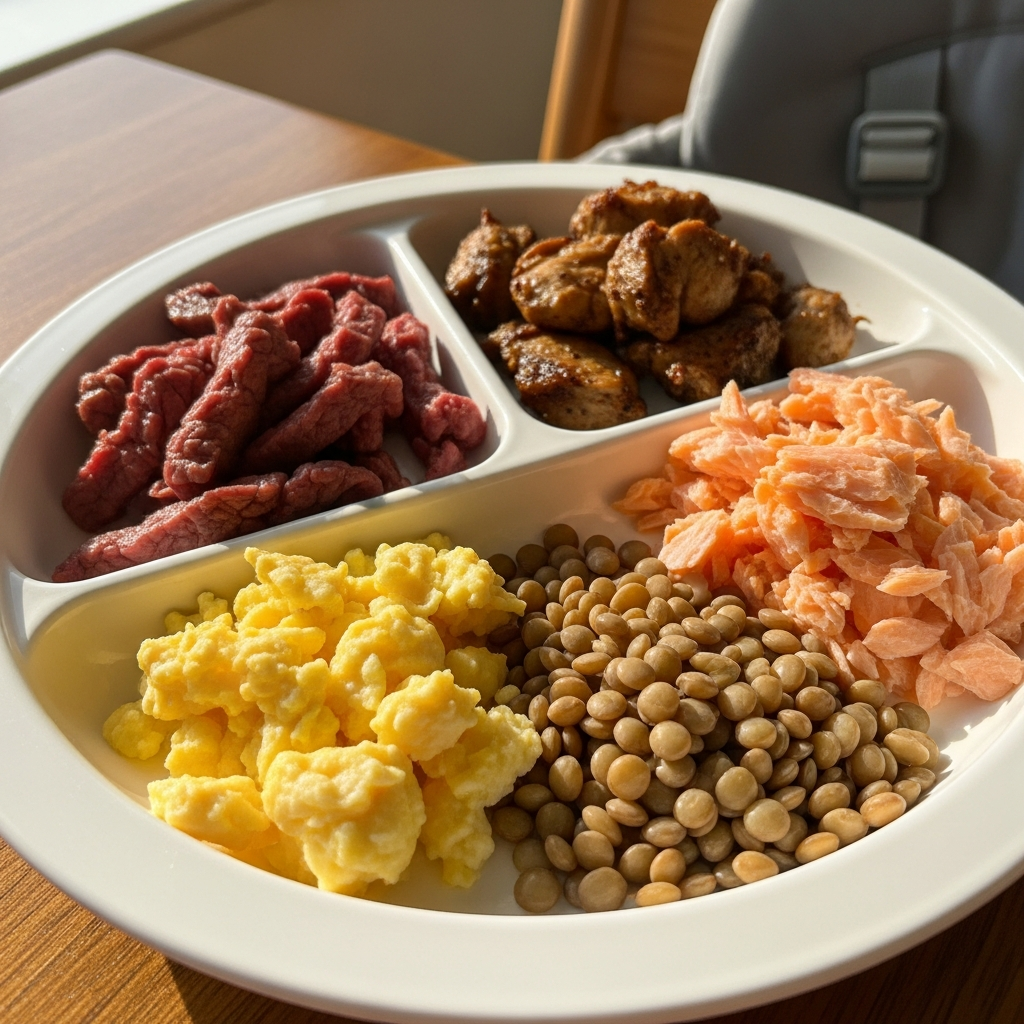
Incorporating iron-rich options into your finger food rotation is easier than you might think. The CDC notes that heme iron from animal products is absorbed more easily by the body than non-heme iron from plants.
Best Animal-Based Iron Sources:
- Soft-cooked red meat strips (beef, lamb)
- Dark poultry meat (chicken thighs)
- Flaked salmon or sardines
- Scrambled egg yolks
Plant-Based Iron Options:
- Mashed or whole lentils
- Soft-cooked black beans
- Iron-fortified baby cereal shaped into fingers
- Soft-cooked spinach mixed into eggs
- Mashed chickpeas
Boosting Iron Absorption with Vitamin C
You can maximize your baby's iron absorption by pairing iron-rich foods with vitamin C sources. As the CDC recommends, pairing non-heme iron sources with foods high in vitamin C can help your baby absorb needed iron.
Effective Iron and Vitamin C Pairings:
- Lentils with soft bell pepper strips
- Beef strips with steamed broccoli
- Fortified cereal with strawberry pieces
- Bean patties with tomato sauce
Important tip: Avoid serving dairy with iron-rich meals, as calcium can inhibit iron absorption. Save milk and cheese for other mealtimes or snacks.
Sample Meal Plans and Finger Food Schedules
Having a structured approach to meals makes finger food feeding less stressful for everyone. Here are practical meal plans and schedules designed for busy families with 10-12 month old babies.
Daily Feeding Schedule for 10-12 Month Olds
Most babies at this age thrive on a consistent routine. The AAP recommends 2 to 3 healthy snacks daily in addition to main meals. Here is a sample schedule:
| Time | Meal/Feed | Notes |
|---|---|---|
| 7:00 AM | Breast milk or formula | First feed upon waking |
| 8:00 AM | Breakfast finger foods | Include protein and fruit |
| 10:00 AM | Morning snack | Light finger foods or milk |
| 12:00 PM | Lunch finger foods | Vegetables, protein, carb |
| 2:30 PM | Afternoon snack | Fruit and dairy option |
| 5:30 PM | Dinner finger foods | Modified family meal |
| 7:00 PM | Bedtime milk | Breast milk or formula |
Breakfast Finger Food Ideas
Starting the day with nutritious finger foods sets your baby up for success:
- Scrambled eggs with soft toast strips: Protein-packed and easy to grab
- Banana pancakes: Mash banana into pancake batter, cook, and cut into strips
- Baked oatmeal fingers: Make oatmeal bars that are easy to hold
- Soft fruit with yogurt: For dipping and scooping practice
- Avocado toast strips: Whole grain bread with mashed avocado
Lunch and Dinner Finger Food Ideas
These meal ideas work for both lunch and dinner:
- Mini meatballs: With soft vegetable sticks on the side
- Pasta with mild sauce: Cut pasta and serve with soft vegetables
- Fish cakes: Homemade with sweet potato wedges
- Shredded chicken: With soft rice and steamed vegetables
- Bean and cheese quesadilla: Cut into strips
Healthy Snack Options for Between Meals
- Cheese cubes with soft fruit pieces
- Steamed vegetable sticks with hummus
- Whole grain crackers with thin nut butter spread
- Soft berries (halved blueberries, quartered strawberries)
Choking Hazards and Safety Guidelines for Finger Foods
Safety is the top priority when introducing finger foods. Understanding choking hazards and knowing the difference between gagging and choking will give you confidence during mealtimes.
Understanding Gagging vs Choking in Babies
Many parents panic when their baby gags, but gagging is actually a normal and protective reflex. HealthyChildren.org, the AAP's parent resource, provides clear guidance on choking prevention.
Gagging (Normal):
- Baby makes sounds like coughing, sputtering, or retching
- Face may turn red
- Baby can still breathe
- Usually resolves on its own
- Baby often continues eating afterward
Choking (Emergency):
- Baby is silent or cannot make sounds
- Face may turn blue
- Cannot breathe or cry
- May grab at throat
- Requires immediate intervention
Research published in AAP Pediatrics found that 35% of infants choked at least once between 6 and 8 months of age, regardless of feeding approach. This underscores why supervision and proper food preparation are essential.
Foods to Avoid Until After 12 Months
- Whole grapes and cherry tomatoes: Always quarter lengthwise
- Hot dogs: Avoid or cut into very small pieces, never coin-shaped
- Popcorn: Completely avoid until age 4
- Whole nuts: Offer only as nut butter or finely ground
- Hard raw vegetables: Cook until soft
- Thick nut butter: Spread very thin or mix into foods
- Honey: Avoid until after 12 months due to botulism risk
How to Cut Finger Foods Safely
The shape of food matters as much as the texture. According to Solid Starts, round, firm, slippery, and small are the riskiest shapes and textures because they can easily lodge in a baby's airway.
Safe Cutting Guidelines:
- Strip shapes: Best for early self-feeders, finger-length and pinky-width
- Quartered rounds: For grapes, cherry tomatoes, and other round foods
- Shredded: Ideal for meats and cheese
- Small cubes: Pea-sized for babies with established pincer grasp
- Avoid coin shapes: These are the perfect size to block airways
Easy Finger Food Recipes for Busy Parents
You do not need to spend hours in the kitchen to provide nutritious homemade finger foods. These easy finger food recipes are designed for busy parents and can be made quickly or prepped in advance.
Quick 10-Minute Finger Food Recipes
Simple Cheesy Scrambled Eggs
- Whisk 1 egg with splash of milk
- Cook in butter over low heat, stirring gently
- Add shredded cheese at the end
- Cut into strips or small pieces
- Prep time: 5 minutes
Smashed Avocado Toast Strips
- Toast whole grain bread
- Mash ripe avocado and spread on toast
- Cut into finger-width strips
- Prep time: 3 minutes
Quick Steamed Veggie Medley
- Steam broccoli, carrots, and sweet potato
- Cook until very soft, passes squish test
- Cut into appropriate sizes
- Prep time: 10 minutes
Make-Ahead Freezer Finger Foods
Batch cooking saves time and ensures you always have healthy options ready.
Mini Turkey Meatballs (makes 24)
- Mix 1 lb ground turkey, 1/4 cup breadcrumbs, 1 egg, minced garlic
- Form into small balls, tablespoon-sized
- Bake at 375F for 15-18 minutes
- Freeze flat on tray, then transfer to bag
- Reheat: Microwave 30 seconds
Veggie Fritters (makes 12)
- Grate zucchini and carrots, squeeze out moisture
- Mix with 1 egg, 1/4 cup flour, pinch of cheese
- Pan-fry in olive oil until golden
- Cool, freeze flat, store in bags
- Reheat: Bake at 350F for 10 minutes
Travel-Friendly Finger Foods for On-the-Go
Eating away from home does not have to mean unhealthy choices:
- Best travel foods: Banana, avocado in skin, cheese cubes, soft crackers
- Container tips: Use divided containers with lids
- Food safety: Pack with ice packs; discard perishables after 2 hours
- Restaurant-friendly: Request plain pasta, soft bread, steamed vegetables
Frequently Asked Questions About Finger Foods for 10-12 Month Olds
Here are answers to the most common questions parents ask about introducing finger foods.
What finger foods can a 10 month old eat without teeth?
How do I transition my baby from purees to finger foods?
How many meals should a 10-12 month old eat per day?
What is the difference between gagging and choking?
Can I give my 10 month old the same food as the family?
What are the best iron-rich finger foods for babies?
How small should I cut finger foods for my baby?
What foods should I avoid giving my 10-12 month old?
Making Finger Food Time Enjoyable for Everyone
Introducing finger foods to your 10-12 month old is one of the most rewarding parenting milestones. Watching your baby develop independence, explore new flavors, and master self-feeding brings joy to mealtimes. Remember that every baby progresses at their own pace, and some messiness is completely normal and even beneficial for development.
The key takeaways for successful finger food introduction include:
- Use the squish test to ensure foods are appropriately soft
- Offer variety across all food groups, especially iron-rich options
- Modify family meals rather than cooking separately
- Know the difference between gagging and choking
- Cut foods into safe shapes and sizes appropriate for development
- Stay calm and let your baby explore at their own pace
At PatPat, we are here to support you through every stage of your parenting journey. Whether your little one is just starting with soft finger foods at 10 months or transitioning to table foods as they approach their first birthday, the tips and recipes in this guide will help you navigate this exciting time with confidence. Happy feeding!




