


Is your 10 month old reaching for food on your plate during family dinners? You are witnessing one of the most exciting milestones in your baby's feeding journey. At 10 months, your little one is ready to move beyond purees and embrace the world of table foods, finger foods, and family meals.
This transition can feel overwhelming. What can a 10 month old eat safely? How do you balance nutrition with this newfound independence? At PatPat, we understand these questions keep parents up at night. That is why we have created this comprehensive guide with over 40 easy 10 month baby food recipes, practical meal plans, and expert-backed tips to help your baby thrive. For comprehensive guidance on introducing solids, the American Academy of Pediatrics offers evidence-based recommendations for every stage of your baby's feeding journey.
Whether you are wondering how to adapt your family dinner for baby or searching for the best finger foods for a 10 month old, this guide covers everything you need to make mealtime enjoyable, nutritious, and safe.
What Foods Are Safe for a 10 Month Old Baby?
At 10 months, your baby can enjoy a remarkable variety of foods. The key is ensuring proper texture and preparation. According to the CDC, babies at this age should eat foods from all food groups including fruits, vegetables, grains, proteins, and dairy.
The good news is that your 10 month old can eat most of what your family enjoys with simple modifications. This stage marks an important transition toward independent eating and participating in family mealtimes together.
Protein Sources Your 10 Month Old Can Enjoy
Protein supports your baby's rapid growth and muscle development. At 10 months, offer these protein-rich options daily:
- Soft-cooked meats: Shredded chicken breast, finely ground beef, flaked salmon or cod. Aim for pieces about the size of your pinky fingernail.
- Eggs: Scrambled until soft, hard-boiled and diced into small cubes, or cut into strips for self-feeding. Eggs provide complete protein plus brain-boosting choline.
- Legumes: Mashed or whole soft lentils, black beans, and chickpeas. These plant proteins also deliver fiber and iron.
- Tofu: Soft silken or firm tofu cut into small cubes that crumble easily in baby's mouth.
- Full-fat dairy: Plain Greek yogurt, ricotta, cottage cheese, and soft cheese cubes provide calcium alongside protein.
Best Vegetables for 10 Month Old Babies
Vegetables introduce important vitamins, minerals, and fiber. The secret is proper cooking to achieve the right soft texture:
- Steamed soft vegetables: Broccoli florets, carrot sticks, green beans, zucchini coins. Steam until a fork slides through easily.
- Roasted root vegetables: Sweet potato wedges, butternut squash cubes, parsnip sticks. Roasting brings out natural sweetness babies love.
- Soft raw options: Ripe avocado slices, cucumber spears with skin removed, very ripe tomatoes.
- Leafy greens: Finely chopped spinach or kale mixed into scrambled eggs, pasta sauce, or meatballs.
Fruits and Grains for Daily Nutrition
Fruits provide natural sweetness and vitamins, while grains deliver energy and B vitamins:
- Soft ripe fruits: Banana pieces, mango chunks, peach slices, halved blueberries, diced kiwi, soft pear wedges.
- Cooked grains: Small pasta shapes like orzo, soft rice, creamy oatmeal, fluffy quinoa.
- Bread products: Toast fingers, soft whole grain bread, whole grain crackers, homemade pancake strips.
The Squish Test: Before serving any food, press it between your thumb and forefinger. If it mashes easily without resistance, it is safe for your baby. If it feels hard or does not give, cook it longer or avoid it.
10 Month Old Feeding Schedule and Daily Meal Plan
Understanding how much and when to feed your 10 month old helps establish healthy eating patterns. At this age, solid foods become increasingly important while breast milk or formula remains essential for nutrition.
How Many Meals and Snacks Does a 10 Month Old Need?
Your 10 month old should have:
- 3 main meals per day (breakfast, lunch, dinner)
- 1-2 snacks between meals
- Breast milk or formula: approximately 24-32 ounces daily
- Small amounts of water offered with meals in an open cup or straw cup
The CDC recommends offering food every 2 to 3 hours, which translates to about 3 meals and 2-3 snacks daily. This frequent feeding pattern matches your baby's small stomach capacity.
Sample Daily Feeding Schedule
This schedule provides a helpful framework, but always follow your baby's hunger cues:
| Time | Feeding | Details |
|---|---|---|
| 7:00 AM | Wake up + breast milk/formula | 6-8 oz milk feeding |
| 8:00 AM | Breakfast | 4-6 tablespoons solid food |
| 10:00 AM | Morning snack + milk | Small snack + 4-6 oz milk |
| 12:00 PM | Lunch | 4-6 tablespoons solid food |
| 2:30 PM | Afternoon snack + milk | Small snack + 4-6 oz milk |
| 5:30 PM | Dinner | 4-6 tablespoons solid food |
| 7:00 PM | Bedtime milk feeding | 6-8 oz milk feeding |
7-Day Meal Plan for Your 10 Month Old
This complete 10 month old meal plan provides variety and balanced nutrition throughout the week:
| Day | Breakfast | Lunch | Dinner |
|---|---|---|---|
| Monday | Scrambled eggs + toast strips | Chicken vegetable pasta | Flaked fish + mashed sweet potato |
| Tuesday | Banana oatmeal + halved blueberries | Lentil soup + soft bread strips | Turkey meatballs + roasted carrots |
| Wednesday | Avocado toast fingers | Cheese quesadilla triangles + beans | Beef stew + soft vegetables |
| Thursday | Greek yogurt + soft peach pieces | Egg salad + cucumber spears | Baked salmon + mashed peas |
| Friday | Banana egg pancakes | Vegetable fried rice with egg | Mild chicken curry + soft rice |
| Saturday | French toast strips + berries | Mini pasta with tomato sauce | Shepherd's pie (soft texture) |
| Sunday | Cheese omelet strips | Bean and cheese soft tacos | Roast chicken + vegetables |
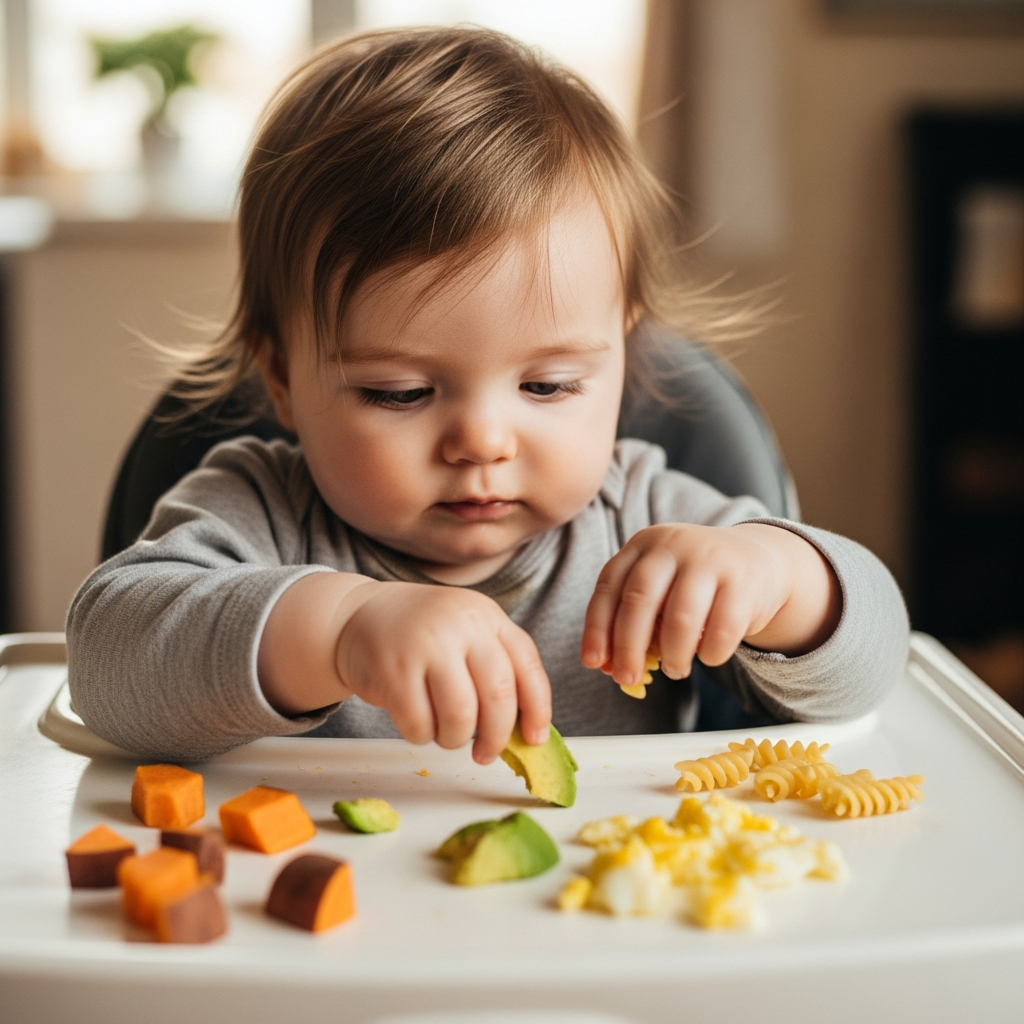
Finger Foods for 10 Month Old Babies: Self-Feeding Favorites
Self-feeding is a remarkable developmental achievement that builds independence, motor skills, and confidence. At 10 months, your baby is developing the pincer grasp, an important developmental milestone that allows them to pick up small objects between their thumb and forefinger.
Encouraging self-feeding at this age supports your baby's natural drive for independence while developing crucial fine motor skills they will use for years to come.
Soft Finger Foods That Dissolve or Mash Easily
These forgiving foods are perfect for beginners because they dissolve with saliva or mash easily:
- Puffed cereals and soft rice cakes
- Ripe banana pieces cut into coins or strips
- Steamed apple slices (soft enough to mash)
- Soft cheese cubes like mild cheddar or mozzarella
- Well-cooked spiral or elbow pasta
- Soft cooked pear wedges
- Ripe mango strips
- Soft French toast strips
Pincer Grasp Practice Foods
According to Pathways.org, babies typically develop the pincer grasp around 9 months. These small foods help strengthen this essential skill:
- Peas (gently smashed for safety but still requiring pincer grip)
- Halved or quartered blueberries
- Small pieces of soft scrambled egg
- Smashed chickpeas
- Diced soft ripe fruits like peach or kiwi
- Tiny pasta shapes like orzo
- Small cubes of soft tofu
How to Cut Foods for Safe Self-Feeding
The way you cut food matters as much as what you serve. Match food shapes to your baby's current grasp abilities:
| Grasp Type | Age Range | Food Shape | Examples |
|---|---|---|---|
| Palmar grasp (whole hand) | 6-9 months | Long strips (finger-sized) | Toast fingers, banana spears, avocado strips |
| Pincer grasp (thumb + finger) | 9-12 months | Small cubes or pieces | Diced fruits, peas, small pasta shapes |
Safety tip: Avoid round coin-shaped pieces that can block the airway. Always cut cylindrical foods like hot dogs, carrots, and grapes lengthwise first, then into smaller pieces.
Easy Breakfast, Lunch, and Dinner Recipes for 10 Month Olds
Creating homemade baby food for your 10 month old does not require hours in the kitchen. These simple recipes provide excellent nutrition while being quick to prepare. Many can be batch-cooked and frozen for busy days.
Quick Breakfast Ideas (Recipes 1-5)
1. Two-Ingredient Banana Egg Pancakes
Mash 1 ripe banana with 1 egg until smooth. Cook small pancakes in a non-stick pan over medium heat. Flip when bubbles form. Cut into strips for easy gripping.
2. Overnight Oats with Mashed Berries
Combine 1/4 cup oats with 1/2 cup formula or breast milk overnight. In the morning, stir in mashed strawberries or blueberries. Warm slightly if desired.
3. Avocado Toast Fingers
Spread half a ripe avocado on whole grain toast. Cut into finger-width strips. Optional: add thin spread of ricotta underneath.
4. Scrambled Eggs with Cheese and Spinach
Whisk 1 egg with splash of milk. Scramble in butter over low heat, adding shredded cheese and finely chopped spinach. Serve in small pieces.
5. Yogurt Parfait with Soft Fruit
Layer full-fat plain Greek yogurt with diced soft peaches, halved blueberries, or mashed raspberries. Let baby self-feed with hands or pre-loaded spoon.
Nutritious Lunch Recipes (Recipes 6-10)
6. Mini Turkey Meatballs with Hidden Vegetables
Mix 1 pound ground turkey with 1/2 cup finely grated zucchini, 1/4 cup grated carrots, and 1/4 cup breadcrumbs. Add 1 egg. Form small marble-sized balls. Bake at 375F for 18-20 minutes. These freeze well.
7. Creamy Vegetable Pasta
Cook small pasta shapes until very soft. Steam mixed vegetables. Blend steamed vegetables with cream cheese until smooth. Toss pasta with the vegetable cream sauce.
8. Lentil and Sweet Potato Mash
Cook red lentils until completely soft. Mash with roasted sweet potato. Add drizzle of olive oil and pinch of cumin for flavor.
9. Soft Quesadilla Triangles with Beans
Mash 2 tablespoons canned black beans. Spread on half a small flour tortilla. Add shredded cheese and fold. Cook until cheese melts. Cut into small triangles.
10. Chicken and Vegetable Fried Rice
Use well-cooked soft rice. Add finely diced cooked chicken. Scramble in 1 egg. Stir in soft cooked peas and diced carrots.
Dinner Recipes the Whole Family Can Share (Recipes 11-15)
11. One-Pot Chicken Vegetable Stew
Cook chicken thighs with soft carrots, potatoes, and green beans in low-sodium broth. Remove baby's portion before adding salt. Shred chicken and mash or dice vegetables.
12. Baked Salmon with Mashed Vegetables
Bake salmon fillet at 400F for 12-15 minutes. Flake into small pieces, carefully checking for bones. Serve with mashed peas and drizzle of olive oil.
13. Beef and Sweet Potato Shepherd's Pie
Brown lean ground beef with finely diced onions and carrots. Top with mashed sweet potato. Bake until bubbling. Reserve unsalted portion for baby.
14. Mild Vegetable Curry with Rice
Simmer soft vegetables like butternut squash, spinach, and chickpeas in coconut milk. Use mild curry powder only. Serve over well-cooked soft rice.
15. Pasta Bolognese (Low Sodium Version)
Make sauce with crushed tomatoes, lean ground beef, grated carrots, and zucchini. Skip added salt for baby's portion. Chop pasta smaller for easier eating.
How to Adapt Family Meals for Your 10 Month Old
One of the biggest time-savers for busy parents is learning to modify your family dinner for baby. You do not need to cook separate meals or prepare special baby food. With simple modifications, your 10 month old can enjoy what everyone else is eating.
Four Steps to Adapt Any Family Meal
- Set aside baby's portion before seasoning: Reserve food before adding salt, strong spices, or sauces. Most herbs like basil and oregano are fine for babies.
- Adjust texture: Cook baby's vegetables a few minutes longer until they pass the squish test.
- Cut appropriately: Dice or shred foods into baby-safe pieces. Proteins should be shredded or pea-sized.
- Remove hazards: Take out whole nuts, large chunks, tough skins, and any foods that do not pass the squish test.
Family Meal Adaptations (Recipes 16-20)
- 16. Baked Pasta: Reserve unseasoned portion before adding salt, chop pasta smaller for baby
- 17. Slow Cooker Pot Roast: Naturally tender meat perfect for babies, shred into tiny pieces
- 18. Sheet Pan Chicken: Remove baby's vegetables 10 minutes early for softer texture
- 19. Stir-Fry: Cook vegetables longer until soft, reduce soy sauce, dice into small pieces
- 20. Homemade Soup: Blend or mash baby's portion to desired consistency
Research indicates that independent access to food through finger feeding supports both motor and cognitive development in infants. When babies feed themselves alongside family members, they develop confidence and positive associations with mealtime.
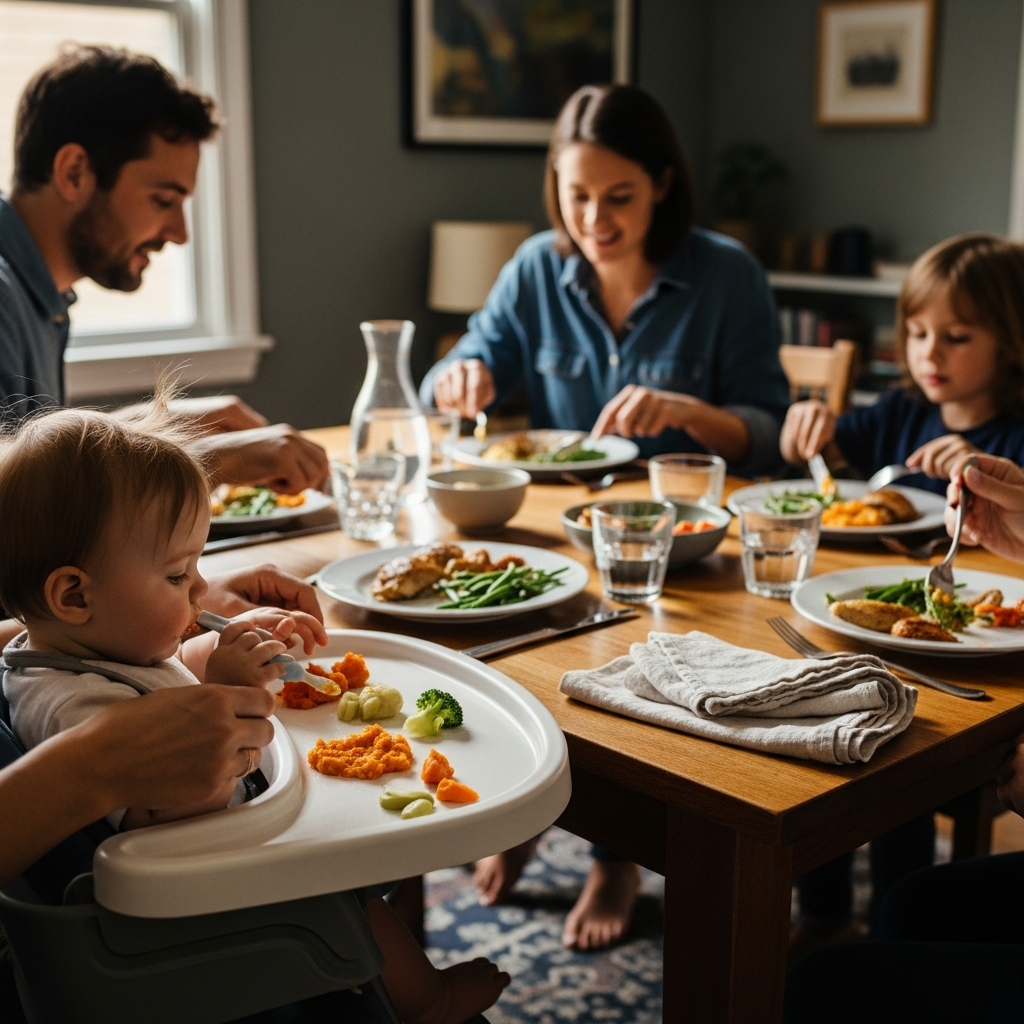
Transitioning from Purees to Table Foods at 10 Months
Many parents wonder if their 10 month old should still eat purees. Most babies are developmentally ready for more texture at this age. The transition does not need to be abrupt. You can combine familiar purees with new textures for a gradual approach.
Signs Your Baby Is Ready for Chunkier Textures
- Makes chewing motions with their jaw (even without teeth)
- Successfully manages soft finger foods without gagging frequently
- Shows strong interest in your food and reaches for items on your plate
- Seems bored with smooth purees or pushes the spoon away
- Uses pincer grasp to pick up small items like peas or cheerios
- Can sit independently with good head and trunk control
Texture Progression Guide
This gradual approach helps babies adjust to new textures comfortably:
| Week | Texture Goal | Examples |
|---|---|---|
| 1-2 | Thicker purees with soft lumps | Mashed banana with small chunks, thick oatmeal |
| 3-4 | Mashed foods with more texture | Fork-mashed vegetables, chunky applesauce |
| 5-6 | Soft pieces mixed with mash | Diced soft fruits in yogurt, pasta with sauce |
| 7-8 | Primarily soft table foods | Modified family meals, finger foods |
Research shows babies may need 8-10 or more exposures before accepting new textures or foods. If your baby resists lumpy foods, mix new textures with familiar favorites and keep offering variety without pressure.
Foods to Avoid and Choking Prevention for 10 Month Olds
Safety is paramount when introducing table foods. Understanding what to avoid and how to prepare foods safely protects your baby. The CDC provides comprehensive food safety guidelines for young children to help parents prevent foodborne illness and keep babies healthy.
Foods That Are Unsafe Until Age One
- Honey: The CDC warns that honey can cause severe botulism in babies under 12 months, including honey in baked goods
- Cow's milk as main drink: Can be used in cooking, but should not replace formula or breast milk until 12 months
- Added salt and sugar: Baby's kidneys cannot process excess sodium
- Whole nuts: Major choking hazard; offer only finely ground nuts or thin nut butter spreads
Choking Hazards and How to Prepare Them Safely
| Food | Risk | Safe Preparation |
|---|---|---|
| Grapes | Round shape blocks airway | Quarter lengthwise into 4 pieces |
| Hot dogs | Coin shape when sliced | Cut lengthwise first, then into small pieces |
| Nuts | Hard texture, small size | Finely ground or as thin nut butter spreads |
| Popcorn | Hard, irregular pieces | Avoid completely until age 4+ |
| Raw carrots | Hard texture | Steam until very soft (passes squish test) |
| Blueberries | Round shape | Halve or quarter lengthwise |
Gagging vs Choking: What Every Parent Should Know
Understanding the difference between gagging and choking reduces anxiety during meals. Gagging is a protective reflex that expels food away from the throat. It is normal during texture learning.
| Gagging (Normal - Do Not Intervene) | Choking (Emergency - Act Immediately) |
|---|---|
| Loud coughing, sputtering sounds | Silent or very high-pitched squeaky sounds |
| Face may turn red temporarily | Lips and skin may turn blue or purple |
| Baby can still cry, cough, and breathe | Cannot cry, cough effectively, or breathe |
| Resolves on its own within seconds | Requires immediate back blows and chest thrusts |
Important: All caregivers should take an infant CPR course. Nationwide Children's Hospital offers comprehensive infant CPR and choking first aid guidance that every parent should review.
Nutritional Requirements for 10 Month Old Babies
At 10 months, your baby's nutritional needs are evolving. Iron becomes particularly critical as natural stores from birth deplete. The Mayo Clinic provides comprehensive guidance on introducing solid foods and meeting your baby's nutritional needs during this important developmental stage.
Iron-Rich Foods: Essential for Brain Development
Iron deficiency anemia most commonly affects babies 9 through 24 months old. Prioritize these iron-rich foods daily:
- Iron-fortified infant cereals
- Red meat like beef and lamb (finely shredded)
- Dark poultry meat (thigh meat contains more iron than breast)
- Beans, lentils, and chickpeas
- Spinach and leafy greens (cooked and finely chopped)
- Eggs, especially the iron-rich yolk
Absorption tip: Pair iron-rich foods with vitamin C sources like tomatoes, citrus, or bell peppers to enhance iron absorption.
Balancing Macronutrients for Growing Babies
- Protein: Supports muscle and tissue growth. Offer eggs, meat, fish, beans, and dairy at each meal.
- Healthy fats: Critical for brain development. Include avocado, olive oil, full-fat dairy, and fatty fish.
- Complex carbohydrates: Provide sustained energy. Offer whole grains, vegetables, and fruits.
- Fiber: Supports digestive health. Found in fruits, vegetables, whole grains, and legumes.
Managing Picky Eating
Many parents worry when babies reject certain foods. This is completely normal. The NCBI reports it can take 10-15 exposures before a child accepts a new food. Offer new foods alongside favorites without pressure.
Complete Recipe Collection: 40+ Ideas by Category
Additional Breakfast Ideas (21-28)
- Chia seed pudding with mashed fruit
- Soft waffles with yogurt dip
- Cottage cheese with diced peaches
- Oat pancakes with unsweetened applesauce
- Cream cheese on whole grain toast fingers
- Soft boiled egg with toast soldiers
- Ricotta spread with mashed berries on toast
- Mashed banana with thin nut butter on toast
Additional Lunch Ideas (29-36)
- Hummus with soft pita triangles
- Cheese and veggie pinwheels (soft tortilla)
- Soft homemade fish cakes
- Mini egg muffins with vegetables
- Mashed avocado and black beans
- Pasta salad with soft diced vegetables
- Mini grilled cheese strips
- Soft polenta with marinara sauce
Additional Dinner Ideas (37-44)
- Creamy pea risotto
- Mild fish tacos in soft flour tortilla
- Chicken and vegetable pot pie (soft filling)
- Soft meatloaf slices with mashed potatoes
- Creamy polenta with meat ragu
- Vegetable egg fried rice
- Soft vegetable lasagna
- Mild butter chicken with basmati rice
Healthy Snack Ideas (45-52)
- Soft cheese sticks or cubes
- Steamed veggie sticks with hummus
- Rice cakes with mashed avocado
- Frozen yogurt dots
- Banana ice cream (frozen banana blended)
- Homemade soft fruit leather strips
- Puffed rice cereal
- Soft baked apple slices with cinnamon
Frequently Asked Questions About Feeding 10 Month Olds
How much food should a 10 month old eat per day?
A 10 month old typically eats 3 meals and 1-2 snacks daily, with portions of about 4-6 tablespoons per meal. They should also consume 24-32 ounces of breast milk or formula. Let your baby guide intake based on hunger cues rather than forcing specific amounts.
Can a 10 month old eat table food?
Yes, 10 month olds can eat most table foods when prepared appropriately. Foods should be soft enough to mash between your fingers, cut into safe sizes, and served without added salt or sugar. Reserve baby's portion before seasoning family dishes.
What finger foods can I give my 10 month old?
Safe finger foods include soft steamed vegetables, ripe banana pieces, scrambled eggs, well-cooked pasta, shredded chicken, soft cheese cubes, and halved blueberries. Choose foods that are soft enough to gum and dissolve easily.
Should a 10 month old still eat purees?
Purees are not required at 10 months but can still be offered alongside table foods. Most babies are developmentally ready for soft, mashed, or chunky textures. A gradual transition combining purees with finger foods works well.
What foods should a 10 month old avoid?
Avoid honey (botulism risk until age 1), whole nuts (choking hazard), whole grapes and cherry tomatoes (must be quartered), raw hard vegetables, popcorn, and foods with added salt or sugar.
How do I transition my baby from purees to table foods?
Gradually increase texture over 4-8 weeks. Start with thicker purees, progress to mashed foods, then soft finger foods, and finally modified family meals. Offer new textures alongside familiar purees.
Why does my 10 month old gag on food?
Gagging is a normal protective reflex that prevents choking as babies learn new textures. It typically decreases with practice. Unlike choking, babies who gag can still breathe and make sounds.
How do I know if my 10 month old is getting enough nutrition?
Signs of adequate nutrition include steady weight gain, regular wet diapers, good energy levels, and meeting developmental milestones. Your pediatrician monitors growth at regular checkups.
Your Journey to Table Foods Starts Now
Feeding your 10 month old is an adventure filled with messy high chairs, new flavors, and exciting milestones. Remember that every baby progresses at their own pace. What matters most is offering variety, ensuring safety, and making mealtimes positive experiences for the whole family.
The transition from purees to table foods opens up a world of family meal possibilities. Your baby can now share in the foods you love, simply modified for their developmental stage. This not only saves you valuable time but creates meaningful bonding moments around the dinner table.
At PatPat, we celebrate every milestone in your parenting journey. Whether your little one is mastering the pincer grasp with peas or diving into their first family pasta dinner, these moments matter. Keep exploring new foods, stay patient with texture transitions, and trust your baby's hunger cues.
Note: This article provides general information and is not a substitute for professional medical advice. Always consult your pediatrician with specific questions about your baby's nutrition and development.





