


Your baby is just weeks away from their first birthday, and what an incredible journey it has been. At 11 months, your almost 1 year old is likely grabbing food off your plate, refusing the spoon, and making it abundantly clear that they want to feed themselves. Sound familiar? You are not alone in wondering what to feed your 11 month old baby as they transition from infant to toddler.
Here is the exciting news: your little one can now enjoy most family foods when prepared safely. This comprehensive guide from PatPat covers everything you need to know about 11 month baby food, from quick breakfast recipes to nutritious dinner ideas. We will also tackle the big milestone on the horizon: preparing baby for whole milk at 12 months. Whether you are looking for finger foods for your 11 month old or a complete eating schedule, you will find practical, parent-tested solutions right here.
What Can an 11 Month Old Baby Eat?
The short answer? Almost everything you eat. By 11 months, your baby has developed the oral motor skills to handle a wide variety of textures, making this an exciting time to expand their palate. According to the CDC's infant nutrition guidelines, solid foods should now make up a significant portion of your baby's diet.
Protein-Rich Foods for Growing 11 Month Olds
Protein supports your baby's rapid growth and brain development. Great options include:
- Soft-cooked meats: Shredded chicken, turkey, ground beef, or pork cut into small pieces
- Flaked fish: Boneless salmon, cod, or tilapia (avoid high-mercury fish)
- Eggs: Scrambled, hard-boiled strips, or mini omelets
- Legumes: Mashed or whole soft beans, lentils, and chickpeas
- Tofu and tempeh: Cut into small cubes or crumbled
Fruits and Vegetables Your Almost 1 Year Old Will Love
Variety is key for developing healthy eating habits. Offer a rainbow of produce:
- Soft raw fruits: ripe banana, avocado, peaches, and berries
- Cooked vegetables: steamed broccoli, roasted sweet potato, soft carrots
- Fresh fruits: cut appropriately (grapes quartered, berries halved)
Grains and Dairy Options at 11 Months
Complex carbohydrates provide energy for your active explorer:
- Whole grain bread, toast strips, and soft crackers
- Pasta in various shapes (rotini and penne work great for little fingers)
- Rice, quinoa, oatmeal, and barley
- Full-fat yogurt and cottage cheese
- Soft cheese cubes (cheddar, mozzarella, Swiss)
Important note: While dairy products like cheese and yogurt are perfectly fine, whole cow's milk should wait until after 12 months as a main beverage.
11 Month Old Eating Schedule and Daily Meal Plan
Establishing a consistent 11 month old eating schedule helps your baby know what to expect and ensures they get adequate nutrition throughout the day. The CDC recommends feeding your child every 2 to 3 hours, which translates to about 3 meals and 2 to 3 snacks daily.
How Many Meals and Snacks Does an 11 Month Old Need?
- 3 main meals: Breakfast, lunch, and dinner
- 2 snacks: One mid-morning and one mid-afternoon
- Breast milk or formula: Approximately 16-24 oz daily, gradually decreasing
- Water: Offered with meals and snacks in a sippy cup
Sample 11 Month Old Feeding Schedule
| Time | Feeding |
|---|---|
| 7:00 AM | Wake up + breast milk/formula |
| 7:30 AM | Breakfast |
| 10:00 AM | Morning snack |
| 12:00 PM | Lunch + water |
| 2:30 PM | Afternoon snack + milk |
| 5:30 PM | Dinner + water |
| 7:00 PM | Bedtime milk feeding |
One-Week Meal Plan for 11 Month Old Babies
| Day | Breakfast | Lunch | Dinner | Snacks |
|---|---|---|---|---|
| Monday | Scrambled eggs + toast | Chicken pasta | Fish with vegetables | Cheese, crackers, fruit |
| Tuesday | Banana pancakes + yogurt | Bean quesadilla | Turkey meatballs with rice | Avocado toast, cucumber |
| Wednesday | Oatmeal with berries | Vegetable soup | Beef stir-fry with noodles | Yogurt, cheese cubes |
| Thursday | French toast strips | Egg salad on toast | Lentil curry with rice | Banana, crackers |
| Friday | Cheese omelet + fruit | Tuna pasta | Chicken with sweet potato | Apple slices, cheese |
| Saturday | Waffles with nut butter | Pizza toast | Salmon with mashed potatoes | Hummus with pita, fruit |
| Sunday | Pancakes with fruit | Grilled cheese + soup | Family roast dinner | Yogurt parfait |
Easy 11 Month Old Baby Food Recipes by Mealtime
These homemade baby food recipes for 11 months are designed to be nutritious, easy to prepare, and perfect for developing self-feeding skills.

Quick Breakfast Recipes for 11 Month Olds
Banana Oat Pancakes (3 Ingredients)
Prep time: 10 minutes | Servings: 6 mini pancakes
- 1 ripe banana, mashed
- 1 egg, beaten
- 1/4 cup rolled oats
Instructions: Mix all ingredients until combined. Cook small spoonfuls in a non-stick pan over medium heat for 2-3 minutes per side. Serve in strips for easy gripping.
Veggie Egg Muffins (Batch-Friendly)
Prep time: 25 minutes | Servings: 12 mini muffins
- 6 eggs, beaten
- 1/2 cup finely diced vegetables (spinach, bell pepper, zucchini)
- 1/4 cup shredded cheese
Instructions: Mix ingredients and pour into greased mini muffin tin. Bake at 350F for 15-18 minutes. Freeze extras for busy mornings.
Avocado Toast with Egg
Prep time: 8 minutes
Spread mashed avocado on whole grain toast strips, top with scrambled egg pieces. A complete, nutritious breakfast your 11 month old can self-feed.
Nutritious Lunch Ideas for Pre-Toddlers
Mini Veggie Frittatas
Prep time: 30 minutes | Servings: 8 mini frittatas
- 4 eggs
- 1/4 cup milk
- 1/2 cup mixed diced vegetables
- 2 tbsp shredded cheese
Instructions: Whisk eggs with milk, stir in vegetables and cheese. Divide into greased muffin tin and bake at 375F for 12-15 minutes.
Soft Bean Tacos
Prep time: 10 minutes
Spread mashed black beans on a soft tortilla, add cheese and a sprinkle of mild seasoning. Fold and cut into strips or small pieces for easy handling.
Pasta Primavera with Hidden Vegetables
Prep time: 20 minutes
Cook small pasta shapes until very soft. Blend cooked vegetables into marinara sauce and toss with pasta. The sauce masks vegetables while providing excellent nutrition.
Family-Friendly Dinner Recipes
One-Pot Mild Chicken Curry
Prep time: 35 minutes | Serves: Whole family
- 1 lb chicken breast, diced
- 1 can coconut milk
- 2 cups mixed vegetables
- 1 tbsp mild curry powder (for adults)
Instructions: Cook chicken with vegetables in coconut milk. Remove baby's portion before adding spices for adults. Serve over rice.
Baked Fish Fingers with Sweet Potato Wedges
Prep time: 30 minutes
Coat fish strips in egg and crushed crackers, bake at 400F for 12-15 minutes. Serve with soft-baked sweet potato wedges cut into finger shapes.
Turkey and Vegetable Meatballs
Prep time: 40 minutes | Makes: 24 mini meatballs
- 1 lb ground turkey
- 1/2 cup finely grated zucchini
- 1/4 cup breadcrumbs
- 1 egg
Instructions: Mix all ingredients, form into small balls. Bake at 375F for 18-20 minutes. Freeze extras for quick future meals.
Finger Foods for 11 Month Old Babies: Self-Feeding Mastery
At 11 months, your baby is refining their pincer grasp, the ability to pick up small objects between the thumb and index finger. According to Mayo Clinic, babies develop fine motor skills and hand-eye coordination during this period. Offering appropriate finger foods for 11 month old babies supports this important developmental milestone.
Best Soft Finger Foods for Developing Independence
- Ripe banana pieces and slices
- Soft cheese cubes (cheddar, mozzarella)
- Steamed broccoli and cauliflower florets
- Well-cooked pasta in various shapes
- Soft bread and toast strips
- Ripe avocado chunks
- Soft-cooked apple and pear slices
- Scrambled egg pieces
Pincer Grasp Foods to Challenge Fine Motor Skills
These smaller foods help your almost 1 year old practice precision picking:
- Halved blueberries and small grape pieces
- Whole soft-cooked peas
- Small cubes of soft melon
- Diced cooked chicken
- Tiny pasta shapes (orzo, mini shells)
- Whole soft black beans
Crunchy Texture Introduction for Almost Toddlers
As your baby approaches their first birthday, you can begin introducing more textures:
- Soft crackers that dissolve quickly
- Plain rice cakes (unsalted)
- Low-sugar puffed cereals
- Well-toasted bread strips
- Teething crackers and soft breadsticks
Remember: even babies without teeth can handle soft finger foods. Their gums are surprisingly strong for mashing soft foods.
Preparing Your Baby for Whole Milk at 12 Months
One of the biggest transitions on the horizon is switching from formula to whole milk. This section addresses everything you need to know about preparing baby for whole milk at 12 months.
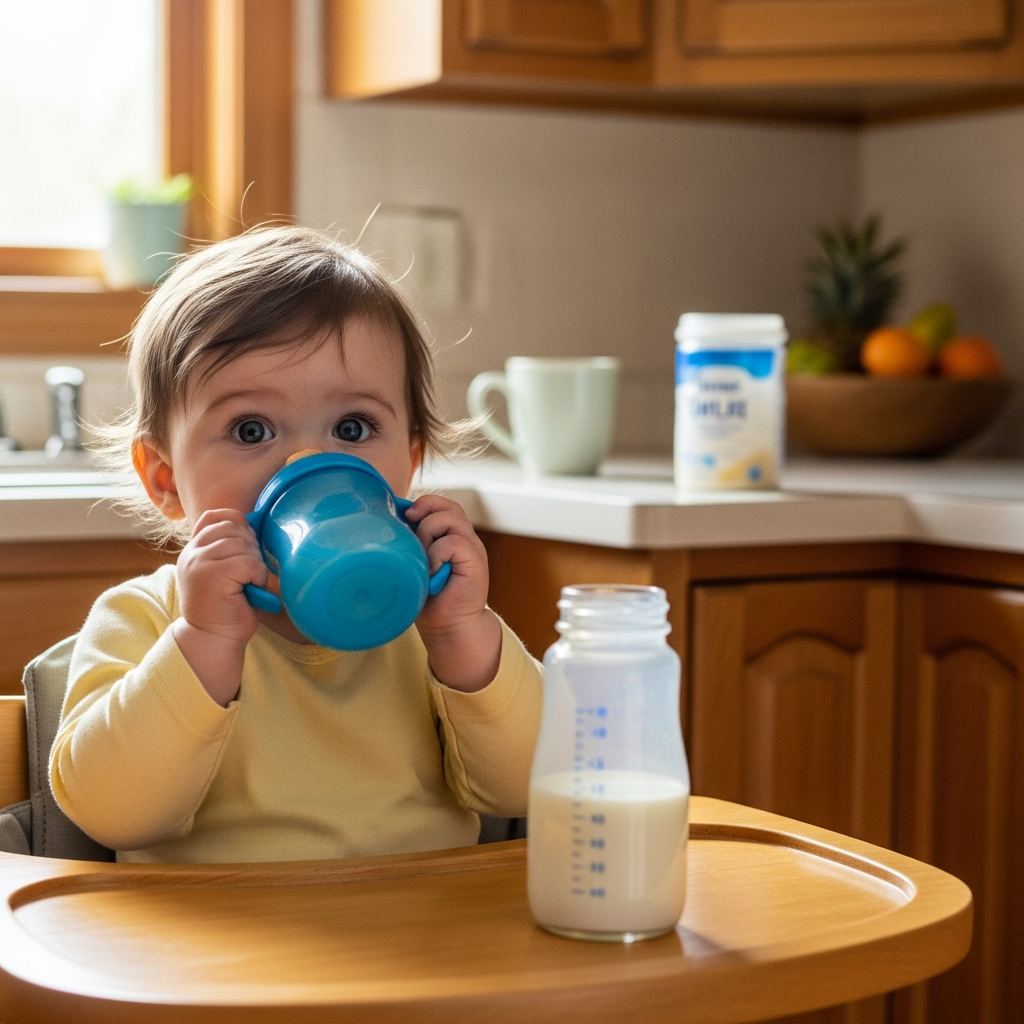
When and How to Introduce Whole Milk
The CDC recommends introducing cow's milk at 12 months old (but not before). Before this age, cow's milk may stress your baby's kidneys and does not provide the right nutrient balance.
Key points for the transition:
- Wait until 12 months for whole milk as the main beverage
- Using milk in cooking before 12 months is acceptable
- Choose whole milk (full-fat) for brain development
- Limit to 16-24 oz daily after transition
Transition Strategies from Formula to Whole Milk
A gradual transition from formula to whole milk helps your baby adjust to the new taste:
| Week | Ratio |
|---|---|
| Week 1-2 | 75% formula, 25% whole milk |
| Week 3-4 | 50% formula, 50% whole milk |
| Week 5-6 | 25% formula, 75% whole milk |
| Week 7+ | 100% whole milk |
Tips for resistant babies: Warm the milk to body temperature for a familiar feel, and try offering it in a new cup for a fresh association.
Signs Your Baby Is Ready for the Milk Switch
- Eating a variety of solid foods successfully
- Meeting nutritional needs through solid food
- No digestive issues with dairy products
- Good weight gain and growth pattern
- Approaching or past 12 months of age
Foods to Avoid at 11 Months
While your baby can eat most foods, some items remain off-limits for safety and health reasons.
Foods Still Unsafe for 11 Month Old Babies
- Honey: Risk of infant botulism until 12 months
- Cow's milk as main drink: Wait until 12 months
- Added salt and sugar: Kidneys still developing
- Whole nuts: Choking hazard (nut butters are fine)
- Hard raw vegetables: Carrots, celery must be cooked soft
- Unpasteurized products: Juice, cheese, milk
Choking Hazards and Safe Preparation Methods
HealthyChildren.org reports that most children who choke to death are under 5 years old. Hot dogs cause more choking deaths than any other food. Use this guide for safe preparation:
| Food | Hazard | Safe Preparation |
|---|---|---|
| Grapes | Round shape | Quarter lengthwise |
| Cherry tomatoes | Round, tough skin | Quarter and remove skin |
| Hot dogs | Coin shape | Slice lengthwise, then dice small |
| Popcorn | Hard, irregular | Avoid completely |
| Whole nuts | Hard, small | Use nut butters instead |
| Raw apples | Hard texture | Cook until soft or grate finely |
The squish test: If you can easily squish a food between your thumb and finger, it is generally safe for your baby.
Managing Common Allergens at 11 Months
Continue exposing your baby to previously introduced allergens. The top allergens include milk, eggs, peanuts, tree nuts, wheat, soy, fish, and shellfish. If introducing new allergens, offer one at a time and watch for reactions: hives, swelling, vomiting, or breathing issues warrant immediate medical attention.
Nutritional Requirements for 11 Month Old Babies
Understanding your baby's nutritional needs helps ensure they are getting everything needed for healthy development.
Iron and Protein Needs as Baby Approaches One Year
According to the CDC, infants ages 7-12 months need 11 milligrams of iron daily. Iron stores from birth are depleted by this age, making dietary iron crucial.
Best iron sources for 11 month olds:
- Iron-fortified infant cereals
- Red meat and poultry
- Beans and lentils
- Spinach and leafy greens
Pro tip: Pair iron-rich foods with vitamin C sources (like citrus fruits or tomatoes) to enhance iron absorption.
Building Healthy Eating Habits Before Toddlerhood
- Offer variety at every meal
- Model good eating behavior (eat together when possible)
- Avoid using food as reward or punishment
- Let baby guide portion sizes based on hunger cues
- Expect 10-15 exposures before new food acceptance
Balancing Solids and Milk as Nutrition Shifts
By 11 months, solid foods should provide 60-70% of your baby's nutrition, with breast milk or formula complementing the diet. Monitor hydration by offering water with meals.
Troubleshooting Common Feeding Challenges
What to Do When Your 11 Month Old Refuses Food
Food refusal at this age is common and usually temporary. Possible causes include:
- Teething pain making eating uncomfortable
- Mild illness suppressing appetite
- Developmental changes and distraction
- Asserting newfound independence
Solutions: Stay calm and avoid pressure. Offer refused foods again later. Ensure milk feeds are not too close to mealtimes. If refusal persists beyond two weeks, consult your pediatrician.
Managing Mealtime Mess and Independence Struggles
Embrace the mess as part of learning. Use splash mats under the high chair and large bibs with pockets. Allow utensil practice even when inefficient. This builds confidence and motor skills essential for toddlerhood.
Addressing Texture Sensitivities Before Toddlerhood
Some babies are slower to accept new textures. Try these approaches:
- Mix familiar textures with new ones gradually
- Offer the same food in different preparations
- Stay patient and consistent
- Consult a feeding specialist if concerns persist
Frequently Asked Questions About 11 Month Old Baby Food
What should an 11 month old be eating?
An 11 month old should eat three meals and two snacks daily, including soft proteins (eggs, meat, fish, beans), fruits, vegetables, grains, and dairy products like cheese and yogurt. Most table foods are appropriate when prepared safely. Breast milk or formula continues at 16-24 oz daily, with solid foods now providing the majority of nutrition.
How many meals a day should an 11 month old have?
An 11 month old should have three main meals (breakfast, lunch, and dinner) plus two snacks between meals. Breast milk or formula is typically offered 3-4 times daily. Solid foods should now be the primary source of nutrition, with milk as a supplement.
Can my 11 month old eat what we eat?
Yes, most 11 month olds can eat modified versions of family meals. Remove baby's portion before adding salt, cut foods into safe sizes, ensure soft textures, and avoid honey, whole nuts, and choking hazards. This is an excellent time to transition baby fully to family foods in preparation for toddlerhood.
What finger foods are safe for 11 month old babies?
Safe finger foods for 11 month olds include soft fruits (banana, avocado, ripe berries), cooked vegetables, scrambled eggs, soft cheese cubes, well-cooked pasta, shredded meats, soft crackers, and halved blueberries. All foods should pass the squish test (easily mashed between your fingers).
When can I give my baby whole milk instead of formula?
Whole milk can replace formula after your baby turns 12 months old. At 11 months, you can use whole milk in cooking and prepare for the transition. Start mixing small amounts of milk with formula a few weeks before the first birthday to help baby adjust to the taste.
How much milk does an 11 month old need?
An 11 month old typically needs 16-24 ounces of breast milk or formula daily, divided into 3-4 feedings. This amount naturally decreases as solid food intake increases. By this age, solid foods should provide most of the nutrition, with milk as a supplement.
Why is my 11 month old suddenly refusing food?
Food refusal at 11 months is often caused by teething pain, illness, developmental leaps, or asserting independence. Continue offering meals without pressure, ensure proper meal timing, and check that milk feeds are not too close to mealtimes. If refusal persists more than two weeks, consult your pediatrician.
Should my 11 month old still eat purees?
Most 11 month olds no longer need purees and should primarily eat soft table foods and finger foods. However, some puree textures (like applesauce or yogurt) remain appropriate. If your baby still prefers purees, gradually increase texture by offering chunkier options alongside familiar smooth foods.
Conclusion: Preparing for Toddlerhood with Confidence
Your 11 month old is on the cusp of an exciting new chapter. By offering a variety of nutritious finger foods, following a consistent 11 month old eating schedule, and gradually preparing for the transition from formula to whole milk, you are setting the foundation for healthy eating habits that will last a lifetime.
Remember, every baby develops at their own pace. What matters most is providing safe, nutritious options and creating positive mealtime experiences. The mess, the food throwing, the occasional refusal: these are all normal parts of learning to eat independently.
At PatPat, we understand the joys and challenges of this pre-toddler stage. As you prepare for that magical first birthday, know that you are doing an amazing job nourishing your growing baby. Ready for what comes next? Check out our guide to feeding your 12 month old toddler for the next exciting phase of your feeding journey.
Resources for Parents:




