


What if your baby's first Christmas could mark the beginning of something truly magical - not just twinkling lights and wrapped presents, but a lifelong commitment to kindness and generosity? Research from UC Berkeley suggests that the roots of empathy can be traced to infancy, meaning the values you model right now are already shaping your child's heart.
As new and expecting parents, you hold a remarkable opportunity. The holiday season offers countless ways to introduce Christmas charity and giving back during the holidays, creating traditions that grow alongside your children. Whether you're expecting your first baby, navigating life with a newborn, or chasing a curious toddler, there are meaningful ways to spread holiday cheer that fit your family's unique season of life.
At PatPat, we believe that family moments matter most during the holidays. This guide will walk you through age-appropriate giving activities, simple ideas for busy parents, and practical ways to build lasting family Christmas traditions around giving. Let's discover how you can raise generous children while creating memories that last a lifetime.
Why Teaching Kids About Christmas Charity Matters
You might wonder whether your baby or toddler truly understands what's happening when you drop off donations or help a neighbor. The answer is: more than you might think. Child development research consistently shows that teaching kids about giving creates lasting benefits for their emotional and social growth.
The Developmental Benefits of Early Generosity Education
Empathy development begins much earlier than most parents realize. According to Zero to Three, babies are sensitive to the distress of others from birth. They respond to crying infants and notice emotional expressions on faces around them. By participating in charitable activities, even as observers, young children absorb powerful lessons about compassion and community.
The connection between generosity and happiness runs deep. Research from Harvard Health found that giving and strong relationships boost happiness, confirming that generosity activates reward centers in the brain. When your toddler sees your smile as you donate toys or watches you prepare care packages, they're learning that generosity brings joy - a lesson that shapes their character for years to come.
Teaching empathy during Christmas doesn't require elaborate activities. Simple narration works wonders: "We're sharing these blankets with families who need them. That makes them feel warm and loved." These moments build emotional intelligence and help children understand perspectives beyond their own.
Building Lasting Family Values Through Holiday Giving
Holiday giving traditions create shared purpose and strengthen family bonding in ways that gift exchanges alone cannot. When you work together toward a common goal - whether that's filling a donation box or baking cookies for neighbors - you're creating a family identity centered on kindness.
The traditions you establish now will evolve beautifully as your children grow. A baby who accompanies you to donation drop-offs becomes a toddler who helps sort toys, then a preschooler who chooses gifts for children in need. Each stage builds upon the last, creating a rich legacy of giving that your children will eventually pass to their own families.
Age-Appropriate Holiday Giving Activities for Every Stage
One size doesn't fit all when it comes to charity activities for toddlers, babies, and young children. Here's how to make giving meaningful at every developmental stage.

Expecting Parents: Preparing for a Lifetime of Giving
Pregnancy is the perfect time to set intentions for your family's giving values. You might not have a little helper yet, but you can lay important groundwork:
- Donate outgrown maternity items to pregnancy centers or shelters supporting expecting mothers in need
- Volunteer virtually from home - many organizations need help with data entry, phone calls, or social media
- Start a family giving journal where you document your charitable activities and values
- Research local programs you'd like to involve your child in once they arrive
Can you volunteer while pregnant? Absolutely - just choose activities that avoid heavy lifting, prolonged standing, and illness exposure. Always consult your healthcare provider about specific opportunities.
Baby's First Christmas: Simple Giving Traditions to Start
Your baby won't remember their first Christmas, but that doesn't mean it can't be meaningful. Starting baby's first Christmas giving traditions creates the foundation for everything that follows:
- Bring baby along to donation drop-offs - even infants absorb the experience
- Create handprint art cards for nursing home residents who would cherish a visit from your little one
- Establish a "birthday gift-back" tradition - for every gift baby receives, donate one item to a family in need
- Take photos documenting your giving activities to create a "Kindness Album" that grows with your child
Toddler and Preschooler Charity Ideas That Actually Work
Once your child reaches toddler age, they can actively participate in giving activities. The key is keeping tasks simple, hands-on, and brief (15-20 minutes maximum for toddlers). Try these approaches:
- Sorting donations by color or type - a game that teaches sharing while building cognitive skills
- Helping pack food bank boxes - let them drop items in and carry lightweight packages
- Creating simple care packages together with items like socks, snacks, and small toys
- Participating in coat or blanket drives - toddlers love carrying items to collection bins
When teaching a 2 year old about giving, use concrete language: "This toy will go to a child who doesn't have one. They'll be so happy!" Abstract concepts are too complex, but simple cause-and-effect explanations resonate.
Simple Ways to Give Back During the Holidays for Busy Parents
Let's be honest: new parenthood is exhausting. Between nighttime feedings, diaper changes, and trying to remember when you last showered, elaborate charity projects probably aren't realistic. That's perfectly okay. Easy ways to give back during the holidays don't have to require much time or energy.
Quick Kindness Actions for Sleep-Deprived Parents
These simple giving ideas for busy parents take just minutes:
- Round-up donations at checkout - many stores offer easy "round up for charity" options
- Use Amazon Smile while ordering baby supplies (a percentage goes to your chosen charity)
- Text-to-donate during late-night feeding sessions - many organizations accept mobile donations
- Set up recurring monthly donations to causes you care about (even small amounts add up)
At-Home Giving Ideas That Require Minimal Energy
New parent holiday giving ideas don't have to involve leaving the house:
- Declutter baby items during nap time - outgrown clothes and gear help other families
- Write encouraging notes to teachers, healthcare workers, or first responders
- Virtual volunteering - proofread documents, moderate forums, or make phone calls from your couch
- Support small businesses and parent-owned shops who often contribute to charitable causes
While you're updating your family's holiday wardrobe, consider choosing brands that give back. Dressing your family in matching Christmas pajamas creates perfect photo memories while supporting family-focused businesses that often contribute to charitable causes during the holiday season.
How to Start Family Giving Traditions This Christmas
The most meaningful Christmas traditions are those that grow with your family. Starting now, even with an infant, means you're building something that will become increasingly special each year.
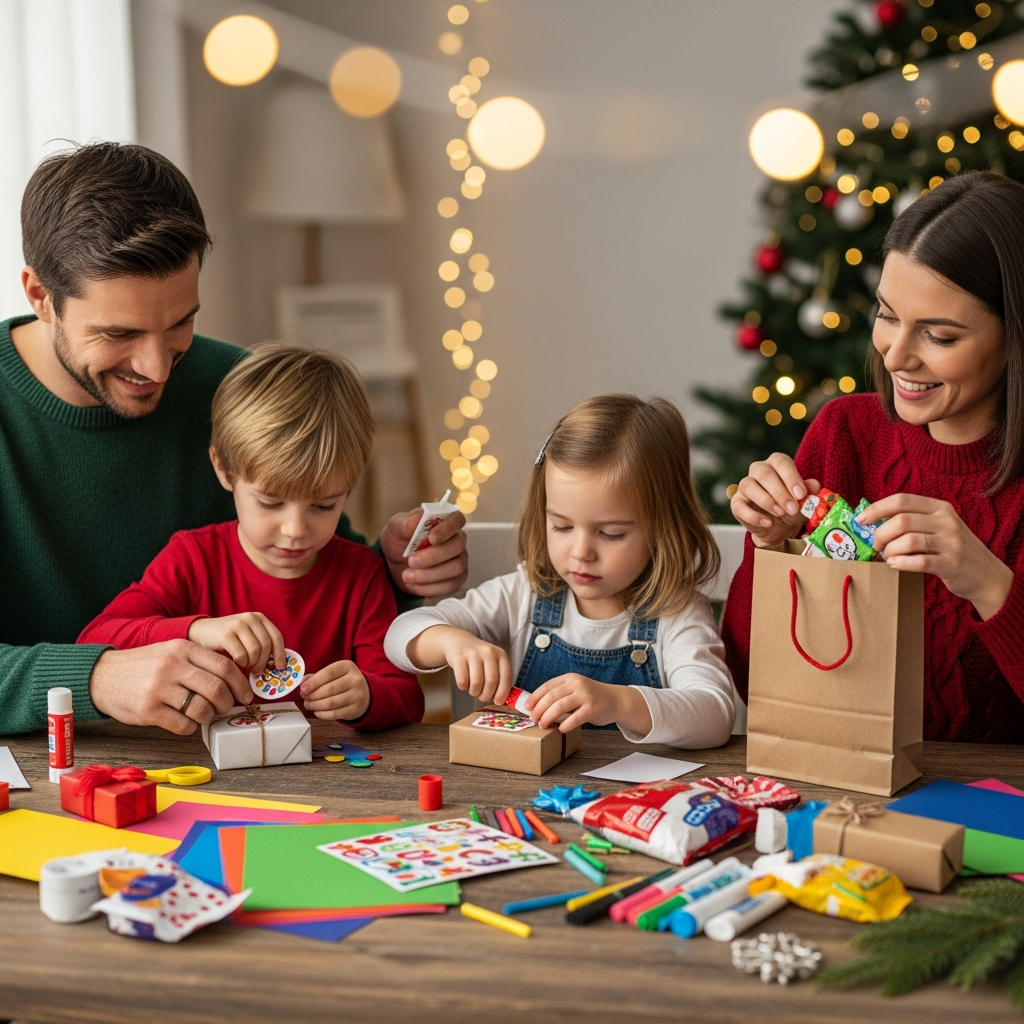
Creating a Kindness Advent Calendar for Your Family
A kindness advent calendar transforms the countdown to Christmas into 25 days of intentional giving. Here's how to make one work for your family:
- Start simple - create 25 cards with one age-appropriate kindness activity each
- Include variety - mix home activities (bake for neighbors) with outings (donate toys) and simple gestures (compliment someone)
- Adjust for your child's age - babies can "participate" while you narrate; toddlers can do hands-on tasks
- Don't stress perfection - missed days are fine; the goal is building habits, not checking boxes
Sample kindness calendar activities include writing thank-you notes, donating one toy, making cards for mail carriers, leaving positive notes on neighbors' doors, and collecting coins for charity. The key is making each activity achievable and fun.
Annual Traditions That Grow with Your Children
Consider establishing family giving traditions that can evolve as your children mature:
- The "One In, One Out" rule - for every new toy received, donate one (teaches balance between getting and giving)
- Birthday month giving - each child's birthday month becomes their time to choose a charity to support
- Holiday letter writing - create cards for deployed troops, hospital patients, or nursing home residents
- End-of-year family giving meeting - review the year's giving activities and plan for the next (even toddlers can participate at their level)
Random Acts of Christmas Kindness the Whole Family Can Do
Beyond structured traditions, random acts of Christmas kindness teach children to notice everyday opportunities for spreading holiday cheer. These spontaneous moments often become the most memorable.
Community Kindness Ideas for Family Outings
Turn regular errands into opportunities for Christmas acts of kindness:
- Pay for the person behind you in the drive-through line
- Leave positive notes on parked cars - "You're doing great!" or "Have a wonderful day!"
- Bring treats to mail carriers and delivery drivers who work extra hard during the holidays
- Write sidewalk chalk messages of encouragement where neighbors will see them
Neighborhood Acts of Kindness with Kids
Your neighborhood offers countless opportunities for holiday kindness activities:
- Bake cookies for elderly neighbors and include a hand-drawn card from your child
- Shovel walkways or rake leaves for neighbors who might struggle with these tasks
- Create welcome baskets for new families who've moved to your area
- Go caroling at retirement communities (babies and toddlers add extra joy!)
The key to teaching children about random kindness is noticing opportunities aloud. Say things like, "That person looks tired - maybe we could let them go ahead of us in line." Over time, your children will begin spotting these opportunities themselves.
Volunteering with Young Children During the Holiday Season
Many parents assume volunteering with young children isn't possible. While it requires some planning, kid-friendly volunteer opportunities do exist, and they provide invaluable lessons about community service.
Finding Kid-Friendly Volunteer Opportunities Near You
Several types of organizations welcome young families:
- Local food banks and pantries often have sorting tasks appropriate for children
- Animal shelters with family programs allow children to help socialize animals
- Community cleanup events welcome all ages for litter pickup in parks
- Library reading programs let older toddlers and preschoolers participate
- Ronald McDonald House locations sometimes offer family volunteer opportunities
Call ahead to confirm age requirements and what activities your child can participate in. Many organizations appreciate knowing you're bringing young helpers so they can prepare appropriate tasks.
Preparing Your Child for Their First Volunteer Experience
Setting expectations helps volunteering with young children go smoothly:
- Explain the "why" in age-appropriate terms: "We're helping sort food so families can have dinner"
- Keep it brief - 30-45 minutes is plenty for young children's first experiences
- Bring snacks and activities for breaks or if your child loses interest
- Focus on the positive - emphasize how helpful they're being, not perfect behavior
- Reflect afterward - ask simple questions like "What did you like about helping today?"
Major Christmas Charity Programs for Families
Several established holiday giving programs make participation easy for families with young children. These Christmas charity programs provide structured ways to give back with clear guidelines.
Toy and Gift Giving Programs for Families
Toys for Tots: This U.S. Marine Corps Reserve program collects new, unwrapped toys for children in need. Drop-off locations are available at many retail stores, fire stations, and community centers through mid-December. Let your child help choose a toy to donate - this makes the experience concrete and meaningful.
Angel Tree (Salvation Army): This program provides Christmas gifts to children in need by allowing families to "adopt" a child and fulfill their wish list. You can visit local Angel Tree locations, select a tag with a child's needs, and shop for those specific items. It's a wonderful way to teach children about helping specific individuals.
USPS Operation Santa: Families can adopt letters that children have written to Santa and fulfill their wishes. Reading these letters with your child (choosing age-appropriate ones) creates powerful conversations about gratitude and generosity.
Family Sponsorship and Food Programs
Beyond toys, families can participate in broader giving initiatives:
- Adopt-a-Family programs through churches, schools, and community organizations let you provide comprehensive holiday support
- Feeding America and local food banks welcome donations and volunteers, especially during the holiday season
- Coat drives and winter clothing donations help families stay warm - perfect for donating items your child has outgrown
- Ronald McDonald House accepts donations and volunteers to support families with hospitalized children
Frequently Asked Questions
How do I teach my child about charity at Christmas?
Start with simple explanations using language your child understands. For toddlers, say "We share our toys with kids who don't have any." Involve them in hands-on activities like sorting donations or dropping items in collection bins. Lead by example and talk about why giving makes you feel happy.
At what age can kids understand charity?
Children begin understanding basic sharing concepts around age 2-3. According to the American Academy of Pediatrics, by age 4 most children begin to show empathy and can grasp that some families need help. However, you can start modeling generosity from birth through your actions and narrating what you're doing during charitable activities.
What are easy ways to give back during the holidays with a baby?
Donate outgrown baby clothes and gear, round up purchases for charity, participate in online giving, bring baby along to donation drop-offs, or create handprint art cards for nursing home residents. Focus on activities that fit into your existing routine.
Can I volunteer while pregnant?
Yes, many volunteer opportunities are safe during pregnancy. Consider activities like sorting donations, writing letters, virtual volunteering, organizing drives, or light administrative tasks. Avoid heavy lifting, prolonged standing, and exposure to illness. Always check with your healthcare provider first.
How do I make a kindness advent calendar?
Create 25 cards or slips with one kindness activity per day. Ideas include: write a thank-you note, donate a toy, compliment three people, bake cookies for neighbors. Place them in numbered envelopes or pockets. Choose age-appropriate activities your whole family can do together.
What volunteer activities can toddlers do?
Toddlers can help sort donations by color or type, drop items into collection bins, carry lightweight food bank items, help pack care packages, decorate cards for seniors, and water plants at community gardens. Keep activities short (15-20 minutes) and supervise closely.
How does Toys for Tots work for families who want to donate?
Purchase new, unwrapped toys and bring them to local drop-off locations (often at stores, fire stations, or community centers) before mid-December. You can involve children by letting them choose a toy to donate. The Marine Corps distributes these toys to families in need.
How do I balance getting and giving at Christmas with kids?
Establish a "give one, get one" tradition where children donate a toy for each new one received. Involve kids in selecting gifts for others before their own lists. Create wishlists that include charitable donations. Talk openly about gratitude and the joy of giving throughout the season.
Start Your Family's Giving Legacy Today
The greatest gift you can give your children this Christmas isn't wrapped in paper - it's the understanding that their actions can make the world a little brighter. Whether you're expecting your first child or navigating the beautiful chaos of toddlerhood, meaningful Christmas traditions centered on giving are within reach.
You don't need to do everything. Choose one or two ideas from this guide that resonate with your family's values and current capacity. Even small gestures - a donated toy, a kind note, a few minutes of volunteer time - create ripples of impact far beyond what you can see.
As you spread holiday cheer with your family this season, remember that you're doing more than filling donation boxes. You're raising generous children who understand that Christmas charity isn't just something we do - it's part of who we are. At PatPat, we're honored to be part of your family's holiday journey and wish you a season filled with warmth, connection, and the joy that comes from giving.
What giving traditions will you start this Christmas? Share your ideas and experiences - your story might inspire another family to begin their own legacy of generosity.



