


Is your little one drooling more than usual, gnawing on everything in sight, and waking up fussier than normal? If so, those tiny teeth are probably making their grand entrance. Teething can turn even the happiest baby into a cranky, uncomfortable mess, and as a parent, watching your child struggle is tough.
Here is the good news: the right teething foods can provide natural, soothing relief for your baby's sore gums. According to the American Academy of Pediatrics, symptoms like mild irritability, drooling, and an urge to chew are all part of the teething process. Food can offer comfort, distraction, and even nutrition during this challenging phase.
At PatPat, we understand the struggles of new parents. This comprehensive guide covers everything from frozen foods for teething to homemade teething biscuits and safety guidelines. Whether you are looking for teething snacks baby will love or wondering what to put in a mesh feeder, you will find practical, pediatrician-informed solutions here.
Understanding Teething and Your Baby's Appetite Changes
Before diving into recipes, it helps to understand what your baby is experiencing. Teething typically begins around 6 months, though Cleveland Clinic notes that teeth can appear as early as 4 months or as late as after the first birthday.
How Teething Affects Your Baby's Eating Habits
When those first teeth push through, your baby's gums become swollen and tender. This discomfort often leads to:
- Appetite fluctuations: Some babies refuse solid foods entirely during active teething
- Preference changes: Many babies suddenly prefer cold foods while others want warm comfort foods
- Increased drooling: This can cause skin irritation around the mouth
- Urge to chew: Counter-pressure actually provides relief from gum discomfort
Research published in PubMed found that decreased appetite for solid foods was statistically associated with teething. The study analyzed over 19,000 child-days and found symptoms were most frequent in the 8-day window around tooth emergence.
Signs Your Baby Is Ready for Teething Foods
Before introducing teething foods, ensure your baby:
- Is at least 6 months old (for most solid teething foods)
- Can sit with support
- Shows interest in food and reaches for items
- Has lost the tongue-thrust reflex
- Displays teething symptoms like drooling and gum swelling
Best Cold and Frozen Foods for Teething Relief
Cold temperatures help numb sore gums, making frozen foods for teething a popular choice among parents. However, safety is paramount. According to Seattle Children's Hospital, items should be chilled rather than frozen solid to avoid bruising delicate gums.

Frozen Fruit Options for Teething Babies
These fruits work wonderfully when slightly thawed (let them sit 2-3 minutes after removing from freezer):
- Frozen banana slices: Soft when slightly thawed, naturally sweet
- Frozen mango chunks: Remove pit completely, cut into thick strips
- Frozen berries: Always use in a mesh feeder to prevent choking
- Frozen melon pieces: Watermelon and cantaloupe are gentle options
- Frozen peach slices: Ensure pit and skin are fully removed
Chilled Vegetables That Soothe Sore Gums
Vegetables offer excellent teething relief with added nutritional benefits:
- Cold cucumber spears: Peel, remove seeds, cut into thick finger-sized pieces
- Chilled steamed carrots: Soft enough to gum but firm enough to hold
- Refrigerated sweet potato wedges: Bake until soft, then chill
- Cold celery sticks: Best for babies 8+ months with more chewing experience
Breastmilk and Formula Frozen Treats
Frozen breastmilk is excellent for teething relief because it provides nutrition while soothing gums:
- Breastmilk popsicles: Pour into silicone molds, let thaw slightly before serving
- Formula ice cubes: Place in mesh feeder for safe gnawing
- Frozen breastmilk lollipops: Use specialized baby-safe molds
- Mixed treats: Combine frozen breastmilk with fruit puree for variety
How to Safely Use a Mesh Feeder for Teething
Mesh feeders are invaluable for introducing frozen foods for teething safely. The mesh allows your baby to gnaw on cold fruit while preventing choking hazards.
| Mesh Feeders | Silicone Feeders |
|---|---|
| More affordable | Easier to clean thoroughly |
| Can stain and harbor bacteria | BPA-free and more durable |
| May need frequent replacement | Doubles as teething toy |
Best foods for mesh feeders: Frozen banana chunks, frozen berries, frozen mango, chilled cucumber, cold watermelon, and frozen breastmilk cubes.
Homemade Teething Biscuit Recipes
Store-bought teething biscuits often contain added sugars and preservatives. Making your own ensures you control every ingredient. These homemade teething biscuits dissolve when wet, reducing choking risk while providing satisfying counter-pressure.
3-Ingredient Banana Oat Teething Biscuits
Ingredients:
- 1 ripe banana (mashed)
- 1 cup oat flour (or blended rolled oats)
- 2 tablespoons coconut oil (melted)
Instructions:
- Preheat oven to 350F (175C) and line a baking sheet with parchment paper
- Mash banana until completely smooth with no lumps
- Mix in oat flour and melted coconut oil until a dough forms
- Roll out dough to about 1/4 inch thickness on a floured surface
- Cut into finger-shaped sticks for easy gripping
- Bake 15-20 minutes until firm and lightly golden
- Cool completely on a wire rack before serving
Allergen-Free Sweet Potato Teething Sticks
Ingredients:
- 1 medium sweet potato
- 1 tablespoon coconut oil
- Pinch of cinnamon (optional)
Instructions:
- Preheat oven to 400F (200C)
- Peel sweet potato and cut into thick finger-sized sticks
- Toss with coconut oil and optional cinnamon
- Spread on baking sheet in single layer
- Bake 25-30 minutes until soft inside but slightly firm outside
- Cool to room temperature or refrigerate for extra soothing
Tip: These can be served cold from the refrigerator for extra gum-soothing benefits.
Sugar-Free Whole Grain Teething Cookies
Ingredients:
- 1 cup whole wheat flour (or oat flour for gluten-free)
- 1/4 cup unsweetened applesauce
- 2 tablespoons coconut oil (melted)
- 1 egg yolk (or 1 tablespoon ground flaxseed mixed with 3 tablespoons water for egg-free)
Instructions:
- Preheat oven to 325F (165C)
- Combine all ingredients in a bowl and mix until smooth dough forms
- Roll dough to 1/4 inch thickness
- Cut into shapes using cookie cutters or slice into rectangles
- Bake 18-20 minutes until golden and firm
- Cool completely on wire rack before serving
Storage: Keep in airtight container for up to 5 days, or freeze for up to 3 months.
Natural Food Teethers Your Baby Can Gnaw On
Sometimes the simplest solutions work best. Large, whole foods provide satisfying counter-pressure that helps relieve teething discomfort naturally.
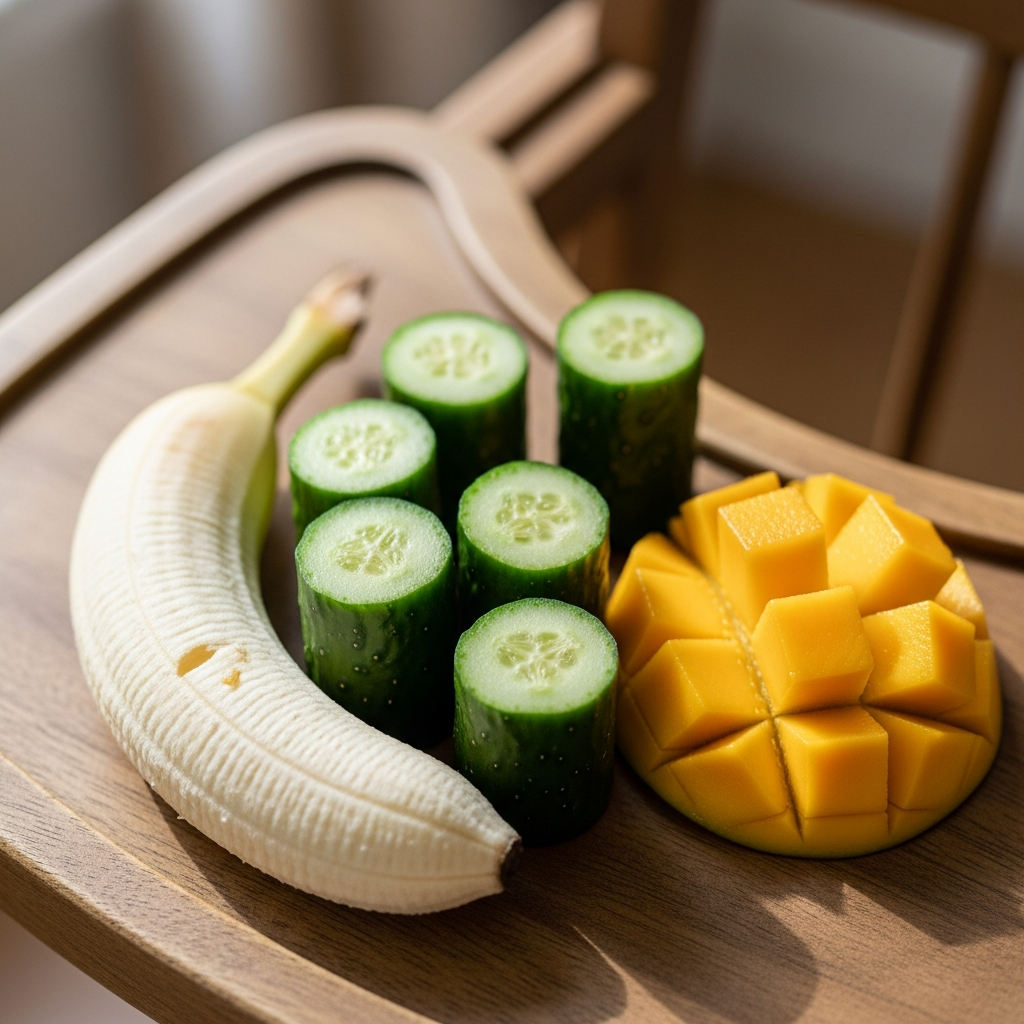
Large Fruit and Vegetable Teethers
- Mango pit: Remove all fruit, wash thoroughly, and refrigerate
- Pineapple core: Cut into manageable pieces for older babies
- Whole peeled carrot: Must be large enough that baby cannot fit it entirely in mouth
- Corn cob: Cook, remove kernels, cool completely
- Watermelon rind: The white part only, washed thoroughly
Age-Appropriate Food Teether Introduction
| Age | Recommended Food Teethers |
|---|---|
| 6 months | Frozen banana in mesh feeder, cold thick cucumber spears, soft fruits in feeders |
| 7-8 months | Mango pit, watermelon rind, large whole carrots (refrigerated) |
| 9+ months | Corn cob (kernels removed), pineapple core (with close supervision) |
Soft Foods When Teething Baby Refuses to Eat
When your teething baby refuses solid foods, do not panic. This is completely normal. According to research, decreased appetite during active teething is expected and temporary.
Gentle Purees That Comfort Sore Gums
- Chilled fruit purees: Banana, pear, and peach are naturally sweet and soothing
- Cold vegetable purees: Sweet potato and butternut squash offer nutrition
- Yogurt-based blends: Plain, full-fat yogurt mixed with fruit
- Avocado mash: Naturally cooling and packed with healthy fats
Cool Smoothies and Yogurt Options
Try these easy recipes for teething snacks baby will actually accept:
- Blend frozen banana with breastmilk or formula for a cold, creamy treat
- Mix Greek yogurt with chilled pureed berries
- Create tiny frozen yogurt bites using silicone molds
Tips for Feeding a Teething Baby Who Will Not Eat
- Offer smaller, more frequent meals instead of large portions
- Serve foods at room temperature or slightly cool
- Try different textures and temperatures to find what provides relief
- Maintain breastmilk or formula intake for proper nutrition
- Be patient and never force food
Foods to Avoid During Teething
Knowing what NOT to give your teething baby is just as important as knowing what to offer. The CDC emphasizes that cutting food properly and avoiding certain items can help prevent choking.
Choking Hazards for Teething Babies
- Whole grapes: Must be quartered lengthwise
- Whole cherry tomatoes: Always cut into small pieces
- Popcorn: Never appropriate for babies
- Hard candy or cookies: Choking risk and unhealthy
- Raw apple chunks: Too hard for babies to manage safely
- Nuts and seeds: Significant choking hazard
- Hot dogs: Circular shape is particularly dangerous
Foods That May Irritate Sensitive Gums
- Citrus fruits (acidic and may cause discomfort)
- Tomato-based foods
- Spicy or heavily seasoned items
- Very salty foods
- Crunchy crackers with sharp edges
Safety Guidelines for Serving Teething Foods
Safety must be your top priority when offering teething foods baby can enjoy. Following proper guidelines protects your little one while providing relief.
Age-Appropriate Serving Sizes and Shapes
| Age | Appropriate Foods and Textures |
|---|---|
| 6 months | Purees, very soft mashable pieces, foods in mesh feeders |
| 7-8 months | Soft finger-sized pieces, dissolvable foods |
| 9-12 months | Soft cubes, greater texture variety, supervised natural teethers |
Shape matters: Avoid round or coin-shaped foods. The CDC recommends cutting food for infants into pieces one-quarter inch or smaller.
Supervision Requirements During Teething Meals
- Never leave your baby unattended while eating
- Stay within arm's reach during all meals and snacks
- Learn infant choking first aid before introducing solids
- Watch for signs of choking (silent distress, inability to cough)
- Keep distractions minimal during feeding time
Signs of Allergic Reactions to Watch For
- Introduce new foods one at a time
- Wait 3-5 days between introducing new ingredients
- Watch for hives, swelling, vomiting, or difficulty breathing
- Common allergens include eggs, dairy, wheat, and tree nuts
- Consult your pediatrician about keeping infant antihistamine on hand
Frequently Asked Questions About Teething Foods
Q: Can I give my 6-month-old frozen fruit for teething?
Yes, frozen fruit is safe for babies 6 months and older when served in a mesh or silicone feeder. The feeder prevents choking hazards while allowing your baby to gnaw on the cold fruit for gum relief. Start with soft fruits like banana, mango, or berries. Always supervise your baby while using a mesh feeder, and let frozen items thaw slightly before serving to avoid bruising tender gums.
Q: How do I make homemade teething biscuits that are safe?
Safe homemade teething biscuits should be firm enough to provide counter-pressure but dissolve when wet from saliva. Use simple ingredients like oat flour, mashed banana, and coconut oil. Bake until firm, let cool completely, and test by holding in your mouth. The biscuit should soften within 30 seconds. If it stays rock hard, reduce baking time in your next batch.
Q: What can I put in a mesh feeder for a teething baby?
Great mesh feeder options include frozen banana chunks, frozen mango pieces, frozen berries (strawberries, blueberries, raspberries), frozen breastmilk, chilled cucumber, and cold watermelon. Avoid hard foods that could break into small pieces. Always clean the mesh feeder thoroughly after each use and inspect for tears before serving.
Q: Is cold cucumber safe for teething babies?
Yes, cold cucumber is generally safe for teething babies 6 months and older. Peel the cucumber, remove seeds, and cut into thick spears that are too large to fit entirely in your baby's mouth. Refrigerate but avoid freezing, as frozen cucumber becomes too hard. Always supervise your baby with cucumber spears and replace when they become soft.
Q: Why does my teething baby refuse to eat solid foods?
Teething pain makes eating uncomfortable because swollen gums hurt when pressure is applied. This is completely normal and temporary. Offer softer, cooler foods, maintain breastmilk or formula intake, and try feeding smaller amounts more frequently. Most babies return to normal eating once the tooth breaks through the gum surface.
Q: What foods help with teething pain the most?
Cold and frozen foods for teething provide the most immediate relief because they numb sore gums. Frozen banana in a mesh feeder, chilled cucumber spears, cold yogurt, and frozen breastmilk popsicles are highly effective. The combination of cold temperature and counter-pressure from chewing provides dual relief that helps soothe discomfort.
Q: Can I freeze breastmilk for teething?
Absolutely! Frozen breastmilk is excellent for teething relief. Pour breastmilk into popsicle molds, ice cube trays, or silicone molds. Serve in a mesh feeder or as a "breastsicle" for older babies who can hold them. Let frozen breastmilk treats thaw slightly before serving. This provides nutrition while naturally soothing sore gums.
Q: When can babies start having teething biscuits?
Most babies can start teething biscuits around 6 months when they show signs of teething and can sit with support. Choose biscuits that dissolve easily when wet to prevent choking. Homemade biscuits are often safer than store-bought options because you can control the hardness and ingredients. Always supervise closely during feeding.
Conclusion: Finding Relief for Your Teething Baby
Teething is challenging, but with the right teething foods baby can find comfort and you can find peace of mind. From frozen foods for teething like chilled bananas and frozen berries in mesh feeders to homemade teething biscuits made with simple, wholesome ingredients, you now have a complete toolkit for soothing those sore gums.
Remember that every baby is different. What provides relief for one child might not work for another, so do not hesitate to experiment with different temperatures, textures, and recipes. As Mayo Clinic recommends, always prioritize safety by supervising closely, choosing age-appropriate foods, and following proper preparation guidelines.
Most importantly, know that this phase is temporary. Before you know it, you will be celebrating that first tooth and moving on to new adventures in feeding. At PatPat, we are here to support you through every milestone of your parenting journey.
Make Teething Time Easier
Looking for more baby feeding tips and recipes? Explore our complete collection of baby food guides, developmental milestone articles, and parenting resources to support you and your little one every step of the way.
If your baby's teething symptoms seem severe, include a true fever over 100.4 degrees, or you have concerns about their eating habits, always consult your pediatrician for personalized guidance.





