


Here is a fact that catches most parents off guard: the iron stores your baby was born with start running out around six months of age. That is the exact moment you are introducing solid foods -- and suddenly, getting enough iron into those tiny bites becomes one of the most important nutritional tasks of the first year. A well-made baby meatballs recipe solves this problem beautifully. Soft meatballs for baby deliver heme iron, protein, zinc, and B vitamins in a shape that little fingers can actually grab and self-feed.
The problem? Store-bought meatballs are loaded with sodium, fillers, and preservatives that have no place in a baby's diet. And most homemade recipes you will find online offer a single variation with no guidance on texture, allergen swaps, or age-appropriate serving. You deserve better than that -- and so does your baby.
This guide from PatPat gives you everything in one place: a base recipe for iron rich meatballs baby will love, five different meat options compared side by side, hidden veggie strategies that even the pickiest little eater will not detect, egg-free and allergen-friendly alternatives, an age-by-age serving chart, choking safety guidance, and a freezer batch cooking system so you can prep once and eat for weeks. Whether you are just starting baby led weaning or feeding a toddler who inhales everything on the plate, these meatballs grow with your child.
Why Meatballs Are the Best Iron-Rich Finger Food for Babies
Not every first food is created equal. Meatballs earn their place at the top of the list because they combine critical nutrition with a self-feeding format that supports developmental milestones at the same time.
Heme Iron vs. Non-Heme Iron: Why Meat Matters at 6 Months
Your baby's body absorbs iron from meat far more efficiently than iron from plant sources. Heme iron from animal sources has an absorption rate of 15 to 35 percent, while non-heme iron from plants is absorbed at only 2 to 20 percent. That difference matters enormously when you are trying to meet the recommended 11 mg of daily iron for babies aged 7 to 12 months.
A single serving of ground beef meatballs (about 3 oz) provides approximately 2.1 mg of iron -- nearly 20 percent of your baby's daily need in just a few small bites. Pairing meatballs with vitamin C-rich foods like tomato sauce, bell pepper strips, or orange segments further boosts non-heme iron absorption.
Why does this matter so urgently? Research published in Pediatrics shows that iron deficiency during infancy is linked to cognitive and motor development delays that can persist for years. Iron-rich meatballs baby eats regularly are one of the most effective ways to prevent this.
The Perfect Self-Feeding Shape for Baby Led Weaning
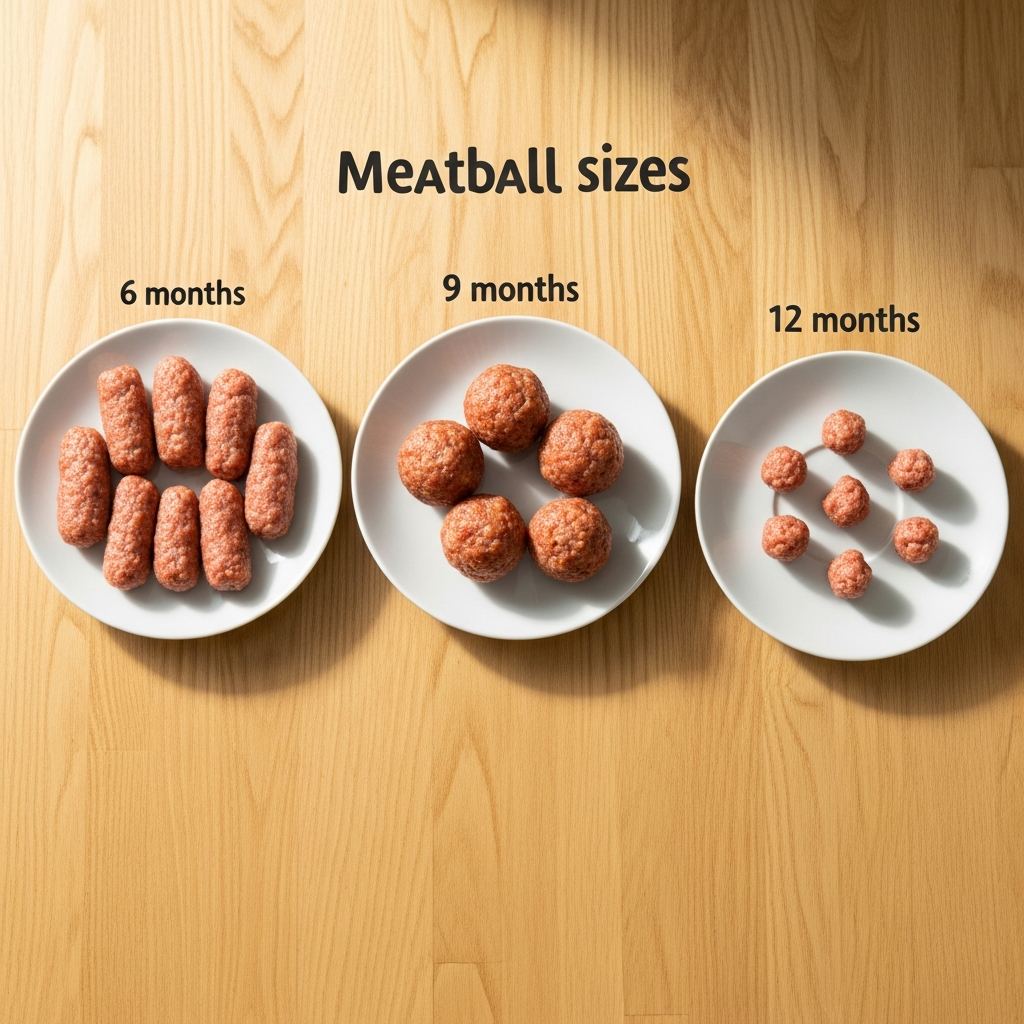
The meatball shape works with your baby's natural grip development. At 6 to 7 months, a finger-shaped meatball sits in the palmar grasp with the top exposed for gnawing. By 8 to 9 months, smaller round meatballs encourage the emerging pincer grasp. Self-feeding builds autonomy, oral motor skills, and hand-eye coordination simultaneously -- making baby led weaning meatballs one of the most developmental foods you can offer.
When Can Babies Eat Meatballs (Age-by-Age Serving Guide)
Most babies can start eating meatballs from 6 months, as soon as they show signs of solid food readiness: sitting independently, loss of tongue thrust reflex, and reaching for food. The WHO recommends that animal source foods including meat should be consumed daily during complementary feeding from 6 months onward. What changes is not the recipe itself, but how you shape and serve the meatball.
Meatballs for 6-7 Month Old Babies
Shape meatballs into elongated finger-sized logs (about 2 inches long, 1 inch thick) that fit the palmar grasp. Alternatively, flatten them into small patties. Serve 1 to 2 per meal alongside breast milk or formula. The meatball must pass the squeeze test -- more on that in the safety section below.
Meatballs for 8-9 Month Old Babies
Transition to traditional round meatballs about the size of a ping pong ball (1.5 inches). Your baby can now bite off pieces independently. Try quartering one meatball to encourage pincer grasp practice. Offer 2 to 3 per meal.
Meatballs for 10-12 Month Olds and Toddlers
Serve smaller 1-inch round meatballs whole or halved. Toddlers over 12 months can handle 3 to 5 per meal and begin practicing fork use. At this stage, the same baby meatballs recipe works for the whole family -- just add seasoning to the adult portions.
| Age | Shape | Size | Amount per Meal | Key Milestone |
|---|---|---|---|---|
| 6-7 months | Finger-shaped or flat | 2 inches long | 1-2 | Palmar grasp, gumming |
| 8-9 months | Round, whole or quartered | 1.5 inch diameter | 2-3 | Pincer grasp developing |
| 10-12 months | Round, whole or halved | 1 inch diameter | 3-4 | Refined pincer grasp |
| 12+ months | Standard round | 1-1.5 inch diameter | 3-5 | Fork use, self-feeding |
Soft Baby Meatball Base Recipe (Egg-Free, 5 Ingredients)
This base recipe produces the softest meatballs for baby using just five pantry-friendly ingredients. It is naturally egg-free and contains no added salt. Every variation in this guide builds on this foundation.
Ingredients You Will Need
- 1 lb ground beef (80/20 blend) -- the fat content keeps meatballs juicy. Avoid 90/10, which dries out during baking.
- 1/3 cup grated zucchini, squeezed dry -- adds invisible moisture without any detectable vegetable flavor.
- 3 tbsp iron-fortified infant cereal -- the secret weapon. It acts as both a binder and an iron booster.
- 1 tbsp arrowroot flour or tapioca starch -- egg-free binding that produces a light, soft texture. Substitute 1 egg if you prefer.
- 1/4 tsp garlic powder -- baby-safe seasoning with no texture issues. Optionally add a pinch of dried oregano or onion powder.
Why no salt? Babies under 12 months should consume less than 1 gram of sodium daily, and meat already contains natural sodium.
Step-by-Step Baking Instructions
- Preheat oven to 375F. Line a baking sheet with parchment paper. Place an oven-safe dish of water on the lower rack for steam.
- Squeeze grated zucchini in a clean towel to remove excess moisture.
- In a bowl, gently combine all ingredients with your hands until just mixed. Do not overmix -- working the meat too aggressively develops protein strands that create a tough, rubbery result.
- Roll into 1 to 1.5 inch balls using a mini cookie scoop for uniformity, or shape into finger-length logs for younger babies.
- Place on prepared baking sheet with 1 inch spacing.
- Bake 15 to 18 minutes until internal temperature reaches 160F. Use an instant-read thermometer.
- Rest 5 minutes on a cooling rack. Perform the squeeze test before serving.
Mini muffin tin shortcut: Press the mixture into greased mini muffin tin cups for perfectly uniform shapes without any rolling.
How to Make Meatballs Extra Soft for Baby
Soft texture is non-negotiable for baby food. Here are three things that control softness:
- Moisture agents (ranked): Grated zucchini is the most effective, followed by shredded apple, mashed sweet potato, and ricotta cheese.
- Fat content: The 80/20 beef blend retains moisture during baking. Leaner meat requires extra moisture compensation.
- The steam trick: Water in the oven creates a humid environment that prevents the surface from drying and cracking.
If your meatballs come out dry, reduce bake time by 2 minutes, check the fat ratio, or add more grated vegetable to the next batch.
Best Meat for Baby Meatballs: Beef, Turkey, Chicken, Lamb, and Pork Compared
Not all meats behave the same inside a meatball. Fat content, iron levels, and natural moisture vary dramatically, which means each type needs a slightly different approach to produce soft meatballs for baby.
Beef Meatballs: Highest Iron
Ground beef (80/20) is the gold standard for iron rich meatballs baby needs. It delivers the highest heme iron content among common ground meats, along with zinc and B12 for brain development. No moisture modification is needed with the 80/20 blend. Pair with garlic powder and a pinch of oregano.
Turkey Meatballs: Lean Protein, Needs Moisture
Ground turkey is leaner (typically 93/7), which means drier meatballs without compensation. Fix this by increasing grated zucchini to 1/2 cup, adding 1 tablespoon unsweetened applesauce, or mixing in 2 tablespoons of ricotta. Request dark meat ground turkey at the butcher counter -- it contains more iron and more fat than white meat turkey. The milder flavor makes turkey meatballs for baby an ideal first-meat introduction.
Chicken Meatballs: Softest for Beginners
Ground chicken produces the softest, most tender meatball texture naturally. It has lower iron content, so compensate by using extra iron-fortified cereal and pairing with vitamin C-rich sides. Add 1 extra tablespoon arrowroot flour for better structural hold, since ground chicken has high moisture content. This is the best choice for texture-cautious babies at 6 months.
Lamb and Pork: Underrated Alternatives
Lamb is second only to beef in iron content and offers a distinctive flavor that broadens your baby's palate early. It pairs beautifully with a tiny pinch of cumin and grated carrot. Pork is naturally juicy and rich in B vitamins -- try it with grated apple for a sweet-savory balance. Mixing half beef and half pork creates an exceptionally juicy, iron-rich meatball.
| Meat Type | Iron | Protein | Texture | Best For |
|---|---|---|---|---|
| Beef (80/20) | 2.1 mg | 19 g | Juicy, firm | Iron-boosting, all ages |
| Turkey (dark) | 1.6 mg | 21 g | Lean, needs moisture | Mild flavor, lighter meals |
| Chicken | 0.9 mg | 20 g | Very soft, delicate | First meatball, sensitive babies |
| Lamb | 1.7 mg | 21 g | Rich, tender | Palate expansion, iron variety |
| Pork | 1.0 mg | 22 g | Juicy, smooth | Flavor variety, apple pairing |

How to Hide Vegetables in Baby Meatballs (Veggie-Packed Variations)
Here is a strategy that works even with the pickiest little eaters: grated or pureed vegetables become completely undetectable inside a flavorful meatball. You can pack up to one-third of the meatball volume with vegetables before texture or binding is affected. These hidden veggie meatballs for baby deliver micronutrients beyond what meat alone provides.
Best Vegetables to Sneak In (Ranked by Visibility)
- Tier 1 -- Invisible: Zucchini (fine grate), cauliflower (riced), mushroom (finely minced). No color or flavor change.
- Tier 2 -- Subtle: Grated carrot (slight orange tint, sweet), butternut squash puree (orange, sweet), sweet potato puree (adds binding).
- Tier 3 -- Visible but valuable: Spinach puree (green), broccoli (green specks), beet (pink). Strong nutrition despite noticeable color.
Start with Tier 1 vegetables when introducing hidden-veggie meatballs for the first time. Begin with 2 to 3 tablespoons of vegetable per pound of meat and increase to 1/3 cup as your baby accepts them.
Spinach Meatballs for Baby (Double Iron Boost)
Blend 1 cup fresh spinach with 2 tablespoons water until completely smooth. Add the puree to the base recipe. You get a double iron benefit: heme iron from the meat plus non-heme iron from the spinach in every bite. Yes, the meatballs will be green. Pair with a cheese sauce (for babies 9+ months with dairy cleared) or tomato sauce to make the color more appealing.
Sweet Potato Meatballs (Vitamin C for Iron Absorption)
Use 1/3 cup mashed roasted sweet potato per pound of meat. The vitamin C in sweet potato enhances absorption of the iron from the meat -- a scientifically strategic pairing. Sweet potato also acts as a natural binder, so you can reduce or eliminate the arrowroot flour. The subtle sweetness appeals to babies who are cautious about purely savory foods.
Mushroom, Carrot, and Zucchini Variations
Finely mince 1/2 cup mushrooms and lightly saute before mixing into the meat. The umami depth replaces the need for added salt. Grate 1/3 cup carrot for natural sweetness and beta-carotene -- this pairs especially well with chicken or turkey. The ultimate invisible duo is 1/4 cup each of zucchini and carrot, which disappear completely while adding vitamin C, potassium, and fiber.
| Vegetable | Preparation | Visibility | Key Nutrients | Best Meat Pairing |
|---|---|---|---|---|
| Zucchini | Fine grate, squeeze dry | Invisible | Vitamin C, potassium | Any meat |
| Mushroom | Finely mince, saute | Invisible | Vitamin D, selenium | Beef, lamb |
| Carrot | Fine grate | Subtle orange | Beta-carotene, fiber | Turkey, chicken |
| Sweet potato | Roast and mash | Subtle orange | Vitamin A, C | Beef, pork |
| Spinach | Blend into puree | Visible green | Iron, folate, vitamin K | Beef (double iron) |
Allergy-Friendly Baby Meatball Variations
If your baby has a food allergy or you are introducing allergens one at a time, knowing exactly how to modify the recipe matters. The good news: the base recipe is already naturally egg-free, gluten-free, and dairy-free.
Egg-Free Baby Meatballs: 5 Binders That Work
The base recipe uses arrowroot flour and grated zucchini for binding, so it works perfectly without egg. But here are all your options:
| Binder | Amount per 1 lb Meat | Texture | Bonus Nutrition |
|---|---|---|---|
| Arrowroot flour | 1 tbsp | Light, soft | Neutral |
| Mashed sweet potato | 3 tbsp | Moist, slightly sweet | Vitamin A, C |
| Hummus | 2 tbsp | Creamy, soft | Iron, protein, fiber |
| Iron-fortified cereal | 3 tbsp | Soft, cohesive | Iron, B vitamins |
| Flax egg | 1 tbsp flax + 3 tbsp water | Slightly dense | Omega-3 |
Dairy-Free and Gluten-Free Modifications
For dairy-free meatballs, simply omit any cheese additions and use coconut yogurt or avocado as a dipping accompaniment. For gluten-free, replace breadcrumbs with oat flour (certified GF), almond flour (if nuts are safe), or additional infant cereal. The base recipe already uses rice cereal and arrowroot flour, making it naturally gluten-free.
The simplest top-allergen-free formulation: ground beef + grated zucchini + rice cereal + arrowroot flour + garlic powder. That is it -- free from eggs, dairy, wheat, soy, nuts, fish, and shellfish.
Meatball Safety and Choking Prevention for Babies
Safety is the foundation of every baby feeding decision. This section covers how to verify that your meatballs are soft enough, the difference between gagging and choking, and essential food safety temperatures.
The Squeeze Test: How to Know Meatballs Are Soft Enough
Before serving any meatball to your baby, press it between your thumb and forefinger. It should compress easily with minimal pressure -- similar to squeezing a ripe banana. If it resists, microwave it for 15 to 20 seconds with a damp paper towel to re-soften, or crumble it into yogurt or pasta sauce instead.
Perform this test on every batch. Even with the same recipe, slight differences in oven temperature or ingredient proportions can change the result. Babies do not need teeth -- a meatball that passes the squeeze test can be safely gummed by a baby with zero teeth.
Gagging vs. Choking: What Every Parent Should Know
Gagging is loud, normal, and protective. Your baby coughs, makes noise, and may have watery eyes or a reddened face. This is the gag reflex doing its job, and it happens frequently with new textures. Do not intervene -- let your baby work the food forward independently.
Choking is silent and dangerous. There is no sound, no coughing, and no airflow. The baby's face may turn blue or pale. Follow CDC choking prevention guidelines and take an infant CPR course before starting solids. Always supervise your baby during mealtimes.
Internal Temperature and Food Safety
- All baby meatballs must reach an internal temperature of 160F (71C). Use an instant-read thermometer, not visual inspection.
- Serve within 2 hours of cooking at room temperature.
- Never re-refrigerate a half-eaten meatball -- bacteria from baby's saliva contaminate the food.
- Reheat refrigerated meatballs to 165F, then cool to a safe eating temperature before serving.
- Refrigerator storage: airtight container, up to 3 days. Freezer: sealed bags, up to 3 months.
Freezer-Friendly Batch Cooking Guide for Baby Meatballs
Here is the real time-saver: make 60 to 80 meatballs in a single Sunday session and eat for two to three weeks. Freezer friendly baby meatballs are the ultimate meal prep hack for busy parents.
How to Freeze Baby Meatballs Step by Step
- Cook meatballs fully and cool completely on a wire rack (15 to 20 minutes minimum). Never freeze warm meatballs.
- Flash freeze on a parchment-lined baking sheet in a single layer for 1 to 2 hours until solid.
- Transfer frozen meatballs to labeled zip-top freezer bags and press out all air.
- Label each bag with recipe name, meat type, date made, and a use-by date 3 months from freezing.
Flash freezing prevents meatballs from fusing into a solid mass, so you can grab exactly the number you need for any meal.
How to Thaw and Reheat Baby Meatballs
- Overnight refrigerator thaw (recommended): Transfer from freezer to fridge the night before. Serve at room temperature or briefly warmed.
- Microwave (fastest): 30 to 45 seconds on medium power with a damp paper towel. Always check temperature before serving.
- Stovetop (best texture): Place frozen meatballs in a small saucepan with 2 tablespoons water or broth, cover, and heat on low for 5 to 7 minutes.
Daycare packing tip: Place 3 to 4 frozen meatballs in an insulated container the morning of. They thaw by lunchtime at a safe temperature inside the insulated bag -- no reheating needed.
Sunday Batch Cooking Schedule
One hour produces 60 to 80 meatballs in 2 to 3 flavor variations:
- 15 minutes: Prep all ingredients (grate zucchini, mash sweet potato, mince mushrooms)
- 15 minutes: Mix and roll all batches simultaneously
- 35 minutes: Bake in two oven loads
- 20 minutes: Cool and freeze
Week 1 rotation: beef + zucchini base and turkey + carrot variation. Week 2 rotation: chicken + sweet potato and beef + spinach. Keep a simple shopping list: 2 lbs ground meat, 2 zucchini, 1 sweet potato, infant cereal, and arrowroot flour.
Frequently Asked Questions About Baby Meatballs
Can babies eat meatballs without teeth?
Yes. Babies do not need teeth to eat meatballs. Their gums are firm enough to mash soft foods effectively. As long as the meatball passes the squeeze test -- compressing easily between your thumb and forefinger -- a baby with no teeth can safely gum and eat it. Most babies start meatballs around 6 months, well before any teeth emerge.
Are store-bought meatballs safe for babies?
Most store-bought meatballs are not ideal because they contain added salt, preservatives, and sometimes onion chunks that pose texture risks. Check sodium content (under 50 mg per serving), verify the list has no honey or added sugar, and always squeeze-test. Homemade baby meatballs give you full control.
What can I use instead of egg in baby meatballs?
The best egg-free binders are arrowroot flour (1 tablespoon per pound of meat), mashed sweet potato (3 tablespoons), hummus (2 tablespoons), or iron-fortified cereal (3 tablespoons). The base recipe in this guide already works without egg.
Can I use turkey instead of beef?
Yes. Turkey meatballs for baby work well but need extra moisture. Use dark meat ground turkey for higher iron and add extra grated zucchini or applesauce to prevent dryness.
What internal temperature should baby meatballs reach?
Baby meatballs must reach 160F (71C). Use an instant-read thermometer in the center of the largest meatball. Rest 5 minutes before serving.
Can I add herbs and spices?
Yes -- and you should. For babies under 12 months, use dried herbs and ground spices (garlic powder, oregano, thyme, cumin) and avoid salt. After 12 months, add small amounts of salt (under 1/4 teaspoon per batch).
Are meatballs good for baby led weaning?
Meatballs are one of the best baby led weaning foods. Their shape fits the palmar grasp, they provide critical heme iron, and their soft texture allows safe gumming without teeth. Shape into finger-length logs at 6 months, then transition to round shapes as grip develops.
Start Simple, Build From There
A good baby meatballs recipe is one of the most versatile tools in your feeding toolkit. With a single base recipe, you can swap the meat, sneak in vegetables, adjust for allergies, and freeze enough to last for weeks. Soft meatballs for baby deliver iron, protein, zinc, and B vitamins in a format that supports self-feeding development from the very first bite.
Start with the simple five-ingredient base recipe and try one variation at a time. Remember the essentials: use the squeeze test on every batch, cook to 160F, and always supervise during mealtimes. These iron rich meatballs grow with your child -- the same recipe works from 6 months through toddlerhood and right into family dinners.
PatPat is here to support every stage of your baby's journey, from those first messy bites to confident self-feeding. Explore more of our baby food recipes and parenting guides to keep mealtime simple, nutritious, and stress-free. Bookmark this page, share it with other parents navigating baby led weaning, and make your next batch of meatballs this weekend.





