


If you are approaching the six-month mark and wondering whether to grab the baby spoon or let your little one pick up food themselves, you are not alone. Baby led weaning has become one of the most talked-about feeding approaches among new parents, and for good reason. Instead of spoon-feeding purees, this method hands the reins to your baby, literally, letting them explore soft, finger-sized pieces of whole food at their own pace.
But getting started can feel overwhelming. How do you know your baby is ready? What are the best BLW first foods? Is it actually safe? This complete guide from PatPat walks you through everything you need to know about how to start baby led weaning, from readiness signs and safety to your first week of meals. Whether you are leaning toward full BLW or thinking about combining it with purees, you will find clear, research-backed answers here.
What Is Baby-Led Weaning and Why Are Parents Choosing It?
The Core Principles of BLW
Baby-led weaning (BLW) is a method of introducing solid foods where your baby feeds themselves soft, graspable pieces of whole food instead of being spoon-fed purees. The approach was pioneered by Gill Rapley, a British health visitor and researcher, who observed that babies could feed themselves when solids were introduced at the older recommended age of six months rather than four.
The core principles are straightforward. Your baby joins family meals and is offered the same foods, prepared in age-appropriate shapes. They control what they eat, how much, and at what pace. Food is offered in graspable strips or sticks, not pureed or spooned in. And breastmilk or formula remains the primary source of nutrition through the entire first year.
This stands in contrast to traditional spoon-feeding, where you control the pace and consistency. With BLW, your baby is in the driver's seat from day one.
Proven Benefits of Letting Baby Self-Feed
The benefits of this approach go beyond convenience. Here is what the research supports:
- Motor skill development — Self-feeding builds hand-eye coordination and drives the natural progression from palmar grasp to pincer grasp.
- Better appetite self-regulation — The BLISS randomized controlled trial found reduced food fussiness and lower satiety responsiveness at age two in BLW babies, suggesting they learn to recognize fullness cues more effectively.
- Less picky eating — Early exposure to varied textures and flavors may build more adventurous eating habits over time.
- Family mealtime participation — Your baby eats what you eat (modified for safety), which means less separate meal preparation.
- Confidence and independence — Babies develop autonomy and a positive relationship with food from the start.
When to Start Baby-Led Weaning: Readiness Signs Every Parent Should Know
The Six Developmental Readiness Signs
Knowing when to start matters just as much as knowing how. The American Academy of Pediatrics recommends introducing solid foods at around six months, but age alone is not enough. Your baby must show these developmental readiness signs:
- Sits upright independently (or with minimal support) with strong head and neck control
- Shows interest in food — watches others eat, reaches for food, opens mouth when food approaches
- Loss of tongue thrust reflex — no longer pushes food out of the mouth automatically
- Brings objects to mouth consistently and with coordination
- Can hold items and release deliberately — developing palmar grasp
- Has approximately doubled birth weight (a general guideline, not a strict rule)
Why Pediatricians Recommend Waiting Until 6 Months
The AAP, WHO, and NHS all recommend approximately six months as the starting age for solid food introduction. Before that point, the gut lining is still immature, the tongue thrust reflex is active, and motor skills are simply not sufficient for safe self-feeding.
A common question is: "Can you start BLW at 5 months?" The clear answer is that waiting until all readiness signs are present is strongly advised. For premature babies, use corrected age rather than chronological age, and always consult your pediatrician before beginning.

Best First Foods for Baby-Led Weaning (With Preparation Tips)
Iron-Rich Foods to Prioritize from Day One
Your baby's iron stores from birth begin to deplete around four to six months of age, making iron-rich foods a top priority when you begin BLW first foods. Iron is critical for brain development, and once a deficiency occurs, the WHO warns it can have significant and irreversible effects on brain development.
Start with these iron-rich options:
- Shredded or soft-cooked meat strips (beef, chicken, turkey) — the highest bioavailable iron source
- Scrambled eggs or omelet strips — also introduces a top allergen early
- Soft tofu strips — a plant-based option with iron and protein
- Well-cooked lentil patties or smashed lentils on pre-loaded spoons
Soft Fruits and Steamed Vegetables for Beginners
These are among the best first foods for BLW because they are naturally soft, nutrient-dense, and easy for little hands to grip:
| Food | How to Prepare | Serving Shape | Why It Works |
|---|---|---|---|
| Avocado | Ripe, no cooking needed | Thick wedges or strips | Healthy fats, soft texture |
| Banana | Peel halfway, leave base for grip | Long strip with peel handle | Natural sweetness, easy to hold |
| Sweet potato | Steam or roast until fork-tender | Finger-length sticks | Iron + vitamin A, naturally sweet |
| Broccoli | Steam until very soft | Whole floret with stem handle | Built-in handle, iron + vitamin C |
| Ripe mango | Peel and slice | Long thick strips | Vitamin C for iron absorption |
| Steamed carrot | Steam until very soft (must pass squish test) | Finger-length sticks | Beta-carotene, mild flavor |
Grains, Dairy, and Healthy Fats
- Toast fingers — lightly toasted, topped with thin nut butter spread or mashed avocado
- Soft-cooked pasta — fusilli or penne shapes are easy to grasp
- Full-fat plain yogurt — serve on pre-loaded spoons or as a dip
- Nut and seed butters — thin spread on toast only; never serve globs (choking hazard)
How to Cut Food for Baby-Led Weaning by Age and Grasp Stage
The Squish Test: Your Number One Safety Check
Before offering any food, apply this simple rule: take the prepared food between your thumb and forefinger. If it squishes easily with light pressure, it is safe. If it resists or requires force, cook it longer or choose something different. Common foods that fail the squish test when undercooked include carrots, apples, and raw bell pepper. Foods that naturally pass include ripe avocado, banana, and steamed sweet potato.
Food Shapes by Developmental Stage (6 to 12 Months)
Understanding safe food sizes means matching shapes to your baby's grasp development:
| Age | Grasp Stage | Ideal Food Shape | Size Reference |
|---|---|---|---|
| 6-7 months | Palmar grasp (whole fist) | Long strips and sticks | Adult pinky finger length and width |
| 7-8 months | Raking grasp (developing) | Shorter strips, thicker pieces | Slightly shorter than pinky finger |
| 8-9 months | Emerging pincer grasp | Smaller soft pieces | Chickpea to blueberry size (quartered) |
| 10-12 months | Refined pincer grasp | Bite-sized pieces, mixed textures | Pea to small dice size |
Cooking Methods That Make Foods BLW-Safe
- Steaming — best for vegetables; preserves nutrients while softening
- Roasting — sweet potatoes, carrots, and zucchini at 400 degrees with light oil until fork-tender
- Boiling — quick method for pasta, eggs, and dense vegetables
- Slow-cooking or braising — ideal for making meat tender enough for babies to gum and mash
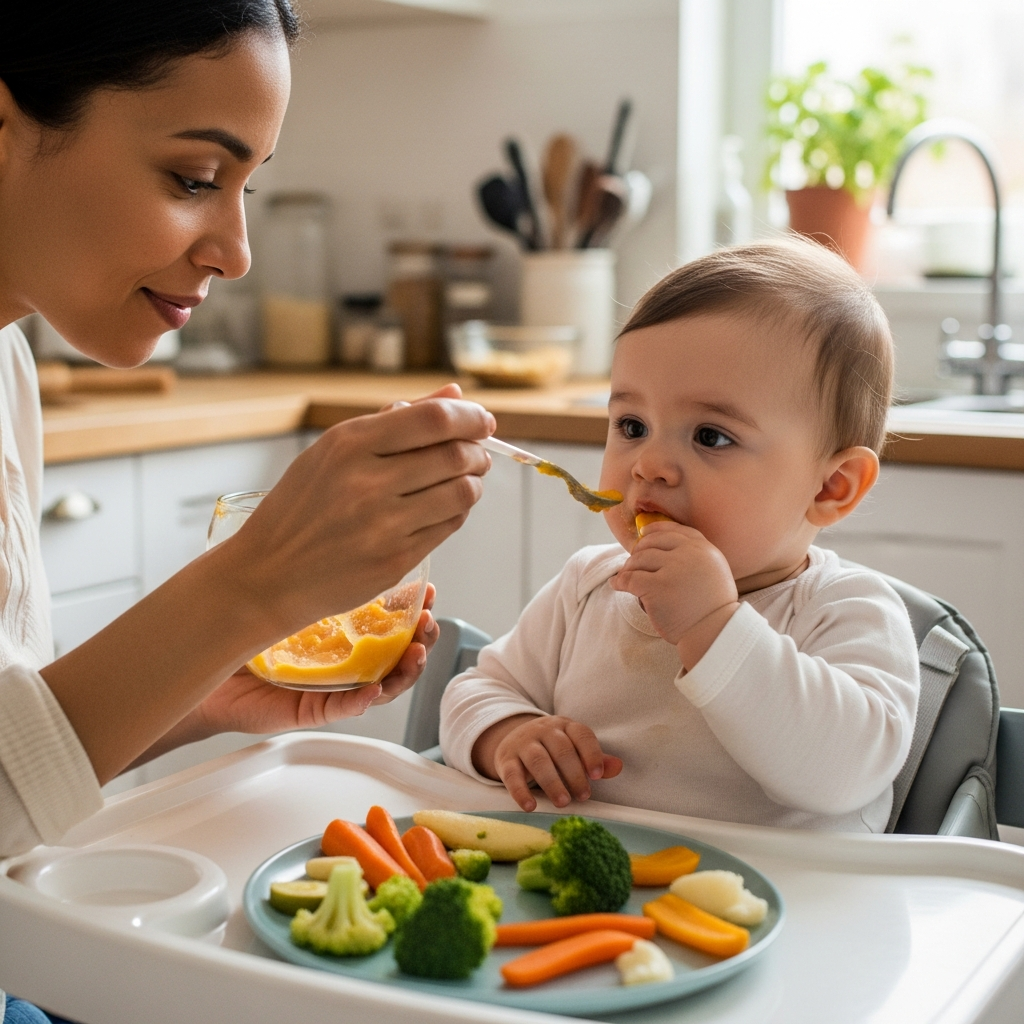
Baby-Led Weaning Safety: Understanding Gagging vs. Choking
Why Gagging Is Normal and Actually Protective
The number one concern parents have about BLW safety is choking. But here is something that changes the picture: gagging is not the same as choking, and it is actually your baby's built-in safety system at work.
The gag reflex pushes food forward and away from the airway. In babies, the gag trigger point sits much further forward on the tongue than in adults, which means they gag more easily and earlier. This is protective by design.
What gagging looks like: loud coughing, watery eyes, a red face, retching sounds. Your baby will be vocal throughout. What to do: stay calm, do not intervene, and let your baby work through it. Gagging typically decreases significantly within the first few weeks of BLW.
Recognizing True Choking: When to Act Immediately
True choking is a medical emergency and looks very different from gagging:
- Silent — baby cannot cough, cry, or make sounds
- Blue or pale — lips, face, or fingertips turning blue
- Unable to breathe — no air movement, no vocal sounds
- Panicked expression — wide eyes, distressed body language
Does Self-Feeding Increase Choking Risk? What Research Says
This is the question that keeps parents up at night, and the answer is reassuring. The BLISS randomized controlled trial published in Pediatrics found no significant differences in choking events between babies following BLW and those who were spoon-fed, as long as appropriate safety guidelines were followed.
The key safety practices that keep risk low:
- Wait until all readiness signs are met, especially sitting upright
- Always seat baby upright in a supportive high chair with feet supported
- Never feed baby while reclined, in a car seat, or while moving
- Avoid known high-risk choking hazard foods
- Always supervise every single meal — never leave baby alone with food
- Learn infant CPR before you begin
Baby-Led Weaning vs. Purees: Choosing the Right Approach for Your Family
Side-by-Side Comparison
The BLW vs. purees debate does not have to be either/or. Here is how these two feeding approaches compare:
| Factor | Baby-Led Weaning | Traditional Puree Feeding |
|---|---|---|
| Starting Age | 6 months (readiness signs required) | 4-6 months (some pediatricians allow earlier) |
| Who Controls Feeding | Baby self-feeds entirely | Parent controls pace with spoon |
| Texture Exposure | Whole soft foods from day one | Smooth purees, gradual progression |
| Mess Level | High — expect food everywhere | Lower — spoon feeding is more contained |
| Meal Prep | Modified versions of family meals | Separate purees require blending |
| Cost | Lower — no special baby food needed | Higher if buying commercial purees |
| Choking Risk | No increased risk when done correctly | Similar risk level |
The Combination Approach: Why Most Families Blend Both Methods
Here is a counterintuitive truth: you do not have to choose one method exclusively. When polled, approximately 80% of parents report using a combination approach, offering finger foods for self-exploration alongside nutrient-dense purees on pre-loaded spoons.
This blended method is sometimes called the BLISS method (Baby-Led Introduction to Solids). It offers several advantages: it ensures adequate iron intake early on, reduces parental anxiety, and provides flexibility for daycare settings where full BLW may not be practical.
The important principle, regardless of which approach you choose, is responsive feeding. Let your baby open their mouth voluntarily, never force the spoon in, and stop when they turn away.
Introducing Allergens and Ensuring Proper Nutrition with BLW
Early Allergen Introduction Through BLW
Current guidelines have shifted dramatically. The AAP now reports that early allergen introduction has led to decreased rates of peanut allergy and other food allergies, reinforcing the recommendation to introduce allergenic foods around six months.
The top 9 allergens to introduce: egg, peanut, tree nuts, cow's milk (in food, not as a drink), wheat, soy, fish, shellfish, and sesame. Here is how to serve common allergens in BLW format:
- Peanut butter — thin spread on toast fingers (never a glob)
- Egg — scrambled egg strips or omelet fingers
- Wheat — toast fingers or soft-cooked pasta
- Cow's milk — in cooking, yogurt, or cheese strips
- Fish — soft, flaked salmon or cod (check carefully for bones)
- Sesame — tahini thinned and spread on toast or mixed into hummus
Introduce one new allergen at a time, offer for two to three days, and watch for reactions such as rash, swelling, or vomiting. Once introduced, offer each allergen at least twice per week to maintain tolerance.
Will Baby Eat Enough with BLW? Addressing Nutrition Concerns
For the first several weeks, much of the food will end up on the floor. This is completely normal. Breastmilk or formula remains the primary source of nutrition through the entire first year, and BLW meals are complementary, meaning they supplement milk feeds rather than replace them.
Research by Cameron et al. found that significantly more BLISS infants were consuming red meat at 7 months compared to traditionally fed babies, suggesting that when iron-rich foods are deliberately prioritized, BLW can support adequate iron intake.
To maximize nutrient intake with BLW:
- Prioritize iron-rich foods at every meal (meat, eggs, lentils)
- Pair iron sources with vitamin C foods (broccoli, mango, bell pepper) to boost absorption
- Offer calorie-dense foods like avocado, nut butters, and full-fat dairy
- Consult your pediatrician if baby consistently refuses food after several weeks or shows signs of iron deficiency
Your First Week of Baby-Led Weaning: A Day-by-Day Starter Plan
Days 1 to 3: Single Foods and Sensory Exploration
This is where all your preparation comes together. Here is your BLW first week schedule, designed as a step-by-step guide for beginners:
- Day 1 — Offer one to two steamed sweet potato sticks at a time when baby is rested and not overly hungry. Breastfeed or bottle-feed first to take the edge off hunger. Place food on the high chair tray and let baby explore. Touching, squishing, and mouthing counts as success.
- Day 2 — Try ripe avocado strips (roll in infant cereal for grip if slippery). Expect most food to be dropped or smashed. This is learning, not eating.
- Day 3 — Offer a steamed broccoli floret with its built-in stem handle. Stick with one new food at a time for these early days to monitor for reactions.
Days 4 to 7: Expanding Variety and Building Routine
- Day 4 — Introduce banana strips (leave half the peel on for grip) alongside a previously offered food
- Day 5 — Try an iron-rich option: scrambled egg strips or a thin strip of slow-cooked beef
- Day 6 — Offer toast fingers with a thin spread of peanut butter (first allergen introduction; monitor for two hours after)
- Day 7 — Combine two to three foods on the tray for a mini meal: sweet potato stick, avocado strip, and flaked fish
What "Normal" Looks Like in the First Month
Set your expectations wisely. Your baby may eat very little actual food for weeks. Most food ends up on the floor, in hair, and on walls. Gagging is likely and is a positive sign that the protective gag reflex is working. Your baby may reject foods they loved yesterday. By the end of month one, your baby should be more comfortable holding, mouthing, and occasionally swallowing small amounts of food.
Frequently Asked Questions About Baby-Led Weaning
Here are expert-backed answers to the most common questions parents ask about BLW.
Can babies do BLW without teeth?
Yes. Babies do not need teeth for self-feeding. Their gums are surprisingly strong and can effectively mash soft foods. The molars needed for grinding do not emerge until 12 to 18 months, yet babies can safely eat a wide variety of soft finger foods from 6 months. As long as food passes the squish test, teeth are not required.
Is gagging normal during BLW?
Yes, gagging is completely normal and expected during BLW. It is a protective reflex that pushes food away from the airway. Gagging looks dramatic — coughing, red face, watery eyes — but it means the safety mechanism is working. Most babies gag less frequently after the first two to three weeks as their oral motor skills improve.
Does BLW increase the risk of choking?
No. The BLISS randomized controlled trial found no increased choking risk in self-fed babies compared to spoon-fed babies when appropriate safety guidelines were followed. The keys are soft foods that pass the squish test, an upright high chair position, and constant supervision.
What age should I start BLW?
Most pediatric organizations recommend around six months. However, your baby must also demonstrate key readiness signs: sitting upright, good head control, loss of the tongue thrust reflex, and interest in food. For premature babies, use their corrected age and consult your pediatrician.
Can I combine BLW with purees?
Absolutely. Roughly 80 percent of parents use a combination approach. You can offer finger foods for self-feeding alongside purees on pre-loaded spoons. This provides flexibility and helps ensure adequate nutrition, especially for iron. Always let your baby control the pace.
What foods should I avoid during BLW?
Avoid choking hazards: whole grapes (quarter lengthwise), whole nuts, popcorn, raw hard vegetables like carrots and apple, hot dog coins, thick nut butter globs, and hard candy. Also avoid honey until age one due to botulism risk. All other foods are generally safe when cooked until soft enough to pass the squish test.
Will my baby get enough nutrition with BLW?
Yes, when done thoughtfully. Breastmilk or formula remains the primary nutrition source through the first year. Prioritize iron-rich foods at each meal and pair them with vitamin C sources. Research shows no significant nutritional differences between self-fed and spoon-fed babies when iron-rich foods are consistently offered.
Is it too late to start BLW at 9 or 10 months?
Not at all. While six months is the ideal starting point, older babies often adjust faster because their motor skills are more developed. Start with soft, easy-to-grasp foods just as you would at six months and expect a brief adjustment period as your baby learns to self-feed.
Start Your Baby-Led Weaning Journey with Confidence
Baby led weaning can feel intimidating before you begin, but once your baby grabs that first sweet potato stick and brings it to their mouth, you will see why so many parents love this approach. The research is clear: when practiced with proper food preparation, the squish test, an upright seating position, and constant supervision, BLW is a safe, effective way to introduce your baby to the world of solid food.
Remember, there is no single "right" way to start solids. Whether you go all-in on BLW, stick with purees, or blend both methods, the best approach is the one that works for your family. The most important things are offering iron-rich BLW first foods early, following your baby's cues, and enjoying this messy, exciting milestone together.
At PatPat, we know these early months are filled with big decisions and even bigger messes. Explore our collection of easy-to-clean baby clothing perfect for mealtime adventures, and check out our other parenting guides to support you through every stage of your little one's journey.
Always consult your pediatrician before starting solid foods, especially if your baby was born premature or has developmental concerns.





