


Is your baby ready for the next exciting chapter in their food journey? At 7 months old, your little one has likely been exploring solids for about a month, and now comes the truly fun part: introducing proteins, expanding flavors, and watching them develop new eating skills.
Here is something that might surprise you: iron requirements for 6-12 month old infants are the highest in their entire life. This makes 7 months a critical window for introducing iron-rich proteins that support your baby's rapidly developing brain.
If you are wondering what to feed your 7 month old baby, you are in the right place. This guide delivers 30+ tested 7 month baby food recipes, complete feeding schedules for both breastfed and formula-fed babies, and practical strategies for introducing proteins, finger foods, and new textures.
At PatPat, we understand the joys and challenges of feeding your growing baby. Let us walk through everything you need to create nutritious, delicious meals that support your 7 month old's development.
What You Will Learn
Quick Answer: At 7 months old, babies are ready to expand beyond single-ingredient purees to combination foods, soft proteins, and early finger foods. The best 7 month baby food options include iron-rich proteins like chicken, beef, and lentils; thicker-textured purees; soft finger foods such as ripe banana pieces and steamed vegetables; and diverse flavor combinations. Most 7-month-olds eat 2-3 solid meals daily alongside 24-32 oz of breast milk or formula.
What Foods Can a 7 Month Old Baby Eat? Complete Food Guide
By 7 months, your baby has likely mastered basic purees. Now it is time to expand their palate with exciting new flavors, textures, and essential nutrients. According to the CDC, babies at 7-8 months can eat various foods from all food groups.
Fruits and Vegetables for 7-Month-Old Babies
- New fruits: Blueberries (mashed), kiwi, papaya, mango, plums
- New vegetables: Beets, asparagus tips, leafy greens
- Combinations: Apple-spinach, pear-kale, mango-carrot, butternut squash-apple
- Texture progression: Slightly chunkier purees with soft lumps
Introducing Iron-Rich Proteins at 7 Months
Protein introduction is perhaps the most important aspect of 7 month old baby food. Research shows adequate iron status in the first years of life is essential to brain and cognitive development.
- Meat proteins: Chicken, turkey, beef, lamb (pureed or finely shredded)
- Plant proteins: Lentils, chickpeas, black beans, tofu
- Fish: Salmon, cod, tilapia (low-mercury options only)
- Eggs: Well-cooked scrambled eggs or hard-boiled
- Dairy: Full-fat plain yogurt, cottage cheese
Iron Absorption Tip: Pair iron-rich foods with vitamin C sources like sweet potato, tomatoes, or citrus to enhance absorption.
Grains and Carbohydrates
- Quinoa and millet (protein-rich grains)
- Soft, overcooked pasta (small shapes)
- Soft toast strips for self-feeding practice
- Oatmeal variations and barley cereal
Sample 7 Month Old Feeding Schedule
Breast milk or formula remains the primary nutrition source, with solids complementing these feedings.
Daily Feeding Schedule for Breastfed 7-Month-Olds
| Time | Feeding Type | Amount |
|---|---|---|
| 6:00 AM | Breast milk | Nurse on demand |
| 8:00 AM | Breakfast solids | 2-4 tbsp cereal + fruit |
| 10:00 AM | Breast milk | Nurse on demand |
| 12:30 PM | Lunch solids | 2-4 tbsp protein + vegetable |
| 2:30 PM | Breast milk | Nurse on demand |
| 5:30 PM | Dinner solids | 2-4 tbsp combination puree |
| 7:00 PM | Breast milk | Nurse before bed |
Daily Feeding Schedule for Formula-Fed 7-Month-Olds
| Time | Feeding Type | Amount |
|---|---|---|
| 6:30 AM | Formula bottle | 6-8 oz |
| 8:00 AM | Breakfast solids | 2-4 tbsp |
| 10:30 AM | Formula bottle | 6-8 oz |
| 12:30 PM | Lunch solids | 2-4 tbsp |
| 2:30 PM | Formula bottle | 6-8 oz |
| 5:30 PM | Dinner solids | 2-4 tbsp |
| 7:00 PM | Formula bottle | 6-8 oz |

Understanding Portion Sizes and Hunger Cues
A typical 7 month old eating schedule includes 2-4 tablespoons per meal, progressing to 4-6 tablespoons by month's end. Total daily solids range from 6-12 tablespoons.
Hunger cues: Opening mouth when food approaches, reaching for the spoon, leaning forward
Fullness cues: Turning head away, closing mouth tightly, pushing food away
30+ Easy Homemade 7 Month Old Baby Food Recipes
These 7 month baby food recipes emphasize variety, nutrition, and age-appropriate textures.
Protein-Rich Baby Food Recipes (1-10)
1. Chicken and Sweet Potato Puree
1/4 cup chicken + 1/2 cup sweet potato
Iron, Vitamin A | Store: 2 days fridge, 2 months freezer
2. Beef and Carrot Mash
2 oz ground beef + 1/2 cup carrots
Heme Iron, Beta-Carotene | Store: 2 days fridge, 2 months freezer
3. Turkey, Apple, and Sage
2 oz turkey + 1 apple + pinch sage
Lean Protein, Vitamin C | Store: 2 days fridge, 2 months freezer
4. Salmon and Vegetable Blend
1 oz salmon + 1/4 cup peas + 1/4 cup potato
Omega-3s | Store: 1 day fridge, 1 month freezer
5. Lentil and Spinach Power Puree
1/4 cup red lentils + 1/2 cup spinach
Plant Iron, Folate | Store: 3 days fridge, 3 months freezer
6. Egg Yolk and Avocado Mash
1 egg yolk + 1/4 avocado
Choline, Healthy Fats | Serve immediately
7. Chickpea and Butternut Squash
1/4 cup chickpeas + 1/2 cup squash
Plant Protein, Vitamin A | Store: 3 days fridge, 3 months freezer
8. Lamb and Pear Puree
2 oz lamb + 1 ripe pear
Iron, Zinc | Store: 2 days fridge, 2 months freezer
9. Tofu and Mango Blend
2 oz silken tofu + 1/2 mango
Plant Protein, Vitamin C | Store: 2 days fridge, 2 months freezer
10. Cottage Cheese and Peach
1/4 cup cottage cheese + 1 peach
Calcium, Probiotics | Store: 2 days fridge (do not freeze)
Combination Vegetable and Fruit Purees (11-22)
11. Apple, Spinach, Oat Blend
1 apple + spinach + 2 tbsp oats
12. Carrot, Mango, Ginger
1/2 cup carrots + 1/2 mango + tiny pinch ginger
13. Sweet Potato, Apple, Cinnamon
1/2 cup sweet potato + 1 apple + dash cinnamon
14. Pear, Kale, Banana
1 pear + handful kale + 1/2 banana
15. Butternut Squash, Apple, Thyme
1/2 cup squash + 1 apple + pinch thyme
16. Zucchini, Pea, Mint
1/2 cup zucchini + 1/4 cup peas + mint leaf
17. Beet, Blueberry, Quinoa
1/4 cup beet + 1/4 cup blueberries + 2 tbsp quinoa
18. Broccoli, Pear, Avocado
1/4 cup broccoli + 1/2 pear + 1/4 avocado
19. Cauliflower, Sweet Potato, Turmeric
1/4 cup cauliflower + 1/2 cup sweet potato + tiny pinch turmeric
20. Green Bean, Potato, Dill
1/4 cup green beans + 1/2 cup potato + fresh dill
21. Peach, Oat, Cinnamon Breakfast
1 peach + 3 tbsp oats + dash cinnamon
22. Plum, Apple, Vanilla
2 plums + 1 apple + drop vanilla extract
Breakfast Recipes (23-27)
23. Banana Oatmeal with Nut Butter
3 tbsp oats + 1/2 banana + 1 tsp thinned nut butter
24. Yogurt Parfait with Berries
1/4 cup yogurt + pureed mixed berries
25. Quinoa Porridge with Apple
3 tbsp quinoa + apple puree + cinnamon
26. Scrambled Egg with Avocado
1 scrambled egg + 1/4 mashed avocado
27. Millet Cereal with Banana
3 tbsp millet cereal + 1/2 banana + breast milk
Stage 2 Texture Progression Recipes (28-32)
28. Chunky Vegetable Medley
Potato + carrot + peas (mashed with lumps)
29. Minced Chicken with Soft Rice
Finely minced chicken + overcooked rice
30. Mashed Beans with Quinoa
Black beans + quinoa + cumin
31. Soft Pasta with Tomato
Small pasta + tomato sauce + basil
32. Flaky Fish with Mashed Potato
Flaked white fish + creamy mashed potato
Best Finger Foods for 7 Month Old Babies
Many 7 month olds show interest in self-feeding. Offering safe finger foods supports motor development while complementing puree meals.
Safe Finger Food Options
All finger foods should be soft enough to squish between your fingers and cut into pinky-finger-sized strips:
- Ripe banana - cut into strips (can roll in crushed cereal for grip)
- Steamed sweet potato sticks - finger-length, very soft
- Ripe avocado slices - perfectly soft, nutrient-dense
- Steamed broccoli florets - easy to grasp by the stem
- Ripe pear spears - soft and sweet
- Overcooked pasta shapes - fusilli or penne work well
- Toast strips - with thin nut butter spread
- Steamed carrot sticks - very soft, not crunchy
- Ripe mango spears - slippery but nutritious
- Well-cooked egg strips - scrambled or omelet strips
Signs Your Baby Is Ready for Finger Foods
- Sits upright with minimal support
- Shows interest in self-feeding and reaching for food
- Brings objects to mouth purposefully
- Beginning to develop pincer grasp
- Reaches for food from your plate
Safety First: Always supervise finger food meals closely. Sit baby upright. Cut round foods lengthwise. Avoid hard, crunchy, or sticky foods.

Baby Led Weaning at 7 Months
Baby led weaning (BLW) allows babies to self-feed using soft, graspable foods. Research shows no difference in choking incidents between babies fed purees and those fed finger foods, as long as appropriate foods are offered.
BLW Principles
- Baby self-feeds from the start (no spoon-feeding)
- Offer soft, graspable foods baby can pick up independently
- Family eats together; baby controls pace and quantity
- Focus on exploration over consumption initially
BLW Meal Ideas
| Meal | BLW Food Ideas |
|---|---|
| Breakfast | Banana spears, toast fingers, scrambled egg strips |
| Lunch | Steamed veggie sticks, shredded chicken, avocado slices |
| Dinner | Soft pasta, flaky fish pieces, meatball quarters |
Combination Approach: Many families successfully combine BLW with traditional purees. Flexibility helps match your baby's needs and your lifestyle.
Foods to Avoid When Feeding Your 7 Month Old
Choking Hazards
- Whole grapes, cherry tomatoes (always cut lengthwise)
- Whole nuts, seeds, and popcorn
- Raw hard vegetables (carrot coins, celery)
- Hot dog rounds and large chunks of meat or cheese
- Thick peanut butter by the spoonful
Foods Unsafe for Babies Under 12 Months
- Honey: Botulism risk
- Cow's milk as main drink: Formula or breast milk until age 1
- Added salt and sugar
- High-mercury fish: Shark, swordfish, king mackerel
- Raw or undercooked eggs/meat
- Fruit juice: AAP recommends avoiding until age 1
How to Store and Freeze Homemade Baby Food
Storage Guidelines
| Food Type | Fridge | Freezer |
|---|---|---|
| Fruit/vegetable purees | 2-3 days | 3 months |
| Meat purees | 1-2 days | 1-2 months |
| Fish purees | 1 day | 1 month |
| Dairy-based mixtures | 1-2 days | Not recommended |
Batch Cooking Tips
- Dedicate 1-2 hours weekly for prep
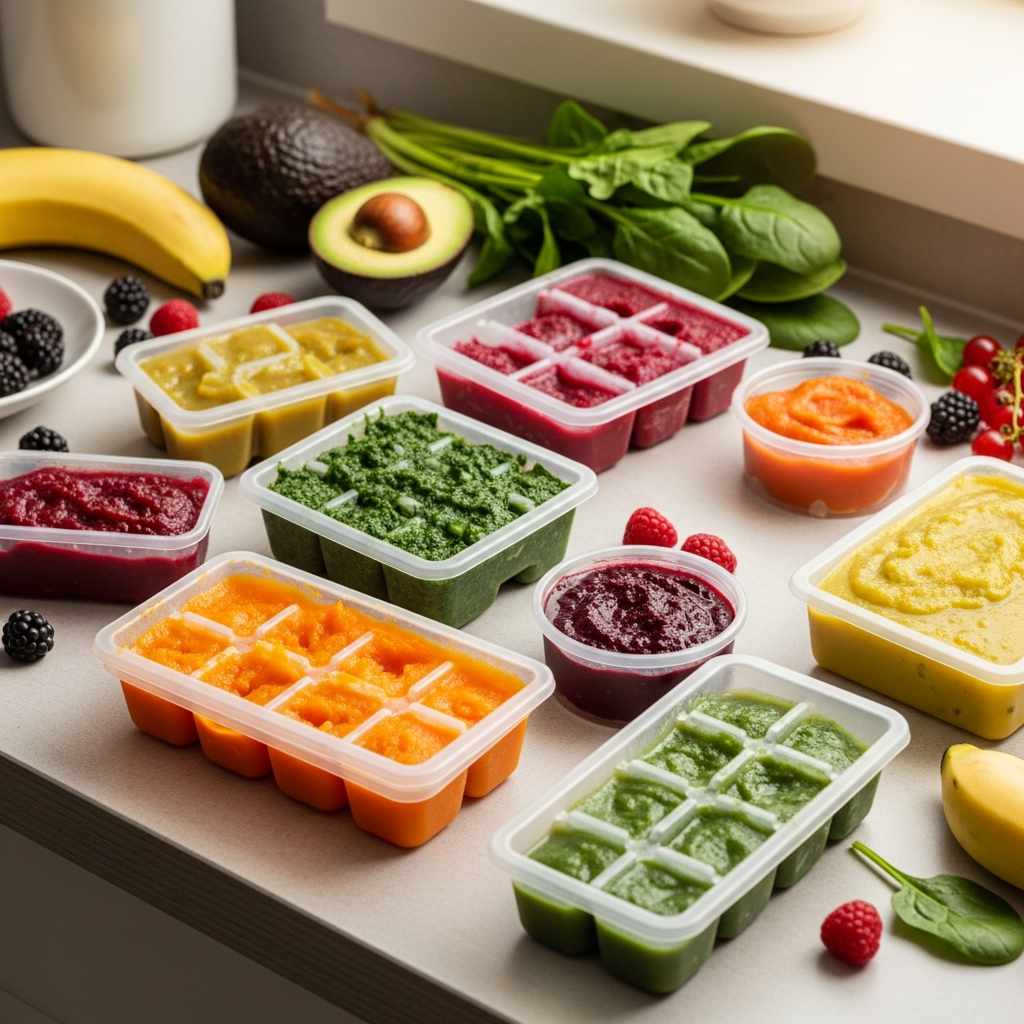
- Use silicone ice cube trays for 1 oz portions
- Transfer frozen cubes to labeled freezer bags
- Thaw overnight in refrigerator or in warm water
- Never refreeze previously frozen food
When Your 7 Month Old Refuses Solids
Common Reasons for Food Refusal
- Teething discomfort - 7 months is peak teething time
- Texture issues - progression too fast or slow
- Timing problems - too hungry, full, or tired
- Preference for self-feeding
- Illness or developmental changes
Strategies to Encourage Eating
- Offer variety in flavors, textures, and temperatures
- Allow self-feeding opportunities
- Eat together and model enjoying food
- Keep meals short (15-20 minutes)
- Offer cool foods for teething relief
- Continue offering rejected foods (10-15 exposures may be needed)
Frequently Asked Questions About 7 Month Old Baby Food
How much solid food should a 7 month old eat per day?
Most 7 month olds eat 2-3 solid meals daily, with 2-4 tablespoons each. Total daily intake ranges from 6-12 tablespoons. Breast milk or formula remains the primary nutrition source at 24-32 ounces daily.
What protein foods are safe for a 7 month old baby?
Safe proteins include pureed chicken, turkey, beef, lamb; flaked fish like salmon and cod; well-cooked scrambled eggs; mashed beans and lentils; tofu; and full-fat plain yogurt or cottage cheese.
Can a 7 month old eat eggs?
Yes, eggs are safe and nutritious. Serve well-cooked (scrambled or hard-boiled). Both yolk and white can be offered together. Eggs provide protein, iron, choline, and healthy fats for brain development.
How often should a 7 month old eat solids?
A 7 month old typically eats solid foods 2-3 times per day, after or between milk feedings, spaced about 2-3 hours apart.
What finger foods can I give my 7 month old?
Safe options include ripe banana strips, steamed sweet potato sticks, soft avocado slices, steamed broccoli florets, ripe pear spears, overcooked pasta, and well-cooked egg strips. All should be soft enough to mash between your fingers.
Why is my 7 month old suddenly refusing solid food?
Common reasons include teething pain, illness, being overtired, texture preferences, or developmental changes. Continue offering variety without pressure. Consult your pediatrician if refusal persists beyond 2 weeks.
Should I give my 7 month old water?
You can offer small amounts (2-4 ounces) with solid food meals using an open cup or straw cup. Water should not replace breast milk or formula feedings.
Can a 7 month old have peanut butter?
Yes, peanut butter can be safely introduced. Research shows early introduction may reduce peanut allergy risk. Thin it with breast milk or formula and mix into purees. Consult your pediatrician if baby has severe eczema or existing allergies.
Ready to Start Your Baby Food Journey?
At PatPat, we support you through every milestone of your baby's first year. Explore our collection of baby feeding essentials, from bibs and feeding sets to adorable mealtime outfits.
Final Thoughts on Feeding Your 7 Month Old
Your 7 month old is at an exciting stage of their food journey. With proteins, new textures, and finger foods entering the picture, mealtime becomes an adventure in exploration. Remember that every baby progresses at their own pace.
The 32 recipes in this guide provide plenty of variety to keep your little one interested and well-nourished. Focus on offering iron-rich foods, diverse flavors, and appropriate textures while following your baby's cues. Whether you choose traditional purees, baby led weaning, or a combination approach, the goal remains the same: building a positive relationship with food that lasts a lifetime.
Trust yourself, trust your baby, and enjoy this delicious phase of parenthood. At PatPat, we celebrate every feeding milestone with you!
Last Updated: December 2025
Medical Disclaimer: This article is for informational purposes only. Always consult your pediatrician before introducing new foods or if you have concerns about your baby's nutrition.





