


You are staring at the calendar, counting days since your last period. It is late again. Could you be pregnant? Is it stress from work? Why does your body feel so different?
If this sounds familiar, you are not alone. Can stress delay your period? Yes, and sometimes significantly. Stress can also create symptoms that mimic pregnancy so closely that even experienced mothers find themselves wondering. At PatPat, we understand these health concerns are part of many women's journeys.
Yes, stress can delay your period. When stressed, your body produces cortisol, which interferes with hormones regulating your menstrual cycle, particularly by suppressing ovulation. Stress-related delays can range from days to several weeks.
This guide covers the science behind stress and your cycle, how to distinguish stress symptoms from pregnancy signs, and practical solutions to restore hormonal balance.

How Stress Affects Your Menstrual Cycle: The Science Explained
Understanding why stress disrupts your period requires examining the communication system between your brain and reproductive organs.
The HPA Axis and Your Reproductive Hormones
Your body's stress response system, the hypothalamic-pituitary-adrenal (HPA) axis, releases cortisol when stressed. The hypothalamus manages both stress response AND reproductive hormones. When stress becomes chronic, chronic stress disrupts the hypothalamic-pituitary-ovarian axis leading to menstrual irregularities.
When your body perceives ongoing threat, it signals that "now is not a safe time to reproduce." This evolutionary mechanism causes cycle disruptions in our modern stress-filled lives.
Cortisol's Direct Impact on Ovulation
Research shows a prolonged increase in cortisol reduced GnRH pulse frequency by 45%, slowing hormonal signals needed for ovulation. Without proper GnRH signaling, your ovaries do not release an egg, delaying your period.
Additionally, "pregnenolone steal" occurs when your body prioritizes cortisol over reproductive hormones, redirecting resources away from your menstrual cycle.

How Long Can Stress Delay Your Period?
Typical Duration of Stress-Related Delays
According to Cleveland Clinic, depending on how your body tolerates stress, cortisol may lead to delayed or light periods, or no period at all. Most women see delays of 5-10 days with moderate stress.
Timing matters: stress before ovulation can delay ovulation itself, pushing your entire cycle back. Stress after ovulation has less impact on that cycle.
When Missed Periods Last Weeks or Months
Chronic severe stress can cause hypothalamic amenorrhea. Hypothalamic amenorrhea is when your hypothalamus causes your period to stop, with common causes including stress, excessive exercise, and undereating. Periods absent for three or more months require medical evaluation.
| Stress Type | Typical Delay | Recovery Time |
|---|---|---|
| Acute stress event | 3-7 days | 1-2 cycles |
| Moderate work/life stress | 1-2 weeks | 2-3 cycles |
| Chronic severe stress | Weeks to months | 3-6 months with intervention |
| Trauma/major life event | Variable, often 2+ weeks | Professional support recommended |

Stress Symptoms That Feel Exactly Like Early Pregnancy
Why Stress Creates Pregnancy-Like Symptoms
The overlap is not coincidental. Depressive disorders or stress may change the chemicals of the brain that affect reproductive hormones, causing pregnancy-like symptoms.
Cortisol affects digestion (nausea), sleep (fatigue), and fluid retention (bloating). These same symptoms appear in early pregnancy for related but different hormonal reasons.
Phantom Pregnancy Symptoms from Anxiety
Anxiety creates hyperawareness. When worried about pregnancy, you notice every sensation. This mind-body connection can even create pseudocyesis (phantom pregnancy) where expectations generate physical symptoms.
Common stress symptoms that mimic pregnancy:
- Nausea and occasional vomiting
- Fatigue and exhaustion
- Breast tenderness
- Mood swings and irritability
- Bloating and abdominal discomfort
- Missed or delayed period
- Food cravings or aversions
- Headaches
- Frequent urination
- Cramping without period
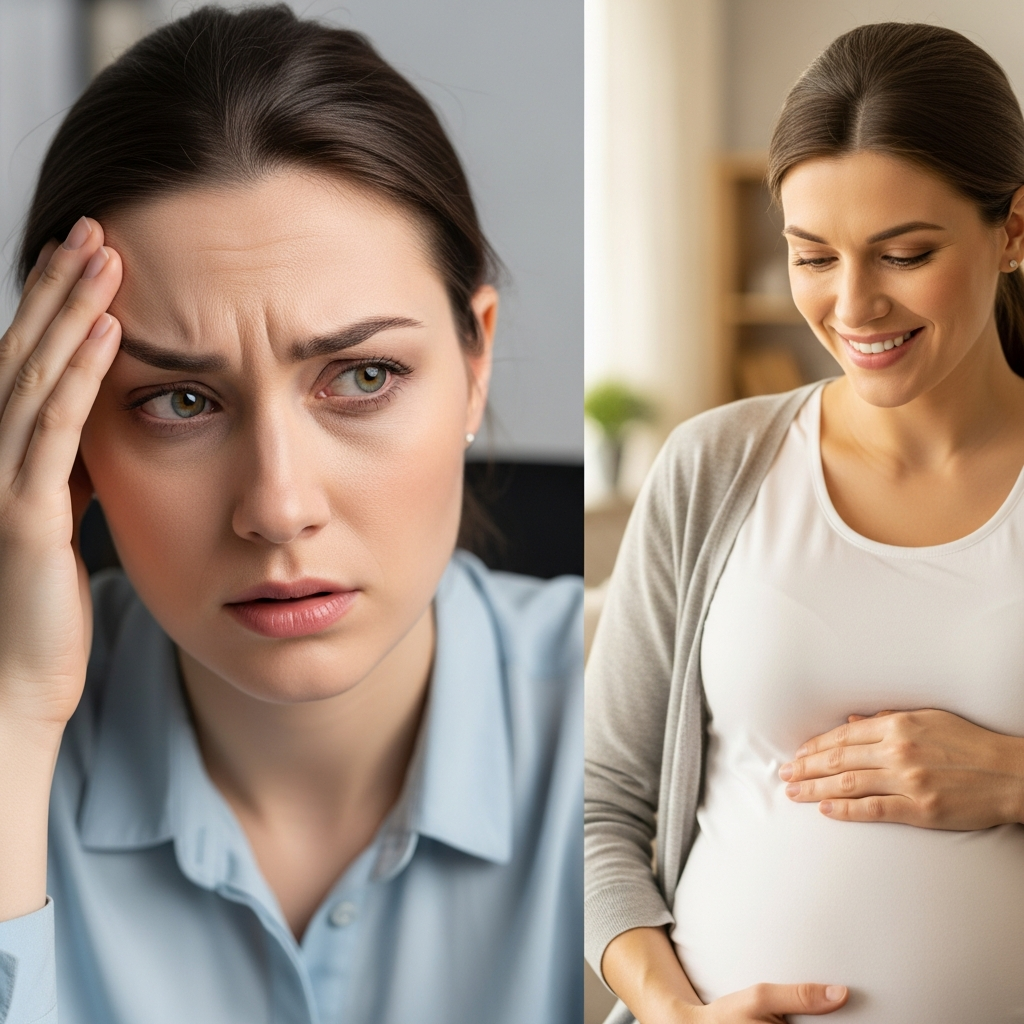
Stress vs Pregnancy Symptoms: Key Differences
Physical Symptom Differences
Nausea: Stress nausea comes and goes with anxious moments. Pregnancy nausea is persistent and often smell-triggered.
Fatigue: Stress fatigue pairs with racing thoughts and insomnia. Pregnancy fatigue brings deep, overwhelming sleepiness.
Breast tenderness: Pregnancy brings more intense, longer-lasting sensitivity, sometimes with areola darkening.
What Pregnancy Tests Tell You
Pregnancy tests detect human chorionic gonadotropin (HCG), produced only during pregnancy. Stress cannot cause a false positive. However, testing too early may yield false negatives. A negative test two weeks after your expected period is highly reliable.
| Symptom | Stress-Induced | Pregnancy-Related |
|---|---|---|
| Nausea | Comes and goes with anxiety | Persistent, smell-triggered |
| Fatigue | Racing thoughts, insomnia | Deep tiredness, excessive sleep |
| Breast Tenderness | Mild, similar to PMS | Intense, longer lasting |
| Missed Period | Returns when stress reduces | Continues throughout pregnancy |
| Bloating | Fluctuates with stress | Consistent and progressive |

Late Period, Negative Test, Stressed Out: What It Means
Understanding the Scenario
When stress delays ovulation, your period arrives later than expected. If ovulation is pushed from day 14 to day 21, your period comes two weeks after that delayed ovulation.
When used correctly, home pregnancy tests are 99% accurate. A negative test two or more weeks after your missed period strongly indicates you are not pregnant.
Factors That Combine with Stress
- Weight changes (gaining or losing 10+ pounds)
- Disrupted sleep patterns or shift work
- New medications or supplements
- Recent illness or recovery
- Travel across time zones
- Intense exercise or sudden sedentary periods
Most women see cycles normalize within four to six weeks once stress decreases.
Natural Ways to Regulate Your Cycle After Stress
Stress Reduction Techniques
- Mindfulness meditation: 10 minutes daily lowers cortisol
- Yoga: Restorative poses activate the parasympathetic nervous system
- Breathing exercises: The 4-7-8 technique shifts your body to rest-and-digest mode
- Sleep hygiene: Aim for 7-9 hours nightly
Nutrition for Menstrual Health
- Complex carbohydrates: Support stable blood sugar and hormones
- Healthy fats: Provide hormone building blocks
- Magnesium-rich foods: Help regulate cortisol
Creating a calm environment can reduce stress. If you are expecting or hoping to be, organizing baby essentials like comfortable bamboo baby clothes that are gentle on newborn skin can feel like productive self-care.

Stress and Trying to Conceive: Managing TTC Anxiety
The Irony of TTC Stress
The two-week wait can feel eternal. Every symptom becomes potentially significant. This creates a frustrating loop: wanting pregnancy creates anxiety, anxiety produces cortisol, cortisol delays ovulation, and the cycle continues.
While stress can delay ovulation, it rarely prevents pregnancy in otherwise healthy couples.
Breaking the Stress-TTC Cycle
Cognitive behavioral therapy has been shown to be effective for FHA secondary to severe stress. Strategies include:
- Limit cycle tracking to essential data points
- Schedule worry-free activities with your partner
- Consider working with a reproductive health therapist
Many couples find comfort in browsing baby clothes or creating wishlists. Researching practical items like baby bodysuits or soft baby rompers and jumpsuits can feel hopeful during the waiting period.

When to See a Doctor About Stress-Related Period Problems
Red Flags Requiring Medical Attention
- Period absent for three or more consecutive months
- Sudden cycle changes with weight fluctuations or hair changes
- Severe or worsening anxiety or depression
- Symptoms suggesting PCOS or thyroid issues
What to Expect at the Doctor
Your provider will ask about cycle history, stress levels, diet, and exercise. Common tests include hormone panels, pregnancy tests, and pelvic ultrasound.
Treatment options include increased caloric consumption, improved nutrition, and decreased exercise activity, according to Endocrine Society guidelines.
See a doctor if:
- Period is 3+ months late
- Negative test but symptoms persist
- Accompanying symptoms like unusual hair growth or severe fatigue
- Mental health symptoms are overwhelming
- Stress management has not restored cycles within 3 months

Frequently Asked Questions
How many days can stress delay your period?
Stress can delay your period from a few days to several weeks. Most women experience delays of 5-10 days with moderate stress. If stress happens before ovulation, delays of 1-2 weeks or more are possible.
Can stress cause a false positive pregnancy test?
No. Pregnancy tests detect hCG, which is only produced during pregnancy. Stress does not cause your body to produce hCG. A positive test means you should consult a healthcare provider.
Why do I feel pregnant but the test is negative?
Stress causes symptoms mimicking pregnancy: nausea, fatigue, breast tenderness, and missed periods. These occur because stress hormones affect similar body systems as pregnancy hormones.
Can anxiety make your period late by 2 weeks?
Yes. Anxiety triggers cortisol release, suppressing ovulation. If ovulation is delayed by 2 weeks, your period will also be delayed by approximately 2 weeks.
What is hypothalamic amenorrhea?
A condition where the hypothalamus stops signaling for ovulation due to stress, low body weight, or excessive exercise. This results in missed periods for 3+ months and requires medical attention.
Will my period come back after stress?
Yes, for most women periods return once stress decreases. Acute stress may delay one cycle; chronic stress might require 2-3 months of management before cycles regulate.
Can stress stop your period for months?
Yes, chronic severe stress can cause stress-related amenorrhea, stopping periods for months. If absent for 3+ consecutive months, consult a healthcare provider.
How do I know if my missed period is from stress or pregnancy?
Take a pregnancy test. A test 2+ weeks after your missed period is highly accurate. Multiple negative tests strongly suggest stress rather than pregnancy.

Taking Control of Your Cycle and Stress
Understanding that stress can delay your period and create symptoms that mimic pregnancy empowers you to take control of your reproductive health. Your body is not malfunctioning; it is responding to perceived threats in an evolutionarily appropriate way.
Key takeaways:
- Stress-related period delays are common and usually temporary
- Stress symptoms that mimic pregnancy result from shared hormonal pathways
- A negative test 2+ weeks after your missed period is reliable
- Lifestyle changes can restore cycle regularity
- Seek medical help if self-care does not resolve issues within 3 months
Whether managing cycle stress or looking ahead to pregnancy, your body is capable of finding balance. When the time comes, breathable baby clothes made from gentle materials will be ready for your little one. At PatPat, we support you through every stage of your journey.

Have You Experienced Stress-Related Period Delays?
Share your experience in the comments below to help other women going through similar situations.





