


Your contractions are five minutes apart. Your partner grabs the car keys. You reach for your hospital bag -- and everything you need is already inside. That moment of calm does not happen by accident. It starts with a solid hospital bag checklist, built weeks before your due date.
Most hospital bag packing lists online give you one long, generic list that leaves you guessing about what you will actually use. This guide is different. We have organized what to pack in your hospital bag into three clear categories -- mom, baby, and partner -- so every person walking into that delivery room is prepared. You will also find sections most guides skip: C-section adjustments, seasonal tips, and a frank list of what NOT to pack. At PatPat, we know preparation is the foundation of confidence, and confidence matters deeply when your baby is on the way.
When to Pack Your Hospital Bag for Labor and Delivery
Why 36 Weeks Is the Ideal Hospital Bag Deadline
Have your hospital bag packed and ready by 36 weeks of pregnancy. The reasoning is both medical and practical. The CDC reports that about 1 in every 10 infants in the United States is born preterm -- meaning before 37 weeks. That is a meaningful number.
Most expectant parents experience a surge of nesting energy around weeks 34-36 of the third trimester that fades as fatigue builds. Ride that wave while you have it. If you have a high-risk pregnancy -- twins, preeclampsia, or gestational diabetes -- many providers recommend having your bag ready by 32-35 weeks.
A Week-by-Week Packing Timeline for First-Time Moms
- Weeks 32-34: Research and gather items. Create your checklist. Install the car seat.
- Weeks 35-36: Pack the full bag. Label pouches by category. Confirm hospital pre-registration.
- Weeks 37-38: Add last-minute items -- phone charger, glasses, daily toiletries. Place the bag by the door or in the car.
- Week 39+: Top off with fresh snacks. Double-check that nothing has expired.
Pro tip: Tape a sticky note to your bag handle listing grab-and-go items (charger, wallet, glasses) so you do not forget them in the rush.
Hospital Bag Checklist for Mom: Labor and Delivery Essentials

What to Wear During Labor at the Hospital
- Hospital gown or personal labor gown: Hospital gowns are free and replaceable if messy; a personal gown helps you feel more like yourself.
- A warm robe: Essential for hallway walks, coverage when visitors arrive, and cold hospital rooms.
- Non-skid grip socks: L&D nurses consistently recommend these -- hospital floors are cold and slippery.
- Hair ties and a headband: Keep hair off your face during the hard work of labor.
Toiletries, Snacks, and Comfort Items You Will Actually Use
- Lip balm: The single most-used item in any hospital bag. Hospitals are incredibly dry, and breathing techniques during labor make chapped lips almost inevitable.
- Basic toiletry bag: Toothbrush, toothpaste, deodorant, face wash in a clear bag for easy access.
- Snacks for early labor: Granola bars, crackers, honey sticks, dried fruit. Check your hospital's eating policy.
- Reusable water bottle with a straw: Easier to sip while lying down or managing contractions.
- Your own pillow: Use a distinctive pillowcase so it does not get mixed up with hospital linens.
- Eye mask and earplugs: Useful for rest between contractions and during recovery.
Technology and Documents to Bring to the Hospital
- Phone charger with a 10-foot cord: Hospital outlets are almost always far from the bed.
- Portable power bank: Backup charging for worst-case outlet situations.
- Downloaded music or podcasts: Helpful during early labor. Do not rely on hospital Wi-Fi.
- Photo ID, insurance cards, birth plan (2-3 printed copies), and pediatrician's contact info.
What the Hospital Typically Provides for Mom
Before you overpack, most hospitals supply these at no extra charge: hospital gown, mesh underwear, maternity pads, peri bottle, ice packs, witch hazel pads, basic soap and shampoo, warm blankets, and extra pillows (just ask your nurse).
Postpartum Recovery Must-Haves for Your Hospital Bag
Most hospital bag guides lump labor and recovery items together, but they serve different purposes. Your labor bag gets you through delivery. These postpartum recovery items help you heal, feed your baby, and get home comfortably.
Postpartum Clothing and the Going-Home Outfit for Mom
- Going-home outfit: Maternity-size, loose-fitting, dark-colored to hide spotting. Your body will still look about 5-6 months pregnant at discharge.
- High-waisted underwear: Avoids irritating a C-section incision. Hospital mesh underwear also works well.
- Loose-waisted pants or a flowy dress: Elastic waistbands and drawstrings are your best friends.
- Slip-on shoes: Bending is difficult postpartum, especially after cesarean delivery.
Breastfeeding Supplies to Pack in Your Hospital Bag
- Nursing bras (pack 2): Wireless with easy-access clips.
- Breast pads: For early leaking. Disposable or reusable both work.
- Nipple cream or lanolin: Relief during the first days of breastfeeding.
- Skip the breast pump: Most hospitals provide hospital-grade pumps during your stay.
- Skip the nursing pillow: Hospital pillows work fine. Save yours for home.
Physical Recovery Essentials After Vaginal and C-Section Delivery
- Peri bottle upgrade: Hospitals provide one, but many moms prefer an angled version for easier use.
- Cooling pads or witch hazel pads: Soothing for perineal swelling after vaginal delivery.
- Stool softener: Postpartum constipation is common after both delivery types.
- Abdominal binder: Especially helpful post-C-section for incision support.
- Compression socks: Reduce swelling; sometimes medically required after cesarean delivery.
Newborn Hospital Bag Essentials: What Baby Actually Needs
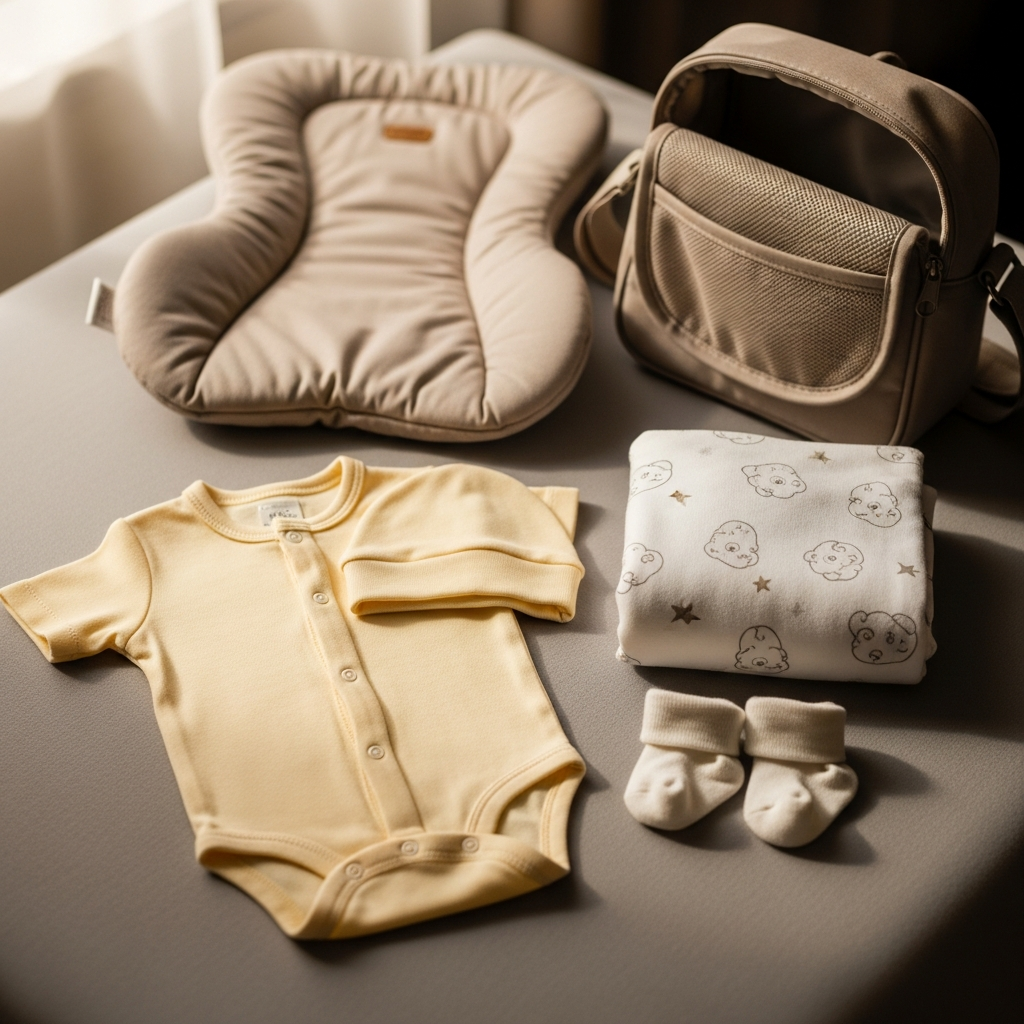
New parents tend to overpack for baby. The hospital provides most of what your newborn needs during the stay. Your job is to bring the items for going home -- and not much more.
How Many Outfits to Pack for Baby at the Hospital
- 2-3 outfits in BOTH newborn size AND 0-3 month size: You will not know baby's exact size until birth.
- Easy-dressing features: Front snaps, envelope necklines, two-way zippers. Avoid anything over baby's head.
- Soft hat and socks: Newborns lose large amounts of heat through their heads, so a hat matters regardless of season.
When packing outfits, look for soft, breathable baby clothes that make dressing a newborn simple. Snap closures and stretch fabrics reduce the stress of dressing a tiny, wiggly baby for the first time.
Choosing the Best Going-Home Outfit for Your Newborn
- Car seat compatibility is non-negotiable: The American Academy of Pediatrics recommends lightweight layers instead of puffy materials for a snug-fitting harness.
- Layer strategically: Thin outfit underneath, blanket over the car seat -- safer than a thick snowsuit.
- Photo outfit vs. car ride outfit: Many parents bring a special outfit for photos and switch to something simpler for the drive.
For the going-home outfit, many parents turn to bamboo baby clothes that regulate temperature naturally. Bamboo fabric is hypoallergenic, silky-soft against newborn skin, and adapts to both warm and cool environments.
What the Hospital Provides for Baby
Do not duplicate these: diapers, wipes, receiving blankets, swaddle blankets, basic onesies, pacifiers (if requested), formula and bottles (if needed), infant hat, and umbilical cord care supplies.
The one thing the hospital never provides: a car seat. It must be properly installed before you arrive, and staff will verify it before discharge.
Dad's Hospital Bag: The Complete Packing Checklist for Partners
Most guides treat the partner as an afterthought. But labor can last 24 hours or more, and the hospital bag for dad or partner deserves real attention.
Clothing, Toiletries, and Overnight Essentials for Partners
- 2 changes of comfortable clothes: You may appear in birth photos you will treasure forever.
- Basic toiletries: Toothbrush, deodorant, face wash, contact lens supplies.
- Comfortable shoes: You will be standing and walking for hours.
- Pillow and lightweight blanket: Hospital reclining chairs are notoriously uncomfortable.
Partner's Role-Specific Essentials for the Delivery Room
- Your own phone charger (separate from mom's) and camera with cleared storage
- Cash and cards for vending machines, cafeteria, and parking
- Pre-made contact list for post-delivery announcements
- Birth plan copy so you can advocate for mom's preferences
- Massage tools or tennis ball for back labor counter-pressure
- Entertainment for downtime: book, tablet, or playing cards
Snacks and Nourishment for Partners During Labor
Partners who skip meals during labor become lightheaded and less helpful. Pack substantial snacks: trail mix, protein bars, beef jerky, nut butter packets, dried fruit, and granola bars. Bring a refillable water bottle and electrolyte packets. One rule: avoid strong-smelling foods, since laboring moms often have heightened smell sensitivity.
Hospital Bag for C-Section, Induction, and Special Situations
Extra Packing Essentials for a Scheduled C-Section
C-section recovery typically requires a 2-4 day hospital stay, according to ACOG. Pack more of everything and add these:
- High-waisted underwear (above incision line)
- Loose, high-waisted pants or nightgown
- Slip-on shoes and long-handled grabber (bending is painful post-surgery)
- Abdominal binder for incision support
- Compression socks (often medically required to prevent blood clots)
- Stool softener (surgery + pain medication = constipation)
- Extra pillow for abdominal support when coughing or standing
Hospital Bag Adjustments for Induction, VBAC, and Other Situations
| Situation | Key Packing Adjustments |
|---|---|
| Induction | Expect 24-48+ hours. Pack extra entertainment, more snacks, and a second change of clothes for your partner. |
| VBAC | Pack for both outcomes -- include C-section recovery items as a contingency. |
| High-risk/preterm | Pack by 32 weeks. Include preemie-sized going-home outfits. |
| Twins | Double the baby outfits. Plan for a longer stay. Install two car seats before your due date. |
Seasonal Hospital Bag Tips: What Changes for Winter, Summer, Spring, and Fall
Winter and Cold-Weather Deliveries
- Baby: Fleece sleep sack for car seat transfer (never a puffy snowsuit under straps), warm hat, extra blanket over the carrier.
- Mom: Warm socks, heavier robe, layered going-home outfit, warm slip-on boots.
- Tip: Warm up the car 10-15 minutes before discharge.
Even in winter, the layer closest to baby's skin should be breathable. Bamboo baby clothes that regulate temperature naturally work as an excellent base layer, wicking moisture and preventing overheating under outer layers.
Summer and Warm-Weather Deliveries
- Baby: Lightweight cotton or bamboo onesie, muslin swaddle, sun shade for car seat, wide-brimmed hat.
- Mom: Breathable going-home dress, sandals, extra deodorant, facial mist spray.
- Tip: Blast the car AC before loading baby. Use a car seat cover to block direct sun.
Spring and Fall Deliveries
Unpredictable temperatures are the challenge. Dress baby in layers: onesie base, zip-up layer, blanket on top. Pack both a light cardigan and a warmer option for mom, plus a rain jacket or umbrella.
What NOT to Pack: Common Hospital Bag Overpacking Mistakes
Items the Hospital Already Provides
You do not need to duplicate these -- most hospitals provide them as standard care: diapers, wipes, diaper cream, mesh underwear, maternity pads, peri bottle, ice packs, basic toiletries, receiving blankets, and infant hats. Call your hospital's L&D unit to confirm what they supply.
Overpacking Mistakes Real Moms Wish They Could Undo
- The massive suitcase: You will not use 80% of it. One weekender for mom plus one small bag for baby and partner is ideal.
- Too many baby outfits: 2-3 is plenty. Baby will mostly be in a diaper and swaddle for skin-to-skin.
- Expensive items or jewelry: Leave valuables at home.
- Elaborate going-home outfits for baby: Car seat harnesses require simple, fitted outfits. Save the Instagram look for home.
- Books, board games, full-size toiletries: During active labor, entertainment goes untouched. Travel-size toiletries are sufficient for a 1-4 day stay.
The Minimalist Hospital Bag Approach
If this checklist feels overwhelming, here is the absolute minimum: phone charger, lip balm, robe, going-home outfits for mom and baby, installed car seat, ID, insurance card, and snacks. Everything else is helpful but not critical. Family can always bring forgotten items later.
Hospital Bag Checklist FAQ
When should I start packing my hospital bag?
Start gathering items at 32-34 weeks and have your bag fully packed by 36 weeks. About 10% of babies arrive before 37 weeks. For high-risk pregnancies or twins, begin by 30-32 weeks.
What does the hospital provide for labor, delivery, and baby?
Most hospitals provide gowns, mesh underwear, maternity pads, peri bottles, ice packs, basic toiletries, blankets, diapers, wipes, receiving blankets, infant t-shirts, hats, and pacifiers. Many also provide formula and hospital-grade breast pumps. Call your L&D unit to confirm.
How many outfits should I bring for baby?
Bring 2-3 outfits in both newborn and 0-3 month sizes. Include one going-home outfit and 1-2 backups. Choose front snaps or zippers for easy dressing.
What should I pack differently for a C-section?
Pack for 3-4 days instead of 1-2. Add high-waisted underwear, an abdominal binder, slip-on shoes, compression socks, stool softener, and an extra pillow. Avoid waistbands at incision height.
What should my partner pack for the hospital?
Two changes of clothes, toiletries, a phone charger, substantial snacks, a water bottle, a pillow and blanket, cash, and entertainment. Avoid strong-smelling foods.
What should I wear home from the hospital?
Loose, maternity-size clothing in dark colors. Elastic waistbands and slip-on shoes. After a C-section, high-waisted pants that avoid pressure on your incision. Button-front tops help with nursing access.
Is a going-home outfit for baby necessary?
Yes. Hospitals provide basics during your stay, but you need your own going-home outfit. Choose something car seat compatible -- a fitted onesie or footed sleeper works better than anything puffy or bulky.
How many bags should I bring to the hospital?
Two to three bags work best: one weekender for mom, one smaller bag for baby and partner, and an optional tote for snacks and chargers. Label them clearly so your partner can find items quickly.
You Are Ready: Final Thoughts on Your Hospital Bag Checklist
You have just walked through the most thorough hospital bag checklist available -- covering everything mom, baby, and partner need for labor, delivery, and recovery. Whether you are packing for a vaginal delivery, a scheduled C-section, an induction, or adjusting for the season, you now have a clear plan.
- Start at 32-34 weeks, finish by 36 weeks, and breathe easy.
- Less is more. Hospitals provide more than you expect.
- Pack for three people, not just mom.
- Adjust for your situation -- delivery type, recovery timeline, and seasonal weather all matter.
As you pack your baby's first outfits, look for baby clothes in comfortable, easy-to-dress styles that make those first days simpler -- because when your new baby arrives, the only thing you should be focusing on is falling in love. Share this hospital bag checklist with your partner so they can pack their own bag, and save it for easy reference when packing day arrives. At PatPat, we are cheering for you every step of the way. Happy packing -- and congratulations.
Additional Resources:





