


Picture this: You are at a family gathering, cradling your newborn, when a well-meaning relative leans in and says, "You should really just stick to one language. Two will only confuse the baby." Sound familiar? If you are raising a bilingual baby or considering teaching your child multiple languages, you have probably heard this concern more times than you can count.
Here is the truth that might surprise those well-meaning relatives: approximately 20% of children in the United States speak a language other than English at home, and research consistently shows that babies are remarkably equipped for multilingual learning. Your little one's brain is actually wired to handle two, three, or even more languages simultaneously.
We understand the questions and concerns that come with raising children in multilingual households. This comprehensive guide will walk you through everything you need to know about bilingual child development, from the fascinating science behind how babies learn two languages to practical strategies you can start using today. By the end, you will feel confident that raising bilingual children is one of the greatest gifts you can give them.
How Babies Learn Two Languages: The Science of Bilingual Brain Development
Why Infant Brains Are Uniquely Wired for Multilingual Learning
Your baby's brain is nothing short of extraordinary. From the moment of birth, infants possess an incredible capacity for language acquisition that diminishes as they grow older. This phenomenon is known as the "critical period" for language learning, which research indicates peaks in early childhood from birth to approximately age seven.
During this window, neural plasticity allows babies to absorb and process multiple language systems simultaneously. Think of your baby's brain like a powerful computer with unlimited tabs open. Each language creates its own neural pathway, and these pathways develop in parallel, not in competition.
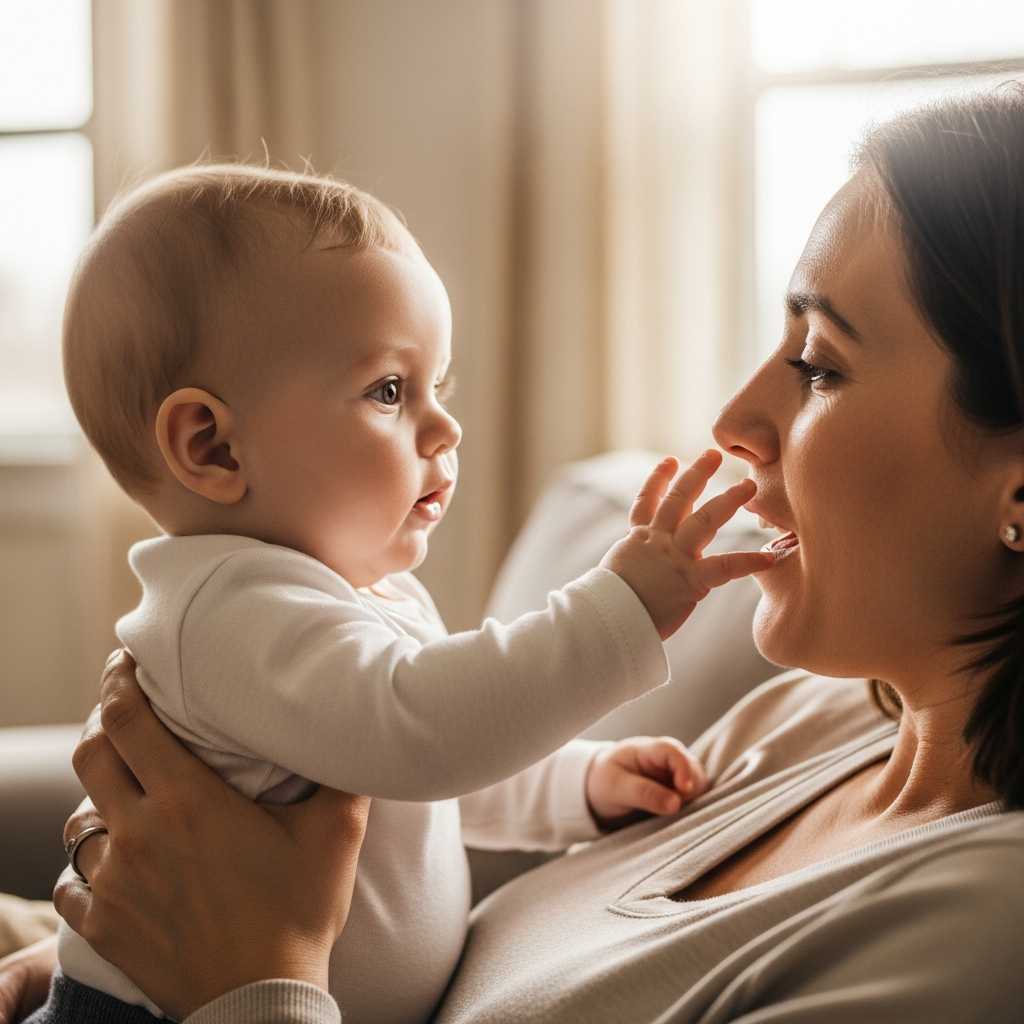
Research from Penfield and Roberts suggests that children under nine can learn up to three languages, with early exposure activating reflexes that allow them to switch between languages without confusion.
What Happens in Your Baby's Brain When Hearing Multiple Languages
When your bilingual baby hears you speak, something remarkable happens in their brain. Unlike what many people assume, the brain does not become overwhelmed or confused. Instead, it creates separate but interconnected language systems.
Groundbreaking research from Princeton University's Baby Lab found that bilingual infants as young as 20 months efficiently and accurately process two languages. These babies can differentiate between words in different languages and monitor and control their languages during real-time listening, much like bilingual adults do.
This ability to manage multiple languages actually strengthens the prefrontal cortex, the area responsible for executive function, including planning, focus, and multitasking. In essence, learning two languages from birth is not just about communication. It is brain exercise that builds cognitive strength.
Do Bilingual Babies Talk Later? Debunking Common Myths
The Language Confusion Myth - What Research Actually Shows
The myth that bilingual babies get "confused" by hearing two languages is perhaps the most persistent misconception parents face. Let us put this worry to rest once and for all.
According to the American Academy of Pediatrics, you will not confuse your child, set them back academically, or prevent them from learning English by using your native languages. In fact, you are setting them up for academic success.
What about when your toddler says something like "quiero mas juice"? This mixing of languages, called code-switching, is not confusion at all. It demonstrates sophisticated language understanding. Your child knows words in both languages and is creatively using all available resources to communicate. Generally, by age three, multilingual children naturally separate their languages by context.
Speech Delay Concerns - Separating Fact from Fiction
Another common worry is that bilingualism causes speech delays. Research firmly contradicts this assumption.
Studies published in the Journal of Speech, Language, and Hearing Research confirm that bilingual status is not associated with increased risk of speech and language delays. Bilingual children reach the same developmental milestones at the same ages as their monolingual peers:
- First words around 12 months
- Two-word phrases by 24 months
- Simple sentences by age 2-3
If your bilingual child does show signs of speech delay, bilingualism is not the cause. The delay would exist regardless of how many languages they hear. In such cases, the recommendation is the same as for monolingual children: consult a speech-language pathologist, ideally one experienced with bilingual assessment.
When Do Bilingual Babies Start Talking? Milestones by Age
Language Milestones from Birth to 12 Months
Understanding what to expect helps you celebrate your bilingual baby's progress without unnecessary worry. Here is what language development looks like in the first year:
| Age | Milestone | Bilingual Baby Notes |
|---|---|---|
| Birth - 3 months | Responds to voices, begins cooing | Responds to both languages equally |
| 4 - 6 months | Babbles, shows language discrimination | Babbles with sounds from both languages |
| 7 - 9 months | Understands simple words, responds to name | Recognizes words in both languages |
| 10 - 12 months | First words emerge | May appear in either or both languages |
What to Expect from 12 Months to Age 3
The toddler years bring rapid language growth in bilingual children:
- 12-18 months: First words appear, vocabulary of 10-50 words across both languages combined
- 18-24 months: Two-word combinations emerge, vocabulary explosion begins
- 2-3 years: Simple sentences develop, child begins separating languages by person or context
Proven Strategies for Raising a Bilingual Child at Home
OPOL Method - One Parent, One Language Explained
The OPOL (One Parent, One Language) approach is one of the most well-known bilingual parenting strategies. Here is how it works: each parent consistently speaks only one language to the child. For example, mom always speaks Mandarin while dad always speaks English.
Research by Annick De Houwer, who studied over 2,000 bilingual families, found that 75% of children raised with the "one parent, one language" approach became bilingual. This success rate increases when the method is followed consistently.
Best for: Families where each parent is a native speaker of a different language
Challenges to consider: Requires discipline to maintain consistency; one parent may feel excluded when the other speaks a language they do not understand
Minority Language at Home (ML@H) and Other Approaches
OPOL is not the only path to bilingualism. Consider these alternatives:
- Minority Language at Home (ML@H): Both parents speak the minority language at home; child learns majority language through school and community. Research suggests this method may produce even higher success rates.
- Time and Place Method: Different languages for different activities or times of day (morning routines in Spanish, evening stories in English)
- Mixed Approach: Flexible combination based on family circumstances
Regardless of your chosen strategy, research indicates that children need approximately 20-30% of their waking hours exposed to the minority language, which translates to roughly 25 hours per week for fluency development.
Raising a Trilingual Baby - Is Learning Three Languages Possible?
How Children Successfully Learn Three Languages Simultaneously
If your family speaks three languages, you may wonder if this is too much for your baby's developing brain. The reassuring answer is no.
Research confirms that children can successfully acquire three or more languages when given adequate exposure to each. The brain has no inherent limit on language learning capacity. Many children around the world grow up trilingual, particularly in multilingual regions of Europe, Africa, and Asia.
Key factors for trilingual success include:
- Sufficient exposure to each language (aim for meaningful daily interaction)
- Consistent language sources (specific people, times, or contexts for each language)
- Quality interactions that go beyond passive listening
Strategies for Trilingual Family Success
Managing three languages requires thoughtful planning:
- Assign each language: Grandmother speaks Korean, parents speak English at home, child attends Spanish immersion school
- Accept temporary imbalances: One language may lag temporarily but catches up with increased exposure
- Build community support: Heritage language playgroups, cultural events, and video calls with relatives abroad all contribute
Creating consistent routines helps trilingual babies associate languages with specific contexts. Whether it is morning time in Mandarin while getting dressed in cozy bamboo baby clothes or afternoon storytime in Spanish, predictable patterns support language learning.
What to Do If Your Bilingual Toddler Is Not Talking Yet
Understanding Normal Variation in Bilingual Development
Every child develops at their own pace, and this applies to bilingual children as well. Some important points to keep in mind:
- Late bloomers exist: Some children simply take longer to start speaking, regardless of language environment
- Receptive language first: Many bilingual children understand far more than they say. They may be in a "silent period" of absorbing before producing
- Count total vocabulary: Your child's language ability should be measured across both languages combined, not each separately
When to Consult a Bilingual Speech-Language Pathologist
While variation is normal, certain signs warrant professional evaluation:
- No words by 16 months
- No two-word phrases by 24 months
- Loss of previously acquired language skills
- Difficulty understanding simple instructions in either language
When seeking evaluation, look specifically for a speech-language pathologist experienced with bilingual assessment. Standard monolingual assessments can misdiagnose bilingual children.
Cognitive Benefits of Raising Bilingual Children
Enhanced Executive Function and Problem-Solving Skills
The benefits of bilingualism extend far beyond communication. Research shows that managing two languages strengthens cognitive abilities:
- Improved executive function: Planning, focus, and multitasking abilities
- Enhanced cognitive flexibility: Ability to switch between tasks and perspectives
- Better attention control: Filtering distractions and maintaining focus
Studies indicate that bilingual children may show greater improvement in cognitive inhibition over time compared to monolingual children.
Social and Long-Term Advantages of Bilingualism
The rewards of bilingualism span a lifetime:
- Cultural connection: Ability to communicate with extended family and heritage community
- Academic advantages: Enhanced reading comprehension and verbal skills
- Career opportunities: Bilingualism is increasingly valued in our global economy
- Delayed cognitive decline: Research from UCLA and other institutions suggests bilingualism may delay dementia symptoms by approximately four years
Building a language-rich environment does not require expensive programs. Everyday moments, from dressing your little one in comfortable baby clothes while singing nursery rhymes in your heritage language to narrating daily activities, create powerful learning opportunities.
Practical Tips for Bilingual Families - Resources and Daily Routines
Creating a Language-Rich Environment at Home
Success in bilingual parenting comes from consistency and immersion in everyday life:
- Books in both languages: Board books for babies, picture books for toddlers
- Music and songs: Nursery rhymes are powerful language tools that stick
- Label items: Post bilingual labels around your home
- Video calls: Regular calls with relatives who speak the minority language
- Community connections: Bilingual playgroups, cultural events, heritage language schools
Screen Time and Language Learning
While live interaction remains most effective, technology can support bilingual development:
- Interactive media with caregiver involvement works best
- Video calls with family count as meaningful language exposure
- Quality educational apps can supplement (not replace) human interaction

For additional support, explore resources like Bilingual Monkeys, Chalk Academy, and the Multilingual Parenting community.
Start Your Bilingual Journey Today
Every conversation counts. Whether you are just beginning or looking to strengthen your approach, the gift of language connects your child to culture, family, and a world of opportunities.
Frequently Asked Questions About Raising Bilingual Children
Can a baby learn two languages at once without getting confused?
Yes, babies can learn two languages simultaneously without confusion. Research from Princeton University confirms that infants as young as 20 months can distinguish between languages and process them as separate systems. What appears as "confusion" (mixing languages) is actually a sign of sophisticated bilingual development called code-switching, which is completely normal and temporary.
Does speaking two languages to a baby cause speech delay?
No, bilingualism does not cause speech delays. The American Academy of Pediatrics and current research confirm that bilingual children reach language milestones at the same age as monolingual peers. If a speech delay exists, it would occur regardless of the number of languages spoken and should be evaluated by a bilingual speech-language pathologist.
What is the best age to start teaching a baby a second language?
The best time to start is from birth. The critical period for language acquisition spans from birth to around age seven, with the earliest years offering the greatest brain plasticity. However, it is never too late. Children can successfully become bilingual at any age with consistent, quality exposure to both languages.
How much language exposure does a bilingual baby need?
Research suggests bilingual children need at least 20-30 hours per week (approximately 25-30% of waking hours) of exposure to the minority language to develop fluency. However, quality matters as much as quantity. Meaningful, engaging conversations are more effective than passive exposure like background television.
What is the OPOL method for raising bilingual children?
OPOL (One Parent, One Language) is a bilingual parenting strategy where each parent consistently speaks only one language to the child. For example, one parent always speaks Spanish while the other always speaks English. Studies show approximately 74-75% of families using this method consistently raise bilingual children.
Can non-native speaking parents raise a bilingual child?
Yes, non-native parents can raise bilingual children through community resources, heritage language schools, bilingual caregivers, educational media, and regular contact with native speakers including video calls with relatives. While native-level fluency helps, consistent exposure from multiple quality sources can successfully achieve bilingualism.
Is it possible for a baby to learn three languages at the same time?
Yes, babies can successfully learn three or more languages simultaneously. Research on multilingual children worldwide shows the brain has no inherent limit on language learning. Success depends on consistent exposure to each language, clear language boundaries, and meaningful interactions with speakers of each language.
When should I worry if my bilingual toddler is not talking?
Consult a bilingual speech-language pathologist if your child has no words by 16 months, no two-word phrases by 24 months, or is losing previously acquired language skills. Importantly, count vocabulary across both languages combined rather than each language separately when assessing development.
Conclusion: Embrace Your Bilingual Parenting Journey
Can babies learn two or three languages at the same time? The science is clear: absolutely yes. Your baby's brain is magnificently designed to handle multiple languages, creating separate neural pathways for each while building cognitive advantages that last a lifetime.
Throughout this guide, we have debunked the myths that may have caused worry, from language confusion to speech delays. We have explored proven strategies like OPOL and minority language at home, and we have established that consistent, quality exposure matters more than perfection.
Whether you are raising a bilingual baby, considering trilingual development, or just starting your multilingual parenting journey, remember these key takeaways:
- Bilingualism does not cause confusion or speech delays
- Start from birth when possible, but know it is never too late
- Aim for 20-30 hours weekly of minority language exposure
- Choose a strategy your family can maintain consistently
- Celebrate code-switching as a sign of linguistic sophistication
- Seek bilingual specialists if you have developmental concerns
The gift of language is one of the most valuable presents you can give your child. It opens doors to culture, family connection, cognitive benefits, and future opportunities. Trust the science, trust your instincts, and trust your baby's remarkable brain.
At PatPat, we celebrate families of all backgrounds and languages. Your bilingual journey may have its challenges, but the rewards, watching your child communicate across cultures and generations, are immeasurably worth it. Start today, because every word, every song, and every story in your heritage language matters.



