


You just brought your tiny bundle home, and suddenly you are responsible for keeping this perfect little human clean and healthy. If you are wondering how often should you bathe a newborn, you are not alone. This question keeps new parents up at night (along with the actual baby, of course).
Here is something that might surprise you: your newborn does not need daily baths. In fact, bathing them too often can actually harm their delicate skin. At PatPat, we understand the anxieties that come with caring for your first baby, which is why we have put together this comprehensive guide based on recommendations from the American Academy of Pediatrics and other trusted medical sources.
Whether you are preparing for your baby's arrival or already navigating those early weeks, this guide covers everything from the ideal newborn bath frequency to safe water temperatures, sponge bath techniques, and creating a soothing bedtime routine around bath time.
The Expert Answer: How Often to Bathe Your Newborn
Quick Answer: Pediatricians recommend bathing newborns 2-3 times per week. Daily baths are unnecessary and may dry out your baby's sensitive skin. Between baths, clean the diaper area and face with warm water and a soft cloth.
According to the American Academy of Pediatrics (AAP), newborns do not need a bath every day. They rarely sweat or get dirty enough to require frequent full baths. Three baths per week during your baby's first year is generally sufficient.
Why does this matter? Your newborn's skin is remarkably different from adult skin. It is thinner, more permeable, and still developing its protective barrier. Over-bathing strips away natural oils that protect this delicate barrier, potentially leading to dry, irritated skin.
Between baths, use a technique called "top and tail" cleaning. Simply use a warm, damp washcloth to gently wipe your baby's face, neck folds, hands, and diaper area. This keeps your little one fresh without the risks of over-bathing.
Remember that every baby is unique. Some may have drier skin that needs even less frequent bathing, while others might need slightly more attention in certain areas. Watch your baby's skin and adjust accordingly.
When Should Your Newborn Have Their First Bath?
The timing of your baby's first bath matters more than you might think. The World Health Organization (WHO) recommends delaying baby's first bath until 24 hours after birth. If cultural reasons require an earlier bath, the delay should be at least 6 hours minimum.
This recommendation exists for good reasons. When babies are born, they are covered in a white, creamy substance called vernix caseosa. While it might look like something you want to wash off, this natural coating is actually a gift from nature.
Benefits of Delayed First Bathing
Research has revealed impressive benefits of keeping vernix on your newborn's skin:
- Temperature regulation: Newborns struggle to maintain body temperature. Research suggests delayed bathing may reduce the risk of neonatal hypothermia.
- Blood sugar stability: Skin-to-skin contact without bath interruption helps stabilize blood sugar levels.
- Improved breastfeeding: One study showed exclusive breastfeeding rates rose from 59.8% to 68.2% after implementing delayed bathing.
- Natural skin protection: According to research published in the Indian Journal of Dermatology, vernix contains compounds that provide antimicrobial activity against bacteria and fungi.
- Enhanced bonding: Uninterrupted skin-to-skin contact in the first hours strengthens the parent-baby bond.
Many hospitals now support delayed bathing practices. Do not hesitate to discuss your preferences with your healthcare team before delivery.
Sponge Bath vs. Tub Bath: Choosing the Right Method
Until your baby's umbilical cord stump falls off, sponge baths are the way to go. According to Cleveland Clinic, you should use sponge baths rather than immersing your baby in water until the cord area has healed. This typically takes 1-3 weeks after birth.
How to Give Your Newborn a Sponge Bath
Sponge bathing might seem intimidating at first, but it becomes second nature quickly. Here is how to do it:
- Prepare your space: Gather all supplies before undressing your baby. Warm the room to 75-80 degrees Fahrenheit.
- Create a comfortable surface: Use a changing pad or thick towel on a flat, secure surface.
- Keep baby warm: Wrap your baby in a towel, exposing only the area you are washing.
- Work from clean to dirty: Start with the face (using plain water), then move to the body, saving the diaper area for last.
- Use gentle strokes: Dampen your washcloth with warm water, adding a tiny amount of mild, fragrance-free cleanser if desired.
- Dry as you go: Pat each area dry before moving on to prevent your baby from getting cold.
When Can Baby Take Their First Tub Bath?
The transition to tub baths happens once the umbilical cord stump dries up and falls off, which typically happens one to three weeks after birth. Before transitioning, ensure the area has completely healed with no discharge or redness.
Signs your baby is ready for tub baths:
- Cord stump has fallen off completely
- Belly button area is dry and healed
- No signs of infection (redness, swelling, or discharge)
If you are unsure whether your baby is ready, check with your pediatrician. When you do start tub baths, begin with just 2-3 inches of water.
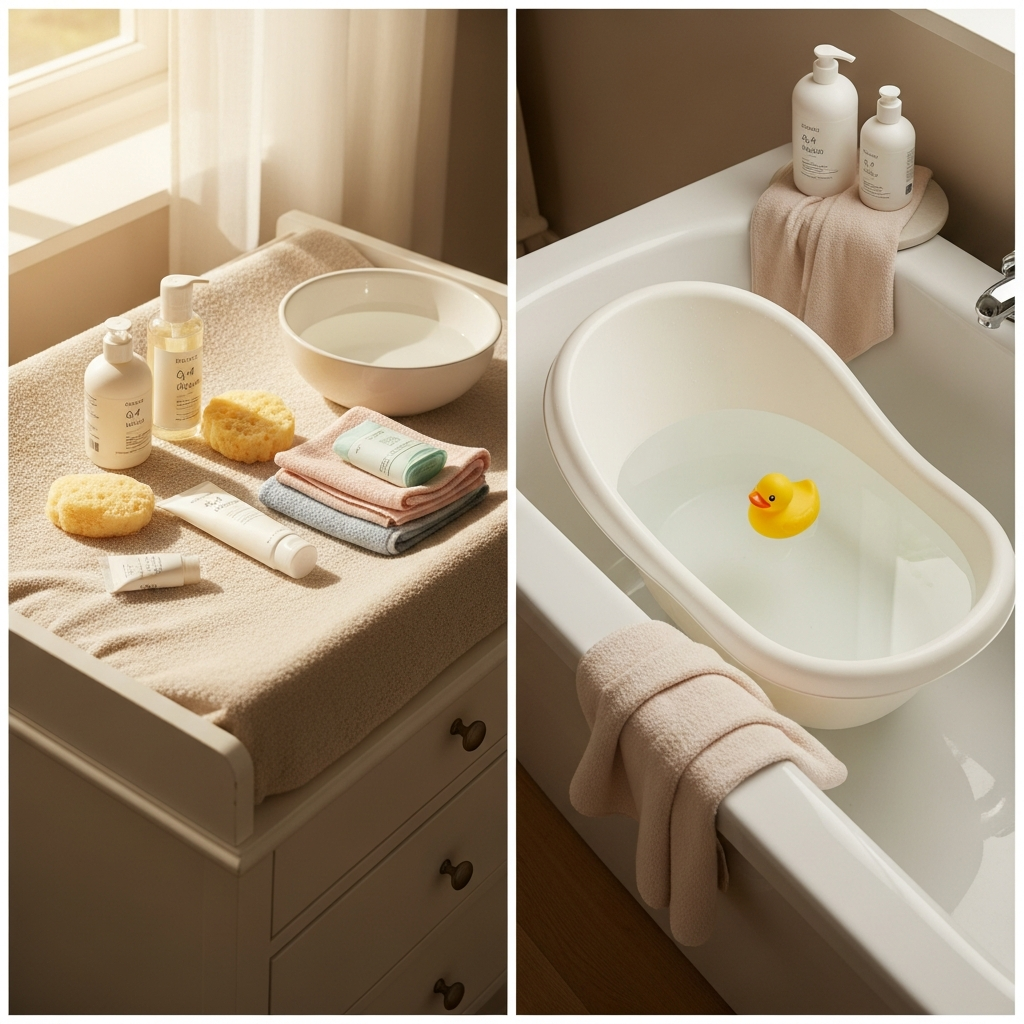
Safe Newborn Bath Temperature and Duration Guidelines
Getting the water temperature right is crucial for your baby's safety and comfort. According to Mayo Clinic, bath water should be between 97-100 degrees Fahrenheit (36-38 degrees Celsius).
Testing Water Temperature Safely
Your hands are poor temperature judges because they tolerate heat better than a baby's sensitive skin. Instead:
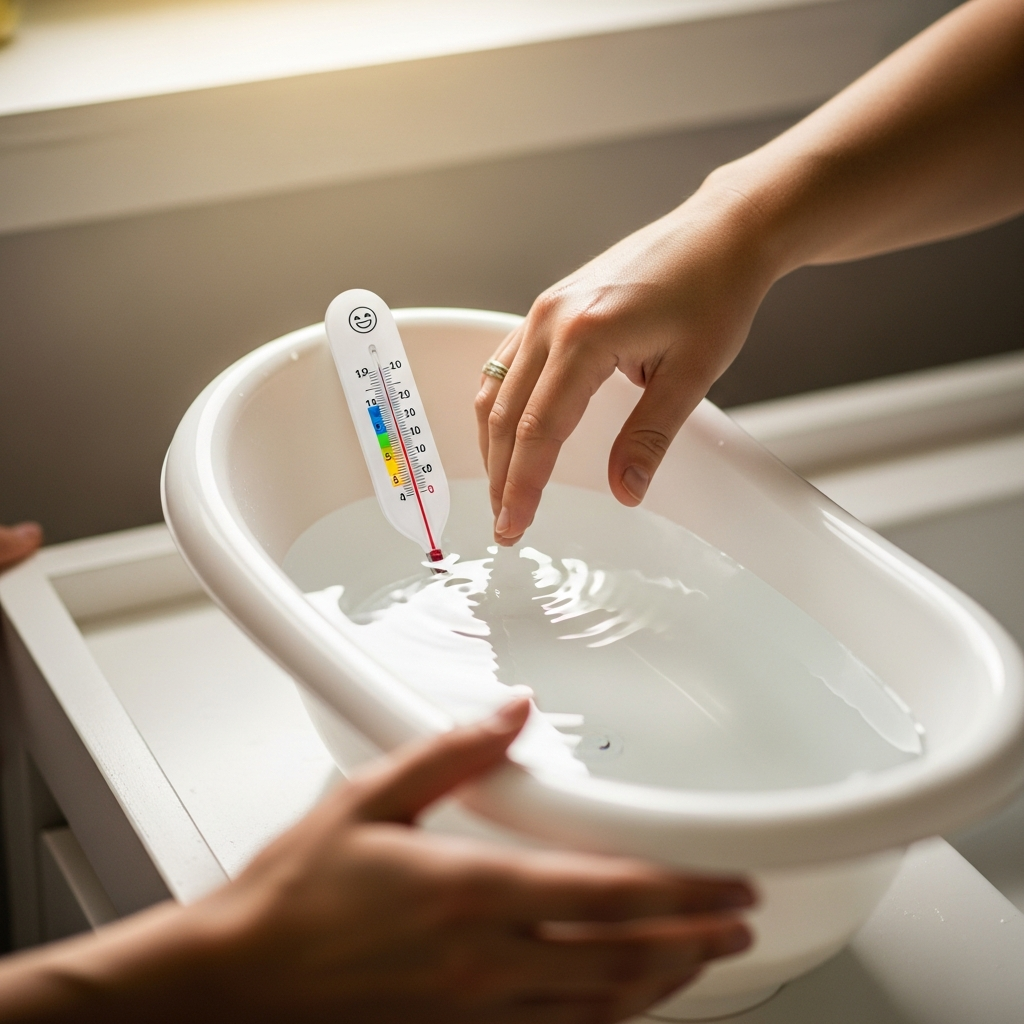
- Use your elbow or inner wrist: These areas are more temperature-sensitive and give you a better sense of how the water will feel to your baby.
- Invest in a bath thermometer: These inexpensive devices take the guesswork out of temperature testing.
- Check continuously: Water cools over time, so add warm water as needed during the bath.
To prevent accidental scalding, keep your water heater set below 120 degrees Fahrenheit.
How long should a newborn bath be? Keep baths short, around 5-10 minutes maximum. Longer baths can dry out your baby's skin and increase the risk of them getting cold.
Safety Alert: Never leave your baby unattended in water, even for a moment. According to the AAP, babies can drown in as little as one inch of water. Keep all supplies within arm's reach before starting and maintain constant supervision throughout.
Step-by-Step Guide to Bathing Your Newborn Safely
Now that you understand the basics, let us walk through the complete bathing process. Preparation is everything when it comes to bathing a newborn safely and efficiently.
Newborn Bath Supplies Checklist
Gather these items before you begin:
| Essential Items | Optional But Helpful |
|---|---|
| Baby tub or sink insert | Bath thermometer |
| 2-3 soft washcloths | Bath kneeler for parent comfort |
| Hooded towel | Rinse cup |
| Fragrance-free baby wash | Non-slip mat |
| Clean diaper | Baby lotion (fragrance-free) |
| Fresh clothes | Soft brush for cradle cap |
The Proper Bathing Sequence
- Face first: Using a damp washcloth with plain water (no soap), gently wipe your baby's face. Clean eyes from the inner corner outward, using a fresh part of the cloth for each eye.
- Scalp and hair: Support your baby's head and gently wet the scalp. Apply a small amount of baby wash, massage softly, then rinse carefully.
- Neck and ears: Clean the neck folds where milk and drool collect. Wipe behind the ears but never inside the ear canal.
- Body: Wash the arms, hands (open those tiny fists!), torso, legs, and feet. Pay attention to skin folds.
- Diaper area last: Clean this area thoroughly, always wiping front to back for girls.
- Rinse completely: Ensure no soap residue remains, as it can irritate sensitive skin.
- Lift carefully: Support your baby's head and neck, wrap them immediately in a warm hooded towel.
Pro tip: Keep one hand on or supporting your baby at all times. Wet babies are slippery babies!
Post-Bath Care: Dressing and Moisturizing Your Newborn
What happens after the bath matters just as much as the bath itself. Proper post-bath care keeps your baby's skin healthy and helps them feel cozy and secure.
Immediately after lifting your baby from the water, wrap them in a warm, hooded towel. The hood helps prevent heat loss from their head, where babies lose significant body heat.
Pat, do not rub: Gently pat your baby's skin dry rather than rubbing. Rubbing can irritate delicate newborn skin. Pay special attention to skin folds in the neck, armpits, elbows, and thighs where moisture can hide.
If your baby's skin appears dry, apply a fragrance-free, hypoallergenic moisturizer while their skin is still slightly damp. This helps lock in moisture more effectively.
Choosing Post-Bath Clothing for Your Newborn
The clothing you choose after bath time can make a real difference in your baby's comfort. Look for:
- Breathable natural fabrics: Cotton and bamboo allow air circulation and wick moisture away from skin.
- Flat seams: Raised seams can rub against tender skin.
- Tag-free designs: Tags can scratch and irritate.
- Easy closures: Snaps and zippers make dressing a wiggly baby easier.
- Appropriate layers: Dress your baby in one more layer than you would wear yourself.
After bath time, dress your little one in soft, gentle newborn clothes that will not irritate their freshly cleaned skin. Clothing made from natural fibers with thoughtful design details helps ensure your baby stays comfortable.
Creating a Calming Bath Time and Bedtime Routine
Bath time is not just about cleanliness. It can become a powerful sleep signal for your baby. Research published in the Journal of Sleep examined bedtime routines including baths and found significant improvements in infant sleep outcomes.
The science behind this is fascinating. A warm bath causes blood vessels near the skin surface to dilate, which subsequently causes a slight drop in core body temperature after the bath. This temperature drop naturally signals to the body that it is time to sleep.
Building a Soothing Bedtime Routine Around Bath Time
Here is a sample evening routine that incorporates bath time effectively:
- Dim the lights: About 30 minutes before bath time, lower lighting to signal wind-down time.
- Warm bath: Keep it calm and quiet, about 5-10 minutes.
- Gentle massage: After drying, a brief massage with baby-safe lotion promotes relaxation.
- Fresh pajamas: Dress your baby in comfortable sleepwear.
- Feeding: A full tummy helps babies sleep longer.
- Quiet time: Cuddles, soft singing, or reading in dim lighting.
- Into bed drowsy: Place your baby down while sleepy but not fully asleep.
What time should you bathe your newborn? While evening baths work well for bedtime routines, some babies are more alert and enjoy morning baths. Observe your baby and choose the time that works best for your family. Consistency matters more than the specific time.
Following bath time, slip your baby into comfortable, cozy baby clothes designed for sweet dreams. Soft sleepwear helps signal to your little one that it is time for rest.
Expert Tip: A consistent bedtime routine that includes a warm bath can help newborns recognize sleep cues and settle more easily at night. The key is consistency, not perfection. Even shortened versions of your routine on busy nights maintain the sleep associations you are building.
Bathing Babies with Sensitive Skin and Eczema
If your baby has sensitive skin or eczema, bath time requires some adjustments. Surprisingly, the recommendations might differ from what you expect.
The National Eczema Association recommends the "Soak and Seal" method, which may actually involve more frequent baths than typical recommendations. This approach helps hydrate the skin when followed by immediate moisturizer application.
The Soak-and-Seal Method for Eczema
Here is how it works:
- Lukewarm bath: Use lukewarm (not warm or hot) water, as heat can trigger eczema flares.
- Keep it brief: Limit bath time to 5-10 minutes.
- Minimal soap: Use only fragrance-free, hypoallergenic cleansers on dirty areas. Plain water works for most of the body.
- Pat mostly dry: Leave skin slightly damp.
- Moisturize immediately: Apply a thick, fragrance-free moisturizer within 3 minutes of bath. This "seals" the moisture into the skin.
For babies with moderate to severe eczema, your pediatrician might recommend daily short baths followed by this sealing technique.
Best Fabrics for Babies with Sensitive Skin
What your baby wears after bathing significantly impacts eczema-prone skin:
- Bamboo: Naturally hypoallergenic, breathable, and thermoregulating. Bamboo fibers are exceptionally soft and less likely to irritate sensitive skin.
- Organic cotton: Soft, breathable, and free from chemical treatments that could trigger reactions.
- Avoid: Wool (scratchy), synthetic fabrics (can trap heat and moisture), and any material with rough textures or raised seams.
For babies with sensitive or eczema-prone skin, consider bamboo baby clothes which offer natural hypoallergenic properties and exceptional softness. Bamboo fabric is thermoregulating and gentle on delicate skin, making it an excellent choice for post-bath dressing.
When to See a Doctor: If your baby's eczema does not improve with home care, the skin appears infected (oozing, crusting, or increasingly red), or your baby seems very uncomfortable, consult your pediatrician or a pediatric dermatologist for personalized guidance.
Frequently Asked Questions About Newborn Bathing
Can I bathe my newborn every day?
While you can bathe your newborn daily, pediatricians recommend 2-3 times per week is sufficient. Daily bathing may strip your baby's natural skin oils and lead to dryness. Between baths, clean the face, neck folds, and diaper area with a warm, damp cloth.
How long after the umbilical cord falls off can I give my baby a tub bath?
You can give your baby a tub bath once the umbilical cord stump has fallen off AND the area has completely healed, which typically takes 1-4 weeks after birth. Look for dry, healed skin with no discharge before transitioning from sponge baths to tub baths.
What temperature should bath water be for a newborn?
Bath water should be between 98-100 degrees Fahrenheit (37-38 degrees Celsius), close to body temperature. Test the water with your elbow or inner wrist, which are more temperature-sensitive than hands. The water should feel comfortably warm, not hot. Consider using a bath thermometer for accuracy.
Should I bathe my newborn before or after feeding?
Wait at least 30 minutes after feeding before bathing your newborn. Bathing on a full stomach may cause discomfort or spit-up. Bathing before feeding can work well, as some babies feed better when relaxed from a warm bath. Avoid bathing when baby is overtired or very hungry.
Is it normal for my newborn's skin to peel after baths?
Yes, skin peeling is completely normal in newborns during the first 2-3 weeks of life. This is not caused by bathing but is a natural process as your baby adjusts to life outside the womb. Avoid picking at peeling skin; apply gentle, fragrance-free moisturizer if skin appears dry.
How do I keep my baby warm during bath time?
Keep the room temperature at 75-80 degrees Fahrenheit (24-27 degrees Celsius), have a warm towel ready nearby, expose only the area being washed while keeping the rest covered, work quickly but gently, and immediately wrap your baby in a hooded towel after bathing. Pour warm water over exposed areas periodically to maintain warmth.
What should I do if my baby hates bath time?
Many newborns initially dislike baths due to the sensation of being undressed and cold. Try warming the room first, using a washcloth over their tummy for security, singing or talking soothingly, making eye contact, ensuring water is the right temperature, and keeping baths brief. Most babies grow to enjoy bath time by 2-3 months.
Is it okay to bathe my newborn in the kitchen sink?
Yes, the kitchen sink can be a safe and convenient option for newborn baths. Line it with a soft towel or sink insert for comfort and grip, ensure the faucet is turned away from baby, clean the sink thoroughly before use, and maintain the same safety practices as any bath. Never leave baby unattended.
Final Thoughts: You Have Got This
Learning how often to bathe a newborn is just one piece of the parenting puzzle, but it is an important one. To recap: most newborns only need 2-3 baths per week, sponge baths until the umbilical cord heals, and water temperature between 98-100 degrees Fahrenheit. Safety always comes first, so never leave your baby unattended near water.
Bath time can become one of the sweetest parts of your day with your little one. It is a chance to connect, to marvel at those tiny toes, and to help your baby feel clean, comfortable, and loved. Do not stress about perfection. Your baby does not need spa-quality baths; they just need you.
At PatPat, we are here to support your parenting journey with resources like this guide and quality clothing that keeps your little one comfortable from bath time through bedtime and beyond. Every splash, every giggle, every quiet moment wrapped in a warm towel is building a foundation of trust and love.
You are doing an amazing job, new parent. Bath time included.



