


Your four-year-old crumbles to the floor because her tower of blocks collapsed. Your seven-year-old storms off after losing a board game. Your toddler screams inconsolably when you leave for work. As parents, watching our children struggle with big emotions can feel heartbreaking, and sometimes we wonder: Am I doing something wrong? How can I help them handle life's inevitable disappointments?
The good news is that raising emotionally resilient children is absolutely something you can learn and practice. Emotional resilience does not mean protecting your child from every difficulty. Instead, it means giving them the tools to experience, process, and recover from challenging feelings. Research from the Harvard Center on the Developing Child and the Gottman Institute shows that emotional intelligence begins developing in infancy and can be nurtured throughout childhood with the right strategies.
In this guide, you will discover research-backed approaches for building emotional resilience in your child, including age-specific milestones, practical regulation techniques, the importance of daily routines, and common mistakes to avoid. At PatPat, we believe that supporting your child's emotional development is one of the greatest gifts you can give them. Let us explore how you can raise a child who not only survives challenges but thrives through them.
What Is Emotional Resilience and Why Does It Matter for Your Child?
Before diving into strategies, let us clarify what emotional resilience actually means for children. Understanding this concept helps you set realistic expectations and recognize your child's progress.
Understanding Emotional Resilience vs. Emotional Suppression
Many parents mistakenly believe that raising resilient children means teaching them to "tough it out" or hide their feelings. This could not be further from the truth. Emotional resilience is not about suppressing emotions or pretending everything is fine.
True emotional resilience involves:
- The ability to experience difficult feelings fully
- Skills to process those emotions in healthy ways
- The capacity to recover and move forward
- Understanding that all emotions are valid, even uncomfortable ones
Resilient children still feel deeply. They get frustrated, sad, angry, and disappointed just like anyone else. The difference is that they develop coping skills to work through these feelings rather than being overwhelmed by them.
The Science Behind Childhood Emotional Development
Your child's brain is literally being built through their early experiences. According to the Harvard Center on the Developing Child, more than 1 million new neural connections are formed every second in the first few years of life.
One key concept from this research is "serve and return" interactions. When your baby babbles and you respond with eye contact and words, or when your toddler reaches for you and you offer comfort, these back-and-forth exchanges build the brain's architecture. The brain is wired to expect this kind of responsive interaction, and it forms the foundation for emotional regulation.
This means emotional development starts much earlier than most parents realize. Those moments of connection in infancy are actually building your child's capacity to manage emotions later in life.
Signs of Emotional Resilience at Different Ages
One of the most helpful things you can do as a parent is understand what emotional milestones look like at each stage. This helps you recognize your child's progress and identify areas where they might need extra support.
Infant to Toddler (0-3 Years) - Building the Foundation
During these early years, your child is learning the basics of emotional regulation through you. Look for these developing skills:
- Self-soothing behaviors: Thumb-sucking, holding a comfort object, or seeking a caregiver
- Social referencing: Looking to you for emotional cues in new situations
- Beginning vocabulary: Using simple words for feelings by age 2-3 ("sad," "happy," "mad")
- Co-regulation: Calming down when comforted by a trusted adult
At this stage, your role is to be a calm, responsive presence. You are essentially lending your child your regulatory system until theirs develops.
Preschool to Early Elementary (3-7 Years) - Expanding Emotional Vocabulary
This is when children begin to understand and articulate more complex emotions. Signs of developing resilience include:
- Naming basic emotions (happy, sad, angry, scared, worried)
- Beginning to problem-solve when frustrated, with guidance
- Showing empathy toward peers who are upset
- Recovering from disappointment with adult support
- Understanding that feelings change and pass
School Age and Beyond (7+ Years) - Building Independence
Older children can increasingly manage emotions without direct adult intervention:
- Self-regulating without constant adult assistance
- Taking others' perspectives and understanding emotional nuance
- Bouncing back from social challenges like friendship conflicts
- Seeking help appropriately when needed
- Using learned coping strategies independently
Remember that the prefrontal cortex, responsible for emotional regulation, continues developing into the mid-20s. This means even teenagers need patience and guidance as their brains mature.
The 7 Cs of Resilience - A Research-Backed Framework
Dr. Kenneth Ginsburg, a pediatrician at Children's Hospital of Philadelphia and professor at the University of Pennsylvania, developed the 7 Cs of Resilience framework in partnership with the American Academy of Pediatrics. This practical model gives parents a roadmap for building resilience systematically.
| The 7 Cs | What It Means | One Actionable Tip |
|---|---|---|
| Competence | Recognizing abilities through experience | Let children struggle before swooping in to help |
| Confidence | Belief built through demonstrated competence | Praise effort and strategy, not just outcomes |
| Connection | Security through relationships | Create family rituals that provide predictable emotional safety |
| Character | Understanding right and wrong | Discuss values through everyday situations |
| Contribution | Mattering to others and community | Assign meaningful household responsibilities |
| Coping | Healthy stress management strategies | Model your own coping strategies out loud |
| Control | Sense of agency over outcomes | Offer choices within clear boundaries |
What makes this framework powerful is that it transforms abstract research into daily parenting practices. You do not need to address all seven areas at once. Start with one or two that feel most relevant to your child's current needs.
Practical Strategies for Teaching Emotional Regulation
Now let us get into specific techniques you can use today to help your child develop emotional regulation skills.
The Power of Emotional Vocabulary - Name It to Tame It
Research from Dr. John Gottman's decades-long studies shows that teaching children to label their emotions is a powerful regulation tool. When children learn to identify what they are feeling, the intensity of that emotion actually decreases. This happens because putting feelings into words engages the prefrontal cortex, which helps regulate the emotional brain.
Ways to build emotional vocabulary:
- Use a feelings wheel with pictures for younger children
- Read books about emotions and discuss characters' feelings
- Name your own emotions out loud: "I'm feeling frustrated right now"
- Expand vocabulary gradually: Move from "sad" to "disappointed," "lonely," or "left out"
Co-Regulation Before Self-Regulation
Here is a counterintuitive truth: children learn to regulate their emotions through regulated adults. You cannot teach calm if you are not calm yourself. This is called co-regulation, and it means your own emotional state directly affects your child's ability to settle.
Practical co-regulation techniques:
- Take deep breaths together - Make it a game with younger children
- Create a "calm corner" - A cozy space with comfort items for cooling down
- Lower your voice and body - Get down to your child's level during big emotions
- Prioritize your own self-care - You cannot pour from an empty cup
Gottman's research found that parental emotion coaching predicted a number of positive outcomes in children, including their self-regulation skills.
Problem-Solving Through Big Emotions
When your child is upset, follow this sequence: Validate, Calm, then Problem-Solve. Never skip validation, or your child will feel unheard and the emotion will intensify.
Try the "traffic light" method:
- Red - STOP: Pause and notice what you are feeling
- Yellow - THINK: Consider your options
- Green - GO: Choose a response and act
Example script: "I can see you're really angry that your brother took your toy. That's so frustrating. Let's take three breaths together, and then we'll figure out what to do."
The Role of Daily Routines in Emotional Security
You might not think of bedtime routines as emotional development tools, but research shows they play a crucial role in your child's ability to regulate emotions.
Why Predictability Creates Emotional Safety
A groundbreaking study from Penn State found that children who had consistent bedtimes were generally able to regulate their behavior and emotions. The study showed that children whose bedtimes varied significantly displayed more impulsivity and less self-control.
Routines matter because they:
- Give children a sense of control in an unpredictable world
- Reduce anxiety by creating predictable transitions
- Free up mental energy that would otherwise go toward figuring out "what's next"
- Provide anchoring moments during times of stress or change
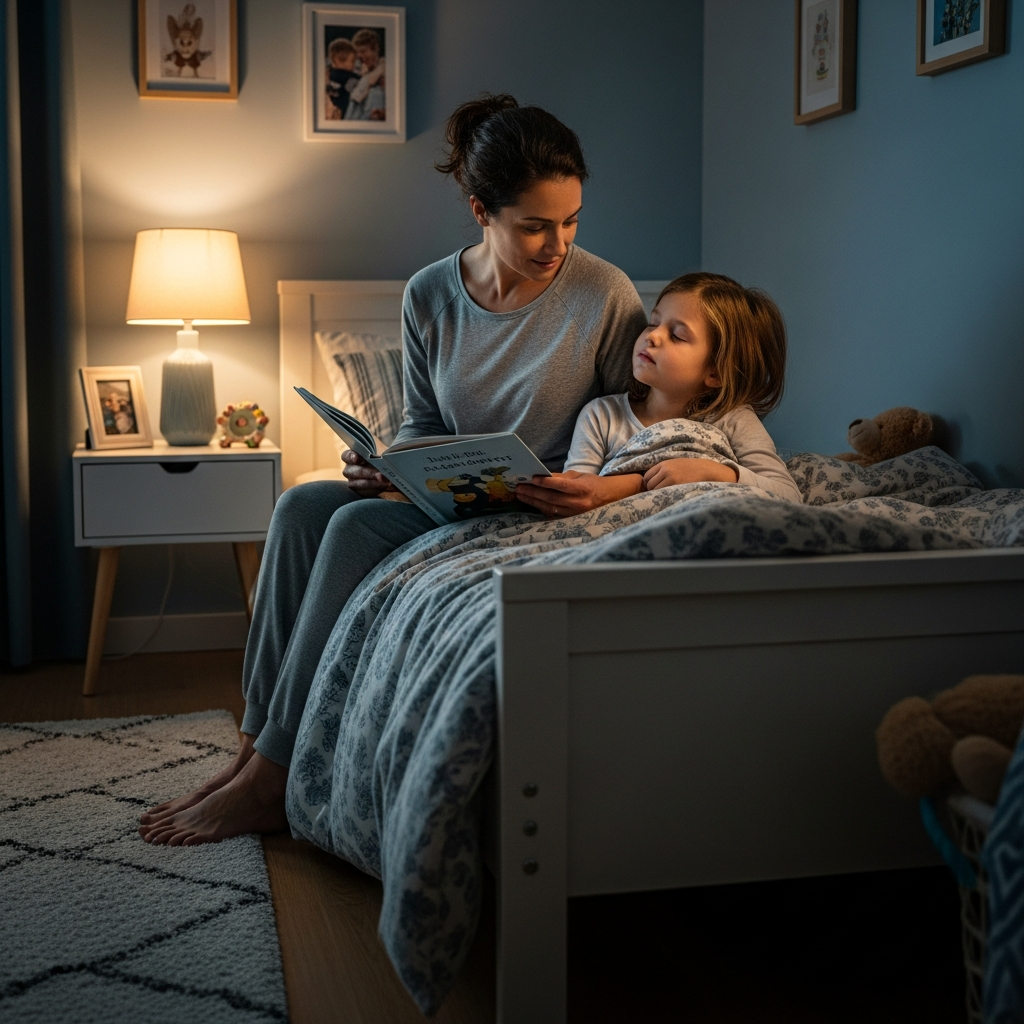
Creating a Calming Bedtime Routine for Emotional Reset
Sleep is when the brain processes emotional experiences from the day. Research indicates that sleep is essential for child development, influencing cognition, emotional regulation, behavior, and physical health. In fact, studies show that as many as 30% of children do not meet recommended sleep guidelines, which can significantly impact their emotional regulation.
Elements of an effective bedtime routine:
- Consistent timing: Same bedtime within a 20-minute window
- Wind-down activities: Bath, stories, songs, or quiet play
- Reduced stimulation: Dim lights and limit screens before bed
- Connection time: Cuddling, talking about the day, or sharing gratitudes
Physical comfort plays an often-overlooked role in bedtime success. When children wear soft, breathable sleepwear, they experience fewer sensory disruptions that can trigger bedtime resistance. Many parents find that bamboo pajamas help sensitive children settle more easily, thanks to the naturally soft, temperature-regulating fabric that feels gentle against skin.
Creating a Supportive Home Environment for Emotional Growth
Your home environment shapes your child's emotional development in ways you might not expect. From physical spaces to the emotional atmosphere, every element matters.
Physical Spaces That Support Emotional Expression
Consider creating a "calm corner" or "peace place" in your home. This is not a time-out spot for punishment. Instead, it is a comfortable area where your child can go to regulate their emotions.
Elements of an effective calm space:
- Soft lighting and comfortable seating (bean bags, cushions)
- Sensory tools like stress balls, fidgets, or soft fabrics
- Comfort items chosen by your child
- Visual aids like feelings charts or calming strategy cards
- Optional: nature elements like plants or a small water feature
Comfort and Clothing - The Overlooked Emotional Factor
Research suggests that sensory processing sensitivity affects approximately 15-20% of the population. For these children especially, physical discomfort can deplete their emotional reserves and make regulation more difficult.
Think about it: if your child is constantly distracted by itchy tags, scratchy seams, or restrictive clothing, they have less energy available for managing emotions and learning new skills. One practical way to support your child's emotional wellbeing is through sensory-conscious clothing choices. Choosing soft, comfortable kids clothes with gentle fabrics and thoughtful construction helps children focus their energy on learning emotional skills rather than fighting physical discomfort.
The Emotional Atmosphere - What Children Feel in Your Home
Children are remarkably attuned to emotional energy. Research shows that parental stress affects children through emotional contagion, meaning your feelings literally influence theirs.
Ways to create a positive emotional atmosphere:
- Model emotional regulation: Let children see you managing your own feelings
- Create connection rituals: Family dinners, one-on-one time, or special traditions
- Balance structure and flexibility: Routines with room for spontaneity
- Manage conflict constructively: Show children that disagreements can be resolved respectfully

Common Mistakes That Undermine Emotional Resilience
Even well-meaning parents sometimes accidentally hinder their child's emotional development. Here are the most common pitfalls and why they backfire.
1. Dismissing or Minimizing Emotions
What it looks like: "You're fine," "Stop crying," "It's not a big deal."
Why it backfires: Children feel unseen and unheard. The emotion often intensifies because it has nowhere to go. Over time, children learn to hide feelings rather than process them.
2. Rescuing Too Quickly
What it looks like: Solving problems before children can try, jumping in at the first sign of frustration.
Why it backfires: Children do not build competence or coping skills. They learn to depend on others to fix their problems rather than developing their own problem-solving abilities.
3. Avoiding All Discomfort
What it looks like: Shielding children from age-appropriate challenges, never letting them fail or feel disappointed.
Why it backfires: Children lack practice managing difficulties. When they inevitably face challenges, they are unprepared and may feel overwhelmed.
4. Inconsistent Boundaries
What it looks like: Giving in after tantrums, changing rules unpredictably, different rules on different days.
Why it backfires: Children feel anxious without clear limits. Inconsistency actually increases tantrums because children learn that persistence sometimes works.
5. Modeling Poor Emotional Regulation
What it looks like: Yelling, shutting down, or avoiding your own emotions in front of children.
Why it backfires: Children learn from what they see, not what they are told. If you yell when frustrated, your child learns that yelling is an acceptable response to frustration.
Remember: We all make these mistakes sometimes. The key is awareness and adjustment, not perfection. When you mess up, repair with your child. This actually teaches resilience by modeling how to recover from mistakes.
When to Seek Professional Support for Your Child's Emotional Health
While some emotional struggles are a normal part of development, certain signs may indicate your child could benefit from professional support.
Signs That May Indicate a Need for Professional Help
- Emotional reactions significantly more intense than same-age peers
- Difficulty recovering from upsets for hours or days
- Anxiety or sadness interfering with daily activities (school, friendships, family life)
- Regression in previously mastered skills
- Physical symptoms with no medical cause (frequent stomachaches, headaches)
- Social withdrawal or significant difficulty with peer relationships
- Talk of self-harm or not wanting to be alive
Where to Start
- Pediatrician: Your first point of contact for concerns
- Child psychologists or therapists: Specialists in childhood emotional health
- School counselors: Can provide support and referrals
- Play therapists: Particularly helpful for younger children
Seeking professional support is not a failure. It is a sign of good parenting. Early intervention leads to better outcomes, and professional support complements your parenting efforts. Resources like the Child Mind Institute and the American Psychological Association's parenting resources offer excellent information for parents navigating these decisions.
Frequently Asked Questions
What are the signs of an emotionally resilient child?
Emotionally resilient children can name their feelings, recover from disappointments without prolonged distress, try again after failures, seek help when needed, and show empathy toward others. They still experience big emotions but have developing tools to work through them. You will notice they can articulate what is bothering them and gradually calm themselves, even if they still need your support during the process.
At what age do children develop emotional resilience?
Emotional resilience develops gradually from birth through adolescence. Foundations begin in infancy through secure attachment with caregivers. Basic emotional regulation emerges around ages 3-4, with significant growth during the elementary years. The prefrontal cortex, responsible for emotional regulation, continues developing into the mid-20s, which is why even teenagers need ongoing support and patience.
Is emotional resilience genetic or learned?
Emotional resilience is both genetic and learned. Research suggests temperament has a genetic component, but environmental factors, especially parenting practices and early experiences, play the largest role. Children with challenging temperaments can absolutely develop strong resilience through supportive relationships, consistent routines, and intentional skill-building by caregivers.
How do you build resilience in a sensitive child?
For sensitive children, focus on validating their deeper emotional experiences rather than dismissing them. Teach coping strategies gradually, create low-stimulation calm spaces, maintain predictable routines, and avoid overwhelming situations when possible. Remember that sensitivity, when channeled well, becomes a strength, leading to empathy, creativity, and emotional depth.
What are the 7 Cs of resilience for children?
The 7 Cs of Resilience, developed by Dr. Kenneth Ginsburg in partnership with the American Academy of Pediatrics, are: Competence, Confidence, Connection, Character, Contribution, Coping, and Control. This framework helps parents systematically build resilience by addressing each area through everyday interactions and intentional parenting practices.
How does sleep affect children's emotional regulation?
Sleep significantly impacts emotional regulation. Research shows children with consistent bedtimes display better emotional and behavioral regulation. During sleep, the brain processes emotional experiences and consolidates emotional learning. Sleep-deprived children show increased emotional reactivity and decreased ability to manage frustration, making adequate rest essential for emotional development.
How do I validate my child's emotions without reinforcing tantrums?
Validate the emotion while holding the boundary: "I can see you're really angry that we have to leave. It's hard to stop playing. And we still need to go now." Acknowledge feelings without changing your decision. This teaches children that all emotions are acceptable while certain behaviors have limits. The key is separating the feeling from the behavior.
What causes lack of emotional regulation in children?
Common factors include developmental stage (young children naturally have limited regulation), temperament, inadequate sleep, sensory processing differences, inconsistent routines, modeling of poor regulation by adults, trauma or stressful experiences, and underlying conditions like ADHD or anxiety. Often it is a combination of factors, and identifying the root causes helps target interventions effectively.
Conclusion: Building Resilience One Day at a Time
Raising emotionally resilient children is not about finding a quick fix or following a perfect script. It is a long-term journey that unfolds through countless small moments of connection, validation, and guidance. The fact that you are reading this guide shows your commitment to raising a child who can thrive through life's challenges.
Remember these key takeaways:
- Connection is the foundation. Resilience grows from secure relationships where children feel seen and supported.
- Consistency matters. Predictable routines and boundaries create emotional safety.
- Model what you teach. Your own emotional regulation is your child's first classroom.
- Progress over perfection. You will make mistakes. Repair and keep going.
Building emotional intelligence in your children is one of the most valuable investments you can make in their future. Emotionally resilient children grow into adults who can navigate relationships, handle setbacks, and pursue their goals with confidence.
At PatPat, we are honored to support families on this journey. Whether it is through comfortable clothing that removes sensory barriers or resources like this guide, we believe every parent deserves support in raising happy, healthy, emotionally intelligent kids. Start where you are, use what you have, and trust that your loving presence is already making a difference.




