


Spring is finally here, and you are probably dreaming of sunny park outings and backyard playtime with your little one. But as the temperatures rise and flowers bloom, you might also be wondering: how do I protect my baby's delicate skin during this seasonal transition?
You are not alone in this concern. Approximately 9.6 million children in the United States have atopic dermatitis, and spring brings unique challenges like increased sun exposure, pollen, and temperature swings that can trigger flare-ups. The good news? With the right approach, you can help your baby enjoy the beautiful weather while keeping their skin healthy and happy.
In this comprehensive guide, we will walk you through everything you need to know about spring skincare for babies and toddlers. From age-appropriate sun protection to managing eczema flare-ups and choosing the best fabrics for sensitive skin.
Understanding Why Baby Skin Needs Special Care in Spring
Before diving into specific strategies, it helps to understand why your baby's skin is so different from yours. This knowledge will empower you to make better decisions throughout the season.
Your baby's skin is still developing its protective barrier. According to research published in Pediatric Dermatology, infant skin is approximately 20-30% thinner than adult skin. This means irritants, allergens, and UV rays can penetrate more easily, while moisture escapes more quickly.
Your little one's skin also has an immature pH balance and produces less natural oils than adult skin. The skin barrier continues maturing until around age six, which explains why babies and toddlers are more prone to dryness, rashes, and irritation.
How Seasonal Changes Affect Your Baby's Delicate Skin
Spring presents a unique set of challenges for baby skin:
- Temperature fluctuations: Morning chill followed by afternoon warmth can stress the skin barrier
- Humidity changes: Transitioning from dry indoor heating to variable outdoor conditions
- Increased outdoor exposure: After months indoors, skin needs time to adjust to sun and wind
- Pollen and allergens: Blooming plants release particles that can irritate sensitive skin
- Sweat: Active outdoor play leads to perspiration, which can trigger eczema flares
Understanding these triggers helps you anticipate problems before they start. The key is being proactive rather than reactive with your baby's skincare routine.
Sun Protection Strategies for Babies Under and Over 6 Months
Sun protection is one of the most important aspects of spring skincare, but the approach differs significantly based on your baby's age. Let us break down what you need to know.
Protecting Newborns Without Sunscreen
If your baby is younger than six months, sunscreen is not your first line of defense. The FDA and American Academy of Pediatrics recommend keeping babies under six months out of direct sunlight entirely. Their thin skin can absorb chemicals more readily, and they cannot regulate body temperature as effectively as older children.
Here is how to protect your young infant:
- Time your outings: Avoid direct sun between 10 AM and 4 PM when UV rays are strongest
- Seek shade: Use stroller canopies, umbrellas, or position yourself under trees
- Dress strategically: Lightweight, long-sleeved clothing and wide-brimmed hats that shade the neck and ears
- Use carrier covers: Breathable muslin covers for baby carriers provide shade while maintaining airflow
When shopping for spring clothing that protects your baby from the sun, look for lightweight, breathable options. Soft, layered baby clothes made from natural fabrics allow you to adjust coverage as temperatures change throughout the day.
Choosing the Right Mineral Sunscreen for Toddlers
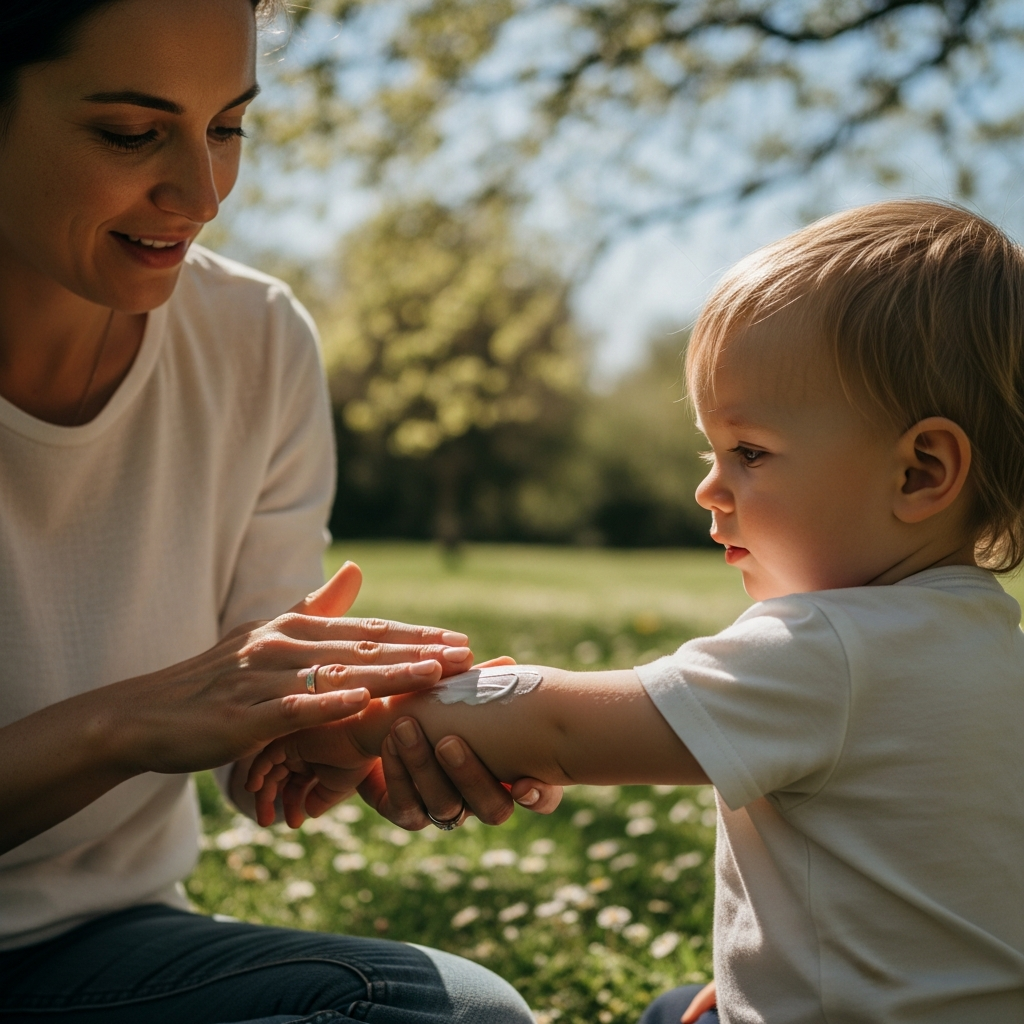
Once your baby reaches six months, you can introduce mineral sunscreen. But not all sunscreens are created equal for sensitive baby skin.
Choose sunscreens with these characteristics:
- Active ingredients: Look for zinc oxide or titanium dioxide as the only active ingredients
- SPF 30 or higher: Provides adequate protection without needing excessive product
- Broad-spectrum: Protects against both UVA and UVB rays
- Fragrance-free: Reduces risk of irritation or allergic reactions
Ingredients to avoid: Oxybenzone, octinoxate, and other chemical sunscreen filters that can absorb into the skin and may cause reactions in sensitive babies.
Application tips for squirmy toddlers:
- Apply 15-30 minutes before going outside
- Use stick sunscreens around the face for easier application
- Reapply every two hours, or immediately after swimming or sweating
- Make it a game to encourage cooperation
Managing Baby Eczema and Dry Skin During Spring Months
If your baby has eczema or sensitive skin, spring can be a challenging season. The combination of pollen exposure, temperature changes, and increased sweating can trigger frustrating flare-ups just when you want to enjoy the outdoors.
According to the American Academy of Pediatrics, atopic dermatitis affects 20-25% of children, making it one of the most common skin conditions pediatricians see. Understanding your triggers and maintaining consistent care can make a significant difference.
Identifying and Preventing Spring Eczema Flare-Ups
Common spring eczema triggers include:
- Pollen: Tree, grass, and flower pollen can settle on skin and cause irritation
- Grass: Direct contact during outdoor play often triggers reactions
- Sweat: Increased activity and warmer temperatures lead to perspiration buildup
- Temperature swings: Moving between cool mornings and warm afternoons stresses the skin barrier
Early warning signs to watch for:
- Increased scratching, especially at night
- Red patches appearing on common areas (cheeks, elbows, behind knees)
- Rough or bumpy texture developing on previously smooth skin
- Unusual fussiness during or after outdoor time
Prevention strategies:
- Apply a barrier cream before outdoor play
- Dress in long sleeves and pants for grass play to minimize direct contact
- Rinse off pollen with a quick bath after extended outdoor time
- Keep fingernails short to minimize scratch damage
Why Bamboo Fabric Helps Babies with Sensitive Skin
What your baby wears matters just as much as what you put on their skin. For babies prone to eczema, fabric choice can be a game-changer.
Bamboo fabric offers several advantages for sensitive skin:
- Naturally soft texture: Bamboo fibers are round and smooth, unlike some cotton fibers that can have microscopic rough edges
- Moisture-wicking: Bamboo absorbs up to 60% more liquid than cotton, keeping skin dry and comfortable
- Temperature regulating: Breathable in warm weather while providing warmth when cool
- Hypoallergenic properties: Less likely to cause irritation than synthetic fabrics
For babies with eczema or particularly sensitive skin, bamboo clothing options can help reduce friction-related irritation while keeping your little one comfortable during spring activities.
Daily Moisturizing Routine for Healthy Spring Skin
A consistent moisturizing routine is your foundation for healthy baby skin. As you transition from winter to spring, your approach may need some adjustments.
Transitioning Your Baby's Skincare From Winter to Spring
Winter often calls for thick, heavy creams to combat dry indoor heating. As spring arrives, you may notice your baby's skin becoming oily or developing small bumps if you continue the same routine.
Signs it is time to switch:
- Moisturizer leaves a greasy residue that does not absorb
- Small white or flesh-colored bumps appear (milia)
- Baby seems uncomfortable or sweaty after application
Making the transition:
- Switch from ointments to creams, or from creams to lighter lotions
- Reduce the amount applied while maintaining frequency
- Continue using heavier products for any dry patches while using lighter formulas elsewhere
Safe Ingredients to Look For in Baby Skincare Products
Understanding ingredient lists helps you make better choices:
Beneficial ingredients:
- Ceramides: Help repair and strengthen the skin barrier
- Hyaluronic acid: Attracts and holds moisture in the skin
- Natural oils: Coconut, sunflower seed, and jojoba oils provide gentle hydration
- Colloidal oatmeal: Soothes irritation and itching
Ingredients to avoid:
- Synthetic fragrances (look for "fragrance-free," not just "unscented")
- Parabens and phthalates
- Sulfates (SLS/SLES)
- Dyes and artificial colors
The 3-minute rule: According to the National Eczema Association, you should apply moisturizer within three minutes of bathing while skin is still slightly damp. This technique, called "soak and seal," locks in hydration and strengthens the skin barrier.
Protecting Your Toddler's Skin During Outdoor Spring Activities
Toddlers are natural explorers, and spring offers endless opportunities for adventure. With a little preparation, you can let them enjoy the outdoors while protecting their skin.
Spring Allergy Care: Preventing Pollen-Related Skin Reactions
Nearly one in five children has seasonal allergies, and while the classic symptoms involve sneezing and watery eyes, skin reactions are also common. Children with eczema may notice their condition worsening during allergy season.
Strategies to minimize pollen exposure:
- Check daily pollen counts and limit outdoor time on high-count days
- Plan outdoor activities for late afternoon when pollen counts typically drop
- Keep windows closed during peak pollen season
- Wipe down your child's hands and face with a damp cloth after outdoor play
- Give an evening bath to remove pollen from hair and skin before bed
Creating a post-outdoor routine:
- Remove outdoor clothing immediately upon coming inside
- Wipe exposed skin with a gentle, damp cloth
- Apply moisturizer to any dry or irritated areas
- Change into clean, soft indoor clothes
Dressing Your Toddler for Spring Outdoor Adventures
The right clothing makes outdoor play more comfortable and protects sensitive skin:
Layering for temperature changes:
- Start with a soft, breathable base layer
- Add a light long-sleeve shirt for sun and scratch protection
- Keep a light jacket handy for cool mornings or shade
Fabric considerations:
- Choose natural, breathable fabrics like cotton or bamboo
- Avoid rough seams, scratchy tags, and tight elastic
- Look for UPF-rated clothing for extended sun exposure
For active outdoor play, comfortable toddler clothing designed with soft fabrics and easy movement in mind allows your little explorer to run, climb, and play without skin irritation.

Choosing Gentle Fabrics and Clothing for Baby Skin Health
You might not think of clothing as part of your skincare strategy, but for babies with sensitive skin, fabric choice matters significantly. What touches your baby's skin all day long can either support or undermine your skincare efforts.
Best Fabrics for Babies and Toddlers with Sensitive Skin
| Fabric | Pros | Cons | Best For |
|---|---|---|---|
| Organic Cotton | Breathable, soft, widely available | Can hold moisture, may shrink | Everyday wear |
| Bamboo | Ultra-soft, moisture-wicking, temperature regulating | Higher price point | Eczema-prone babies, sleepwear |
| Cotton-Bamboo Blend | Balance of softness and durability | Varies by blend ratio | Active play |
Fabrics to avoid for sensitive skin:
- 100% polyester or synthetic blends (trap heat and moisture)
- Wool (can be scratchy and irritating)
- Stiff denim or heavily textured fabrics
Spring Wardrobe Essentials That Protect Delicate Skin
Building a skin-friendly spring wardrobe does not require a complete overhaul. Focus on these essentials:
- Lightweight long-sleeve shirts: Provide sun protection without overheating
- Soft cotton or bamboo leggings: Protect legs during grass play
- Wide-brimmed sun hats: Shield face, ears, and neck
- Seamless socks: Prevent irritation on sensitive feet
- Zip-up layers: Easy on and off for temperature changes
Washing tips for sensitive skin:
- Use fragrance-free, hypoallergenic detergent
- Skip fabric softeners and dryer sheets
- Wash new clothes before first wear to remove manufacturing residues
- Consider an extra rinse cycle to remove all detergent
Whether you need breathable pieces for warm days or soft layers for cooler mornings, quality kids' clothing made from gentle fabrics helps protect your child's skin throughout spring adventures.
When to See a Pediatric Dermatologist About Your Baby's Skin
While most spring skin concerns can be managed at home, some situations require professional attention. Knowing when to seek help prevents minor issues from becoming major problems.
Signs that warrant a doctor's visit:
- Rash that persists beyond 1-2 weeks despite home treatment
- Signs of infection: pus, oozing, increased warmth, or crusting
- Fever accompanying a skin reaction
- Rash that spreads rapidly or covers large areas
- Eczema severe enough to disrupt sleep or daily activities
- Any sudden, unexplained skin changes
Questions to ask your pediatric dermatologist:
- What specific triggers should we avoid for my child?
- Are there prescription options that might work better than over-the-counter products?
- Should we consider allergy testing?
- What is the best daily routine for my child's specific skin type?
Trust your instincts. You know your baby best. If something seems off or home treatments are not working, seeking professional guidance is always the right choice.
Frequently Asked Questions
What is the best skincare routine for babies in spring?
A simple spring skincare routine includes a gentle, fragrance-free cleanser during baths 2-3 times per week, applying lightweight moisturizer within 3 minutes of bathing, using mineral sunscreen (SPF 30+) on babies over 6 months, and dressing in breathable, soft fabrics like bamboo or organic cotton for outdoor play.
When can I start using sunscreen on my baby?
The American Academy of Pediatrics recommends waiting until your baby is 6 months old before applying sunscreen. For younger infants, rely on physical protection: stay in shade, use protective clothing, wide-brimmed hats, and avoid direct sun during peak hours (10 AM - 4 PM). After 6 months, choose mineral sunscreens with zinc oxide or titanium dioxide.
Why does my baby's eczema get worse in spring?
Spring eczema flare-ups often result from increased pollen exposure, temperature fluctuations, sweating during outdoor play, and grass allergies. The transition from dry indoor heating to fluctuating outdoor humidity can also disrupt your baby's skin barrier. Managing triggers, consistent moisturizing, and choosing hypoallergenic fabrics like bamboo can help reduce spring flare-ups.
Is bamboo clothing good for babies with sensitive skin?
Yes, bamboo clothing is excellent for babies with sensitive skin or eczema. Bamboo fabric is naturally hypoallergenic and moisture-wicking, which helps prevent skin irritation and overheating. It is softer than cotton, regulates temperature well, and is less likely to cause friction-related skin issues during active play.
How often should I moisturize my baby's skin in spring?
Moisturize your baby's skin at least twice daily: after morning bath time and before bed. Apply within 3 minutes of bathing while skin is still slightly damp to lock in moisture. Babies with eczema or very dry skin may benefit from more frequent application, especially after outdoor activities or diaper changes.
What ingredients should I avoid in baby skincare products?
Avoid synthetic fragrances, parabens, phthalates, formaldehyde-releasing preservatives, sulfates (SLS/SLES), and dyes in baby skincare products. For sunscreen, avoid chemical filters like oxybenzone and octinoxate. Instead, look for products labeled "fragrance-free" (not "unscented"), hypoallergenic, and dermatologist-tested with minimal, natural ingredients.
How do I protect my baby from pollen allergies affecting their skin?
Protect your baby from pollen-related skin reactions by checking daily pollen counts and limiting outdoor time on high-count days, dressing them in long sleeves and pants, wiping hands and face with a damp cloth after outdoor play, bathing in the evening to remove allergens, and keeping windows closed during peak pollen season.
What are signs my baby's rash needs medical attention?
Seek medical care if your baby's rash spreads rapidly, includes fever or illness symptoms, shows signs of infection (pus, oozing, increased warmth), doesn't improve after 1-2 weeks of home treatment, significantly disrupts sleep or eating, or appears suddenly after introducing a new food or product. Trust your instincts and consult your pediatrician when concerned.
Enjoying Spring with Healthy, Happy Baby Skin
Spring is a wonderful time to introduce your baby or toddler to the joys of outdoor play. With a thoughtful approach to sun protection, consistent moisturizing, smart fabric choices, and awareness of seasonal triggers, you can help your little one enjoy the season while keeping their delicate skin healthy.
Remember these key takeaways:
- Keep babies under 6 months in the shade; use mineral sunscreen for older babies
- Apply moisturizer within 3 minutes of bathing for best results
- Choose breathable, natural fabrics like cotton and bamboo for sensitive skin
- Create a post-outdoor routine to remove pollen and prevent irritation
- Trust your instincts and consult a pediatric dermatologist when needed
Every baby is unique, and what works for one may need adjustment for another. Be patient as you learn your child's specific sensitivities and triggers. With the right care and attention, you can make this spring season enjoyable for the whole family.
At PatPat, we understand the importance of keeping your little ones comfortable and protected. Bookmark this guide for reference throughout the season, and share it with other parents who might find it helpful. Here is to sunny days, happy babies, and healthy skin this spring!




