


Standing in the toy aisle, staring at shelves packed with colorful boxes promising "brain-boosting benefits" and "developmental advantages," you might feel completely overwhelmed. Which toys does your baby actually need? Will choosing the wrong ones somehow hold back their development? Here is the reassuring truth: your baby's brain is already working overtime, forming at least one million new neural connections every second during the first years of life. The right toys simply support this incredible natural process.
This guide walks you through baby developmental toys for each stage, from newborn to first birthday. You will learn what milestones to expect, which age-appropriate toys support each phase, and how to choose safe options without breaking the bank. Whether you are a first-time parent, expecting, or shopping for a grandchild, understanding developmental toys by age helps you make confident choices. At PatPat, we believe every parent deserves practical, trustworthy guidance for this exciting journey.
One important note before we dive in: every baby develops at their own pace. The timelines here are guidelines, not deadlines. When do babies start playing with toys? Most begin showing interest around two to three months, but your little one might be earlier or later, and that is completely normal.
How Toys Support Your Baby's Brain Development and Milestones
The Science of Play-Based Learning in Infancy
Your baby's brain is a construction site operating at full speed. By age one, 1,000 trillion synaptic connections have formed. These connections build the foundation for everything from language to problem-solving. Play activates and strengthens these neural pathways in ways that passive observation cannot.
The Harvard Center on the Developing Child describes a concept called "serve and return" interactions. When your baby coos or reaches for a toy, and you respond with eye contact, words, or a smile, you are literally building brain architecture together. Much like a game of tennis, these exchanges strengthen neural connections essential for communication and social skills.
This is why the best baby developmental toys encourage interaction between you and your child. A simple rattle becomes powerful when you shake it, your baby reaches for it, you hand it over, and you both celebrate the success together. Toys with different textures, shapes, and colors promote sensory development while supporting motor skill growth as babies reach, grasp, and explore.
Understanding Developmental Milestones vs. Individual Timelines
The CDC defines milestones as behaviors that 75% or more of children demonstrate by certain ages. This means a quarter of typically developing children might reach these markers later. Milestones serve as helpful guideposts, not pass-or-fail tests.
Watch your unique baby rather than constantly comparing them to charts or other children. If your six-month-old is not sitting independently while your neighbor's baby has been sitting for weeks, that does not signal a problem. However, if your child is not meeting multiple milestones or loses skills they previously had, a conversation with your pediatrician makes sense. The American Academy of Pediatrics recommends developmental screening at 9, 18, and 30 months as standard practice.
Best Toys for Newborns: High-Contrast and Sensory Essentials (0-3 Months)
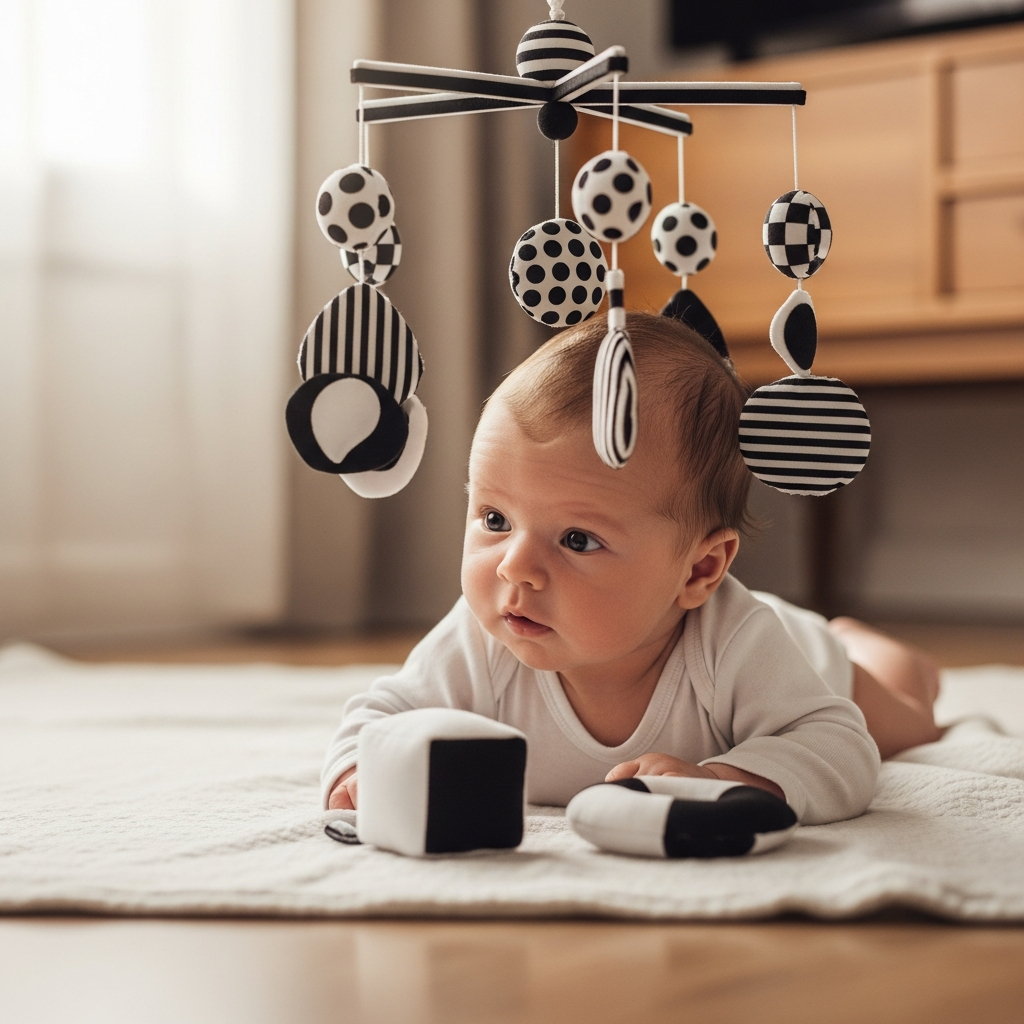
Your newborn's world is a blur. During the first weeks, babies see clearly only about 8 to 12 inches from their face, roughly the distance between your face and theirs during feeding. Color vision develops gradually, making high-contrast patterns the first things they can truly focus on.
Visual Development: High-Contrast Toys and Black-and-White Patterns
Black and white baby toys are not just trendy. They match your newborn's visual capabilities perfectly. High-contrast cards, mobiles, and soft books with bold patterns capture attention when pastel colors simply fade into the background. Visual tracking, where your baby follows a moving object with their eyes, develops during these early weeks.
Place high-contrast cards near the changing table or hold them during tummy time. Move a black-and-white mobile slowly across your baby's field of vision. These simple activities strengthen the neural connections responsible for vision and attention.
Soft Sensory Rattles and First Touch Experiences
Hearing develops rapidly in the first months. Soft rattles with gentle sounds introduce cause and effect in its earliest form. When baby's random arm movements create a sound, learning begins. Crinkle toys and textured fabric books add tactile exploration to the mix.
Choose lightweight rattles that are safe if baby accidentally hits their face, which will happen. Look for sensory toys with varied textures like smooth satin, bumpy cotton, or soft velvet. These textured toys for infants build the foundations of tactile discrimination.
Tummy Time Toys That Support Early Motor Development
Tummy time is non-negotiable for motor development. A systematic review in the AAP journal Pediatrics found that tummy time was positively associated with gross motor and total development. The AAP recommends starting at birth with two to three sessions of three to five minutes daily, building toward 30 minutes by seven weeks.
Best toys for tummy time include:
- Tummy time mats with attached toys and mirrors
- High-contrast cards propped at eye level
- Crinkle toys placed just out of reach to encourage lifting and reaching
- Unbreakable mirrors for self-discovery
Comfortable clothing makes floor play more enjoyable. Dress your baby in breathable bamboo baby clothes during tummy time sessions. Temperature-regulating fabric helps your little one focus on building those important motor skills without overheating.
Toys for Growing Infants: Grasping, Reaching, and Teething (3-6 Months)
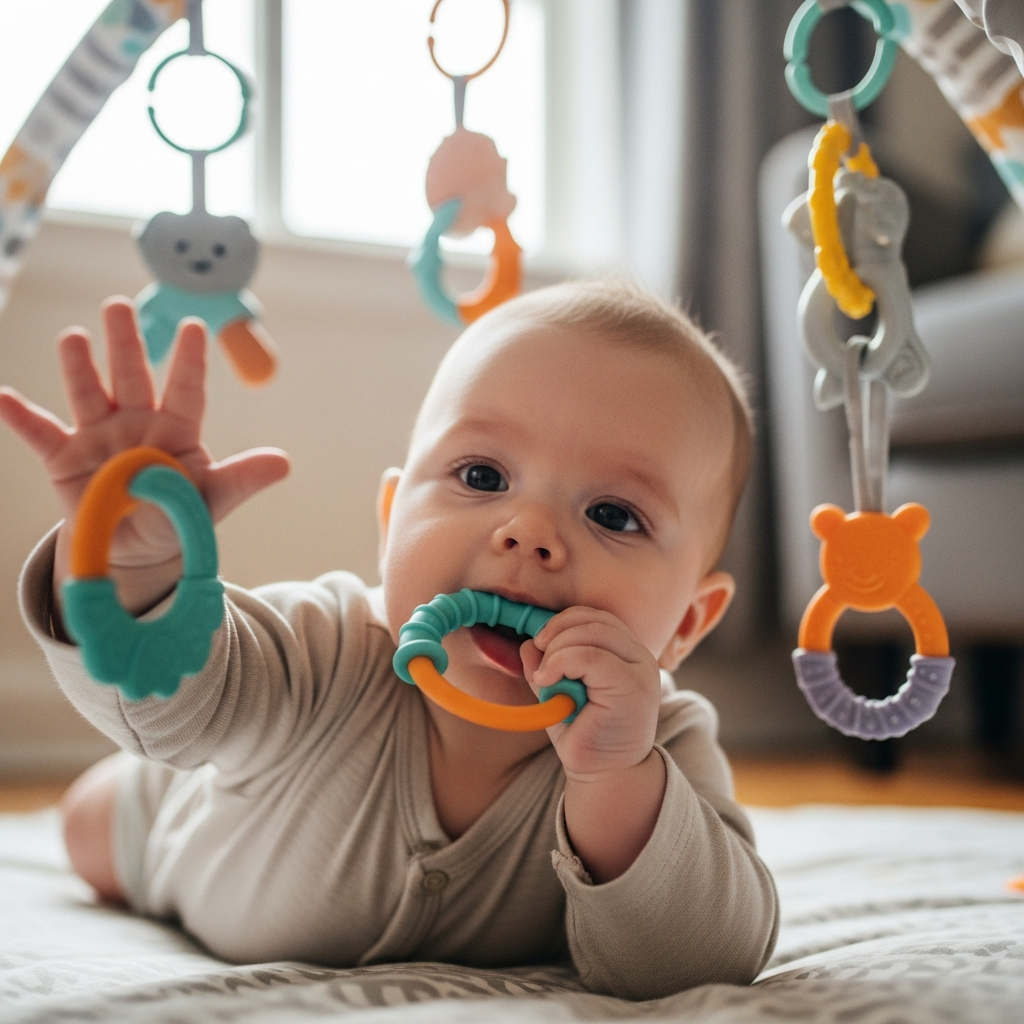
Between three and six months, everything changes. Your baby transitions from reflexive movements to intentional reaching. They start grasping objects purposefully and bringing everything to their mouth. This is also when many babies begin teething, adding a new dimension to toy selection.
Grasping Toys That Build Hand-Eye Coordination
The best toys for 3 month old development and beyond are lightweight and easy to grip. O-balls with their open structure allow tiny fingers to find purchase easily. Soft rings, fabric links, and simple rattles help babies practice the grasp-and-release pattern essential for fine motor development.
Hand-eye coordination toys encourage babies to:
- Reach toward objects they see
- Grasp items placed in their hands
- Transfer toys between hands
- Shake and bang objects to explore cause and effect
By four to six months, playtime becomes more dynamic. Babies bring toys to their mouths for oral exploration, shake rattles deliberately, and may bang objects on surfaces. This phase builds the foundation for the pincer grasp that develops later.
Teething Toys for Comfort and Sensory Exploration
Teething typically begins around six months, though some babies start earlier. Choosing safe teething toys means looking for BPA-free, phthalate-free materials. Silicone teethers and natural rubber options provide safe surfaces for chewing while offering varied textures for sensory exploration.
The best teething toys for 6 month old babies serve double duty as developmental tools. Textured surfaces massage sore gums while different shapes encourage exploration. Avoid teethers with liquid centers that could leak or break, and check regularly for signs of wear.
Activity Gyms and Play Mats for Independent Exploration
A quality baby play gym becomes a hub of activity during this stage. Dangling toys encourage reaching and batting. Attached mirrors support self-recognition. Many mats transition from back play to supported sitting as babies develop new skills.
Look for activity mats with adjustable features that grow with your baby. Removable toys allow customization as interests change. The best options provide enough stimulation to engage without overwhelming.
Active play often means multiple outfit changes. Stock up on comfortable baby clothes with convenient snap closures that make quick changes between play sessions effortless.
Supporting Mobility and Curiosity: Toys for Crawlers (6-9 Months)
Around six to nine months, many babies become mobile. Crawling opens up entirely new worlds of exploration. Cognitive leaps happen rapidly as babies discover cause and effect relationships and begin understanding object permanence.
Cause and Effect Toys That Encourage Problem-Solving
Cause and effect toys for babies teach one of the most important early lessons: actions have predictable outcomes. Push a button, hear a sound. Drop a ball, watch it roll. These repetitive experiences build cognitive connections that form the basis of later problem-solving skills.
Excellent choices for this stage include:
- Pop-up toys that respond to button presses
- Simple musical instruments like shakers and drums
- Busy boards with various switches and latches
- Toys that light up or play sounds when activated
Research shows that simple, open-ended toys often engage babies more effectively than complex electronic options. The joy comes from the discovery, not the bells and whistles.
Crawling Encouragement Toys and Rolling Balls
Toys to help baby crawl motivate movement through curiosity. Rolling balls that move just out of reach encourage forward motion. Crawl-through tunnels create goals to work toward. Light-up toys placed a few feet away provide incentive to keep going.
Some babies army crawl. Others bottom-scoot. Some skip crawling entirely. All of these variations fall within normal development. Gross motor development toys support whatever movement style your baby chooses.
Object Permanence Games and Peek-a-Boo Toys
Object permanence, understanding that things exist even when hidden from view, develops around this age. This cognitive milestone explains why babies suddenly become interested in peek-a-boo and why separation anxiety often emerges.
Nesting cups, shape sorters, and hide-and-find toys strengthen object permanence understanding. A simple game of hiding a toy under a blanket provides the same developmental benefit as expensive learning toys. Your baby's delighted expression when the toy "reappears" never gets old.
Pre-Toddler Exploration: First Steps and Problem-Solving (9-12 Months)
The months leading to your baby's first birthday bring remarkable developments. Many babies pull to stand, cruise along furniture, and some take those thrilling first steps. Problem-solving abilities explode as babies learn to stack, sort, and manipulate objects with increasing skill.
Stacking and Building Toys for Cognitive Growth
Stacking toys teach spatial awareness, sequencing, and persistence. Stacking rings, cups, and soft blocks let babies experiment with size relationships. And here is a secret: knocking down towers is just as developmentally valuable as building them. The crash teaches cause and effect while providing satisfying sensory feedback.
Open ended toys for babies at this stage include:
- Stacking rings in graduated sizes
- Nesting cups that fit inside each other
- Soft fabric or foam blocks for safe stacking
- Simple shape sorters with basic shapes
These best toys for baby first year choices grow with your child. A stacking toy interesting at ten months remains engaging well into toddlerhood as skills advance.
Push Toys for Babies Learning to Stand and Walk
Push toys for babies learning to walk support the transition from cruising to independent steps. Look for sturdy push walkers with appropriate resistance. Too little resistance and the walker scoots away; too much and baby cannot move it.
Safety considerations for walking toys matter. Weighted bases prevent tipping. Rubber wheel edges protect floors and fingers. Avoid seated walkers that roll freely, as pediatric organizations have raised safety concerns about these designs.
Budget-friendly alternatives work just as well. A stable laundry basket or weighted cardboard box provides pushing practice without special equipment.
First Birthday Gift Ideas That Grow With Your Child
First birthday toys should offer longevity. Simple wooden puzzles, quality blocks, and basic musical instruments remain engaging for years. Soft dolls and comfort toys support emerging imaginative play.
For grandparents and gift-givers, focus on quality over quantity. One well-made wooden stacker outperforms five plastic gadgets that will be discarded within months. Consider what skills the birthday child is currently working on and choose accordingly.
Choosing Safe and Non-Toxic Developmental Toys
Non-Toxic Materials and Safety Standards for Baby Toys
Baby toy safety requires vigilance. The CPSC receives about 15 reports of choking deaths annually in children under three. Many involve small toy parts.
Safety standards to look for include:
- ASTM F963 certification for toy safety
- BPA-free and phthalate-free labeling
- Food-grade silicone for teethers
- No small parts for under-three toys
The toilet paper roll test helps assess choking hazards. If a toy or part fits entirely inside a toilet paper tube, it poses a choking risk for babies and toddlers. Check toys regularly for loose parts or damage.
Wooden Toys vs. Plastic: Making Informed Choices
The wooden toys vs plastic toys baby debate has passionate advocates on both sides. Wooden toys offer durability, natural textures, and environmental sustainability. Quality plastic toys, properly manufactured, are easier to clean and sometimes better suited for specific purposes like teething.
Consider the toy's purpose when choosing materials. Wooden blocks for stacking make sense. Silicone teethers for mouthing are practical. Avoid cheap plastics with strong chemical odors, which may indicate unsafe manufacturing.
Budget-Friendly Alternatives and Household Items as Toys
Do babies need expensive toys? Research consistently says no. Simple, open-ended toys and household items often engage babies more effectively than complex electronic gadgets. The Princeton Baby Lab's research on brain synchronization during play emphasizes that baby and adult brain activity rises and falls together during interactive play. The caregiver interaction matters more than the toy's price tag.
Safe household items that double as developmental toys:
- Wooden spoons and plastic measuring cups for banging
- Clean cardboard boxes for climbing and hiding
- Plastic containers with lids for opening and closing
- Metal mixing bowls for drum play
Practical Tips: How Many Toys Does Your Baby Actually Need?
Quality Over Quantity: The Case for Minimalist Baby Toys
Pediatricians and neuroscientists largely agree that overstimulation can backfire. Too many toys lead to shorter attention spans and reduced engagement. Signs of overload include turning away, fussiness, or "zoning out."
A minimalist approach, grounded in a handful of well-chosen developmental toys, often serves infants better than rooms filled with gadgets. Focus on essentials for each developmental stage, observe what captures your baby's interest, and resist marketing pressure suggesting you need every new product.
Toy Rotation Systems for Sustained Engagement
Toy rotation keeps playthings fresh and engaging. The concept is simple: store most toys out of sight, offering only a small selection at a time. Rotate weekly or biweekly.
Benefits of toy rotation include:
- Renewed interest in "old" toys
- Less overwhelming play spaces
- Deeper engagement with available toys
- Easier cleanup and organization
Use developmental appropriateness as your rotation criteria. As your baby masters stacking rings, swap in more challenging shape sorters.
Frequently Asked Questions About Baby Toys and Development
When do babies start playing with toys?
Babies begin engaging with toys around two to three months old, when they start tracking objects with their eyes and reaching toward items of interest. At this age, "play" involves looking, listening, and batting at objects. By four to five months, most babies actively grasp and mouth toys. By six to seven months, purposeful play with cause-and-effect exploration emerges.
What toys should a 3-month-old be playing with?
At three months, focus on high-contrast black-and-white toys, soft rattles, crinkle toys, and activity gyms. Babies this age benefit from tummy time mirrors, lightweight rings they can bat at, and soft textured toys they can grasp when placed in their hands. Keep toys simple since sensory exploration matters more than complexity at this stage.
Do babies need expensive toys for proper development?
No. Research consistently shows that simple, open-ended toys and household items often engage babies more effectively than complex electronic toys. What matters most is interactive play with caregivers. Quality materials and safety certifications are worth investing in, but high price tags do not guarantee better developmental outcomes.
Are wooden toys better for babies than plastic?
Both materials have benefits. Wooden toys are durable, eco-friendly, and provide natural textures. Quality plastic toys that are BPA-free and phthalate-free are safe, easier to clean, and sometimes better suited for teething. Choose based on the toy's purpose. Wooden blocks work well for stacking while silicone teethers make sense for mouthing.
How do toys help cognitive development in babies?
Toys support cognitive development by providing sensory input that strengthens neural pathways. Cause-and-effect toys teach that actions have predictable outcomes. Stacking and sorting toys develop spatial reasoning. Interactive toys encourage hand-eye coordination. The most significant cognitive benefits come from caregiver-involved play rather than solo toy time.
What toys are safe for babies under 1 year?
Safe toys for babies under one should have no small parts, be made from non-toxic materials, have no sharp edges, and be age-labeled appropriately. Avoid toys with button batteries, long strings, and magnetic components. Always supervise play and regularly inspect toys for damage.
What age do babies start reaching for toys?
Most babies begin intentionally reaching for toys between three and four months. Before this, they may bat at objects reflexively. By four to five months, reaching becomes more coordinated. Around five to six months, babies typically grab objects accurately and begin transferring items between hands.
How do I choose age-appropriate toys for my baby?
Check manufacturer age labels as a starting point, then consider your baby's current skills. Can they grasp, sit independently, or crawl? Match toys to developmental stage rather than strictly to age. Observe what captures their interest and look for toys offering slight challenges without frustration. When in doubt, simpler is usually better.
Conclusion: Trusting Your Instincts on the Toy Journey
Navigating baby developmental toys does not need to feel overwhelming. Understanding your baby's milestones by age gives you confidence in choosing appropriate options. The science is clear: those million neural connections forming every second in your baby's brain thrive on responsive, interactive play with you, not on the perfect toy.
Remember these key takeaways:
- Match toys to developmental stages, not just age labels
- Simple, open-ended toys often outperform expensive gadgets
- Your interaction matters more than the toy itself
- Safety first: check for small parts, non-toxic materials, and age-appropriateness
- Less is often more when it comes to toy quantity
Trust your instincts. You know your baby better than any product description or marketing claim. Watch what engages them, follow their lead, and enjoy the play journey together.
The first year flies by remarkably fast. Those early tummy time sessions transform into crawling adventures, then pulling to stand, and suddenly you are celebrating a first birthday. Each stage brings new discoveries, new toys to explore, and new milestones to celebrate. Embrace the journey, keep play at the center, and watch your baby's incredible development unfold.


